

You’ve made the critical decision to protect your home and invested in a professional termite treatment. But now comes the anxious part: waiting and wondering, “Did it actually work?” Seeing a few lingering pests can be alarming, and the uncertainty of not knowing if your property is truly safe is stressful. You need clear answers, not more guesswork. That’s why our expert technicians are here to give you peace of mind by outlining the definitive signs your termite treatment is working effectively.
In this guide, we’ll walk you through the 7 clear indicators of a successful treatment. You will learn what to expect in the days and weeks following the service, understand the timeline for complete elimination, and know exactly when to be patient versus when it’s time to call us for a follow-up inspection. Get the expert-backed checklist you need to feel confident that your termite problem is solved for good and your home is secure.
Key Takeaways
- Termite elimination is a process, not an instant event. Learn the different timelines for chemical barriers versus baiting systems to know what to expect.
- The key signs termite treatment is working vary by method. Discover why seeing fewer termites is a goal for barriers, while bait station activity can be a positive sign.
- Know the difference between normal post-treatment activity and a real problem. We outline the critical red flags that mean it’s time to call your pest professional.
- Protect your investment with simple post-treatment care. Learn actionable steps you can take to support the treatment’s effectiveness and prevent future infestations.
First Things First: Understanding the Post-Treatment Timeline
After a professional termite treatment, it’s natural to want immediate peace of mind. You need to know the threat to your home is gone. However, termite elimination is a strategic process, not an instant event. The time it takes to see results depends entirely on the method used by your pest control specialist.
Understanding this process is the first step in identifying the key signs termite treatment is working. At ABC Pest Control, our experts use two primary, industry-leading methods to protect Australian homes, and each operates on a different schedule.
How Chemical Barriers Work (The ‘Invisible Wall’)
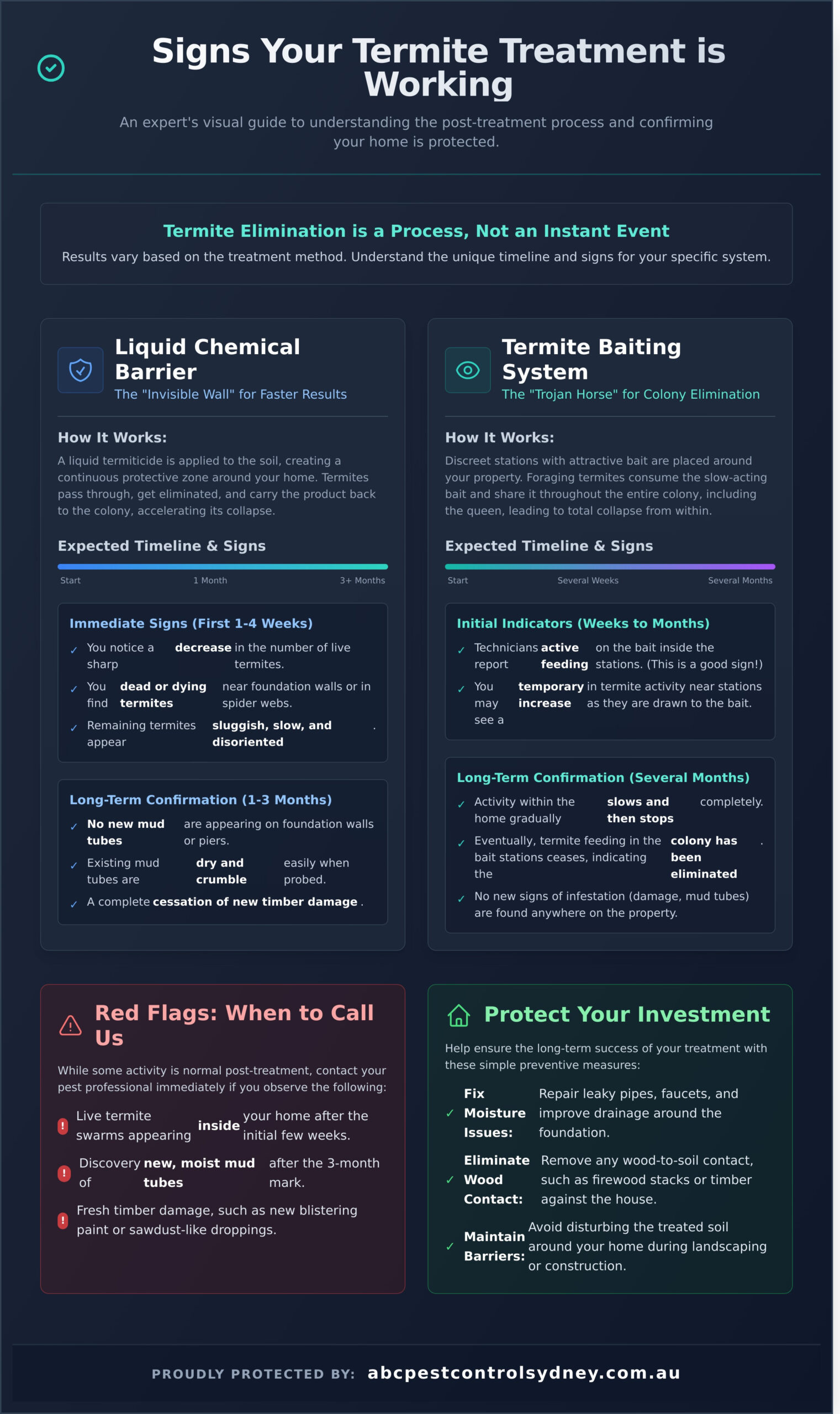
This method provides a more immediate and robust line of defence. Our technicians apply a long-lasting liquid termiticide into the soil around and under your home’s foundation. This creates a continuous treated zone that functions as an undetectable Termite barrier. As foraging termites pass through it, they are not only eliminated but also carry the termiticide back to the colony, transferring it to others. This approach provides faster, more visible results, often showing a significant drop in termite activity relatively quickly.
How Baiting Systems Work (The ‘Trojan Horse’)
A termite baiting system is a long-term strategy designed for total colony elimination. We install discreet bait stations in the ground at strategic points around your property where termites are likely to forage. These stations contain a highly attractive bait mixed with a slow-acting growth inhibitor. Worker termites consume the bait and carry it back to the nest, sharing it with the entire colony, including the queen. While this method takes longer-sometimes several months-it is designed to destroy the colony from the inside out for complete eradication.
Knowing which system was applied to your property is crucial. A liquid barrier offers rapid protection, while a baiting system requires more patience to achieve its goal. Your understanding, combined with professional follow-up inspections, will help you confidently spot the signs that your treatment is succeeding.
Signs of Success for a Liquid Chemical Barrier Treatment
A liquid chemical barrier is your home’s frontline defence, creating an invisible, treated zone in the soil around your foundation. This professional treatment is designed for total colony elimination, which means patience is key. As termites move through the treated soil, they unknowingly carry the non-repellent termiticide back to the nest, spreading it throughout the colony.
Understanding the different methods of termite eradication is crucial. For a detailed overview, the United States Environmental Protection Agency offers an authoritative guide on How to Identify and Control Them. After treatment, you won’t see results overnight. Instead, you will see clear, gradual signs that the termite population is collapsing.
Immediate Signs (First 1-4 Weeks)
In the first month, the chemical barrier is actively working to disrupt and destroy the colony. The most positive signs your termite treatment is working are often subtle but significant. Don’t be alarmed if you still see some activity; this is a normal part of the elimination process. Here’s what to look for:
- Fewer Live Termites: You should notice a sharp drop in termite numbers in the areas where you previously saw them, such as skirting boards or window frames.
- Finding Dead Termites: This is the best proof of success! Seeing dead or dying termites near your foundation, inside your home, or in spider webs means they have crossed the barrier and the product is effective.
- Sluggish and Disoriented Pests: Termites that have contacted the termiticide will appear slow, confused, and unable to function normally before they die. This is a clear indicator the treatment is impacting their nervous system as intended.
Long-Term Confirmation (1-3 Months)
After the initial period, you can look for more permanent evidence that the termite threat has been neutralised. These long-term signs confirm the colony has been eliminated and your property is protected. Your professional pest technician will also check for these during follow-up inspections.
- No New Mud Tubes: The “highways” termites build for travel will stop appearing. Regularly check your foundation walls and subfloor piers for any new mud structures.
- Dry, Brittle Mud Tubes: Gently probe any existing mud tubes with a stick. If they are dry and crumble easily, they are inactive. Active tubes are typically moist and will have soldier termites emerge if broken.
- Cessation of Damage: You should find no new signs of timber damage. This means no fresh, sawdust-like droppings (known as frass) and no new hollow-sounding spots in your wooden structures.
Key Indicators That Your Termite Baiting System is Working
Termite baiting systems are a highly effective, long-term solution for eliminating entire colonies, but they work very differently from instant-kill chemical barriers. The process is a strategic attack on the colony’s heart, not just the foraging termites you might see. Success depends on these workers finding the bait, consuming it, and carrying the slow-acting ingredient back to the nest to eradicate the queen and her subjects. This is a core principle in modern Termite Prevention and Control strategies.
Unlike other treatments, seeing termite activity in the bait stations is not a bad thing-it’s exactly what our expert technicians want to see. It means the system is engaging the enemy. Regular professional monitoring is essential to track progress and confirm the colony is on its way to total collapse.
Early Signs (First 1-3 Months): The Bait is Being Taken
In the first few months, the primary goal is engagement. We need the termites to start feeding on the bait matrix. It is crucial to understand that you may still see live termites in or around your home during this phase. This is normal, as the bait requires time to be circulated throughout the colony. Your peace of mind is our priority, and your technician will keep you fully informed.
Key early indicators include:
- Technician Reports ‘Hits’: Your pest control specialist will confirm that termites have found and entered the in-ground bait stations.
- Evidence of Active Feeding: There will be clear visual proof that the bait is being consumed, which means the termites have accepted it as a reliable food source.
- Live Termites in Stations: Seeing live termites inside the stations proves they are actively transporting the bait back to the colony, beginning the elimination process.
Later Signs (3-6+ Months): The Colony is in Decline
After several months of consistent feeding, you will start to see the powerful results of the baiting system. This is when the most definitive signs your termite treatment is working become apparent, confirming the termite population is collapsing. Your property is becoming safer as the threat is neutralised from the inside out.
Look for these positive long-term outcomes:
- Feeding Cessation: Your technician will report a significant drop-off or complete stop in bait consumption. This is a strong signal that there are few, if any, workers left to feed.
- No Swarmers: One of the best signs of success is the absence of termite swarmers (alates) during the next flight season. A dead colony cannot produce new reproductive termites.
- Clear Follow-Up Inspections: A thorough professional inspection of your home and property will no longer find any evidence of live termites.
Red Flags: When to Be Concerned Your Treatment Isn’t Working
Investing in a professional termite treatment brings peace of mind, but it’s natural to worry if the problem is truly gone. While you’re looking for positive signs termite treatment is working, it’s just as crucial to know the warning signals. A small amount of termite activity can sometimes be seen shortly after a treatment, but persistent or new activity is a cause for concern. Remember, reputable pest control specialists provide a warranty for this very reason-to ensure the job is done right.
Clear Warning Signs
If your treatment was completed weeks or months ago, seeing any of the following red flags means you should contact your pest control provider immediately. These are not normal post-treatment occurrences and indicate the colony may not have been fully eradicated.
- New, Active Mud Tubes: Finding new termite tunnels along your foundation, walls, or subfloor is a major warning. This shows the colony is still active and either bypassed the chemical barrier or was not affected by the baits.
- A Live Termite Swarm: Seeing a swarm of flying termites (alates) inside your home months after treatment is a definitive sign of a mature, thriving colony nearby. A swarm is a colony’s attempt to reproduce and expand, which would not happen if the treatment were successful.
- Discovering Fresh Wood Damage: One of the most worrying signs a termite treatment isn’t working is finding new damage. Look for wood that sounds hollow when tapped, crumbles easily, or has fresh pinholes or tunnels that were not there during the initial inspection.
What to Do If You’re Worried
Spotting a potential red flag can be stressful, but it’s important to act correctly to resolve the issue effectively. Do not try to handle it yourself. Instead, follow these simple steps:
- Document What You See: Take clear photos or a short video of the activity. Make a note of the exact location and the date you discovered it. This evidence is invaluable for your technician.
- Avoid Disturbing the Area: Resist the urge to break open mud tubes or spray the area with store-bought pesticides. This can cause termites to retreat and relocate, making it much harder for a professional to track and eliminate them.
- Contact Your Provider Immediately: Call the company that performed the initial treatment. Explain what you’ve found and reference your service agreement or warranty. They should schedule a follow-up inspection at no extra charge.
Your home is your biggest investment, and protecting it is our priority. If you feel your current treatment has failed or you need a reliable expert to assess your property, trust the experts at ABC Pest Control to get it right.
How to Protect Your Investment: Post-Treatment Care
A professional termite treatment is a powerful first step, but protecting your home is a partnership. Your actions after our team leaves are crucial for the long-term success of the barrier. While seeing fewer termites is one of the key signs termite treatment is working, what you do next determines whether that protection lasts for years to come. Think of it as safeguarding your investment against future threats.
Maintaining Your Protective Barrier
Your termite treatment creates an invisible, protective zone around your home’s foundation. To ensure this barrier remains effective, you must avoid disrupting it. Your vigilance plays a direct role in the treatment’s longevity. Here’s how you can help:
- Do not disturb the soil: Avoid deep digging, new garden bed installations, or any construction directly against your foundation. This can create gaps in the chemical barrier, giving termites a direct entry point into your home.
- Eliminate moisture sources: Termites need moisture to survive and are actively drawn to it. Immediately fix any leaking outdoor taps, air conditioning units, or plumbing pipes that create damp soil near your house.
- Ensure proper drainage: Check that your downpipes, gutters, and landscaping direct rainwater away from your foundation, not towards it. Pooled water creates the perfect damp environment for termites to thrive.
Why Annual Inspections Are Non-Negotiable
In a high-pressure area like Sydney, a ‘set and forget’ approach is a recipe for disaster. An annual professional inspection isn’t just a recommendation; it’s an essential part of your home’s defence system. It is the only way to be certain your protection remains intact.
These yearly checks are often required to maintain your treatment warranty, giving you complete peace of mind. More importantly, our expert technicians are trained to spot subtle new threats and environmental changes that could compromise your barrier. An expert can identify issues long before they undermine the positive signs your termite treatment is working, preventing a new infestation from taking hold.
Don’t wait for a new infestation to cause costly damage. Protect your property and your warranty. Book your annual termite inspection with ABC Pest Control today.
Protect Your Investment with Confidence
Knowing what to look for after your termite service is crucial for your peace of mind. Remember that patience is key-both liquid barriers and baiting systems need time to fully eradicate a colony. A significant decrease in live termite activity and no new signs of damage are the most reliable signs termite treatment is working. Your continued vigilance ensures the long-term success of the protection plan for your home.
However, if you have any doubts or spot concerning red flags, you must act fast. Don’t let uncertainty lead to expensive structural repairs. An expert assessment is the only way to be absolutely certain your property is secure. The professional team at ABC Pest Control Sydney is ready to give you that certainty.
With over 20 years of experience protecting Sydney homes, we are fully licensed, insured, and offer warranty-backed solutions. Our treatments are safe and eco-friendly, so you can protect your family and your investment. Worried About Termites? Get an Expert Assessment Today.
Frequently Asked Questions
Is it normal to see some live termites after a treatment?
Yes, it can be. With modern treatments like termite baits and non-repellent liquid barriers, the goal is for termites to carry the treatment back to the nest. This process takes time to eliminate the entire colony. Seeing a few live termites shortly after application is often one of the key signs termite treatment is working as intended. However, if you see significant activity weeks later, contact your technician immediately for a follow-up inspection.
How long does a professional termite treatment last in Sydney?
The lifespan of a termite treatment depends on the system installed. A professionally installed chemical barrier, compliant with Australian Standards, can protect your Sydney home for up to eight years. Termite baiting systems require ongoing professional monitoring and maintenance to remain effective. Your expert technician will recommend the best solution for your property and detail the expected longevity and follow-up requirements to ensure continuous protection for your home.
Will I need to leave my house during or after the termite treatment?
Your safety is our priority. For most of our modern, eco-friendly termite treatments, such as exterior baiting systems, you can remain comfortably at home. For certain internal liquid treatments, we may recommend vacating the immediate area for a few hours as a precaution. Our highly trained and licensed technicians will provide you with clear, specific instructions before any work begins, ensuring complete safety for your family and pets.
What happens if the termites come back? Is there a warranty?
Absolutely. At ABC Pest Control, we stand by our results. Our professional termite management solutions come with a comprehensive service warranty. If termites reappear in a treated area during the warranty period, we will return to rectify the problem at no additional cost to you. This guarantee gives you peace of mind, knowing your property is protected by experts who are committed to effectively eliminating your termite problem for good.
Can I do my own follow-up treatment to save money?
We strongly advise against any DIY termite treatments. Attempting to apply your own products can interfere with the professional system, potentially voiding your warranty and making the infestation worse. Termite control is a complex job that requires licensed experts with access to specialised equipment and regulated termiticides. Protecting your most valuable asset from structural damage is not the place to cut corners. Always trust a professional.
Does seeing flying termites (swarmers) mean my treatment failed?
Not necessarily, but it requires urgent professional assessment. Swarmers, or alates, could be emerging from a neighbouring property and are a sign that a mature colony is nearby. However, it could also indicate a previously undiscovered infestation point on your property. Don’t wait. The only way to be certain is to call your pest control specialist immediately for a thorough inspection to ensure your home remains protected.