


Have you discovered mysterious, tiny holes in your favourite woollen jumper, expensive rug, or upholstered furniture? It’s a frustrating discovery that often points to a hidden pest problem. You might see a few tiny, mottled bugs on your windowsill and not think much of it, but these are a serious warning sign. The culprit is the carpet beetle, Australia‘s silent destroyer of natural fibres. What you can see is often just the tip of the iceberg; the real damage is done by their voracious, hidden larvae, which can be chewing through your valuables undetected.
Don’t let these tiny pests cause widespread, costly damage. You’re in expert hands now. This comprehensive guide provides the clear action plan you need to take back control. We will teach you how to confidently identify adult beetles and their destructive larvae, uncover the full extent of an infestation, and use professional-grade strategies to eliminate them from your home for good. It’s time to protect your property and gain peace of mind.
What Are Carpet Beetles? Identifying the Pests in Your Home
If you’ve found mysterious, irregular holes in your wool carpets, silk clothes, or leather upholstery, the culprit is likely a common household pest: the carpet beetle. While the tiny adult beetles themselves are harmless, their larvae are responsible for causing significant damage to natural fibres found throughout your home. A widespread carpet beetle Australia homeowners often face, these pests belong to the diverse Dermestidae family of beetles, known for their ability to digest keratin.
The key to stopping the damage is correct identification. Don’t wait until the problem gets worse. Knowing what to look for is the first step in protecting your property.
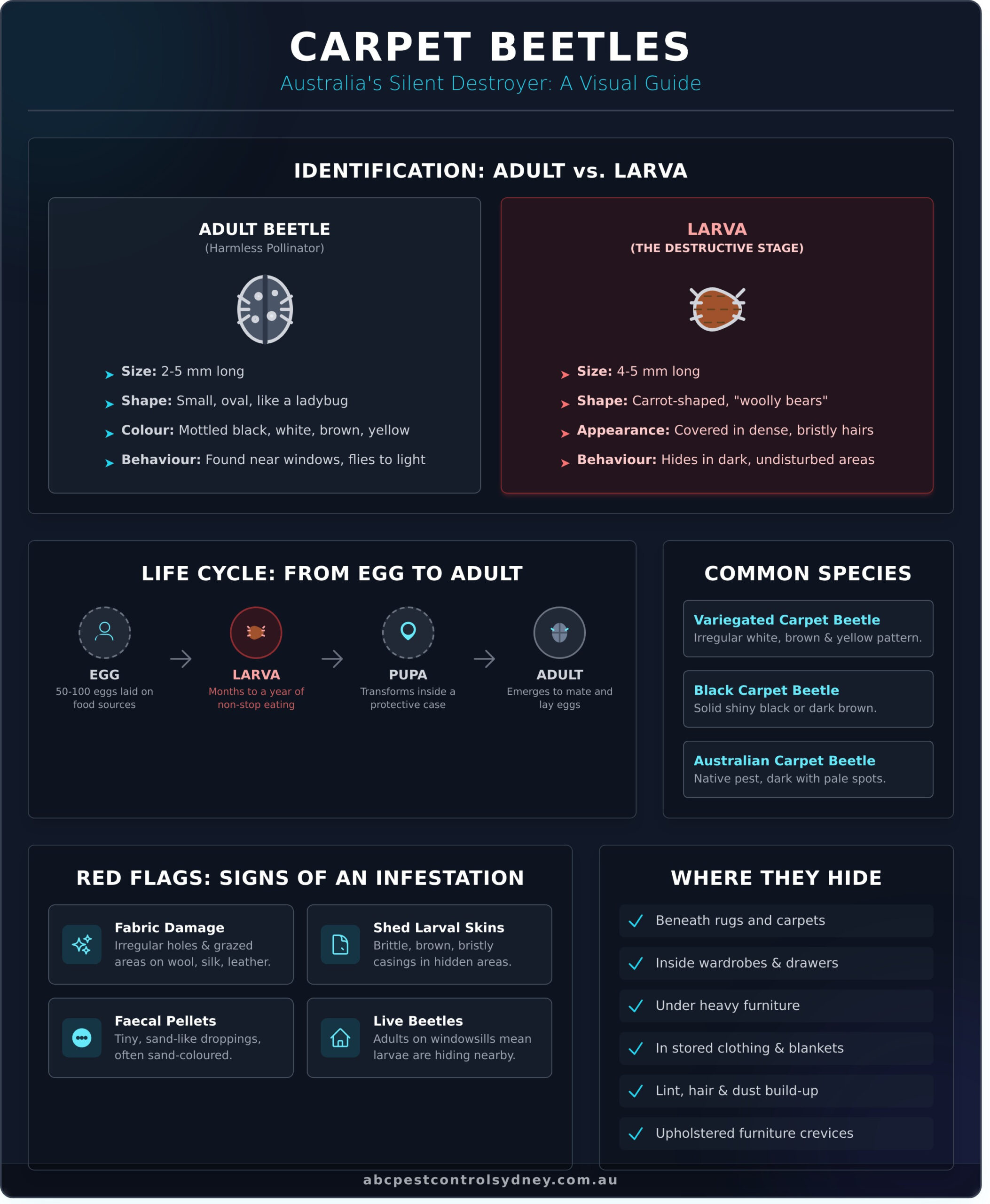
Adult Carpet Beetles: These are small, oval-shaped insects, typically measuring just 2-5 mm long. Their colouring is often a mottled mix of black, white, brown, or yellow, sometimes resembling a tiny, dark ladybug.
Carpet Beetle Larvae: The destructive stage. Often called ‘woolly bears,’ the larvae are about 4-5 mm long, carrot-shaped, and covered in dense, bristly hairs. Their colour ranges from light brown to almost black. It is these voracious larvae that chew through your valuable belongings.
Common Carpet Beetle Species in Australia
While several species exist, you are most likely to encounter one of these three in your home. Our expert technicians are trained to identify and manage all types, as the treatment methods are highly effective across all species.
- Variegated Carpet Beetle (Anthrenus verbasci): The most common species worldwide. Adults have an irregular pattern of white, brown, and yellowish scales on a black body.
- Black Carpet Beetle (Attagenus unicolor): Adults are solid black or dark brown, shiny, and slightly larger and more elongated than other species. Their larvae are reddish-brown and covered in short hairs.
- Australian Carpet Beetle (Anthrenocerus australis): A native pest, this beetle is dark with patterns of pale spots. It is a very common invader of homes across the country.
Carpet Beetle Life Cycle: From Egg to Adult
Understanding the life cycle is crucial for effective control. Carpet beetles go through four stages: egg, larva, pupa, and adult. Female beetles lay 50-100 tiny eggs in dark, undisturbed areas where larval food sources are abundant-like inside wardrobes, under rugs, or in wall voids.
The larval stage is the longest and most destructive, lasting anywhere from a few months to over a year. During this time, they feed constantly. A key warning sign of an established infestation is seeing adult beetles flying towards windows and lights, as they are trying to get outside to feed on pollen. If you see this, you likely have a hidden larval problem that needs immediate professional attention.
Signs of an Infestation: How to Know You Have Carpet Beetles
Most homeowners discover a carpet beetle problem long after it has started. The first sign isn’t the pest itself, but the damage the larvae have already caused. Because the larvae of the carpet beetle in Australia are so small and elusive, they thrive in dark, undisturbed areas like the corners of wardrobes, beneath heavy furniture, and deep within carpet fibres.
These destructive pests feed on animal-based materials, putting your valuable possessions at risk. Their diet includes wool, silk, fur, leather, hair, and even dried pet food. If you suspect an issue, you need to act fast. Look for these definitive signs.
Damage to Fabrics and Furniture
The most obvious evidence is damage caused by the hungry larvae. Look for irregular, scattered holes chewed through natural fibre items. Unlike the more concentrated damage from clothes moths, carpet beetle damage can appear as larger, grazed areas, especially on carpets and rugs. They can also cause significant harm to taxidermy, museum pieces, and even insect collections by consuming the delicate animal materials.
Physical Evidence of Larvae
Finding direct evidence of the larvae is a clear sign you have an active infestation. Since they prefer dark, hidden spots, you will need to inspect thoroughly. According to pest management guides from the University of California IPM, a careful inspection is the first step to control. Be on the lookout for:
- Shed Larval Skins: As the larvae grow, they moult, leaving behind brittle, brown, and bristly skin casings. Finding these in drawers, closets, or under rugs is a sure sign of activity.
- Faecal Pellets: You may find tiny, sand-like droppings the colour of the fabric they have been eating. This is often more visible on light-coloured materials.
- Live Larvae: Spotting the small, hairy, caterpillar-like larvae confirms the problem. Check along the edges of carpets, in wool blankets, and in stored clothing.
Spotting Adult Beetles
Finding adult carpet beetles indoors, particularly on window sills or near lights, is a major red flag. While adult beetles feed on pollen and nectar outdoors, their presence inside means a breeding population is likely established nearby. They are simply trying to get outside to feed and mate, leaving their destructive larvae behind to damage your property. Don’t ignore them-it’s a warning that an infestation is underway.
Where Do Carpet Beetles Hide? A Complete Inspection Checklist
To effectively eliminate a carpet beetle Australia infestation, you must first find the source. Simply cleaning visible areas is not enough. These pests are experts at hiding in dark, undisturbed locations where their larvae can feed on natural fibres without interruption. A systematic search is your best weapon against these destructive insects.
Focus your inspection on areas rich in wool, silk, fur, felt, leather, and even accumulated lint and hair. As detailed in the comprehensive Australian Museum guide to carpet beetles, the larvae require these animal-based materials to develop. Use a torch to check the darkest corners and crevices.
In Living Areas and Bedrooms
These rooms are prime targets due to the abundance of furniture, clothing, and flooring made from natural materials. Be methodical and check these key hotspots:
- Under carpets and rugs: Lift the edges of wall-to-wall carpets and check underneath large area rugs, especially along the seams and padding.
- Wardrobes and drawers: Carefully inspect woollen jumpers, silk garments, and other natural-fibre clothing. Look inside dark corners of closets and under stored blankets.
- Upholstered furniture: Check deep within the seams, folds, and undersides of sofas and chairs, particularly those made with wool or leather.
- Baseboards and air ducts: Lint, pet hair, and human hair accumulate in these areas, providing a perfect food source for carpet beetle larvae.
In Kitchens and Pantries
While known for eating fabrics, some carpet beetle species also infest stored food products. Don’t skip the kitchen in your search. They are often found in dried goods that have been stored for long periods.
- Inspect open or damaged packages of flour, cereals, pasta, and grains.
- Check the dark, back corners of pantry shelves and cupboards where crumbs and food dust gather.
- Examine bags of dry pet food or birdseed, as these are common infestation sites.
Other Common Hiding Spots
Think beyond the obvious. Carpet beetles can be found in some truly unexpected places around the home. Broaden your search to include these often-overlooked areas:
- In wool-based insulation within attics or wall cavities.
- Inside musical instrument cases lined with felt.
- In taxidermy mounts or preserved insect collections.
- Within abandoned bird, rodent, or wasp nests in or near your home.
Feeling overwhelmed by the search? A small infestation can quickly spread, causing significant damage. Don’t wait. Book a professional inspection with our experts today.
How to Get Rid of Carpet Beetles: DIY vs. Professional Treatment
When you discover carpet beetles, taking immediate action is crucial. Your approach will depend on the scale of the problem. A minor, localised issue can sometimes be resolved with DIY methods, but widespread or recurring infestations demand professional expertise to break the life cycle for good. It’s important to have realistic expectations-DIY efforts often manage the visible adults but can miss the hidden larvae.
Step 1: The Ultimate Clean-Out (DIY Methods)
If you’ve only spotted a few beetles in one area, a deep clean is your first line of defence. This is a non-negotiable step to remove as many eggs, larvae, and adult beetles as possible. Focus your efforts here:
- Vacuum Everything: Thoroughly vacuum carpets, rugs, upholstered furniture, and along skirting boards. Pay close attention to closets, pantries, and dark, undisturbed areas. Dispose of the vacuum bag outside immediately.
- Launder Fabrics: Wash all infested clothing, curtains, bedding, and linens in hot water (above 55°C) or have them dry-cleaned to kill all life stages.
- Steam Clean: Use a steam cleaner on carpets, rugs, and furniture. The high heat is extremely effective at eliminating larvae and eggs embedded deep in the fibres.
- Discard Infested Items: If an item like a rug or piece of clothing is heavily damaged and infested, it’s often best to discard it in a sealed bag to prevent re-infestation.
Step 2: When to Call the Professionals
DIY cleaning is a great start, but it often isn’t enough to solve a persistent carpet beetle Australia problem. Don’t wait until the damage becomes severe. You need an expert exterminator if:
- You cannot locate the primary source of the infestation.
- The beetles return even after your most thorough cleaning efforts.
- You find evidence of beetles in multiple rooms throughout your home.
- You need a guaranteed, family- and pet-friendly solution you can trust.
What a Professional Carpet Beetle Treatment Involves
A professional treatment goes far beyond what store-bought products can achieve. Our highly trained technicians use a strategic approach to ensure complete eradication.
- Detailed Inspection: We start by identifying all breeding sites and harbourage areas, which are often hidden in wall voids, subfloors, or attics.
- Targeted Insecticide Application: We apply a low-toxicity, professional-grade insecticide to cracks, crevices, and voids where larvae hide. This is not a general spray; it’s a precise treatment.
- Insect Growth Regulators (IGRs): We use IGRs to halt the beetle life cycle, preventing larvae from maturing into breeding adults and stopping the infestation at its source.
- Expert Prevention Advice: Our team provides you with practical, long-term strategies to prevent future problems.
If you’re facing a stubborn carpet beetle infestation, don’t let them win. Contact our expert team at ABC Pest Control for a safe and effective solution.
Preventing Carpet Beetles: Keep Your Home Protected for the Long Term
After successfully removing an infestation, the last thing you want is a repeat problem. The most effective strategy against the destructive carpet beetle in Australia is proactive prevention. Protecting your valuable wool carpets, silk clothing, and leather furniture is far easier than dealing with the damage they cause. A combination of routine cleaning and smart storage is your best defence.
Don’t wait for the tell-tale signs of damage to appear. Implement these simple, expert-recommended steps to keep your home pest-free for good.
Regular Cleaning and Maintenance
Carpet beetle larvae thrive on dust, lint, and animal hair. By removing their food source, you make your home far less inviting. Focus your efforts on areas that are often overlooked.
- Vacuum thoroughly and frequently. Pay special attention to the edges of rooms, underneath heavy furniture, inside closets, and in other low-traffic areas where dust and lint accumulate.
- Routinely clean storage areas. Empty and wipe down pantries, linen closets, and wardrobes at least twice a year.
- Remove other pest activity. Clear away old spider webs and check window sills for dead insects, as these can serve as a food source for carpet beetles. Inspect roof cavities for old bird or rodent nests.
Proper Storage of Natural Fibres
Adult beetles lay their eggs on or near a suitable food source for their larvae. Storing items made from natural fibres correctly is critical to breaking this cycle and protecting your belongings from becoming a meal.
- Clean items before storage. Always wash or dry-clean woollen jumpers, silk garments, and other susceptible fabrics before storing them for long periods. Food stains and body oils are highly attractive to pests.
- Use airtight containers. Store out-of-season clothing and blankets in sealed plastic tubs or vacuum-sealed bags. Cardboard boxes are not pest-proof.
- Consider using deterrents. Placing mothballs or natural cedar blocks inside storage containers can help repel adult beetles.
Excluding Pests From Your Home
Preventing carpet beetles from getting inside in the first place is a fundamental step. Adult beetles often fly in from outside during warmer months in search of a place to lay their eggs.
- Check your screens. Ensure all window and door screens are in good repair, with no rips or tears.
- Seal entry points. Use caulk to seal any cracks and crevices around your home’s foundation, windows, and where utility lines enter the building.
- Inspect items from outdoors. Adult beetles feed on pollen, so carefully check fresh flowers and plants for any hitchhikers before bringing them inside.
If you’ve taken these steps but still suspect a problem, it’s time to call in the professionals. For fast and effective solutions for any carpet beetle Australia issue, contact the expert team at ABC Pest Control today.
Take Control of Your Carpet Beetle Problem for Good
You now have the essential knowledge to identify, manage, and prevent a carpet beetle australia infestation. Recognising the signs-from the bristly larvae to the tell-tale damage on natural fibres-is your first line of defence. While thorough cleaning and DIY methods are crucial, eliminating a persistent infestation often requires professional power to ensure every egg, larva, and adult is eradicated effectively.
Don’t wait for these destructive pests to ruin your valuable carpets, clothing, and furniture. When you need guaranteed results against tough pests, trust the experts. With over 20 years of experience serving Sydney, ABC Pest Control delivers eco-friendly and safe treatments that protect your family and home, giving you complete peace of mind.
Don’t let carpet beetles destroy your belongings. Book your expert pest control service in under 60 seconds!
Frequently Asked Questions About Carpet Beetles
Are carpet beetles harmful to humans?
Carpet beetles do not bite or sting, so they are not directly harmful to people. However, their larvae are covered in small, bristly hairs that can cause an allergic reaction in some individuals, resulting in an itchy rash or dermatitis. The primary harm they cause is to your property, as the larvae’s appetite for natural fibres can lead to irreversible damage to expensive carpets, clothing, and upholstered furniture. Prompt action is essential to protect your home.
What is the difference between carpet beetles and bed bugs?
The main difference is their food source. Bed bugs are parasitic insects that feed on human blood, leaving behind itchy bites. Carpet beetles are scavenger pests whose larvae feed on animal-based materials like wool, silk, leather, feathers, and fur. Visually, adult carpet beetles are small and oval-shaped, often with mottled patterns, while bed bugs are flat, reddish-brown, and typically found hiding in and around mattresses. Correct identification is critical for effective extermination.
Do carpet beetles fly into the house?
Yes, adult carpet beetles are proficient fliers and are strongly attracted to light. They commonly enter Australian homes during the warmer months through unsecured screen doors, open windows, and small cracks in the foundation or walls. They can also be brought inside unknowingly on items like cut flowers, second-hand furniture, or infested animal products. Sealing entry points is a good preventative measure, but a professional inspection is needed to locate the source of an infestation.
Can carpet beetles live in your bed?
While carpet beetles can be found in your bed, they are not there to feed on you. Unlike bed bugs, they are attracted to the natural fibres within your bedding. The larvae will consume materials such as woollen blankets, down or feather pillows, and even accumulated human hair and dead skin cells. Finding them in your bedding is a clear sign of an established infestation that requires immediate and professional treatment to prevent it from spreading further throughout your home.
Why are there adult carpet beetles on my window sill?
Seeing adult carpet beetles on your window sills is a significant warning sign. After the larval stage, the adult beetles are instinctively drawn to sunlight as they seek to get outside to feed on pollen and mate. Their presence on a window usually means an infestation is already established inside your home, and a new generation of beetles is emerging. A professional finding a carpet beetle Australia infestation often starts with this very sign, indicating a hidden source nearby.
How long does a professional carpet beetle treatment take?
A professional carpet beetle treatment is designed to be both thorough and efficient. For a standard-sized home, the treatment application itself typically takes our expert technicians around 1 to 2 hours to complete. The exact time can vary depending on the size of your property and the severity of the infestation. We provide a clear plan and preparation guidelines to ensure the treatment is highly effective, allowing you to reclaim your home from these destructive pests quickly.