

Waking up to mysterious, itchy bites is a deeply unsettling experience. Your mind immediately races: could it be bed bugs? The fear of a hidden infestation and the challenge of finding the early signs of bed bugs can rob you of your peace of mind. Many Sydney homeowners feel stressed and even embarrassed, but the truth is these pests can appear in any home, clean or not.
You don’t have to live with the worry. This guide is your first step towards a guaranteed solution. We’ve created a complete, expert-approved checklist to help you confidently identify if you have a bed bug problem. You’ll learn a clear, step-by-step method for inspecting your property and understand exactly what to do next if you find evidence. It’s time to stop wondering and start taking control to ensure your home is safe and pest-free.
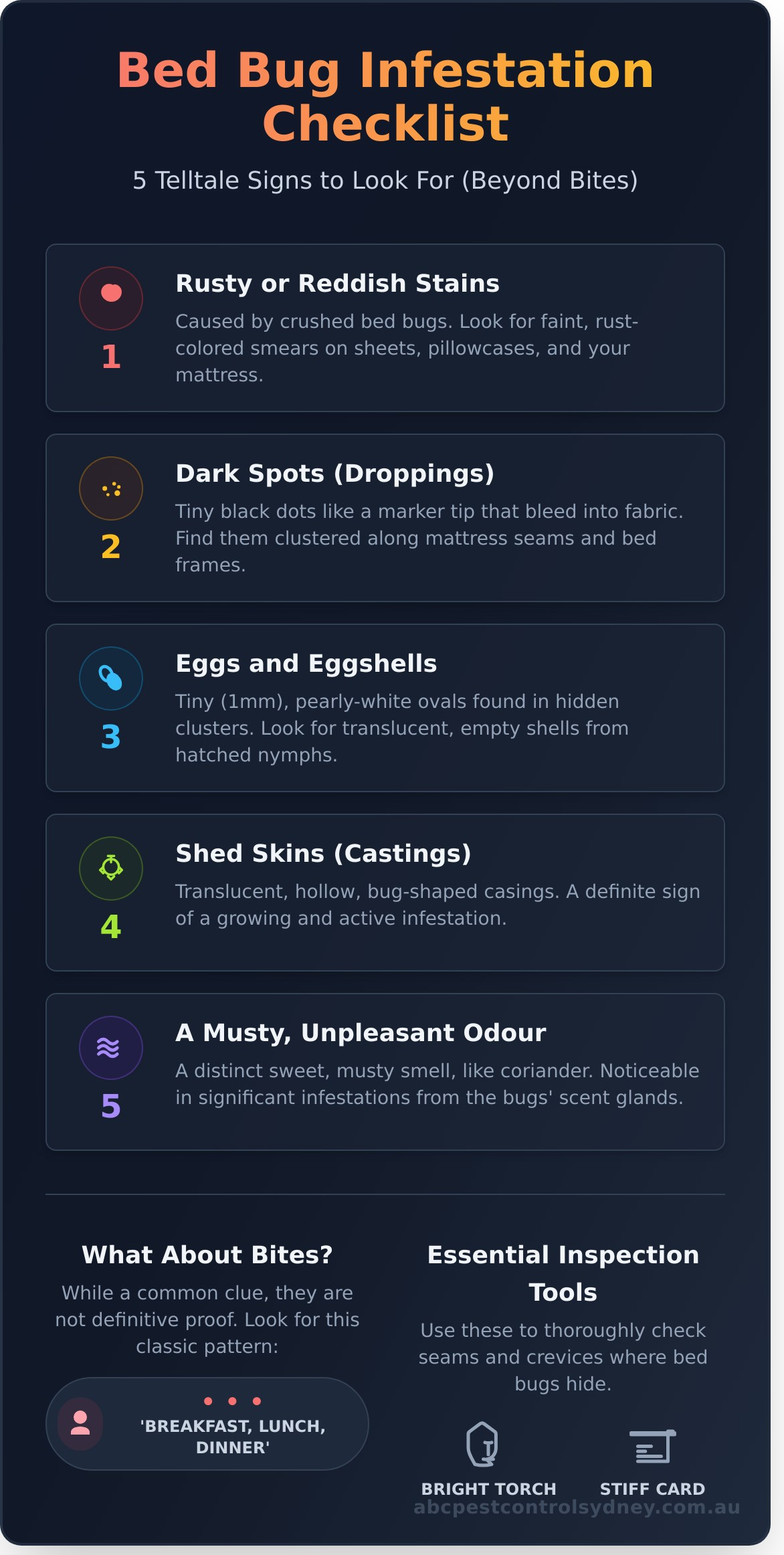
The 5 Telltale Physical Signs of an Infestation (Beyond Bites)
While itchy bites are often the first alert, they are not definitive proof of bed bugs. The most reliable confirmation comes from the physical evidence these pests leave behind on your property. Learning to spot these subtle clues on your mattress, bed frame, and furniture is crucial. Finding these early signs of bed bugs is your best defence against a small problem escalating into a major infestation that threatens your family’s peace of mind. Don’t wait-inspect your home for these five telltale signs today.
1. Rusty or Reddish Stains on Bedding
Have you noticed small, rust-coloured smears on your sheets or pillowcases? These stains are often caused by a bed bug being crushed after feeding during the night. The stains are essentially their digested blood. Inspect your bedding, mattress, and even pyjamas carefully under a bright light, as these marks can be faint and easily overlooked.
2. Dark Spots (Bed Bug Droppings)
Bed bug droppings, or faecal spots, are another undeniable sign of an infestation. They look like tiny black dots from a fine-tipped marker and will often bleed into the fabric, creating a small, dark halo. You will typically find these clustered along mattress seams, on the mattress tag, around bed frame joints, and on the box spring. Finding these spots is a clear call to action.
3. Eggs and Eggshells
Bed bug eggs are incredibly small (about 1mm) and can be very difficult to spot. They are pearly white and oval-shaped, often laid in tight, hidden locations. Check the tufts and seams of your mattress, cracks in the bed frame, and behind the headboard. You may also find the translucent, empty eggshells left behind after the nymphs have hatched.
4. Shed Skins or Castings
As young bed bugs (nymphs) grow, they must shed their skin multiple times before reaching adulthood. These shed skins, or castings, look like hollow, translucent, and lighter-coloured versions of the bugs themselves. For a comprehensive overview of bed bugs and their complex life cycle, know that finding these casings is a definite sign of a growing and active population that needs to be eliminated professionally.
5. A Musty, Unpleasant Odour
In cases of a more significant infestation, you may notice a distinct and unpleasant odour. This smell is produced by the bed bugs’ scent glands and is often described as musty and sweet, similar to coriander or spoiled berries. If you notice an unusual smell in your bedroom that has no other obvious source, it’s a serious warning sign that warrants a professional inspection immediately.
Identifying Bed Bug Bites: What to Look For on Your Skin
Waking up with mysterious red marks on your skin is alarming and often one of the first indicators of a pest problem. However, relying on bites alone can be misleading. These marks are one of the most commonly confused early signs of bed bugs, and a significant number of people show no physical reaction at all. A lack of bites doesn’t guarantee your home is pest-free.
Understanding the typical appearance and pattern of bed bug bites can help you distinguish them from other insect bites, but it’s crucial to remember they are only one piece of the puzzle.
The Classic Bite Pattern
Bed bugs often feed in a distinct pattern. Unlike the random bites of a mosquito, bed bug bites frequently appear in a straight line or a tight cluster of three to five. This is famously known as the ‘breakfast, lunch, and dinner’ pattern. You’ll typically find these bites on areas of skin exposed during sleep, such as your arms, legs, hands, neck, and face.
Appearance and Sensation
Generally, bed bug bites look like small, red, raised welts, very similar to a mosquito bite. The most common and frustrating symptom is intense itchiness. For some people, a tiny, darker red spot may be visible in the centre of the welt where the insect bit. The reaction can vary greatly from person to person, ranging from mild irritation to a more severe, rash-like inflammation.
Bed Bug Bites vs. Flea and Mosquito Bites
It’s easy to mistake bed bug bites for those from other household pests. Here’s how to spot the difference:
- Flea Bites: Usually appear as very small, dark spots surrounded by a reddish area and are most often concentrated around the ankles and lower legs.
- Mosquito Bites: Are typically more random and isolated, appearing as single, puffy welts in no specific pattern.
- Key Difference: Unlike the immediate reaction from a mosquito, bed bug bites can take several days to appear, making it harder to pinpoint when you were bitten.
While bite patterns provide important clues, they are not definitive proof of an infestation. The only way to be certain is to find physical evidence of the pests themselves. It is crucial to know how to inspect for bed bugs by looking for live insects, shed skins, or their dark droppings on your mattress and bed frame. If you suspect an issue, don’t wait for more bites to appear. A professional inspection is the fastest way to get peace of mind and an effective, guaranteed solution.
Your Step-by-Step Guide: How to Inspect a Room for Bed Bugs
Finding the early signs of bed bugs requires more than a quick glance. A random search will likely miss these secretive pests, so a systematic approach is essential for an effective inspection. Before you start, you will need two simple tools: a bright torch (your phone’s light works perfectly) and a thin, stiff card, like a credit card or ID card. This card is crucial for scraping along seams and checking tight crevices where bed bugs hide. For the best results, always start your search at the epicentre-the bed-and work your way outwards.
Step 1: The Bed and Mattress
Begin by carefully stripping all bedding-sheets, pillowcases, and doonas. Inspect each item for the tell-tale signs: tiny dark spots (faecal matter), shed skins, or live bugs. These clues, along with properly identifying bed bug bites on your skin, can help confirm an infestation. Next, focus on the mattress itself. Use your card to check along all seams, piping, and under any tags. Finally, lift the mattress entirely and inspect the box spring or bed base, paying close attention to any cracks, corners, and staple lines.
Step 2: The Bed Frame and Headboard
Bed bugs don’t just live in fabric; they thrive in the tiny cracks of wood and metal frames. If possible, dismantle your bed frame to get a clear view of all the joints, corners, and screw holes-these are prime hiding spots. It is crucial to remove the headboard from the wall and thoroughly inspect the back of it, as well as the wall behind it. These pests are experts at fitting into the smallest, most discreet gaps.
Step 3: Furniture Near the Bed
Your search must extend to the immediate vicinity of the bed. Empty and inspect bedside tables, checking inside and underneath drawers. Shine your torch on all nearby items, including lamps, alarm clocks, books on the nightstand, and even behind picture frames hanging on the wall. Upholstered furniture like chairs or couches in the bedroom are also high-risk areas and require a detailed check of their seams, zips, and crevices.
Step 4: The Rest of the Room
If an infestation has had time to grow, bed bugs will spread further into the room. Broaden your search by checking behind any peeling paint or loose wallpaper. Use your card to inspect the gap where the carpet meets the skirting boards. As a final, thorough check, look inside electrical outlet covers (with the power safely turned off) and around window and door frames. Finding evidence here can suggest a more significant problem.
A thorough inspection can be stressful, and it’s easy to miss these tiny pests. If your search confirms your fears or if you simply want the peace of mind that comes with a professional assessment, don’t wait. The experienced team at ABC Pest Control Sydney provides guaranteed, family-safe solutions to eliminate bed bugs for good.
Found Signs of Bed Bugs? Your Immediate Action Plan
Discovering potential bed bug activity is stressful, but your next steps are critical. Panic can lead to costly mistakes that spread the infestation and make it harder to treat. Taking swift, correct action after spotting the early signs of bed bugs is the key to protecting your home and family. While some DIY remedies seem tempting, they often make the problem worse. The fastest and most effective solution is always professional intervention.
Rest assured, there is a clear path to getting this problem under control. Here’s what you should and shouldn’t do.
What NOT to Do: Avoid These Common Mistakes
Before you do anything, stop and avoid these actions that can worsen the infestation:
- Don’t use ‘bug bombs’ or foggers. These over-the-counter products are ineffective for bed bugs. The aerosol pushes them deeper into cracks and voids, scattering them to other rooms and making professional treatment more difficult.
- Don’t throw out your furniture. It’s a common reaction, but it’s rarely necessary. Mattresses, bed frames, and sofas can almost always be treated effectively. Plus, bed bugs hide in walls and carpets, so removing furniture won’t solve the core problem.
- Don’t move items to other rooms. Shifting clothing, books, or bags from an infested area is the quickest way to establish a new colony elsewhere in your home. Keep everything contained.
- Don’t sleep in another room. Bed bugs are attracted to the carbon dioxide you exhale. If you move, they will eventually follow you, spreading the infestation to a new area.
What to Do Right Now: Your Safe First Steps
These immediate actions can help manage the situation while you wait for professional help:
- Collect a sample. If you can, carefully capture a live bug in a sealed jar or zip-lock bag. This allows for a positive identification by a certified technician.
- Wash and dry fabrics on high heat. Strip all bedding, curtains, and clothing from the affected area. Wash them and, most importantly, dry them on the highest heat setting for at least 30 minutes to kill all life stages.
- Vacuum thoroughly. Use a vacuum with a crevice tool to clean your mattress seams, bed frame, headboard, and the carpet around the bed. Immediately after, seal the vacuum bag in a plastic bag and dispose of it in an outside bin.
These steps are for containment only. For a complete and guaranteed solution, you need an expert. If you’ve found any of the early signs of bed bugs, don’t wait for the problem to grow. Call our Sydney experts immediately for a professional assessment. We provide safe, effective treatments to eliminate the infestation and give you back your peace of mind.
Your Next Step: Eradicate Bed Bugs with Confidence
Knowing what to look for is the most critical step in stopping an infestation before it takes hold. From the subtle rust-coloured stains on your mattress to the shed skins in hidden crevices, recognising the early signs of bed bugs is your best defence. You’re now equipped with the knowledge to inspect your Sydney home thoroughly and take immediate action if you find evidence.
But spotting the signs is only half the battle. For complete peace of mind, trust the local experts. With over 20 years of experience serving Sydney, ABC Pest Control provides effective treatments that are safe for your family and pets. We stand by our professional service with a 100% Satisfaction Guarantee, ensuring the problem is eliminated for good.
Suspect you have bed bugs? Don’t wait. Book a professional inspection now.
Take back your home and your sleep. A pest-free property is just a click away.
Frequently Asked Questions About Bed Bugs
Can you see bed bugs with the naked eye?
Yes, adult bed bugs are visible without magnification. They are typically the size of an apple seed, with flat, oval, reddish-brown bodies. After feeding on blood, they become more swollen and red. You can often spot them in their hiding places, such as mattress seams, bed frames, and behind headboards. Seeing even one is a clear signal to take immediate, decisive action to protect your home from an infestation.
Do bed bugs mean my house is dirty?
Absolutely not. This is a common and stressful myth. Bed bugs are not attracted to dirt; they are attracted to warmth, blood, and the carbon dioxide we exhale while sleeping. They can be found in the most pristine five-star hotels and immaculate homes. A bed bug problem is not a reflection of your housekeeping standards. It is simply an unfortunate pest issue that requires a swift, professional solution to ensure your peace of mind.
What do bed bugs smell like?
A large or long-standing bed bug infestation can produce a distinct, unpleasant odour. The smell is often described as musty and sweet, similar to the scent of coriander, spoiled raspberries, or even almonds. This odour comes from the alarm pheromones the bugs release when disturbed and from their droppings. If you detect a persistent, unusual musty scent in your bedroom, it’s a strong indicator that you should book a professional inspection immediately.
How quickly can a bed bug infestation spread?
An infestation can spread alarmingly fast. A single female bed bug can lay one to five eggs per day, and hundreds in her lifetime. These pests are expert hitchhikers, easily moving between rooms on clothing, in furniture, or through wall voids and electrical outlets. It is crucial to address the problem the moment you spot the early signs of bed bugs to prevent a small issue from escalating into a property-wide infestation.
Can I get rid of a small bed bug problem myself?
We strongly advise against DIY treatments for bed bugs. Store-bought products often fail to eliminate the eggs and can cause the bugs to scatter deeper into hiding spots, making the problem much harder to treat. This can prolong your discomfort and increase the overall cost of removal. The only way to guarantee complete eradication is with a professional, targeted treatment plan from certified experts who can safely eliminate the infestation.
Are bed bug bites dangerous to my health?
While bed bugs are not known to transmit diseases, their bites can still impact your health and well-being. The bites often cause itchy, red welts that can lead to secondary skin infections if scratched excessively. Some people may also experience allergic reactions. Beyond the physical symptoms, an infestation can cause significant anxiety, stress, and sleepless nights. Professional pest control is essential to restore comfort and safety to your home.