Flicking on the kitchen light late at night only to see a small, brown insect scurry for cover is a moment that can ruin your peace of mind. Your immediate disgust is quickly followed by worry: what kind of bug was that? Is it a threat to my family’s health? If you’re a Sydney homeowner, you’re likely dealing with the most formidable household pest in the city-the German cockroach. These invaders are notoriously difficult to eliminate with DIY sprays, making proper identification the critical first step to taking back your home.
Rest assured, you’ve come to the right place. This ultimate guide is designed to give you clarity and confidence. We will walk you through how to positively identify a German cockroach, uncover the serious health risks they carry, and reveal their common hiding spots. By understanding exactly what you’re up against, you’ll be equipped with the knowledge to pursue a safe and effective solution to protect your home and family for good.
How to Identify a German Cockroach: Key Features to Look For
When you spot a cockroach in your Sydney home, your immediate goal is to get rid of it. But before you act, it’s crucial to know exactly what you’re dealing with. The german cockroach is the most common indoor cockroach species worldwide, notorious for rapidly infesting kitchens, bathrooms, and food preparation areas. Unlike other species that may wander in from outside, this pest is almost exclusively found living and breeding indoors alongside humans. Proper identification is the first and most critical step toward effective, guaranteed elimination, as different species require different treatment strategies.
Appearance and Colouring
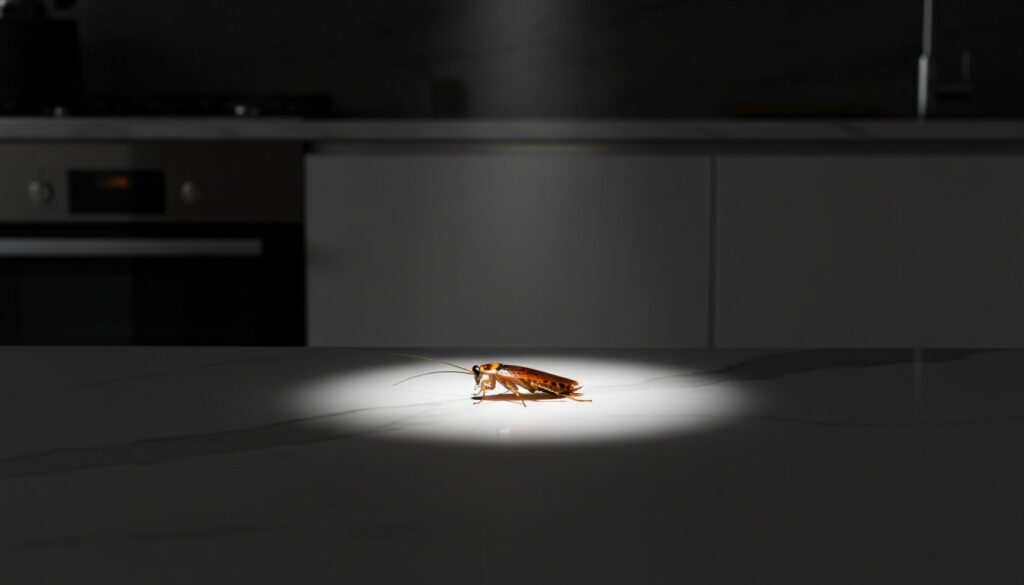
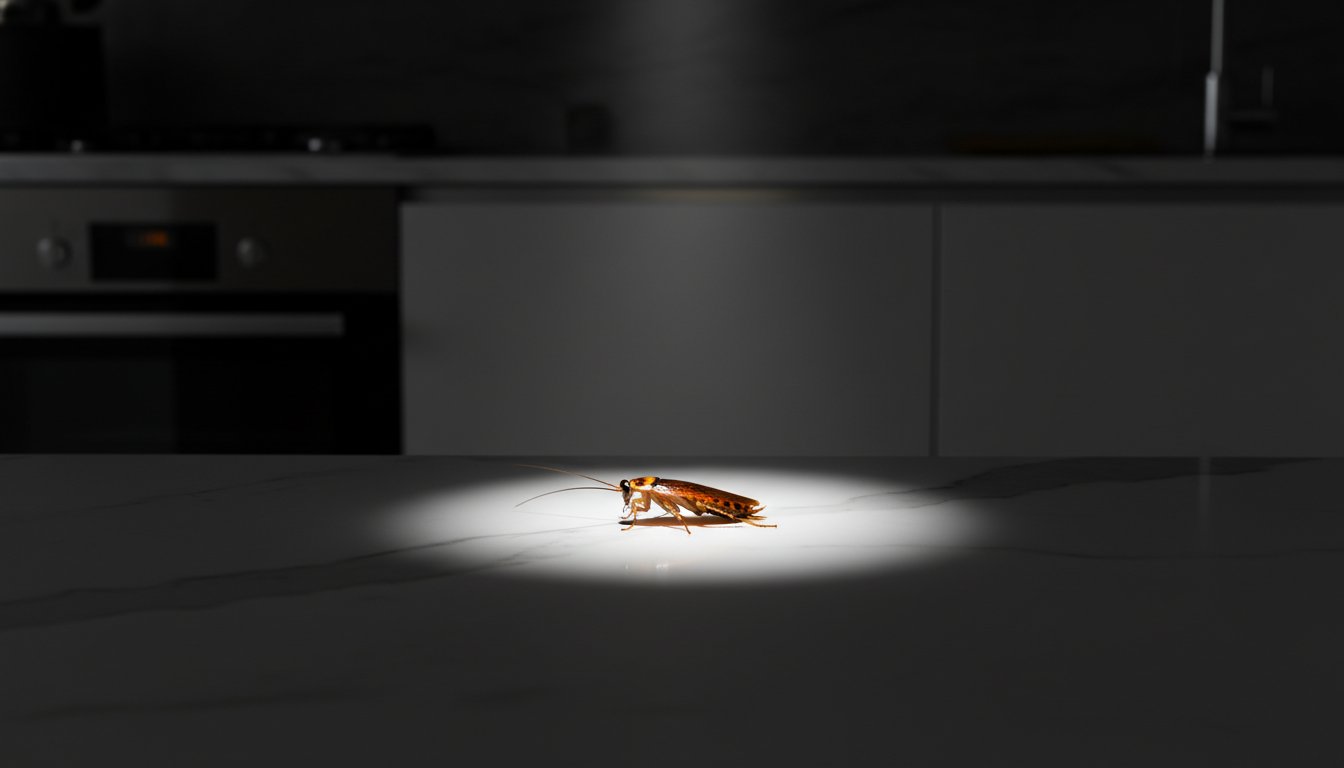
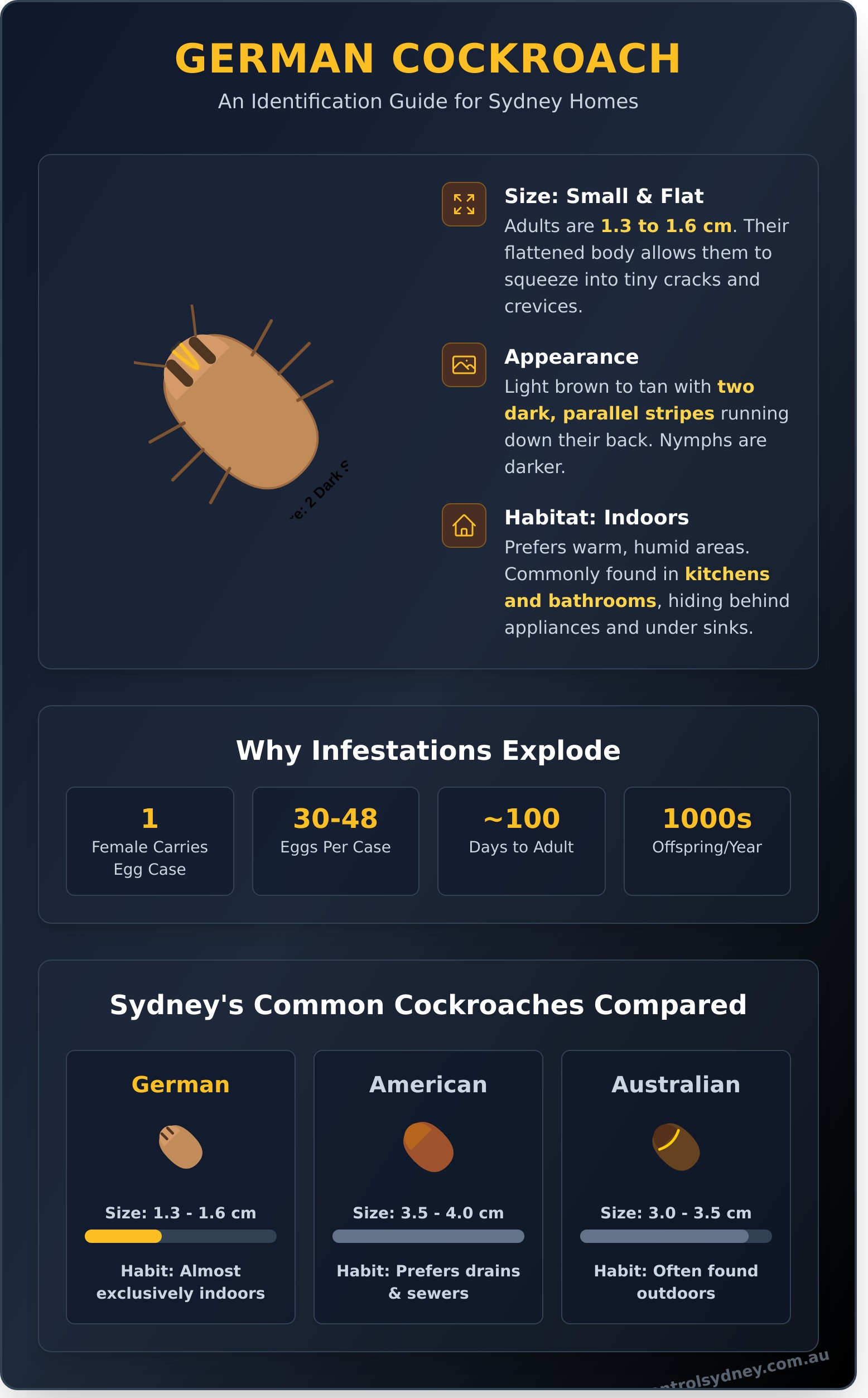
An adult German cockroach is light brown to tan in colour. Its most unmistakable feature is the two dark, almost parallel stripes running down its back, starting from just behind its head to the base of its wings. These two distinct lines are a clear giveaway. Nymphs (young cockroaches) are much darker, often appearing almost black, and have a single, lighter stripe running down the middle of their back.
Size and Shape
This is a relatively small species, with adults typically measuring between 1.3 to 1.6 cm in length. Their oval and flattened body shape is a key survival trait, allowing them to squeeze into the tiniest cracks and crevices around your kitchen cupboards, behind appliances, and inside wall voids. For more in-depth biological information, you can review these German cockroach facts. They have long antennae and six spiny legs built for speed. While adults have fully developed wings, they rarely fly, preferring to run and scurry when disturbed.
German vs. Other Common Sydney Cockroaches
In Sydney, it’s easy to confuse this pest with other common species. However, the differences are significant for proper treatment. Here’s a quick guide to tell them apart from their larger cousins:
| Feature | German Cockroach | American Cockroach | Australian Cockroach |
|---|---|---|---|
| Size | Small (1.3 – 1.6 cm) | Large (3.5 – 4 cm) | Large (3 – 3.5 cm) |
| Colour | Light brown/tan with 2 dark stripes on its back. | Uniform reddish-brown. | Dark brown with distinct yellow markings on head and wings. |
| Habits | Almost exclusively indoors; prefers warm, humid areas like kitchens and bathrooms. | Prefers dark, damp areas like drains and sewers; can fly. | Often found outdoors in gardens and woodpiles, but will enter homes. |
The German Cockroach Lifecycle: Why Infestations Explode
If you’ve ever seen one German cockroach and then suddenly felt overrun, you’re not imagining it. Their ability to multiply at an astonishing rate is the primary reason they are one of the most challenging pests to control in Australian homes. A single female can be responsible for an infestation of thousands in just one year, quickly turning a minor issue into a major health hazard. Their lifecycle is significantly faster than other common cockroaches, meaning that without immediate, professional intervention, a population can explode before you even realise the full extent of the problem.
From Egg to Adult: The Rapid Breeding Cycle
The key to their rapid takeover lies in the female’s egg case, known as an ootheca. Unlike other species that deposit their eggs and leave, the female German cockroach carries this protective case, which contains 30-48 eggs, until just before they hatch. This drastically increases the survival rate of her young. The entire development from egg to a reproductive adult can be completed in as little as 100 days under ideal conditions. This incredibly efficient German cockroach lifecycle means multiple generations can live, breed, and thrive in your home simultaneously, creating a constant cycle of infestation that DIY products simply cannot break.
Preferred Habitat: Where They Hide in Your Home
To survive and breed, these pests seek out three things: warmth, moisture, and darkness. Your kitchen and bathroom provide the perfect environment. They are experts at hiding, squeezing their flat bodies into the tightest spaces to avoid detection. You will most often find them in hidden, undisturbed areas.
- Behind and under refrigerators, dishwashers, and ovens
- Inside kitchen cabinets and pantries, especially in corners
- Underneath sinks and around plumbing pipes
- Within the motor areas of small appliances like microwaves and coffee makers
- In wall voids, cracks, and crevices
Diet and Attraction: What Brings Them Inside?
German cockroaches are opportunistic scavengers and will eat almost anything. While they are attracted to typical food waste, their diet is surprisingly broad. They feed on tiny crumbs, grease splatters, starch from book bindings, and even soap residue or glue. This is why even a meticulously clean home can sustain an infestation. While excellent sanitation can help manage the problem by reducing food sources, it is not enough to eliminate a colony once it has been established. Their ability to survive on the smallest traces of food makes professional eradication essential.
Health Risks: Why German Cockroaches Are More Than Just a Nuisance
The sight of a german cockroach scurrying across your floor is unsettling, but the real danger lies in what you can’t see. These pests are far more than a simple annoyance; they pose a significant and direct threat to your family’s health and the hygiene of your home. Because they travel through unsanitary environments like sewers, drains, and rubbish bins, they pick up a host of dangerous microorganisms. They then track these germs directly onto your kitchen counters, cutlery, and even your food, turning your safe space into a potential hazard zone. Addressing an infestation with urgency is crucial for protecting your household.
Spreading Bacteria and Dangerous Pathogens
A cockroach doesn’t need to bite to make you sick; its presence alone is enough to contaminate your environment. Their bodies and legs are covered in bacteria and pathogens collected from the filth they inhabit. When they crawl across your benchtops or into your pantry, they transfer these germs to every surface they touch. This mechanical transmission is a primary concern, as they are known carriers of:
- Salmonella: A leading cause of severe food poisoning.
- E. coli: Can cause serious stomach cramps, vomiting, and diarrhoea.
- Gastroenteritis-causing bacteria: Responsible for stomach flu symptoms.
Government health bodies have extensively documented the various health risks of cockroaches, confirming their role in spreading disease. Simply put, where cockroaches roam, dangerous bacteria follow.
Triggering Allergies and Asthma
Beyond bacteria, cockroaches introduce potent allergens into your home. Their shed skins, saliva, and droppings contain proteins that can trigger severe allergic reactions and asthma attacks, particularly in vulnerable individuals like children and the elderly. These microscopic particles easily become airborne and circulate throughout your home, where they are inhaled. For many people in Sydney, a persistent cockroach problem is a primary indoor trigger for chronic respiratory issues, leading to unexplained coughing, sneezing, skin rashes, and difficulty breathing.
Food Contamination and Spoilage
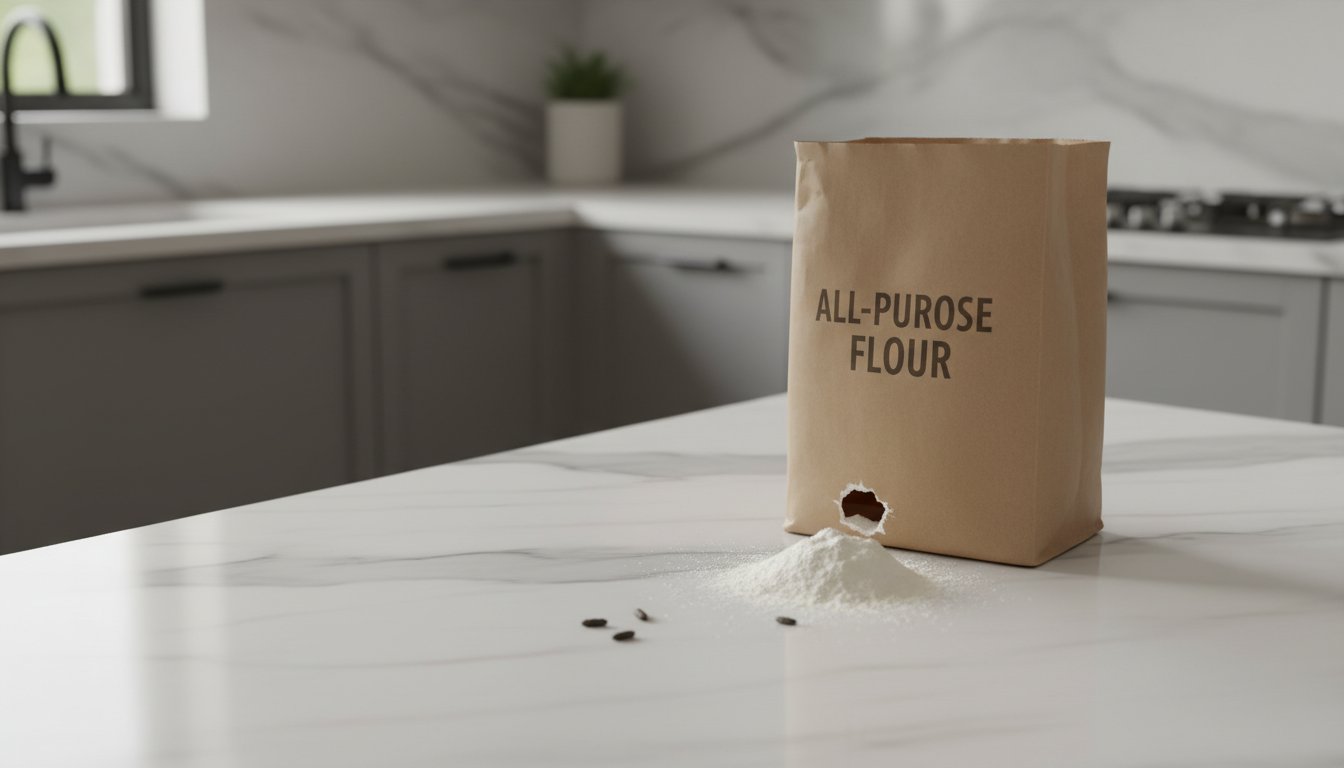
An infestation can quickly lead to significant food waste and financial loss. Cockroaches are experts at finding their way into improperly sealed food containers, contaminating cereals, flour, and other pantry staples with their droppings and bodily secretions. This not only makes the food unsafe to eat but also leaves behind a distinct, foul odour that can permeate your cupboards. Protecting your food supply means eliminating the pests that threaten it.
Don’t wait for a pest problem to become a health crisis. Protect your family’s health. Schedule a professional inspection now.
Top 5 Signs of a German Cockroach Infestation
Because German cockroaches are primarily nocturnal, you will often see the evidence of an infestation long before you see a roach itself. Finding these clues is the first step to protecting your home and family. However, if you do spot one scurrying across your floor during the day, treat it as a major red flag. A daytime sighting usually indicates that their hiding spots are overcrowded, pointing to a severe infestation that requires immediate, professional action.
Here are the top five signs to watch for to help you catch the problem early:
1. Cockroach Droppings
One of the most common signs is their droppings. These look like small, dark specks, often compared to coarse black pepper or coffee grounds. You’ll typically find this evidence accumulating in areas where they congregate, such as inside kitchen drawers and cupboards, along countertops, or behind appliances like your fridge and microwave.
2. Egg Casings (Oothecae)
A clear sign of a breeding population is finding empty egg casings, known as oothecae. These are light brown, purse-shaped capsules about 6-9mm long. After the nymphs hatch, the casing is left behind. Look for them in hidden, sheltered locations like the corners of cabinets, behind furniture, or tucked into cracks and crevices.
3. A Distinctive, Musty Odour
A large or long-standing german cockroach infestation produces a noticeable and unpleasant smell. This odour is often described as oily, musty, or sometimes even strangely sweet. The smell comes from a combination of their droppings, shed skins, and pheromones they secrete to communicate, and it will grow stronger as the population increases.
4. Smear Marks and Shed Skins
In areas with high moisture, like under sinks or around pipes, roaches leave behind dark, irregular smear marks as they crawl. You may also find their shed skins. As young cockroaches (nymphs) grow, they moult several times, leaving behind translucent, cockroach-shaped casings. Finding these is undeniable proof of an active infestation.
5. Live Cockroaches During the Day
As mentioned, this is the most alarming sign. A single roach seen during the day almost certainly means there are hundreds-or even thousands-hiding out of sight. Their nests have become so crowded that they are forced into the open to forage. Don’t dismiss it as a one-off; it’s a clear signal that the infestation has reached a critical level.
Have you noticed any of these signs in your home? Don’t let a small problem become a major health hazard. Contact the certified experts at ABC Pest Control Sydney for a safe, effective, and guaranteed solution to eliminate your pest problem for good.
Take Back Your Home from German Cockroaches
Understanding the key features of the german cockroach is the first step in protecting your property. As we’ve covered, their incredibly fast lifecycle can turn a minor issue into a major infestation in no time, posing serious health risks to your family. Recognizing the early signs is critical, but taking decisive, professional action is what truly restores your peace of mind.
Why risk your family’s health and comfort? With over 20+ years of Sydney experience, the certified team at ABC Pest Control provides swift, effective solutions that are safe for your family and pets. We are so confident in our ability to eliminate your pest problem that we back every service with our 100% Satisfaction Guarantee.
Don’t Let Them Take Over. Book Your Professional Pest Inspection Today!
Let us help you reclaim your space and ensure it stays healthy, safe, and pest-free.
Frequently Asked Questions About German Cockroaches
Can German cockroaches fly?
While German cockroaches have fully developed wings, they are not capable of true flight. At most, they might use their wings to flutter or glide for short distances, particularly when moving downwards from a high surface. You are far more likely to see them scurrying rapidly across floors, walls, and countertops, as running is their main way of getting around. Their inability to fly does not make them any less of a threat in your home.
Do German cockroaches bite people or pets?
Rest assured, German cockroaches do not seek out humans or pets to bite. Bites are extremely rare and typically only occur in severe infestations where all other food sources have been exhausted. The real danger they pose is the spread of disease. These pests contaminate food and surfaces with harmful bacteria like Salmonella and E. coli, creating a significant health risk for your family that demands immediate professional attention to protect your home.
How did German cockroaches get into my clean apartment?
Cleanliness is a great deterrent, but these pests are expert hitchhikers. They can easily enter your apartment inside cardboard boxes, grocery bags, second-hand appliances, or even luggage from a trip. They also migrate from neighbouring units through shared plumbing, wall voids, and electrical conduits. Once inside, even the smallest crumbs and water droplets are enough for them to thrive, which is why a professional barrier is your most effective defence.
What is the main difference between a German cockroach and an American cockroach?
The easiest way to tell them apart is by size and appearance. The German cockroach is small, typically 1.5 cm long, and light brown with two distinct dark stripes behind its head. In contrast, the American cockroach is much larger, often reaching 4 cm, and is a solid reddish-brown colour. You’ll find German cockroaches indoors near kitchens and bathrooms, while American cockroaches prefer dark, damp areas like basements and drains.
How quickly can a German cockroach infestation get out of control?
A German cockroach infestation escalates with alarming speed. A single female can produce hundreds of offspring in her lifetime, and those young can mature and start reproducing in as little as six weeks. This explosive breeding cycle means a few roaches can multiply into thousands in just a few months. This is why swift, professional action is critical at the very first sign of a problem to eliminate the infestation before it becomes overwhelming.
Why do I see more cockroaches after I spray?
Seeing more activity after a treatment can be unsettling, but it is often a sign the product is working effectively. Professional-grade treatments contain flushing agents designed to irritate cockroaches and force them out of their hidden nests in walls and crevices. This increased visibility means the pests are coming into contact with the insecticide. It is a crucial step in the eradication process, ensuring the entire population is exposed and eliminated for good.