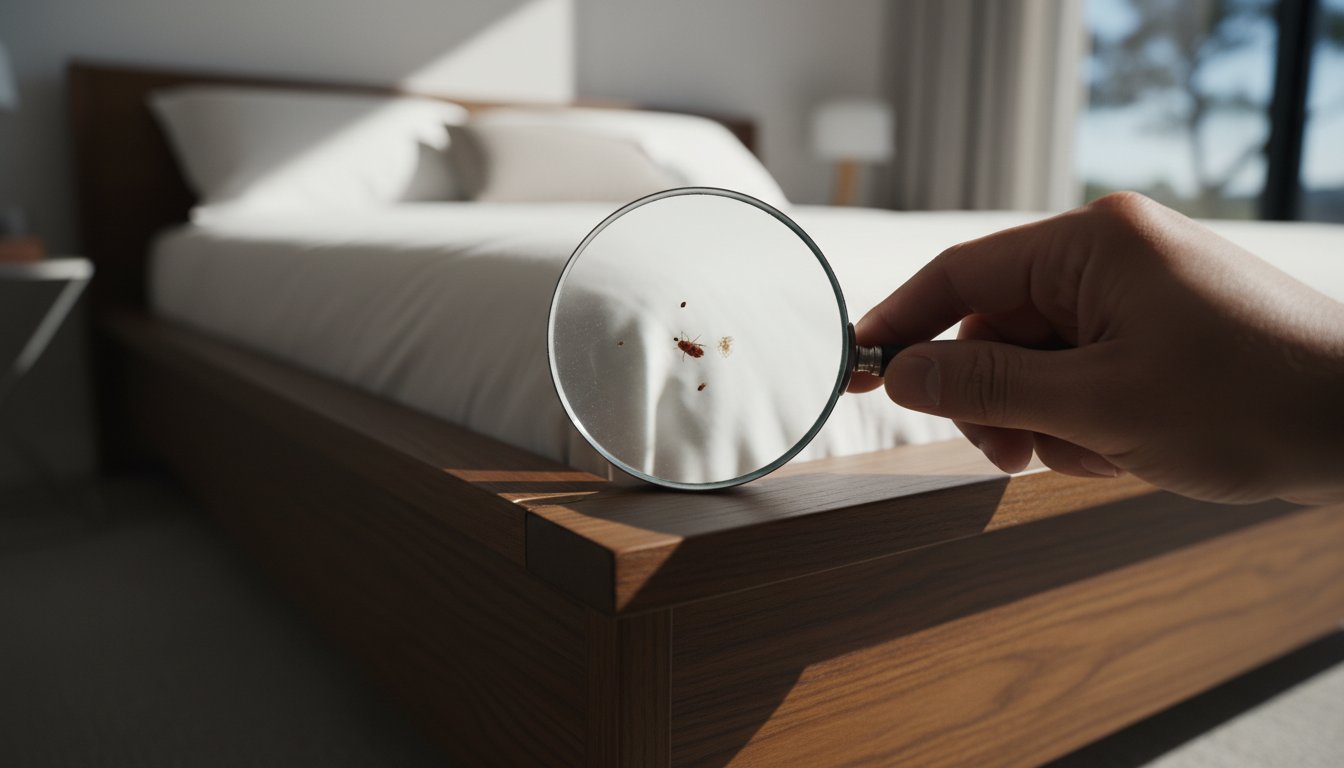
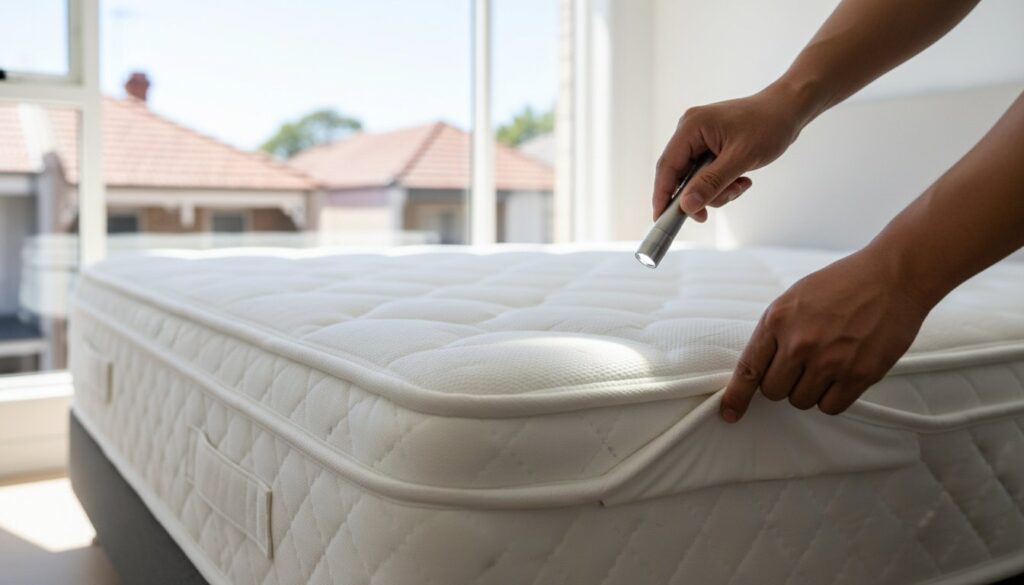
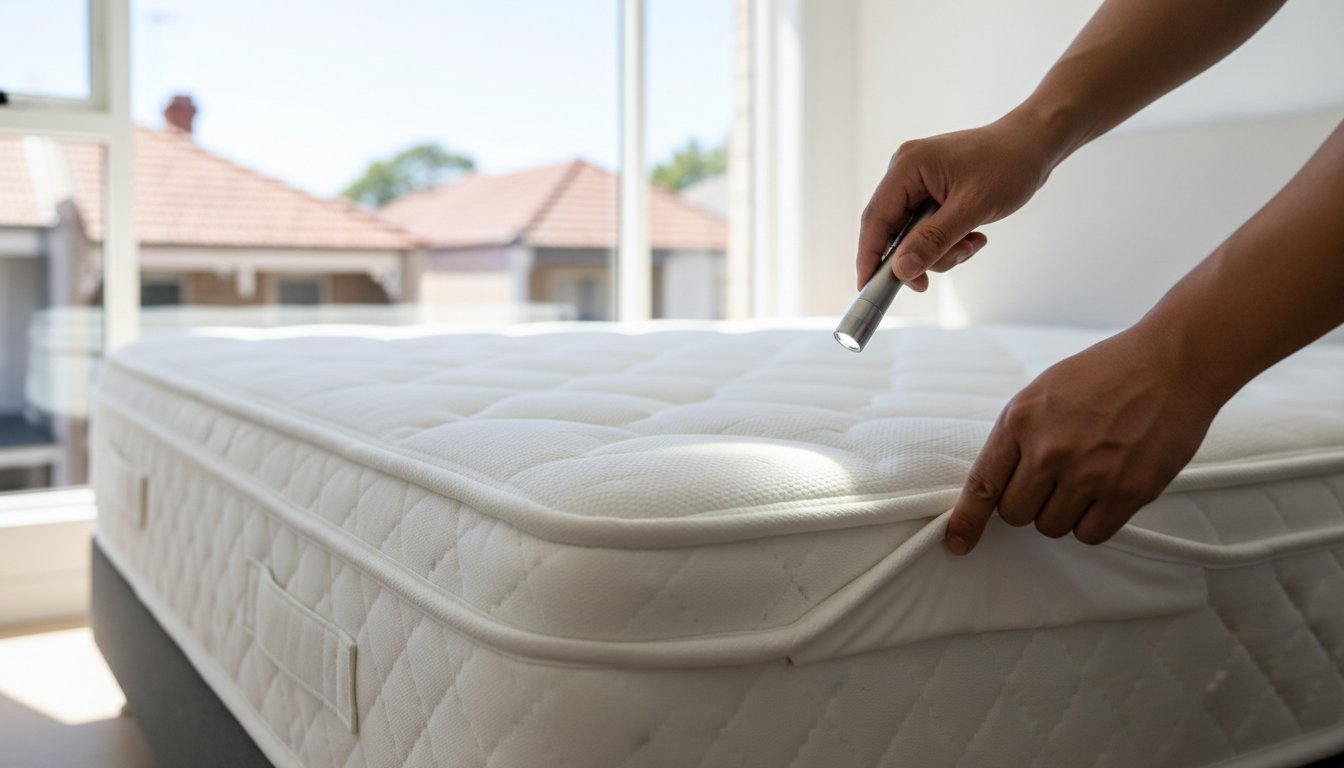
That creeping feeling that you might not be sleeping alone is enough to ruin anyone’s rest. Waking up with itchy, unexplained bites can quickly turn into serious anxiety, leaving you with one urgent question: how to check for bed bugs in mattress and confirm if you have a problem. Don’t let the worry spiral. Taking immediate, informed action is the most critical step to stopping an infestation before it spreads.
As specialists in tough pests, our professional team knows that a proper inspection is the first step toward regaining your peace of mind. In this expert guide, we will walk you through a simple, 5-step process used by our own technicians. You will learn exactly what signs to look for, where to find them, and get a clear, actionable plan for what to do next if you discover these unwanted guests. Let’s get you the answers you need, fast.
Key Takeaways
- Prepare for a thorough inspection by gathering a few essential tools. This simple step is critical for uncovering evidence hidden from the naked eye.
- Our guide details the professional 5-step method for how to check for bed bugs in mattress seams, tufts, and tags, ensuring you don’t miss their most common hiding spots.
- Correctly identify an infestation by learning the 5 telltale signs of bed bugs. Knowing what to look for-from tiny rust-coloured spots to shed skins-is key to confirming the problem.
- If you find evidence, your immediate actions are crucial. Discover the first steps to take and the common mistakes you must avoid to prevent spreading the infestation.
Before You Begin: Gather Your Bed Bug Inspection Toolkit
Before you start pulling apart your bedding, stop. To get an accurate picture of a potential infestation, you must inspect the room in its undisturbed state. Bed bugs are notoriously difficult to spot. A deep dive into bed bug biology and behavior reveals they are masters of hiding in tiny cracks, often remaining unseen during the day. Disturbing the area can cause them to scatter, making them even harder to find.
To learn how to check for bed bugs in mattress seams and folds like a professional, you first need the right equipment. Gathering a few simple household items will make your search faster and far more effective, helping you uncover evidence hidden from the naked eye. Don’t wait-get your toolkit ready now.
Essential Gear
These are the non-negotiable items you need for a thorough and safe inspection. Having them on hand ensures you can properly check tight spaces and protect yourself in the process.
- A bright flashlight: Your phone’s torch is perfect. A powerful, focused beam is crucial for illuminating the dark crevices where bed bugs love to hide, such as mattress seams and bed frame joints.
- A thin, stiff card: Use an old credit card, library card, or even a piece of firm cardboard. This tool is for sliding into tight gaps and seams to push out any hidden bugs, eggs, or droppings.
- Disposable gloves: Always protect your hands. Gloves prevent direct contact with any bugs or stains you might find during your inspection.
Optional but Helpful Items
While not strictly necessary, these extra tools can significantly improve the accuracy of your inspection, especially if you suspect a small or early-stage infestation.
- A magnifying glass: Bed bug eggs and newly hatched nymphs are incredibly small-about the size of a pinhead. A magnifying glass helps you confirm what you’re seeing.
- Double-sided tape: Wrap it around a ruler or paint stirrer. This is an effective way to trap and collect a live bug from a hard-to-reach area without squashing it.
- Clear zip-top bags: If you find a bug, casing, or suspicious stain, seal it in a bag. This preserves the evidence for professional identification by a pest control expert.
The 5-Step Professional Mattress Inspection Method
Don’t panic. To find bed bugs, you just need to be systematic. This is the exact process our Sydney pest control experts use for initial inspections, a method designed to uncover even the most well-hidden pests. Work slowly from the bedding outwards, and remember that adult bed bugs are flat and can squeeze into any crack the width of a credit card. Following these steps is the most effective way how to check for bed bugs in mattress and confirm a problem fast.
Step 1: Carefully Inspect Your Bedding
Start with the top layers. Slowly and carefully pull back your duvet, blankets, and sheets one by one. Do not shake them, as this can spread bugs or eggs. Look for small, reddish-brown blood stains or tiny dark spots (fecal matter), which often look like an ink dot. Be sure to check your pillowcases inside and out, paying close attention to the seams and corners where bugs love to hide.
Step 2: Examine Every Inch of the Mattress Surface
Strip the bed completely. To prevent spreading a potential infestation, place all linens directly into a sealed plastic bag. Now, grab a bright flashlight and get ready for a detailed search. Meticulously inspect the mattress piping, seams, and any tufts or buttons. For a professional-grade check, run the edge of a credit card along the seams to push out any hidden bugs or eggs. The U.S. EPA offers an excellent guide on how to find bed bugs by identifying these subtle signs. Finally, don’t forget to check any labels or tags sewn onto the mattress.
Step 3: Lift the Mattress and Check the Box Spring or Bed Base
This is a critical step many people miss. Carefully lift your mattress and lean it securely against a wall. Thoroughly inspect the top surface of your box spring or bed base, focusing on the corners, edges, and where the fabric is stapled to the frame. If you have a slatted bed base, check the top and underside of each individual slat, as bugs often hide in the joints and cracks.
Step 4: Investigate the Bed Frame and Headboard
Bed bugs are not just confined to the mattress. They love the security of wood and fabric headboards. Use your flashlight to check all joints, screw holes, and crevices in your bed frame. If your headboard is mounted to the wall, check the narrow space behind it. Any crack or gap is a potential hiding spot, so be as thorough as possible.
Step 5: Check the Immediate Surroundings
A growing infestation will spread outwards from the bed. The final step in learning how to check for bed bugs in mattress and the surrounding area is to inspect the immediate vicinity. Pull out your bedside tables and check inside the drawers, along the joints, and on the underside. Scan the skirting boards near the bed and even behind any peeling wallpaper or hanging picture frames. Early detection in these areas can stop a major problem before it starts.
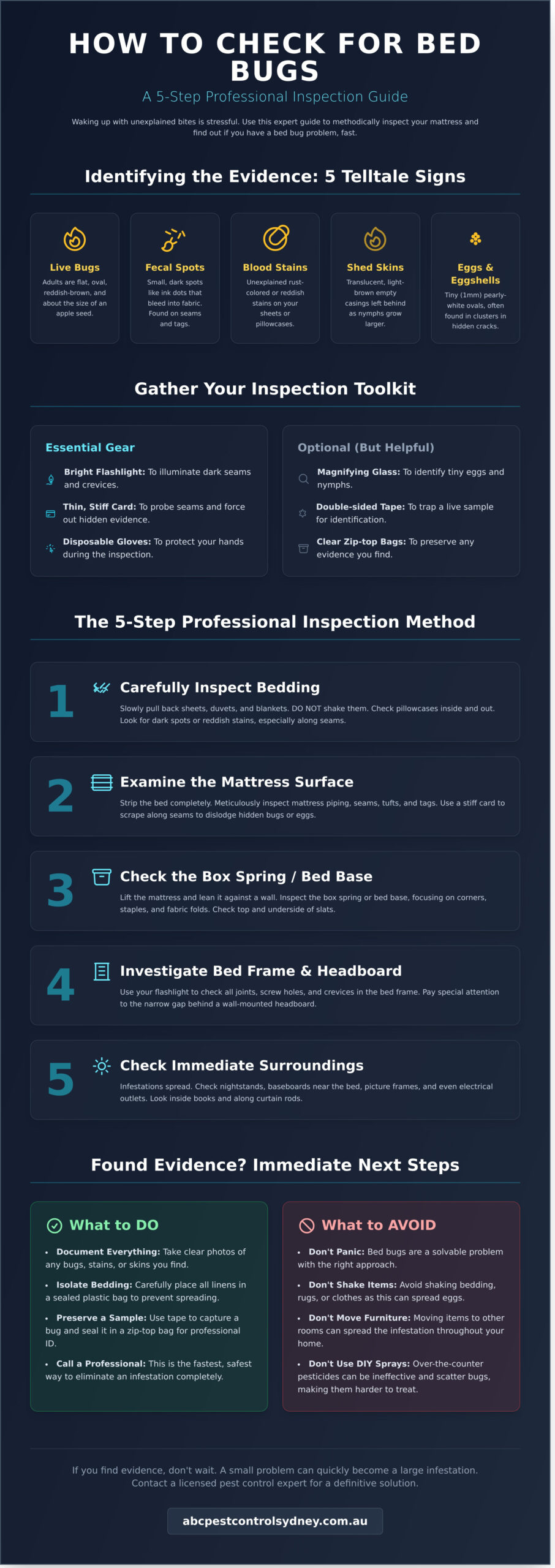
Identifying the Evidence: The 5 Telltale Signs of Bed Bugs
Once you begin your inspection, knowing exactly what you’re looking for is critical. Misidentification can lead to ineffective treatments and prolonged stress. These are the definitive signs that confirm a bed bug infestation. Use your flashlight and magnifying glass to get a closer look, and be sure to take clear photos of any evidence you find. This will be invaluable for professional confirmation.
1. Live Bugs and Shed Skins
Finding a live bug is the most obvious confirmation. Bed bugs are notoriously difficult to spot, but a thorough search can reveal them. Look for:
- Adults: Flat, oval-shaped, and reddish-brown. They are about the size of an apple seed (5-7mm).
- Nymphs: Smaller, immature bugs that are translucent or yellowish-white. They turn red after a blood meal.
- Shed Skins: As nymphs grow, they shed their exoskeletons. These casings look like empty, light-brown bug shells and are often found near their hiding spots.
2. Dark, Rusty-Coloured Spots
These small, dark stains are bed bug faecal matter, which is essentially digested blood. They often look like tiny ink dots from a marker pen and typically appear in clusters along mattress seams, tags, and piping. A key part of how to check for bed bugs in mattress is the smear test: if you dab a suspicious spot with a wet cloth, it will smear or “bleed” a reddish-brown colour.
3. Tiny White Eggs and Eggshells
Bed bug eggs are extremely small (about 1mm) and pearly white, making them very difficult to see on light-coloured surfaces. They are often laid in tight, hidden clusters in mattress seams, cracks in the bed frame, and behind the headboard. Because they are sticky, they will adhere firmly to surfaces. You can often feel them by running a credit card along a seam.
4. Unexplained Blood Stains
Small, unexplained smears of blood on your sheets, pillowcases, or pyjamas are a common early warning sign. These stains occur when a recently fed bed bug is accidentally crushed in your sleep. While other things can cause blood stains, their appearance alongside other signs is a strong indicator of a bed bug problem.
Finding any of these signs is a clear signal that you have a bed bug issue. These pests are experts at hiding, a behaviour well-documented in this University of California bed bug guide, which is why a professional inspection is the next critical step. Don’t wait for the problem to get worse-act fast.
Found Bed Bugs? What to Do Right Now (and What to Avoid)
Discovering bed bugs is stressful, but your immediate actions are crucial. Panicking and moving items around can spread the infestation, making it significantly harder and more costly to eliminate. The goal is to contain the problem immediately and prepare for professional eradication. Don’t wait-acting fast is your best defence.
Immediate First Steps
To prevent the infestation from spreading, follow these steps precisely. This is your first line of defence after you’ve learned how to check for bed bugs in mattress and confirmed their presence.
- Do NOT move furniture. Resist the urge to drag your mattress, bed frame, or other items into another room or outside. This is the number one way a small infestation becomes a whole-house problem.
- Bag and wash all bedding. Carefully place all sheets, pillowcases, blankets, and nearby clothing into sealed plastic bags. Transport them directly to the washing machine and wash on the highest heat setting, followed by at least 30 minutes in the dryer on high heat.
- Vacuum everything. Use a vacuum with a crevice tool to meticulously clean the mattress seams, tufts, box spring, bed frame, headboard, and the entire floor area around the bed. Immediately seal the vacuum bag in another plastic bag and dispose of it in an outside bin.
After the pest control treatment is complete, a final, thorough deep clean is crucial to remove any lingering residues, dead pests, and allergens. This is where a professional cleaning company can be invaluable in restoring your home to a pristine, stress-free condition. To see what this kind of service entails, you can learn more about Maid for Geelong and their approach to comprehensive property cleaning.
Why DIY Treatments Are a Risky Gamble
While a store-bought “bug bomb” or spray seems like a quick solution, these products are often ineffective and can make the situation worse. Bed bugs are notoriously resistant to common pesticides. More importantly, these repellents can scatter the bugs, driving them deeper into wall voids and other hiding spots, making them much harder for professionals to find and eliminate. Failing to kill every single egg guarantees the infestation will return.
When to Call a Professional Exterminator
If you have found any definitive sign of bed bugs-from live insects to skin casings or fecal spots-it is time to call for expert help. Professionals have access to specialised equipment and effective, eco-friendly treatments that guarantee complete eradication of adults and eggs. Don’t risk a recurring infestation by trying to handle these tough pests alone.
In some cases, intensive treatments may require your family to be out of the house for several hours. If you need to arrange transport during this process in Sydney, a reliable maxi cab service can help manage the logistics. A good resource for this is tiptopmaxisydney.com.au.
Take control of the situation now. Confirm your findings with a free quote from our Sydney experts. Our experienced team can provide a fast, safe, and effective solution to protect your home and peace of mind.
Beyond the Mattress: Other Common Bed Bug Hiding Spots
You’ve thoroughly inspected your mattress, but the job isn’t done. A common mistake is assuming bed bugs only live in the bed. In reality, they are expert hitchhikers and will infest an entire room, using your bed as their primary feeding ground. A complete inspection is the only way to understand the true severity of the infestation and ensure total eradication.
As a rule, you must carefully check everything located within a 2-3 metre radius of the bed. While learning how to check for bed bugs in mattress is the critical first step, a full room inspection is what leads to a pest-free home.
Furniture Near the Bed
Bed bugs seek out dark, undisturbed cracks and crevices close to their host. Your bedroom furniture provides the perfect environment for them to hide and breed. Systematically inspect these items:
- Bedside Tables & Dressers: Empty all drawers. Use a torch to inspect the interior joints, runners, and undersides of the furniture itself.
- Upholstered Chairs & Sofas: Pay extremely close attention to seams, tufts, zippers, and the area beneath cushions. Check the wooden or metal frame underneath.
- Behind & Underneath: Carefully pull furniture away from the wall. Inspect the back panels and the floor area where the item usually sits.
Walls and Carpets
The structure of your room offers countless hiding spots that are easy to overlook. Don’t skip these areas during your inspection, as they are common harbourage points for established infestations.
- Carpets and Rugs: Peel back the edges of the carpet where it meets the wall. Look underneath any area rugs.
- Baseboards and Mouldings: Check the cracks and gaps where baseboards meet the floor and wall.
- Wall Hangings & Wallpaper: Remove picture frames and mirrors to inspect behind them. Look for any peeling or loose sections of wallpaper.
Unexpected Hiding Places
Bed bugs can fit into any crack the width of a credit card, which means they can be found in some very surprising places. Check these often-missed spots:
- Electrical Outlets: Inspect the gaps around power point plates and light switches.
- Books & Electronics: Look in the spines of hardcover books, inside alarm clocks, and other bedside items.
- Curtains: Examine the folds, seams, and along the curtain rods and brackets.
Discovering bed bugs in these secondary locations is a clear sign of a growing infestation that requires professional intervention. While knowing how to check for bed bugs in mattress is a vital skill, tackling a widespread problem is a job for experts. Don’t wait for it to get worse. If you’ve found evidence beyond your bed, contact the specialists at ABC Pest Control Sydney for fast, effective, and guaranteed results.
Take Control of Your Bed Bug Problem Today
You now have the professional knowledge of how to check for bed bugs in mattress, which is your first and most critical line of defence. By following a systematic 5-step inspection and knowing how to spot the telltale signs-from tiny dark stains to shed skins-you can catch an infestation before it escalates. This proactive approach is key to protecting your home and family.
But finding evidence is only half the battle. Bed bugs are notoriously tough pests and DIY treatments often fail, allowing the infestation to spread. When it comes to complete eradication, you need a specialist. With over 20 years of experience serving Sydney, our team has the expertise to handle even the most stubborn bed bug problems using safe, eco-friendly treatments.
Found signs of bed bugs? Don’t wait. Book your expert Sydney inspection in under 60 seconds.
Take decisive action now and get back to sleeping soundly.
Frequently Asked Questions About Bed Bugs
Can you see bed bugs with the naked eye?
Yes, adult bed bugs are visible. They are typically about the size of an apple seed-small, oval-shaped, and reddish-brown. However, their young (nymphs) are much smaller, nearly translucent, and very difficult to spot. You’ll often find them hiding in mattress seams and bed frames. Because they are so hard to find, a professional inspection is the surest way to confirm their presence and assess the situation accurately.
What’s the difference between bed bug bites and mosquito bites?
The main difference is the pattern. Bed bug bites often appear in straight lines or small clusters of three to five, a pattern sometimes called “breakfast, lunch, and dinner.” These bites are typically on skin that is exposed while you sleep. Mosquito bites, on the other hand, are usually more random and scattered across any exposed skin. While both are red and itchy, the distinct linear pattern is a strong indicator of bed bugs.
If I find one bed bug, does it mean I have an infestation?
Finding a single bed bug is a serious warning sign. Unfortunately, where there is one, there are almost certainly more hiding nearby, including eggs and nymphs you can’t easily see. Bed bugs reproduce quickly, so one bug can lead to a full-blown infestation in just a few weeks. It is critical to act immediately and call a professional to prevent the problem from escalating and spreading throughout your home.
How quickly do bed bugs spread from one room to another?
Bed bugs can spread alarmingly fast. While they don’t fly, they are expert crawlers and hitchhikers, moving between rooms through wall voids, on clothing, or inside furniture. A small, localised problem can easily spread to an adjacent room in just a few weeks. This is why fast, decisive action is essential to contain the infestation and protect the rest of your home. Don’t wait for them to multiply.
Can I get rid of bed bugs just by throwing out my mattress?
Unfortunately, no. Disposing of your mattress is an expensive step that will not solve the problem. Bed bugs hide in many other places besides the mattress, including bed frames, carpets, skirting boards, and nearby furniture. If these areas are not treated, the remaining pests will simply move back onto your new mattress. A comprehensive, professional treatment is the only guaranteed way to eliminate them completely.
How did bed bugs get into my clean home?
A bed bug problem has nothing to do with your home’s cleanliness. These pests are expert hitchhikers and can be brought into the most pristine environments on luggage, secondhand furniture, clothing, or even a backpack. They are simply looking for a food source and a safe place to hide. That’s why knowing how to check for bed bugs in mattress and luggage after travelling is a crucial preventative measure for any homeowner.
Is a professional bed bug treatment in Sydney expensive?
The cost of a professional bed bug treatment in Sydney depends on the size of your property and the severity of the infestation, with prices for a standard home often starting from A$300-$400. While this may seem like a significant expense, it is an investment in your peace of mind. DIY methods often fail, allowing the infestation to worsen and ultimately costing you more in the long run. A professional service gets it right the first time.