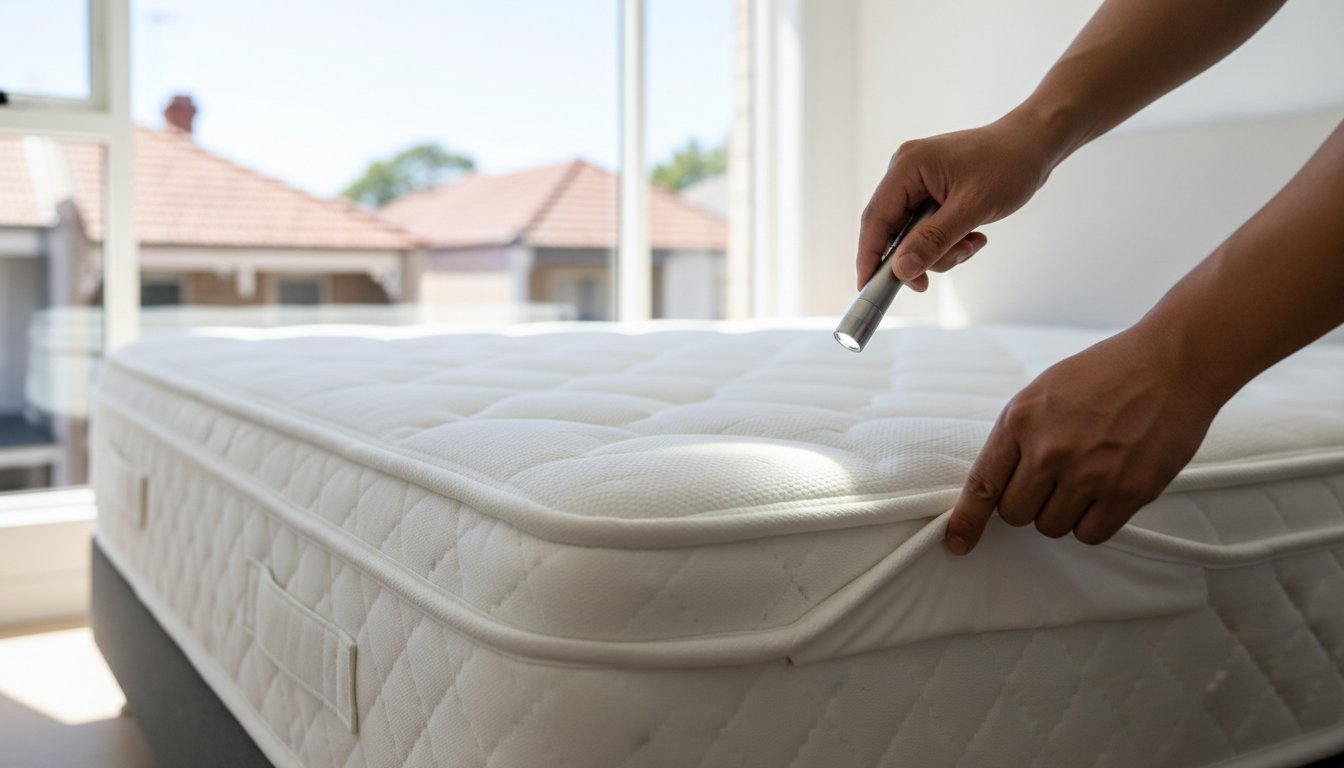
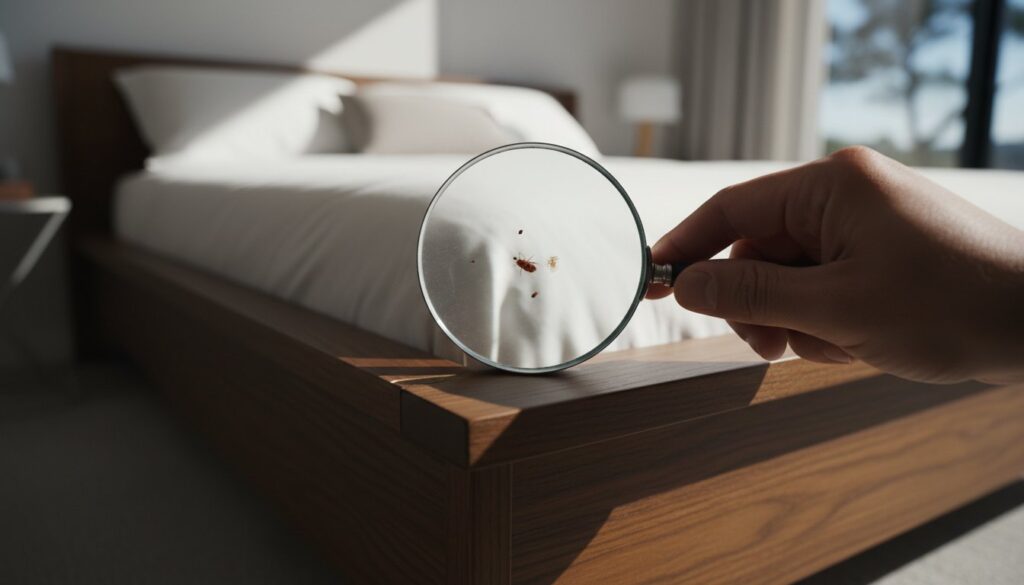
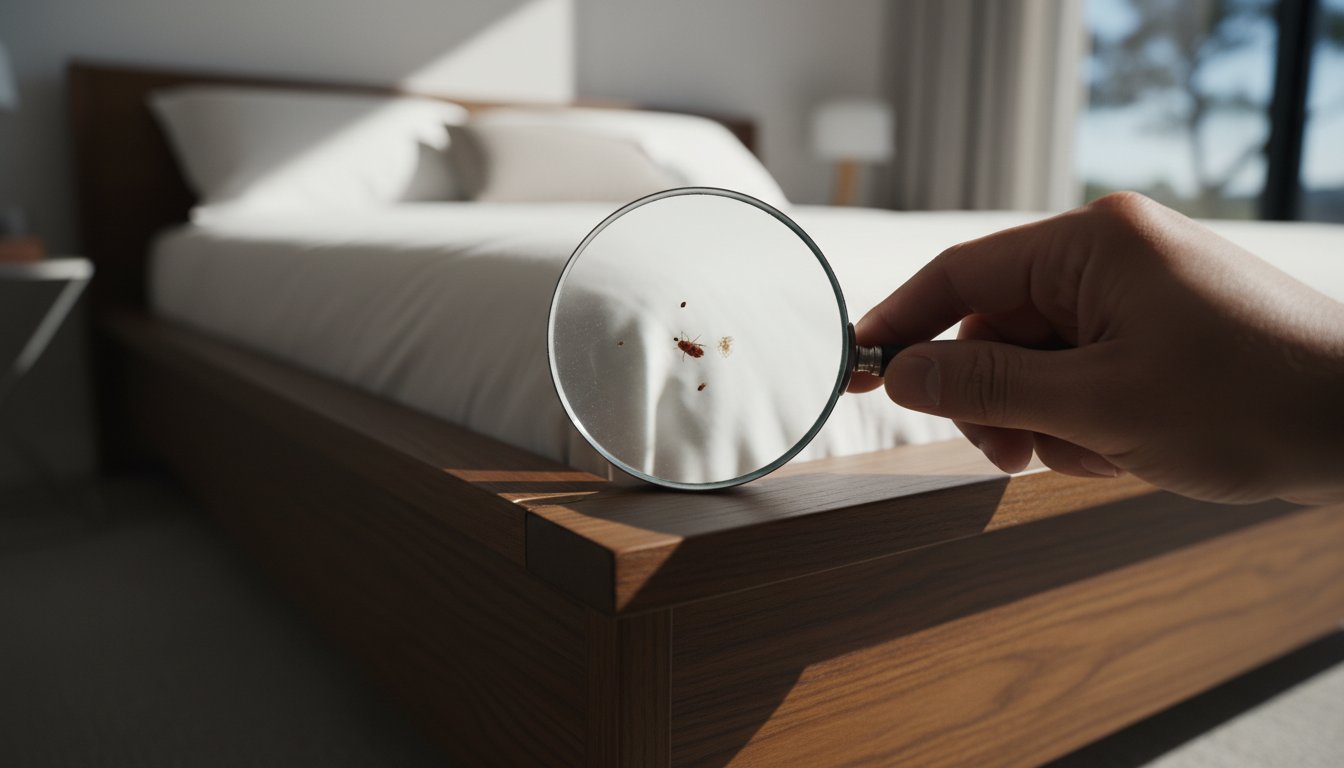
That sinking feeling when you spot a mysterious dark speck on your beautiful wooden bed frame is hard to ignore. Is it just a scuff mark, or the first warning of something more sinister? The thought of pests hiding where you sleep is distressing, especially when you’re worried about having to discard expensive furniture. Don’t let uncertainty turn into a full-blown infestation. Knowing the definitive signs of bed bugs on wooden furniture is the most critical first step to regaining control and protecting your home.
You are in the right place. This ultimate checklist, created by pest control experts, will give you the confidence you need. We will reveal the 5 undeniable signs of bed bugs on your bed frame, dresser, and nightstands. You’ll learn exactly why these tough pests are drawn to wood and, most importantly, discover the immediate, expert-approved steps you must take to stop an infestation before it spreads. Let’s get started.
Key Takeaways
- Bed bugs don’t just live in mattresses. Learn why your wooden bed frame, dressers, and nightstands are prime hiding spots for these tough pests.
- Discover the 5 telltale signs of bed bugs on wooden furniture, including tiny dark stains and shed skins, often long before you see a live insect.
- Follow our expert-approved, systematic checklist to thoroughly inspect your furniture for evidence without missing a single crack or crevice.
- Found signs of an infestation? Learn the immediate steps you must take-and the common mistakes to avoid-to stop the problem from getting worse.
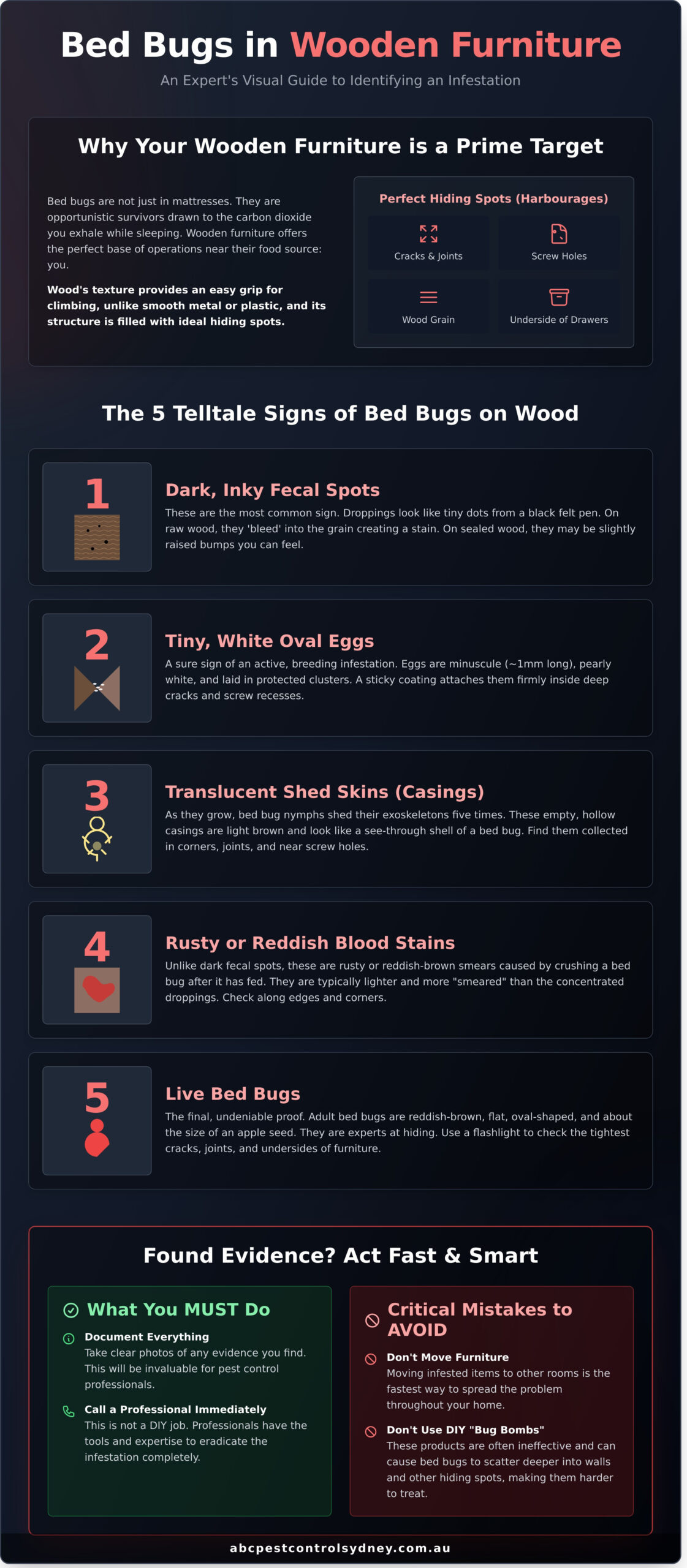
Why Bed Bugs Love Wooden Furniture (It’s Not Just Mattresses)
Many Australians believe bed bugs only live in mattresses and fabric, but this is a dangerous and costly misconception. While mattresses are a common hotspot, these pests are opportunistic survivors. Your wooden bed frame, bedside table, wardrobe, and even picture frames offer the perfect environment for an infestation to take hold and grow undetected.
Bed bugs are drawn to shelter that is close to their food source: you. They sense the carbon dioxide you exhale and your body heat, and wooden furniture in the bedroom provides an ideal base of operations. Understanding why they are drawn to wood is the first step in spotting the early signs of bed bugs on wooden furniture and stopping an infestation before it spreads.
The Perfect Hiding Spots: Cracks, Joints, and Screw Holes
Adult Bed bugs have incredibly flat bodies, allowing them to squeeze into crevices as thin as a credit card. Wooden furniture is full of these ideal hiding places, known as harbourages. These dark, undisturbed locations protect them while they digest, mate, and lay eggs. Pay close attention to:
- Joints where bed slats meet the frame
- Recessed screw and bolt holes
- Gaps in the headboard or footboard
- Decorative carvings and wood grain
- The underside of drawers in nightstands and dressers
Older or antique timber furniture, with its natural wear, cracks, and imperfections, offers even more real estate for bed bugs to colonise.
Wood vs. Metal or Plastic: Why Material Matters
Unlike the smooth, slick surfaces of metal or plastic, wood is a porous material with a natural texture. This texture gives bed bugs the grip they need to easily climb and move around. A metal bed frame offers fewer natural crevices and its slippery surface can make it more difficult for them to travel. This is why infestations are often discovered faster on metal furniture.
However, do not assume non-wooden items are immune. In a significant infestation, bed bugs will hide anywhere they can find shelter, including power outlets, behind wallpaper, and inside electronics. But their strong preference for wood makes it the first place a professional will inspect for the signs of bed bugs on wooden furniture.
The 5 Telltale Signs of Bed Bugs on Wooden Furniture
Finding bed bugs on wood can be tricky. Unlike a white mattress where stains stand out, the grain and dark colour of wood can easily hide the evidence. More often than not, you’ll find the signs of an infestation long before you spot a live bug. To conduct a thorough inspection, our experts recommend using a bright flashlight and a magnifying glass. Understanding the common signs of bedbugs on furniture is the first step to identifying a problem and taking swift, decisive action. Here are the top five signs of bed bugs on wooden furniture to look for.
1. Dark, Inky Fecal Spots
This is one of the most common and obvious signs. Bed bug droppings look like tiny, dark specks, as if someone dotted the surface with the tip of a black felt pen. On unfinished or raw wood, these spots will often soak or ‘bleed’ into the grain, creating a small, dark stain. On painted or sealed wood, the spots may appear as small, slightly raised bumps that you can feel with your fingertip.
2. Tiny, White, Oval-Shaped Eggs
Spotting bed bug eggs is a definite confirmation of an active, breeding infestation. The eggs are minuscule-about 1mm long-and have a pearly white or translucent appearance. They are often laid in protected clusters and are coated in a sticky substance, so they will be firmly attached inside deep cracks, furniture joints, and screw recesses. Don’t wait if you find these; it means the problem is growing.
3. Translucent Shed Skins (Casings)
As bed bugs mature from nymphs to adults, they shed their exoskeletons five times. These empty, hollow casings are light brown and look like a perfect, see-through shell of a bed bug. You’ll find these shed skins collected in the same places the bugs hide: along the corners of drawers, in the joints of a bed frame, or near screw holes where they feel secure.
4. Rusty or Reddish Blood Stains
While fecal spots are digested blood, these stains are not. Rusty or reddish-brown smears on your wooden furniture are often caused by crushing a bed bug shortly after it has had a blood meal. These stains are typically lighter and more “smeared” in appearance compared to the concentrated, dark ink-like fecal spots. Check along edges and corners where a bug might have been accidentally squashed.
5. Live Bed Bugs
The final, undeniable sign is seeing the pests themselves. Adult bed bugs are flat, oval-shaped, and reddish-brown, about the size of an apple seed. They are experts at hiding in the tightest spaces. During your inspection, pay close attention to wood joints, cracks, screw heads, and the undersides of furniture, as these are their preferred daytime hiding spots.
Your Step-by-Step Guide to Inspecting Wooden Furniture
Finding evidence of bed bugs requires a methodical and thorough approach. Don’t just glance over your furniture; a proper inspection is an active search. To effectively find all signs of bed bugs on wooden furniture, you need to be systematic. Arm yourself with a bright torch and a thin, stiff tool like an old credit card or plastic scraper. This method, recommended by experts who detail the process of inspecting furniture for bed bugs, helps dislodge hidden eggs and pests from tight cracks. Focus on one piece of furniture at a time to ensure nothing is missed.
Remember, bed bugs don’t just live in your bed. They can infest any wooden item in the room, so your search must be comprehensive.
Inspecting Your Wooden Bed Frame and Headboard
Your bed is ground zero for an infestation. Carefully dismantle the frame if possible. Pay extremely close attention to the joints, corners, and anywhere two pieces of wood connect. Use your torch and credit card to check:
- All screw holes, nail holes, and dowel joints.
- Any cracks, splits, or knots in the wood.
- The underside of the bed slats and support beams.
- The back of the headboard, especially the area that rests against the wall.
Checking Dressers, Nightstands, and Wardrobes
Bed bugs will seek refuge in any nearby furniture. For dressers, nightstands, and wardrobes, you must be just as thorough. Remove every drawer completely and inspect it inside and out, focusing on the corners and joints. Then, inspect the main body of the furniture, checking the drawer runners, the underside where the legs meet the floor, and the thin back panel, which often has gaps where pests can hide.
Examining Wooden Chairs, Skirting Boards, and Picture Frames
A persistent infestation means expanding your search beyond the main furniture. Any wooden item is a potential hiding spot. Check the underside of wooden chairs or benches, particularly around the joints and any upholstery staples. Don’t forget to run your card along the top edge of your skirting boards (baseboards) where they meet the wall. Even wooden picture frames can provide a safe harbour for these pests.
If you uncover any of the key signs of bed bugs on wooden furniture during your inspection, immediate action is critical. A small problem can quickly become a major infestation. For a professional assessment and guaranteed results, contact our expert team at ABC Pest Control Sydney today.
Found Evidence? What to Do Next (And What to Avoid)
Discovering the signs of bed bugs on wooden furniture is a stressful experience. Your first instinct might be to act fast, but the wrong actions can spread the infestation and make it much harder to control. Before you do anything, take a deep breath. This problem is manageable with expert help, but it’s crucial to avoid common mistakes that can turn a small issue into a whole-house nightmare.
Here’s what you should never do-and the one right move to make.
Mistake #1: Using Store-Bought ‘Bug Bombs’ or Sprays
Over-the-counter foggers and sprays are largely ineffective against bed bugs. These products release a mist that doesn’t penetrate the deep cracks and crevices in wood where bed bugs hide. Worse, the irritating chemicals often cause the bugs to scatter, driving them into wall voids and adjacent rooms. Many bed bug populations in Australia have also developed a strong resistance to these DIY chemicals, making them a waste of money and a potential health hazard for your family and pets.
Mistake #2: Moving or Discarding Furniture
Dragging an infested bed frame, dresser, or nightstand through your home is one of the fastest ways to spread bed bugs. As you move the item, you can unknowingly drop eggs, nymphs, and adult bugs in hallways and other rooms, starting new colonies. While it may seem easier to throw the furniture out, most pieces can be professionally treated and saved. If an item must be removed, it should be completely sealed in heavy-duty plastic first to contain the pests during transport.
The Right Move: Isolate the Area and Call the Experts
Once you’ve confirmed you have bed bugs on your wooden furniture, the safest and most effective strategy involves immediate containment and a call to a professional. While you wait for an expert to arrive, you can take these preparatory steps:
- Reduce Clutter: Clear away any clutter from the floor and around the infested furniture. This eliminates hiding spots and gives technicians better access for a thorough inspection and treatment.
- Wash Fabrics: Carefully gather any bedding, clothing, and curtains from the affected room. Wash them in hot water (at least 60°C) and dry them on high heat for at least 30 minutes to kill all life stages.
- Don’t Move Anything: Avoid moving any items out of the room to prevent spreading the infestation.
These actions help, but they are not a substitute for a professional solution. Bed bugs are notoriously difficult to eliminate. Don’t let the problem get worse. Contact our bed bug specialists today. Our team has over 20 years of experience with tough pests and provides safe, guaranteed treatments to protect your home and family.
Your Next Step to a Bed Bug-Free Home
Remember, bed bugs aren’t confined to your mattress. They expertly hide in the cracks, joints, and screw holes of wooden furniture, from bed frames to antique dressers. Knowing the key signs of bed bugs on wooden furniture-like dark faecal spots, shed skins, and tiny eggs-is your first and most critical line of defence against a full-blown infestation.
Discovering these signs is stressful, but you don’t have to face it alone. Quick, decisive action is the key to stopping them from spreading. At ABC Pest Control, we are specialists in treating tough pests just like bed bugs. With over 20 years of experience serving Sydney, our expert team uses safe, eco-friendly treatments to protect your home and family. We provide the professional help you need for complete peace of mind.
Found signs? Don’t wait. Book your expert bed bug inspection in under 60 seconds.
Take control today and let our experts restore comfort and safety to your home.
Frequently Asked Questions About Bed Bugs in Wooden Furniture
Can bed bugs live in solid or polished wood furniture?
Yes, absolutely. While bed bugs cannot burrow into solid wood, they are experts at hiding in tiny cracks, joints, and crevices. A polished surface does not deter them. They will exploit screw holes, gaps between wood panels, and the undersides of furniture where the finish is often less complete. Wooden bed frames, nightstands, and dressers are prime hiding spots that require a thorough inspection.
Do bed bugs eat wood like termites do?
No, bed bugs do not eat wood. This is a critical difference between them and termites. Bed bugs are parasitic insects that feed exclusively on blood. They use wooden furniture purely for shelter-a safe, dark place to hide close to their food source. If you see physical damage to the wood itself, such as tunnels or holes, you are likely dealing with a different pest like termites or wood borers.
How can I tell the difference between bed bug stains and mould on wood?
Bed bug stains on wood appear as small, dark spots, almost like the tip of a pen. These are faecal droppings and will often smear if wiped with a damp cloth. In contrast, mould usually appears as fuzzy or slimy patches and can be green, black, or white. Mould also has a distinct musty odour, which is not a characteristic of bed bug infestations. Correct identification is key to effective treatment.
Can I get rid of bed bugs from wooden furniture myself with heat or steam?
While high heat and steam can kill bed bugs on contact, DIY methods are often ineffective for wooden furniture. It is extremely difficult to ensure the heat penetrates deep into every crack and joint where bugs and eggs hide. Improper steam use can also damage wood finishes and warp the furniture. For a guaranteed result, professional heat treatments are the safest and most reliable solution.
If I find bed bugs on one piece of furniture, does it mean they are everywhere?
Not necessarily, but it is a serious warning sign requiring immediate action. Bed bugs spread quickly. Finding them on one item means the infestation is established and they could already be in nearby furniture, skirting boards, or carpets. A professional inspection is crucial to determine the full extent of the problem. Don’t wait until a small problem becomes a whole-house infestation. Act fast.
How long can bed bug eggs survive in a wooden crevice?
Bed bug eggs are incredibly resilient. In a wooden crevice at normal room temperature, they can hatch in about 10 days. These tiny, pearly-white eggs are glued firmly into cracks, making them difficult to see and remove. Their resilience is why spotting early signs of bed bugs on wooden furniture and seeking expert help is vital to break their life cycle and eliminate the infestation for good.