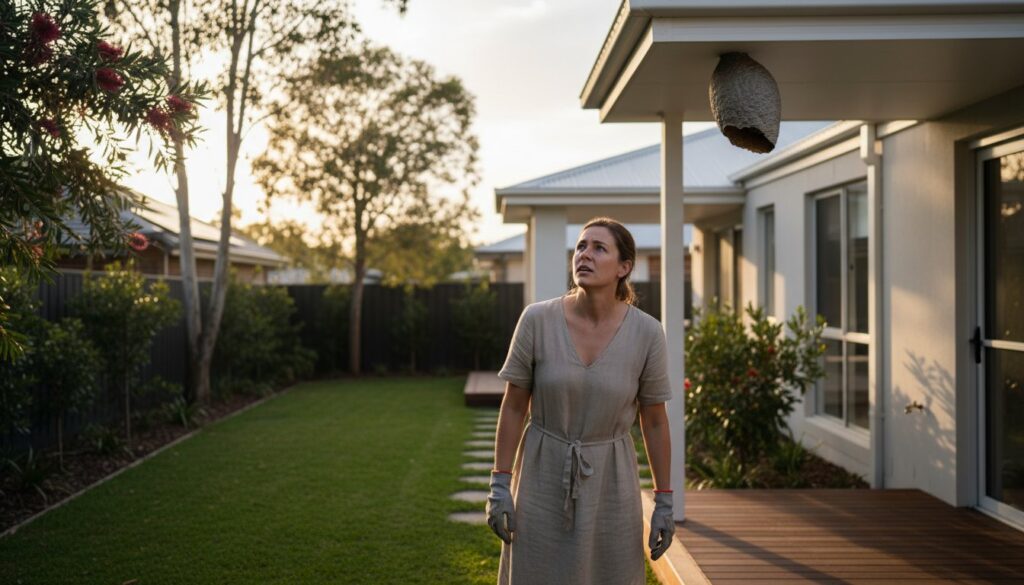
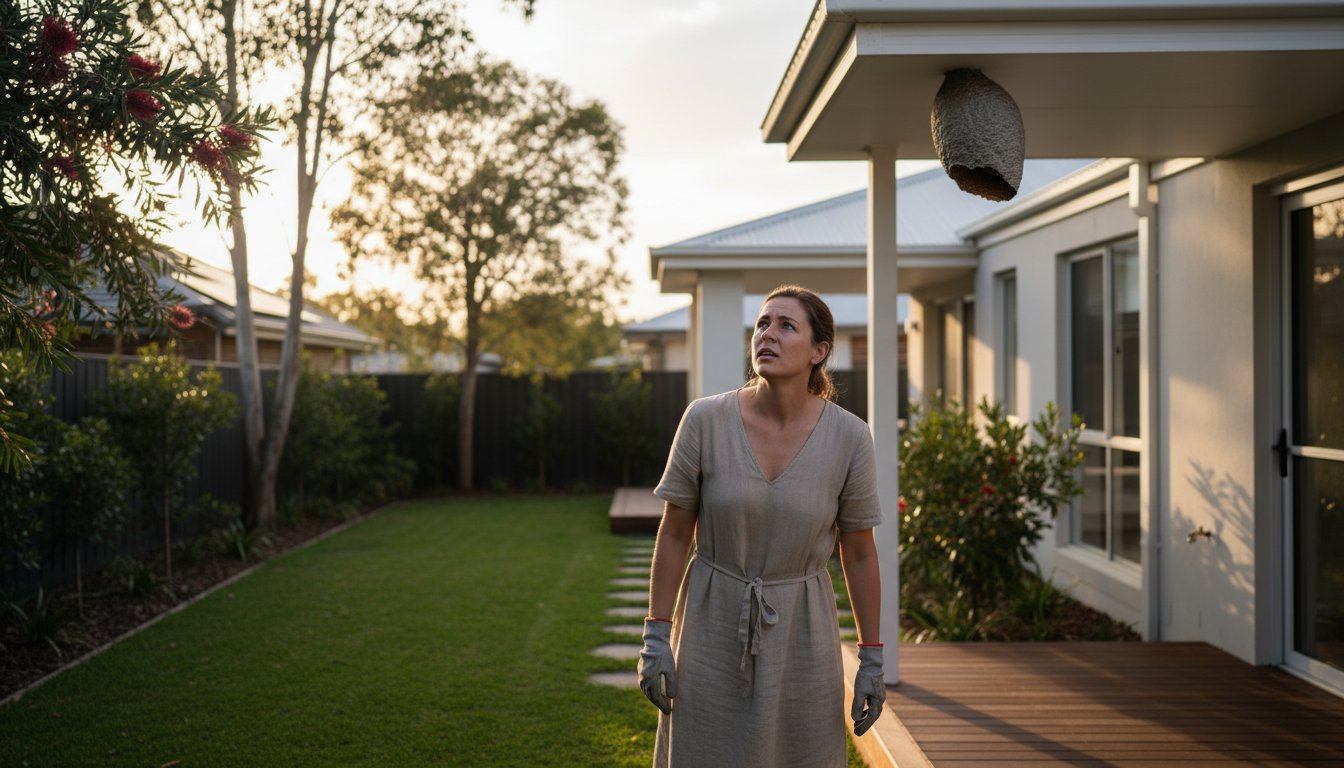
That buzzing, grey paper orb tucked under your eaves isn’t just an unsightly addition to your Sydney home-it’s a potential danger zone. The sight of a growing wasp nest can spark immediate anxiety, and for good reason. Your first instinct might be to deal with it quickly yourself, but a DIY approach can provoke an aggressive swarm, turning a manageable problem into a serious threat. The risk of multiple, painful stings to you, your children, or your pets is simply too high to ignore.
So, what should you do? Before you reach for a ladder or a can of store-bought spray, it’s crucial to understand the real dangers. In this essential guide, we cut through the misinformation to reveal the risks of DIY wasp nest removal. We will provide the clear, expert steps needed to safely and permanently eliminate the threat, protect your family, and prevent wasps from returning. Discover how to reclaim your property with confidence and restore complete peace of mind.
Identifying Common Wasps and Nests in Sydney
Before you can decide on a removal strategy, you must first determine the level of threat you’re facing. Not all wasps are created equal; their aggression levels, sting potency, and nest structures vary dramatically. Correctly identifying the species is the critical first step in assessing the risk to your family and property. Sydney is home to several common types of wasps, but understanding the main three will help you make a safe and informed decision.
Paper Wasps: The Open-Comb Architects
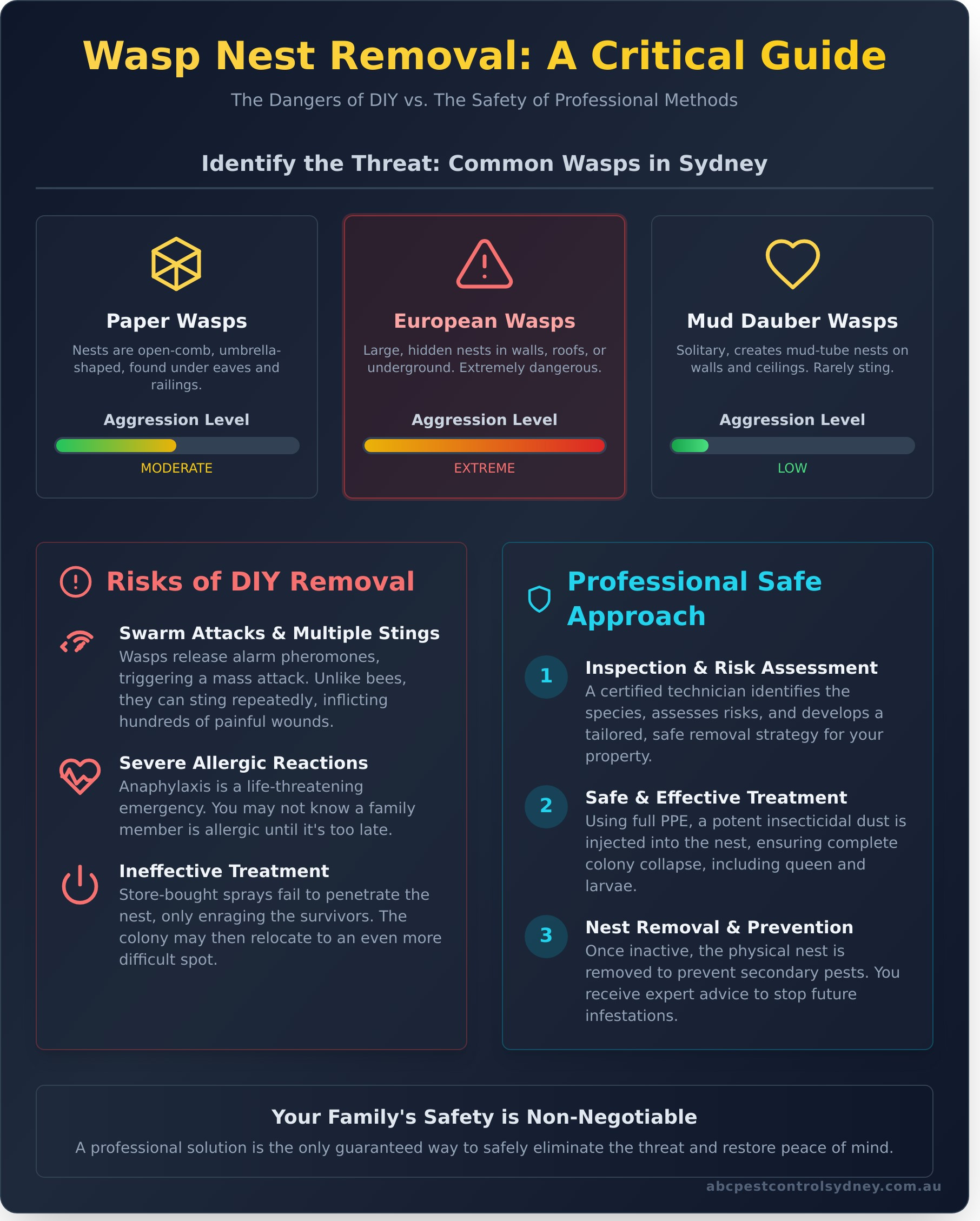
You can recognise a paper wasp nest by its distinct, umbrella-like shape with open, hexagonal cells visible from below. These small nests are often found in sheltered spots like under eaves, deck railings, and inside dense shrubs. While they are beneficial pollinators, paper wasps are moderately aggressive and will deliver a painful sting to defend their home if they feel threatened. It’s best to approach with caution.
European Wasps: Highly Aggressive Invaders
The European wasp is a serious pest in Sydney, known for its extreme aggression. Their large, papery nests are typically hidden from view in wall cavities, roof voids, attics, or even underground. A steady stream of wasps flying in and out of a single entry point is a key giveaway. They can sting repeatedly and will attack in swarms with little provocation. Due to the significant danger they pose, you should never attempt DIY removal of a European wasp nest.
Mud Dauber Wasps: Solitary and Less Threatening
These wasps are easily identified by their unique nests, which look like small, cylindrical tubes or clumps of dried mud. You’ll often find them attached to walls, under ceilings, or in sheds and garages. Mud daubers are solitary insects and are generally not aggressive towards humans. They rarely sting unless physically trapped or handled, making them a much lower risk compared to their more social counterparts.
The Dangers of DIY Wasp Nest Removal: More Than Just a Sting
While the idea of saving a few dollars by tackling a wasp problem yourself is tempting, the risks far outweigh the potential savings. Hardware store sprays and home remedies often seem like a quick fix, but they can turn a manageable issue into a dangerous emergency. Agitating a wasp colony without completely and safely eliminating it is the worst-case scenario, leading to aggressive retaliation that puts you, your family, and even your neighbours in harm’s way. Understanding these dangers is the first step to making a safe decision.
Risk 1: Swarm Attacks and Multiple Stings
When a single wasp feels threatened, it releases an alarm pheromone that signals the entire colony to attack the perceived threat-you. Unlike bees, which can typically only sting once, most Australian wasp species can sting repeatedly. A defensive swarm can inflict hundreds of painful stings in a matter of seconds. This overwhelming response is the primary reason DIY attempts go wrong, causing serious injury and intense pain.
Risk 2: Severe Allergic Reactions (Anaphylaxis)
You may not know you or a family member is allergic to wasp stings until it’s too late. Anaphylaxis is a severe, life-threatening allergic reaction that requires immediate medical attention. The risk is simply too high to take a chance. Symptoms can develop rapidly and include:
- Difficulty breathing or wheezing
- Swelling of the face, lips, or throat
- Dizziness, fainting, or a drop in blood pressure
- Rapid heartbeat
Protecting your loved ones means not taking unnecessary risks with a volatile wasp nest.
Risk 3: Ineffective Treatment and Regrouping
Consumer-grade aerosol sprays often fail to penetrate the core of a nest, killing only the wasps on the outer layers. The surviving wasps become highly agitated and more aggressive than before. Worse, a failed removal attempt may cause the colony to abandon the treated wasp nest and simply relocate to another hard-to-reach spot on your property, like a wall cavity or roof eave. This makes future professional removal more complex and highlights why it’s crucial to Prevent wasps from building nests as a primary defence. Our certified technicians use specialised insecticidal dusts and protective gear to ensure complete, guaranteed eradication on the first visit.
A Professional’s Approach: The Safe Wasp Removal Process
When you’re faced with an aggressive wasp nest, your family’s safety is the top priority. Attempting a DIY removal can lead to painful stings and an incomplete job. At ABC Pest Control, our certified technicians follow a meticulous, safety-first protocol designed to eliminate the threat quickly, effectively, and permanently. We use specialised equipment and professional-grade treatments that are not available to the public, guaranteeing a complete solution. Understanding our proven process will give you the peace of mind you deserve.
Step 1: Thorough Inspection and Risk Assessment
Our process begins with a detailed assessment of your property. A licensed technician will identify the specific wasp species, pinpoint the exact location of the nest, and evaluate all potential risks to your family, pets, and home. Our team adheres to the highest industry safety standards, as recommended by bodies like the National Pest Management Association, to develop a tailored treatment plan. We ensure you understand every step of the plan before we begin, providing full transparency and confidence.
Step 2: Safe and Effective Treatment
Safety is non-negotiable. Our technicians always wear full personal protective equipment (PPE) to prevent stings and ensure a controlled treatment. We use a potent insecticidal dust, which is carefully injected directly into the wasp nest entrance. This professional-grade product is fast-acting and designed to be carried throughout the colony, eradicating not only the adult wasps but also the queen and larvae. This method guarantees complete colony collapse. The treatment is powerful but precisely applied, making it safe for your family and pets once it has settled.
Step 3: Nest Removal and Post-Treatment Advice
Once we have confirmed the colony is completely inactive (typically after 24-48 hours), our job isn’t finished. We return to safely remove the physical nest. This crucial step prevents secondary pest problems, such as carpet beetles, which can infest abandoned nests. After removal, we provide you with expert advice and practical tips to help prevent wasps from building a new nest on your property in the future. Don’t take chances with aggressive pests. Get a free quote for safe wasp removal.
When to Absolutely Call a Professional: A Safety Checklist
While some small, exposed nests might seem like a simple DIY job, many situations involving a wasp nest carry significant and unnecessary risks. Your safety, and that of your family, is the number one priority. Before attempting any removal, use this straightforward checklist to make an informed, safe decision. If you tick any of these boxes, please do not proceed on your own.
Assess the Nest’s Location and Size
The physical characteristics of the nest and its placement are critical red flags. Ask yourself:
- Is the nest large? Anything bigger than a golf ball indicates a growing, active colony that can swarm aggressively if disturbed.
- Is it high up or in an awkward spot? Attempting removal on a ladder is extremely dangerous, as a single sting can cause you to fall.
- Is the nest hidden? Nests inside wall cavities, roof eaves, or underground require specialised equipment to access and treat effectively.
- Is it near a high-traffic area? Nests by doorways, windows, or children’s play areas pose an immediate and constant threat.
Consider the Wasp Type and Your Health
Not all wasps are the same, and personal health factors can turn a simple sting into a medical emergency. Consider the following:
- Do you suspect they are an aggressive species, such as European wasps, which are known for their painful stings and defensive swarming?
- Does anyone in your household have a known allergy to bee or wasp stings? An anaphylactic reaction can be life-threatening.
- Are there young children or pets who play nearby? They are more vulnerable and may not know how to react safely around a disturbed nest.
- Are you unsure of the wasp species? Misidentifying the pest can lead to using ineffective and dangerous removal methods.
The Verdict: If in Doubt, Don’t Do It
If you answered ‘yes’ to any of the questions above, the decision is clear: call a professional immediately. The cost of a professional service is minimal compared to the severe risks of painful stings, allergic reactions, or an incomplete removal that only makes the wasps more aggressive. Our team of certified technicians is equipped with the proper protective gear and specialised treatments to handle these dangerous situations safely and effectively, guaranteeing complete removal.
Don’t gamble with your family’s wellbeing. Schedule a professional inspection today.
How to Prevent Wasps From Building Nests on Your Property
Once the immediate threat of a wasp nest is gone, the next crucial step is prevention. You can significantly reduce the risk of future infestations by making your property less attractive to these pests. By incorporating a few simple, proactive measures into your regular home maintenance routine, you can protect your home and family and ensure peace of mind.
Seal Potential Entry Points
Wasps are opportunistic and will exploit any small opening to get inside walls, attics, or ceiling voids. Denying them entry is your first line of defence. A thorough inspection of your home’s exterior can reveal vulnerable spots you may have overlooked.
- Inspect and Seal: Regularly check for and seal any cracks in your home’s siding, foundation, or around window frames. Pay close attention to where utility pipes and wires enter the house.
- Repair Screens: Ensure all window and door screens are free of rips or tears.
- Cover Vents: Use fine-gauge mesh to cover vents leading to the attic or crawl spaces without impeding airflow.
Manage Food and Waste Sources
Wasps are constantly searching for food, especially proteins and sugars to feed their colony. An easily accessible food source can draw them to your property and encourage them to build a nest nearby. Limiting their access to food is a simple but highly effective deterrent.
- Secure Bins: Always keep rubbish and compost bins tightly sealed, especially those containing food waste.
- Clean Up Promptly: Remove fallen fruit from trees in your garden and clean up spills from sugary drinks or food immediately after outdoor entertaining.
- Manage Pet Food: Avoid leaving pet food bowls outside for extended periods.
Consider Decoy Nests and Landscaping
You can also alter your garden environment to make it less appealing. Wasps are fiercely territorial and will generally avoid building a new wasp nest near what they perceive to be an existing one. Strategic landscaping also helps eliminate ideal nesting real estate.
- Hang Decoys: Place fake or decoy wasp nests under eaves and in sheltered areas where wasps might typically build.
- Trim Greenery: Keep trees and dense shrubs trimmed back from the side of your house, as paper wasps often use these as anchor points.
- Plant Wisely: Avoid planting heavily flowering plants directly against your home’s foundation or near doorways.
For a professional assessment of your property’s risk factors and guaranteed prevention strategies, don’t hesitate to contact the certified experts at ABC Pest Control Sydney today.
Protect Your Family: The Safe Choice for Wasp Nest Removal
When it comes to a wasp infestation, the verdict is clear: the dangers of a DIY approach far outweigh the benefits. Attempting to remove a nest without professional equipment and expertise can provoke an aggressive swarm, leading to painful stings and potentially severe allergic reactions. The only truly safe and effective solution is to trust certified experts who can guarantee complete eradication.
Why take the risk? ABC Pest Control has been Sydney’s trusted expert for over 20 years. Our technicians use specialised, eco-friendly treatments to safely eliminate your wasp nest while keeping your family and pets out of harm’s way. We stand by our work, offering a 100% Satisfaction Guarantee for your complete peace of mind.
Don’t risk it. Contact ABC Pest Control for safe and guaranteed wasp nest removal. Reclaim your home and enjoy your outdoor spaces with confidence.
Frequently Asked Questions About Wasp Nest Removal
What is the difference between a wasp nest and a beehive?
Wasp nests and beehives are very different in appearance and material. A wasp nest is made from a grey, paper-like pulp (chewed wood) and often has a visible, swirled pattern. You might find them hanging from eaves or in wall cavities. In contrast, a beehive is made from beeswax and has a clear, hexagonal cell structure. Wasps are also slender and smooth, while bees are typically hairier and more robust in their appearance.
How much does professional wasp nest removal cost in Sydney?
In Sydney, the cost for professional wasp nest removal generally ranges from A$150 to A$350. The final price can vary depending on several factors, including the nest’s size, its accessibility (e.g., high on a roof vs. in a bush), and the specific wasp species. For an accurate and firm quote, we recommend a professional inspection. This ensures a safe, effective, and guaranteed treatment tailored to your situation, giving you complete peace of mind.
Can I just knock a wasp nest down with a hose or a broom?
Absolutely not. This is extremely dangerous. Attempting to knock down a nest will be seen as an attack, causing the wasps to swarm and aggressively defend their colony. This puts you and anyone nearby at high risk of receiving multiple painful stings. This method also fails to eliminate the wasps, which will likely just rebuild nearby. For your family’s safety, always trust a certified professional to handle the removal using proven, safe techniques.
Are wasps active at night? When is the best time to treat a nest?
Wasps are far less active at night. As temperatures drop in the evening, the entire colony returns to the nest to rest, making it the safest and most effective time for professional treatment. Attempting to remove a nest during the day is more hazardous because foraging wasps are out and about. Our experienced technicians schedule treatments for optimal times, like dusk or dawn, to ensure the entire colony is eradicated swiftly and safely.
Will wasps go away on their own at the end of the season?
While most worker wasps will die off in late autumn, the fertilised queen often survives the winter by hibernating nearby. In the spring, she will emerge to start a new colony, frequently in the same location. Leaving an old wasp nest on your property essentially invites them back next year. Professional removal is the only way to guarantee the cycle is broken and protect your home from a recurring infestation.
What should I do immediately if I get stung by a wasp?
First, move away from the area calmly to avoid attracting more stings. Wash the affected area with soap and water, then apply a cold compress or ice pack to help reduce swelling and numb the pain. Over-the-counter antihistamines or pain relievers can also help manage symptoms. If you experience signs of a severe allergic reaction-such as difficulty breathing, dizziness, or swelling of the face and throat-seek emergency medical attention immediately.