
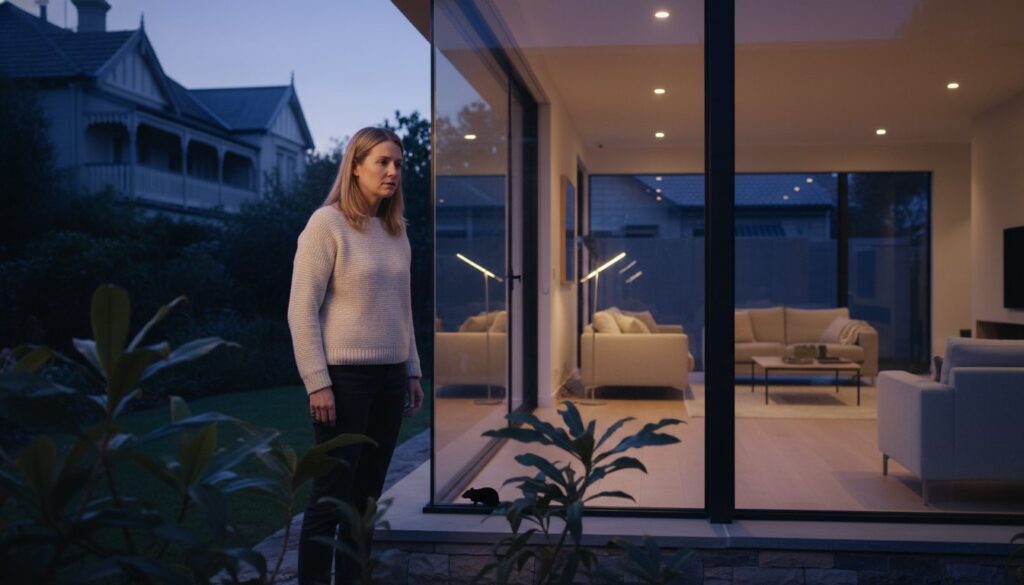
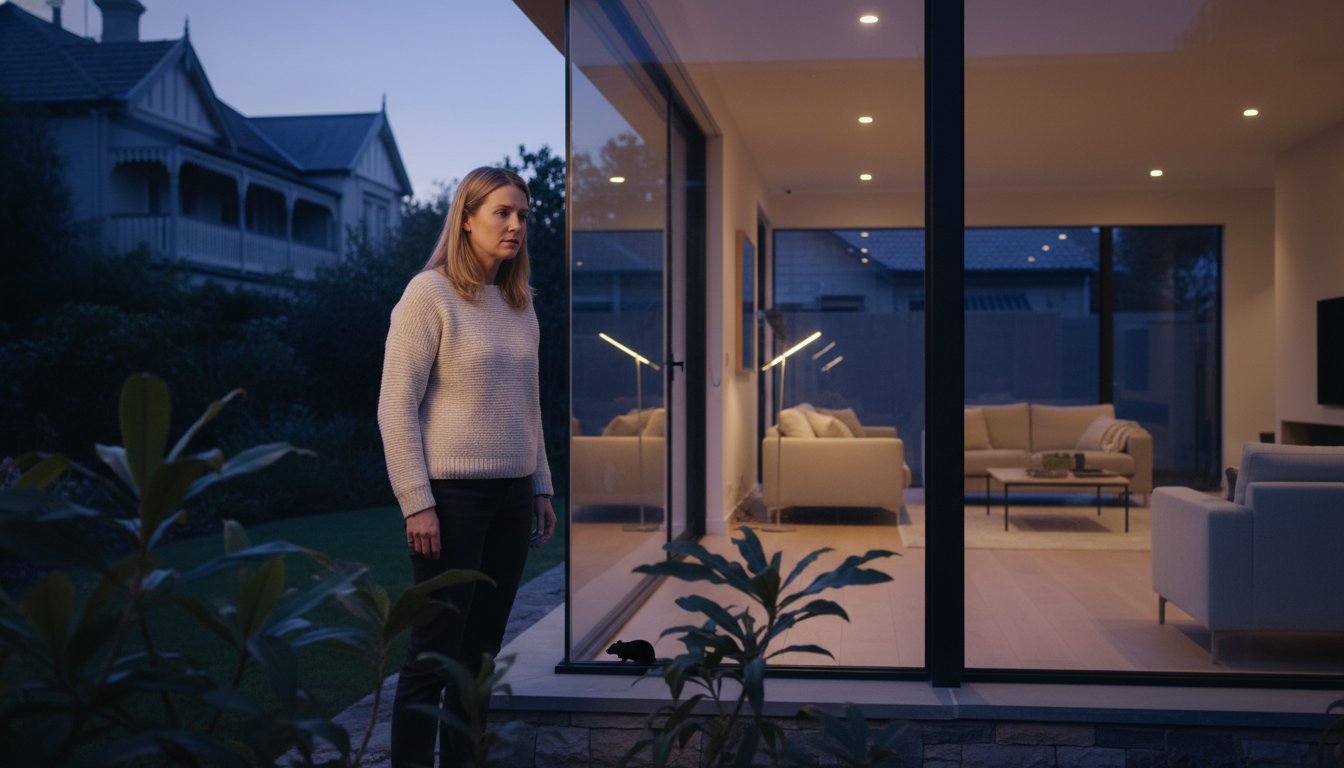
Did you know that calls for rodent control in Sydney can spike by over 40% as soon as the first winter chill hits in May? It’s a sound every homeowner dreads: that faint scratching in the walls that signals you’re no longer alone. You’re right to be concerned. These pests aren’t just a nuisance; they pose a serious risk, from chewing through electrical wiring to spreading diseases like Leptospirosis. Tackling winter rodent problems isn’t just about getting a quiet night’s sleep; it’s about protecting your home and family.
In this definitive 2026 guide, our expert team, with over 20 years of experience, promises to show you exactly how to win this battle. You will discover precisely why rats and mice target Sydney homes as temperatures drop and learn the professional strategies to find their secret entry points. We’ll walk you through the effective, non-toxic solutions that guarantee your property stays secure and rodent-free all season long, giving you complete peace of mind.
Key Takeaways
- Understand the key reason why cold Sydney weather drives rodents from your garden directly into your home for shelter.
- Learn to distinguish between Sydney’s most common rats and mice to understand the specific threat you’re facing.
- See why ignoring winter rodent problems is a costly mistake and learn about the serious fire risks they can create in your walls.
- Implement a professional-grade strategy to seal entry points and remove attractants, making your home far less inviting to pests.
- Find out when a DIY approach isn’t enough and why expert treatment is the safest, most effective solution for your family.
Why Winter in Sydney Triggers a Surge in Rodent Invasions
That scratching sound you hear in the ceiling isn’t just the house settling. As winter descends on Sydney, your home becomes a prime target for unwelcome guests. Pest control experts see a dramatic spike in call-outs, with rodent sightings increasing by up to 40% between June and August. This isn’t a coincidence; it’s a predictable survival response. As temperatures drop, the biological programming of common Sydney’s Winter Rodent Species like the Black Rat and House Mouse shifts entirely towards finding a safe harbour. Your warm, dry home is their five-star hotel.
The first sign of trouble often comes from the roof. Rats that spent summer nesting in gardens and trees are driven indoors by the cold and wet. Sydney’s damp winter weather makes exposed nests unlivable, forcing them to seek dry, elevated shelter. Your roof void offers the perfect escape. Ignoring a single scurrying sound is a mistake. A single pregnant female finding her way inside in June can produce a litter of 6-12 pups in just 21 days, leading to an established colony by August. Addressing winter rodent problems requires immediate, decisive action.
The Biological Drive: Food, Water, and Warmth
A rodent’s life revolves around three simple needs: food, water, and shelter. In winter, their natural food sources like seeds, insects, and berries become scarce. This forces them to get creative and brave, pushing them directly toward your kitchen. Easy-to-access resources in Sydney backyards, such as pet food left outside, unsecured compost bins, or unharvested fruit on citrus trees, act as a powerful invitation. Once inside, the insulated walls and attic of your home provide the perfect, temperature-controlled incubator for raising their young, turning a small issue into a major infestation fast.
Common Entry Points in Australian Architecture
You’d be shocked at how easily rodents can invade a typical Sydney home. They don’t need a wide-open door; a tiny gap is all it takes. Mice can squeeze through any opening larger than 6mm-if a pen can fit, so can a mouse. Rats need a hole just the size of a 20-cent coin. Don’t underestimate their determination.
Our professional technicians find that most infestations start at these key vulnerabilities:
- Weep Holes: The small gaps left in brickwork for ventilation are a superhighway for mice.
- Roof Access: Overhanging branches from gum trees provide a direct bridge to your roof, where they can slip under a loose tile or find a gap in the flashing.
- Utility Gaps: Small, unsealed gaps around pipes for your NBN connection, water, or gas lines are common entry points.
- Damaged Vents: Broken screens on sub-floor or roof vents offer an easy way in.
A quick inspection of these areas can reveal how secure your property truly is. Sealing these entry points is a critical first step in preventing serious winter rodent problems before they begin.
Identifying Your Uninvited Guests: Sydney’s Winter Rodent Species
When you hear scratching in the walls as temperatures drop, it’s easy to assume it’s “just a rat.” But in Sydney, you could be hosting one of several distinct species, each with unique behaviours and requiring a targeted approach. Correctly identifying your intruder is the first critical step in reclaiming your home and solving your winter rodent problems effectively. An incorrect guess can lead to ineffective treatments and a prolonged infestation.
The three most common culprits invading Sydney homes are the Roof Rat, the Norway Rat, and the common House Mouse. While they all seek warmth and food, where they choose to nest and the evidence they leave behind are key differentiators. Beyond the physical damage, it’s crucial to understand the significant health risks of rodent infestations, as they can transmit diseases through their droppings, urine, and fleas.
The Roof Rat: Sydney’s High-Climbing Nuisance
Also known as the Black Rat (Rattus rattus), the Roof Rat is an agile climber and the number one pest in Sydney’s leafy suburbs like Mosman, Strathfield, and the Inner West. Their slender bodies and long tails, which are typically longer than their head and body combined, make them expert acrobats. They exploit overhanging tree branches and power lines to gain access to your home’s upper levels.
You won’t find them burrowing in the garden. Instead, listen for activity in your attic, wall cavities, and false ceilings, especially at night. A key sign of a Roof Rat infestation is their “runways”-dark, greasy rub marks left along rafters, pipes, and fence lines from the oils on their fur.
The Norway Rat and the Common House Mouse
Unlike their high-climbing cousins, Norway Rats (Rattus norvegicus) are ground-dwellers. They are stockier, with a blunt nose and a tail shorter than their body. These rats are more common in the Sydney CBD and coastal areas, using sewers and creating burrows under buildings and along foundations. If you have a problem on the ground floor or in your basement, the Norway Rat is a likely suspect.
The House Mouse (Mus musculus) is the smallest of the trio but can cause massive damage. They thrive indoors, and their tiny size allows them to squeeze through gaps as small as a pencil’s width. In a suburban Sydney kitchen, they often nest in warm, hidden areas near a food source, like behind the fridge or inside the insulation of an oven. Don’t underestimate them; a single female can produce up to 10 litters per year, with 5-6 pups each, turning a small issue into a major infestation in just a few months.
Here’s a quick guide to telling them apart:
- Droppings: Roof Rat droppings are spindle-shaped with pointed ends. Norway Rat droppings are larger, capsule-shaped with blunt ends. Mouse droppings are tiny, like black grains of rice.
- Size & Tail: The Roof Rat is slender with a tail longer than its body. The Norway Rat is thick-bodied with a tail shorter than its body. The mouse is very small, weighing only 15-20 grams.
- Nesting Signs: Look for shredded insulation in the attic for Roof Rats, disturbed soil around the building for Norway Rats, and chewed paper or fabric in drawers for mice.
Identifying these signs can be difficult, and a misidentification can waste time and money on the wrong solution. If you’re unsure which pest you’re dealing with, our expert technicians can provide a definitive identification and create a targeted, effective treatment plan to protect your home this winter.

The Hidden Risks: Why “Wait and See” is a Costly Winter Strategy
One of the most dangerous misconceptions Sydney homeowners have is that rodents are temporary winter guests. Many believe, “They will leave once it gets warm.” This is rarely true. Once rats or mice establish a warm, sheltered nest in your roof void or wall cavity, they have no reason to leave. Your home becomes a permanent base for breeding, turning a couple of intruders into a major infestation in just a few months. Ignoring the first signs of activity is not a strategy; it’s a gamble with your property and your family’s health.
The truth about winter rodent problems is that the damage starts immediately and escalates quickly. What begins as a faint scratching sound can spiral into thousands of dollars in repairs and serious safety threats. Don’t wait for the damage to become undeniable.
Electrical and Structural Damage
A rodent’s incisors never stop growing, forcing them to gnaw constantly to wear them down. Unfortunately, the PVC coating on electrical wiring is a perfect target. When rodents chew through this protective layer, they expose live copper wires, creating a severe fire hazard. A single spark from a short circuit can ignite nearby insulation or timber, leading to a devastating house fire. This isn’t a rare occurrence; faulty wiring is a leading cause of residential fires, and rodents are a primary culprit.
The destruction doesn’t stop there. Rodents will shred insulation to build nests, contaminating it with urine and faeces. This not only ruins its thermal efficiency but also creates foul odours and health risks. The cost to decontaminate and replace fouled insulation in a standard 3-bedroom Sydney roof cavity can easily exceed A$3,500. They also chew through plasterboard, timber supports, and flexible air conditioning ducting, leading to costly and complex repairs that directly devalue your home.
Health Hazards and Parasites
Beyond the structural threats, rodents are vectors for disease. They contaminate every surface they touch, spreading pathogens that pose a direct risk to your family. In Sydney, the primary health concerns include:
- Salmonellosis: A bacterial infection spread when rodent droppings contaminate food, water, or kitchen benchtops, causing severe gastrointestinal illness.
- Leptospirosis: A serious disease transmitted through rodent urine. If it gets into cuts or contaminates food, it can lead to kidney damage and meningitis.
Rodents also act as transport for other pests. They carry fleas, mites, and lice into your home, creating a secondary infestation that can be difficult and expensive to resolve. Perhaps one of the most overlooked impacts is the psychological toll. Living with pests creates a constant state of “pest anxiety”-the stress of hearing noises in the walls, the fear of contamination, and the worry for your children’s safety. Your home should be a sanctuary, not a source of stress.
The “Seal, Sanitize, Strike” Framework for Winter Rodent Control
Dealing with winter rodent problems requires a systematic plan, not just a few scattered traps. At ABC Pest Control, our 20 years of experience in Sydney have shown that the most effective strategy is the “Seal, Sanitize, Strike” framework. This professional, three-pronged approach doesn’t just manage an infestation; it builds a long-term defence for your home.
Step 1: Seal Your Defences. The first and most critical step is exclusion. A young mouse can squeeze through a gap the width of a pen (about 6mm), and a rat only needs an opening the size of a 20-cent coin. You must block every potential entry point. Forget foam fillers that rodents can chew through in minutes. Use coarse steel wool or copper mesh packed tightly into gaps, then seal with a hard-setting caulk. This creates a barrier they simply cannot penetrate.
Rodent-Proofing Your Sydney Property
Sydney’s unique architecture presents specific challenges. For terrace houses in areas like Paddington or Surry Hills, pay close attention to gaps between shared walls and aging floorboards. Our technicians recommend a targeted approach:
- Install robust brush strips along the bottom of your garage door to block this common super-highway for pests.
- Seal all utility entry points where pipes for NBN, gas, or water enter your home. Use steel mesh and exterior-grade sealant.
- Trim all tree branches back so they are at least 2 meters from your roofline, removing any easy access to your roof cavity.
Step 2: Sanitize and Remove the Welcome Mat. Rodents invade for two reasons: shelter and resources. Once you’ve sealed the shelter, you must remove their food and water. This makes your home far less attractive. It’s a simple but vital part of solving your winter rodent problems. Cleanliness is your best weapon. Store all pantry food, including pet food, in airtight glass or metal containers. Wipe up crumbs and spills immediately, secure outdoor bins with tight lids, and fix any dripping taps or pipes.
Step 3: Strike with Professional Precision. Sealing and sanitizing prevent new invasions, but you need an active strategy for the rodents already inside. This is where DIY methods often fail. Supermarket snap traps might catch one naive rodent, but the rest of the colony quickly becomes “trap shy” and learns to avoid them.
Effective Baiting and Trapping Strategies
Our licensed technicians understand rodent behaviour. Placing a trap in the middle of a kitchen floor is a waste of time; rodents are neophobic (afraid of new things) and thigmotactic, meaning they travel along walls for security. We place commercial-grade baits and traps along these known rodent pathways for maximum effectiveness. Crucially, all our baiting is done inside lockable, tamper-proof stations that are safe for children and pets, complying with Australian Pest Standards.
Don’t let a few rodents turn into a full-blown winter infestation. A professional strategy is the only way to guarantee results and protect your family. If you’ve sealed the gaps and cleaned up, it’s time to take the final step. Book your professional rodent treatment with our experts today and let us implement the ‘Strike’ phase for you.
Professional Rodent Control Sydney: The ABC Pest Control Advantage
Dealing with a rodent infestation is stressful. You need a solution that is fast, effective, and safe. At ABC Pest Control Sydney, we don’t just eliminate pests; we restore your peace of mind. With over 20 years of dedicated experience in the Sydney basin, our team understands the unique behaviours of local rats and mice. We know how they exploit heritage home foundations in The Rocks and navigate the complex structures of commercial buildings in Parramatta. This deep local knowledge is our first line of defence against your winter rodent problems.
Your family’s safety is our top priority. That’s why we use advanced, eco-friendly, and non-toxic treatment methods. Our solutions are specifically designed to be tough on pests but gentle on your home environment, ensuring your children and pets are never at risk. We provide professional-grade results without compromising on safety.
For complete protection, our highly popular Deluxe Package offers an unbeatable value. It’s not just a rodent treatment; it’s a comprehensive pest shield for your entire property. This package covers up to 15 of Sydney’s most common pests, including cockroaches, spiders, and ants, giving you year-round security. Why solve one problem when you can prevent a dozen? Don’t wait for pests to cause damage. Take control now. You can book in under 60 seconds and have an expert technician on the way.
Our Proven Rodent Elimination Process
Our success is built on a meticulous, three-stage process. It starts with a detailed site inspection where our trained specialists identify entry points, nesting sites, and travel routes that DIY methods almost always miss. We then develop a customised treatment plan tailored specifically to your residential or commercial property, ensuring targeted and effective elimination. Finally, we provide expert advice and preventative measures to seal your property, ensuring rodents don’t come back next winter.
Safe, Effective, and Guaranteed Results
You’re in expert hands. Every treatment we perform strictly adheres to the Australian Pest Control Standards, guaranteeing the highest level of safety and effectiveness. We believe in complete transparency, which means our pricing is clear and upfront. You will never find hidden “winter surge” fees on our invoices. We stand by our work and guarantee results, giving you the confidence that your home is protected.
Stop letting rodents take over your home this winter. Take decisive action with a team you can trust.
Get Rid of Rodents Today – Book Your Sydney Expert Now
Protect Your Sydney Home This Winter: Your Next Step
As Sydney’s temperature drops, your home becomes a prime target for rats and mice. Remember, ignoring the first signs of activity often leads to costly damage and health risks. While sealing entry points and keeping a clean home are crucial first steps, resolving serious winter rodent problems requires professional expertise.
You don’t have to face it alone. With over 20 years of experience protecting Sydney homes, the team at ABC Pest Control provides fast and effective solutions. Our expert technicians, featured in Yahoo News and the Daily Mail, use safe, non-toxic, and eco-friendly treatments to guarantee your family’s safety and restore your peace of mind.
Take back your home today. Book Your Sydney Rodent Inspection in Under 60 Seconds and let our trusted team deliver a permanent solution. It’s time to enjoy a safe and pest-free winter.
Frequently Asked Questions About Winter Rodent Problems
Why are rodents more active in Sydney homes during winter?
Rodents invade Sydney homes in winter primarily for warmth, food, and shelter. As outside temperatures drop below 15°C, rats and mice seek refuge from the cold. Your home offers a warm environment, especially in roof voids and wall cavities, along with a reliable food supply from your kitchen. This makes your property the perfect place for them to nest and breed, safe from the harsh winter elements. Don’t let your home become their winter sanctuary.
How can I tell if I have rats or mice in my roof?
You can tell if you have rodents in your roof by listening for distinct noises and looking for physical evidence. The most common signs are scratching, gnawing, or scurrying sounds, which are often more noticeable at night. You should also look for droppings; mouse droppings resemble dark grains of rice, while rat droppings are larger and spindle-shaped. A persistent, musty odour is another key indicator of an active infestation in your roof void.
Are rodent control chemicals safe for my dogs and cats?
Yes, our professional rodent control treatments are safe for your pets when applied correctly by our licensed technicians. Your family’s safety is our number one priority. We use commercial-grade, tamper-resistant bait stations that are lockable to prevent access by children and pets. These stations are strategically placed by our experts in areas your pets can’t reach, such as subfloors and roof voids, ensuring the treatment is both effective and secure.
Can rodents cause house fires in Australia?
Yes, rodents are a serious fire risk and are linked to an estimated 5% of unexplained house fires across Australia. A rodent’s front teeth grow continuously, forcing them to gnaw on hard surfaces like electrical wiring to wear them down. This strips the protective insulation, exposing live wires that can short-circuit and spark. These sparks can easily ignite nearby nesting materials like insulation or paper, leading to a devastating fire. Don’t wait for disaster to strike.
What is the best way to seal my home against winter rodents?
The best way to seal your home is to find and block every potential entry point larger than 6mm. A mouse can fit through a gap the size of a pen, while a rat only needs an opening the size of a 20-cent coin. You must inspect your home’s foundation, roofline, and utility entry points. Use durable materials like steel wool, metal sheeting, or specialised caulk to seal any gaps, as rodents cannot chew through them.
How long does a professional rodent treatment take to work?
You can expect to see a significant reduction in rodent activity within 5 to 7 days following a professional treatment. While some rodents may consume the bait on the first night, it takes time for the entire colony to be eliminated. Full control of the population is typically achieved within 2 to 3 weeks. The exact timeline can vary based on the size of the infestation, which is why our technicians provide a clear schedule after their initial inspection.
Does ABC Pest Control Sydney offer a guarantee on rodent removal?
Absolutely. We provide a 100% satisfaction guarantee on all our rodent removal services for your complete peace of mind. If you experience any further rodent activity within the warranty period after our initial service, we will return to your property and re-treat the problem areas at no additional cost. Our professional team is committed to delivering a permanent solution, not just a temporary fix. You’re in expert hands.
How much does rodent control cost in Sydney in 2026?
In 2026, the cost for a professional rodent control service for a standard-sized home in Sydney typically ranges from A$250 to A$450. This price includes a full property inspection, treatment using commercial-grade baits in secure stations, and expert advice on future prevention. The final cost can vary depending on the severity of the infestation and the size of your property. For a precise, fixed-price quote, you can book an inspection in under 60 seconds.