

Last week, a Sydney homeowner moved a heavy lounge only to find her expensive wool rug riddled with irregular, jagged holes. She hadn’t seen a single insect in months, yet the destruction was unmistakable. Are you tired of finding mystery holes in your favorite silk blouse? It’s a frustrating reality for many locals. You find the damage or experience itchy skin reactions often mistaken for bed bug bites, but the hidden signs of carpet beetle larvae remain tucked away in the dark corners of your home.
We understand how stressful it is to watch your valuables get ruined by an invisible enemy. You need clear answers and a fast plan of action. This expert detection guide will teach you how to identify these pests before they finish off your designer wardrobe or heirloom rugs. We’ll walk you through seven specific indicators of an infestation. This information provides the confirmation you need to decide if professional help is required to stop the cycle of damage immediately.
- Identify the “Woolly Bear” larvae by their carrot-shaped bodies and bristly brown hairs before they cause extensive damage to your property.
- Recognize the primary signs of carpet beetle larvae, such as irregular grazing holes in natural fabrics and translucent, shed skin casings found in dark corners.
- Distinguish beetle damage from clothes moths and bed bugs, noting that “bites” are often skin reactions to larval hairs rather than actual insect bites.
- Perform an immediate “Search and Destroy” audit by focusing your inspection on dark, dusty, and undisturbed areas like under heavy furniture.
- Learn why professional integrated pest management is the most reliable way to reach larvae hiding deep within carpet fibers and floorboard crevices.
What Do Carpet Beetle Larvae Look Like? Identifying the “Woolly Bear”
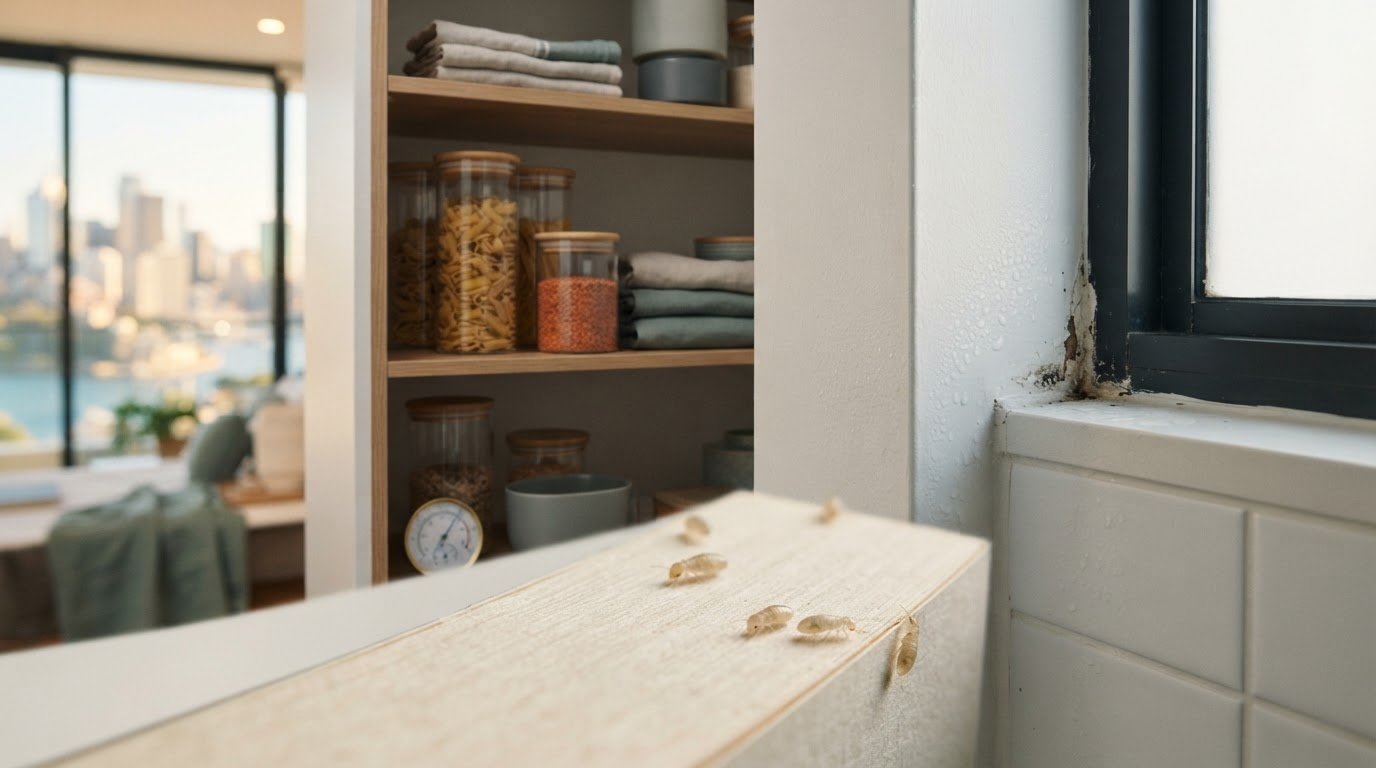
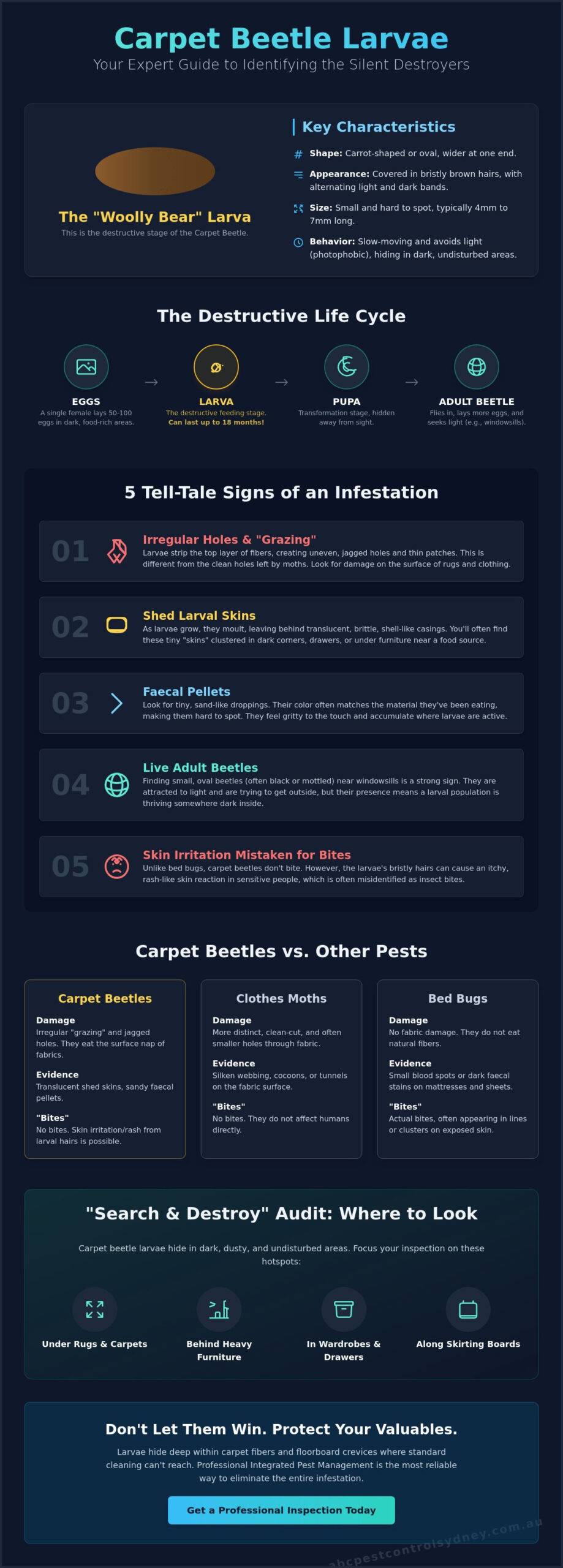
While adult beetles are often seen on windowsills during a Sydney spring, they aren’t the ones eating your rugs. It’s the larval stage that causes the real destruction. These pests belong to the Dermestidae family. To effectively spot the signs of carpet beetle larvae, you must first know what you’re looking for. They are commonly nicknamed “woolly bears” because of their distinct, bristly appearance. These larvae are typically carrot-shaped or oval, featuring alternating light and dark brown bands across their bodies. Most grow between 4mm and 7mm long. This small size makes them incredibly difficult to see when they are buried deep in dark carpet piles or tucked behind skirting boards.
Don’t let their slow movement fool you. They are surprisingly mobile. While they crawl at a leisurely pace, they can easily travel from a bedroom wardrobe to a lounge room rug in search of fresh food. What Do Carpet Beetle Larvae Look Like? is a common question for homeowners who find small, hairy insects in their wardrobes, but by the time you see one, the damage is likely already done. Identifying these pests early is the only way to save your investment in natural fiber furnishings.
The Life Cycle: From Egg to Destructive Larva
Adult beetles fly into Sydney homes through open windows or hitch a ride on fresh bouquets of flowers. Once they find a suitable environment, a single female can lay between 50 and 100 eggs. They choose dark, undisturbed spots where food is plentiful for their offspring. The larval stage is the longest part of their life cycle. It can last anywhere from a few months to 18 months depending on the temperature and food supply. This means a single generation can graze on your wool rugs for over a year before you even notice they’re there. This prolonged feeding period is why a small infestation quickly turns into a disaster.
Why They Are Hard to Find
These larvae are photophobic. This means they have a natural fear of light and will actively hide when you enter a room. They thrive in the shadows behind heavy furniture or inside the dark recesses of built-in wardrobes. Their diet is strictly keratin based. Keratin is the protein found in natural animal fibers like wool, silk, feathers, and leather. They even eat the pet hair and lint that accumulates under your bed. They are remarkably resilient. Some larvae can survive for several weeks without any food at all. This makes them a high-difficulty challenge for standard cleaning routines that only focus on visible surfaces.
The 5 Tell-Tale Signs of a Carpet Beetle Infestation
Identifying the signs of carpet beetle larvae requires a keen eye for detail. These pests are masters of camouflage, often leaving behind a trail of evidence long before you spot a live insect. Unlike clothes moths that tend to eat clean holes through fabric, carpet beetle larvae are surface grazers. They often strip the top layer of fibers, leaving behind thin, irregular patches or jagged holes. This “grazing” pattern is a primary indicator that you’re dealing with beetles rather than moths. According to The 5 Tell-Tale Signs of a Carpet Beetle Infestation, early detection is the only way to prevent the total loss of your high-value textiles.
Another unmistakable sign is the presence of shed larval skins. As the “woolly bears” grow, they moult several times, leaving behind translucent, shell-like casings. These are often found in clusters near their food source. You might also notice faecal pellets, which look like tiny, sand-like grains. These droppings are typically the same color as whatever the larvae have been eating. If you see adult beetles gathering on windowsills, consider it a lagging indicator. Adults are attracted to light and attempt to move outdoors to feed on pollen, but their presence inside usually means a destructive larval population is already thriving in your dark cupboards.
Damage Patterns: Rugs, Clothing, and Upholstery
Check the underside of your woollen rugs and Persian carpets immediately. Larvae prefer the dark, undisturbed space between the rug and the floor. They also target clothing, specifically focusing on areas that may have traces of sweat, oil, or food spills. This is because the larvae seek out the extra nutrients found in soiled fabrics. Don’t forget to inspect natural-fibre insulation in your roof or any taxidermy items. These provide a massive keratin source that can sustain a large population for months. If you notice these patterns, it may be time to consult with an expert in carpet beetle Sydney services to stop the spread.
Shed Skins and Faecal Matter
Evidence piles usually accumulate along skirting boards and in the far corners of built-in wardrobes. It’s easy to mistake faecal pellets for common household dust, but their uniform size and shape set them apart. Look for translucent husks that look like dried-up insect bodies. Shed skins are a definitive sign of an active, growing population. Clean these areas thoroughly, but remember that visible evidence is often just the tip of the iceberg.
Carpet Beetles vs. Clothes Moths vs. Bed Bugs
Many Sydney residents misidentify the signs of carpet beetle larvae, leading to ineffective DIY treatments and continued property damage. If you discover a hole in your favorite wool jumper, don’t immediately blame moths. Clothes moths leave behind tell-tale silk webbing or small, cigar-shaped cocoons. Carpet beetle larvae do not. Instead, they leave clean, jagged holes and those translucent shed skins we identified in the previous section. Understanding these differences is the first step toward a pest-free home. For a deeper look at larval behavior, you can consult the University of California’s guide to carpet beetles.
Differentiating the Physical Evidence
A “graze” on a rug is a classic indicator of beetle larvae. While moths often eat through the material entirely, beetles prefer to strip the surface fibers. If you find an adult beetle on your window, it doesn’t rule out other issues, but it’s a strong clue that your “bites” might actually be a skin reaction. Use the table below to compare common household pests.
| Pest | Primary Food | Evidence Left Behind | Health Impact |
|---|---|---|---|
| Carpet Beetle | Keratin (Wool, Silk, Hair) | Shed skins, sand-like droppings | Skin rash (Dermatitis) |
| Clothes Moth | Keratin (Wool, Silk) | Webbing, silken cocoons | None |
| Bed Bug | Human Blood | Blood spots, dark fecal stains | Actual bites |
If your inspection reveals blood spots on sheets or dark stains in mattress seams, you are likely dealing with a different intruder. In that case, read our how to get rid of bed bugs guide to confirm your suspicions and take immediate action.
The “Rash” Factor: Carpet Beetle Dermatitis
The biggest source of confusion for homeowners is the physical reaction. Carpet beetles do not bite humans or pets. They have no interest in blood. The itchy, red bumps you find on your skin are often Carpet Beetle Dermatitis. This is an allergic reaction to the barbed hairs, known as hastisetae, found on the larvae. As the larvae move across your bed or through your clothing, these microscopic hairs pierce the skin and cause irritation.
The resulting rash looks remarkably like a bed bug bite. It often appears as small, red, itchy bumps in a line or cluster. Only some people in a household might react. This depends on individual sensitivity to the allergen. One family member might be covered in bumps while another feels nothing. Professional identification is vital. Don’t waste money on expensive bed bug treatments if your real problem is a hidden colony of “woolly bears” in your carpet pile. Identify the pest correctly to save your time and your budget.
The “Search and Destroy” Audit: Where to Look Tonight
Don’t wait for more damage to occur. You need to conduct a thorough search of your home immediately. Identifying the signs of carpet beetle larvae requires looking beyond the visible surfaces of your rooms. These pests thrive in “dark and dusty” environments. Focus your energy on areas that haven’t seen a vacuum cleaner or a dust rag in months. In many Sydney homes, especially older terrace houses or federation-style builds, the deep crevices between floorboards and skirting boards are prime real estate for infestations.
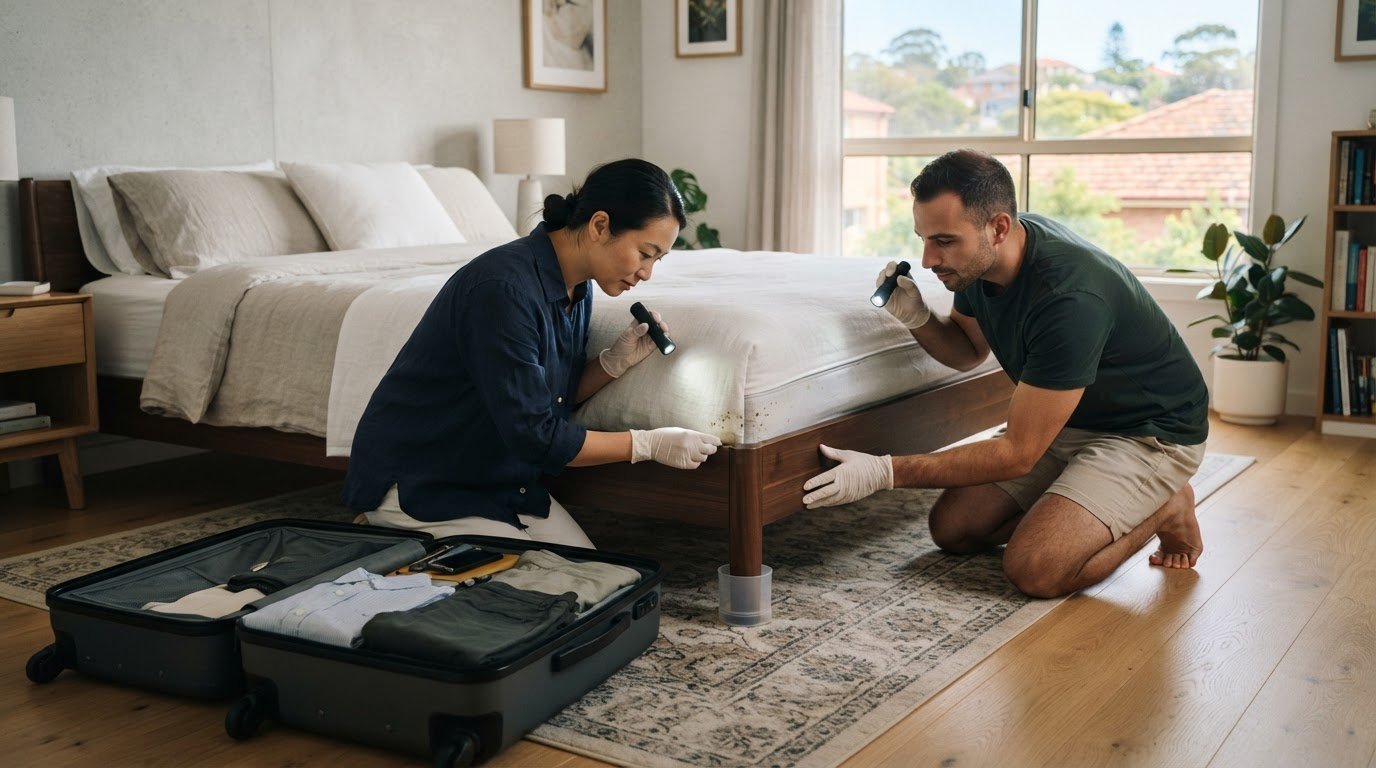
Grab a high-powered flashlight and a thin spatula. Use the spatula to gently probe the gap under your skirting boards. If you see small, sand-like grains or translucent husks spill out, you’ve found a nesting site. Check your roof voids and eaves as well. Sydney’s local bird populations often build nests in these spaces. Once the birds leave, carpet beetles move in to feed on the remaining feathers and organic debris. From there, it’s a short crawl into your living spaces. Don’t ignore the possibility of dead rodents in wall cavities, as these provide a massive food source that can sustain a colony for an entire season.
The Wardrobe and Linen Cupboard Deep Dive
Your wardrobe is the ultimate buffet for a “woolly bear.” Open every drawer and pull out your winter storage bins. Larvae often hide in the deep folds of woollen jumpers and silk scarves that stay tucked away for most of the year. Check the following specific items:
- Felt components: Inspect the underside of old hats, shoe linings, and even the internal hammers of a piano.
- Heavy furniture: Move the lounge and bed. Larvae love the dark, compressed wool fibers directly under furniture legs.
- Stored linens: Check the corners of linen cupboards for any natural fiber blankets that aren’t used regularly.
- Window Furnishings: Check the hems and pleats of your drapes, as these are common hiding spots; learn more about Anning Curtains & Blinds for high-quality, custom window treatments.
Overlooked Keratin Sources
Pet hair is a major food source that homeowners often miss. Even if you vacuum daily, hair accumulates behind the fridge, under the sofa, and inside dryer vents. This lint is pure keratin and can sustain a massive colony. Check your hairbrushes and natural-bristle paintbrushes in the garage. If you have taxidermy, trophy mounts, or dried flower arrangements, inspect them with your flashlight for any surface grazing or shed skins. If your audit reveals an active infestation, it’s time to call in the experts. Book a carpet beetle Sydney treatment today to stop the destruction before it spreads to every room in your house.
Professional Carpet Beetle Treatment in Sydney
If you’ve identified the signs of carpet beetle larvae in your home, you must act now. Superficial cleaning or store-bought sprays rarely solve the problem. These DIY methods often fail because they don’t penetrate the deep crevices where larvae reside. Our professional approach at ABC Pest Control Sydney utilizes Integrated Pest Management (IPM). This comprehensive methodology combines thorough inspections, sanitation advice, and targeted treatments. We prioritize eco-friendly solutions that are completely safe for your families and pets. You don’t have to choose between a healthy home and a pest-free one. Secure your property with our General Pest Control Package and stop the damage immediately.
Why Sydney Homes Are at Risk
Sydney’s environment is particularly welcoming to fabric pests. Our high humidity levels often lead to the growth of microscopic fungi on wool and silk. These fungi serve as a nutrient-rich supplement for carpet beetle larvae. Homeowners in the Inner West face additional risks. Older terrace houses often feature deep gaps between original floorboards and wide skirting boards. These architectural features are impossible to reach with a domestic vacuum cleaner. They become permanent breeding grounds for “woolly bears.” A professional pest inspection is your most effective defense. It allows us to pinpoint these hidden reservoirs of activity before your expensive rugs are ruined.
What to Expect from a Professional Service
Our technicians bring specialized tools and knowledge to every job. We use a combination of targeted residuals and insect growth regulators (IGRs). These IGRs are essential for breaking the long 18-month life cycle of the beetle. They prevent the larvae from ever maturing into egg-laying adults. This effectively ends the infestation from the inside out. We also provide the expert identification necessary to avoid misdiagnosis. If you’ve been mistaking the signs of carpet beetle larvae for bed bug bites, we’ll set the record straight. This prevents you from wasting money on the wrong treatment plan. Take control of your home’s safety and comfort now. Book your Sydney carpet beetle inspection today and let our experts handle the rest.
Take Action to Save Your Valuables Today
Your wool rugs and silk garments are significant investments that deserve protection. By recognizing the signs of carpet beetle larvae early, such as irregular grazing patterns and translucent shed skins, you’ve taken the first step toward reclaiming your home. Remember that these pests thrive in the dark, hidden gaps of Sydney’s unique architecture. Delaying treatment only gives the larvae more time to multiply and destroy your property. It’s time to stop the grazing and start the recovery process.
Don’t let a small issue turn into a total loss. With over 20 years of experience in the Sydney metropolitan area, our team provides specialist expertise in treating difficult fabric pests. We use eco-friendly and safe extermination methods to ensure the peace of mind of your family and pets. Our professional intervention breaks the cycle that DIY methods simply can’t reach. Protect your home and fabrics; book your Sydney Pest Control Package today! You can rest easy knowing your home is in the hands of seasoned professionals who understand the local challenges of Sydney pest management.
Frequently Asked Questions
Do carpet beetle larvae bite humans or pets?
No, carpet beetle larvae do not bite humans or pets. They don’t have the mouthparts required to break skin or feed on blood. The red, itchy bumps people often find are actually an allergic reaction to the tiny, barbed hairs on the larvae’s bodies. These hairs, called hastisetae, can cause skin irritation or dermatitis upon contact, which is frequently mistaken for bed bug bites.
How did carpet beetle larvae get into my clean house?
Adult carpet beetles fly into Sydney homes through open windows, doors, or small gaps in flyscreens. They are attracted to light and often enter while seeking pollen and nectar from garden plants. You might also accidentally bring them inside on fresh-cut flowers or second-hand furniture. Even the cleanest house can provide a food source like lint, pet hair, or woollen rugs for the larvae to thrive.
Can carpet beetle larvae live in your bed or mattress?
Yes, carpet beetle larvae can live in your bed or mattress if it contains natural materials. They are attracted to woollen blankets, silk sheets, or feather-filled pillows and duvets. They also feed on the dead skin cells and hair that naturally accumulate in bedding. While they don’t feed on you like bed bugs do, their presence in your bed increases the chance of skin irritation from their bristly hairs.
What is the fastest way to get rid of carpet beetle larvae?
The fastest way to eliminate an infestation is through professional integrated pest management. While cleaning helps, it rarely reaches the deep crevices where the population hides. Experts use targeted residuals and insect growth regulators to break the 18-month life cycle immediately. This approach ensures that eggs, larvae, and adults are all managed, preventing a secondary outbreak in your wardrobes or carpets.
Will a normal vacuum cleaner kill carpet beetle larvae?
A vacuum cleaner won’t kill the larvae, but it’s a vital tool for removing them and their food sources. Regular, deep vacuuming can suck up active larvae, shed skins, and the hair or lint they eat. However, it’s difficult to remove every egg or larva hidden under heavy furniture or inside floorboard gaps. You must empty your vacuum canister into a sealed bag outside to prevent the pests from crawling back into your home.
Are carpet beetle larvae the same as “woolly bears”?
Yes, “woolly bear” is the common nickname for carpet beetle larvae. This name comes from their distinct appearance; they are covered in dense, bristly hairs and have a striped, carrot-shaped body. If you see these small, hairy insects crawling near your skirting boards, you are seeing the primary signs of carpet beetle larvae. Identifying them as “woolly bears” is often the first step toward realizing you have a fabric pest problem.
How do I tell the difference between carpet beetle and bed bug rashes?
It can be very difficult to tell the difference without a professional inspection. Bed bug bites are actual punctures that often appear in a straight line or “breakfast, lunch, and dinner” pattern. Carpet beetle dermatitis is an allergic rash that appears as small, red, itchy bumps where your skin touched the larval hairs. If you find shed skins but no blood spots on your sheets, you are likely dealing with beetles.
What do carpet beetle eggs look like and where are they laid?
Carpet beetle eggs are tiny, oval-shaped, and usually white or cream in color. They are less than 1mm long, making them almost invisible to the naked eye. A single female can lay 50 to 100 eggs in dark, undisturbed areas. Typical locations include the underside of wool rugs, inside air conditioning ducts, or behind skirting boards where pet hair and dust accumulate to provide an immediate food source for hatching larvae.