

You reach into your wardrobe for that favorite wool coat or silk dress, only to find a jagged, unexplained hole right in the center. It’s a sinking feeling every Sydney homeowner knows, especially when expensive fabrics like cashmere are at stake. Learning how to protect clothes from moths isn’t just about smell-heavy mothballs that don’t work; it’s about safeguarding your investment before the damage spreads to every closet in your home.
We understand the frustration of seeing your best outfits ruined by a hidden pest you can’t seem to catch. It’s stressful to realize that DIY solutions often fail to stop the breeding cycle in our humid coastal climate. This guide provides the expert-approved steps you need to identify the signs of an infestation, eliminate the larvae for good, and store your garments safely. You’ll learn exactly how to reclaim your wardrobe and understand when it’s time to bring in professional intervention to ensure these pests never return.
Key Takeaways
- Identify the specific moth species common in NSW and understand why larvae, not the flying adults, are the real threat to your fabrics.
- Master the thermal method to eliminate active infestations and learn exactly how to protect clothes from moths using high-heat laundering techniques.
- Discover why hermetic seals and gasket-lined bins provide superior protection compared to traditional cardboard boxes or natural repellents.
- Learn why recurring infestations often stem from eggs hidden in floorboards or wall voids that DIY cleaning simply cannot reach.
- Gain the confidence to know when professional intervention is necessary to secure your home’s most valuable textiles with expert-led protocols.
Identifying the Culprit: Is it Really Clothes Moths?
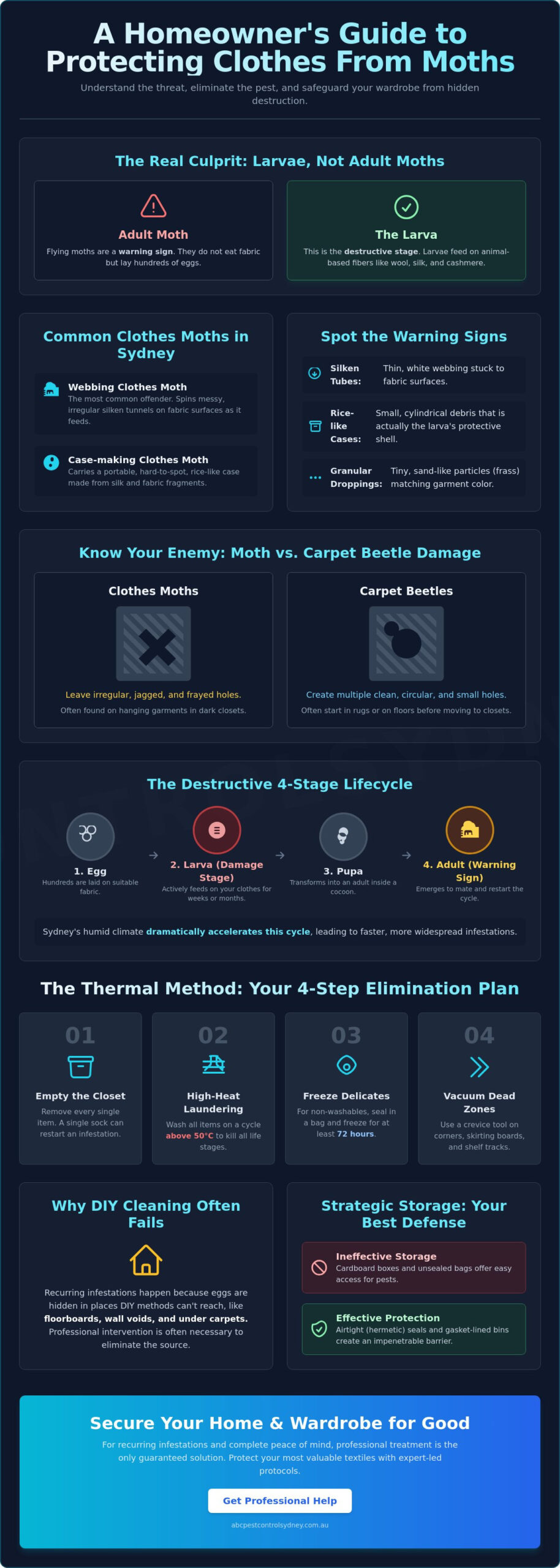
The fluttering insect you see near your lights isn’t the one destroying your wardrobe; clothes moths are actually keratin-eating larvae that do the real damage while thriving in the dark, undisturbed corners of your closet. If you want to know how to protect clothes from moths, you must understand that the adult moth cannot eat fabric, but the hundreds of eggs it lays will soon hatch into hungry caterpillars. These larvae feed exclusively on animal-based fibers, making your expensive woollens and silks a primary target for destruction.
In New South Wales, homeowners typically encounter two main species. The Webbing Clothes Moth is the most frequent offender, known for spinning messy silken tunnels as it feeds. The Case-making Clothes Moth is slightly more organized, carrying a portable, rice-like case made of silk and fabric fragments wherever it goes. Both species target high-value natural fibers like wool, silk, cashmere, and fur, leaving behind irregular, ragged holes that can ruin a garment in a matter of weeks.
Look for these tell-tale signs in the dark folds of your clothing or along the seams of suits:
- Silken tubes: Thin, white webbing stuck to the surface of the fabric, often looking like a translucent patch.
- Rice-like cases: Small, cylindrical debris that may look like lint but is actually a protective shell for the larvae.
- Granular droppings: Tiny sand-like particles (frass) that often match the color of the garment they are consuming.
Moths vs. Carpet Beetles: Know Your Enemy
Don’t assume every hole is from a moth. A carpet beetle Sydney infestation presents differently, often leaving very clean, circular holes rather than the frayed, irregular edges typical of moths. While moths prefer hanging garments, carpet beetles usually start their journey in floor rugs or along skirting boards before migrating into your closets. Identifying the specific pest is vital because treatment protocols vary between these two resilient insects.
The Secretive Lifecycle of a Sydney Moth
The common clothes moth follows a four-stage lifecycle: egg, larva, pupa, and adult. Seeing a single flying adult is an urgent warning sign; it means there are likely dozens of larvae already tunneling through your cashmere. Sydney’s high humidity and warm coastal temperatures can significantly accelerate this process. Instead of taking months to develop, the larvae can mature much faster in our climate, leading to rapid, widespread damage across your entire wardrobe if left untreated. Understanding this cycle is the first step in knowing how to protect clothes from moths effectively.
Eliminating an Active Infestation: The Thermal Method
Stop the damage immediately. Once you’ve identified larvae in your wardrobe, you’re in a race against their lifecycle. You need a systematic approach to kill every egg and larva without destroying your expensive garments. The most effective way to handle an active problem is through the thermal method, which uses temperature extremes to eradicate pests that chemicals might miss.
Follow these four critical steps to clear your closet:
- Step 1: Empty the entire closet. Do not leave a single item behind. Even a stray silk scarf or woollen sock can harbor enough microscopic eggs to restart the infestation within weeks.
- Step 2: Use high-heat laundering. For all washable natural fibres, use a cycle above 50°C. Research from the UC Statewide IPM Program confirms that sustained high temperatures are lethal to all life stages of the clothes moth, including the resilient eggs.
- Step 3: The Freezing Technique. If an item can’t be washed, seal it in a plastic bag, squeeze out the air, and freeze it for at least 72 hours. This is essential for delicate items that can’t handle the wash.
- Step 4: Vacuum the “Dead Zones.” Use a high-powered vacuum with a crevice tool. Focus on skirting boards, shelf corners, and the tracks of sliding doors where lint and hair accumulate.
Deep Cleaning Your Storage Space
You can’t just clean the clothes; you must treat the environment. Wipe down every shelf and hanging rod with a vinegar solution or a specialized disinfectant. Focus heavily on the dark corners where larvae prefer to pupate undisturbed. Don’t forget to clean behind heavy furniture positioned near the wardrobe. Dust and pet hair trapped in these gaps provide a secondary food source for moths. If the scale of the task feels overwhelming, professional pest sprays Sydney can provide the deep-reach treatment necessary to secure your home.
Dry Cleaning vs. DIY Heat Treatment
Know when to call in the experts for your fabrics. Professional dry cleaning is the safest choice for delicate silks, furs, and structured blazers that might lose their shape in a home wash. Learning how to protect clothes from moths involves recognizing the risk of shrinking expensive woollens if you attempt DIY heat treatment incorrectly. While “sun-airing” clothes on a hot Sydney day provides some UV protection and helps dislodge larvae, it isn’t a total cure. Use it as a supplementary step, but rely on high heat or freezing for guaranteed results.
Long-Term Prevention: Strategic Storage and Barriers
Prevention is your best defense once you’ve cleared an active infestation. If you want to master how to protect clothes from moths, you must create a fortress around your garments. This involves more than just hanging a few cedar blocks; it requires a strategic shift in how you store and maintain your wardrobe. You need to eliminate their access and their incentive to stay.
Start with the Hermetic Seal. Plastic bins with rubber gaskets are vastly superior to cardboard boxes or standard plastic tubs. Moths are incredibly persistent; they can squeeze through gaps as small as a few millimeters. Cardboard is particularly dangerous because it provides both a hiding spot and a potential food source for other pests. Using clear bins allows you to perform visual inspections without breaking the seal, giving you peace of mind without the risk of a breach.
Be realistic about natural repellents. While cedar, lavender, and rosemary smell pleasant, they have a very limited role in a real-world scenario. Cedar oil can kill young larvae, but its effectiveness fades quickly as the wood dries out. Similarly, pheromone traps are excellent for monitoring activity, but they only attract adult males. They won’t stop the egg-laying females or the larvae already in your clothes. For a truly effective strategy, consult a comprehensive guide to clothes moth control to understand the limitations of these common DIY deterrents.
Enforce the “Clean Clothes Only” rule strictly. Clothes moth larvae aren’t just looking for wool; they’re hunting for the nutrients found in sweat, skin cells, and food spills. Even a tiny, invisible stain can make a garment a prime target. Always wash or dry clean every item before placing it into seasonal storage. This single habit can be the difference between a pristine wardrobe and a ruined collection.
Managing Humidity in Sydney Closets
Sydney’s coastal humidity creates a perfect breeding ground for pests. High moisture levels soften natural fibers, making them easier for larvae to consume. Use moisture-absorbing canisters or a dedicated dehumidifier in your walk-in wardrobe to keep the air dry. Regular “closet audits” are essential; move your clothes around to prevent stagnant air pockets. Effective pest control in Sydney often starts with these simple environmental adjustments that make your home less hospitable to invaders.
Choosing the Right Storage Containers
Invest in high-quality, airtight containers for your out-of-season items. Avoid vacuum bags for long-term storage of delicate natural fibers, as they can damage the structure of the wool or silk over years of compression. Instead, choose rigid plastic bins with secure latches. Labeling these bins and checking them every few months ensures you catch any breach early. This proactive approach is the most reliable way to understand how to protect clothes from moths over the long term.
When DIY Fails: The Risks of Recurring Infestations
You’ve laundered your woollens, scrubbed the shelves, and set out traps, yet you still find new holes in your favorite garments. This is the primary frustration of many Sydney homeowners. The reality is that DIY efforts often focus only on the visible larvae, leaving the root cause untouched. Understanding how to protect clothes from moths requires a shift from treating symptoms to addressing the entire environment. If the insects return after a deep clean, you aren’t dealing with a dirty closet; you’re dealing with a systemic infestation.
Moth eggs are microscopic and incredibly resilient. They don’t just sit on your clothes. They hide in the deep crevices of floorboards, behind skirting boards, and within wall voids. While your wardrobe might be clean, these “reservoir populations” continue to hatch and migrate back to your fabrics. Without a systemic approach, you’re trapped in a cycle of cleaning and losing clothes. Furthermore, an unchecked population can quickly spread from your closet to expensive wool carpets and upholstered furniture, leading to thousands of dollars in property damage.
Identifying a Systemic Infestation
Is the problem bigger than just one drawer? If you see adult moths fluttering in multiple rooms, the source is likely hidden. Moths often breed in old bird nests in the eaves or within natural fiber insulation in the roof. These “hidden sources” act as a staging ground for constant re-infestation. Much like the persistent nature of how to get rid of bed bugs, moths require professional-grade treatments that penetrate these inaccessible areas. A professional technician uses specialized equipment to reach the voids where DIY sprays simply cannot go.
The Cost of Delay vs. The Cost of Treatment
Moths can destroy a high-value wardrobe in just a few weeks. When you calculate the replacement cost of a single designer suit, a cashmere sweater, or a silk gown, the financial risk of waiting is immense. A professional pest package is an investment in your property’s safety. Expert intervention provides the peace of mind that comes with a service guarantee, ensuring the breeding cycle is broken for good. Don’t let a small problem turn into a total loss of your textile investments. If you’ve discovered recurring damage, contact our team for an expert assessment before more of your wardrobe is ruined.
Professional intervention is the only way to ensure 100% eradication in complex cases. While DIY methods are great for maintenance, they rarely solve a deep-seated biological problem. Take action today to ensure you know exactly how to protect clothes from moths by securing your home against future generations of these destructive pests.
Professional Moth Control with ABC Pest Control Sydney
When home remedies and DIY cleaning cycles fail to stop the damage, you need a solution that targets the biological source of the problem. ABC Pest Control Sydney brings over 20 years of local experience to every wardrobe we protect. We don’t just spray surfaces; we employ specialized moth and carpet beetle treatment protocols designed specifically for the resilient species found in the Sydney metropolitan area. Our team understands that learning how to protect clothes from moths effectively means neutralizing the hidden egg reservoirs that standard vacuuming misses.
We prioritize your family’s safety. Our technicians use eco-friendly, family-safe treatments that are highly effective against larvae but gentle on your home environment. We apply these professional-grade residuals with precision, ensuring they reach the deep crevices where moths pupate. Don’t wait for another jagged hole to appear in your favorite designer suit or heirloom cashmere. Immediate professional intervention stops the lifecycle today and prevents the total loss of your textile investments. We handle the complex cases that standard maintenance can’t resolve, giving you back your peace of mind.
Our Integrated Pest Management (IPM) Approach
Success starts with accurate identification. We locate the specific nesting sites and determine whether you’re facing webbing moths, case-making moths, or carpet beetles. This precision allows us to apply safe residuals that break the breeding cycle at its weakest point. Once the active threat is neutralized, we provide preventative guidance tailored to your home’s specific architecture so you know exactly how to protect clothes from moths for the long term. Whether you live in a modern apartment or a heritage terrace, we help you identify the structural gaps where pests thrive.
Book Your Sydney Pest Inspection Today
Protecting your home shouldn’t be complicated or time-consuming. Our General Pest Control Packages are designed to offer comprehensive protection for your entire household. These bundles cover moths along with 15 other common household pests, providing a total shield for your property and your belongings. We are committed to rapid, professional service across all Sydney suburbs, ensuring your wardrobe is secured without delay. Take the first step toward a moth-free home now. Protect your wardrobe—Book a Professional Treatment Now and gain the reliability that only two decades of expertise can provide.
Secure Your Wardrobe and Reclaim Your Peace of Mind
Your clothes are more than just fabric; they are a significant investment in your style and comfort. By now, you’ve mastered the basics of how to protect clothes from moths through thermal eradication and airtight storage. You know that vigilance in cleaning and moisture control is the first line of defense against these destructive pests. However, when the infestation persists in hidden voids, professional expertise is the only way to break the cycle for good.
Don’t let another expensive garment fall victim to larvae. ABC Pest Control Sydney offers over 20 years of local expertise to ensure your home remains a safe haven. We utilize eco-friendly and family-safe methods to target pests without compromising your health. Our comprehensive packages provide protection against 15 different pests, giving you total security across your entire property. Take decisive action today to stop the damage before it spreads further.
Secure Your Home with a Professional Moth Treatment Plan and enjoy the confidence of a moth-free closet. We are ready to help you safeguard your most valuable textiles with reliable, expert-led solutions.
Common Questions About Moth Protection
Do mothballs actually work to protect clothes?
Yes, but only in high concentrations within airtight containers. They use chemicals like naphthalene which can be toxic and leave a persistent, unpleasant odor on your garments. Modern homeowners often find them impractical because the fumes must reach a specific saturation point to kill larvae. Relying on them in a walk-in wardrobe is usually ineffective and poses unnecessary health risks to your family.
Can moths eat synthetic fabrics like polyester or nylon?
No, larvae cannot digest synthetic fibers, but they will still chew through them to reach natural fibers underneath. If your polyester shirt is stained with food, sweat, or skin cells, moths may damage the garment while hunting for those nutrients. This is why keeping all items clean is a vital part of knowing how to protect clothes from moths effectively throughout the year.
How do I know if I have moths or carpet beetles?
Look at the shape of the holes and the debris left behind in your closet. Moths leave irregular, frayed holes and silken webbing or rice-like cases in the folds of your clothes. Carpet beetles leave cleaner, more circular holes and shed prickly, brown larval skins. While both target natural fibers, carpet beetles are more likely to be found at floor level before migrating upward.
Will washing my clothes at 40 degrees kill moth eggs?
No, a 40-degree wash is generally insufficient to eradicate all life stages of the clothes moth. You need temperatures above 50°C for at least 30 minutes to guarantee the destruction of resilient eggs and larvae. For delicate items that cannot handle high heat, freezing for 72 hours is the safer alternative. Always check garment care labels before attempting high-temperature laundering to prevent permanent shrinkage.
Are pheromone moth traps enough to stop an infestation?
No, pheromone traps are strictly a monitoring tool rather than a total eradication solution. They only attract adult males, leaving the egg-laying females and hungry larvae to continue their destruction. While they help you identify a growing problem early, they cannot break the breeding cycle alone. Use them to gauge the severity of the issue before implementing a more systemic professional treatment plan.
How long can moth larvae live without food?
Larvae can survive for several weeks without a direct food source, depending on the temperature and humidity levels. In a typical Sydney climate, they are highly resilient and can enter a dormant state if conditions become unfavorable. They often hide in floorboard gaps or behind skirting boards, waiting for new natural fibers to arrive. This resilience makes professional-grade residuals necessary for total, long-term eradication.
Can clothes moths fly into my house from outside?
Yes, adult moths can enter through open windows, doors, or small structural gaps, though they are relatively weak fliers. They are often accidentally brought inside on vintage clothing, second-hand furniture, or even grocery items. Once inside, they seek out dark, undisturbed areas to lay their eggs. Installing fine mesh screens on windows is a simple but effective preventative measure for most Sydney homes.
Is professional moth treatment safe for my pets and children?
Yes, our professional treatments prioritize safety by using APVMA-approved products and targeted application methods. We focus on “dead zones” like wall voids and skirting boards rather than saturating your primary living spaces. When you learn how to protect clothes from moths through a professional service, we provide clear safety protocols, including brief exclusion periods, to ensure your family and pets remain completely protected.