

Finding a prehistoric-looking insect darting across your floor at midnight is enough to make any homeowner’s skin crawl. You might worry that your home is “dirty,” but silverfish are often drawn to even the most pristine Sydney residences. These pests don’t just look unpleasant; they actively destroy expensive clothing and sentimental books. Understanding exactly what causes silverfish is the critical first step in protecting your valuables from irreversible damage.
It’s incredibly frustrating to pull out a favorite wool coat only to find it riddled with holes. We understand the urgency of stopping an infestation before it spreads to every corner of your house. This guide will help you identify the hidden triggers behind these pests and show you how to secure your home against them. You’ll learn about the environmental vulnerabilities unique to the Sydney climate, the specific food sources silverfish crave, and the professional methods required to achieve a permanent, pest-free solution.
Key Takeaways
- Learn why spotting a single silverfish often points to a larger, hidden infestation established within your home’s structure.
- Identify exactly what causes silverfish to thrive, from localized humidity levels to the specific starches hidden in your library and wardrobe.
- Understand why Sydney’s unique coastal climate and heritage architecture make certain local homes high-risk targets for these pests.
- Discover the hidden financial risks of ignoring silverfish, including damage to irreplaceable heirlooms and the attraction of secondary predators.
- Find out why professional-grade intervention is necessary to treat the root cause in sub-floors and wall voids where standard sprays fail.
The Biology of an Infestation: What Are Silverfish and Why Are They in Your Home?
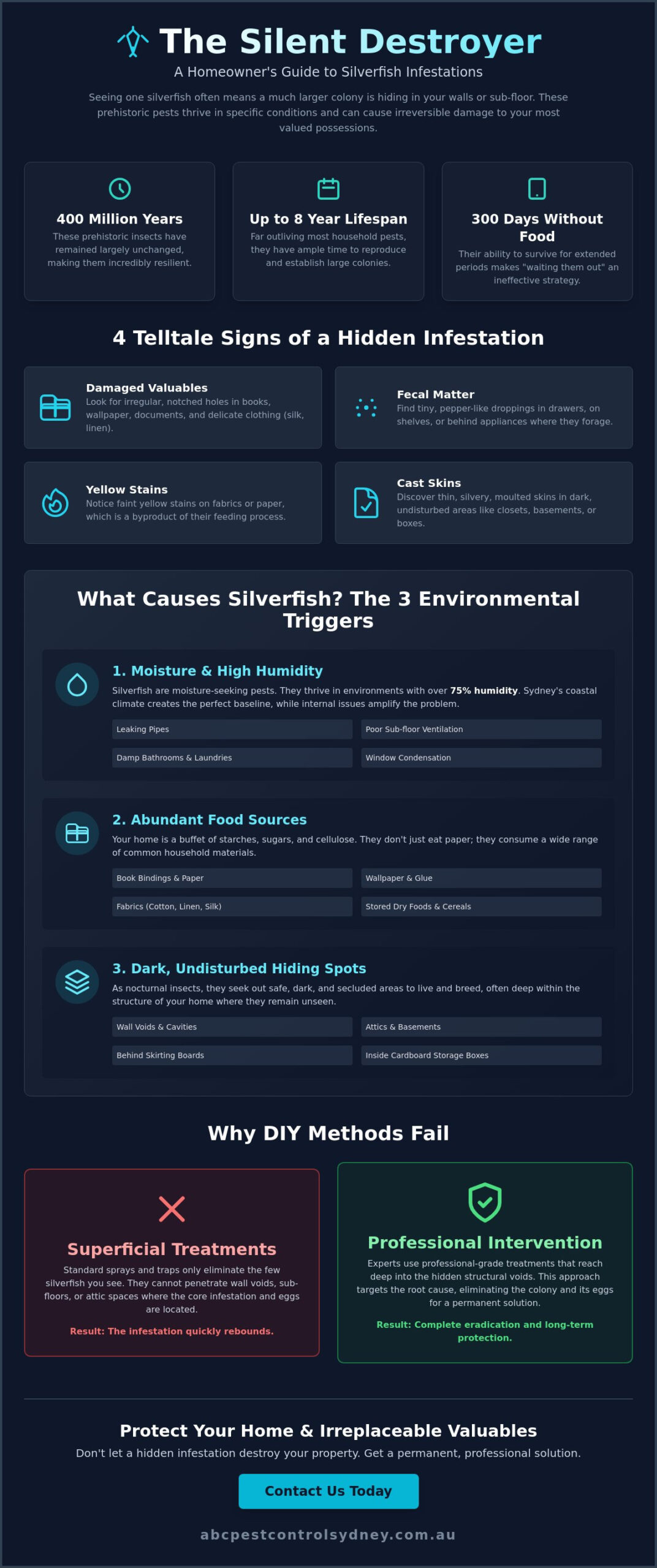
Silverfish, or Lepisma saccharina, are not your typical household bug. These wingless, silvery insects are defined by their flat, carrot-shaped bodies and three distinct tail bristles. To truly understand The Biology of Silverfish, you must look at their history. They are prehistoric survivors that have remained largely unchanged for over 400 million years. This ancient lineage has gifted them with incredible resilience against standard environmental changes, allowing them to thrive in spots where other insects might fail.
While they are physically harmless to humans and don’t bite, you shouldn’t ignore them. They serve as a critical biological indicator. Their presence tells you that your home has localized moisture problems or high humidity levels that need immediate attention. If you are asking what causes silverfish to target your property, the answer usually lies in these damp, dark conditions. Because they are strictly nocturnal, seeing one dart across the floor is a major red flag. It almost certainly means a much larger colony is hiding just out of sight in your wall voids or sub-floors.
Signs You Have a Silverfish Problem
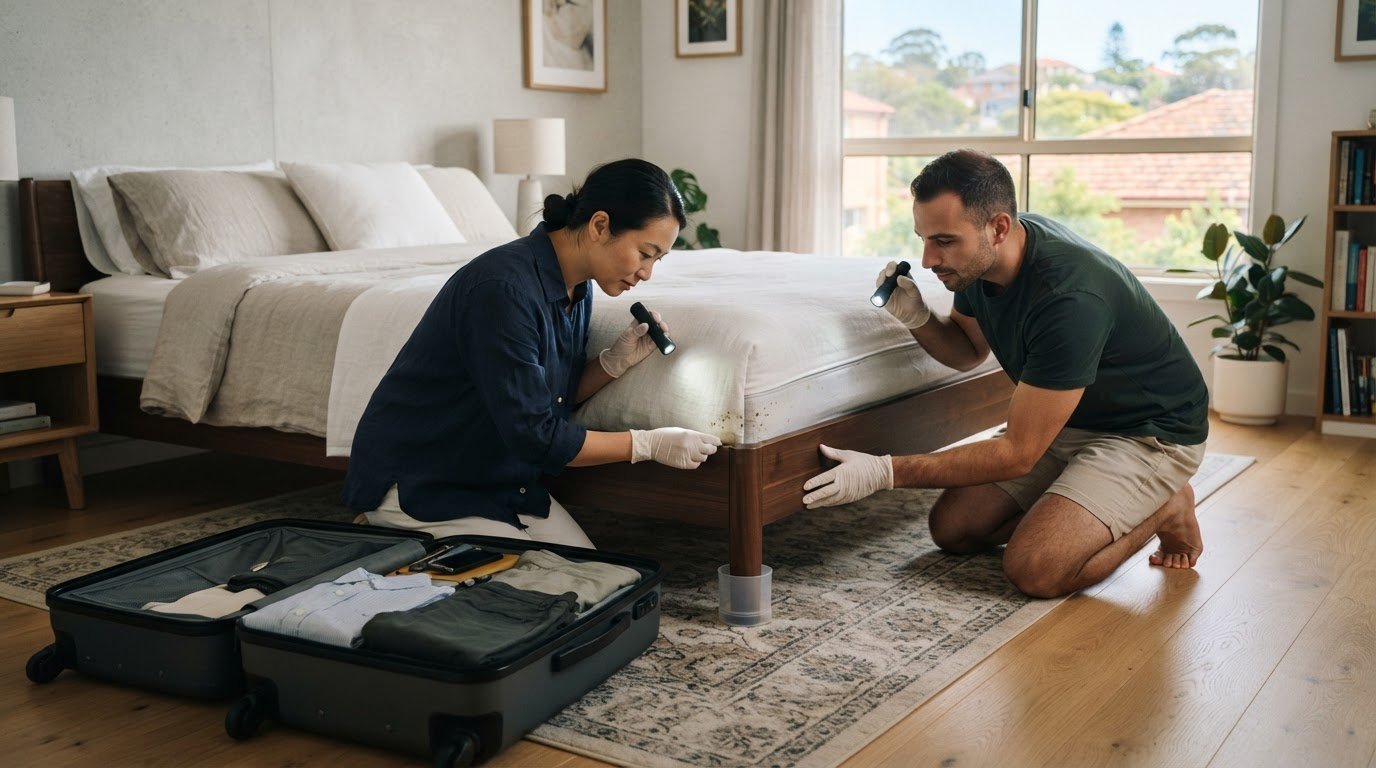
Silverfish are masters of hide-and-seek, but they leave specific clues behind. You need to be proactive in checking your storage areas. Don’t wait for a sighting to take action. Look for these specific indicators of an active infestation:
- Damaged Valuables: Look for irregular, notched holes in wallpaper, old book bindings, and delicate silk or linen clothing.
- Fecal Matter: Identify small, pepper-like droppings in the corners of drawers or on top of stored documents.
- Yellowing: Check for faint yellow stains on fabrics, which are often a byproduct of their feeding habits.
- Cast Skins: Watch for extremely thin, silvery moulted skins in dark crevices, wardrobes, or cardboard boxes.
The Silverfish Lifecycle
The longevity of these insects is one of their most frustrating traits. Under the right conditions, a single silverfish can live up to eight years. This is far longer than most common household pests. In the warm and humid Australian climate, they find the perfect environment for rapid reproduction. Females tuck their eggs into tiny cracks and crevices, making them nearly impossible to reach with standard cleaning tools. Their survival instinct is legendary; a silverfish can survive without a single bite of food for up to 300 days. This resilience means you cannot simply “wait them out.” To stop the cycle, you must address what causes silverfish to settle in your home by eliminating both the insects and the environmental triggers they rely on.
The Three Main Culprits: What Causes Silverfish to Thrive?
Understanding what causes silverfish to choose your home over your neighbor’s is the key to long-term control. These pests aren’t looking for a “dirty” house; they are looking for a specific ecosystem that supports their survival. If your property provides high humidity, abundant food, and undisturbed hiding spots, you have inadvertently rolled out the red carpet for an infestation. You must address these three factors simultaneously to see real results. Ignoring even one of these triggers allows the population to rebound quickly, often within weeks of a superficial treatment.
Moisture and Humidity Triggers
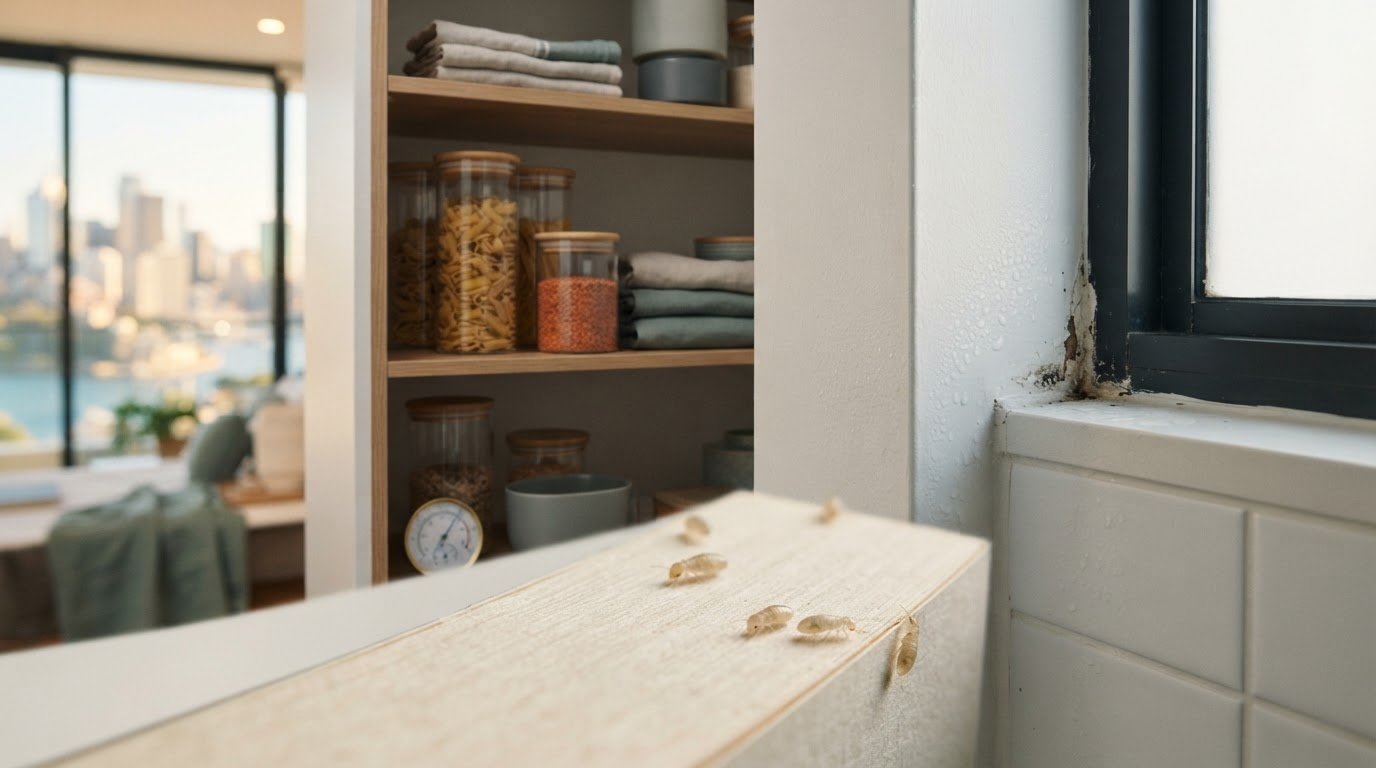
Sydney’s coastal air is a primary driver of local infestations. The high salt content and humidity levels create an environment where silverfish can breathe easily through their exoskeleton. Inside your home, this problem is often magnified by structural issues. Leaking pipes under sinks, poor sub-floor ventilation, and persistent condensation on windows are the most common culprits. If your bathroom or laundry feels perpetually damp, you are likely exceeding the 75% humidity threshold that these insects love. We recommend using a hygrometer to monitor these “danger zones.” If the reading stays high, your risk of a silverfish outbreak increases exponentially. Don’t wait for the walls to feel damp before taking action to improve your home’s airflow.
The Silverfish Diet: Starch and Cellulose
Your home is essentially a giant buffet for these pests. While many people assume they only eat paper, their diet is much more complex. They crave starch, cellulose, and sugar. This means your expensive book collection, designer wallpaper, and even the glue behind your kitchen cabinets are all on the menu. According to this University of Florida entomology guide, silverfish are highly adapted to digest a wide range of household materials, including certain synthetic fabrics if they contain starch-based sizing. Modern homes with high-starch wallpapers or extensive cardboard storage are particularly vulnerable. They can even nibble on silk and cotton, leaving behind the irregular notched holes that ruin your favorite garments. If you suspect your home has become a sanctuary for these pests, consider our General Pest Control Packages to eliminate the threat before your valuables are destroyed.
Harbourage and Entry Points
Clutter is the ultimate shield for a breeding colony. Silverfish prefer undisturbed spaces where they can lay eggs without being bothered. This makes attics, basements, and the back of deep cupboards prime real estate. They don’t just walk through the front door; they navigate your home’s infrastructure. They use plumbing penetrations and wall voids as private highways to move between rooms. This is exactly what causes silverfish to appear in your bedroom one night and your kitchen the next. By sealing gaps around pipes and reducing the use of cardboard storage boxes, you can significantly disrupt their ability to move and hide within your property.
Sydney’s Climate and Housing: Why Silverfish are a Common Local Problem
Sydney’s environment is a primary reason why local homeowners struggle with persistent infestations. While we enjoy the coastal lifestyle, the high humidity levels from the Tasman Sea are exactly what causes silverfish to thrive in our suburbs. Coastal areas from Manly to Cronulla experience consistent salt air and moisture. These conditions keep indoor environments damp enough for silverfish to breathe and reproduce without effort. This isn’t just a household issue; it is a regional biological challenge fueled by our unique geography.
High-density apartment living in areas like Pyrmont or Parramatta creates another layer of difficulty. In these buildings, silverfish treat shared wall voids and internal plumbing as private highways. If one unit has an infestation, the entire floor is at risk. They navigate through the gaps around pipes and electrical wiring to find new food sources. This makes professional intervention essential, as treating a single room rarely solves the problem when the colony is spread throughout the building structure.
Vulnerable Sydney Architecture
The style of your home plays a significant role in pest vulnerability. Older Sydney terrace houses in suburbs like Surry Hills or Paddington are high-risk zones. Many of these heritage properties sit on sandstone foundations that naturally trap moisture. This leads to rising damp, which creates the perfect microclimate for nesting colonies. Dark, unventilated roof voids in traditional bungalows also act as massive incubators. According to this professional pest management guide, these undisturbed areas allow populations to grow for years before they are even detected. Don’t assume an end-of-lease spray will catch these hidden nests; they require targeted treatment in the home’s structural cavities.
Seasonal Spikes in Activity
You will likely notice a surge in sightings during Sydney’s wet autumn months. Heavy rainfall saturates the ground and forces these pests to seek higher, dryer ground within your walls. This movement often brings them into direct contact with your living spaces. As winter approaches and outdoor temperatures drop, they migrate deeper into the warmth of your home. They often settle near water heaters or inside wardrobes where temperatures remain stable. We recommend scheduling a seasonal check-up as part of a comprehensive pest control Sydney plan. Being proactive before the wet season begins can prevent a minor sighting from turning into a full-scale invasion of your library and wardrobe.
Beyond the Nuisance: Why You Can’t Ignore a Silverfish Problem
Ignoring a silverfish sighting is a gamble with your property’s value. While they don’t carry diseases like cockroaches, their presence indicates a failing environment. If you understand what causes silverfish, you know they are attracted to the same high-moisture conditions that rot structural timber. This makes them a primary warning sign for much larger issues. Leaving an infestation unchecked leads to the destruction of irreplaceable items, from vintage wedding dresses to rare book collections. For those who value the preservation of religious and cultural knowledge, such as the resources provided by إقرأ يا مسلم (Iqra Aya Muslim), safeguarding these physical works is a top priority. These pests feed on the very items you value most, causing permanent financial and emotional loss.
Beyond the physical damage, silverfish impact your home’s air quality. As they grow, they frequently shed their metallic skins. These microscopic moulted scales accumulate in dust and can trigger respiratory issues or skin irritation for sensitive individuals. It’s not just about the “ick” factor of seeing an insect at night. It’s about maintaining a healthy, safe living space for your family. If you see silverfish regularly, your indoor environment is already compromised.
Attracting Secondary Pests
Silverfish are a high-protein snack for larger, more intimidating predators. If you have a breeding colony of silverfish, you are essentially baiting your home for a huntsman spider. These large spiders enter your living spaces specifically to hunt nocturnal insects. House centipedes are also common followers. They will stay as long as the food supply is plentiful. By eliminating the silverfish population, you take a critical step toward total rodent control and spider management. Stop the food source to stop the predators from moving in.
The Link to Moisture and Termites
The connection between silverfish and termites is rooted in shared habitat. Both pests thrive in damp, dark, and undisturbed wall voids. Silverfish are effectively the “canaries in the coal mine” for hidden water damage and timber rot. If you find silverfish near your home’s structural beams or in the sub-floor, it is a clear signal to act immediately. We strongly recommend a professional termite inspection Sydney to ensure these moisture-loving pests aren’t masking a more destructive termite colony. Don’t let a small silverfish problem hide a massive structural threat.
Protect your home from the predator chain and hidden structural damage today. Book one of our General Pest Control Packages to secure your property against silverfish and the pests they attract.
Professional Extermination: How ABC Pest Control Sydney Resolves the Root Cause
Many homeowners waste time and money on supermarket sprays that only kill the silverfish they see. These surface-level treatments fail because they don’t address the hidden breeding colonies tucked deep inside your home’s structure. Understanding what causes silverfish to remain entrenched involves looking into the wall voids, sub-floors, and roof cavities where they lay their eggs. Our professional-grade gels and micro-dusts are designed to penetrate these hard-to-reach areas. Unlike DIY remedies, our specialized methodology ensures we eliminate the infestation at its source, providing you with a permanent solution rather than a temporary fix.
We prioritize the safety of your family and pets. Our technicians use low-toxicity, eco-friendly products that comply with national regulatory standards. This modern approach effectively targets the “canaries in the coal mine” without compromising your indoor air quality. By treating the structural vulnerabilities that attract these pests, we mitigate your anxiety and restore your peace of mind. Don’t wait for these insects to ruin your library or attract larger predators into your living space. Rapid intervention is the key to protecting your property’s value.
The ABC Pest Control Treatment Process
Our systematic approach ensures no corner of your home is left vulnerable. We follow a clear, professional protocol to resolve even the most resilient infestations:
- Step 1: Comprehensive Inspection. We identify dark, damp harbourage zones and assess the structural triggers that are currently fueling the population.
- Step 2: Cavity Treatment. Our team applies targeted, low-toxicity micro-dusts directly into wall cavities and sub-floor areas where silverfish breed undisturbed.
- Step 3: Strategic Baiting. We place professional-grade bait stations in high-activity zones like pantries and linen cupboards to eliminate any remaining foragers.
Maintaining a Silverfish-Free Home
- Airtight Storage: Switch to airtight plastic containers for important documents, sentimental photos, and seasonal clothing.
- Moisture Control: Use dehumidifiers in damp basements or laundries to keep humidity levels below the threshold these pests require.
- Regular Cleaning: Vacuum frequently to remove the dust, hair, and skin cells that silverfish use as supplementary food sources.
Take control of your home today. Book a General Pest Control Package for year-round protection and ensure these destructive insects never return to your Sydney property.
Take Control of Your Pest-Free Future
Leaving silverfish to roam your wall voids and wardrobes is a risk you don’t have to take. You now understand that high humidity, accessible starches, and Sydney’s unique coastal climate are exactly what causes silverfish to thrive. These pests are more than a nuisance; they are a direct threat to your sentimental heirlooms and a biological indicator of hidden moisture issues. By addressing the root cause rather than just the visible insects, you protect your home’s structural integrity and your family’s health.
Don’t wait for expensive damage to occur. ABC Pest Control Sydney brings over 20 years of local expertise to every job. We use safe, eco-friendly treatment methods that are trusted by thousands of Sydney families to deliver permanent results. Our professional team is ready to secure your property using advanced techniques that reach deep into the places where DIY sprays fail. Protect your valuables and book your Sydney silverfish treatment today!
You deserve a home that feels safe and pristine. Take the first step toward total peace of mind and reclaim your space from these prehistoric invaders today.
Frequently Asked Questions
Do silverfish mean my house is dirty?
No, silverfish are not a sign of a dirty home. Understanding what causes silverfish involves looking at moisture and food sources like starches rather than general cleanliness. Even the most pristine Sydney houses can face an infestation if there is high humidity or abundant cellulose from books and wallpaper. They are biological indicators of dampness, not poor hygiene.
Can silverfish crawl into your ears or mouth while you sleep?
No, silverfish will not crawl into your ears or mouth. This is a common urban myth. These insects are extremely shy and generally avoid humans at all costs. They prefer dark, quiet, and damp environments like basements or cupboards. Their lack of wings and preference for flat surfaces makes them very unlikely to enter your bed.
How do I get rid of silverfish forever in my Sydney home?
Eradicating silverfish permanently requires a two-step approach of professional extermination and strict environmental management. Identifying what causes silverfish to stay in your home, such as poor sub-floor ventilation or damp roof voids, is the first step. Once the breeding colony is removed, you must maintain low humidity levels and use airtight plastic containers to protect your library and wardrobe from future invaders.
What is the fastest way to kill silverfish?
The fastest way to collapse a silverfish population is through professional-grade micro-dusts applied directly into wall cavities. While supermarket sprays might kill a single insect on contact, they don’t reach the hidden nests. Professional treatments use specialized equipment to deliver long-lasting residuals into the voids where the colony lives and breeds. This ensures the entire population is eliminated quickly.
Are silverfish a sign of termites?
Silverfish aren’t a direct sign of termites, but they do indicate the type of damp environment that termites love. Both pests are drawn to high-moisture wall voids and structural timber areas. If you notice silverfish activity near your home’s foundation or sub-floor, it’s a strong warning to check for hidden water damage or potential termite entry points.
What do silverfish eat in a typical Australian house?
In a typical Australian home, silverfish feed on materials rich in starch, protein, and cellulose. Their diet includes the glue in book bindings, the paste behind wallpaper, and the fibers in cotton or silk clothing. They can also survive on household dust, hair, and even dead insects. This versatile diet makes it very easy for them to find food in any room.
Can silverfish damage my clothes and books?
Yes, silverfish can cause irreversible damage to your most prized possessions. They specifically target the starches and sugars found in paper and natural fabrics. You might find irregular, notched holes in your favorite silk dress or yellow stains on the pages of old books. Because they eat the surface of the material, the damage is often permanent and costly to repair.
Should I call an exterminator for just a few silverfish?
Yes, you should call a professional even if you only see a few silverfish. These insects are strictly nocturnal and highly secretive. Seeing one or two during the day or at night usually means a much larger, established colony is already breeding within your walls. Early intervention prevents a minor nuisance from turning into a destructive infestation that ruins your valuables.