Could a few unexplained bites mean bed bugs have arrived, or could they have another cause? Bites alone aren’t proof, but checking for physical signs can help you decide what to do next. Luggage after a trip or second-hand furniture can bring bed bugs indoors, so take practical steps to reduce the risk and protect your home from bed bugs in Sydney.
It’s understandable to feel uneasy when you spot marks on bedding or wake with itchy skin. This guide explains which signs deserve attention, how to reduce the chance of bed bugs entering or spreading through your home, and when professional treatment may help.
You’ll also learn how to prepare for ABC Pest Control Sydney’s bed bug treatment and follow the safety instructions, including leaving for approximately 1-2 hours after wet chemicals are applied, or 1 hour on a hot day. ABC brings over 20 years of local pest-control experience to the next steps, so you can respond to evidence rather than worry alone.
Key Takeaways
- Learn which signs, including live insects, shed skins, eggs, and dark or rusty marks, deserve a closer look. Bites alone aren’t enough to identify bed bugs.
- Understand how bed bugs can hitch a ride on luggage, clothing, or second-hand furniture, regardless of how clean your home is.
- Use a simple routine to manage incoming belongings and check likely hiding places to help protect your home from bed bugs in Sydney.
- If you find credible signs, record what you saw and where, and avoid moving potentially affected belongings around your home.
- Find out when ABC Pest Control Sydney’s bed bug treatment may be appropriate and how to prepare for it.
Bed Bugs in Sydney: What to Notice Before an Infestation Spreads
It’s unsettling to wake with itchy marks, return from a trip and notice something unusual, or find dark spots near your bed. These signs are worth checking, but bites and marks can have other causes. Inspecting the area calmly can help you decide what deserves attention and protect your home from bed bugs in Sydney.
Start with physical clues near places where people sleep or rest. Bed bugs can hide in narrow gaps, so check the bed and nearby furniture rather than relying on a skin reaction or a single mark. The Bed bug overview describes their behaviour and biology, but identifying a possible sign at home means looking carefully at the surrounding area.
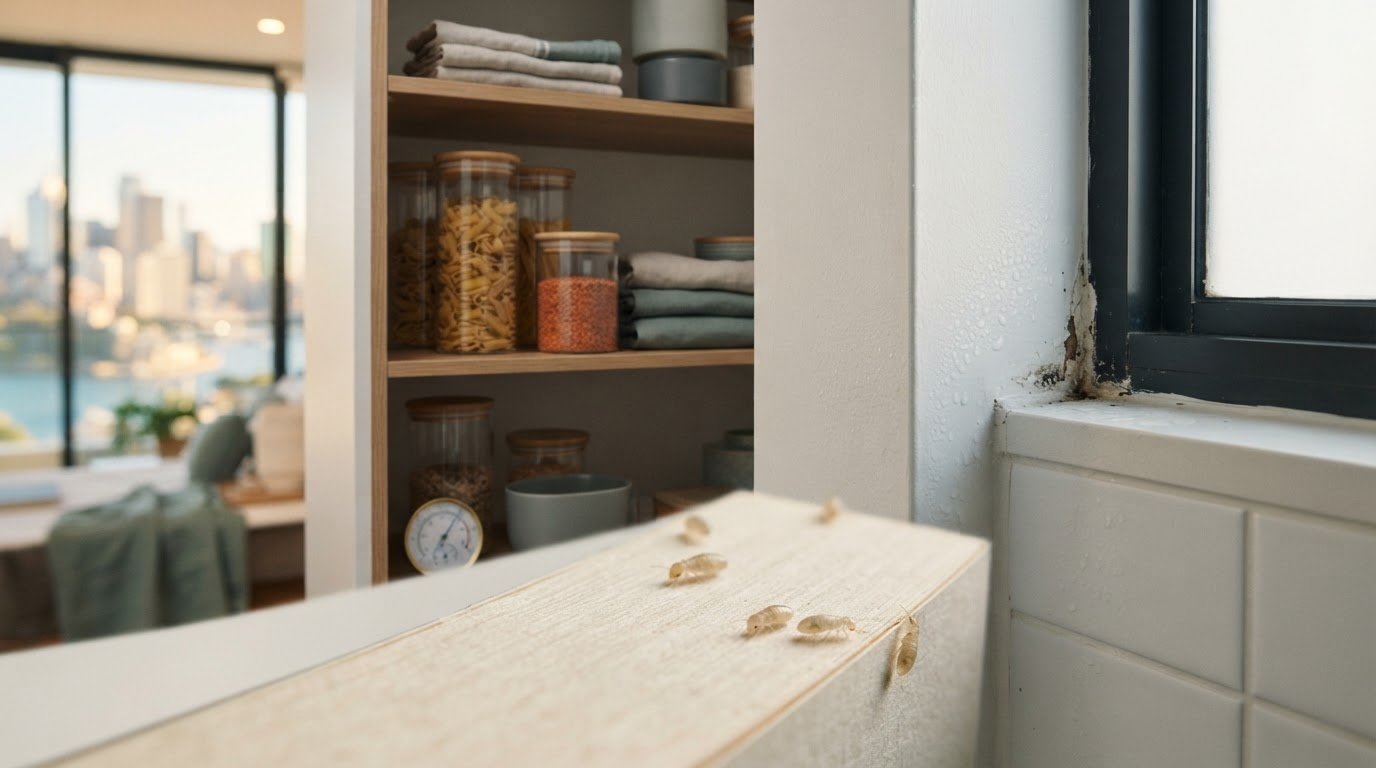
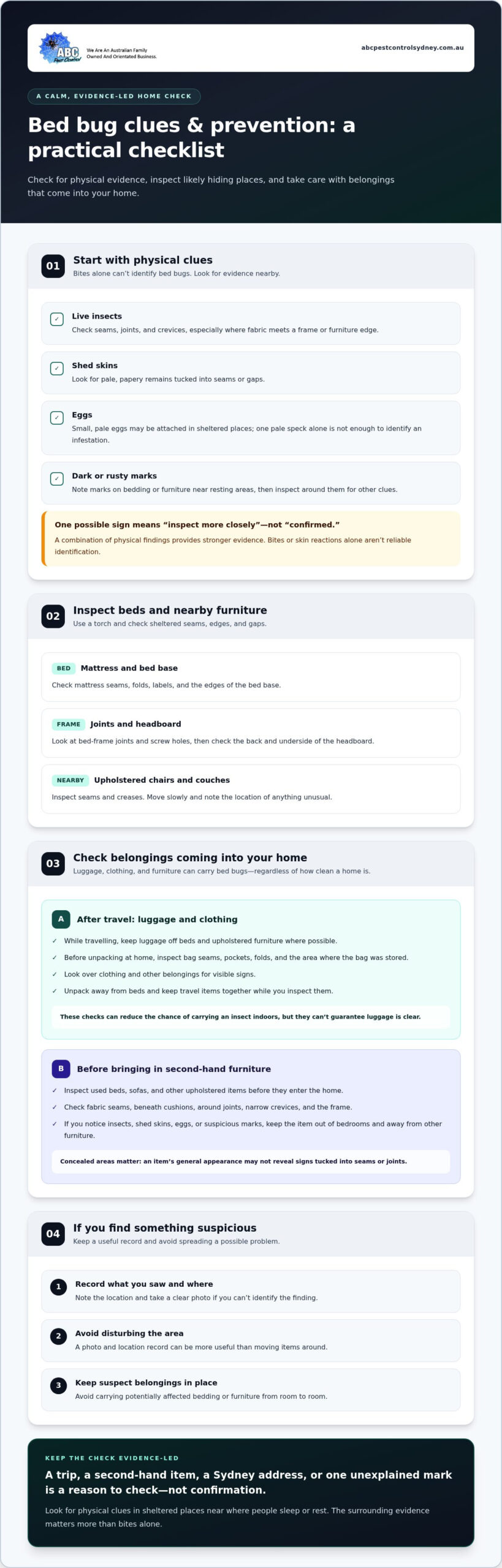
- Live insects: Check seams, joints, and crevices for small insects, particularly where fabric meets a frame or furniture edge.
- Shed skins: Look for pale, papery remains tucked into seams or gaps.
- Eggs: Small, pale eggs may be attached in sheltered places. A single pale speck isn’t enough to identify an infestation.
- Dark or rusty marks: Note marks on bedding or furniture near resting areas, then inspect the surrounding area for other clues.
A possible sign is a reason to inspect more closely. A combination of physical findings provides stronger evidence to support identifying bed bugs. Check where the sign is and what is nearby before drawing a conclusion.
Where to check around beds and furniture
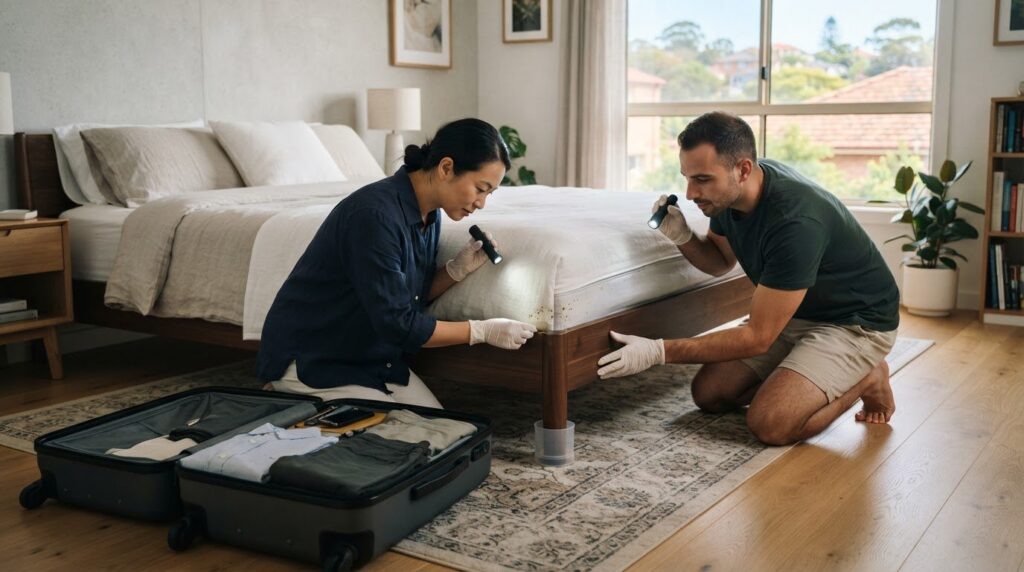
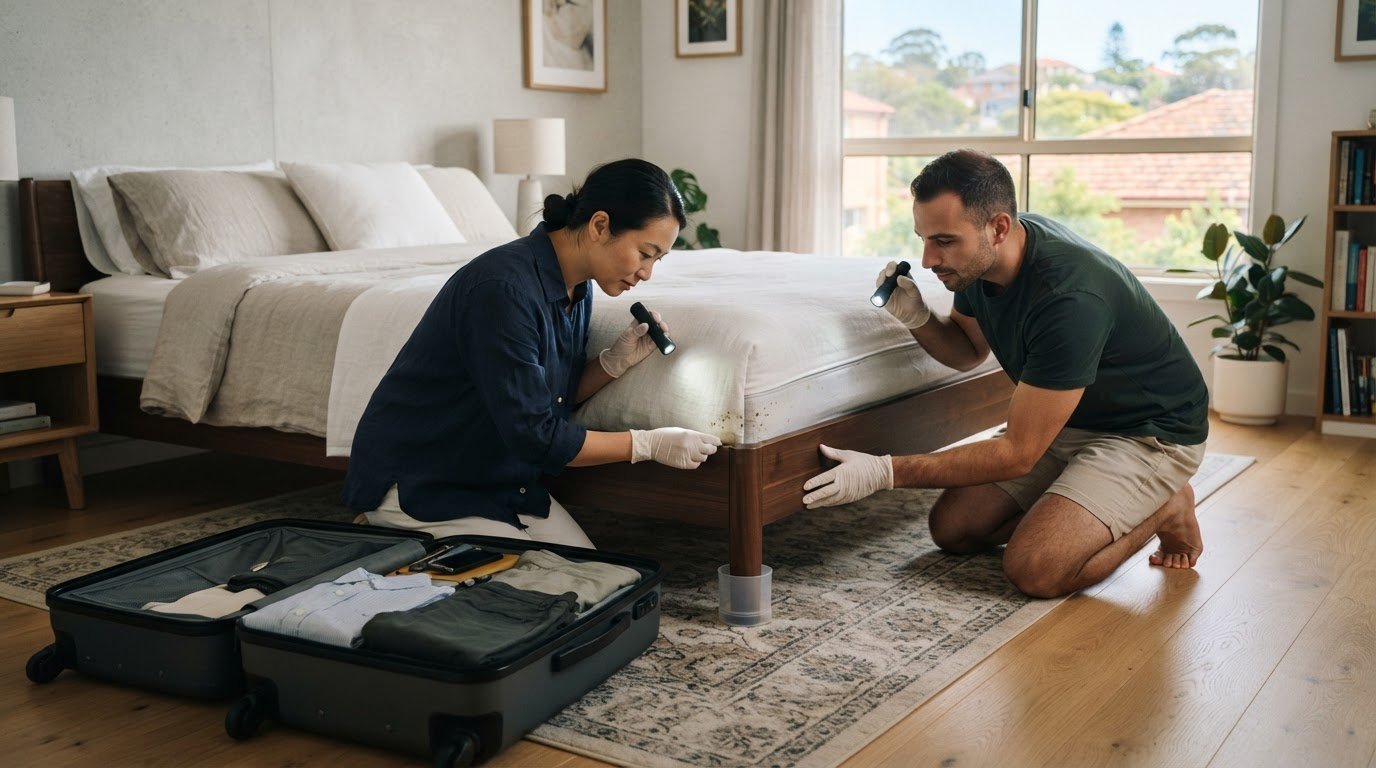
Use a torch to inspect mattress seams, folds, labels, and the edges of the bed base. Check bed-frame joints, screw holes, and the back or underside of the headboard. Then inspect nearby upholstered chairs or couches, focusing on seams and creases. Move slowly and note where you find anything unusual. For more visual identification detail, consult ABC Pest Control Sydney’s bed bug identification article.
Don’t treat every speck, stain, or piece of lint as proof. A mark is more significant when it appears with other clues in a sheltered spot close to where someone sleeps or rests. If you find something you can’t identify, record its location and take a clear photo rather than disturbing the area. This creates a useful record if you need further guidance.
When bites are not enough to identify bed bugs
Skin reactions vary. Some people notice itchy marks, while others show little or no reaction, and the appearance of a bite can’t reliably identify which pest caused it. Don’t diagnose bed bugs from a line or cluster of marks alone. Instead, look for physical clues on mattress seams, the bed frame, and nearby furniture. ABC’s early signs article can help you work through a focused checklist.
If you find several clues in the same resting area, take the concern seriously without panicking. Record what you saw and where, and avoid moving suspect bedding or furniture through other rooms. An evidence-led check is more useful than assuming bites confirm an infestation or overlooking physical signs that deserve attention.
How Bed Bugs Can Reach Homes Across Sydney
Bed bugs don’t arrive because a home is untidy. They can travel in personal belongings or used furniture, then hide in seams, gaps, and folds. Luggage, clothing, and furniture can carry bed bugs from one place to another.
A Sydney address alone doesn’t indicate an infestation. Focus on belongings brought into the home and look for physical signs rather than assuming every traveller or second-hand item carries bed bugs. A few simple checks can reduce the chance of bringing them inside and help protect your home from bed bugs in Sydney.
Travel and luggage: reduce the chance of bringing bed bugs home
During a trip, keep luggage off beds and upholstered furniture where possible. Before unpacking at home, inspect the bag’s seams, pockets, and folds, along with the area where it was stored. Look over clothing and other belongings for visible signs, too. These steps can reduce the chance of carrying an insect indoors, but they can’t guarantee luggage is clear.
Unpack in a practical spot away from beds, and keep travel items together while you inspect them. If something looks suspicious, avoid carrying it from room to room. Check it before moving it elsewhere.
Second-hand furniture and belongings
Inspect used beds, sofas, and other upholstered items before bringing them inside. Look along fabric seams, beneath cushions, around joints, and in narrow crevices where insects could shelter. Check the frame as well as the visible upholstery. If you notice insects, shed skins, eggs, or suspicious marks, don’t move the item into a bedroom or place it against other furniture.
Checking concealed areas is more useful than judging an item by its general appearance. Bed bugs can be difficult to spot when tucked into seams or joints, so take time to inspect an item before bringing it indoors.
Keep the focus on belongings, not your postcode
Travel and second-hand furniture are reasons to check, not proof of an infestation. The same applies in houses, apartments, and units across Sydney. If you’ve recently travelled or brought home a used chair, inspect the item and nearby resting areas for physical clues. Don’t treat a city location, a trip, or one unexplained mark as confirmation.
- Keep luggage away from beds while travelling, then inspect its seams and storage area before unpacking.
- Check second-hand upholstered items, especially seams, joints, and crevices, before bringing them inside.
- Keep anything with suspicious visible signs out of bedrooms and avoid moving it between rooms.
These habits can help limit opportunities for bed bugs to travel unnoticed. If you find credible signs, ABC Pest Control Sydney provides Bed Bug Treatment across the Sydney metropolitan area. Learn about bed bug treatment as a practical next step when closer attention is warranted.
A Practical Sydney Home Prevention Routine
Bed bug prevention doesn’t require constant cleaning or repeated room-by-room searches. Keep the routine focused: check belongings as they come in, make likely hiding places easier to inspect, and respond promptly to credible physical signs. Bed bugs aren’t a measure of household cleanliness, and routine tidiness alone won’t stop them hitchhiking indoors.
Use this simple sequence to reduce opportunities for bed bugs to settle and protect your home from bed bugs in Sydney:
- Manage incoming belongings. After travel or when receiving used items, check luggage, clothing, and upholstered furniture before placing them near beds or sofas.
- Inspect likely hiding places. Look over mattress seams, bed frames, headboards, and nearby furniture, especially when there’s a specific reason for concern.
- Respond to credible signs. Record what you found and where. Avoid moving suspect belongings between rooms, and seek expert help if physical clues warrant closer attention.
This approach works in a house, apartment, or unit. There’s no need to move every piece of furniture or inspect every room without a reason. Focus on belongings entering the home and resting areas where signs would be most relevant.
A repeatable check after travel or visitors
After a trip, inspect luggage seams, pockets, and folds before unpacking, then check the area where the bag was stored. Keep travel items together while you look them over. If a visitor has stayed overnight and you have a specific reason for concern, visually check the bedding and nearby furniture. Look for physical evidence before taking disruptive action. Repeat checks when new information gives you a reason, rather than turning them into a source of unnecessary alarm.
If you find no physical clues, there’s no need to treat an ordinary trip or visit as proof of a problem. If you do spot something suspicious, note its location and avoid carrying the item through other parts of the home. A measured response keeps your attention on what you can verify.
Protect beds and nearby resting areas
Keep enough space around the bed and nearby furniture to see seams, frame joints, and edges. In a compact unit, even a small clear gap can make a visual check easier. Reduce piles of clothing, bags, and other belongings beside sleeping areas, where they can obstruct inspection. This won’t make a room bed bug-proof, but it can make changes easier to notice.
Choose habits you can maintain. Store frequently used luggage where it can be checked, and avoid placing bags or newly acquired upholstered items straight onto beds. No single household product or tidy room guarantees prevention. The aim is to make potential hiding places easier to inspect and to notice credible signs before moving items around the home.
What to Do When You Suspect Bed Bugs in a Sydney Home
Finding a suspicious mark or insect can be worrying, but a clear record and a measured response make the next step easier. Photograph visible clues and note where you found them, such as a mattress seam or bed-frame joint. Where practical, leave potentially affected bedding, clothing, or other belongings in place rather than carrying them between rooms. This preserves useful information and helps you respond calmly to protect your home from bed bugs in Sydney.
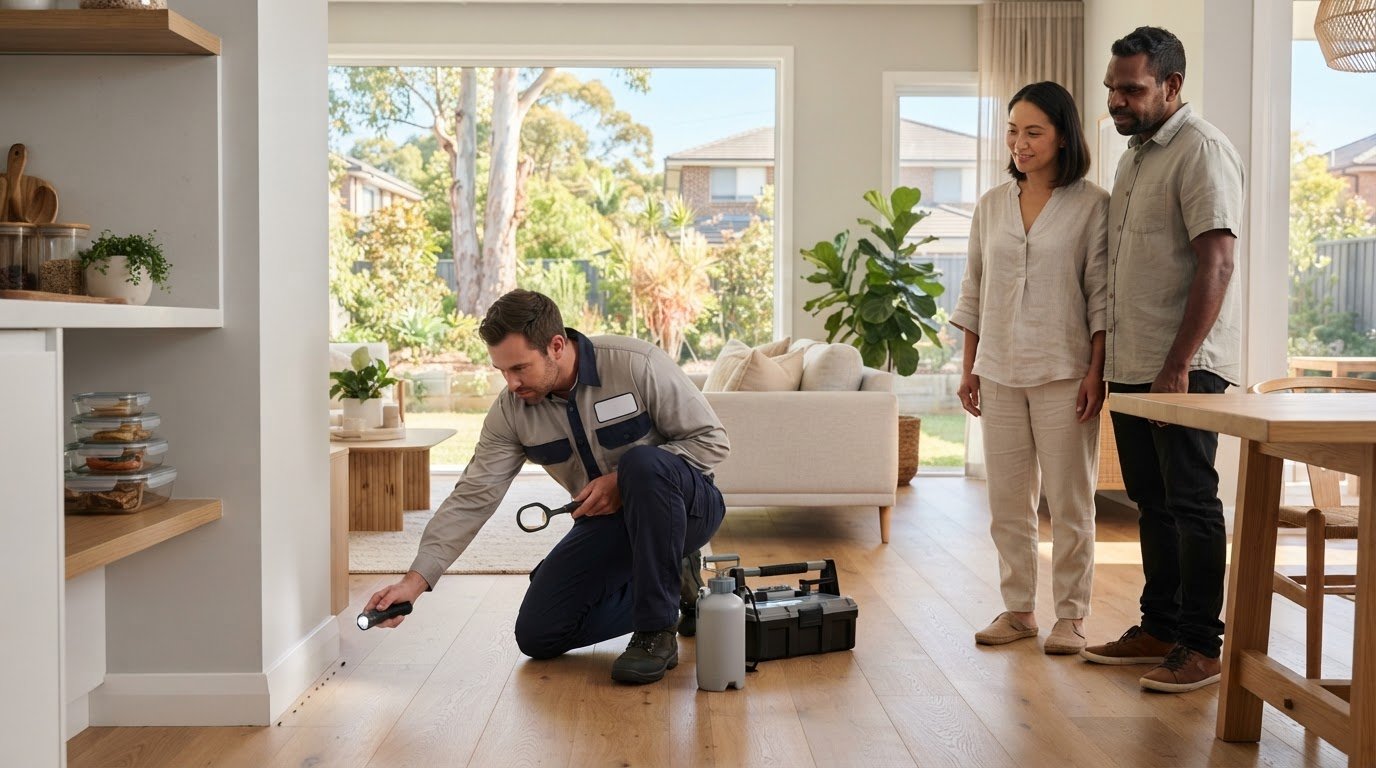
ABC Pest Control Sydney provides Bed Bug Treatment across the Sydney metropolitan area. If physical signs warrant professional attention, the team can explain how to prepare your home and what safety instructions to follow. For a broader response beyond preparation, use the complete bed bug action plan as a guide to your next steps.
Prepare the home before Bed Bug Treatment
Before the service visit, remove clothing, newspapers, children’s toys, and food from ground surfaces. Provide access to skirtings so the service team can reach the areas that need attention. Follow the preparation instructions for your treatment, and keep the space around the affected room as clear as possible. You don’t need to undertake a major clean or move belongings throughout the home.
In an apartment or unit, make sure the relevant rooms and edges are accessible, even if space is limited. If you’re unsure how to arrange a particular item, follow the service team’s instructions rather than moving potentially affected belongings to another room.
What to expect during and after application
You must vacate the premises while wet chemicals are applied. Plan to be away for approximately 1-2 hours after application, or 1 hour on a hot day. Children with asthma should not be present during application and can return after 2-3 hours. Follow the service team’s safety instructions for your household.
Once the spray has dried or evaporated, no washing of treated surfaces is required. If wet spray contacts skin, wash the area immediately with soap and plenty of water. These instructions help you plan for treatment and keep household members informed.
Before the visit, clear ground surfaces and provide access to skirtings. During application, follow the team’s directions and leave the premises for the advised period. To arrange Bed Bug Treatment across Sydney, book bed bug treatment with ABC Pest Control Sydney.
Bed Bug Treatment in Sydney: A Clear Next Step for Your Home
Prevention can reduce opportunities for bed bugs to enter or spread, but it isn’t a substitute for treatment when you find credible physical signs or remain concerned after checking. ABC Pest Control Sydney provides Bed Bug Treatment across the Sydney metropolitan area. The company focuses on affordable, fast, safe, and eco-friendly pest control, with practical guidance to help you understand what to expect.
ABC uses a water-based residual spray that does not affect surface colouring or finishes. Treatment planning also takes weather into account: in rainy conditions, indoor work is performed first. If rain continues, outside work is rescheduled. The residual spray will not wash away in rain unless there is an extreme event such as a flash flood. This sets clear expectations without promising instant elimination or treating routine prevention as a substitute for addressing an infestation.
Why choose local bed bug specialists in Sydney
ABC brings over 20 years of local pest-control experience to homes across metropolitan Sydney. Its service reaches the CBD, Northern Beaches, Eastern Suburbs, Inner West, Southern Suburbs, and Western Suburbs, including Parramatta, Penrith, and Blacktown. Operations Manager Warren has been featured by Yahoo News and the Daily Mail. ABC’s local experience helps the team provide treatment guidance to Sydney households.
Book Bed Bug Treatment and plan for prevention
When credible signs make professional attention a sensible next step, booking treatment can help turn uncertainty into a clear plan. The booking process takes under 60 seconds. Follow the preparation and safety instructions for your home, and keep prevention habits in place after treatment rather than relying on one visit as a guarantee that bed bugs cannot return.
For optimal prevention, ABC recommends three treatments per year, or treatment as needed based on environmental conditions. This is an ongoing prevention recommendation, not a promise of instant elimination. Continue to pay attention to belongings entering the home and check likely hiding places when there’s a specific reason for concern. A consistent routine and prompt attention to credible signs can work together to reduce risk and protect your home from bed bugs in Sydney.
If you’ve found credible signs or have ongoing concerns, book Bed Bug Treatment with ABC Pest Control Sydney and take a calm, practical next step.
Take the Next Step With Confidence
You don’t need to resolve every uncertainty at once. Base your next decision on what you can observe, not on worry alone. If you’re still concerned, professional bed bug treatment can help you move from checking signs to a practical plan for your household.
Prevention is an ongoing habit, not a reason to stay on alert every day. Keep checks proportionate to the situation, pay attention when something changes, and act when the evidence calls for it. A calm, consistent approach can help you feel more in control and protect your home from bed bugs in Sydney.
If you’re ready to take the next step, book your Bed Bug Treatment in Sydney. ABC Pest Control Sydney brings over 20 years of local pest-control experience, uses a water-based residual spray that does not affect surface colouring or finishes, and makes booking possible in under 60 seconds.
With clear information and the right support, you can move forward with confidence.
Frequently Asked Questions
Can bed bugs spread from one room to another?
Yes. Bed bugs can reach another room if they travel in moved belongings or furniture, and they may also move between nearby hiding places. For example, carrying bedding from one room to another could transfer insects if they’re present. Avoid shifting items unnecessarily while you investigate. If you live in an apartment, report credible signs to the property manager so they’re aware of the concern.
Can I bring bed bugs home in my luggage after travelling?
Yes, bed bugs can hitchhike in luggage or clothing, though taking a trip doesn’t mean you’ve brought them home. Before unpacking, inspect bag seams, pockets, and folds, then check the place where the luggage was stored. Keep the bag separate from beds while you look it over. If you find a suspicious insect or other physical clue, take a photo and avoid carrying the bag through several rooms.
Do bed bugs mean my Sydney home is dirty?
No. Bed bugs can enter a clean or untidy home because they’re transported in belongings and furniture, not attracted by dirt. There’s no need to feel embarrassed or assume that more cleaning will solve the problem. Focus on inspecting likely hiding places and recording physical clues. If you rent, keep a record of what you find and when, then follow your usual process for notifying the property manager about a pest concern.
Is a bed bug bite enough to confirm an infestation?
No. A bite by itself can’t confirm bed bugs. People’s skin reactions differ, and itchy marks can have other causes. Check the sleeping area for physical evidence before deciding what the marks mean. If you find no visible clues, avoid making disruptive changes based only on skin irritation. If you find a suspicious insect or other physical sign, photograph it and record where it appeared to support a clearer assessment.
Do I need to wash surfaces after bed bug spray dries?
No. Once the spray has dried or evaporated, surfaces don’t need to be washed. Follow the service team’s instructions about any specific surface or item. If wet spray contacts skin, wash immediately with soap and plenty of water. Keep household members away during application and observe the advised vacancy period before returning.
What happens if it rains on the day of pest treatment?
Rain doesn’t automatically stop all treatment work. ABC Pest Control Sydney performs indoor work first in rainy conditions. If the rain continues, outside work is rescheduled. The residual spray will not wash away in rain unless there is an extreme event such as a flash flood. Follow the team’s directions for your appointment. If treatment includes outdoor areas, that work will be rescheduled if rain continues.