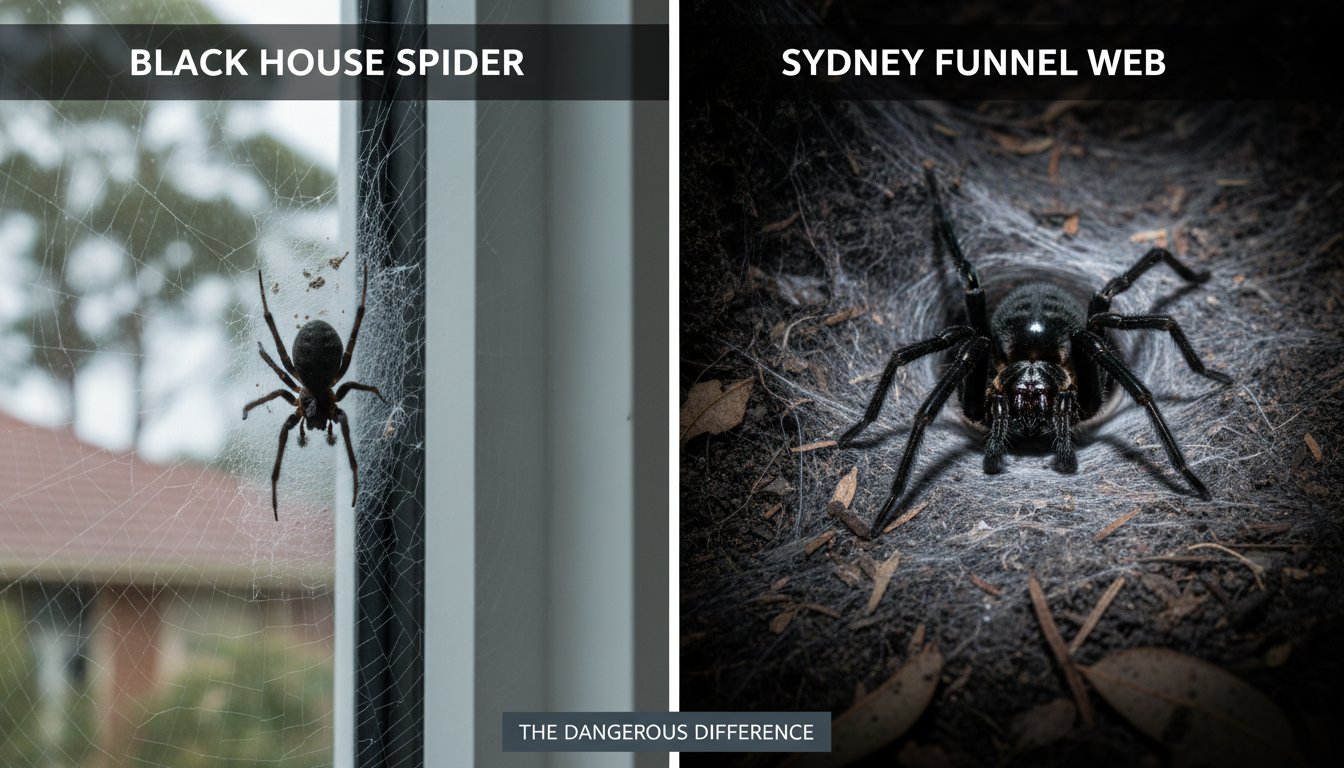
Sydney is officially one of Australia’s most active hotspots for arachnids, with spiders ranking as the second most common pest across the metropolitan region as of April 2026. We understand that finding a robust, black spider in your home causes immediate anxiety for your family and pets. It’s easy to feel overwhelmed when you’re unsure if a guest is harmless or a medical emergency. At ABC Pest Control Sydney, your safety is our priority. We’ve spent over 20 years protecting local homes from these exact fears.
You’ll learn how to accurately settle the black house spider vs funnel web debate by looking at web location and behavior rather than just color. This guide provides a definitive identification guide and clear safety protocols to help you navigate these encounters. You’ll know exactly when to stay calm and when your home needs professional treatment. We’re here to give you the peace of mind that comes with expert knowledge. If you’re worried about a tough infestation, you can book a professional inspection in under 60 seconds.
Key Takeaways
- Spot the difference between the velvety, matte appearance of a house spider and the dangerously glossy, hairless “head” of a Sydney Funnel-web.
- Use web location as your primary clue; house spiders build lacy webs in high windows, whereas funnel-webs prefer moist, ground-level burrows.
- Settle the black house spider vs funnel web debate by understanding their distinct behaviors and knowing exactly when a bite requires an emergency hospital visit.
- Recognize deceptive lookalikes like Mouse and Trapdoor spiders to ensure you’re applying the correct first aid and safety protocols for your property.
- Learn why professional spider control is the most effective way to eliminate tough infestations without making the pests more aggressive or driving them indoors.
Identification Guide: Physical Differences Between Black House Spiders and Funnel Webs
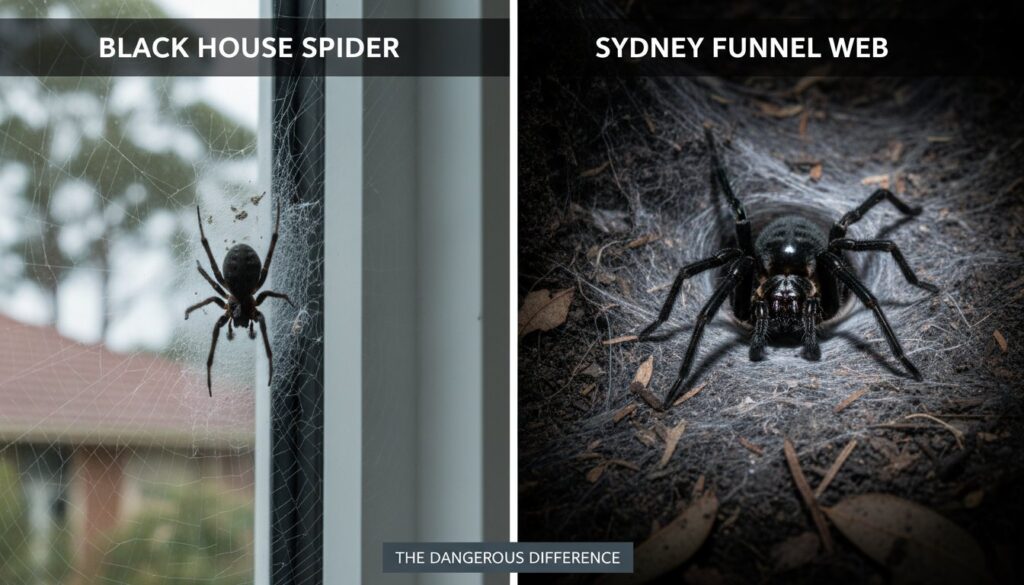
Finding a dark, robust spider in your home triggers an immediate fight-or-flight response. While both species appear similar at a distance, their physical anatomy tells two very different stories. To keep your family safe, you must look past the dark color and focus on specific textures and body parts. In the black house spider vs funnel web comparison, the most critical differences are found on the front of the body and the very tip of the abdomen.
Use this quick reference list to identify the spider safely from a distance:
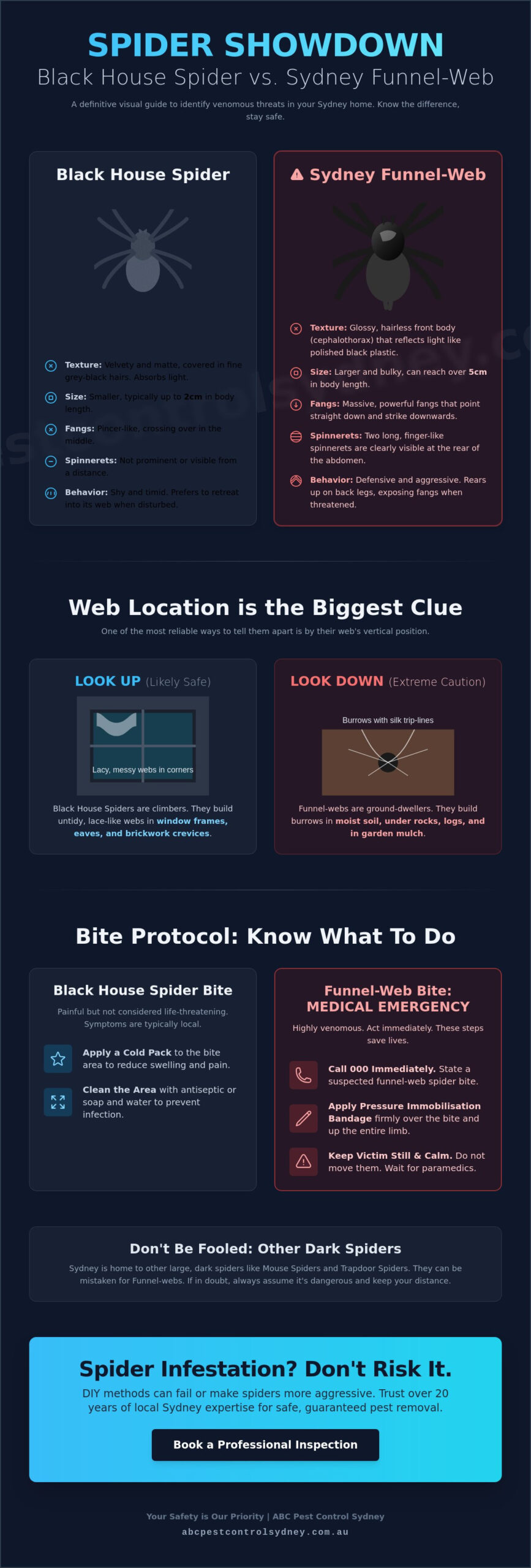
- Texture: Funnel-webs are glossy and hairless on their front half; Black House spiders are velvety and matte.
- Size: Funnel-webs are bulky and can reach 5cm in length. Black House spiders are smaller, usually topping out at 2cm.
- Fangs: Funnel-webs have massive fangs that point straight down; Black House spiders have smaller pincer-like fangs that cross over.
- Spinnerets: Look for two long, finger-like points at the back of a Funnel-web. Black House spiders lack these prominent features.
The “Glossy Look” of the Sydney Funnel-Web
The Sydney funnel-web spider possesses a cephalothorax that looks like it was polished with oil. This front section is deep black, hairless, and reflects light like a piece of glass. Contrast this with the Black House spider, which has a dull, grey-black appearance. Its entire body is covered in fine, velvety hairs that absorb light rather than reflecting it. A glossy, hairless cephalothorax is the primary danger sign that you are dealing with a medically significant species.
Behavior and Aggression Levels
You can often identify these spiders by how they react to your presence. Funnel-webs are notoriously defensive. If they feel cornered, they’ll rear up on their back legs, exposing their fangs in a clear warning. They don’t typically run away. Black House spiders are the opposite. They’re shy, timid creatures that prefer to retreat deep into their lacy webs when disturbed. Despite these tendencies, don’t ever test a spider’s aggression with your hands or feet. Even a shy spider will bite if it’s pressed against your skin accidentally.
Fangs and Spinnerets
The anatomy of the fangs is a major differentiator. Funnel-webs belong to a primitive group of spiders with fangs that strike in a parallel, downward motion. These fangs are powerful enough to pierce a fingernail. Black House spiders use a more modern pincer motion where the fangs meet in the middle. Additionally, look at the rear of the spider. A Funnel-web has visible, twin spinnerets that look like small fingers extending from the abdomen. If the spider’s rear is blunt and lacks these “fingers,” it’s likely a house spider. If you see those long spinnerets, keep your distance and call for a professional inspection immediately.
The Web Factor: How Location and Design Reveal the Species
If you’re staring at a web on your property, its location and structure are your best diagnostic tools. While both spiders use a funnel-like entrance, they occupy completely different vertical spaces. Understanding the black house spider vs funnel web distinction often comes down to where you’re standing. If you have to look up, you’re likely safe. If you have to look down at the soil, immediate caution is required. This vertical separation is one of the most reliable ways to identify these pests before you ever see the spider itself.
Black house spiders are talented climbers. They love high-traffic areas for insects, such as window tracks and eaves. Their silk is “lace-like” and messy. It often catches dust and debris, making it look grey or dirty over time. In contrast, funnel webs are strictly ground-dwellers. They build thick, structural silk burrows in moist soil. They also use “trip lines”, which are long strands of silk radiating out from the burrow entrance to detect the vibrations of passing prey. These silk wires are a clear signature of a burrowing hunter.
Where You Find Them in a Sydney Home
In a typical Sydney residence, Black House spiders claim the brickwork crevices, window frames, and the corners of garden sheds. They rarely leave these spots. Funnel webs seek out damp, sheltered environments. You’ll find them under rocks, beneath fallen logs, or tucked into thick garden mulch. Because Sydney’s climate is becoming warmer and wetter in 2026, these ground habitats are thriving. If you’re worried about your backyard safety, our experts provide comprehensive pest control Sydney services that include thorough garden inspections to keep your family out of harm’s way.
A key resource from the Western Australian Museum highlights the key differences between the species, specifically noting that funnel webs aren’t found in your second-story window. If you find a spider at eye level or above, the risk of it being a funnel web is virtually zero. The black house spider vs funnel web comparison becomes much simpler when you look at the height of the web. Ground level means danger; high up usually means a harmless house guest.
Identifying the “Lacy” Web of the Black House Spider
Look closely at the entrance of a window web. Black House spiders create a distinct zigzag pattern of silk around the hole. This “lace” is sticky and designed to tangle small flies and mosquitoes. Because the spider stays in the same web for most of its life, the silk accumulates dust. It looks like a neglected corner of an old attic. These spiders are homebodies. They won’t chase you. They only bite if you accidentally put your finger into that messy funnel while cleaning windows or moving stored boxes.
If you spot these messy webs around your home’s exterior, don’t wait for the population to grow. While they aren’t lethal, a large infestation can be unsightly and attract other pests. You can book a professional spider treatment today to clear these areas safely and restore your peace of mind.
Bite Risks and First Aid: What Happens if You Get Bitten?
Understanding the medical stakes of a black house spider vs funnel web encounter is vital for every Sydney resident. While the visual differences can be subtle, the venom profiles are worlds apart. A bite from a male Sydney Funnel-web is a life-threatening emergency. Conversely, a Black House spider bite is painful but rarely requires a hospital stay. Your priority must be fast, accurate action based on the symptoms you observe.
Since the introduction of antivenom in 1981, there have been zero recorded deaths from Funnel-web bites in Australia. However, with an estimated 30 to 40 people bitten every year, the danger remains real. Funnel-web venom contains powerful neurotoxins that attack the human nervous system. Victims often experience rapid onset symptoms including heavy sweating, nausea, and involuntary muscle spasms. If you see these signs, every second counts. Don’t wait for symptoms to worsen before calling for help.
A Black House spider bite presents differently. You’ll likely feel sharp local pain followed by swelling and redness. Some people report feeling lightheaded or nauseous, but these systemic symptoms are infrequent and usually mild. For a deeper look at how these spiders behave and look, you can consult this Black House Spider identification guide from the Australian Museum. Knowing the difference helps you stay calm during a stressful moment.
The Pressure Immobilisation Technique (PIT) is your most important tool for a suspected Funnel-web bite. This method restricts the movement of venom through the lymphatic system. It buys you precious time until medical professionals can administer antivenom at the hospital. This technique is not used for Black House spider bites, where a simple cold pack is more effective.
Immediate Steps for a Funnel-Web Bite
- Step 1: Call 000 immediately. State clearly that a Funnel-web bite is suspected.
- Step 2: Apply a broad pressure bandage over the bite site and then wrap the entire limb. It should be as tight as a bandage for a sprained ankle.
- Step 3: Keep the patient completely still and calm. Movement speeds up the spread of venom through the body.
Treating a Black House Spider Bite
If you’re certain the spider was a Black House species, focus on comfort and monitoring. Use a cold pack to relieve local pain and reduce swelling. Keep the area clean to prevent secondary infections. While these bites aren’t lethal, you should see a doctor if pain persists for more than 24 hours or if you notice signs of an allergic reaction. If you couldn’t identify the spider, treat the situation with maximum caution and seek a professional medical opinion immediately.
Common Lookalikes: Trapdoor and Mouse Spiders in Sydney
Even with a clear understanding of the black house spider vs funnel web differences, Sydney’s biodiversity can still throw you a curveball. Several other ground-dwelling spiders mimic the appearance of these two species, leading to unnecessary panic or, worse, dangerous complacency. In the sandstone-rich suburbs of Sydney, you’re likely to encounter Mouse spiders and Trapdoor spiders, both of which share physical traits with their more famous cousins.
Identifying these lookalikes requires a keen eye for detail. While some are harmless, others possess venom that is medically significant. We always recommend a “better safe than sorry” approach. If you find a large, dark spider on the ground and can’t identify it with 100% certainty, treat it as a potential hazard. Don’t try to trap or move it yourself. Our team has over 20 years of experience identifying these tough pests and can provide immediate peace of mind.
- The Mouse Spider: These are often the biggest source of confusion. They are glossy black, bulky, and have a very bulbous head section.
- Trapdoor Spiders: These are hairy and range from deep brown to black. They look intimidating but lack the lethal neurotoxins found in funnel-webs.
- Wishbone Spiders: Another ground-dweller often found in garden beds. They are frequently mistaken for funnel-webs due to their size and dark coloring.
Identifying the Mouse Spider
The Mouse spider is a significant lookalike because its venom can be just as toxic as a funnel-web’s. Look for a distinct, high-arched head and fangs that appear disproportionately large for its body. Unlike the velvety Black House spider, the Mouse spider has a smooth, shiny carapace. Interestingly, medical professionals can use funnel-web antivenom to treat Mouse spider bites because the toxins are so similar. If you see a large spider that doesn’t fit these descriptions, it might be a Huntsman spider, which is common in Sydney homes but behaves very differently.
Trapdoor Burrows vs. Funnel-Web Holes
You can often tell who is living in your backyard by looking at the entrance to their home. A Trapdoor spider lives up to its name by creating a silk “lid” or door that camouflages the burrow entrance. Funnel-webs leave their holes open, often surrounding the entrance with messy, structural silk trip lines. Sydney’s moist, sandstone-heavy soil is a favorite for both species, so garden beds and retaining walls are high-risk zones. If you’ve discovered a suspicious hole in your lawn or garden and aren’t sure who lives there, book an expert garden assessment to ensure your property is safe for your children and pets.
Never stick your fingers into a burrow or use a stick to poke around. Trapdoor spiders are generally shy, but a funnel-web will defend its home with aggression. If the burrow is open and lined with thick silk, keep a three-meter safety distance and call a professional. We use safe, non-toxic treatments to manage these risks without harming your local ecosystem.
Professional Spider Control: When to Call ABC Pest Control Sydney
Attempting to handle a spider infestation on your own often backfires. Supermarket sprays might seem like a quick fix, but they frequently fail to reach the source of the problem. In many cases, DIY chemicals only irritate the spider, making it more aggressive or driving it deeper into your wall cavities. When you’re stuck between the black house spider vs funnel web identification struggle, guessing isn’t an option. Your safety is our priority, and we’ve spent over 20 years perfecting our spider control methods in Sydney.
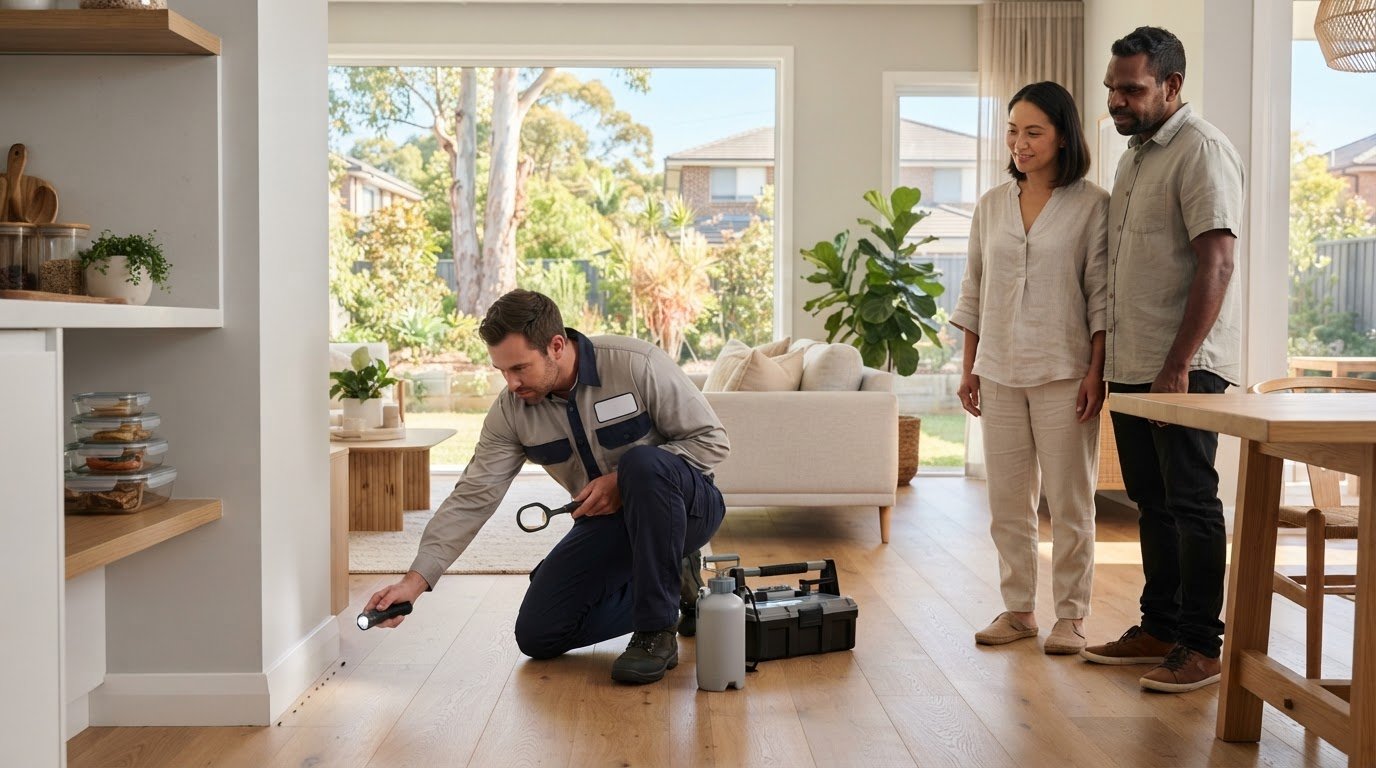
Our technicians use a professional-grade, eco-friendly approach that targets the perimeter of your property. We don’t just spray randomly; we create a defensive barrier. For residents facing multiple issues, our “Deluxe Package” is the most effective solution. This signature service manages up to 15 different pests, including spiders, cockroaches, and ants. As of February 2024, our specialized spider treatments start from $165, providing an affordable way to secure your home without using toxic or harsh chemicals that could harm your pets or children.
Our 20-Year Experience with Sydney Spiders
Experience matters when dealing with potentially lethal pests. Our highly trained technicians are recognized experts who understand the unique behaviors of Sydney’s local species. We know that a funnel-web requires a different strategy than a black house spider. By focusing on the external perimeter and entry points, we stop pests before they even cross your threshold. We respect your time and know you want results fast. That’s why you can book your inspection in under 60 seconds using our modern online system.
Preventative Tips for Homeowners
While professional treatment is the most reliable solution, you can take active steps to make your home less attractive to spiders. Sydney has seen a spike in spider populations throughout 2026 due to warmer temperatures and increased moisture. To protect your property, follow these simple guidelines:
- Move garden mulch, woodpiles, and leaf litter away from the foundation of your house to eliminate funnel-web hiding spots.
- Seal small gaps in window screens and door frames to block black house spiders from entering your living spaces.
- Keep outdoor lights off at night when possible, as they attract the insects that spiders love to eat.
- Always check shoes and gardening gloves left outside before putting them on.
Don’t wait until a close encounter turns into a medical emergency. If you’ve spotted suspicious webs or large black spiders in your yard, take action today. Get a Free Pest Control Quote Today and let our specialists give you the peace of mind you deserve. We’re ready to make your Sydney home safe and spider-free.
Protect Your Family and Reclaim Your Peace of Mind
Identifying the black house spider vs funnel web doesn’t have to be a source of constant anxiety for your household. Remember that height and silk texture are your most reliable indicators when distinguishing a harmless resident from a serious threat. Your safety is our priority, and we’re here to help you make those critical distinctions with confidence. With over 20 years of experience, ABC Pest Control Sydney provides the expert eyes you need to protect your family and pets.
Our Operations Manager is a recognized expert featured in major outlets like Yahoo News and Daily Mail, ensuring you’re in the most capable hands in the industry. We use safe, non-toxic treatments that effectively manage pests without compromising the health of your loved ones. Don’t let uncertainty keep you on edge in your own backyard. Book your Sydney spider inspection in under 60 seconds! You deserve the peace of mind that comes with a professionally secured, spider-free home.
Frequently Asked Questions
Can a Black House spider kill a dog or cat?
Black House spider bites are rarely fatal to pets, but they can cause significant distress and localized pain. While most dogs and cats only experience swelling and redness, smaller pets may suffer more severe systemic reactions like vomiting or lethargy. If your pet shows these signs after a suspected bite, contact a veterinarian immediately for professional care.
How can I tell if a spider hole in my garden is a Funnel-web?
A Funnel-web burrow is typically an open, silk-lined hole with thick “trip lines” radiating outward from the entrance. Unlike Trapdoor spiders, they do not build a lid or door to cover the hole. These burrows are usually located in moist, shaded areas such as garden rockeries, under thick mulch, or beneath retaining walls.
What is the best way to get rid of Black House spiders on my windows?
Professional perimeter treatments are the most effective way to eliminate these spiders and prevent them from rebuilding their messy webs. Our technicians apply a long-lasting, non-toxic barrier that targets their hiding spots in window tracks and eaves. You can also help by sealing gaps in window screens and door frames to block their entry points.
Are Funnel-web spiders found inside Sydney houses?
Yes, male Funnel-webs often wander indoors during the summer and autumn months while searching for mates. They seek out cool, damp areas like laundry rooms, bathrooms, or even the inside of shoes left on the floor. It is vital to check your footwear and avoid leaving clothes on the ground during this wandering season.
Does pest control work for Funnel-web spiders?
Expert pest control is highly effective at managing these dangerous spiders by creating a chemical barrier around your home’s foundation. This preventative approach stops ground-dwelling spiders from establishing burrows near your entry points. We use specialized, safe treatments that provide a protective shield for your family and pets throughout the year.
Is the Black House spider venomous to humans?
Yes, the Black House spider is venomous, though its bite is not considered a life-threatening emergency for most adults. In the black house spider vs funnel web comparison, the house spider’s venom typically causes localized pain and swelling rather than the severe neurotoxic symptoms of a Funnel-web. Always seek medical advice if pain persists for more than 24 hours.
What should I do if I find a Funnel-web in my swimming pool?
Use a pool skimmer to remove the spider safely and never touch it with your bare hands. Funnel-webs can survive underwater for up to 24 hours by trapping air bubbles around their bodies. Even a spider that appears drowned can still deliver a lethal bite, so treat any pool-found spider with extreme caution.
Are Funnel-webs more active after rain in Sydney?
Funnel-webs are significantly more active after heavy rainfall because flooding often forces them out of their underground burrows. Throughout 2026, Sydney’s increased rainfall patterns have led to a spike in wandering spider reports. This increased activity makes understanding the black house spider vs funnel web differences even more important for local homeowners who want to stay safe.