

What if the most terrifying thing about the white tail spider is actually a myth? You’ve likely felt that spike of panic while shaking out your bedsheets or reaching for a laundry basket in your Sydney home. The fear of a “flesh-eating” wound is common, but identifying white tail spider bite symptoms correctly is the first step to staying calm. In a landmark 2003 study of 130 confirmed bites by Isbister and Gray, exactly zero cases resulted in necrotic ulcers. Since 95% of these bites occur indoors, knowing the facts is essential for your family’s safety.
We understand that your home should be a sanctuary, not a source of anxiety. You’re in expert hands as we dive into the medical reality of these spiders. This guide will debunk the necrosis myth once and for all and provide the exact first aid steps recommended by Australian health standards. We’ll also preview professional, eco-friendly prevention strategies to ensure these nomadic hunters don’t hide in your towels again. It’s time to replace fear with facts and get the peace of mind you deserve.
Key Takeaways
- Spot the distinct white-tipped abdomen and cylindrical body of these nomadic hunters that prefer laundry piles over traditional webs.
- Identify primary white tail spider bite symptoms including immediate localized stinging and red, itchy swelling to differentiate them from other pests.
- Gain peace of mind by reviewing the 2003 clinical evidence that definitively debunked the myth of flesh-eating necrotic wounds.
- Learn the proper first aid protocol using soap, water, and cold compresses to manage pain and prevent secondary infections effectively.
- Implement expert decluttering and spider-proofing strategies to secure your Sydney home’s garages and laundries against future infestations.
How to Identify a White Tail Spider and Its Bite
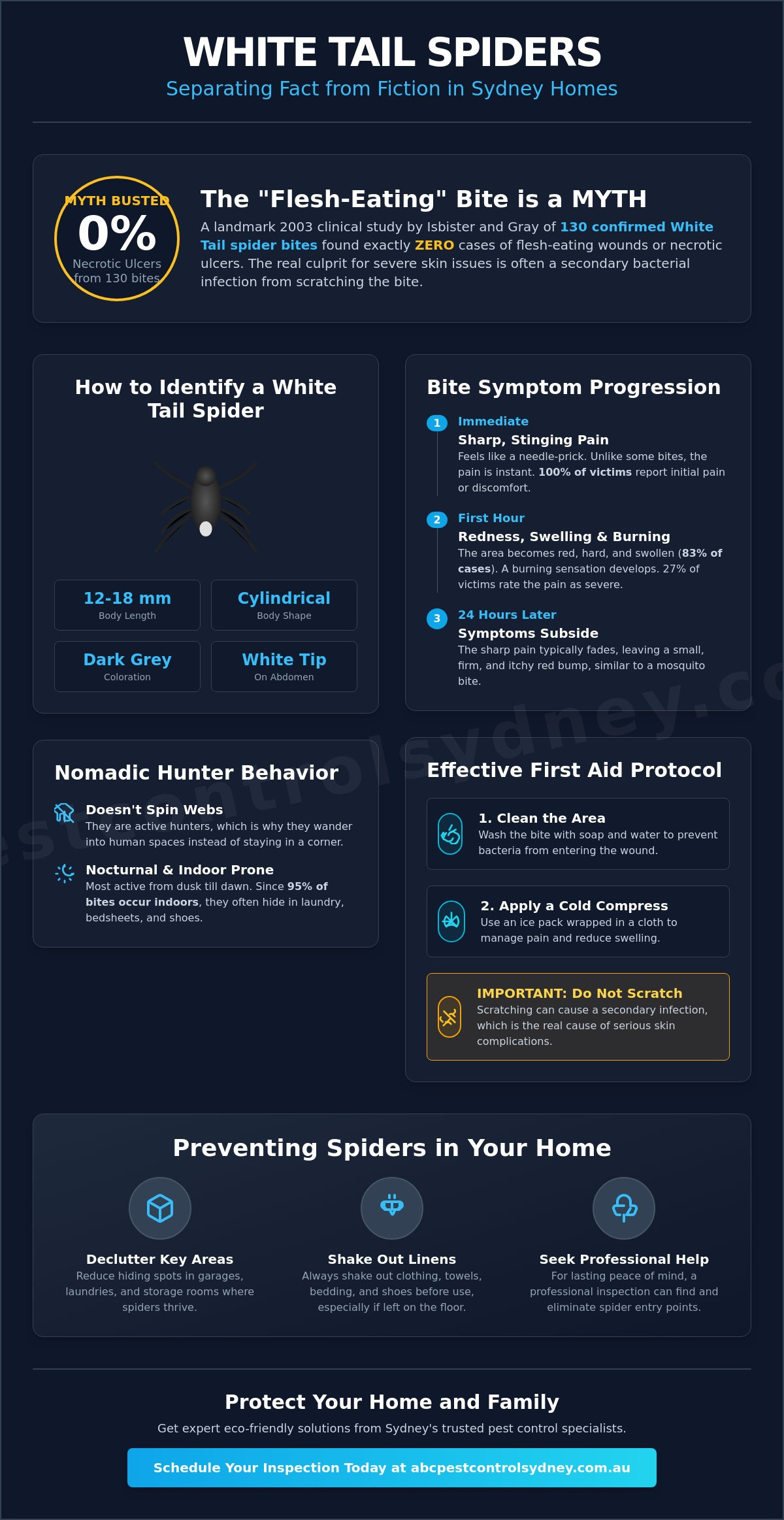
Identifying a white tail spider starts with looking for its slender, cylindrical body. These spiders are typically 12 to 18 millimetres long and range from a dark grey to a deep black colour. The most famous feature is the dull white or greyish spot at the very tip of the abdomen, which gives them their name. Unlike many other Sydney pests, the White-tailed spider does not spin a web to catch its prey. They are highly active hunters that seek out other spiders, especially common house spiders, as their primary food source.
This hunting behavior is exactly why they end up in your personal space. They don’t stay in dark, dusty corners; they wander. Our expert technicians have spent over 20 years inspecting Sydney properties, and we consistently find them in unexpected places. They frequently hide in folded laundry, under bedsheets, or inside shoes left on the floor. If you feel a sharp, needle-like prick while getting dressed, it’s a classic sign of an encounter. This initial sensation is often described as a sudden sting rather than the dull ache associated with other common household spiders.
Because they are “stealth” hunters, you won’t find a web to alert you to their presence. Your safety is our priority, so we recommend shaking out any clothing left on the floor. While these spiders are most active between 4:00 PM and 8:00 AM, they can be disturbed at any time of day if they have sought refuge in your linens. They don’t want to bite you, but they will strike if they are accidentally crushed against your skin while you’re sleeping or reaching for a towel.
Lampona Cylindrata: The Science of the Sydney White Tail
There are two main species found in New South Wales: Lampona cylindrata and Lampona murina. While they look nearly identical to the naked eye, their behavior is what matters most to homeowners. Their wandering nature means they encounter humans far more often than web-dwelling species do. The white tail spider is a vagrant hunter that thrives in the Sydney climate. This nomadic lifestyle allows them to move quickly between rooms, making them a “tough pest” to track without professional help.
Initial Bite Appearance vs. Other Insect Stings
Distinguishing white tail spider bite symptoms from a common mosquito or ant bite can be difficult in the first hour. A white tail bite usually leaves a small red mark or a raised wheal, often with a visible central puncture point. While a mosquito bite is soft and itchy, a spider bite often feels firm and may develop a small, painful blister. Finding the spider is the only 100% certain way to confirm the source of the bite. Without the specimen, even medical professionals may struggle to differentiate the reaction from a secondary bacterial infection. If you suspect a bite, try to safely catch the spider in a jar for identification by a specialist.
Understanding White Tail Spider Bite Symptoms and Progression
While the initial prick is sharp, the progression of white tail spider bite symptoms follows a predictable and manageable path. Data from the landmark Isbister and Gray study (2003) shows that 100% of patients experience pain or discomfort, with 27% rating that pain as severe. This isn’t a “silent” bite. You’ll know it’s happened almost instantly. According to The Australian Museum, these spiders possess venom that causes localized reactions rather than the widespread systemic issues seen with funnel-web spiders. Most cases involve a red mark or swelling, which occurs in 83% of documented bites.
The First 60 Minutes: What to Expect Immediately
The sensation usually evolves into a persistent burning pain. Unlike a Redback bite, which can take 5 to 60 minutes to start hurting, the white tail reaction is immediate. You’ll notice the skin becoming red and hard to the touch within the first hour. Localized heat is common. This is your body’s natural inflammatory response. Resist the urge to scratch. Scratching introduces bacteria from under your fingernails, which is the leading cause of the skin ulcers often misidentified as spider necrosis. If you’re worried about these spiders hiding in your home, it’s worth considering a professional pest inspection to find their hiding spots before they find you.
The Day After: Symptom Resolution
Most symptoms follow a strict 24-hour window. By the next morning, the sharp pain usually subsides. It transforms into a small, itchy red bump, similar to a mosquito bite but slightly firmer. This change shows your body is successfully neutralizing the mild venom. Itchiness is reported in 44% of cases and is often the final symptom to fade. In approximately 9% of cases, people report mild systemic effects like a headache or slight nausea. If these don’t clear up within 24 hours, it’s time to see a GP. Full recovery without medical intervention is the standard outcome for the vast majority of healthy adults.
Your safety is our priority, and understanding this timeline helps reduce unnecessary anxiety. While the pain is real, the long-term risk is minimal. We’ve seen hundreds of Sydney homes where residents feared the worst, only to find that simple first aid and professional prevention were all they needed. Don’t wait until a bite occurs to secure your property. You can book a specialist treatment today to clear out these wandering hunters and their food sources.
The Necrosis Myth: Do White Tail Spiders Cause Flesh-Eating Wounds?
Fear of the white tail spider often stems from sensationalized media reports that peaked in the 1980s and 90s. During this era, any unexplained skin ulcer was quickly blamed on this “flesh-eating” spider. While a Huntsman might look intimidating and a Redback requires urgent medical attention for its systemic venom, the white tail occupies a misunderstood middle ground. Authorities at Healthdirect Australia confirm that these spiders are not considered dangerous to humans. The medical reality is far less terrifying than the folklore suggest.
Necrotising arachnidism is a condition where skin tissue dies following a bite. For decades, this was the primary concern for anyone noticing white tail spider bite symptoms in their family. However, the landmark 2003 study by Isbister and Gray changed everything. They followed 130 patients who were bitten by spiders that were caught and expertly identified. The results were conclusive: not a single person developed a necrotic ulcer. The reputation was built on anecdotal evidence and misdiagnosis rather than clinical fact.
The real culprit behind most “flesh-eating” wounds is usually a secondary bacterial infection. Bacteria like MRSA (Methicillin-resistant Staphylococcus aureus) or common streptococcus live on human skin. When a spider bites, it creates a tiny puncture. If the area isn’t cleaned or if the patient scratches the site, these bacteria enter the wound. This leads to cellulitis or other infections that mimic the appearance of venom damage. Distinguishing between a venom reaction and a bacterial infection is vital for getting the right treatment fast.
Why the ‘Flesh-Eating’ Reputation Persists
Misidentification plays a massive role in why this myth won’t die. In many historical medical case studies, the spider was never actually seen; it was simply assumed to be the cause of a mystery wound. The spider’s “creepy” nomadic nature and dark, slender body make it an easy villain for a worried homeowner. Zero confirmed white tail bites in a study of 130 cases resulted in skin ulceration. Despite this, the psychological impact of decades of urban legends remains a challenge for pest control professionals to address.
Identifying Real Complications: Secondary Infections
Your safety is our priority, so it’s important to recognize when a bite needs medical intervention. While the venom itself won’t cause necrosis, a secondary infection can become serious if left untreated. Watch for spreading redness that feels hot to the touch, the presence of pus, or a developing fever. These are signs of cellulitis, not spider venom. Professional hygiene and immediate first aid are your best defenses. By keeping the wound clean and resisting the urge to scratch, you effectively eliminate the risk of the “scary” wounds often featured in outdated news reports.
Immediate First Aid and When to Seek Medical Attention
If you suspect a bite, don’t panic. You’re in expert hands. Your first priority is to wash the bite site thoroughly with plain soap and water. This simple step is your best defense against the secondary bacterial infections that often lead to the “scary” wounds people fear. Once the area is clean, apply a cold compress or an ice pack for 10 to 15 minutes. This helps numb the immediate sting and significantly reduces the swelling associated with white tail spider bite symptoms. For managing localized itching or mild discomfort, over-the-counter paracetamol or antihistamines are usually effective.
One critical rule applies here: never use a pressure-immobilisation bandage. While this technique is vital for funnel-web or mouse spider bites, it’s incorrect for white tails. Using a tight bandage can trap the localized venom in one spot, which actually increases your pain and discomfort. Your safety is our priority, so stick to the “cold and clean” method for the best results. Most symptoms will peak and begin to fade within 24 hours if these steps are followed correctly.
White Tail vs. Funnel-Web First Aid: A Life-Saving Distinction
Knowing which technique to use can save a life in a Sydney backyard. For white tails and redbacks, you want ice and elevation. For funnel-webs, you need a firm pressure bandage and total immobilisation. Confusing these two can lead to unnecessary distress. While you’re focusing on family safety, it’s a good time to ensure your property is secure from all angles. Our Termite Inspection Sydney guide explains how regular checks can identify various pest entry points, keeping your home safe from more than just spiders.
Red Flags: When to Call 000 or Visit a Sydney GP
Most bites resolve quickly, but you must watch for rare red flags. Call 000 immediately if you notice signs of anaphylaxis, such as difficulty breathing, swelling of the tongue, or a sudden collapse. These reactions are extremely rare but require urgent medical attention. You should also visit a Sydney GP if the localized redness begins to spread rapidly after the first 24 hours or if the pain becomes unbearable. If it’s safe to do so, take a clear photo of the spider. This helps doctors confirm the species and provide the right care. For immediate advice, you can also call the Australian Poisons Information Centre on 13 11 26.
Need help fast? Don’t wait until pests cause damage to your peace of mind. CALL US NOW to book a professional spider treatment and protect your family today.
Preventing White Tail Spiders in Your Sydney Home
Preventing these nomadic hunters requires more than just a quick surface spray. Because white tails specifically hunt other spiders, the most effective way to keep them out is by removing their food source. If your home has a high population of common house spiders, you’re essentially laying out a buffet for a wandering hunter. This is why many homeowners continue to report white tail spider bite symptoms even after using off-the-shelf products. They aren’t addressing the root cause. Controlling the entire spider ecosystem in your home is the only way to get lasting results.
Focus your efforts on “spider highways” like garages, laundries, and sub-floors. These areas often accumulate clutter, providing the perfect dark crevices for a white tail to rest during the day. We recommend keeping cardboard boxes off the floor and sealing seasonal clothing in airtight plastic bins. Additionally, inspect your window screens and door weather strips for any gaps. A white tail can squeeze through a gap as small as 2 millimetres. Sealing these entry points keeps the hunters outside where they belong.
DIY sprays often fail against vagrant hunters because these spiders don’t stay in one spot long enough for traditional residual chemicals to work. Identifying white tail spider bite symptoms is important for peace of mind, but preventing the encounter entirely is the ultimate goal for any Sydney family. You need a targeted, professional approach that reaches into the wall voids and roof spaces where these spiders actually hide between meals.
The ABC Pest Control Approach to Spiders
We take a comprehensive view of your property’s safety. Our General Pest Control Packages are designed to target both the white tail and the prey they follow into your home. We use eco-friendly, non-toxic treatments that are safe for your children and pets. With over 20 years of experience in Sydney, we understand the local climate and exactly where “tough” pests like these hide. You’re in expert hands with a team that adheres to the highest Australian Pest Standards.
Book Your Safety Inspection Today
Don’t wait until you find a spider in your bedsheets to take action. Our Operations Manager is a recognised expert whose pest management advice has been featured in major outlets like the Daily Mail and Yahoo News. We respect your time and offer a seamless experience that allows you to book in under 60 seconds. Your safety is our priority, and we’re ready to secure your home immediately. Protect your home from spiders—Book Now!
Secure Your Sydney Home and Family Today
You now have the facts to replace fear with confidence. The 2003 clinical study of 130 cases proved that necrosis is a myth, not a medical reality for these spiders. By recognizing white tail spider bite symptoms early and applying basic first aid like soap and ice, you can manage most encounters safely at home. Your family’s well-being depends on focusing on proven evidence rather than outdated urban legends. Most symptoms will naturally fade within 24 hours, leaving you with nothing more than a small, itchy mark.
Real peace of mind comes from professional prevention. We’ve spent over 20 years securing Sydney properties with our specialized, non-toxic treatments. Our expertise is so well-regarded that our Operations Manager has been featured in major outlets like Yahoo News and the Daily Mail. You’re in expert hands with a team that prioritizes your safety and uses eco-friendly solutions. Take the final step to protect your sanctuary from these nomadic hunters and their prey. Book Your Sydney Spider Control in Under 60 Seconds! and enjoy a pest-free home tonight.
Frequently Asked Questions
Is a white tail spider bite a medical emergency?
No, a white tail spider bite is rarely a medical emergency. Most cases involve localized pain and swelling that you can manage at home with soap, water, and ice packs. You should only seek urgent medical attention if you experience rare signs of an allergic reaction, such as difficulty breathing, or if the redness begins to spread rapidly after the first 24 hours.
How long do white tail spider bite symptoms last?
Most white tail spider bite symptoms resolve completely within 24 hours. The initial sharp, burning pain usually subsides within a few hours, while the red mark and itchiness typically fade over the following day. In approximately 95% of documented cases, patients require no medical intervention beyond basic first aid to achieve a full recovery.
Can a white tail spider bite kill you?
No, there is no evidence that a white tail spider bite is fatal to humans. There have been zero confirmed deaths from any spider bite in Australia since 1979. While the bite is painful and can cause significant discomfort, the venom is not considered life-threatening, and medical authorities do not produce or require an antivenom for this species.
What does a white tail spider bite look like after 24 hours?
After 24 hours, the bite site usually appears as a small, red, itchy lump. It looks very similar to a large mosquito bite or an ant sting but often feels firmer to the touch. The initial localized heat and hardness should have subsided by this point, leaving a minor skin irritation that may remain itchy for another day or two.
Should I use a pressure bandage on a white tail spider bite?
No, you must never use a pressure-immobilisation bandage for a white tail bite. This specific technique is reserved for funnel-web and mouse spider bites to slow venom movement into the lymphatic system. For white tails, the goal is to soothe the area with a cold pack; trapping the venom with a tight bandage can actually increase localized pain and swelling.
Why do white tail spiders come inside Sydney homes?
These spiders enter Sydney homes as “vagrant hunters” in search of their primary food source: other spiders. They don’t build webs to catch prey, so they wander through laundries, bathrooms, and bedrooms looking for house spiders. They are often brought inside accidentally via laundry left on the line or through gaps in window screens as small as 2 millimetres.
Are white tail spiders more active at a certain time of year in NSW?
Yes, white tail spiders are most active during the warmer months in New South Wales. You’ll likely notice an increase in sightings from October through to March. During this summer peak, the increased activity of their prey spiders also draws these nomadic hunters further into residential properties and living spaces.
What is the best way to get rid of white tail spiders permanently?
The most effective way to eliminate white tail spiders is to remove their food source through professional pest control. By clearing out the house spiders they hunt, you make your home unattractive to these wanderers. Our eco-friendly treatments target these “tough pests” at the source, ensuring your family’s safety remains the top priority while providing a long-term solution.