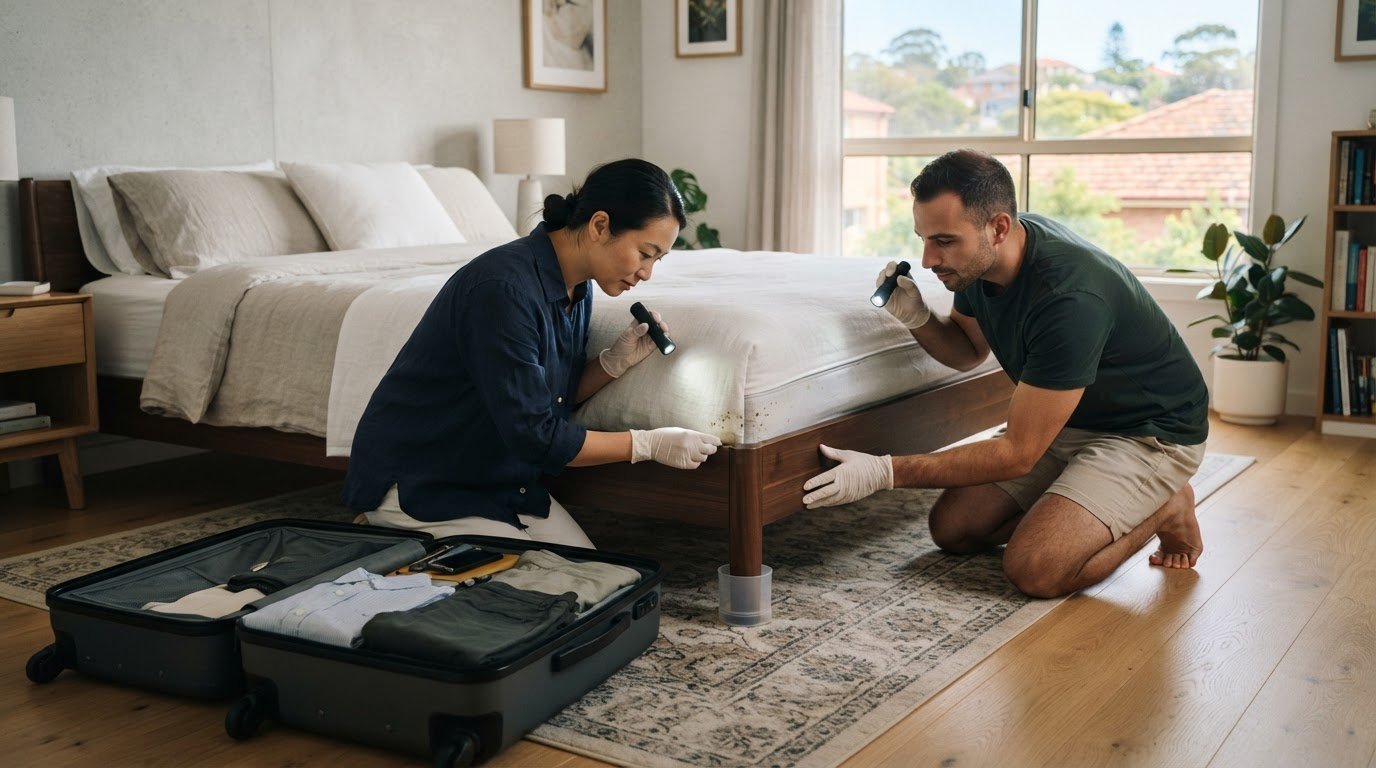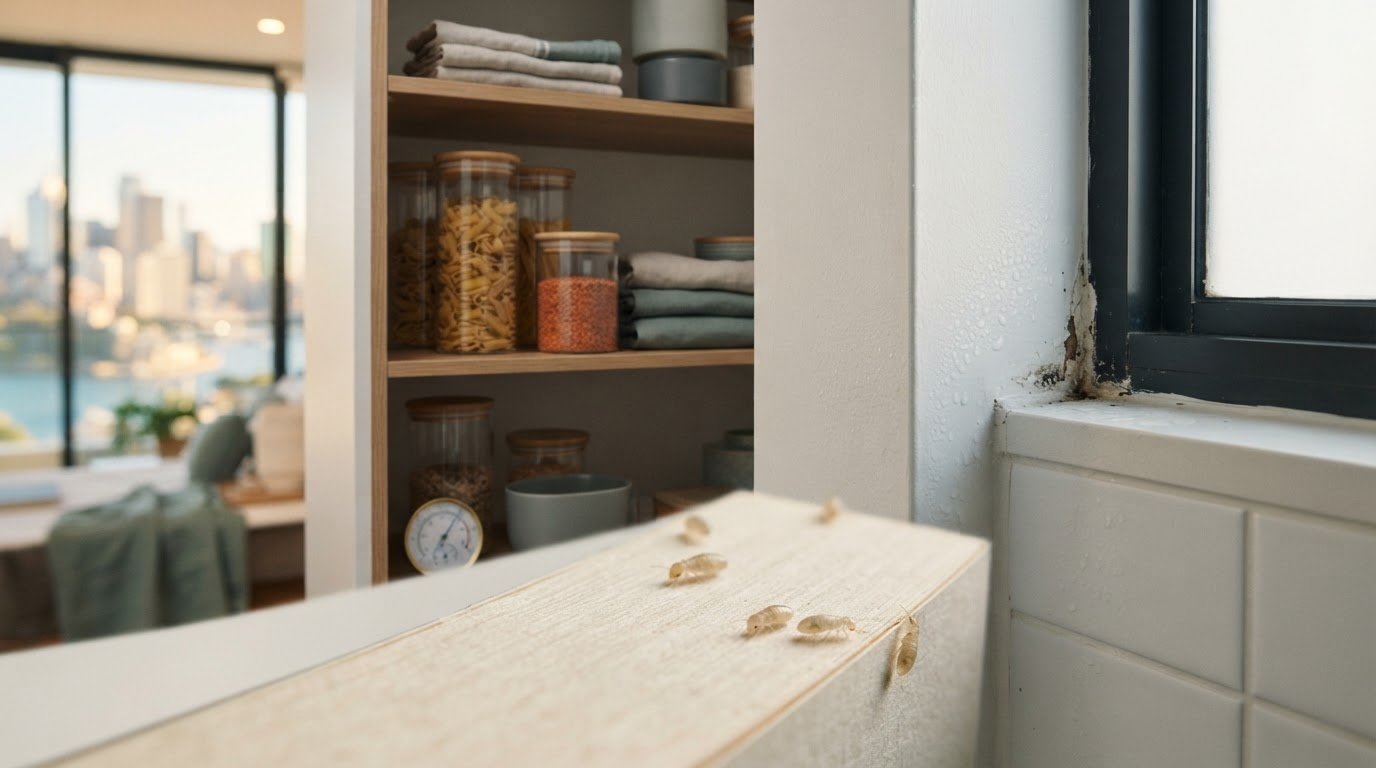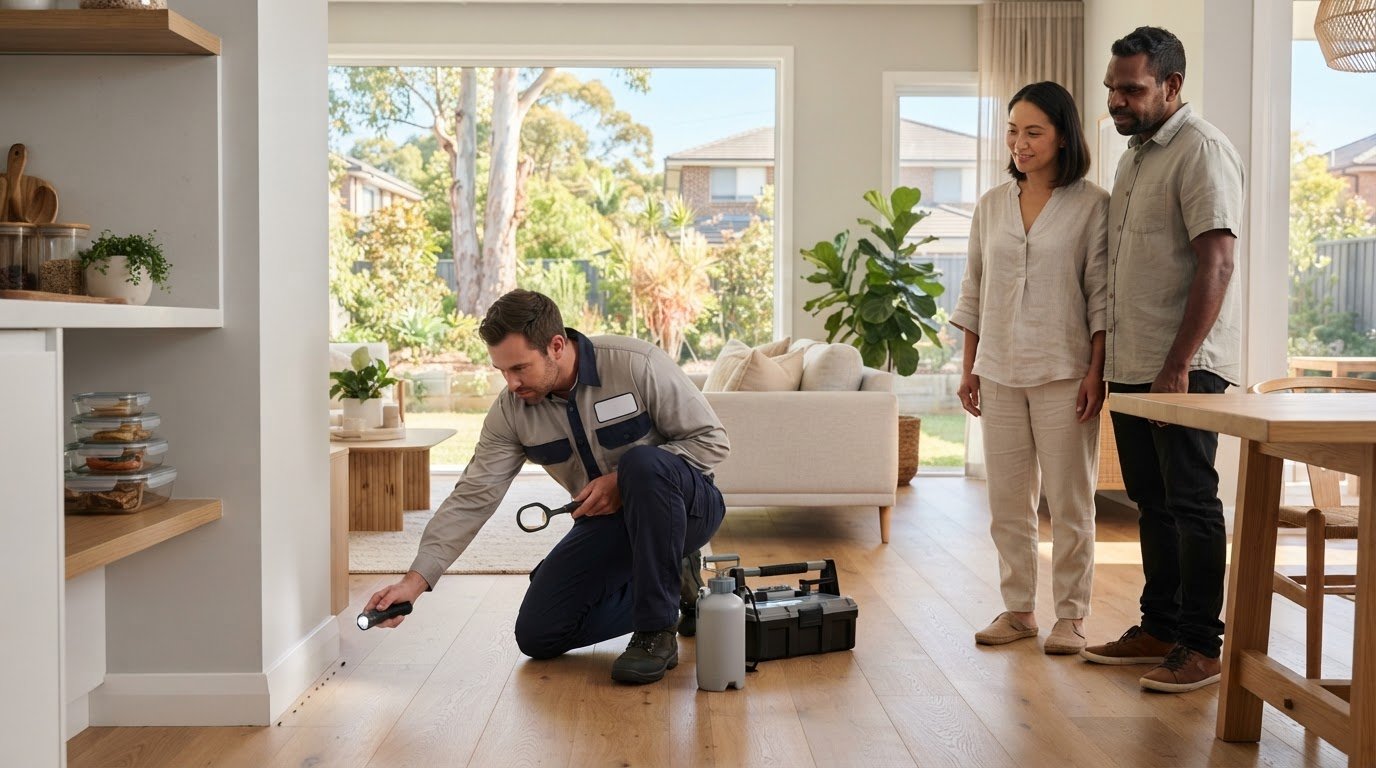


Did you know that Sydney is officially Australia’s most pest-prone capital city, with areas like the Eastern Suburbs recording 211% more ant activity than the national average? It’s incredibly frustrating to spend hours scrubbing your benches only to find a fresh trail of scouts heading for your pantry ten minutes later. If you are struggling with how to get rid of ants in the kitchen, you are likely dealing with more than just a few stray bugs; you are facing a highly organized colony that requires a professional approach.
We understand that recurring infestations cause genuine anxiety about food contamination and chemical safety. Your family’s health is our priority, and we believe you shouldn’t have to choose between a clean home and a safe environment. This guide provides the exact steps to eliminate kitchen ants for good by disrupting their pheromone communication and targeting the hidden queen. You will learn everything from simple DIY disruptions to the professional, eco-friendly strategies our experts use to keep Sydney homes ant-free year-round. We’ll show you how to move beyond temporary sprays and achieve the permanent results your home deserves.
Key Takeaways
- Learn why standard surface sprays often backfire by causing colonies to split and multiply through a survival process called “budding.”
- Discover the “Trojan Horse” strategy for how to get rid of ants in the kitchen by using professional baiting techniques that target the hidden queen.
- Follow our expert ant-proofing checklist to identify “invisible” zones behind appliances and seal entry points using professional-grade materials.
- Understand how Sydney’s unique humidity and sudden rainstorms drive infestations and why non-toxic, eco-friendly treatments are the safest solution for your family.
- Identify the “Three-Strike Rule” to know exactly when DIY efforts have failed and you need an expert technician to guarantee a clean, ant-free kitchen.
Why Ants Invade Sydney Kitchens: Identifying the Culprits
Kitchen ants are not just a nuisance; they are highly efficient, opportunistic scavengers. These tiny invaders enter your home with a clear mission: to find sugar, proteins, and moisture. If you are searching for how to get rid of ants in the kitchen, it’s vital to understand that what you see on the bench is just the tip of the iceberg. A single “scout” ant is sent out by the colony to locate food sources. Once it finds your honey jar or a stray crumb, it leaves an invisible chemical path for thousands of its sisters to follow. You aren’t just fighting a few bugs; you’re fighting a biological system designed to exploit your pantry.
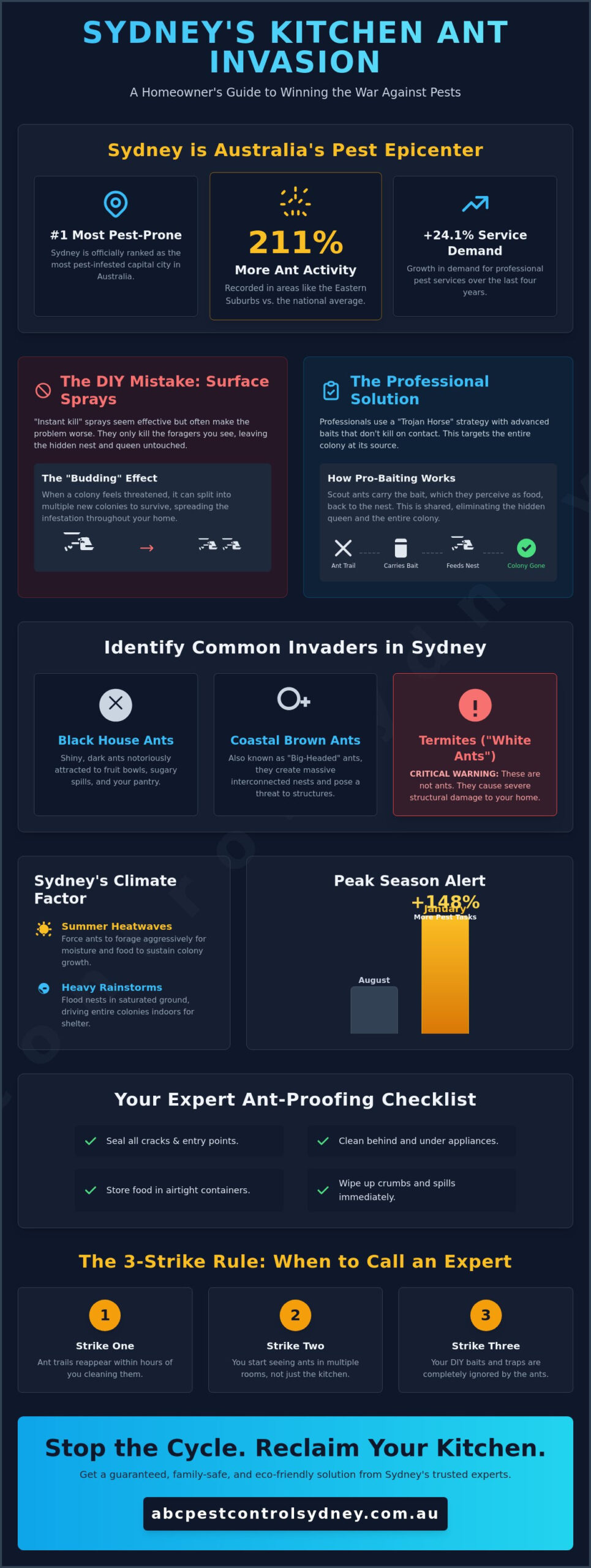
Greater Sydney is currently ranked as the most pest-prone capital city in Australia. With ant activity in areas like the Eastern Suburbs sitting at 211% above the national average as of May 2026, the pressure on local kitchens is immense. Seeing one ant today often means a massive colony is already established just outside your walls. Our experts have seen demand for pest services grow by 24.1% over the last four years, proving that these infestations are becoming more frequent and harder to manage without professional help.
Common Local Ant Species in New South Wales
Identifying your enemy is the first step toward a solution. Black House Ants are the most frequent culprits. They are shiny, dark, and notoriously attracted to fruit bowls and sugary spills. In contrast, Coastal Brown Ants, often called “Big-Headed” ants, are a significant threat to Sydney structures because they create massive interconnected nests. It is also crucial to distinguish these from “White Ants.” While kitchen ants are a hygiene risk, White Ants are actually termites that cause structural damage. Knowing the difference ensures you apply the right treatment fast.
The Sydney Weather Connection
Our local climate plays a massive role in why infestations happen. The Science of the Trail: Why Your Surface Spray is Failing is deeply linked to ant biology and how they respond to environmental stress. During Sydney’s notorious summer heatwaves, ant metabolic rates skyrocket. This forces them to forage more aggressively for moisture and food to sustain the colony’s growth.
Heavy NSW rainstorms also trigger sudden indoor migrations. When the ground becomes saturated, ant nests flood, driving entire colonies upward into the dry voids of your kitchen walls. Statistics show that January sees 148% more pest tasks than August, making the humid summer months the peak time for kitchen invasions. If you are also noticing other pests, it’s common for how to get rid of cockroaches and ant management to be handled together, as both thrive in these humid Sydney conditions. Don’t wait until the trail becomes a highway; taking action now prevents a small problem from becoming a total takeover.
The Science of the Trail: Why Your Surface Spray is Failing
Most homeowners reach for a can of supermarket spray the second they see a trail on their bench. It’s an instinctive reaction because you want the invaders gone immediately. However, in 2026, these “instant kill” products are often the primary reason your infestation keeps returning. While they effectively kill the individual ants you see, they fail to address the root cause. If you want to know how to get rid of ants in the kitchen permanently, you must stop focusing on the foragers and start targeting the colony’s biology.
How Pheromone Communication Works
Ants navigate your home using a sophisticated chemical language. When a scout finds a food source, it deposits a pheromone trail on its way back to the nest. Pheromones are the “GPS system” of the ant world. This invisible map tells other workers exactly where to go and even signals the quality of the food found. Wiping these trails with plain water or standard kitchen cleaner is rarely enough to stop the invasion. The chemical bonds are surprisingly resilient; unless you use a professional-grade disruption method, the next wave of foragers will pick up the scent within minutes.
According to research from the CSIRO on Why Ants Invade Sydney Kitchens, invasive species are experts at using these chemical signals to dominate urban environments. When you disrupt only a small portion of the trail, you aren’t solving the problem. You are simply forcing the colony to find a new, often more hidden route to your pantry.
The Danger of Repellents
The biggest mistake people make is using repellent sprays, such as those containing common pyrethroids. These products act like a loud warning bell for the entire nest. When the colony senses a toxic barrier, they don’t just give up. Instead, they often engage in a survival mechanism called “budding.” This is a process of colony fragmentation where the queen and her workers split into multiple smaller, satellite colonies to ensure the species survives. By spraying, you might inadvertently turn one central nest into three separate infestations hidden deep within your wall cavities.
- Repellent sprays only eliminate the foragers, which represent a tiny fraction of the total colony.
- Colony budding can lead to new trails appearing in different parts of the kitchen within 48 hours.
- Supermarket baits often dry out too quickly or contain concentrations that kill the ant before it can reach the queen.
True success comes from using non-repellent, slow-acting baits that the ants don’t recognize as a threat. These allow the workers to feed and return to the nest, unknowingly sharing the treatment with the queen. If your current DIY efforts are leading to more trails, it is time to consult a Sydney pest expert who can apply professional-grade, non-toxic solutions that eliminate the entire colony safely. Understanding this biological response is the only way to achieve a truly ant-free home.
DIY vs. Professional Ant Removal: Which Method Works?
Deciding how to tackle an infestation usually starts with a trip to the pantry. For a small, isolated incursion where you’ve spotted just a few scouts, home remedies might offer temporary relief. However, if you are dealing with a persistent trail that returns every morning, you need to understand the difference between a deterrent and a solution. When researching how to get rid of ants in the kitchen, most people want a quick fix, but the reality of ant biology often requires a more sophisticated approach. DIY methods often fail because they address the symptoms rather than the source.
Natural Home Remedies: Myths vs. Reality
Vinegar is a popular choice because it effectively dissolves the chemical trails left by scouts. While it is a great tool for immediate hygiene, it is a poor colony killer. It simply clears the “road,” but the “nest” remains full. Similarly, coffee grounds and cinnamon act as mild deterrents. They might redirect the ants to a different corner of your bench, but they won’t stop the hunger driving them toward your food. These methods are temporary at best and often lead to frustration when the ants reappear elsewhere.
We also urge caution with “internet-famous” borax and sugar recipes. While boric acid is the basis for the “Trojan Horse” method, home-mixed versions can be dangerous. If the concentration is too high, it kills the ant before it reaches the nest. If it’s too low, it does nothing. Most importantly, leaving borax mixtures in a kitchen is a safety risk for families with small children or pets. Professional pest control Sydney solutions prioritize your safety by using enclosed, tamper-resistant bait stations that keep toxins away from food preparation areas.
Professional Baiting Technology
The professional advantage lies in understanding the complex social structure of the colony. When our technicians begin Identifying the Culprits, they select specific gel baits designed to exploit a behavior called trophallaxis. This is the process where ants share regurgitated food with the rest of the colony, including the queen. This ensures the treatment reaches the heart of the nest where sprays cannot go. Our approach includes:
- Targeted gel baits that are highly attractive to specific Sydney species.
- Tamper-resistant stations that protect your family and pets from accidental contact.
- Residual barriers that prevent new colonies from moving into your wall cavities.
Our licensed technicians, registered with the NSW EPA, also utilize Insect Growth Regulators (IGRs). These specialized chemicals don’t just kill adult ants; they disrupt the life cycle, preventing larvae from maturing and stopping the queen from producing new eggs. This multi-pronged approach is why professional treatment succeeds where DIY fails. We don’t just manage the ants you see; we eliminate the next generation before it ever reaches your kitchen. If your DIY efforts haven’t produced results within 48 hours, it’s a sign that the infestation is too established for pantry staples to handle.
The Ultimate Kitchen Ant-Proofing Checklist
Eliminating the current colony is only half the battle. If you don’t change the environment that attracted them, a new colony will move into the vacancy within weeks. To truly master how to get rid of ants in the kitchen, you must implement a structured prevention plan. This checklist focuses on removing the three essentials ants need to survive: food, water, and easy access. By making your home a “hostile” environment, you stop the cycle of recurring trails.
- Step 1: Deep clean the “invisible” zones. Crumbs behind the toaster or grease under the fridge provide weeks of food for a colony.
- Step 2: Seal entry points. Use silicone sealant to close gaps in window frames or where plumbing pipes enter the wall.
- Step 3: Manage moisture. Fix leaky taps immediately and dry your sink with a microfibre cloth every night before bed.
- Step 4: Use airtight storage. Swap cardboard boxes for glass or hard plastic containers with rubber seals to lock out scents.
- Step 5: Create “No Food” zones. Restrict eating to the dining area to prevent crumbs from spreading to other rooms.
Deep Cleaning for Pheromone Disruption
Standard soapy water isn’t enough to stop the biological “GPS system” we discussed earlier. You need enzymatic cleaners or citrus-based solutions to chemically dissolve those invisible pheromone trails. Pay close attention to the “splashback” zones where grease and sugar accumulate during cooking. One often-overlooked area is the dishwasher seal. This warm, moist environment frequently collects food debris, creating a hidden highway for foragers. Cleaning this seal weekly can reduce ant sightings significantly.
Exclusion Tactics: Sealing the Perimeter
Sydney homes often have unique entry points that require specific attention. Inspect your window sills and door frames for cracks as thin as a credit card. In Australian brickwork, weep holes are essential for ventilation but act as open doors for pests. We recommend using specialized stainless steel mesh inserts that allow airflow while blocking invaders. For pet owners, protein-rich kibble is a major drawcard. Using “ant-proof” bowls that feature a water moat prevents scouts from reaching the food and signaling the rest of the nest.
If you’ve followed these steps and still see trails, your infestation may be deeper than the surface. Don’t let the problem grow and cause more anxiety. You can BOOK NOW and have a specialist secure your kitchen in under 60 seconds. Our professional team ensures your home meets Australian Pest Standards while keeping your family safe with non-toxic, eco-friendly treatments.
When to Call ABC Pest Control Sydney
Knowing when to stop the DIY struggle is the key to reclaiming your home. While small incursions are manageable, an established colony often requires more than just pantry staples. We recommend using the “Three-Strike Rule” to decide if you need professional help. If you’ve cleaned the invisible zones, sealed the cracks, and tried retail baits, yet the ants remain, it’s time to call in the specialists. Persistent trails are a clear sign that the nest is deep within your wall cavities or subfloor, far beyond the reach of standard home methods. If you are struggling with how to get rid of ants in the kitchen after multiple attempts, you are likely dealing with a resilient colony that has already begun “budding.”
In many Sydney homes, ants are rarely the only uninvited guests. Because they thrive in the same humid conditions, tough infestations like how to get rid of cockroaches and ants often go hand-in-hand. When you’re facing multiple pests, our highly popular Deluxe Package offers a comprehensive, all-in-one solution. With over 20 years of experience in Sydney Pest Control, we understand the unique challenges of local suburbs from Blacktown to the Eastern Suburbs. Your safety is our priority. That’s why we use only eco-friendly, non-toxic treatments that are safe for your children and pets while still being deadly to the colony.
Our Proven Ant Elimination Process
We don’t just spray and leave; we solve the problem at the source. Our technicians follow a rigorous process to ensure the infestation is gone for good. First, we conduct a comprehensive inspection to find the nest, not just the trail. We then use specialized gel baits that utilize trophallaxis, ensuring workers carry the treatment back to the queen. This is the only way to ensure the entire colony is eliminated. Finally, we provide a follow-up and guarantee. If the ants return within the warranty period, so do we. We adhere strictly to Australian Pest Standards to give you total peace of mind.
Book Your Sydney Pest Control in Under 60 Seconds
We know that a pest invasion feels like an emergency. You shouldn’t have to wait days for a solution while ants crawl over your food preparation areas. Our urgent response team is ready to tackle Sydney kitchen emergencies with modern efficiency. Our local knowledge of NSW pest standards and weather-driven behavior means we get results where others fail. Don’t let the anxiety of a dirty kitchen ruin your week. Get a Free Quote and Reclaim Your Kitchen Today! Our streamlined system allows you to book your service and secure your home in under 60 seconds.
Take Control of Your Kitchen Today
You now have the professional roadmap for how to get rid of ants in the kitchen by disrupting pheromone trails and sealing structural entry points. Success in Sydney’s pest-heavy climate requires moving beyond surface sprays that cause colonies to split and multiply. By focusing on deep cleaning and professional-grade baiting that targets the hidden queen, you can stop the cycle of recurring infestations for good. Don’t let a small trail turn into a permanent takeover of your pantry.
With over 20 years of Sydney expertise, our technicians provide the specialized care your home needs to remain hygienic and safe. We are recognized experts featured in the Daily Mail and Yahoo News, and we prioritize your family’s health by using only eco-friendly and non-toxic treatments. You don’t have to tolerate constant trails or food contamination anxiety any longer. Our efficient system ensures you get results fast, helping you maintain a pristine environment year-round even during the humid summer peaks.
Reclaim Your Kitchen! Book Your Sydney Ant Treatment in Under 60 Seconds
A clean, ant-free kitchen is within your reach. Take the first step today and enjoy the peace of mind that comes with a professionally protected home.
Frequently Asked Questions
How much does professional ant removal cost in Sydney?
Professional ant removal in Sydney typically ranges from $100 to $300 for a standard treatment. If you opt for a general pest control package that includes cockroaches and spiders, prices usually start around $250. Some specialized providers in the NSW region list intensive treatments starting from $400 including GST. The final price depends on the severity of the infestation and the size of your kitchen area.
Can I get rid of ants in the kitchen without using toxic chemicals?
Yes, professional treatments today focus on eco-friendly, low-toxicity baits that target the colony while remaining safe for your family. To see how modern management techniques protect your home, you can explore Ant Control with Source Pest Control, which specializes in safe, effective residential services.
Why do ants keep coming back to my kitchen even after I clean it?
Ants return because standard cleaning often fails to remove the invisible pheromone trails left by scouts. These chemical maps signal to thousands of other workers that your kitchen is a viable food source. Unless you use enzymatic cleaners to dissolve these paths or professional baits to kill the queen, the colony will continue to pick up the scent and return to your benches daily.
Is it possible to have an ant nest inside my kitchen walls?
It is very common for Sydney species like Coastal Brown Ants to build satellite nests inside wall cavities, subfloors, and behind skirting boards. These areas provide a protected, climate-controlled environment that is ideal for breeding. If you notice ants emerging from power points or gaps in the cabinetry, it is a definitive sign that the colony has moved into your home’s structure.
How long does it take for professional ant bait to work?
You will generally see a significant drop in activity within 2 to 7 days after the professional bait is applied. These gels are intentionally slow acting to allow worker ants enough time to share the treatment with the rest of the colony. This process ensures the bait reaches the queen, which is the only way to stop the infestation from returning a few weeks later.
What is the best way to kill a queen ant I can’t find?
The most effective strategy for how to get rid of ants in the kitchen permanently is using baits that exploit a behavior called trophallaxis. Since the queen remains hidden deep within the nest, you must use the foragers as a delivery system. They carry the bait back and feed it directly to the queen, leading to a total colony collapse without you ever needing to locate the nest yourself.
Can ants in the kitchen cause structural damage to my Sydney home?
Most common kitchen ants are primarily a hygiene threat, but certain species like Carpenter Ants can cause damage by tunneling through moist timber. While ants don’t eat wood like termites, their nesting habits can weaken structures over time. In Sydney, the biggest risk is often the contamination of food and surfaces, which can lead to the spread of bacteria throughout your household.
What should I do if I find “white ants” in my kitchen cupboards?
Contact a licensed pest controller immediately because “white ants” are actually termites, which require urgent professional intervention. Do not disturb the nest or use household fly sprays, as this will only cause the colony to retreat and relocate to another part of your home. Termites require specialized equipment and EPA-approved treatments that are entirely different from standard ant control methods.