
Imagine waking up at 2:00 AM in your Sydney home, feeling a sudden itch, and switching on the lamp to find a mysterious dark smear on your pillowcase. It’s a terrifying moment that leaves you wondering if your sanctuary has been invaded. We understand the deep anxiety of not knowing what’s hiding in your mattress, especially when you can’t tell the difference between a simple stain and actual bed bug signs on sheets. You aren’t alone in this; our team helps dozens of Sydney families every week who are facing the exact same fear of rising infestation costs and sleepless nights.
You deserve to reclaim your bedroom and your peace of mind immediately. In this guide, you will learn how to accurately identify bed bug evidence on your bedding and what professional steps you need to take right now to protect your home. We’ll provide a clear, step-by-step inspection process and show you how our 20 years of experience with tough pests can eliminate the problem for good. Don’t wait for the problem to grow. Let’s get you the definitive answers you need today.
Key Takeaways
- Identify early signs of an infestation right where they start, ensuring you catch “tough pests” before they take over your bedroom.
- Learn to recognise the three unmistakable bed bug signs on sheets—including fecal markers and exoskeletons—that warrant an immediate professional inspection.
- Use our objective framework to tell the difference between common bedding stains and actual pest evidence, saving you from unnecessary stress.
- Follow a critical action plan to contain the problem and discover why moving your mattress or using “bug bombs” can actually make the infestation worse.
- Find out why expert, eco-friendly intervention is the only way to guarantee results for your Sydney home and how you can book a specialist in under 60 seconds.
Identifying Early Bed Bug Signs on Your Bed Sheets
Finding bed bug signs on sheets is often the first definitive evidence of an active nocturnal infestation in your Sydney home. Because these pests require regular blood meals to survive, your bedding becomes the primary zone for activity. They stay close to their host, making your linens the frontline for detection. You might wake up feeling perfectly fine, but your sheets can reveal a hidden problem that’s already growing behind your headboard.
It is vital to debunk the myth that these pests are attracted to filth. Bed bugs don’t care about the cleanliness of your house; they are expert hitchhikers, not filth-seekers. They enter five-star hotels and pristine suburban homes alike via luggage, backpacks, or used furniture. Relying on physical bite marks is also a mistake. Data shows that approximately 67% of people do not have any skin reaction to bites. For 2 out of 3 residents, visual bed bug signs on sheets are the only warning signal before the population reaches a critical level.
Why Bed Bugs Target Your Bedding
The biology of these insects dictates their behavior. Bed bugs are strictly nocturnal and possess specialized sensors to detect the heat and carbon dioxide emitted by a sleeping human. Detailed research into bed bug biology and behavior shows they prefer to hide in tight, dark spaces like mattress seams or bed frames during the day. They only emerge when you are stationary for long periods. In Sydney, we observe a significant increase in infestations during the humid months from December to March. These higher temperatures shorten their life cycle, leading to faster breeding and more frequent feeding sessions on your bedding.
The Psychology of the “Bed Bug Scare”
Discovering unexplained marks on your pillowcase often triggers an immediate “skin crawling” sensation and intense anxiety. This “bed bug scare” can lead to sleepless nights and DIY attempts that often make the problem worse. It’s important to stay calm. While they are distressing, bed bugs don’t transmit blood-borne diseases, unlike other common Sydney pests like mosquitoes or ticks.
ABC Pest Control Sydney has spent over 20 years acting as the calming expert in these high-stress situations. We specialize in “tough pests” that other companies struggle to eliminate. Our team follows strict Australian Pest Standards to ensure your home is safe and your family is protected. If you’ve spotted something suspicious, don’t wait for the problem to spread. You’re in expert hands with our professional technicians who prioritize your safety and peace of mind.
- Expertise: Over 20 years of experience in Sydney pest control.
- Safety: We use safe, non-toxic treatments suitable for families and pets.
- Urgency: We treat bed bug sightings as high-priority emergencies.
- Reliability: Our methods effectively manage and eliminate even the most stubborn infestations.
The Three Tell-Tale Visual Indicators of Bed Bugs on Bedding
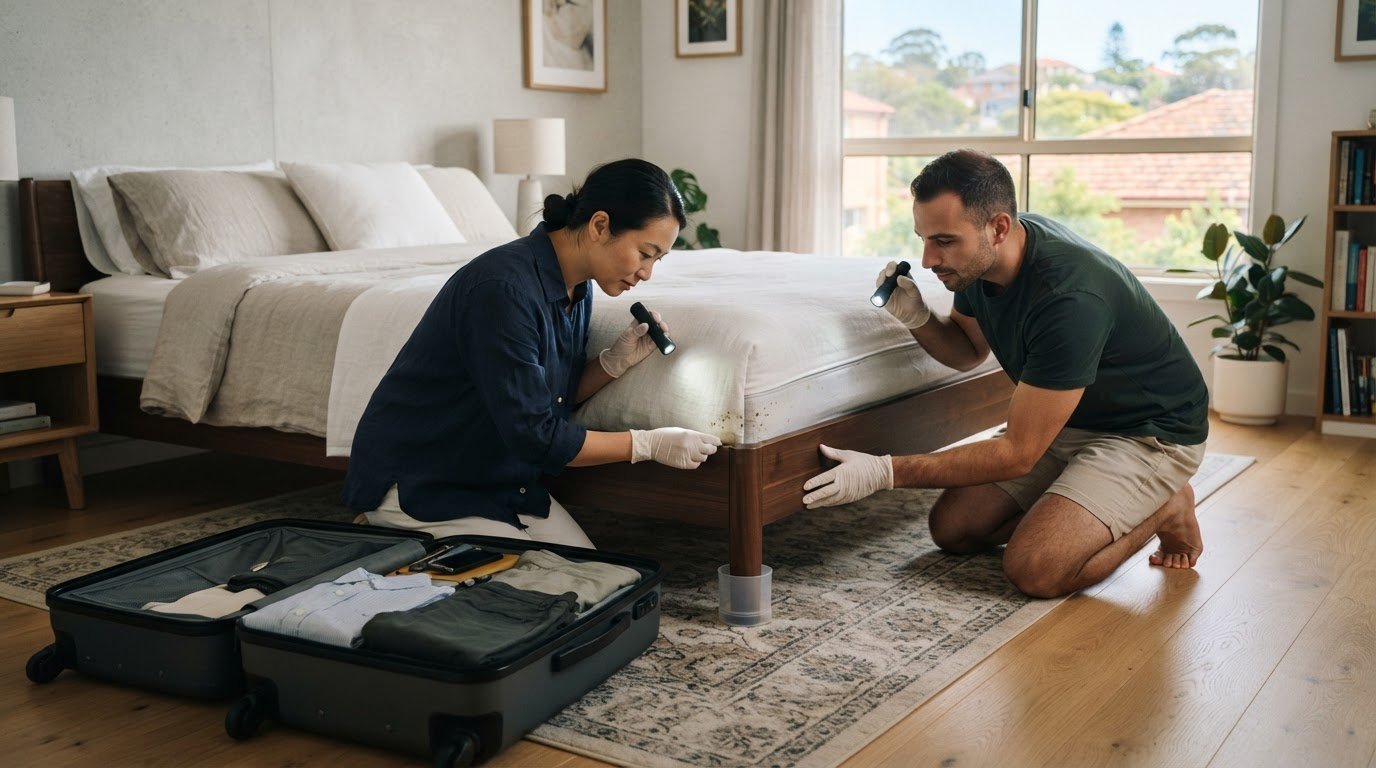
Identifying an infestation early protects your family and your Sydney home from a growing problem. You need to look for the “Big Three” indicators: blood spots, fecal matter, and discarded exoskeletons. Use a high-powered torch to inspect your mattress, focusing heavily on the head of the bed and along the deep seams where these pests hide. Finding just one of these signs is enough to warrant a professional inspection immediately. If you’re worried about your home, you can book a specialist inspection in under 60 seconds to get expert help fast.
Rusty or Reddish Blood Stains
You might notice small, circular red spots on your linens. These often occur when a bed bug is accidentally crushed by your body weight immediately after it has finished feeding. Look for unexplained blood smears that look like tiny streaks on your pillowcase or duvet cover. These spots are digested blood droplets expelled during the feeding process. Because bed bugs feed for 5 to 10 minutes at a time, these stains are frequently concentrated in areas where your skin has the most direct contact with the mattress surface.
Dark Fecal Spotting (The “Ink Blot” Sign)
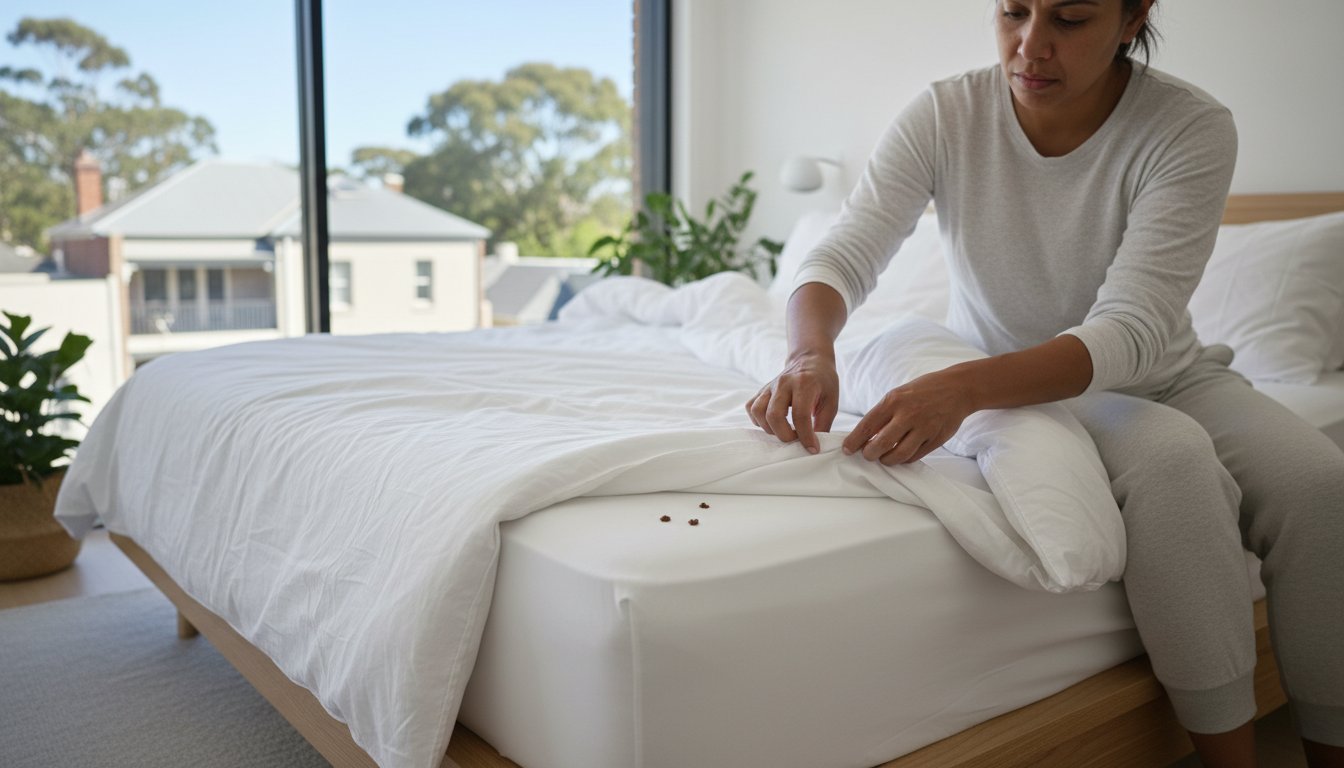
Fecal spots are one of the most reliable bed bug signs on sheets. These tiny, dark brown or black dots resemble the mark from a fine-tip felt pen. Unlike regular household dirt or lint, these spots have a “soaked-in” appearance because they’re composed of liquid waste. To confirm what you’re seeing, perform a smear test. If the spot smears when you wipe it with a wet cloth, it’s likely fecal matter. The U.S. Environmental Protection Agency provides detailed guidance on identifying these Signs of Bed Bugs to help homeowners distinguish them from other household debris.
Shed Skins and Egg Shells
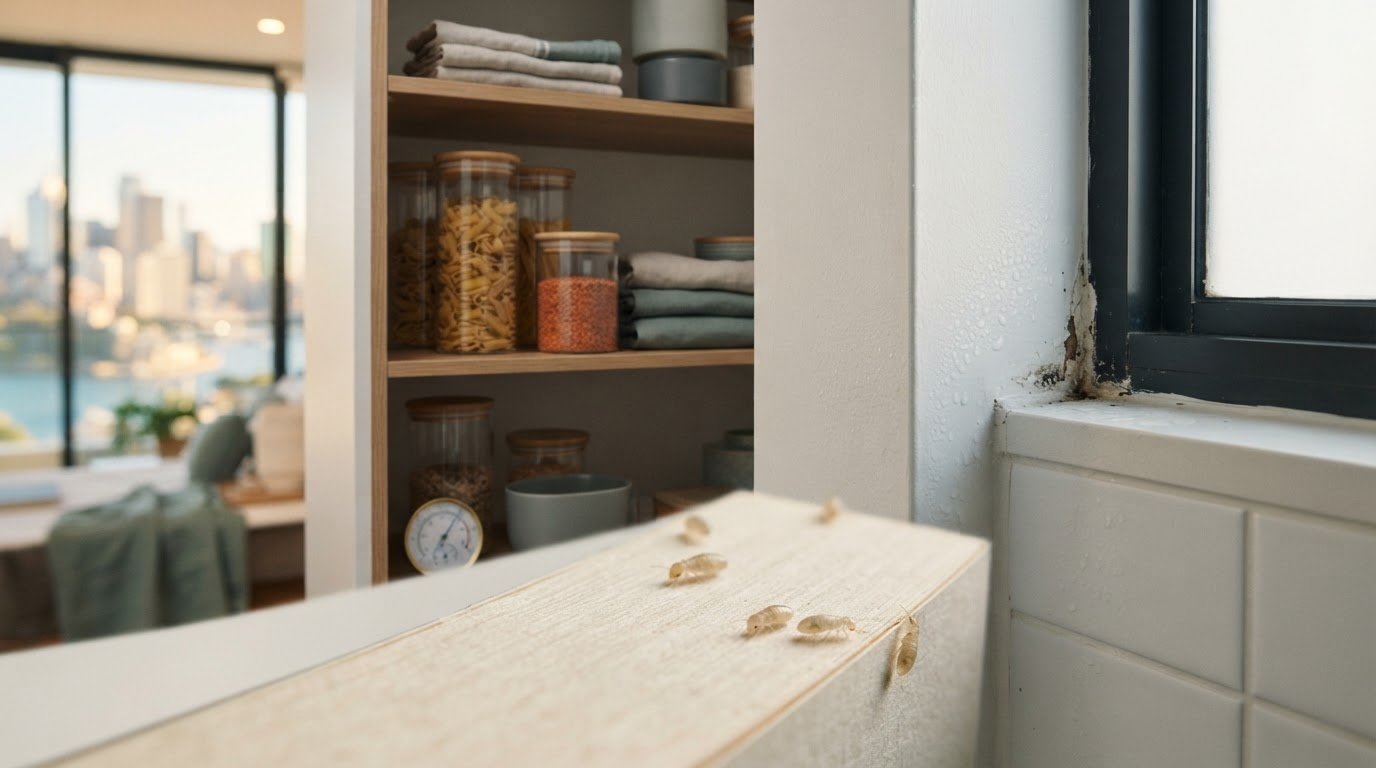
As bed bugs grow, they must shed their skin five times before reaching maturity. You’ll find “exuviae,” which are the translucent, yellowish husks left behind as nymphs progress through their life stages. Finding these skins indicates a growing, breeding colony is active in your room. Keep an eye out for eggs as well. These are tiny, white, grain-of-rice shaped specks measuring approximately 1mm long. They’re often glued to the fabric of the mattress or tucked deep into the piping. Since a single female can lay up to 500 eggs in her lifetime, seeing even a few shells suggests a significant population is already developing in your Sydney property.
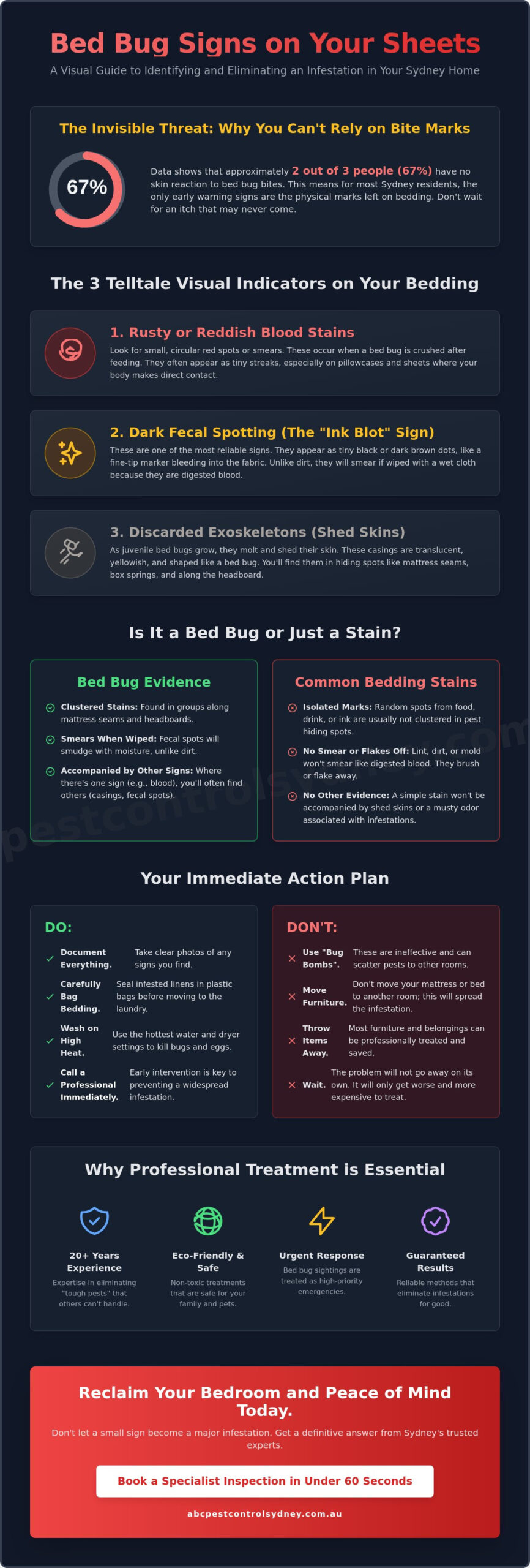
Bed Bug Evidence vs. Common Bedding Stains: How to Tell the Difference
It is tempting to dismiss a dark mark as a simple spill. Most Sydney homeowners we visit initially hoped the spots were just a bit of dirt or a pen leak. Don’t let wishful thinking delay your response. Bed bugs reproduce fast. One female can lay up to five eggs a day. You need to evaluate the evidence objectively before you strip the bed. Identifying bed bug signs on sheets early can save you thousands in replacement furniture costs.
Stop. Don’t wash those sheets yet. Use your smartphone to take close-up photos of any marks. Clear evidence helps our technicians identify the pest in under 60 seconds during a professional inspection. We use these photos to determine if you have a “tough pest” situation or a simple laundry mishap. Follow this framework to evaluate your findings:
- Location: Are the spots near the seams, zippers, or corners?
- Shape: Are the marks crisp and round, or do they have blurry, bleeding edges?
- Reaction: Does the spot change color when you apply a drop of water?
Bed Bugs vs. Flea Dirt
Sydney’s humid weather makes flea infestations common. Flea dirt looks like tiny grains of black pepper. It’s small and gritty. You will usually find it in concentrated areas where a pet sleeps. Bed bug fecal spots are different. They are smooth and look like tiny ink blots. Use the “water test” to be sure. If you drop a tiny bit of water on flea dirt, it turns a rusty red color because it contains undigested blood. Bed bug spots stay dark and black. If you suspect your pet brought guests inside, or if you’re dealing with other pests, check our rodent control Sydney guide. Rats and mice often carry fleas into roof voids and bedrooms.
Ink Stains vs. Bed Bug Fecal Spots
A leaky pen usually creates a “halo” effect. The ink bleeds into the fabric fibers, creating a fuzzy, faded edge around the central spot. Bed bug fecal spots are crisp and distinct. They look like a tiny drop of dried liquid. These bed bug signs on sheets don’t appear randomly in the middle of the mattress. You’ll find them in clusters or “trails” near the seams and edges. Bed bugs prefer these tight spaces for protection. If you see a single large blot, it’s likely ink. If you see a series of tiny, dark dots near the piping of your mattress, you have an infestation that requires professional help.
Our team has over 20 years of experience identifying these subtle differences. We’ve seen every type of “false alarm” in Sydney homes. If you’re unsure, keep the evidence intact. Washing the sheets destroys the trail we use to find the nesting site. Contact a specialist immediately to confirm your findings and protect your home.
Step-by-Step Guide: What to Do After Finding Signs of Bed Bugs
Finding bed bug signs on sheets is a shock. Your first instinct might be to rip the bedding off and run to the laundry. Stop right there. Panicking is the fastest way to spread these “tough pests” throughout your entire Sydney home. You need a controlled, professional approach to contain the situation before it escalates into a property-wide crisis.
Your safety is our priority. While these pests are stubborn, they’re manageable if you follow a strict containment plan. Start by staying in the room where you found the evidence. Moving to another bedroom or the living room only invites the bugs to follow your body heat, expanding the infestation area within 24 to 48 hours.
The “No-Move” Rule for Bedding
Never carry loose, infested sheets through your hallway. Bed bugs are expert hitchhikers. If you walk through the house with exposed bedding, you’ll drop eggs and live bugs onto your carpet and into other rooms. This turns a single-room issue into a whole-house nightmare. You must bag your sheets inside the bedroom. Use a heavy-duty plastic bag and seal it tight with tape or a knot before moving it.
Don’t move to the sofa to sleep tonight. It’s a common mistake that backfires. Bed bugs are attracted to your body heat and the carbon dioxide you exhale. If you relocate to the lounge, the colony will migrate through walls and under doors to find you. You’ll end up infesting your expensive furniture, making the professional treatment much more complex and time-consuming.
- Seal it: Use dissolvable laundry bags or heavy-duty plastic bags.
- Contain it: Keep all items in the affected room until they’re ready for the wash.
- Heat it: Use the “Hot Wash” method. Wash all bedding at a minimum of 60°C for at least 30 minutes. High heat is the only reliable way to kill eggs and adults effectively.
Expanding the Search: Beyond the Sheets
Once you’ve identified bed bug signs on sheets, you must look deeper. These pests hide in gaps as thin as a credit card. Check the piping of your mattress, the joints of your bed frame, and behind the headboard. Don’t ignore nearby electrical outlets or skirting boards. They love dark, tight spaces close to their food source.
For a thorough inspection, follow our how to get rid of bed bugs guide. This 5-step process ensures you don’t miss hidden clusters. If you find live bugs, don’t try to spray them with supermarket chemicals. Most DIY sprays are ineffective against modern bed bug strains and only cause them to scatter deeper into your walls, making them harder to reach.
You’re in expert hands with ABC Pest Control. We’ve spent over 20 years managing infestations across Sydney using safe, non-toxic methods that meet Australian Pest Standards. Don’t wait until the problem grows. CALL US NOW to book a specialist inspection and protect your home today.
Why Professional Bed Bug Treatment is Essential for Sydney Residents
Discovering bed bug signs on sheets often triggers an immediate sense of panic. Your first instinct might be to grab a supermarket “bug bomb” or a generic pesticide spray. Don’t do it. These DIY methods almost always fail because bed bugs are masters of survival. They’ve spent thousands of years evolving to hide in the tiniest cracks. ABC Pest Control Sydney brings over 20 years of experience to your doorstep, specifically targeting these “tough pests” that standard treatments can’t touch.
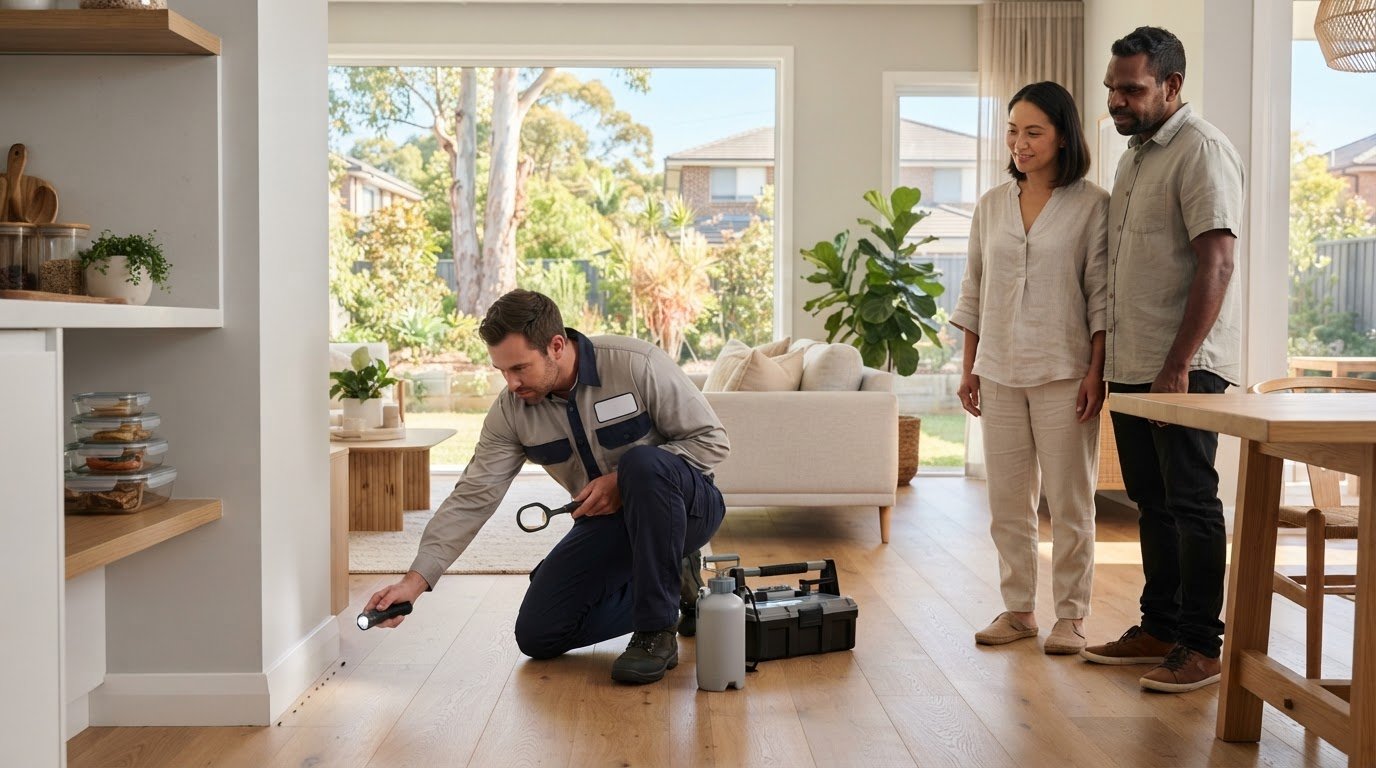
Our professional approach is far more sophisticated than a simple spray. We use a combination of targeted heat, specialized dusts, and eco-friendly residuals. These methods ensure we reach every life stage, from eggs to adults. Our team follows strict Australian Pest Standards to guarantee your home remains a safe environment. If you want a comprehensive strategy, our pest control Sydney resource provides the ultimate framework for total home safety.
The Danger of DIY Bed Bug Treatments
Off-the-shelf sprays often cause more harm than good through a process called “budding.” When a colony detects a weak or repellent chemical, the bugs don’t just die; they split. This causes the infestation to spread from your mattress into wall voids and adjacent rooms. You’re left with a much larger problem than you started with.
There’s also a significant safety risk. Over-applying harsh chemicals in a bedroom where you sleep for eight hours a night is dangerous. Professional technicians use non-toxic, eco-friendly solutions that are safe for kids and pets. Our specialized equipment reaches temperatures and deep crevices that no DIY tool can match. We don’t just move the bugs around; we eliminate them.
Expert Solutions for Sydney Apartments and Units
Sydney’s high-density living creates a unique challenge. Bed bugs easily travel through electrical conduits and shared wall voids in apartment blocks. If you live in a unit, a localized treatment in just one room isn’t enough. We focus on unit and apartment pest control as a specialized service to prevent “re-infestation” from neighboring properties.
Our Operations Manager is a recognized expert frequently featured in the Daily Mail and Yahoo News for tackling Sydney’s most stubborn infestations. We understand the biology of these pests and the structural layout of local buildings. Don’t wait for the bed bug signs on sheets to multiply and move to your sofa or your neighbor’s flat. You can book a professional inspection in under 60 seconds. CALL ABC PEST CONTROL SYDNEY NOW and get your peace of mind back today.
Take Control of Your Sleep Today
Identifying bed bug signs on sheets like dark fecal spots or tiny blood smears is the first step toward reclaiming your bedroom. These pests are notoriously difficult to eliminate without expert help. DIY methods often fail because they don’t reach the deep crevices where eggs are hidden. Acting fast prevents a small problem from becoming a massive infestation that spreads throughout your Sydney property.
ABC Pest Control brings over 20 years of Sydney pest expertise to every job. Our industry leading methods have been featured in Yahoo News and Daily Mail, proving our status as a trusted authority in the region. We prioritize your health by using safe, eco-friendly, and non-toxic treatments that effectively target tough pests without risking your family’s safety. You deserve a home that’s completely pest-free and comfortable, providing a safe environment for your loved ones and the perfect setting for capturing milestones with Moments In Bloom Photography.
Get a Professional Bed Bug Inspection in Sydney – Book in Under 60 Seconds!
Don’t let another night go by in discomfort. Our highly trained technicians are ready to provide the professional solution you need to sleep soundly again.
Frequently Asked Questions
Is this bed bug poop or just regular dirt on my sheets?
Bed bug droppings appear as small, dark, circular spots that look like ink from a felt-tip pen. Unlike regular dirt, these spots soak into the fabric and smear if you wipe them with a damp cloth. You’ll often find 3 to 5 spots clustered together near the seams or corners of your mattress. If the mark doesn’t brush off easily, it’s likely a sign of an infestation.
Can you actually see bed bug eggs on sheets with the naked eye?
Yes, you can see bed bug eggs, but they’re tiny, measuring only 1 millimetre in length. They look like miniature grains of white rice and are often found in clusters of 10 to 50 eggs. These eggs are sticky, so they’ll be glued to the fabric of your sheets or the crevices of your bed frame. Use a bright torch to spot them in the folds of your bedding.
What do bed bug blood spots look like compared to a mosquito bite smear?
Bed bug blood spots are typically bright red or rusty brown smears caused by crushing an engorged bug while you sleep. These marks are often larger and more irregular than a tiny mosquito spot. You’ll usually find these bed bug signs on sheets near the foot or head of the bed. Mosquito smears are generally isolated, whereas bed bug marks often appear repeatedly over several nights.
Should I throw away my mattress and sheets if I find bed bugs?
You don’t need to throw away your mattress or sheets in 95% of cases. Professional heat treatments or eco-friendly chemical sprays can effectively eliminate the pests without destroying your property. Simply wash your sheets in water at least 60 degrees Celsius to kill all life stages. Our Sydney experts can save your expensive bedding and restore your peace of mind with a single visit.
How fast do bed bugs spread from my sheets to the rest of the house?
Bed bugs can spread to adjacent rooms within 24 hours by hitchhiking on your clothing or crawling through wall voids. A single female bed bug lays up to 5 eggs per day, leading to a population of over 200 bugs within a month. Don’t wait for them to colonize your entire Sydney home. Acting fast prevents a small problem from becoming a massive, multi-room infestation.
Can bed bugs live on silk, satin, or synthetic bed sheets?
Bed bugs can live on any fabric, including silk, satin, and polyester, because they only use the sheets as a path to reach you. While they prefer the texture of cotton for laying eggs, they’ll hide in the seams of any bedding material. Their survival depends on access to a blood meal, not the thread count or material of your sheets. No fabric is 100% bed bug proof.
Will washing my sheets in hot water kill all the bed bugs?
Washing sheets in hot water kills bed bugs if the temperature stays above 60 degrees Celsius for at least 30 minutes. You must follow this with a high-heat dryer cycle for 40 minutes to ensure every egg is destroyed. While this cleans your bedding, it won’t solve the problem if bugs are still hiding in your bed frame or skirting boards. You need a professional inspection to find every hiding spot.
Why do I have signs on my sheets but no visible bite marks on my skin?
You might see bed bug signs on sheets without bites because roughly 30% of people don’t have a physical reaction to bed bug saliva. Even if you don’t itch or see red welts, the presence of blood spots or shells means the bugs are active. Our technicians often find heavy infestations in homes where the residents haven’t noticed a single mark. Don’t ignore the evidence on your fabric.