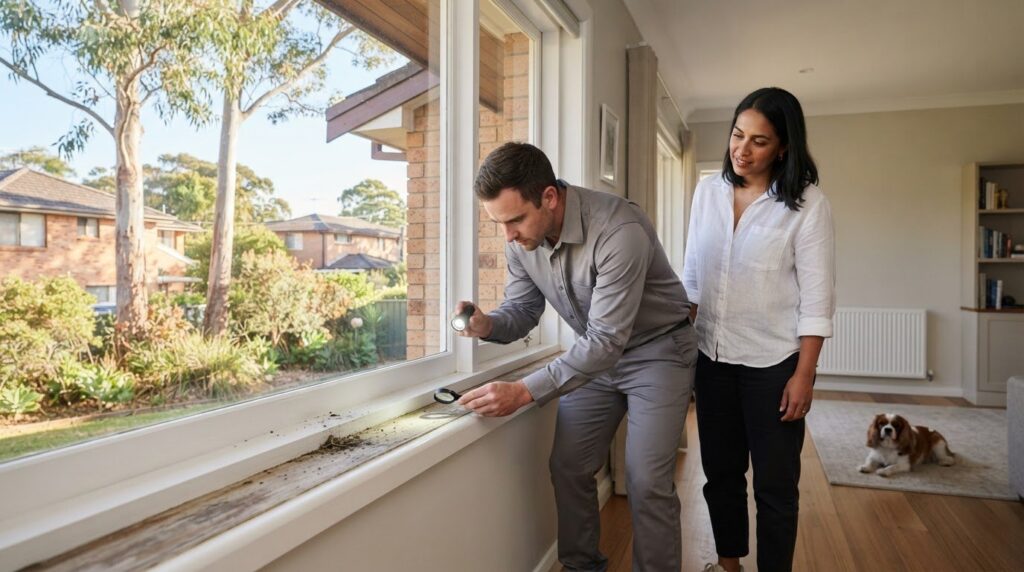
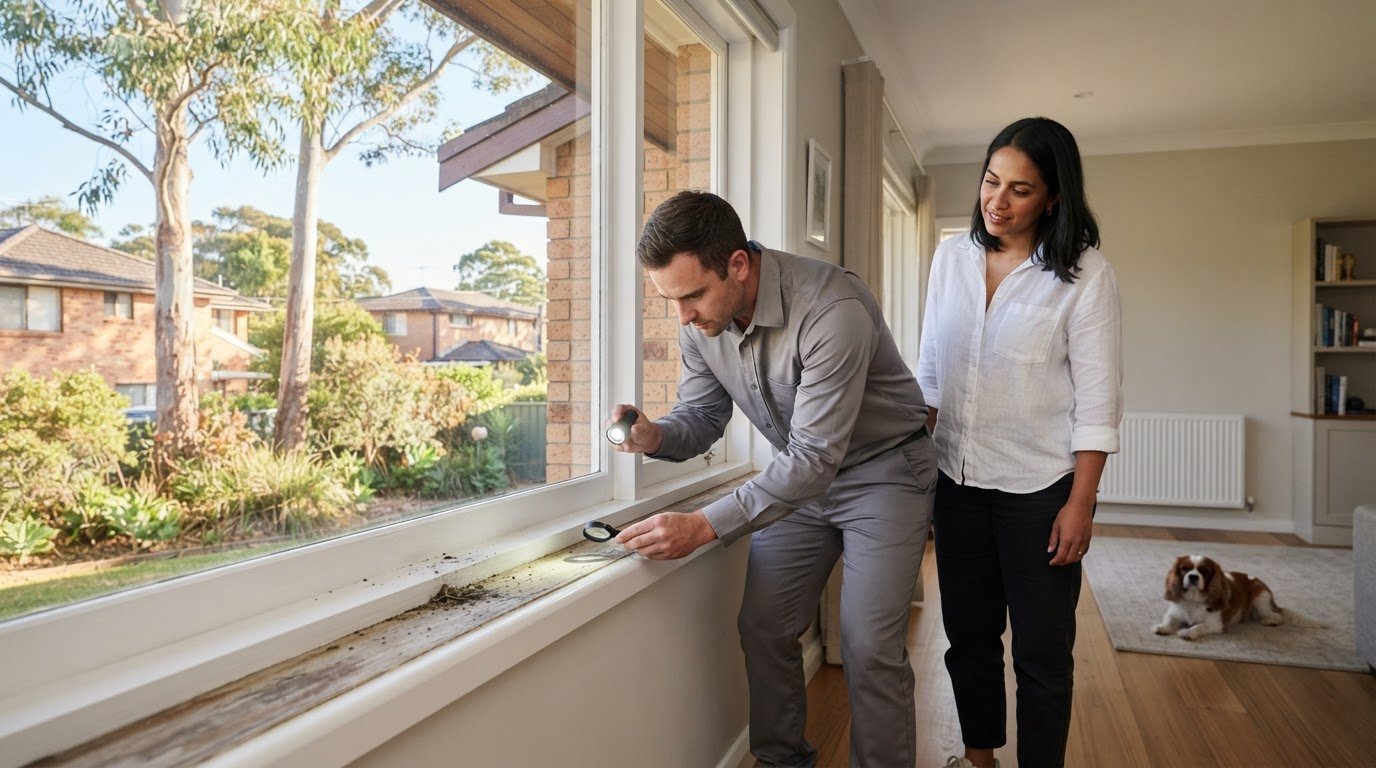
If the nest is gone but bites or crawling pests continue, does that mean you need fumigation? If you’re searching for bird lice fumigation after nest removal sydney, the key distinction is that removing a nest addresses the source, but mites that have already moved indoors may still need attention. People often call bird mites “bird lice,” and an inspection can help identify what’s actually present before anyone chooses a treatment.
It’s understandable to worry about lingering pests, particularly if you’re also concerned about children, pets or nearby wildlife. Treatment shouldn’t be guessed at or applied without clear instructions. This article explains why mites may remain after nest removal, what to expect during an assessment and how to prepare without making the problem harder to assess. You’ll also learn why a targeted follow-up may be more appropriate than assuming the whole property needs fumigation, and what steps can help reduce the chance of pests returning.
If a nest may still be active, don’t disturb it. Check relevant NSW wildlife guidance. ABC Pest Control Sydney has more than 20 years of pest-management experience. Contact the company to discuss an assessment and suitable next steps.
Key Takeaways
- Pests seen after nest removal don’t automatically mean you need whole-home fumigation. An assessment can help establish the right treatment scope.
- People often call bird mites “bird lice.” Note where and when you see activity to help a provider assess what may be present.
- For bird lice fumigation after nest removal sydney, ask about pest identification, treatment scope and written safety instructions before agreeing to a plan.
- Don’t apply products or seal possible entry points before the source and access areas have been assessed.
- If a nest may still be active, don’t disturb it. Check relevant NSW wildlife guidance before taking action.
Bird lice after nest removal in Sydney: why pests may still be inside
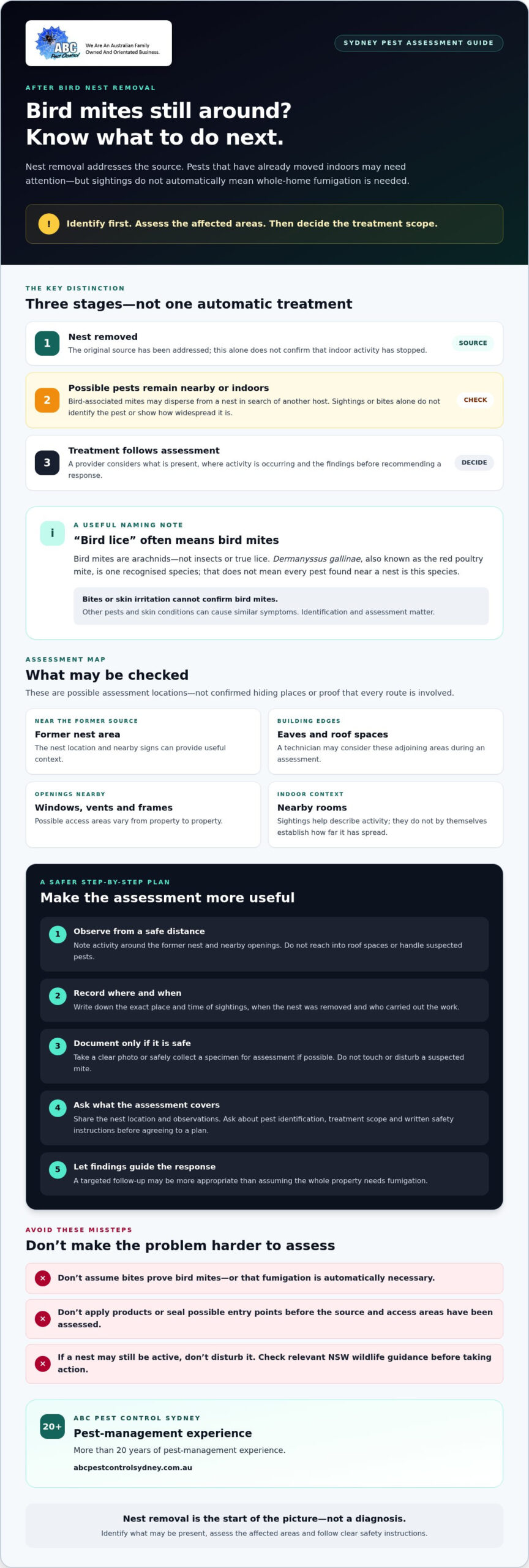
Finding crawling pests or getting bites after a bird nest has been removed is stressful. It doesn’t automatically mean you need fumigation. Nest removal addresses the source, while a follow-up assessment checks whether bird-associated pests have moved into nearby areas and whether treatment is appropriate. If you’re researching bird lice fumigation after nest removal sydney, start with identification and inspection rather than assuming the whole home needs treatment.
Are bird lice and bird mites the same thing?
People often use “bird lice” as a general name for small pests associated with birds, but the biting pests that may leave an abandoned nest are typically bird mites. Mites are arachnids, not insects or true lice. Dermanyssus gallinae, also known as the red poultry mite, is one recognised bird-mite species. That doesn’t mean every pest found near a nest is this species.
Bird mites may appear as tiny moving specks, but their size and appearance can make identification difficult. Bites or skin irritation alone can’t confirm bird mites. Other pests and skin conditions can cause similar symptoms. If possible, take a clear photo or safely collect a specimen for assessment. Don’t rely on a bite pattern to diagnose the cause.
Why can biting pests remain after a nest is removed?
Bird mites depend on bird hosts for their usual blood meals. If birds leave or a nest is removed, mites may disperse from the nest in search of another host. Nearby indoor spaces can offer shelter, so activity may continue after the original source is gone. Removing the nest doesn’t necessarily remove pests that have already moved beyond it.
An inspection can focus on the former nest area and nearby places where pests may be present, such as eaves, roof spaces, window frames and adjoining openings. These are areas to check, not proof that mites have travelled along every route or reached every room. Seeing a few pests also doesn’t establish how widespread the issue is.
Record where and when you notice activity, then seek an assessment if it continues. A pest professional can consider the suspected pest, nest location and signs around the property before recommending a response. Treatment scope should follow those findings. Don’t assume fumigation is required or apply products based on bites alone.
How bird-associated mites move from a nest into Sydney homes
A bird nest, its host birds and the nearby building form a connected environment. Bird mites usually feed on birds. If the birds leave or the nest is removed, some mites may move away from the nest in search of another host. If the nest is near a house, mites may reach indoor spaces through eaves, roof voids, vents or other adjoining openings. The route and extent can vary from property to property, so don’t assume every possible entry point is involved.
Nest removal may not immediately remove pests already indoors because mites can disperse from the nest into nearby areas before or during its removal. An assessment should therefore consider both the former nest location and surrounding spaces. Nest removal alone doesn’t prove that all activity has stopped.
Where should you look after a nest is removed?
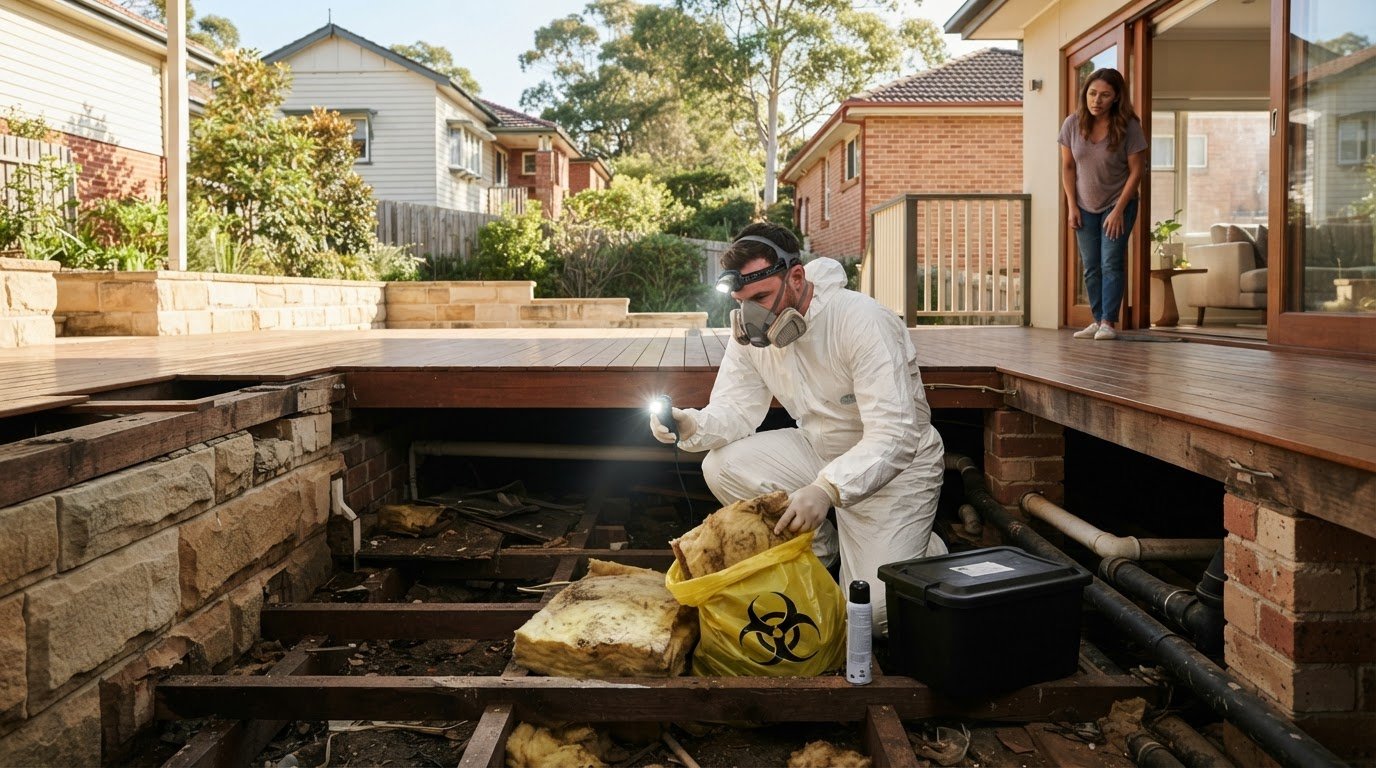
Observe the area from a safe distance. Note activity around the former nest and adjacent openings, but don’t handle suspected pests or reach into roof spaces. A technician may consider nearby windows, eaves, roof spaces and rooms as assessment locations. These are places to check, not confirmed hiding spots. Record the date, time and exact place of each sighting.
What signs can help a professional assess the issue?
Repeated sightings near the former nest give a provider useful context, but they don’t confirm the pest or show how far it has spread. Take a clear photo only if you can do so safely. Don’t touch or disturb a suspected mite. Note when the nest was removed and who carried out the work. This history can help the provider understand when the activity began.
In Sydney, share your observations with a pest professional and ask what the assessment covers before choosing a treatment. If you’re considering bird lice fumigation after nest removal sydney, explain where the nest was, where you’ve seen activity and whether it continues. Those details can help the provider discuss an appropriate next step without assuming a particular treatment scope.
If you’re unsure what to do next, you can contact ABC Pest Control Sydney to discuss your situation and whether the company can help determine an appropriate next step. ABC Pest Control Sydney provides general residential and commercial pest management, but bird-mite-specific treatment should be confirmed directly.
Is bird lice fumigation after nest removal Sydney necessary?
No. Removing a bird nest doesn’t automatically mean the whole home needs fumigation. First establish what pest is present, where activity is occurring and how extensive it appears. A few sightings near the former nest may call for a different response from confirmed activity across several indoor areas. The method and treatment scope should follow a professional assessment, not the word “fumigation” alone.
If you’re weighing up bird lice fumigation after nest removal sydney, ask the provider to explain why a particular approach is recommended. The plan should take account of pest identification, the affected locations and the directions for any product selected.
Inspection-led targeted treatment: Focuses on areas where the assessment finds evidence of activity. It may be considered when signs appear limited, subject to the technician’s findings and product directions.
Broader-area treatment: Covers a wider area and may be considered if evidence indicates activity beyond one localised spot. It shouldn’t be assumed necessary simply because a nest was removed.
What does “fumigation” mean in this situation?
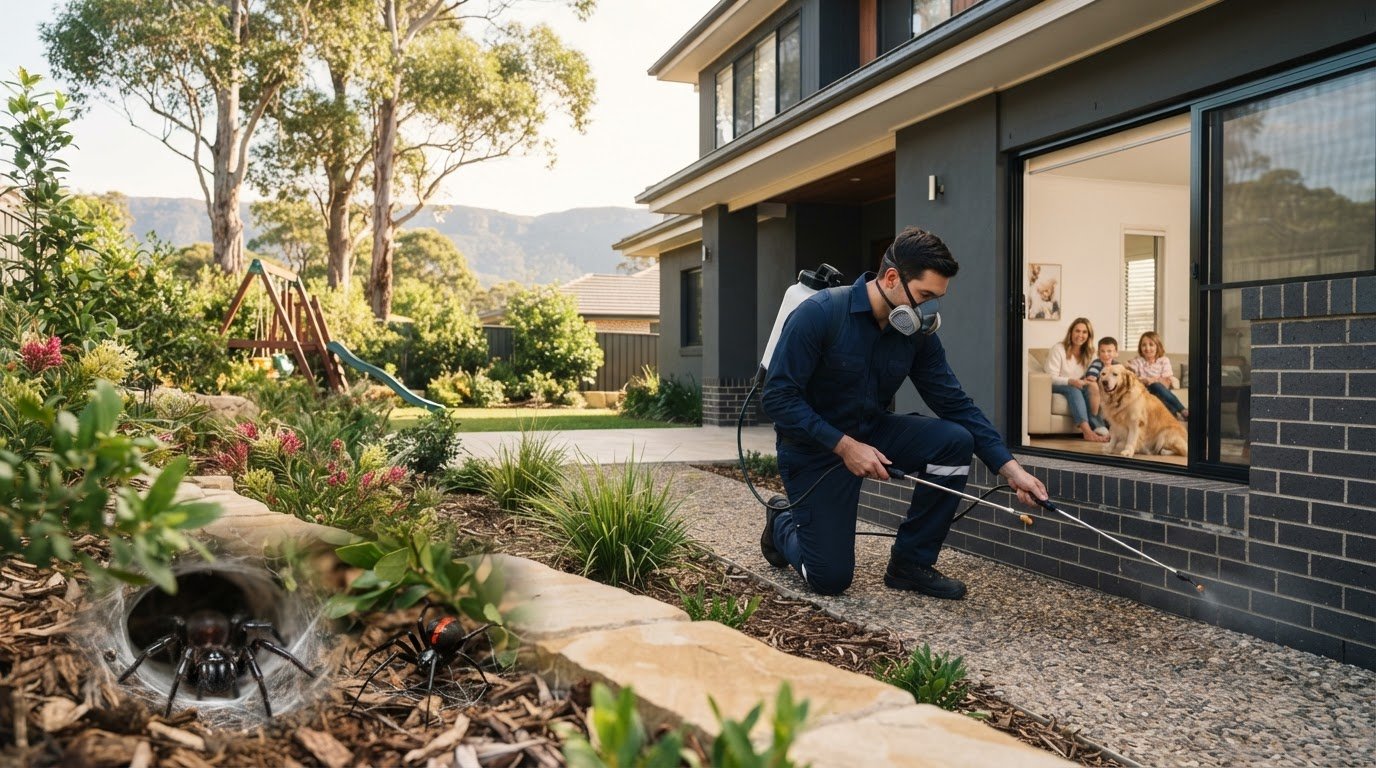
People may use “fumigation” to describe different pest treatments, so ask what method is actually proposed. A household fogger releases product into a space. It isn’t automatically equivalent to a technician-selected treatment based on an inspection. Don’t use foggers or other chemicals to treat suspected bird mites yourself. Before work begins, ask which areas will be treated and request clear preparation and re-entry instructions.
Also confirm any directions relevant to children, pets and other occupants. Follow the provider’s product-specific guidance rather than relying on general advice or assumptions about when a treated area is safe to enter.
When is a professional inspection the sensible next step?
Arrange an assessment if sightings continue after nest removal, appear in more indoor locations or the pest can’t be confidently identified. Share where and when you’ve noticed activity, along with details about the nest and its removal. An assessment can help determine whether treatment is warranted and how much of the property needs attention. No single method can be assumed to suit every case.
Skin irritation or bites don’t prove bird mites are present. If symptoms are severe or concerning, seek medical help promptly rather than trying to diagnose the cause from marks on the skin. Keep the pest assessment and medical advice separate: a clinician can advise on symptoms, while a pest professional can assess the property.
What to do after nest removal: a safe step-by-step plan
Take a measured approach. These steps help you share useful information with a pest professional and avoid actions that could interfere with an assessment.
- 1. Avoid disturbing the area. Keep people and pets away from suspected nesting debris. Don’t handle pests, apply products or seal possible openings before the source and access points have been assessed. If a nest is active or you’re unsure, don’t disturb it. Check relevant NSW wildlife guidance.
- 2. Document what you notice. Record the nest-removal date and location, whether bird activity has stopped, and where and when pests appear. Photograph suspected pests only from a safe distance.
- 3. Contact a provider. Describe the sightings and ask whether they can assess the suspected pest. Share who removed the nest and any instructions you received from them.
- 4. Follow the assessment and instructions. Ask the provider to explain the findings, proposed treatment area and method. Follow the specific preparation, ventilation, re-entry and pet-safety directions they provide.
- 5. Monitor and report changes. Keep noting sightings after the assessment or treatment. Tell the provider if activity continues or appears in a different area, and follow their guidance on what to do next.
Questions to ask before booking an assessment
Clear answers can help you decide whether the proposed next step suits your situation. Ask:
- How will you identify the pest before recommending treatment?
- Which areas will you inspect, including the former nest location and nearby rooms?
- If treatment is proposed, which specific areas will it cover, and why?
- Can you provide written preparation, ventilation, re-entry and pet-safety directions for the product selected?
If you’re searching for bird lice fumigation after nest removal sydney, remember that the word “fumigation” doesn’t tell you which method or treatment area is intended. Request an assessment first, then use the provider’s findings and written instructions to decide what’s appropriate. Don’t use a household product or seal an opening as a substitute for identifying the source.
ABC Pest Control Sydney provides general residential and commercial pest management, but bird-mite-specific treatment isn’t confirmed. You can discuss a pest assessment and confirm directly whether the company can assess your concern.
Choosing bird pest control in Sydney and arranging the next step
Choose a provider who will assess the suspected pest before recommending a method. A clear explanation of the treatment scope and written safety directions matter more than broad claims about fast or complete results. This is especially important if you’re searching for bird lice fumigation after nest removal sydney and need to know what a provider can assess or treat.
How do you compare providers for a bird-related pest issue?
Use these questions to compare the clarity and relevance of the proposed service:
- Can they assess the suspected pest? Ask how they’ll identify it and explain their findings, rather than treating bites or a vague description as confirmation.
- Is the treatment scope clear? Ask whether the assessment considers the former nest location and the indoor areas where you’ve observed activity. If treatment is recommended, find out which locations it covers and why.
- Are the instructions specific? Request written preparation, ventilation, re-entry and pet-safety directions for the method and product proposed. Clear, relevant guidance helps you plan and avoid relying on assumptions.
- Can they explain the next step? A provider should be able to describe what to monitor and how to report continuing activity, without promising that one approach suits every property.
When should you contact ABC Pest Control Sydney?
ABC Pest Control Sydney provides general residential and commercial pest management across metropolitan Sydney and has more than 20 years of pest-management experience. The company’s services don’t confirm a dedicated bird-lice service, so contact the business to check whether it can assess your concern and whether its services are suitable. Don’t assume general pest management includes specialist bird-mite treatment.
When you enquire, describe the nest-removal history and share where and when you’ve noticed activity. Ask directly whether the business can assess the suspected pest, what the assessment would cover and whether a suitable service is available. This helps establish a clear next step without committing to treatment before its suitability is confirmed.
Contact ABC Pest Control Sydney to discuss your pest-control needs and ask whether an assessment is appropriate for your situation.
Take the next step with a clear assessment
Lingering activity after nest removal can be unsettling, but it doesn’t automatically mean whole-home fumigation is needed. The pest may need to be identified first, and treatment scope should reflect where activity is found. Record sightings, avoid disturbing suspected pests, and ask for clear preparation and safety instructions before any treatment.
If you’re looking for bird lice fumigation after nest removal sydney, confirm that the provider can assess the suspected pest and whether its services suit your situation. ABC Pest Control Sydney provides residential and commercial pest management across metropolitan Sydney, along with general pest-control packages and ongoing maintenance plans. The company has more than 20 years of experience. Bird-lice-specific treatment isn’t confirmed, so discuss your concern and service suitability directly.
Contact ABC Pest Control Sydney to discuss your pest-control needs and ask whether an assessment is an appropriate next step. Clear observations and professional guidance can help you make an informed decision.
Frequently Asked Questions
Do I need bird lice fumigation after removing a nest in Sydney?
Not necessarily. Nest removal takes away the source, but bird-associated mites may already have moved into nearby spaces. An inspection can help confirm whether the pests are mites and where activity is occurring before a treatment is chosen. If you’re considering bird lice fumigation after nest removal sydney, ask the provider to explain the proposed method, treatment area and safety instructions. Whole-home treatment shouldn’t be assumed necessary.
How long do bird mites stay after a nest is removed?
There isn’t a reliable fixed timeframe for every property. It can depend on whether mites remain indoors, the areas they’ve reached and whether birds or another suitable host are nearby. Continued sightings don’t, by themselves, show how extensive the issue is. Record when and where you notice activity, and arrange an assessment if it persists or spreads rather than relying on a predicted end date.
Are bird lice and bird mites the same pest?
Not exactly. “Bird lice” is often used loosely for small pests associated with birds, but the biting pests that may leave an abandoned nest are typically bird mites. Mites are arachnids, not true lice. They can be difficult to identify by sight, and bites or skin irritation aren’t proof of bird mites. A clear photo or safely collected specimen may help a professional assess what’s present.
Can bird mites live on people or pets?
Bird mites may bite people when their usual bird host is no longer available, but they can’t reproduce on human blood. A bite doesn’t prove mites are present, and skin irritation can have other causes. If you suspect pets are affected, ask a veterinarian for advice rather than applying pest products to an animal. Keep people and pets away from suspected nesting debris and follow professional instructions.
What should I clean after a bird nest is removed?
Don’t rush to handle or clean suspected nesting debris, especially if the removal provider has given specific instructions. Keep people and pets clear of the area, and ask the provider what handling or cleaning steps are appropriate. Record nearby sightings and share them during a pest assessment. Avoid spraying products or sealing openings first, as these actions may interfere with identifying the source and access points.
Is it safe to use a bug bomb for bird mites?
Don’t use a household fogger or bug bomb to treat suspected bird mites without professional guidance. A fogger isn’t automatically suitable for the pest or areas involved, and it may not address activity in roof spaces or other concealed locations. Ask a provider to identify the suspected pest and explain the proposed treatment. Request written preparation, ventilation, re-entry and pet-safety instructions for any product selected.
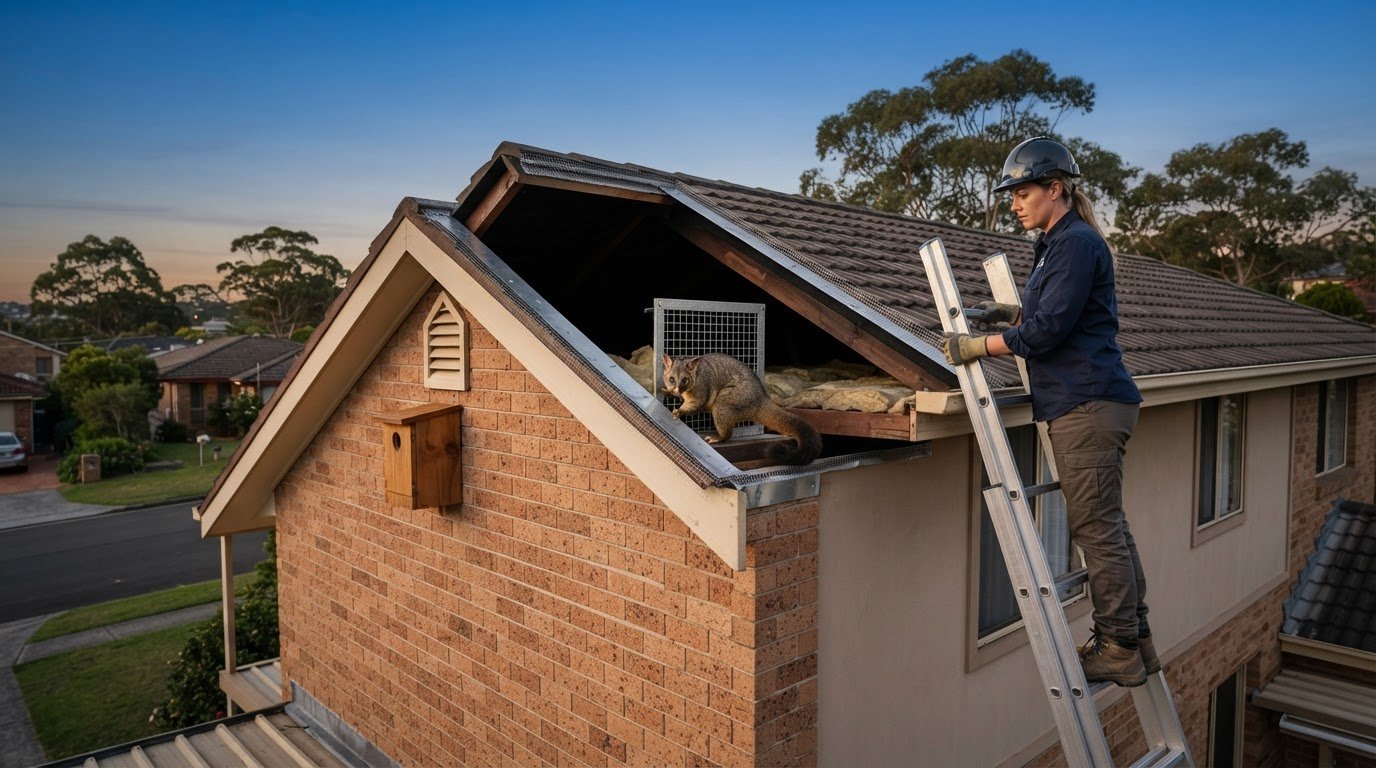
Can I remove a bird nest myself in Sydney?
Don’t disturb an active or unidentified nest. In New South Wales, native birds are protected, and nest removal may be restricted, particularly if eggs or chicks are present. Check relevant NSW wildlife guidance before taking any action, and seek advice if you’re unsure about the bird species or whether the nest is active. Avoid handling the nest until you’ve confirmed what steps are appropriate.