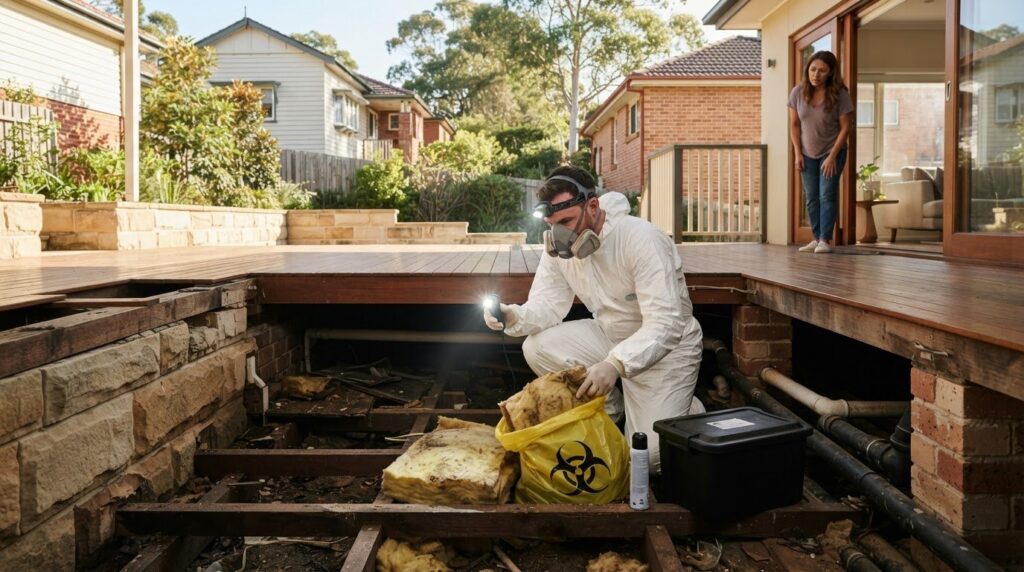
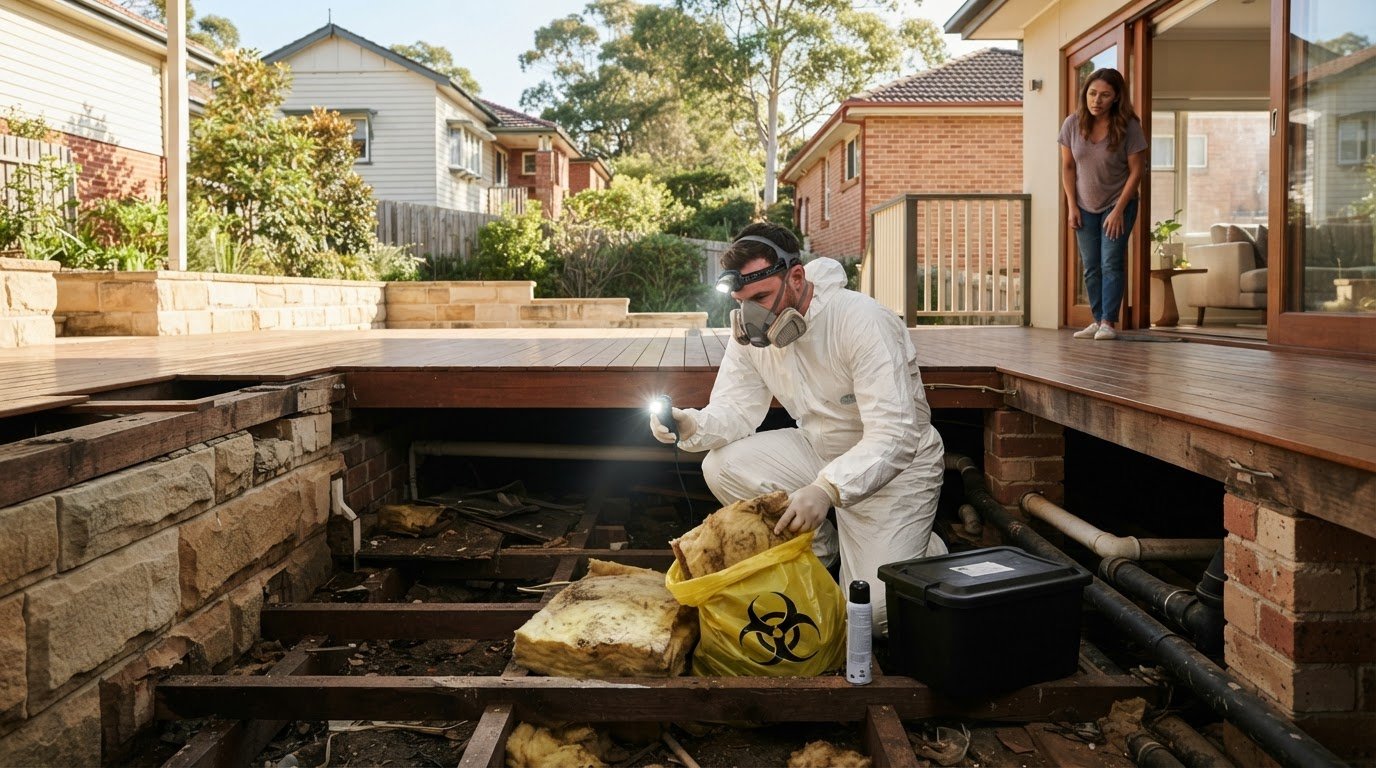
You walk into your living room and a thick, sickly-sweet odour hits you instantly. It’s not just a bad smell; it’s the unmistakable scent of decay rising from beneath your floorboards. For many Sydney homeowners, this isn’t just a minor inconvenience. It’s a source of genuine anxiety regarding disease, parasites, and potential structural damage. You’re right to be concerned. A dead animal in the subfloor can attract secondary infestations and put your family’s health at risk.
Our guide to subfloor pest control sydney provides the expert clarity you need during this urgent situation. We’ll show you how to identify the source of the stench, safely remove carcasses, and eliminate the foul odours for good. You’ll learn how our General Pest Control Packages address the unique sub-environment of Sydney homes to stop the cycle of decay. We’ll also walk through the essential prevention steps to ensure your subfloor remains a pest-free zone. With over 20 years of local experience, we’re here to help you restore your peace of mind and protect your home today.
Key Takeaways
- Identify common Sydney subfloor invaders, including Roof Rats and protected Brushtail Possums, that exploit the void beneath your floorboards.
- Master safe carcass removal techniques using PPE and high-powered torches to prevent the transmission of bacteria and disease.
- Implement professional subfloor pest control sydney to eliminate pheromones and “pest signatures” that attract secondary infestations.
- Decontaminate your subfloor by removing soiled insulation and debris to permanently resolve rotting smells and health risks.
- Secure your home with expert-led General Pest Control Packages designed to handle high-difficulty challenges and long-term prevention.
What is Subfloor Pest Control Sydney and Why is it Critical?
Subfloor pest control refers to the targeted management and treatment of the dark, enclosed void between the ground and your property’s floorboards. This hidden space plays a vital role in structural stability, yet it remains the most vulnerable zone for pest invasions. When wild animals enter this area and die, the consequences for your household are immediate. A single decaying carcass can completely ruin your home’s air quality for weeks, releasing airborne contaminants directly into your living zones.
Leaving a dead animal to rot creates severe health risks for everyone inside the property. Decaying organic matter releases harmful bacteria and attracts dangerous parasites like fleas, ticks, and mites. Secondary infestations quickly follow, with blowflies and maggots rapidly multiplying around the carcass. Professional intervention is required to halt this biological hazard before it spreads throughout your home.
The Anatomy of a Sydney Subfloor
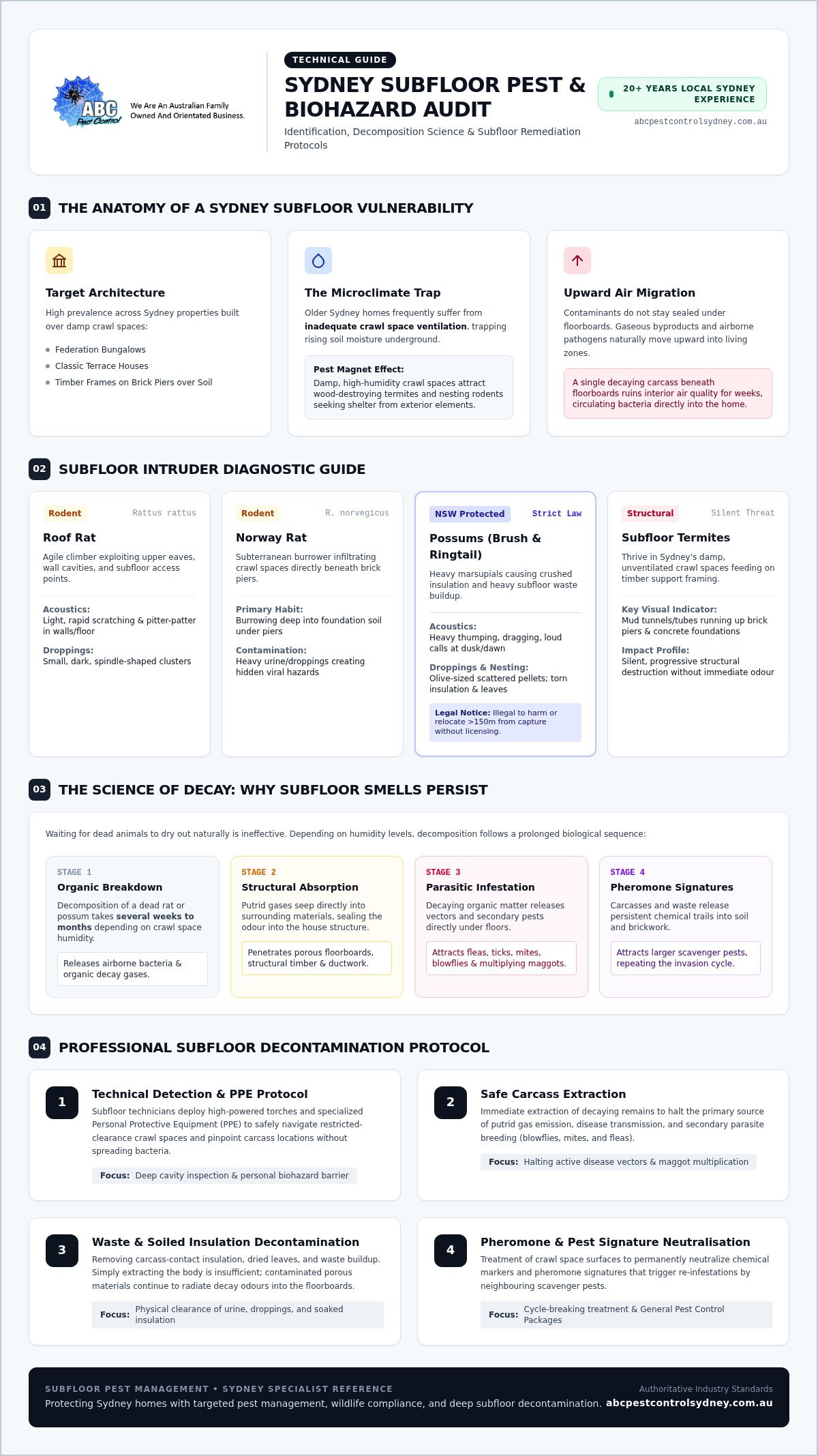
Sydney architecture features a high concentration of federation bungalows, classic terrace houses, and timber-framed properties built over soil. These structures rely on crawl spaces and brick piers to elevate the living areas. Unfortunately, many older Sydney homes suffer from inadequate ventilation, which traps moisture underground. This humid, damp environment acts as an absolute pest magnet, drawing in destructive termites and nesting rodents looking for shelter from the elements. As these pests occupy the crawl space, the contaminated air naturally migrates upward, degrading the internal environment of your home.
Why the Smell Won’t Go Away on Its Own
Hoping the stench will vanish naturally is a dangerous strategy that prolongs your family’s discomfort. Understanding the science of decomposition reveals that a dead rat or possum can take several weeks or even months to fully break down, depending on the humidity levels. During this time, the putrid gases seep directly into porous floorboards, structural timber, insulation materials, and internal ductwork. This ensures the foul odour lingers long after the animal has dried out. Additionally, the carcass releases chemical signatures that attract larger scavenger pests, creating a cycle of infestation that requires specialized subfloor pest control sydney services to break completely.
Identifying the Culprits: Common Sydney Pests Found in Subfloors
Identifying the specific species inhabiting your crawl space is the first step toward effective subfloor pest control sydney. In the humid climate of New South Wales, two primary suspects dominate subfloor nesting: Roof Rats and Norway Rats. Roof rats are agile climbers that often enter through gaps in the eaves, while Norway rats prefer burrowing into the soil beneath your piers. Both species leave behind urine and droppings that create hidden health hazards, including bacteria and viruses that can circulate into your home.
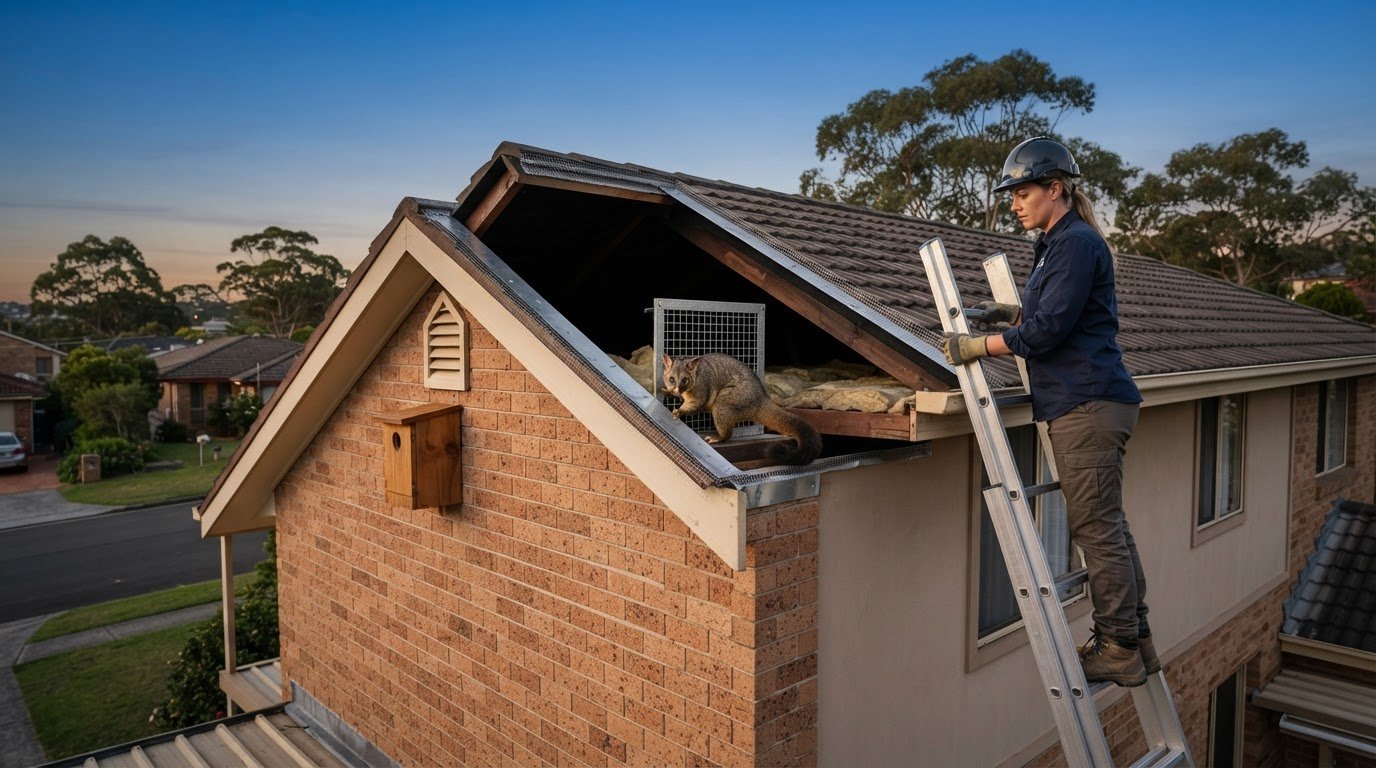
Possums present a different challenge. Brushtail and Ringtail possums are protected species in NSW. You cannot legally harm or relocate them beyond 150 metres from their capture point without specific licensing. They love the shelter of a subfloor, but their heavy presence often leads to crushed insulation and significant waste buildup. If you suspect an intruder, contacting professional subfloor management experts ensures you stay compliant with local wildlife regulations while reclaiming your home.
Signs of Rodent Activity vs. Possum Intrusion
Listen closely to the sounds coming from under your floorboards. Rats typically produce light, rapid scratching or pitter-patter noises as they move through wall cavities. Possums are much heavier. You will hear distinct thumping, dragging, or loud vocalizations, especially at dusk and dawn. During a visual inspection, look for droppings. Rat droppings are small, dark, and spindle-shaped, usually found in clusters. Possum droppings are larger, roughly the size of an olive, and often found scattered near entry points. You might also find shredded paper, dried leaves, or torn insulation used as nesting material.
Termite Warning Signs in the Subfloor
While rodents cause immediate noise and smell, termites are the silent threat. Sydney’s damp subfloors provide the perfect moisture levels for these destructive pests. Look for mud tubes, which are small tunnels made of soil and debris, running up brick piers or concrete foundations. These tubes protect termites from light and dehydration as they travel from the ground to your structural timbers. Check for hollow-sounding wood or the presence of alates, which are winged termites that swarm during humid weather. Because repair bills for termite damage in Sydney can exceed $13,000, early detection is vital. Refer to our guide on termite inspection sydney for specialized subfloor pest control sydney detection methods that catch these pests before they compromise your home’s integrity.
How to Get Rid of Dead Animal Smell Under Your House: A Step-by-Step Guide
Removing a decaying carcass is a high-stakes task that requires immediate action and specific technical protocols. The stench isn’t just unpleasant; it’s a sign of active biological decomposition that can impact your family’s health. To resolve the issue, you must follow a structured approach to location, removal, and decontamination. While DIY efforts are possible, most homeowners find that subfloor pest control sydney specialists are better equipped to handle the hazardous conditions found in Sydney’s cramped crawl spaces.
- Step 1: Locate the source. Use your nose to narrow down the area. Use a high-powered torch to inspect every corner, paying close attention to sagging insulation or damp patches.
- Step 2: Equip PPE. Never touch a carcass or contaminated debris with bare skin. Wear an N95 mask and heavy-duty gloves to prevent inhaling pathogens.
- Step 3: Safe Bagging. Place the carcass and any soiled material into a heavy-duty bag. Double-bag the waste to prevent leakage and dispose of it according to Sydney council regulations.
- Step 4: Neutralise the Odour. Apply an enzymatic cleaner to the site. These products break down the organic proteins causing the smell rather than just masking them.
Locating the Carcass in Tight Spaces
Finding a dead animal isn’t always straightforward. Pests often crawl into the most inaccessible corners to die, such as inside glass wool insulation or near plumbing penetrations. In these cases, professional tools like thermal imaging cameras or moisture meters are invaluable. These devices identify “hot spots” of decomposition or fluid saturation behind walls without needing to tear down structures. If the source is physically unreachable, we use professional-grade odour counteractants that chemically bond with malodour molecules to neutralise them at the source.
Neutralising the Odour Molecules
Standard store-bought air fresheners fail because they only cover up the scent. The science of enzymatic cleaners is different. These solutions contain specific bacteria or enzymes that digest the proteins, fats, and oils that cause the rot smell. This is the only way to solve the underlying chemical problem. For persistent smells that have permeated the timber, we may deploy charcoal bags or professional ozone generators to scrub the air clean. Don’t settle for a temporary fix when you can achieve a total resolution.
Safe Disposal and PPE Requirements
Safety is the primary concern during removal. Decaying animals can carry Leptospirosis or Hantavirus, making proper gear essential. You need N95 masks, heavy-duty rubber gloves, and disposable coveralls. Once the carcass is double-bagged, you must sanitise the “impact zone” with a hospital-grade disinfectant. This kills lingering bacteria and ensures the area is safe for future maintenance work. If the thought of navigating a dark, contaminated crawl space is overwhelming, our General Pest Control Packages provide the expert intervention needed to clear the site safely.
Post-Removal Decontamination: Sanitising Your Subfloor for Safety
Simply removing a dead animal only solves half the problem. The area remains saturated with “pest signatures,” which are chemical markers like pheromones and waste products. These scents act as a beacon for other scavengers and rodents, signaling that your home is a safe nesting site. If you don’t decontaminate the zone, you’re leaving an open invitation for a new infestation to take hold. Total subfloor pest control sydney requires a deep clean of the structural elements. This involves stripping away contaminated insulation and debris that holds onto these persistent odours and biological hazards.
Professional-grade disinfectants must be applied to the soil and brick piers. Standard household cleaners don’t have the residual strength to neutralise pathogens in a damp subfloor environment. We focus on breaking down the organic matter at a microscopic level. By treating the ground directly, we eliminate the food sources for secondary invaders like maggots and beetles. Addressing subfloor dampness is also vital. Moisture-laden soil is a primary attractant for termites and mould, making subfloor pest control sydney a critical step for long-term home health.
Cleaning Up Droppings and Urine
Safety during cleanup is paramount. Always follow the ‘spray before you sweep’ rule. Dry sweeping rodent droppings causes pathogens to become airborne, which you can easily inhale. Use a disinfectant spray to dampen the waste first. For thorough removal, we use HEPA-filtered vacuums that trap fine particles and allergens. This prevents the spread of disease throughout your ventilation system. For a comprehensive strategy to keep these intruders out for good, check our rodent control sydney guide.
Improving Subfloor Ventilation
Stagnant air is a major contributor to lingering smells and structural decay. In many Sydney properties, blocked vents or poor design trap humidity under the house. This encourages rapid mould growth and timber rot. Consider installing solar-powered subfloor fans to force air circulation. Clearing debris from existing vents also makes a massive difference. For homes with high ground moisture, a ground moisture barrier can be installed. This heavy-duty plastic sheeting stops water vapour from rising out of the soil. This simple step significantly reduces the ‘musty’ smell common in older Sydney homes and creates a less hospitable environment for pests.
Don’t risk your family’s health by ignoring the mess left behind. Book a comprehensive General Pest Control Package to ensure your subfloor is professionally decontaminated and secure.
Professional Subfloor Pest Management: Why Sydney Homeowners Trust ABC Pest Control Sydney
Trusting a professional with your home’s foundation is a decision that impacts your family’s safety and property value. ABC Pest Control Sydney brings over 20 years of local expertise to every job. We understand the specific challenges of New South Wales properties, from humid crawl spaces to protected wildlife. Our technicians are trained to handle high-difficulty challenges that standard cleaning services simply cannot touch. By choosing our subfloor pest control sydney services, you’re investing in a permanent solution rather than a temporary fix.
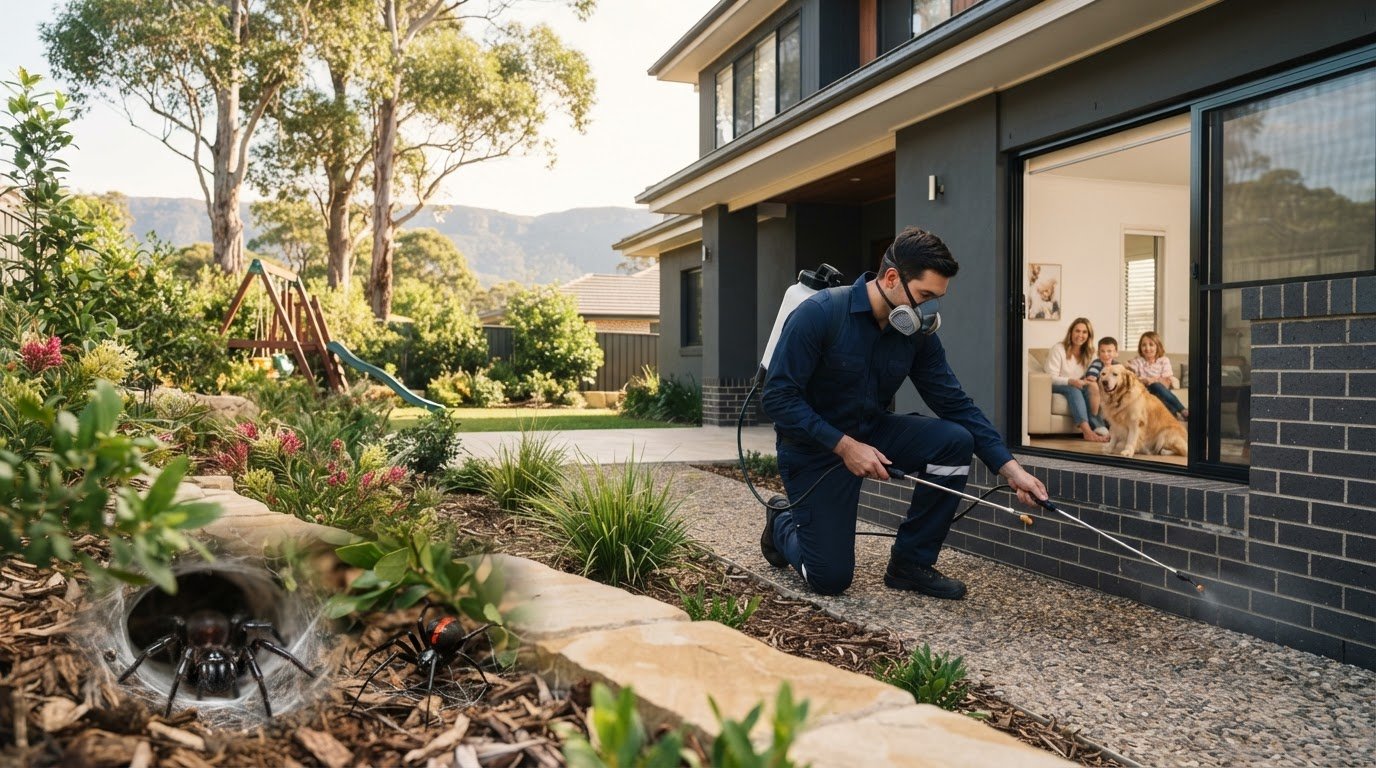
Our General Pest Control Packages offer comprehensive protection. These bundles cover up to 15 different pests, ensuring your subfloor isn’t just free of dead animals, but also protected against future invasions. We prioritize your family’s health by using eco-friendly treatments. These methods are tough on pests but safe for your children and pets. You get the peace of mind that comes with a professional warranty and the technical expertise of a seasoned Sydney authority. We adhere to all national regulatory standards, ensuring every treatment is compliant and effective.
Our Specialized Subfloor Inspection Process
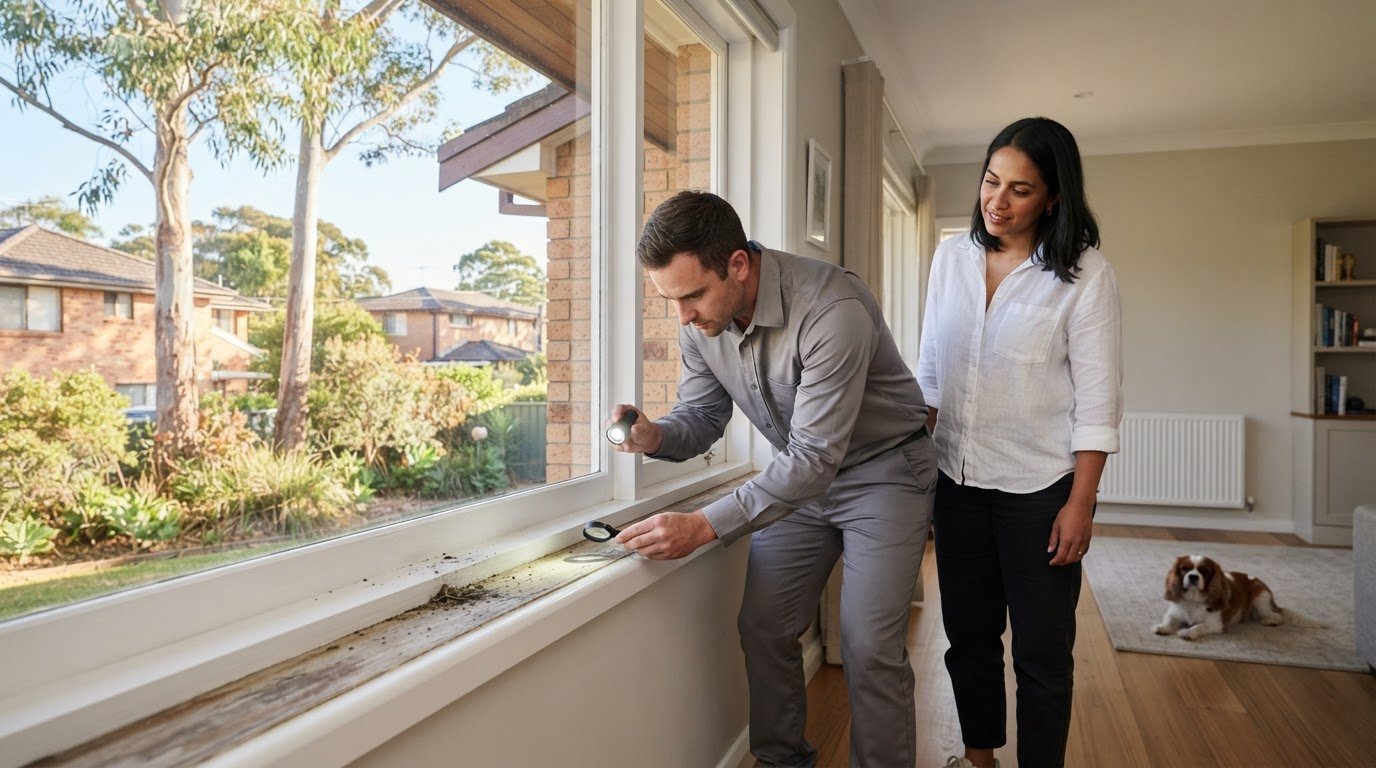
We don’t just look for the obvious. Our specialized inspection process involves a detailed visual assessment of all accessible subfloor areas and brick piers. We look for structural vulnerabilities that pests exploit to gain entry. Our team identifies hidden termite activity and moisture pockets that could lead to future rot. Because every Sydney suburb has unique environmental factors, we create customized treatment plans. Whether you live in a coastal bungalow or a city terrace, your plan is tailored to your specific home type and location. This targeted approach ensures no corner of your subfloor is left vulnerable.
Booking Your Subfloor Service Today
Don’t let a foul odour or a hidden infestation compromise your home’s air quality for another day. We provide an urgent response for dead animal removal to restore a healthy environment immediately. Our pricing is completely transparent. We offer tiered service bundles to suit every budget, ensuring professional protection is accessible to all Sydney homeowners. You don’t have to navigate these dark, hazardous spaces alone. Take the decisive step toward a pest-free home. Contact ABC Pest Control Sydney for an immediate quote and reclaim your peace of mind today.
Reclaim a Healthy Home Environment Today
A foul odour rising from your floorboards is more than just a nuisance; it’s a signal that your home’s health is at risk. By following the steps in this guide, you now understand that professional removal and deep decontamination are non-negotiable for total safety. Effective subfloor pest control sydney isn’t just about clearing a carcass. It involves breaking the chemical cycle of pheromones and pathogens that attract secondary invaders and compromise your structural integrity.
ABC Pest Control Sydney brings over 20 years of local experience to every challenging subfloor case. We specialise in the professional removal of ‘difficult’ pests and persistent odours using eco-friendly and family-safe treatments. You don’t have to live with the stress of a contaminated crawl space or the fear of hidden termite damage. Our General Pest Control Packages provide the comprehensive shield your property needs. Book Your Subfloor Pest Inspection with ABC Pest Control Sydney Today to restore your peace of mind. Reclaim your home and breathe easy knowing your property is in expert hands.
Frequently Asked Questions
How long does a dead animal smell last under the house?
A dead animal smell can last anywhere from several weeks to months depending on the size of the carcass and the moisture levels. In Sydney’s humid environment, decomposition slows down if the animal is trapped in a poorly ventilated space. The odour will linger until the soft tissue has completely broken down, meaning the problem won’t resolve itself quickly without professional intervention.
Is it dangerous to breathe in the smell of a dead animal in the subfloor?
Yes, inhaling air contaminated by a decaying carcass presents genuine health risks for your household. The foul odour indicates active biological decomposition, which releases bacteria, mould spores, and airborne particles. These contaminants can trigger respiratory issues and allergies. Additionally, the carcass carries parasites like fleas and mites that can migrate upward into your living spaces.
Can I just use lime or bleach to get rid of the smell?
No, using lime or bleach is a temporary fix that fails to solve the underlying chemical problem. Bleach sanitises the surface but does not break down the deeply embedded organic proteins causing the rot smell. Lime can absorb some moisture but won’t eliminate the odour molecules entirely. You need professional-grade enzymatic cleaners to completely neutralise the biological compounds.
What is the most common animal that dies under Sydney houses?
Roof rats, Norway rats, and possums are the most frequent pests found dead in Sydney subfloors. Older terrace houses and properties with timber floors are particularly vulnerable to these invaders. They seek out the dark, warm crawl spaces for nesting, especially during seasonal changes, and frequently become trapped inside insulation or wall cavities where they eventually die.
Will pest control remove a dead possum from my subfloor?
Yes, licensed technicians will safely remove dead possums and decontaminate the impact zone. Because Brushtail and Ringtail possums are protected species in New South Wales, handling living or dead ones requires strict adherence to national regulatory standards. Professionals ensure the carcass is disposed of legally while implementing proper safety protocols to protect your home from secondary infestations.
How much does professional subfloor pest removal cost in Sydney?
The cost of dead animal removal and subfloor treatment varies based on the accessibility of the crawl space and the complexity of the decontamination required. While basic removal services across the industry start within a standard competitive range, complex cases involving insulation replacement or extensive sanitisation will be quoted individually. Contact us directly for a transparent, customized quote tailored to your property.
How do I stop animals from getting under my house in the first place?
Exclusion is the most effective way to prevent pests from entering your crawl space. You must seal all entry points, including broken brick vents, gaps around plumbing penetrations, and missing access hatch covers. Using heavy-duty wire mesh allows necessary ventilation while blocking rodents and possums. Investing in regular subfloor pest control sydney inspections helps identify these structural vulnerabilities early.
Does building insurance cover the removal of dead animals and decontamination?
Standard building insurance policies in Australia rarely cover the removal of dead animals or routine pest decontamination. Most insurers consider pest infestations and subsequent cleaning to be maintenance issues rather than sudden, accidental events. It’s always best to check your specific product disclosure statement, but relying on proactive subfloor pest control sydney packages is the safest way to manage costs.