Did you know that Greater Sydney is the most pest-prone capital in Australia, with 96.9% more pest control tasks per capita than the national average? This data from May 2026 confirms what every local business owner already feels during a humid summer. You’ve worked hard to build your brand, but a single fly landing on a customer’s plate can destroy your “Scores on Doors” rating and invite heavy fines from the NSW Food Authority. It’s frustrating when generic DIY solutions fail to keep up with the Sydney heat, leaving your reputation and your customers’ health at risk.
You need a solution that works as hard as you do. This guide helps you select the most effective commercial fly control systems sydney to ensure your venue remains hygienic, compliant, and discreet. We’ll preview the latest 2026 “Layered Defense” strategies championed by ABC Pest Control Sydney, from high-tech LED encapsulation traps to professional management plans that satisfy Standard 3.2.2 of the Food Standards Code. Discover how to protect your bottom line from the $9,000 average annual cost of infestations and keep your commercial environment fly-free.
Key Takeaways
- Learn why glue board units have replaced electric grid traps as the gold standard for hygienic, discreet fly capture in modern Sydney food venues.
- Discover how to evaluate “fly pressure” and square meterage to select the most efficient commercial fly control systems sydney for your specific facility layout.
- Master the placement standards of AS 4674-2004 to ensure your hardware remains fully compliant with NSW food safety inspections and “Scores on Doors” ratings.
- Find out how integrating professional-grade hardware with environmental sanitation through our “Deluxe Package” stops fly breeding cycles before they start.
- Understand the critical link between Sydney’s humid weather patterns and fly outbreaks to better prepare your business for seasonal pest surges.
The Fly Threat to Sydney Businesses in 2026
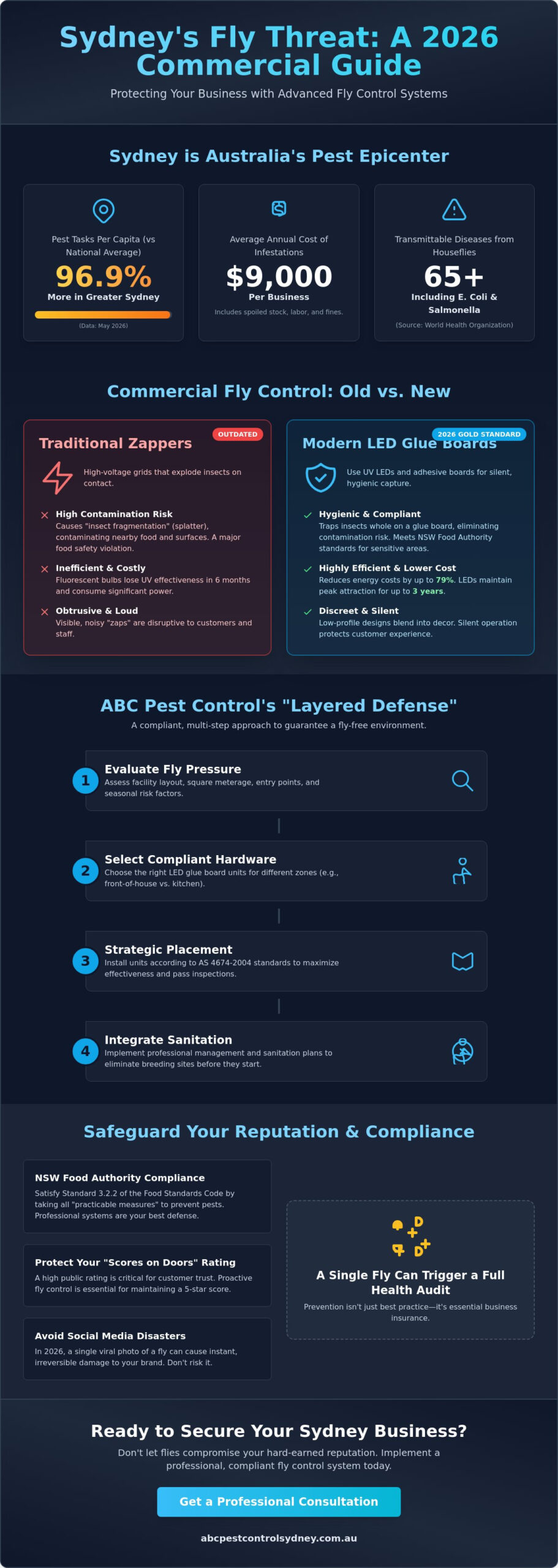
Sydney’s 2026 climate has shifted toward warmer, wetter patterns, creating a perfect storm for insect activity. These conditions accelerate the breeding cycles of filth flies, allowing populations to explode within days. For local business owners, this isn’t just a nuisance. It’s a direct threat to your bottom line. Data from May 2026 shows that Sydney remains Australia’s most pest-prone capital, with a 96.9% higher rate of pest issues than the national average. When temperatures rise, the pressure on your commercial fly control systems sydney increases exponentially. You need a strategy that handles these surges before they impact your operations.
The economic stakes are high. Globally, the average annual cost of managing fly infestations for a single business reaches $9,000. In Sydney’s competitive hospitality and food processing sectors, these costs manifest through spoiled stock, wasted labor, and regulatory penalties. The health risks are equally severe. The World Health Organization confirms that houseflies transmit over 65 different diseases, including E. Coli and Salmonella. Modern workplaces must also contend with evolving pathogens that thrive in high-density urban environments. Today’s customers have a zero-tolerance policy for pests. A single fly sighting in 2026 is often viewed as a sign of systemic hygiene failure.
Common Commercial Fly Species in New South Wales
Identifying the specific intruder is the first step in effective management. House flies are the most common invaders in Sydney offices and cafes, known for their rapid movement and high disease-carrying potential. Blow flies are larger and often indicate a breakdown in waste management or sanitation, especially in industrial settings. Fruit flies remain a persistent threat to Sydney’s bars and restaurants. They target fermenting organic matter in drains and bar wells, making them incredibly difficult to eliminate without specialized Pest control technologies and professional intervention.
The Legal and Reputational Risks
Compliance is your best defense against the NSW Food Authority. Under Standard 3.2.2 of the Food Standards Code, businesses must take all practicable measures to prevent pests from entering or harboring on their premises. The “Scores on Doors” program makes your hygiene standards public knowledge. A poor rating or a viral photo of a fly on social media can lead to an instant drop in revenue. Because a single fly in a high-risk food prep area can trigger a full health audit, proactive prevention is the only way to safeguard your brand’s reputation in the Sydney market.
Comparing Commercial Fly Control Technologies
Choosing the right hardware for your facility involves more than just picking a brand. In 2026, the shift toward LED and encapsulation technology has redefined how we manage infestations. Traditional electric grid traps, commonly known as zappers, are becoming a liability in Sydney food preparation zones. While they kill flies instantly, the high-voltage explosion causes insect fragmentation. These microscopic particles can contaminate food surfaces, leading to significant health risks from flies and potential regulatory breaches. This is why many auditors now mandate glue board units or encapsulation systems in sensitive areas.
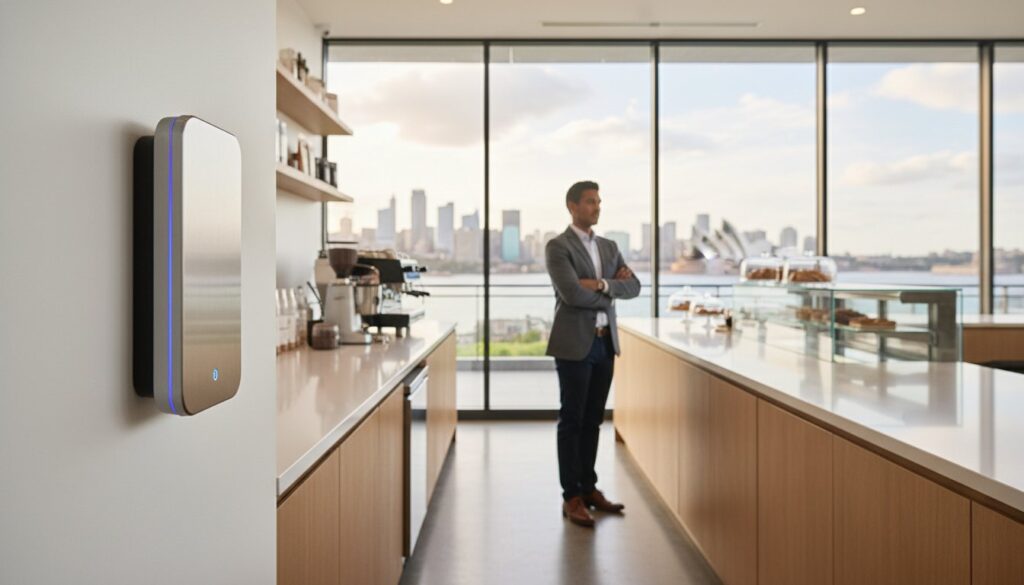
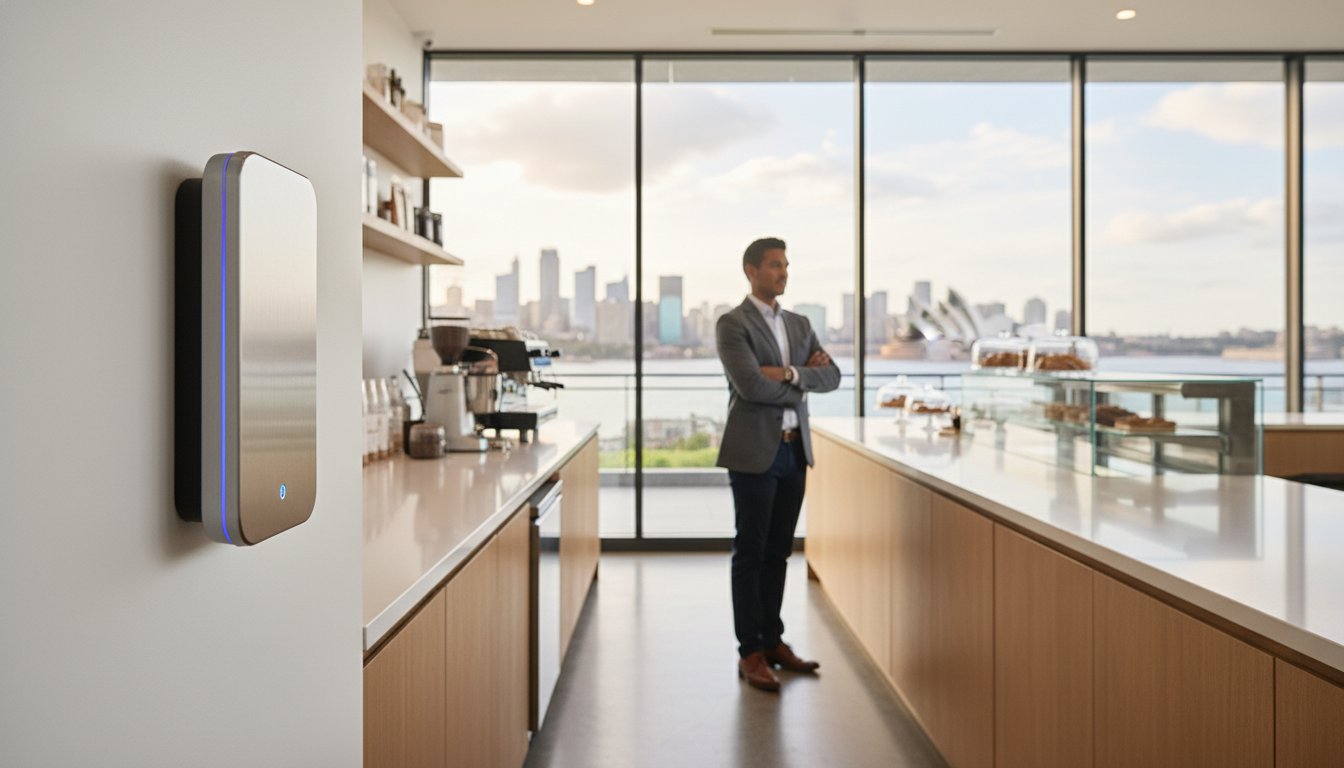
Glue board units offer a silent and discreet alternative. They use high-tack adhesive boards to trap insects whole, preventing any risk of “splatter” or contamination. For high-traffic Sydney venues, modern encapsulation systems take this a step further by rolling the trapped insects into a sealed internal cartridge. This ensures that even in the most demanding environments, your commercial fly control systems sydney remain hygienic and invisible to your patrons. These systems are designed to be low-profile, blending into the decor while providing 24/7 protection.
Traditional Zappers vs. Modern LED Units
The financial argument for upgrading is clear. Traditional fluorescent bulbs lose their UV effectiveness within six months and consume significant power. In contrast, modern LED units reduce energy costs by up to 79% while maintaining peak attraction levels for up to three years. This efficiency is critical for Sydney businesses facing rising utility prices in 2026. Maintenance cycles are also simplified. You no longer need to schedule quarterly bulb replacements; instead, a simple monthly glue board check keeps your system running at 100% capacity.
Choosing the Right Light Spectrum
UV-A light is the primary driver for insect attraction. Flies are biologically programmed to seek out specific wavelengths that mimic natural sunlight. Specifically, the 365nm wavelength is optimal for Sydney fly species, providing the strongest possible pull toward the trap and away from your customers. Shatterproof bulbs are a non-negotiable requirement for Sydney food businesses because they prevent glass shards from entering the food chain if a bulb is accidentally damaged. If you’re unsure which technology fits your floor plan, our team can help you design a Commercial Pest Management strategy tailored to your specific needs.
How to Choose the Right System for Your Sydney Facility
Selecting the ideal commercial fly control systems sydney requires a tactical approach rather than a one-size-fits-all purchase. You must account for the unique environmental pressures of your specific suburb. For instance, businesses in the City and Inner South of Sydney face the highest pest density in New South Wales. If your facility is located near high-traffic waste areas or loading docks, your requirements will differ significantly from a boutique retail space in the Eastern Suburbs. Don’t guess your needs; follow this structured framework to ensure your investment delivers results.
- Step 1: Identify Fly Pressure. Determine if you have high pressure (near bins or open doors), medium pressure (frequent foot traffic), or low pressure (sealed, air-conditioned zones).
- Step 2: Calculate Square Meterage. Measure the open floor area needing protection. A unit rated for 50 square meters will fail in a 200-square-meter warehouse.
- Step 3: Match the Environment. Segregate your needs between customer-facing “Front of House” areas and high-intensity “Back of House” production zones.
- Step 4: Evaluate Aesthetics. Decide if you need industrial power or a discreet design that blends with your interior decor.
- Step 5: Adopt a Layered Defense. Combine your hardware with the professional expertise of ABC Pest Control Sydney to address breeding sites and entry points simultaneously.
Hospitality & Retail (Front of House)
In dining and retail environments, the customer experience is your priority. You need hardware that works silently in the background. Modern commercial fly control systems sydney for hospitality often look like high-end lighting fixtures, utilizing glue board technology to capture insects without the unhygienic “zap” sound. Strategic placement is vital here. We position units to draw flies away from entrances and dining tables, ensuring your patrons never see a pest or the capture mechanism itself.
Warehousing & Industrial (High Volume)
Industrial settings demand high-capacity units built for durability. Large loading docks and production lines often require IP-rated systems that can withstand humid conditions or regular wash-downs. These units feature powerful UV-A attraction to manage the high volume of flies typical in Sydney’s humid 2026 summers. For total facility security, we recommend integrating your fly management with professional rodent control. This comprehensive approach ensures that all potential entry points and harborages are managed under a single, efficient plan.
Regulatory Compliance and Placement Standards
Compliance with Australian Standards is the foundation of any professional pest management strategy. In Sydney, the benchmark for food premises is AS 4674-2004. This standard dictates how your facility must be constructed and fitted out to prevent pest harborages. When installing commercial fly control systems sydney, you cannot simply mount a unit wherever there’s an available power outlet. The law requires that these devices are positioned to prevent any risk of food contamination. A common mistake is placing units directly above food preparation benches or packing lines. This is a critical failure that will lead to an immediate breach during a NSW Food Authority audit.
Effective placement also requires understanding the “Competition with Sunlight” rule. UV-A lamps in fly traps are designed to mimic natural light, but they cannot compete with the sun. If you place your unit near a bright Sydney window, the natural UV rays will wash out the lamp’s attraction. Flies will ignore the trap and stay focused on the window or your food surfaces. To maximize your investment, units should be placed in the darkest part of the room, away from competing light sources and strong cross-drafts from air conditioning units that can blow flies off their flight path.
HACCP Compliance for Sydney Food Businesses
For businesses following HACCP or SQF protocols, documentation is as important as the hardware itself. Professional commercial fly control systems sydney must include a “Catch Analysis” as part of the service. This involves identifying the specific species trapped on glue boards to find the root cause of an outbreak. If we find blow flies, it points to a sanitation issue near your bins; if we find fruit flies, it suggests a blocked drain. Health inspectors expect to see these detailed reports to prove you are proactively managing your environment with non-toxic, chemical-free attractants.
The Golden Rules of Fly Trap Placement
Height is a critical factor in capture rates. Most Sydney fly species navigate at a specific level, making 1.5m to 2m the “sweet spot” for mounting your hardware. Placing units too high near the ceiling or too low on the floor will significantly reduce their effectiveness. You must also account for airflow. Air conditioning vents can interfere with the fly’s ability to reach the trap. For larger facilities, the “Entry Point Buffer” strategy involves placing high-output units inside every loading dock and pedestrian entrance to intercept flies before they reach sensitive production zones. To ensure your facility meets every regulatory requirement, book a professional commercial inspection with our expert team today.
Why Sydney Businesses Trust ABC Pest Control Sydney for Fly Management
Relying on over 20 years of experience managing pests across the Sydney metropolitan area, our team understands that hardware is only half the battle. Our signature “Deluxe Package” takes the high-tech commercial fly control systems sydney discussed earlier and pairs them with deep environmental sanitation. We don’t just treat the symptoms; we eliminate the source. Because your safety is our priority, all treatments are eco-friendly and non-toxic, ensuring your staff and patrons remain protected without the use of harsh chemicals.
We know that a pest sighting requires an immediate response. ABC Pest Control Sydney is the trusted choice for “tough pests” that require more than a standard spray. Our fast-paced service rhythm ensures sudden outbreaks are contained before they impact your brand’s reputation. We treat your business with the professional authority required to meet Australian Pest Standards every time, providing a reassuring presence during stressful infestations.
The ABC Advantage: Local Expertise
Our technicians are highly trained in the specific building architectures found throughout Sydney, from the tight spaces of CBD heritage buildings to sprawling industrial sites. This local insight allows us to optimize the placement of your commercial fly control systems sydney for maximum efficiency. Our Operations Manager is a recognized expert featured in major outlets like Yahoo News and Daily Mail, providing the media-backed authority you can trust. We also specialize in complex, multi-pest issues, such as managing stubborn German cockroaches alongside your fly program for a total facility solution.
Book Your Commercial Assessment in Under 60 Seconds
Busy managers need results without the red tape. Our streamlined system allows you to book your commercial assessment in under 60 seconds, getting an expert on-site fast. We offer transparent reporting and fixed-price commercial maintenance plans that simplify your budgeting and ensure you stay audit-ready. Protect your business with ABC Pest Control Sydney today and secure the long-term hygiene of your facility with our proven expertise.
Secure Your Sydney Business with Expert Fly Management
Sydney’s 2026 climate demands more than just basic hardware. It requires a strategic, compliant approach to protect your brand from reputational damage and health department fines. By choosing modern LED encapsulation and glue board technology, you align your facility with AS 4674-2004 standards and eliminate the contamination risks associated with traditional zappers. Remember that effective commercial fly control systems sydney rely on precise placement and a “Layered Defense” that addresses both active pests and their environmental breeding grounds.
Don’t wait until a single fly sighting triggers a full health audit or a negative viral review. You’re in expert hands with ABC Pest Control Sydney. We bring over 20 years of Sydney expertise to every job, ensuring your facility remains HACCP and Australian Standards compliant. Our eco-friendly and non-toxic treatments prioritize the safety of your staff and customers while delivering tangible results. We specialize in managing tough pests so you can focus on running your business.
Need help fast? Get a Professional Commercial Fly Control Quote in Under 60 Seconds and let our highly trained specialists secure your premises. We’ll ensure your commercial environment stays hygienic and your “Scores on Doors” rating remains spotless. Your peace of mind is our priority.
Frequently Asked Questions
What is the most effective commercial fly control system for a restaurant?
Glue board units with LED technology are the most effective choice for Sydney restaurants. These systems capture insects whole, which eliminates the risk of contaminated food surfaces caused by traditional zappers. Since they operate silently, they don’t disturb the dining atmosphere for your patrons while maintaining a high level of hygiene.
Do LED fly traps really save money on electricity in Sydney?
LED systems reduce energy consumption by up to 79% compared to traditional fluorescent models. This represents a significant saving on utility bills for Sydney businesses facing rising costs in 2026. These units also maintain their peak attraction levels for up to three years, meaning you spend less on replacement parts and maintenance labor over time.
How often should glue boards and UV bulbs be replaced in a commercial unit?
You should replace glue boards every 30 days to ensure the adhesive remains effective and the unit stays hygienic. Standard fluorescent UV bulbs require replacement every 6 months because their attraction power fades even if they still glow. However, modern LED bulbs in commercial fly control systems sydney only need changing every 3 years.
Are electric zappers legal in Sydney commercial kitchens?
Electric zappers are generally permitted in non-food zones, but they are restricted in high-risk food prep areas by AS 4674-2004. High-voltage grids cause insect parts to explode, which can lead to food contamination. Most Sydney health inspectors prefer glue board units or encapsulation systems to ensure total compliance with modern hygiene standards.
Where is the best place to install a fly trap in a warehouse?
Install your units near loading docks and pedestrian doors to intercept flies as they enter the facility. The ideal mounting height is between 1.5m and 2m from the floor to match the natural flight path of most species. Avoid placing traps near bright windows, as natural sunlight will compete with the UV attraction and reduce effectiveness.
Can commercial fly systems help with fruit fly problems in bars?
Yes, specialized commercial fly control systems sydney that utilize 365nm light wavelengths effectively attract and capture fruit flies. While these units manage the adult population in bar areas, you must also address organic matter in drains and beer lines. Combining professional hardware with targeted sanitation is the only way to break the breeding cycle.
What are the NSW Food Authority requirements for fly control?
The NSW Food Authority enforces Standard 3.2.2, which requires businesses to take all practicable measures to prevent pest harborage and entry. You must prove that you are actively managing pests to maintain your “Scores on Doors” rating. Using professional hardware and keeping detailed catch analysis reports helps demonstrate your commitment during a health inspection.
Why are flies so much worse in Sydney during the summer months?
Sydney’s humid weather in 2026 has created ideal conditions for rapid insect breeding and survival. Warmer and wetter patterns accelerate the lifecycle of house flies, allowing them to reach maturity in just 7 days. Because Sydney is Australia’s most pest-prone capital, businesses face a constant influx of invaders that thrive in the city’s high-density urban environment.