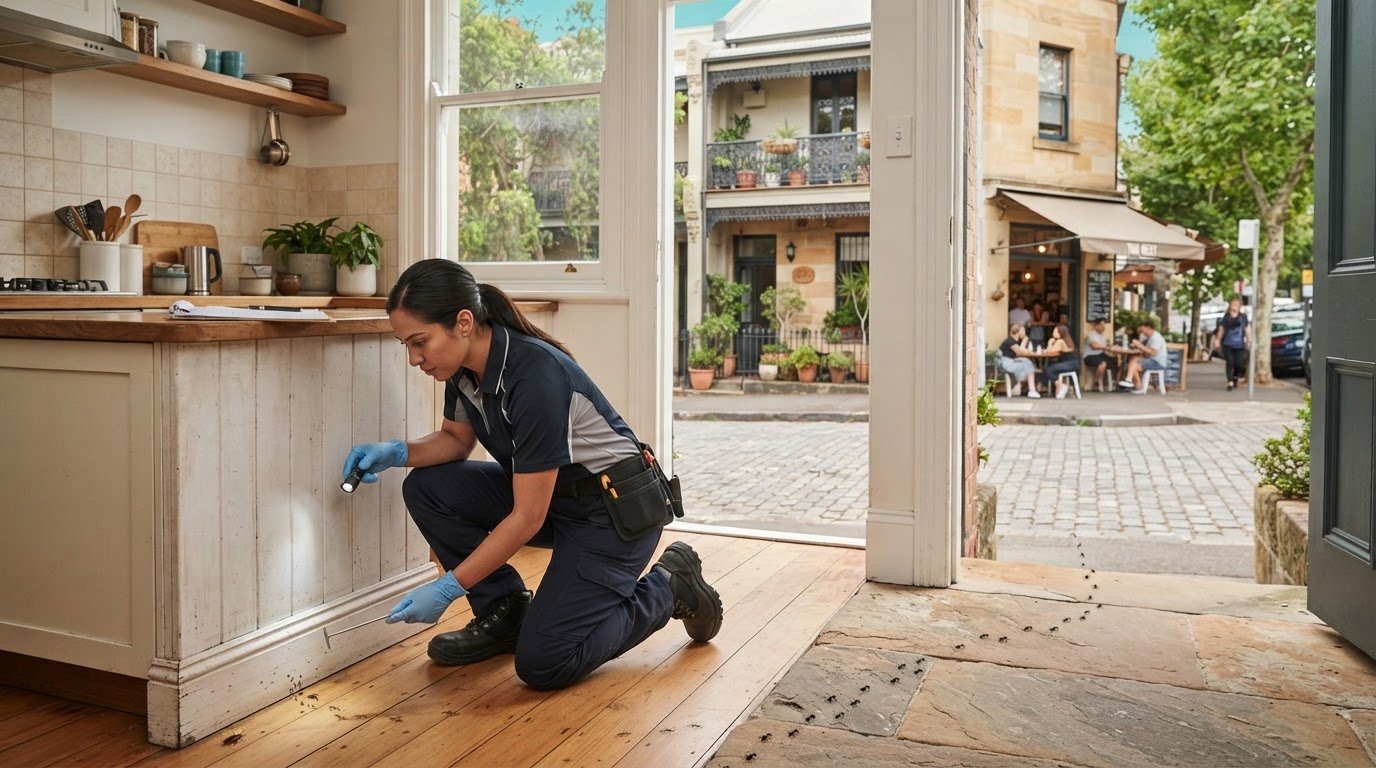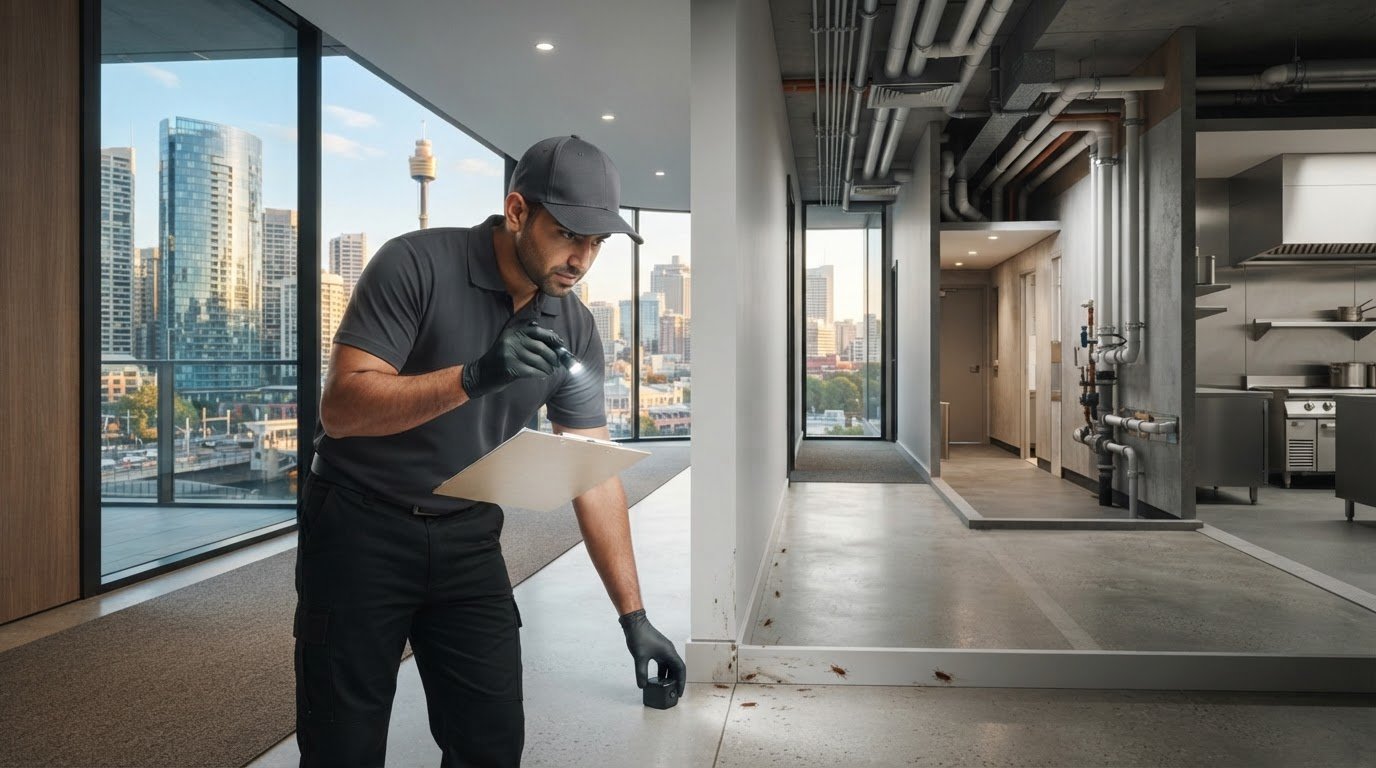
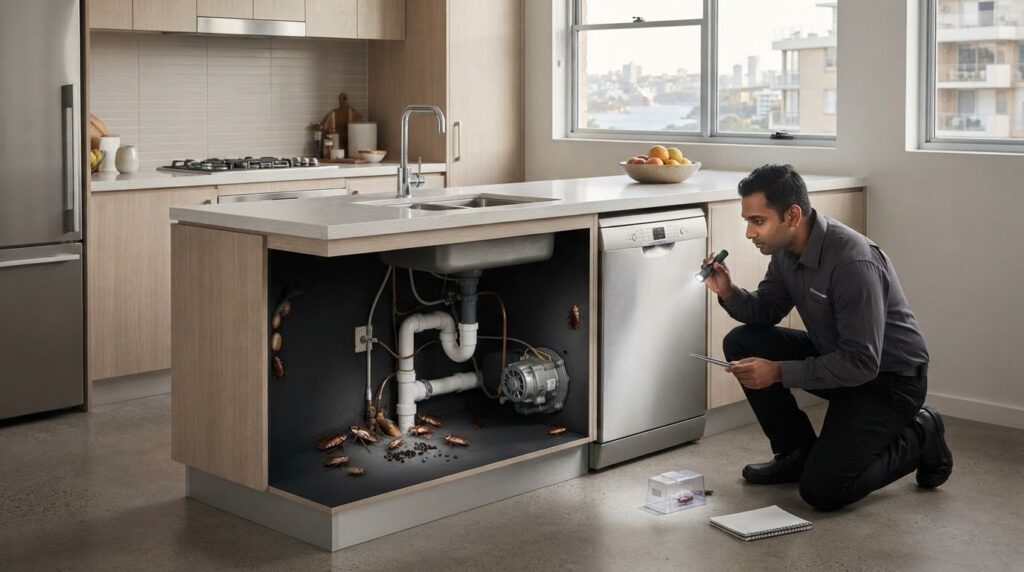
What if the cockroaches you can see are only part of the problem? German cockroach control in Sydney and the Eastern Suburbs can be challenging because these pests reproduce rapidly and are highly resistant to standard DIY treatments. Spraying the insects you spot or cleaning visible surfaces may not reach cockroaches sheltering out of sight.
Repeated sightings in an apartment are frustrating, particularly when you’re unsure whether activity is limited to your home. Shared plumbing, wall cavities and other concealed spaces can provide routes between areas of a building. Treating only the insects you see may leave hidden harbourage untouched.
This guide explains how to recognise possible German cockroach activity, where to look for signs and what to do before treatment. It also covers how residents and strata teams can share useful information, and how a professional assessment can shape a response around the apartment and the evidence.
Key Takeaways
- Identify German cockroaches using visible features, not just where an insect was found or a single sighting.
- Understand how egg cases, concealed harbourage, food and moisture can support activity and contribute to spread through apartment buildings.
- German cockroach control in Sydney and the Eastern Suburbs needs to account for rapid reproduction and resistance to standard DIY treatments. Effective next steps should look beyond visible insects.
- Use a practical sequence to record sightings, reduce accessible food and moisture, and coordinate with building management when shared areas may be involved.
- ABC Pest Control Sydney brings over 20 years of experience to residential and commercial pest management, with treatment tailored to the property and infestation.
German Cockroaches in Sydney Apartments: Why Infestations Can Persist
Recurring cockroach sightings can be unsettling, especially in a shared building. German cockroaches are small, indoor-dwelling insects that shelter near food, water and warmth. They can hide in narrow spaces, so an apartment may look clear while activity continues out of sight. A sighting is worth investigating, but it doesn’t show by itself how far the problem extends.
German cockroach control in Sydney and the Eastern Suburbs can be challenging because these pests reproduce rapidly and are highly resistant to standard DIY treatments. Start by identifying what you’re seeing and noting where activity occurs. A clear record gives residents, building managers and pest professionals a more useful starting point than assumptions based on one insect.
How to recognise German cockroaches indoors
German cockroaches are small and light brown, with two darker stripes running lengthwise just behind the head. It can be difficult to judge size and colour from a quick glimpse, and other cockroach species may also be found indoors. Look at the insect’s visible features rather than assuming it is a German cockroach because it appeared in a kitchen or apartment.
If it’s safe, take a clear photo without touching or disturbing the insect. Droppings, egg cases and repeated sightings can provide more clues, particularly when you note where and when you found them. These signs can support identification, but one insect or photo alone may not show the extent of activity. The German Cockroach Biology and Behavior reference describes the species’ characteristics and habits.
One German cockroach sighting is a reason to investigate, not proof that every apartment in the building is infested. Record any further sightings and signs before drawing conclusions about neighbouring units.
Why apartment conditions can make control more complex
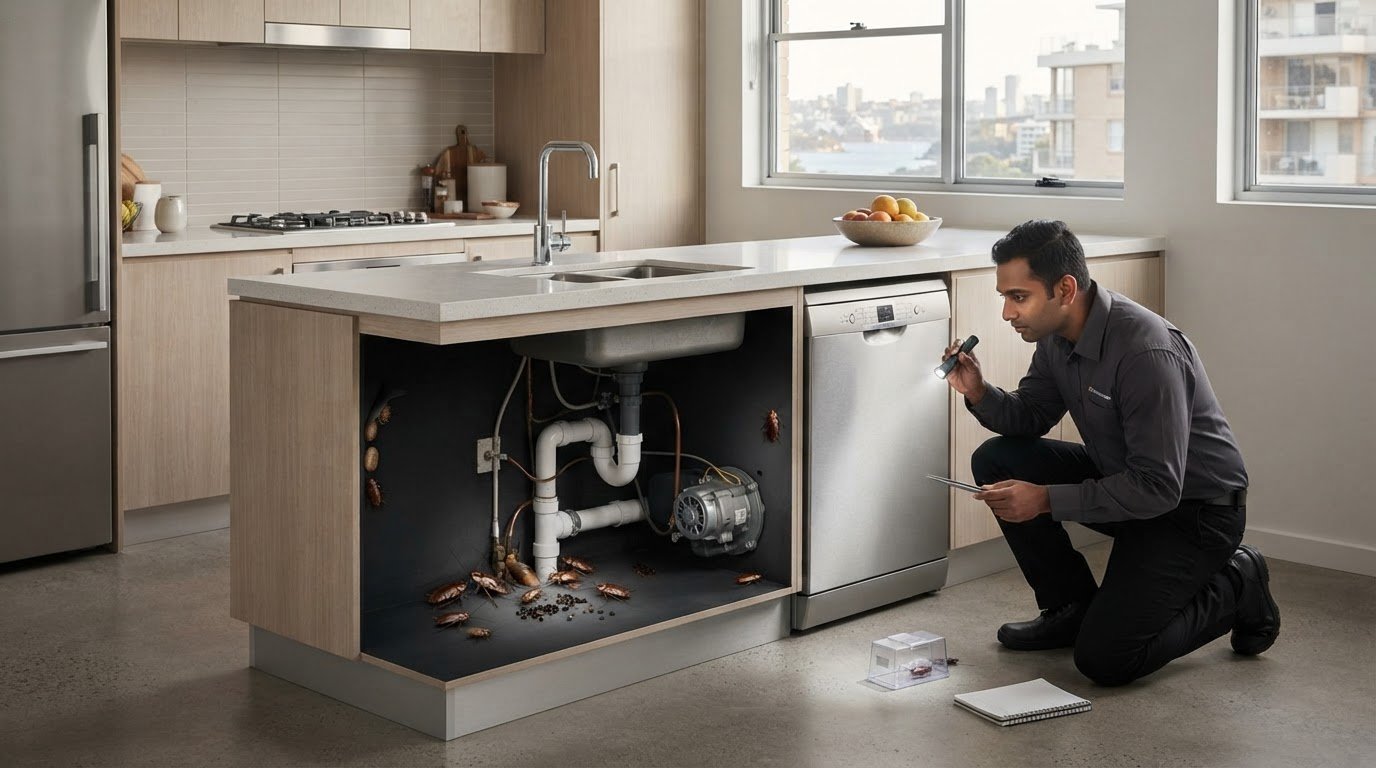
Kitchens and bathrooms can provide food, moisture and shelter. Crumbs around appliances, a damp area under a sink or gaps behind cabinetry may offer useful resources and hiding places. Fridges, ovens and dishwashers can also create warm, concealed spaces that are easy to miss during everyday cleaning.
In apartment buildings, gaps around pipes and other service openings may give insects places to hide or move through. Shared walls and service penetrations can make it harder to pinpoint where activity began. That doesn’t mean every neighbouring apartment has cockroaches or needs the same treatment. The pattern of sightings, available evidence and property layout all matter.
Record the exact location of each sighting, such as beside a fridge, under a bathroom vanity or near a shared service area. This can help distinguish activity around a local hiding place from signs that may involve connected parts of the building. An assessment based on the property and evidence is more useful than guessing from a single insect.
How German Cockroach Infestations Grow and Spread Through Buildings
German cockroach activity can build quietly. Egg cases protect developing young, while adults and immature cockroaches shelter close to food and moisture. Activity may become more noticeable over time, even if insects remain hidden in a compact harbourage. Seeing one cockroach in an open area doesn’t reveal how many may be out of sight.
German cockroach control in Sydney and the Eastern Suburbs needs to account for how quickly these pests reproduce and their resistance to standard DIY treatments. A response that focuses only on insects spotted on open surfaces may leave hidden activity unaddressed. Knowing where cockroaches can shelter and what supports them helps residents take practical steps while arranging an assessment if sightings continue.
Where German cockroaches hide and feed
Look for places that combine warmth, shelter and access to food or moisture. Narrow spaces around kitchen appliances, plumbing, cupboards and food storage can provide hiding places close to resources. A gap beside a fridge, food residue under a toaster or moisture beneath a sink may be more relevant than a clean, exposed benchtop.
Check accessible areas without pulling apart appliances or applying products where people, pets or food could be exposed. Remove crumbs and food residue, store food securely and avoid leaving standing water. These steps can make the apartment less attractive, but they won’t show whether cockroaches are sheltering behind fixed cabinetry or in inaccessible spaces. Penn State Extension’s German Cockroach Control Strategies also discusses sanitation and control measures, underscoring the value of practical prevention alongside a targeted response.
Sightings in one room can’t map every harbourage. Cockroaches may use concealed spaces near a kitchen or bathroom without appearing in the open. Treating visible surfaces alone can leave those hiding places undisturbed.
How activity may extend beyond one apartment
In connected buildings, gaps around pipes and other service routes, shared walls and adjoining spaces may complicate efforts to locate activity. Cockroaches can also be moved accidentally in belongings, packaging or deliveries. These are possible routes, not proof of how an infestation began. Don’t assume a neighbour caused the problem or that nearby apartments are affected.
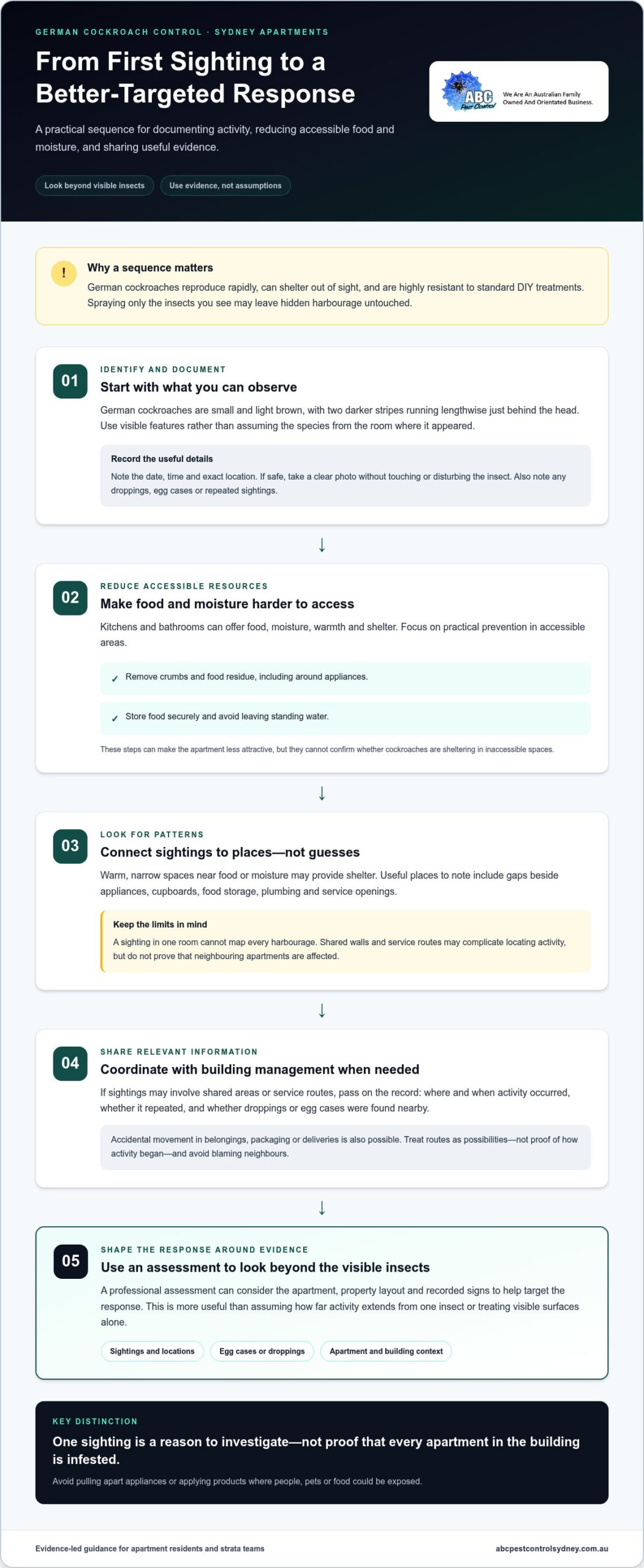
A simple record can help reveal patterns without speculation. Note the date, time and exact location of each sighting, and whether you found an egg case or droppings nearby. For example, repeated activity beside a kitchen service opening is useful information to share with building management. A single sighting in a recently unpacked delivery is also worth recording. Keep any photos with your notes.
Share relevant observations with strata or building management if activity occurs near shared areas or residents report sightings in different locations. A professional assessment can help determine whether treatment should focus on one apartment or consider connected areas. ABC Pest Control Sydney provides tailored cockroach treatments across metropolitan Sydney. Read about German cockroach control in apartments if sightings persist.
Why DIY Cockroach Sprays Often Miss the Source of the Problem
Seeing a cockroach after spraying can make it seem as though the treatment hasn’t worked. A product that affects an exposed insect may not reach cockroaches sheltering inside a cupboard gap, behind an appliance or near plumbing. Fewer visible insects don’t necessarily mean hidden activity has been addressed.
This is an important consideration for German cockroach control in Sydney and the Eastern Suburbs. These pests reproduce rapidly and are highly resistant to standard DIY treatments, so repeated spraying may leave the underlying source untouched. That doesn’t mean every DIY product is ineffective. Product choice, placement and access to hidden harbourage all matter, particularly in an apartment.
What DIY sprays can and cannot do
Some sprays can affect insects they directly reach, so residents may see fewer cockroaches in the open for a time. But a product applied to an exposed surface may not reach insects or egg cases in concealed spaces. A short-term drop in visible activity isn’t proof that every hiding place has been treated.
Use any household product strictly according to its label. Don’t combine products, apply them in ways the label doesn’t allow, or place them near food, utensils, children or pets where the instructions restrict use. Incorrect application can create avoidable exposure and make a treatment less useful. If you’ve already sprayed, note the product and where you used it so that information can be considered during an assessment.
Avoid repeatedly applying products to the same open surfaces while leaving likely harbourage untouched. In shared buildings, activity may also involve service gaps or connected spaces beyond the reach of a resident’s individual treatment. Spraying inside one apartment can’t establish whether those areas are involved.
When professional treatment is a more practical next step
If sightings continue despite sensible cleaning and monitoring, arrange a professional assessment rather than repeating the same approach. Share where you’ve seen activity, when it occurs, any signs you’ve noticed and what products you’ve used. These details help relate the visible evidence to the property’s layout and likely harbourage.
A technician can assess the apartment and tailor treatment to the observed activity and property, rather than relying on a blanket response. In an apartment block, tell building management if there are signs near shared areas or reports from other residents. This information can help clarify whether the concern appears confined to one unit or may need broader coordination. It doesn’t mean every neighbouring home should receive identical treatment.
For practical control steps, explore this guide to getting rid of cockroaches. If sightings persist, a tailored assessment is a sensible next step. Follow the technician’s instructions and the relevant product label for preparation, re-entry and aftercare guidance.
What Sydney Apartment Residents and Strata Teams Can Do Next
Take practical steps now, but don’t treat cleaning alone as a cure. German cockroaches can remain in concealed spaces, and their rapid reproduction and resistance to standard DIY treatments can make activity difficult to control. In an apartment building, the source may not be obvious from one unit. Keep clear records and coordinate a suitable assessment rather than guessing where the activity began.
A resident checklist before treatment
Work through these actions in order. They’ll help you describe the problem and prepare without guessing at treatment requirements.
- Record each sighting. Note the date, time and exact location, such as beside the fridge or under a bathroom vanity. Include whether you saw one insect or several, and note any repeated pattern. Take a clear photo where practical and safe.
- Share relevant signs. Record where you found droppings or egg cases. Tell the technician about products you’ve used and where you applied them. This context can help inform the assessment.
- Reduce accessible food. Store food securely, wipe away grease and spills, and remove crumbs from benches and floors, especially near likely activity areas. Keep rubbish contained and avoid leaving pet food out longer than needed.
- Address moisture and clutter. Wipe up standing water and report leaks through the appropriate property channel. Clear excess items from accessible areas so they’re easier to inspect, but don’t move heavy appliances or dismantle fixtures unless instructed.
- Follow property-specific preparation advice. Don’t assume every apartment needs the same preparation. Follow the technician’s instructions and product label for preparation, re-entry and aftercare directions.
These steps can make conditions less supportive and help with an assessment, but they may not reach concealed harbourage. For broader household prevention, Sydney pest-control guidance can help residents consider practical habits alongside a tailored response.
How strata can support coordinated control
Building management can bring separate reports together without assuming that a particular neighbour is responsible. Residents should report recurring activity through the appropriate strata or building-management channel. Include locations and dates, share only relevant details and respect other residents’ privacy.
Management can consider whether reports relate to shared spaces or service routes, such as areas around plumbing, and coordinate access if an assessment needs to include them. Keep residents informed about practical arrangements and any instructions they need to follow. Each apartment may require an individual assessment. Reports from one unit don’t prove that every unit is affected or should receive identical treatment.
When sightings continue, a professional assessment can help determine a response suited to the apartment and observed activity. ABC Pest Control Sydney provides residential pest management across metropolitan Sydney, with cockroach treatments tailored to the property. Arrange an apartment cockroach assessment to take a practical next step.
Professional German Cockroach Control in Sydney: What to Expect
Recurring sightings call for more than another guess at where to spray. Professional German cockroach control starts with assessing the activity and the apartment, then tailoring treatment and aftercare to what’s found. Because German cockroaches reproduce rapidly and are highly resistant to standard DIY treatments, an assessment can help identify a practical response rather than focusing only on insects seen in the open.
ABC Pest Control Sydney has over 20 years of experience providing residential and commercial pest management across metropolitan Sydney. The company treats cockroaches and tailors its approach to the property and infestation, using eco-friendly methods. Treatment choices depend on the assessment, and no method should be presented as completely risk-free or an instant solution in every case.
How a tailored apartment assessment informs treatment
An assessment considers where and when activity has been observed, the signs residents have documented and conditions that may support cockroaches. The technician can also consider access to likely harbourage and features of the apartment, including kitchen fixtures, appliances and service openings. In a shared building, information about relevant common areas or reports from management may help build a clearer picture without assuming neighbouring units have the same issue.
That evidence informs a treatment plan suited to the property, rather than a one-size-fits-all application. The aim is to address relevant activity and hiding places while accounting for the apartment’s layout and household needs. Where access or resident coordination matters, agree on practical arrangements before work begins. Share your sighting records and mention products already used so the assessment reflects what has happened so far.
Aftercare and follow-up expectations
Before treatment, make sure you understand the technician’s property-specific instructions. Follow their guidance and the product label on preparation, access, cleaning and re-entry. Don’t assume the same steps or timings apply to every home. If anything is unclear, get instructions from the technician before taking action.
Visible activity and aftercare can vary with the treatment and conditions in the apartment. A sighting after treatment doesn’t by itself show whether the response needs adjustment, so keep a clear record rather than applying additional products without guidance. Note dates, locations and changes in activity. If cockroaches continue to appear, share those details with the technician so they can advise on reassessment and appropriate next steps.
Follow-through matters. Keep food stored securely, reduce accessible crumbs and moisture, and report relevant activity near shared areas through building management. These habits support treatment, but they don’t replace a plan tailored to the infestation.
For tailored help with German cockroaches in an apartment, arrange professional cockroach control with ABC Pest Control Sydney.
Make Your Next Step Count
Persistent sightings can be stressful, but you don’t have to keep guessing at the cause or repeating the same response. German cockroaches reproduce rapidly and are highly resistant to standard DIY treatments. A clear assessment can help guide the next step for your home and, where relevant, building management.
Keep a record of new sightings and share what you’ve observed. A tailored approach can account for the property, signs of activity and practical household needs. ABC Pest Control Sydney provides residential and commercial pest management across metropolitan Sydney, with treatments tailored to the infestation and eco-friendly methods. The team brings over 20 years of pest-management experience to its work.
Take action with a considered plan for your apartment. Arrange professional cockroach control for your Sydney property with ABC Pest Control Sydney.
Frequently Asked Questions
How fast do German cockroaches reproduce?
German cockroaches can reproduce quickly when food, moisture and warm shelter are readily available, but conditions affect how fast activity develops. A single sighting can’t show how long cockroaches have been present or how many there may be. If you find an egg case, photograph it without handling it and note the nearby location. Repeated signs give an assessment more useful context than trying to estimate an infestation from one insect.
Can German cockroaches travel between apartments?
Yes, they may move through connected spaces in a building, although a sighting in one unit doesn’t prove the next unit is affected. If reports recur, send building management a concise record of dates and locations, such as activity near a kitchen wall or pipe opening. This can help management look for patterns without attributing the cause to a particular resident or apartment.
Can German cockroaches live inside appliances?
Yes, they can shelter in warm, protected spaces in or around appliances, particularly where food residue or moisture is accessible. Check the surrounding floor, nearby cupboard edges and accessible gaps, but don’t dismantle equipment to search. Never spray inside electrical appliances or anywhere the product label prohibits. If activity appears to come from inside an appliance, note the location and tell the pest professional before treatment.
Do German cockroaches bite people?
German cockroaches aren’t known for biting people as a typical behaviour. Their presence can still be a concern, especially if they’ve been near food or food-contact surfaces. Store uncovered food, wash utensils and clean affected surfaces using suitable household cleaning practices. Avoid touching insects or droppings directly. If you develop symptoms or are worried about a possible health reaction, seek advice from a qualified health professional.
Can I use a fogger for German cockroaches in an apartment?
A fogger may not reach cockroaches concealed in narrow spaces, so it might not address the source of recurring activity. German cockroaches reproduce rapidly and are highly resistant to standard DIY treatments. If using a fogger, follow its full label directions and apartment requirements. Never combine pest products, and consider a professional assessment if sightings continue.
How long should I stay out after cockroach treatment?
Re-entry timing depends on the treatment, so there isn’t one timeframe that applies to every apartment. Follow the treating technician’s instructions and the product label for re-entry, ventilation and cleaning. Make sure everyone in the household, including children and pet carers, understands the directions before treatment begins. If you’re unsure whether a room or surface is ready to use, ask the treating technician for clear, property-specific guidance.