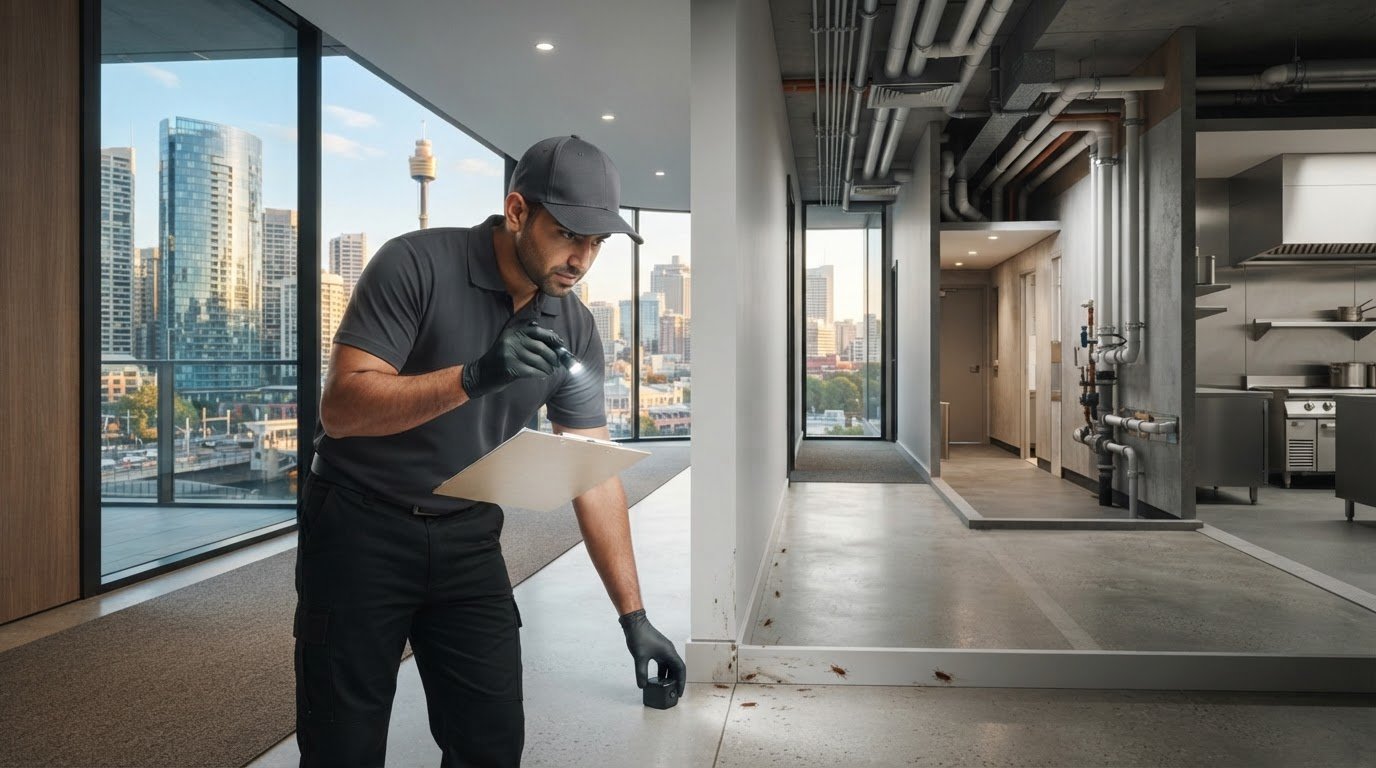
In Sydney CBD, a pest problem can extend beyond the room where it first appears. Shared service areas, dense building layouts and the movement of people and goods can make activity harder to trace, particularly in the CBD.
It’s understandable to want treatment that addresses pests without unnecessary disruption to residents, staff, customers or daily operations. A useful plan starts with the property’s layout and use, rather than a one-size-fits-all response. Cockroaches and rodents can be concerns in apartments, food businesses and shared spaces, while a building’s age and condition can shape other pest risks.
This guide explains the pest issues Sydney CBD homes and businesses may face, what a tailored treatment plan considers, and how professional help can suit a property’s needs. ABC Pest Control Sydney brings more than 20 years of experience in residential and commercial pest management. Its general pest control packages cover up to 15 common pests. Learn why identifying signs and likely activity areas matters, and what to prepare before arranging pest control.
Key Takeaways
- Match the pest management approach to the property’s use, whether it’s an apartment, office, hospitality venue or mixed-use building, particularly in the CBD.
- Record sightings, droppings, damage and activity locations to help guide an inspection and identify where pests may be moving.
- Compare treatment options by pest coverage, inspection scope, property needs and follow-up arrangements.
- Before a visit, document activity, clear access to relevant areas and coordinate access to shared spaces through the appropriate building contact.
- ABC Pest Control Sydney provides tailored residential and commercial pest management, backed by more than 20 years of experience.
Why Pest Control in Sydney CBD Needs a Property-Specific Approach
Finding a pest in one room of a dense CBD building doesn’t always show where it entered or where activity is concentrated. Shared walls, service routes and common facilities can make the source harder to isolate. A useful inspection considers the affected space alongside the building’s layout and everyday use.
Pest control isn’t a single treatment applied in the same way everywhere. The Pest Control Overview describes the broad range of methods used to manage pests. For an individual property, a practical starting point is identifying the pest and considering its access to food, water, shelter and connected spaces.
Which Sydney CBD properties need different considerations?
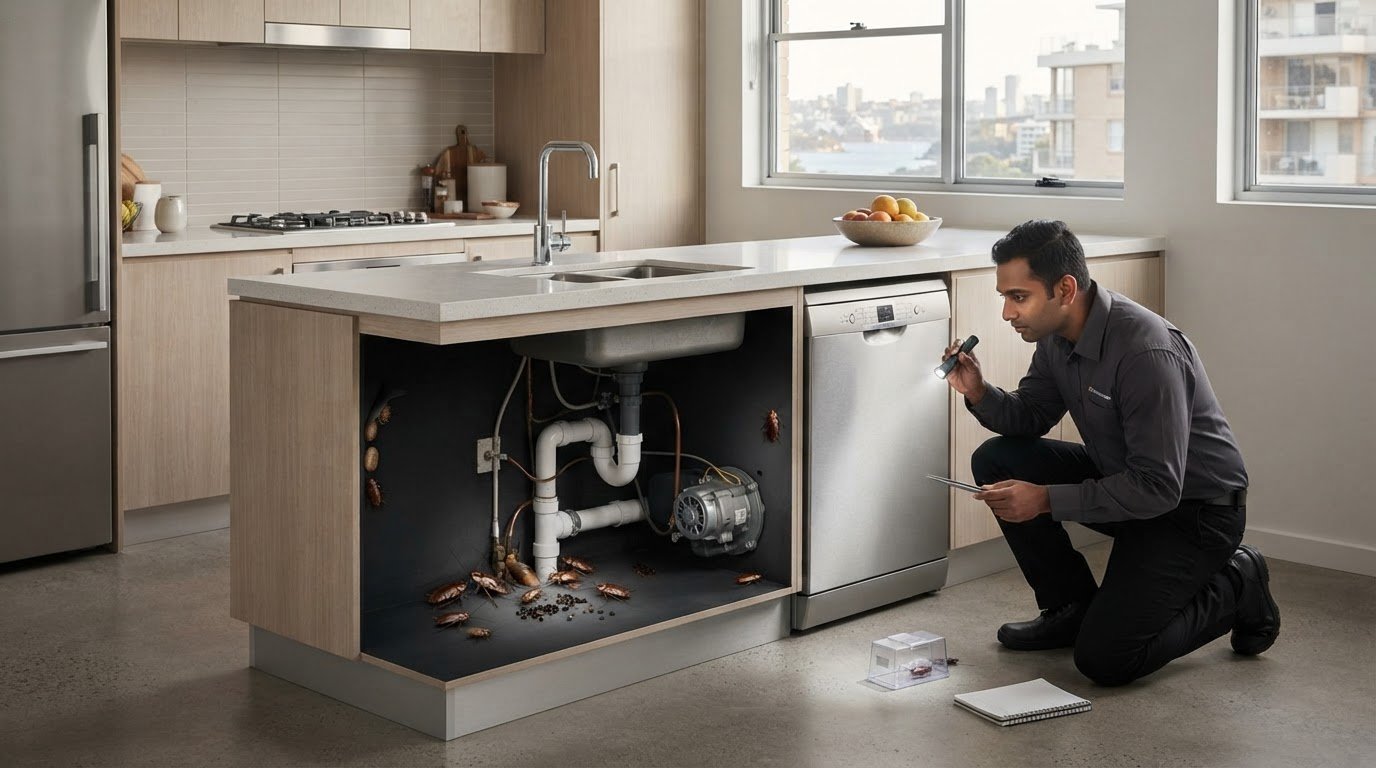
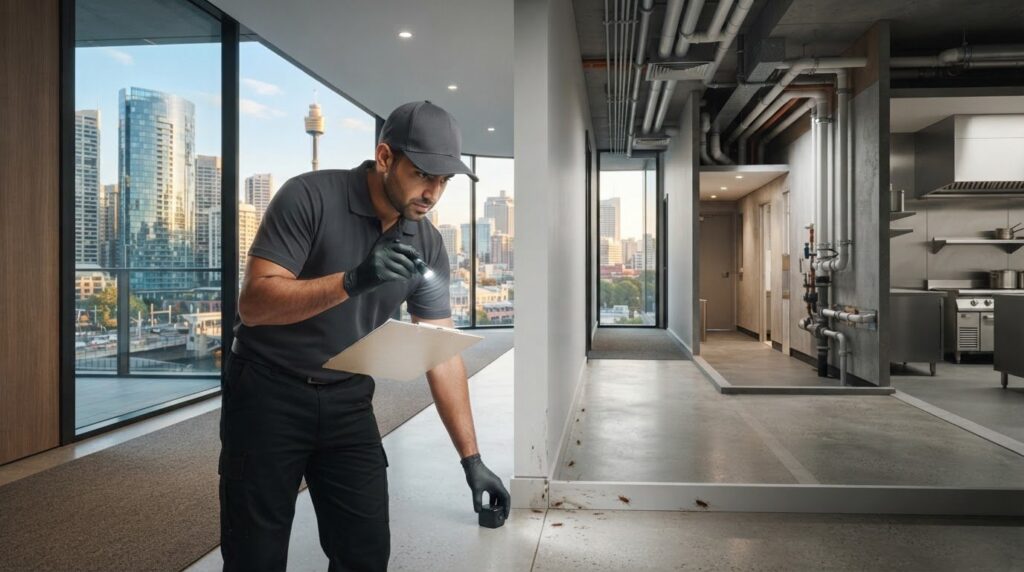
Each property has its own routines and inspection priorities. In an apartment, activity inside a private unit may need to be considered alongside shared corridors, basements or waste rooms. An office may have kitchens, staff areas and storage with different access patterns. A hospitality venue has customer-facing and operational spaces to consider, while a mixed-use building may combine several of these settings.
Building age, layout and maintenance can also shape where an inspection focuses. An older structure may have a different arrangement of gaps and service routes than a newer fit-out. These are factors to assess, not evidence that a particular pest is present.
Why can pests persist in dense buildings?
Connected service areas can make it difficult to tell whether activity is isolated or linked to nearby spaces. Depending on the building, waste handling, deliveries and storage may each influence where an inspection looks first. A sighting near an apartment kitchen, for example, can direct attention to food and water sources in that unit. A report near a shared waste area makes that location relevant to the wider assessment.
A report from one unit doesn’t automatically mean neighbouring homes are affected. But when sightings, droppings or damage are reported, considering nearby shared areas can help build a clearer picture of the activity and its possible routes.
- Waste areas: Note where bins are kept and how people access them.
- Deliveries and storage: Identify receiving points and areas where goods or supplies are stored.
- Service spaces: Describe relevant shared areas and access arrangements to help focus the inspection.
The next step depends on the pest identified and what the site reveals. A property-specific assessment can help distinguish an isolated concern from activity that may involve shared spaces, so the response reflects the building rather than assumptions about every CBD property.
How Building Layout and Pest Activity Shape CBD Treatment
A suitable treatment plan starts with evidence, not assumptions. Pest identification, site conditions and property use all matter. In the CBD, a private residence may sit above workplaces, storage areas or shared facilities, so the same sign can point to different inspection priorities depending on where it appears and how that part of the building is used.
Building use and pest evidence together inform treatment planning. Activity near a kitchen may direct attention to food and water sources. Signs near a loading area or shared storage space can make those locations relevant to the assessment. This context helps shape a response around the property’s actual needs.
What signs help identify a pest issue?
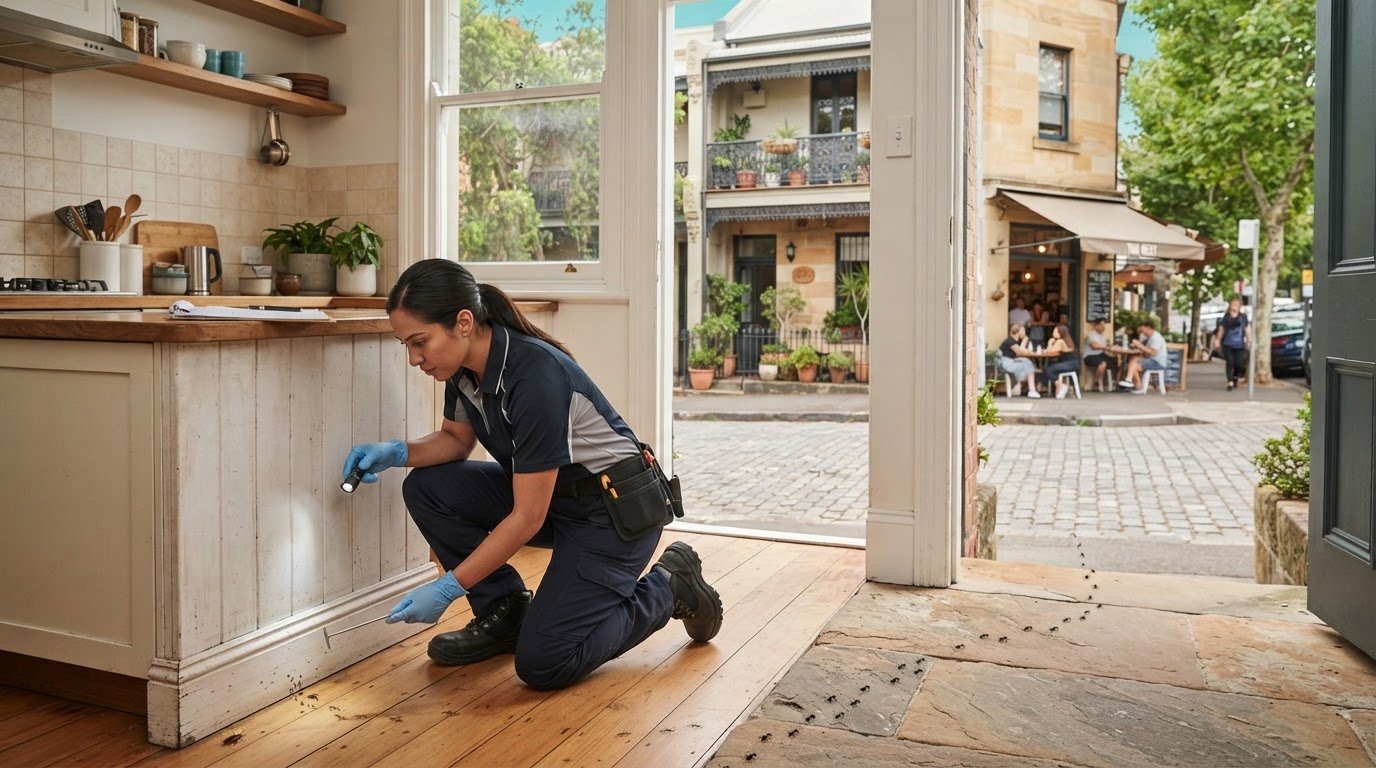
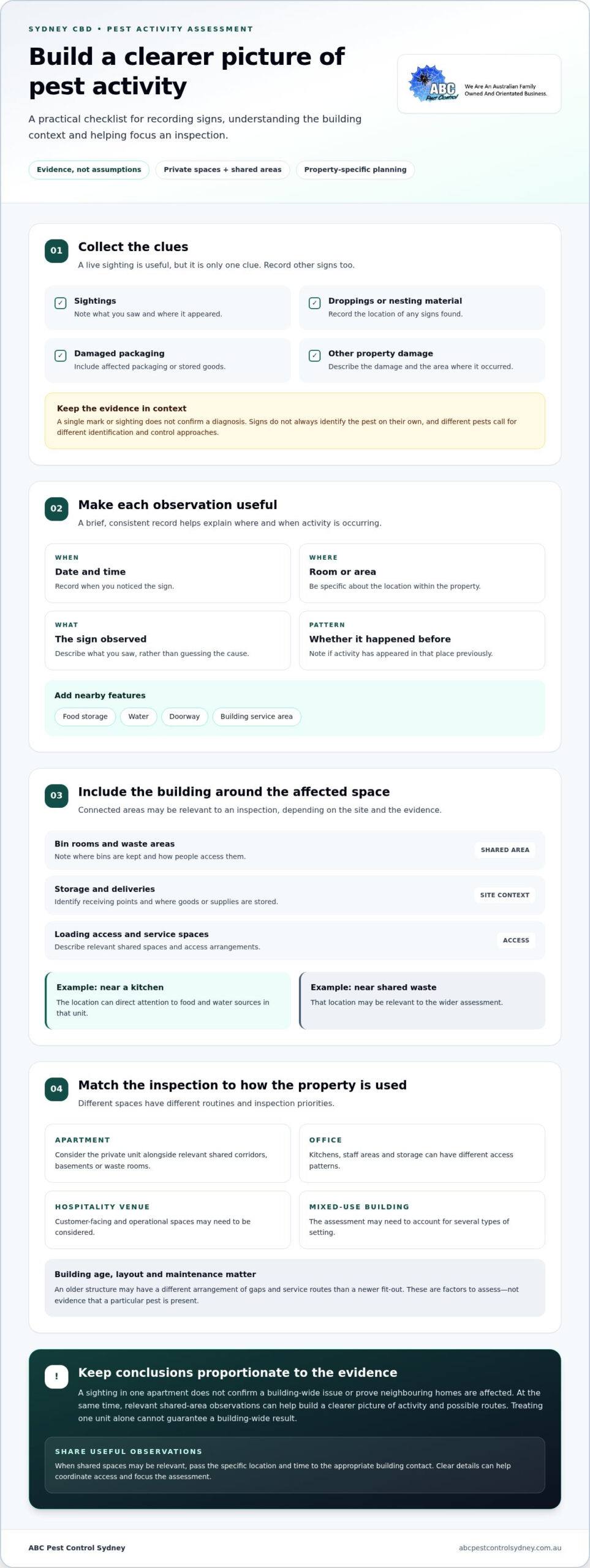
A live sighting is useful, but it’s only one clue. Droppings, nesting material, damaged packaging or other property damage can also signal activity. These signs don’t always identify the pest on their own, so don’t treat a single mark or sighting as a confirmed diagnosis. Different pests call for different identification and control approaches.
Keep a brief record to make the evidence more useful. Note the date and time, the room or area, what you saw, and whether activity has appeared there before. If possible, note whether the location is near food storage, water, a doorway or a service area.
How do shared areas affect an inspection?
In an apartment or commercial building, relevant evidence may extend beyond the affected room. Bin rooms, storage areas, loading access and building service spaces can help establish whether activity appears isolated or may involve connected areas. A sighting inside one apartment doesn’t confirm a building-wide issue, and treating that unit alone can’t guarantee a building-wide result.
Share specific observations with building management when shared spaces may be relevant. A location and time are more useful than a general report. For example, note repeated activity beside a particular storage area or near a service access point. This can help coordinate access and give a clearer picture of the site.
- Record: Sightings, droppings, damage and when each sign appeared.
- Locate: Nearby doors, food areas, waste points or building services.
- Communicate: Pass relevant shared-area observations to the appropriate building contact.
These details help a tailored plan account for the identified pest, affected areas and the way the property operates. ABC Pest Control Sydney provides residential and commercial pest management tailored to each property. Explore Sydney pest control solutions to learn more.
Comparing Pest Control Approaches for CBD Homes and Businesses
The right pest control approach depends on what’s happening, where activity appears and how the property operates. A single sighting in a home may call for a different assessment from recurring signs across an office or concerns spanning several areas of a mixed-use building.
Use this framework to compare options and clarify the scope of work. It helps you assess what a plan covers instead of assuming one treatment suits every situation.
| Situation | Pest coverage | Inspection scope | Property use | Follow-up arrangements |
|---|---|---|---|---|
| One-off concern | Focus on the pest or concern identified. | Assess the affected area and relevant signs. | Consider whether it’s a private residence, office or customer-facing space. | Discuss what to monitor and whether another visit is appropriate. |
| Recurring activity | Confirm the pest rather than relying on past assumptions. | Consider repeated locations and possible contributing conditions. | Account for routines such as food handling, storage and access. | Set expectations for monitoring and any agreed follow-up. |
| Multi-area property needs | Clarify which pests and areas are in scope. | Consider relevant rooms and shared spaces. | Factor in different occupants, operations and access arrangements. | Coordinate next steps across the areas included in the plan. |
Compare plans by the work they cover: pest identification, inspection scope, property use and follow-up arrangements. A broad package doesn’t mean every pest receives the same treatment. ABC Pest Control Sydney tailors packages to the property and pest concerns. Its general pest control packages cover up to 15 common pests across residential and commercial settings.
When is general pest control a suitable starting point?
A general package can be a practical starting point when the concern involves common pests or you want coverage suited to a home or business. The pests included may need different identification and approaches, so consider the package alongside the signs present and the property’s needs. For more guidance on choosing an approach, see Pest Control Sydney: Your Ultimate Guide to a Pest-Free Home.
When might a specific pest service be more appropriate?
Some concerns need focused identification and attention. Termites, bed bugs and possums each present different signs and property considerations, so don’t assume a general package addresses them in the same way. If you’re seeing possible cockroach activity, a pest-specific guide can help you understand what evidence to record before arranging an assessment.
Once you’ve compared the scope with the evidence and the building’s needs, ABC Pest Control Sydney can help with tailored residential or commercial pest management. Explore Sydney pest control services to learn about an approach for your property.
How to Prepare for Pest Control in a Sydney CBD Property
Preparation helps make an inspection more focused and makes it easier to plan around residents, staff or customers. In a busy CBD building, access to apartments and shared spaces may need coordination. Gather the details you have, arrange access to relevant areas and explain how the property is used before treatment begins.
What should residents and property managers do beforehand?
Record what you’ve noticed and where it occurred. For apartments, arrange access to the relevant rooms and share building entry procedures or shared-area restrictions with the service team. If a bin room, basement or another common space may be relevant, speak with the appropriate building contact about access rather than assuming it’s included in a private unit visit.
Use this checklist before the appointment:
- Document activity. Note sightings, droppings or damage, along with the location and approximate time. Include whether signs have appeared more than once.
- Clear agreed access. Make the affected rooms and identified access points available as arranged. Don’t move or handle anything if you’re unsure; raise it with the service team.
- Share site details. Explain how to enter the building, where to report on arrival and any limits on accessing shared areas.
- Coordinate common spaces. If inspection of a shared area may be relevant, contact the building manager or another appropriate person to organise access.
How can CBD businesses reduce disruption?
For a workplace or customer-facing venue, preparation should reflect how the premises operate. Identify affected work areas and note where staff or customers need access. Explain the business’s operating routines so treatment planning can account for the spaces in use, without assuming every area needs the same approach.
- Map the areas: List reported activity locations, nearby storage and work zones that may need assessment.
- Explain the routine: Note busy periods, deliveries, food preparation or other activities that affect access and scheduling discussions.
- Plan communication: Decide who will coordinate access and pass instructions to staff or other occupants.
- Keep guidance visible: Make post-treatment instructions available to the people who use the affected spaces.
Before treatment, follow the technician’s instructions and the applicable product-label directions. Share those instructions with anyone who uses the treated areas, and ask for clarification if any direction is unclear. Clear communication helps residents, building contacts and business teams understand what to expect and what steps to follow.
ABC Pest Control Sydney provides residential and commercial pest management tailored to the property and its pest concerns. Learn about pest control for your property.
How ABC Pest Control Sydney Helps CBD Properties Take the Next Step
Sharing clear details makes it easier to discuss pest control for your property. An apartment, office, hospitality venue and mixed-use building each has different routines, access needs and affected areas. ABC Pest Control Sydney tailors its residential and commercial pest management to the property and reported pest concerns. In CBD buildings, shared spaces can also be relevant to planning.
With more than 20 years of experience, the team works across varied property settings. Every treatment plan depends on the pest concern and site details, including the building’s layout and use.
What information helps ABC tailor the service?
Start with a clear description of the property and affected areas. Share the signs you’ve noticed, such as sightings or damage, and when and where activity occurs. Mention access arrangements, operating routines or shared spaces that may be relevant. These details help frame the discussion around the property rather than assumptions.
- Property type: Say whether it’s an apartment, office, hospitality venue or another setting.
- Areas affected: Identify rooms, work zones or common areas where activity has been reported.
- Pest evidence: Describe what you saw and when it appeared. If you’re unsure what the pest is, say so rather than guessing.
- Access and operations: Explain entry arrangements, relevant shared-area access and routines that affect how spaces are used.
What happens after the initial enquiry?
The initial discussion can clarify the reported issue, property type and practical site considerations. Treatment planning is then tailored to the pest concern and property context. ABC’s general pest control packages cover up to 15 common pests. The appropriate approach depends on the specific concern and isn’t identical for every pest or building.
For a commercial property, explain how staff, customers and daily operations use the affected areas. For a residence, note whether the concern is within a private unit or involves shared spaces. If you manage the building, include relevant access arrangements. Clear information helps establish what needs attention and supports a focused next step.
You don’t need to have every answer before making an enquiry. Start with a concise account of what you’ve noticed, where it occurred and how the property operates. ABC Pest Control Sydney can discuss the details and tailor its service to the reported pest concern and site.
CBD property owners and managers can contact ABC Pest Control Sydney to discuss pest management for a home or business.
Take the Next Step Towards a Clear Pest Management Plan
Don’t let uncertainty about a sighting stall the next step. A clear conversation can turn what you’ve noticed into a practical starting point. In the CBD, building access and day-to-day use may affect how pest concerns are assessed.
Before getting in touch, gather the details that are easiest to share: the property type, where activity has appeared, what signs you’ve observed and any access considerations. You don’t need to identify the pest yourself. Clear observations give the team useful context to discuss your concern and the property’s needs.
ABC Pest Control Sydney brings more than 20 years of experience to residential and commercial pest management, including general packages tailored to properties. Contact ABC Pest Control Sydney to discuss pest management for your CBD property.
Frequently Asked Questions
Is pest control in Sydney CBD different for apartments and businesses?
Yes. Apartments and businesses have different access, occupancy and operating needs. A home treatment may focus on a private living area, while a café or office may need planning around staff access, customer areas or business routines. Share how the premises are used and which spaces are affected so the approach reflects the site, not just the pest reported.
Can pests move between apartments in a CBD building?
They can move through connected areas, depending on the pest and the building. Shared service routes, openings around pipes, corridors or waste areas may be relevant, but a sighting in one apartment doesn’t prove nearby units are affected. If you notice repeated activity, record where it occurs and tell building management. This gives the property contact useful information when deciding whether shared spaces should also be considered.
How much does pest control cost in Sydney CBD?
The cost depends on the pest concern and the work needed, so there isn’t one suitable figure for every Sydney CBD property. Factors can include the type and size of premises, areas requiring attention, reported activity and access arrangements. A small apartment concern and a multi-area commercial property may need different scopes. Describe the property and issue when requesting a service discussion so the proposed work can be matched to the situation.
Are pest-control treatments suitable for homes with children or pets?
Tell the pest management team before treatment if children, pets or other occupants have specific needs. Precautions depend on the treatment and product directions, so don’t assume every method has the same re-entry or preparation requirements. Follow the technician’s instructions and applicable product-label directions, including guidance about treated areas. Keep those instructions available to other household members, and clarify anything you’re unsure about before using the space.
What should a Sydney CBD business do before pest control?
Identify affected work areas and explain how staff, customers and deliveries use them. For example, note whether reported activity is near a staff kitchen, stock storage or a customer area. Share operating routines and building access procedures so the service can be planned around the premises. Assign someone to communicate instructions to staff, then keep post-treatment guidance accessible to everyone who uses the affected spaces.
What happens if pests return after treatment?
If you notice further activity, record the date, location and signs rather than assuming it’s the same issue. Activity may need reassessment, especially if it appears in a new area or involves a different pest. Review the instructions provided after treatment and contact the service team to discuss what you’re seeing and any follow-up arrangements. Avoid adding another treatment without understanding how it may interact with the previous work.
How often should a CBD apartment or business have pest control?
There’s no single interval that suits every property. The need for routine visits can depend on the type of premises, previous activity, building conditions and how the space is used. A business with food handling or storage may have different monitoring needs from an apartment with no recent signs. Discuss the property’s history and current concerns with the pest management team to determine a suitable schedule, rather than relying on a fixed calendar interval.