

What if the pests you can see are only a small part of the problem? It’s frustrating when activity stops after treatment, then returns days or weeks later. Pests, eggs or entry points may remain hidden from view. For persistent infestations, achieving full eradication usually requires professional intervention.
This guide explains why pests persist in Sydney homes and businesses, and how professional pest control can address the source rather than simply reduce sightings. You’ll learn what an assessment and tailored treatment may involve, why the right approach depends on the pest and where it’s hiding, and which practical steps can help prevent activity from returning. With more than 20 years of experience managing pests across metropolitan Sydney, ABC Pest Control Sydney understands that lasting results start with identifying the problem properly. Read on to learn what to expect and how to take a confident next step.
Key Takeaways
- Fewer sightings don’t always mean an infestation is resolved. Consider hidden harbourages, nests and entry points.
- For persistent pest activity, achieving full eradication usually requires professional intervention. Accurate identification helps guide a treatment approach suited to the pest and property.
- Cleaning, removing food sources and sealing visible gaps can support control. Professional treatment can address a wider infestation and its follow-up needs.
- Know what to expect: discuss pest activity, have the site assessed, then follow preparation and treatment guidance tailored to the property.
- Use a room-by-room prevention check for food, waste, moisture and visible gaps to help reduce the chance of pests returning.
Why Full Pest Eradication in Sydney Is Harder Than Removing Visible Pests
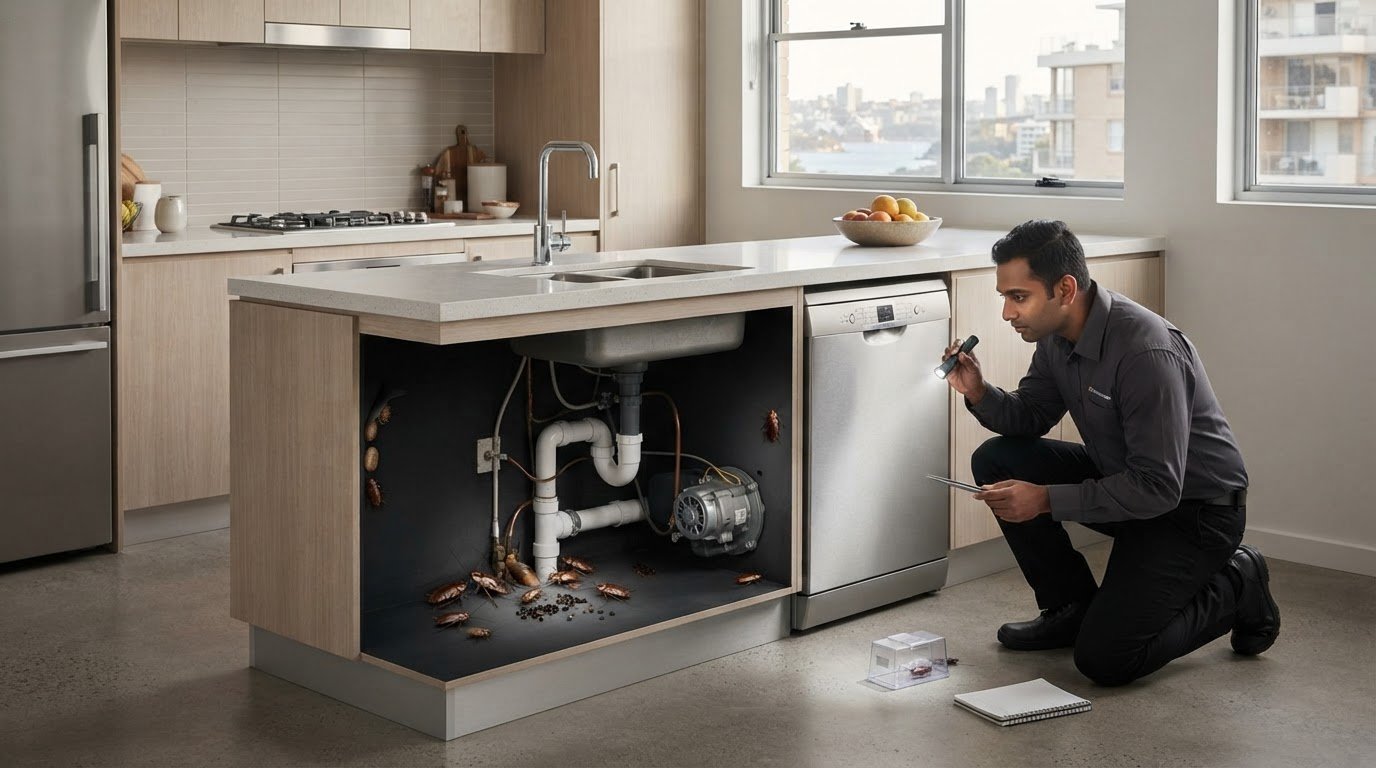
Seeing fewer pests is encouraging, but it doesn’t always mean the infestation has ended. The pests you notice may be workers or foragers, while others remain concealed in wall voids, cupboards, roof spaces, drains or other sheltered areas. Droppings, shed skins, damaged packaging and repeated activity in one spot can point to a larger problem, but rarely reveal its full extent on their own.
Here, eradication means resolving the active infestation, not promising that pests can never enter the property again. The result depends on the species, the extent of activity and the conditions at the site. For established or recurring activity, achieving full eradication usually requires professional intervention. A quick reduction in sightings may follow treatment, but lasting control also depends on finding what allows pests to survive or return.
Professional pest management involves assessing pest activity and site conditions, then applying targeted treatment and practical prevention. That’s different from applying one product wherever a pest appears. Treatment methods need to suit the identified pest and the property. Integrated pest management can draw on a range of approaches. For example, biological control describes using natural enemies to manage pest populations, though the appropriate method depends on the situation.
Why seeing fewer pests does not always mean the problem is solved
Some pests spend much of their time hidden, so activity may continue even when you no longer see them in the open. Their life cycle matters too: eggs or immature stages may not respond to an approach aimed at active adults. The timing and need for follow-up therefore vary by species and site. Don’t assume every infestation needs the same treatment schedule, or that a quiet spell confirms the source has been dealt with.
Temporary reductions can also leave the underlying conditions unchanged. If food remains accessible, moisture persists, or pests can still enter through gaps, activity may resume. Repeated sightings in the same area are a reason to look beyond the visible pest and investigate nearby shelter, access routes and attractants.
Why Sydney homes and businesses can face different pest pressures
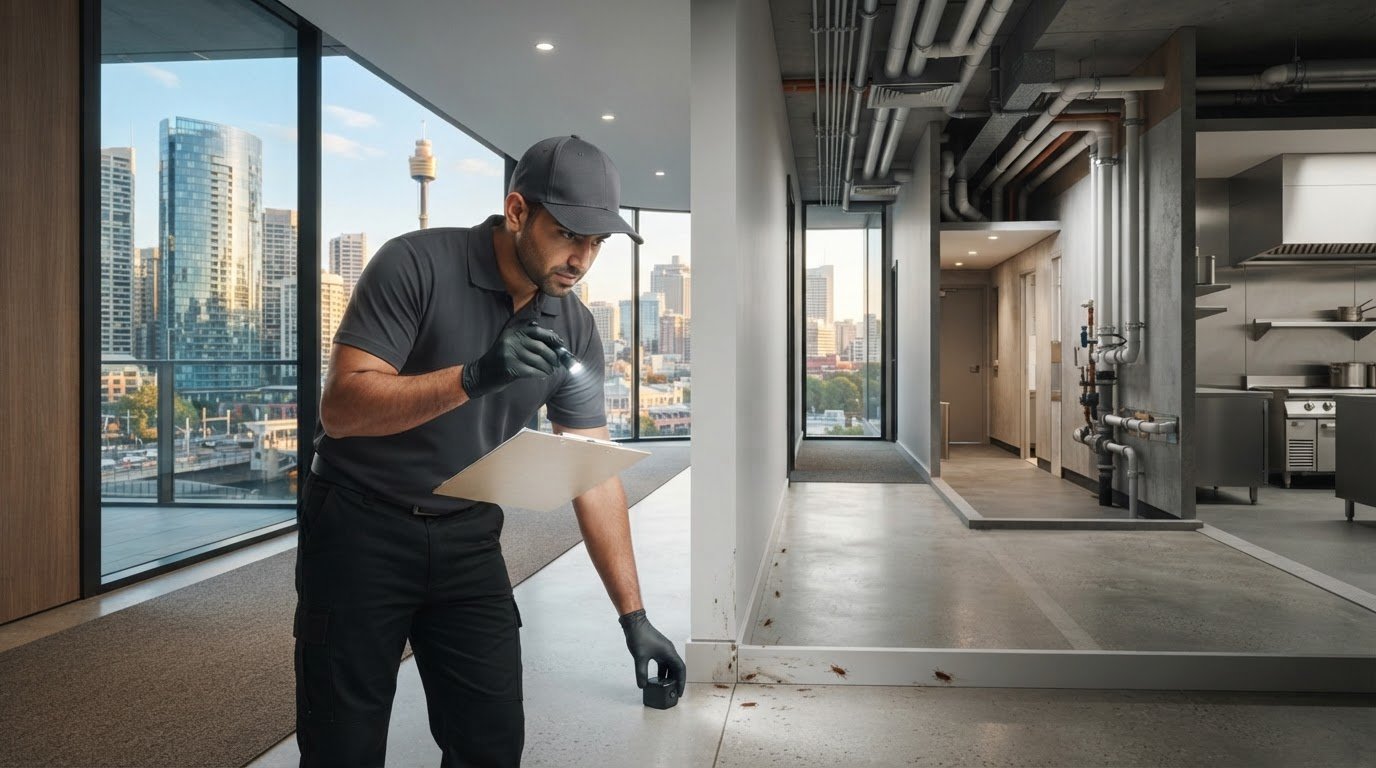
Sydney’s mild climate can support pest activity through much of the year, but the risk inside a property depends on its particular conditions. A home with pantry access and damp areas presents different clues from an apartment with shared walls, service penetrations or common spaces. A commercial kitchen, storeroom or waste area has its own activity patterns and access points.
Layout, food sources, moisture and entry gaps all shape where pests settle and how they move. That’s why a useful assessment considers the premises as well as the pest. A tailored approach helps distinguish a local sighting from activity connected to a wider harbourage or recurring access point.
How Professional Pest Control in Sydney Finds the Source of an Infestation
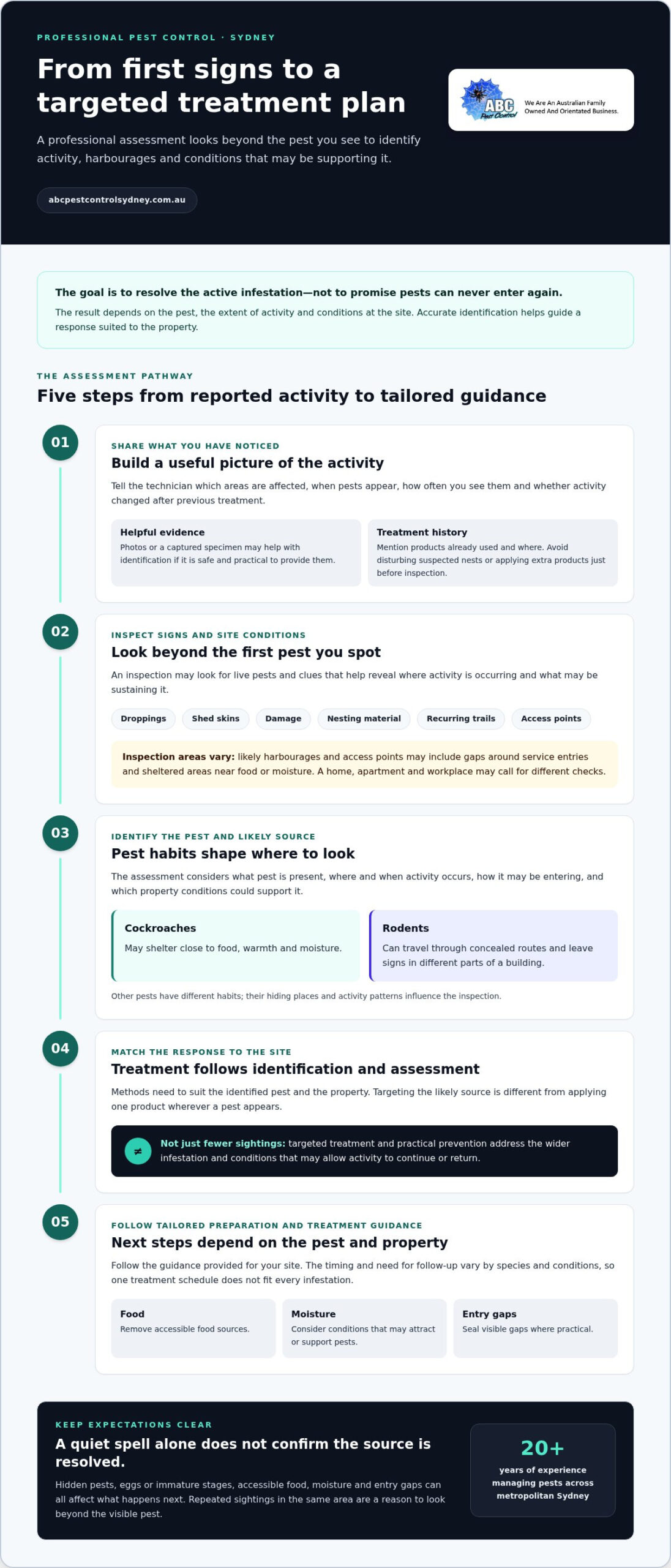
A useful assessment looks beyond the first pest you spot. The technician considers what pest is present, where and when activity occurs, how it may be entering, and which property conditions could be supporting it. In recurring cases, achieving full eradication usually requires professional intervention. Accurate identification helps focus the response instead of relying on a treatment that may not suit the pest or its location.
What a pest assessment can reveal
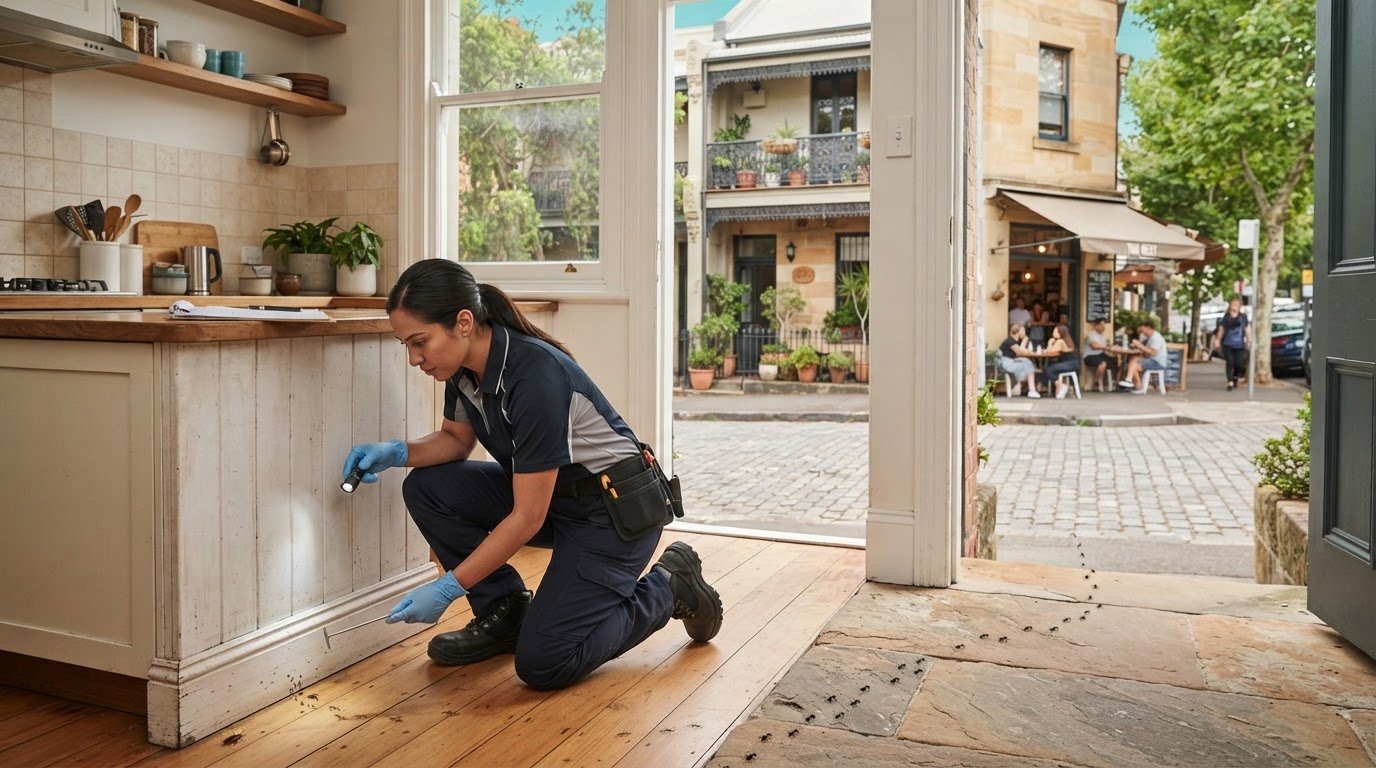
An inspection may look for live pests and clues such as droppings, shed skins, damage, nesting material or recurring trails. Likely harbourages and access points are considered too, from gaps around service entries to sheltered areas near food or moisture. Inspection areas vary with the pest and property layout, so an apartment, house and workplace won’t necessarily call for the same checks.
Help make the assessment more useful by sharing what you’ve noticed. Note the rooms or areas affected, times of activity, how often pests appear, and any changes after previous treatment. Photos or a captured specimen may help with identification if it’s safe and practical to provide them. A broader view of residential and commercial pest management is available in this Sydney pest control guide.
Why pest identification changes the treatment plan
Cockroaches may shelter close to food, warmth and moisture, while rodents can travel through concealed routes and leave signs in different parts of a building. Other pests have different habits. Their hiding places, movement and activity patterns influence where and how treatment is targeted. Advice on getting rid of cockroaches is most useful when the problem has been correctly identified as cockroach activity.
Treatment selection should follow pest identification and site assessment. Choosing an approach before establishing the pest and its likely harbourage can miss the source or leave conditions that support further activity. The Australian Environmental Pest Managers Association (AEPMA) provides information about professional pest management in Australia.
Residents can help by pointing out sightings and signs without disturbing suspected nests or applying additional products just before an inspection. Tell the technician what treatments you’ve already used and where. That history can help explain changes in pest activity and inform the next steps. If activity persists, a professional assessment can help narrow down the source and match the response to the site. ABC Pest Control Sydney brings more than 20 years of experience to residential and commercial pest management across metropolitan Sydney. For help with persistent activity, explore a Sydney pest assessment.
DIY Pest Control vs Professional Treatment: What Can Each Achieve?
Household prevention and professional treatment serve different purposes. You can reduce the conditions that attract pests and deal with a limited, clearly understood problem. A professional assessment is more practical when activity keeps returning, spreads across rooms or is difficult to identify. The right choice depends on the pest, the extent of activity and whether you can reach the source safely.
DIY measures can support control, but they may not reveal hidden harbourages or address activity beyond the area you can see. Professional pest management adds pest identification, a property-wide assessment where needed, targeted treatment and guidance on follow-up. For recurring or hard-to-identify activity, achieving full eradication usually requires professional intervention. That doesn’t mean every sighting signals a serious infestation; it means persistent signs deserve a closer look.
When household prevention measures can help
Practical changes can make a property less attractive to pests and support other control measures. Store food in sealed containers, clear crumbs and spills, empty rubbish regularly, and keep waste containers closed. Reduce standing moisture where practical, and check visible gaps around doors, windows and service entries. These steps can help limit food, water and access, but they won’t diagnose an infestation hidden out of sight.
Use any household pest-control product only as its label directs. Don’t mix products or apply them in ways the instructions don’t allow. If the pest is uncertain, activity is recurring, or you’re unsure how to use a product safely, pause and seek advice rather than applying more.
When professional intervention is the more practical next step
Look for a pattern, not just a single pest. Repeated sightings after you’ve addressed food and waste, signs in several areas, or activity in places you can’t inspect easily are good reasons to arrange a professional assessment. The same applies if you can’t confidently identify the pest. Correct identification helps shape a suitable plan, since cockroaches, rodents and other pests differ in where they shelter and how they move through a property.
A professional can assess the activity and site conditions, then tailor treatment and follow-up guidance to the situation. ABC Pest Control Sydney has more than 20 years of experience in residential and commercial pest management across metropolitan Sydney. If you’re dealing with signs of rats or mice, this Sydney rodent control guide can help you understand what to watch for and when a closer assessment may be useful.
Use prevention for prevention, and seek assessment when the source or extent isn’t clear. The two approaches can work together: everyday habits reduce attractants, while pest-specific professional planning addresses persistent activity that household measures alone may not resolve.
What to Expect During a Professional Pest Treatment in Sydney
A professional pest treatment should start with understanding the problem, not applying a one-size-fits-all solution. The visit typically moves from discussing pest activity to assessing the property, selecting a suitable treatment and explaining what happens next. The exact approach depends on the pest, where it’s active and the conditions at the site. For recurring activity, achieving full eradication usually requires professional intervention.
- Discuss what you’ve noticed. Share which pests you’ve seen, when they appear, the affected rooms and any signs such as droppings or damage. Mention earlier treatments and whether activity changed afterwards.
- Assess the site. The inspection focuses on relevant areas, possible harbourages and access points, along with property conditions that may support pest activity. The areas checked vary by pest and layout.
- Tailor the treatment. Once the pest and likely source are understood, the treatment can be matched to the situation rather than applied uniformly throughout the property.
- Review instructions and follow-up. The professional explains any preparation, safety and aftercare guidance relevant to the treatment, as well as whether further monitoring or follow-up is appropriate.
An assessment adds value by connecting the signs you’ve noticed with the pest’s behaviour and the property’s conditions. That helps direct treatment towards relevant areas and gives you clearer guidance on what to do before and after the visit. ABC Pest Control Sydney brings more than 20 years of pest-management experience to residential and commercial properties across metropolitan Sydney. If activity is continuing or returning, arrange a professional pest assessment.
How to prepare your property for treatment
Preparation is specific to the pest, treatment method and property, so don’t assume every visit requires the same steps. Before the appointment, make a short note of where and when you’ve seen pests, which rooms are affected and what treatments you’ve already tried. These details help provide a useful picture of the activity.
Follow the instructions given for your site. You may be asked to make particular areas accessible or take other steps, but requirements depend on the planned treatment. Ask for clarification if an instruction is unclear, and follow all site-specific safety directions from the treatment professional. Don’t move items or use additional pest-control products unless advised.
What happens after treatment
Visible activity may not stop immediately. The timing and signs you notice afterwards can depend on the pest and the treatment approach, so follow the aftercare guidance rather than judging the outcome from the first few hours alone. Keep track of new sightings, including their location and timing.
Report continuing activity according to the instructions provided. Follow-up needs depend on the infestation and service plan; not every pest or property requires the same schedule. Clear guidance helps you understand what changes to watch for and when further assessment may be useful.
Keep Pests from Returning: A Practical Sydney Prevention Plan
Prevention can make a property less inviting to pests, but it can’t guarantee they’ll never return. Food, waste, moisture and gaps can all contribute to activity, so small checks around the home or workplace are worthwhile. If pests keep reappearing despite these steps, look beyond housekeeping: achieving full eradication usually requires professional intervention.
Use this room-by-room checklist to spot conditions you can address. Focus on reducing attractants and noting changes, not trying to diagnose or treat a persistent infestation yourself.
Everyday habits that reduce pest attractants
- Kitchen and pantry: Store food in sealed containers, wipe up crumbs and spills promptly, and check cupboards for signs of activity. Keep rubbish closed and remove it regularly.
- Bathroom and laundry: Look for leaks, pooling water or persistent dampness. Address moisture issues where practical, and keep these areas ventilated as appropriate.
- Living areas and storage: Avoid leaving food scraps or pet food out for extended periods. Keep stored items orderly enough to notice pest signs or activity.
- Entry points: Check visible gaps around doors, windows and service openings. Note possible access points that may need attention, but don’t mistake a gap check for a complete inspection.
- Workplaces and shared areas: Keep waste areas orderly and pay attention to food storage and moisture near kitchens, staff spaces and storerooms.
These habits support pest control; they aren’t a substitute for identifying and treating an established infestation. Avoid applying extra products just because activity has returned. Follow the product label and any professional aftercare instructions relevant to your property.
When to arrange a professional follow-up
Keep a simple record if activity changes: note the pest or signs observed, the location, when it happened and whether sightings are becoming more frequent or spreading. This information can help distinguish an isolated sign from a recurring pattern. Contact a pest professional if activity persists after treatment, returns or appears in new areas. Don’t wait for a minor issue to become difficult to track.
The right next step depends on the pest, where it’s active and the treatment already carried out. A professional can assess those details and advise whether monitoring, further treatment or ongoing maintenance is appropriate. Regular maintenance can be useful for properties with recurring pest concerns, while follow-up needs vary from site to site.
ABC Pest Control Sydney brings more than 20 years of experience to residential and commercial pest management across metropolitan Sydney. Keep up with practical prevention, and act on returning signs early. For tailored help with pest activity at your property, arrange a service with ABC Pest Control Sydney.
Take the Next Step Towards a Pest-Free Property
Don’t wait for recurring pest activity to become part of your daily routine. Note what you’re seeing and where it’s happening, then use that information to guide the next step. If the problem persists, achieving full eradication usually requires professional intervention. A tailored assessment can help clarify what’s driving the activity and what response may suit your property.
ABC Pest Control Sydney provides residential and commercial pest management across metropolitan Sydney. General pest packages can address up to 15 common pests, with treatment tailored to the situation. Get support from an experienced team and a clear path forward.
Ready to address pest activity at your property? Arrange professional pest control in Sydney and take a confident step towards a more comfortable home or workplace.
Frequently Asked Questions
Can you completely eradicate a pest infestation?
Often, professional treatment can resolve an active infestation, but results depend on the pest, how far it has spread and whether conditions continue to support it. In recurring or complex cases, achieving full eradication usually requires professional intervention. Even after activity stops, new pests can enter later. Think of eradication as resolving the current infestation, while prevention and monitoring help reduce the risk of another one developing.
Why do pests come back after treatment?
Pests may return if some activity was missed, if the original access route remains open, or if new pests enter the property. In apartments and commercial buildings, activity may also be connected to nearby spaces or shared structures. For example, treating one room won’t prevent pests arriving with deliveries or through an unaddressed opening. Note where and when activity resumes, as that pattern can help clarify what’s happening.
How long does professional pest control take to work?
There’s no single timeframe, because the expected response depends on the pest and treatment used. Some methods may reduce visible activity quickly, while others take longer to affect pests that are hidden or emerge at different stages of their life cycle. Follow the professional’s aftercare guidance and note any changes rather than applying more products. If activity continues beyond the period explained for your treatment, report what you’re seeing.
Is professional pest treatment safe for pets and children?
Safety instructions depend on the treatment and the property, so follow the directions given by the pest professional for your specific visit. Tell them in advance about children, pets or other household considerations that may affect preparation. Keep people and animals away from treated areas for as long as instructed, and follow any product-label directions provided. Don’t rely on a general online re-entry time, as it may not apply to your treatment.
What should I do before a pest control treatment?
Before the visit, make a note of where you’ve seen pests, when they appear and any changes you’ve noticed. Mention previous treatments and the products used, if you know them. Make relevant areas accessible only as directed, and follow the preparation instructions for your particular treatment. Don’t apply extra products beforehand unless instructed, as this may affect the treatment plan or make it harder to understand current pest activity.
When should I call a professional pest controller?
Arrange an assessment if you repeatedly find signs you can’t identify, if activity continues after reasonable prevention steps, or if pests appear in several parts of the property. A professional can help distinguish between different pests whose signs may look similar and recommend an appropriate response. If the activity is in a shared building, record which areas are affected and raise the pattern with the relevant property manager as well.
Does one pest treatment permanently prevent pests from returning?
No single treatment can ensure pests will never return, because new activity can arise if pests find a way inside or suitable food, moisture or shelter. A treatment addresses the situation at the time of service; prevention and monitoring help manage future risk. Keep checking vulnerable areas after treatment, and note any fresh signs. If activity reappears or spreads, share those observations with a pest professional to guide the next step.