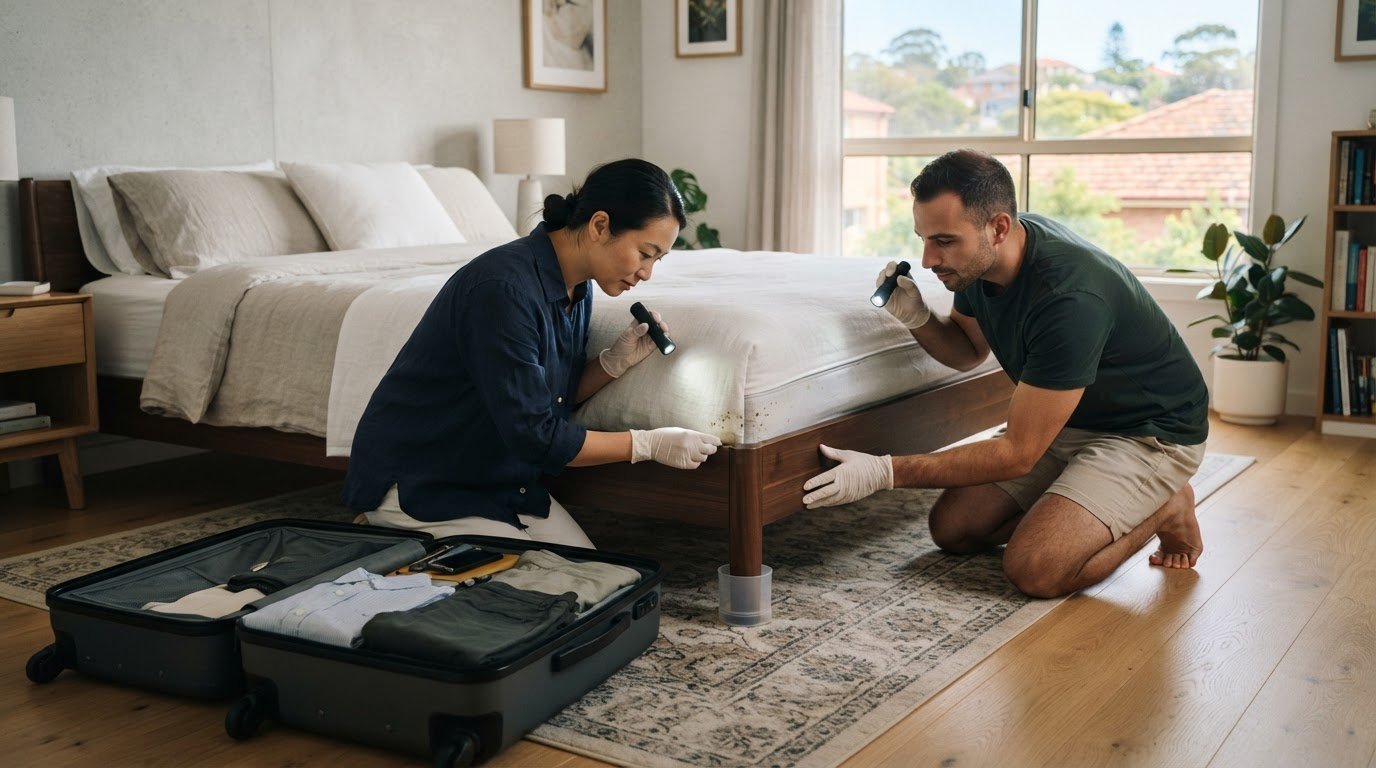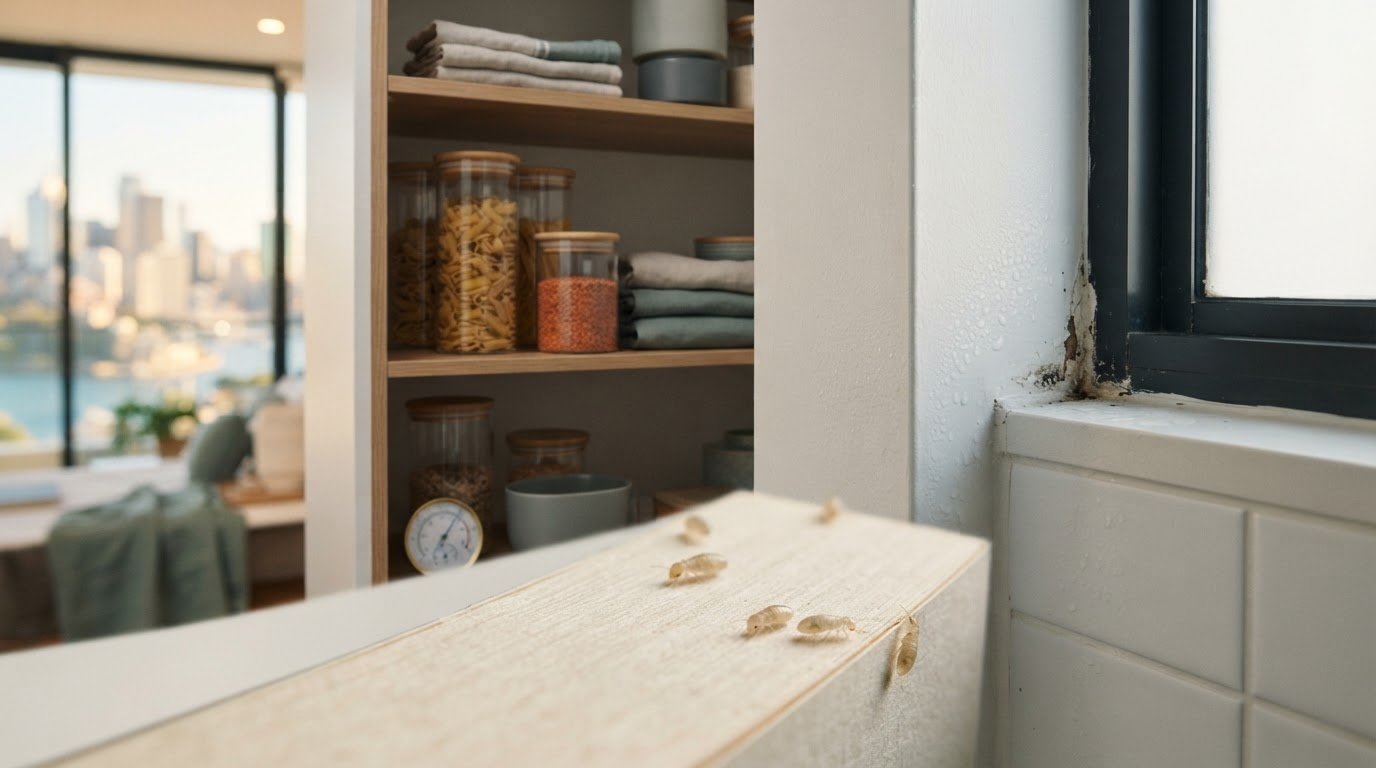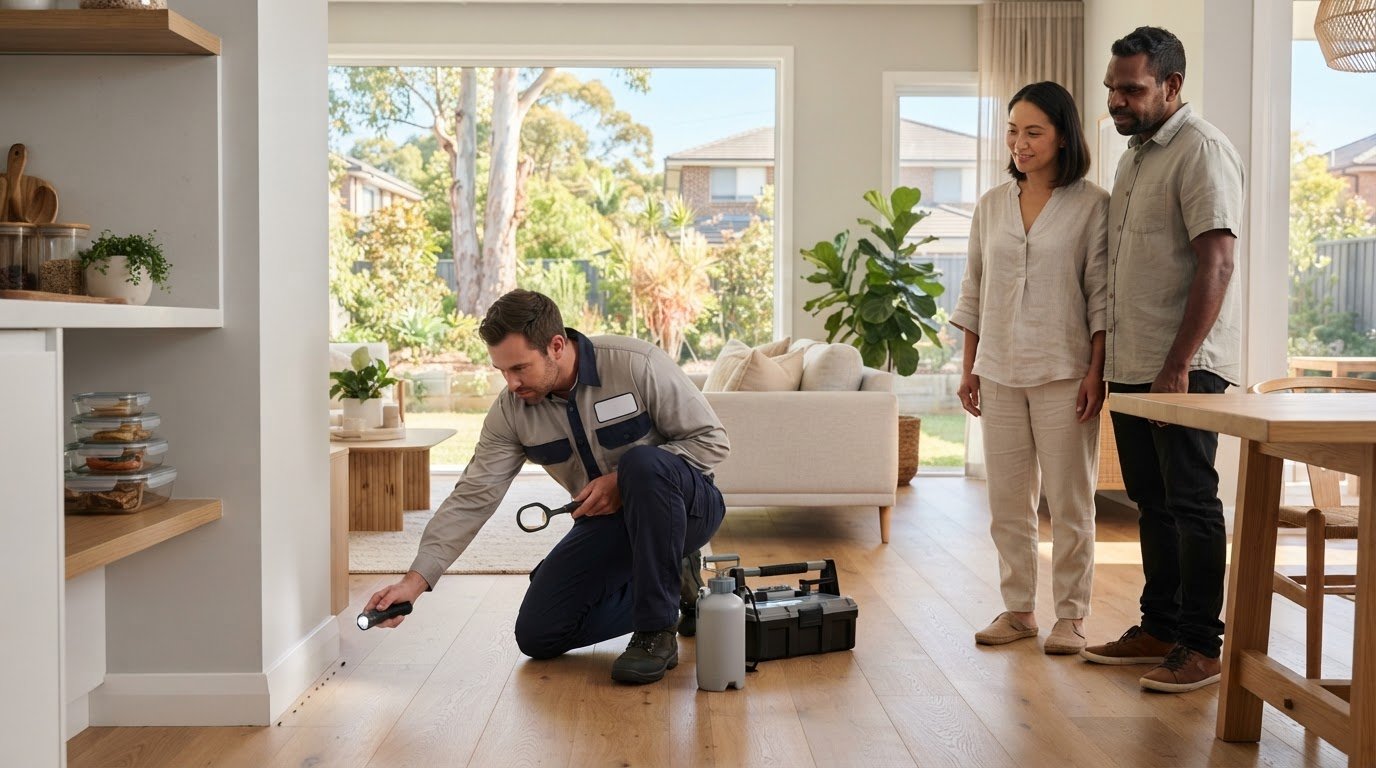


Last Tuesday, a tenant in Parramatta discovered a trail of German cockroaches in their kitchen just three weeks after moving in. Like many of the 33% of Sydney residents who rent, they felt immediate anxiety about being blamed for the mess or facing a rent hike if they complained. You likely feel the same way. Living with pests is unsanitary and stressful, especially when you’re worried that speaking up might put your rental bond at risk. It’s frustrating to feel like a guest in your own home while pests take over.
You deserve a safe, pest-free home, and you don’t have to pay for it out of your own pocket. This guide shows you exactly how to convince landlord to get pest control by using professional communication and your legal rights under the NSW Residential Tenancies Act 2010. You’ll learn the strategic steps to secure a professional exterminator funded by your landlord. We’ll also walk you through the NCAT process so you can handle any disputes with confidence and expert authority. Let’s get your home back to normal fast.
Key Takeaways
- Understand your legal rights under NSW tenancy laws to determine if your landlord is responsible for maintaining a “habitable” and pest-free home.
- Learn how to document evidence and build a professional case that makes it impossible for a landlord to ignore your request for action.
- Master the “Asset Protection” strategy on how to convince landlord to get pest control by framing the treatment as a vital investment in their property.
- Access a proven communication script and learn why keeping all correspondence in writing is critical for a fast, professional resolution.
- Find out how a professional inspection report from ABC Pest Control can act as an unbiased mediator to resolve disputes and protect your home.
Understanding Responsibility: Is the Landlord or Tenant Liable in NSW?
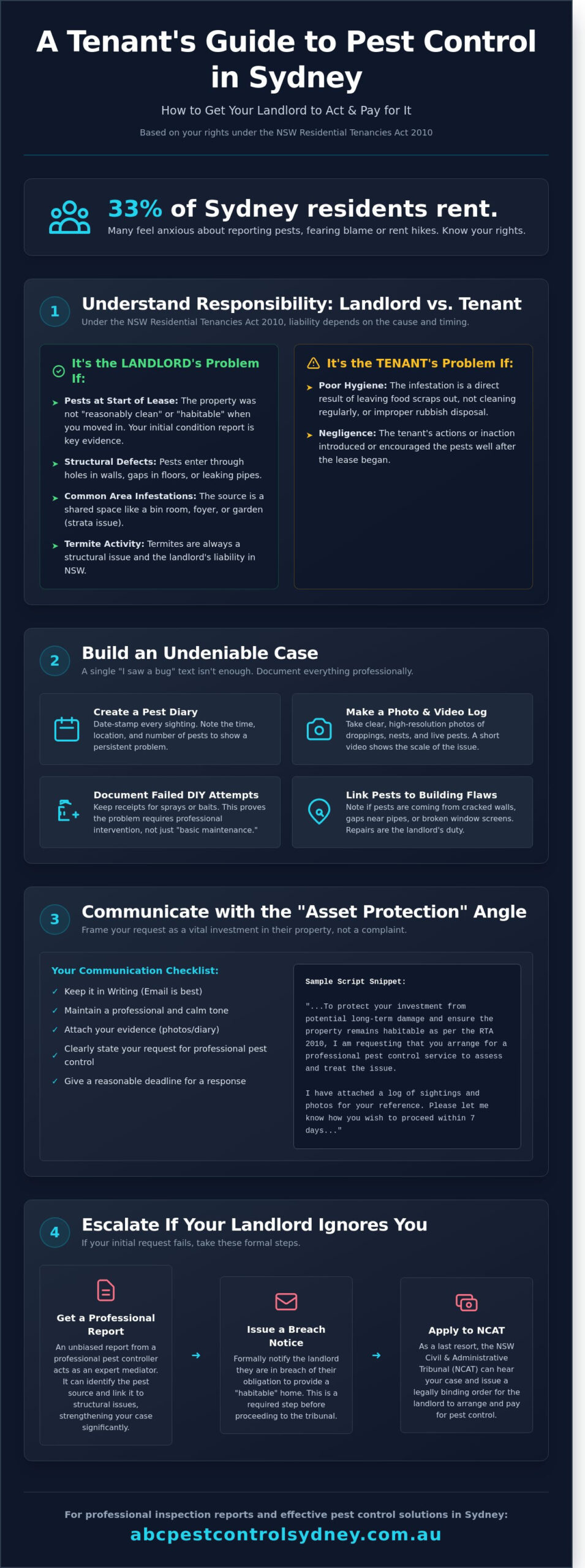
Dealing with a pest infestation in a Sydney rental property is stressful. You need to know where you stand legally before taking action. Under the Residential Tenancies Act 2010, landlords are legally required to provide a property that is “reasonably clean” and “habitable” at the start of any new lease. If rats, spiders, or ants are present when you first pick up the keys, the responsibility to fix the issue sits firmly with the property owner. Understanding Landlord-tenant law is vital because it establishes the baseline for your living conditions and safety expectations.
The lines can blur once you’ve lived in the property for several months. If an infestation occurs later, the cause becomes the deciding factor. Tenants may be held liable if the pest problem is a direct result of poor hygiene, such as leaving food scraps out or allowing rubbish to accumulate. If you’re wondering how to convince landlord to get pest control, you must first ensure your own cleaning habits aren’t the root cause. At ABC Pest Control, we’ve seen how quickly a small issue turns into a crisis. Our 20 years of experience in Sydney helps us identify the source of any outbreak accurately so you’re in expert hands.
NSW Fair Trading Guidelines for 2026
Current standards from NSW Fair Trading emphasize that a “habitable” property must be free from pests that pose health risks. This includes stubborn German cockroaches, which are notorious for spreading bacteria in kitchens. Fair Trading views these as a major breach of habitability if they were present at the start of the lease. Your initial condition report is your strongest piece of evidence. If you noted “cockroach droppings in cupboards” on day one, the landlord is obligated to act. Don’t wait until the problem grows; professional intervention is the only way to ensure your safety is the priority.
When Pests are Definitely the Landlord’s Problem
There are specific scenarios where the landlord is always responsible for treatment. These include:
- Structural Defects: If pests enter through holes in walls, gaps in floorboards, or because of leaking pipes, the landlord must pay for both the repair and the professional pest treatment.
- Common Areas: In apartment blocks, infestations originating in bin rooms, foyers, or shared gardens are the responsibility of the landlord or the strata manager.
- Termite Activity: Termites are always a structural and landlord issue in NSW. Since termites damage the fabric of the building, they remain a property owner’s liability.
Learning how to convince landlord to get pest control starts with pointing out these structural failures. Our highly trained technicians can provide detailed reports that link pest activity to building maintenance issues, giving you the leverage you need to get results. Need help fast? We can inspect your property and provide an authoritative assessment of the situation.
Gathering Evidence: How to Build a Case Your Landlord Can’t Ignore
A quick phone call or a text message saying “I saw a cockroach” rarely gets results. Most landlords view isolated sightings as a minor nuisance or a lifestyle issue rather than a professional emergency. To learn how to convince landlord to get pest control, you must present a documented case that proves the infestation is persistent and structural. You aren’t just complaining; you’re protecting their investment from long-term damage and potential health code violations.
Creating a Pest Diary and Photo Log
Start a digital folder the moment you spot a problem. Take clear, high-resolution photos of droppings, egg casings, and any live pests. If you see a trail of ants or a scurrying rodent, take a 10-second video to show their movement and volume. Date-stamp every entry to establish a clear timeline of the invasion. Note external triggers; for instance, Sydney recorded over 150mm of rainfall in some suburbs during recent months, which naturally drives pests indoors. If you’ve already spent $65 on supermarket sprays or baits with no success, record those failed DIY attempts. This proves to the landlord that the problem has moved beyond “basic maintenance” and requires a professional, non-toxic intervention to get results.
Linking Pests to Maintenance Issues
Landlords are legally responsible for keeping a property in a reasonable state of repair. The Tenants’ Union of NSW clarifies that this includes ensuring the premises are fit for habitation and free from health hazards. You’ll find it much easier to learn how to convince landlord to get pest control if you can prove the pests are entering through structural defects rather than poor housekeeping. Check for these common issues during your walk-through:
- Dampness: Leaky pipes or poor ventilation under Sydney kitchen sinks create the perfect breeding ground for stubborn German cockroaches.
- Gaps and Seals: Inspect door sweeps and window screens. A gap larger than 1.5cm is an open invitation for rats, making rodent control a structural necessity rather than a hygiene one.
- Cracks in Masonry: External cracks in the brickwork allow spiders and ants to bypass your cleaning efforts and nest inside the wall cavities.
If the landlord remains hesitant, consider booking a professional pre-inspection. Having a specialist identify that a colony is nesting inside the building’s infrastructure, rather than on your kitchen bench, provides the expert evidence needed to trigger immediate action. Don’t wait for the infestation to spread through the entire building; get a professional assessment to back your claims today.
The Asset Protection Angle: Why It’s in the Landlord’s Interest to Act
Landlords often view maintenance requests as a drain on their cash flow. To get results, you must shift the narrative from a “tenant problem” to an “asset protection” strategy. You aren’t just asking for a favor; you’re helping them protect a multi-million dollar Sydney investment. When you discuss how to convince landlord to get pest control, frame the conversation around risk mitigation and long-term financial health.
Ignoring a few cockroaches or a scratching sound in the walls leads to catastrophic depreciation. Professional pest control Sydney services ensure the building remains structurally sound and legally compliant. A proactive approach increases tenant retention, saving the landlord thousands in vacancy periods and letting fees. High turnover is a landlord’s biggest silent expense, and a pest-infested home is the fastest way to lose a reliable tenant.
Pests That Cause Structural Damage
Pests don’t just affect your comfort; they actively consume the property. Highlighting these specific risks can create the urgency needed for action:
- Rodents: Rats and mice have teeth that never stop growing. They chew through electrical wiring and insulation to keep them down. This creates a massive fire risk. Some industry data suggests that up to 20 percent of house fires with “unknown” causes are actually triggered by rodent damage.
- Termites: These are the most dangerous threat to Sydney homes. CSIRO reports suggest 1 in 3 Australian properties will face termite activity. They can devalue a home by tens of thousands of dollars in just a few months by eating the internal timber frame.
- Possums: While they are protected species, their presence in ceiling cavities causes extensive damage to roofing structures and creates health hazards through waste buildup.
The Cost of Delay vs. Professional Prevention
Compare the small fee of a one-off treatment to the massive cost of major structural repairs. A professional technician identifies entry points and stops infestations before they require expensive renovations. Using non-toxic, eco-friendly treatments ensures the property remains safe for future occupants while preserving the building’s integrity. This is a vital point in how to convince landlord to get pest control because it shows you care about the home’s longevity.
Landlords should also consider the legal landscape. Under the NSW Residential Tenancies Act, failing to provide a habitable environment can lead to “Retaliatory Eviction” claims if a landlord tries to end a lease instead of fixing a known pest issue. Acting now avoids the NSW Civil and Administrative Tribunal (NCAT) and keeps the property’s market value high for years to come.
How to Ask Your Landlord for Pest Control (With Sample Script)
Approaching your property manager requires a “Professional Tenant” mindset. This means you stay calm, stick to the facts, and remain firm about your right to a safe home. If you’re figuring out how to convince landlord to get pest control, the most effective strategy is to remove the emotion from the conversation. Landlords view their property as an investment. Show them that an active infestation, like stubborn German cockroaches or wood-destroying termites, threatens that investment. You aren’t complaining; you’re helping them protect their asset.
Always keep your communication in writing. Use your official rental portal or email rather than a phone call. This creates a time-stamped paper trail that’s vital if the situation escalates. When you send your request, set a clear timeframe for a response. For urgent health hazards like bed bugs or wasps, ask for a reply within 24 hours. For general maintenance like ants or spiders, a 7-day window is reasonable.
If the landlord claims the pests are your fault, don’t get defensive. Instead, provide evidence of your cleanliness or mention that the pests were present shortly after you moved in. Point out structural issues like gaps under doors or leaky pipes that invite pests. This shifts the focus back to property maintenance, which is the landlord’s responsibility.
Email Template for Requesting Pest Treatment
Your subject line should be direct to ensure it’s opened immediately. Use something like: URGENT: Pest Issue at [Your Address] – Maintenance Request. This signals that the matter is serious and requires a professional solution. Use the “Sandwich Method” to keep the tone balanced: start with a positive comment about the property, state the pest problem clearly, and end with a proactive solution.
Copy and adapt this script for your needs:
“Hi [Landlord/Property Manager Name],
I’m really enjoying living at [Address] and appreciate how well the garden has been maintained. However, I’ve recently discovered an increasing number of [Pest Type] in the kitchen and bathroom. I’ve taken steps to keep the area clean, but the issue seems to be coming from [mention a crack or structural point].
Under the Residential Tenancies Act 2010, landlords must provide and maintain the premises in a reasonable state of repair, which includes ensuring the property is fit for habitation and free from pests.
I’d like to arrange for a professional treatment as soon as possible to prevent this from spreading. Please let me know by [Date/Time] when a technician can attend.”
Negotiating the Costs and Outcomes
Learning how to convince landlord to get pest control often requires showing them you’re willing to cooperate for a fast result. Offer to be home to meet the technician so the property manager doesn’t have to travel to the site. This saves them time and call-out hassles, making them more likely to approve the request quickly.
- The 50/50 Split: If the infestation is in a “grey area” where the cause is unclear, propose sharing the cost. It’s better to pay half for an expert treatment now than to live with pests for months.
- Expert Evidence: Mention that you’ve contacted ABC Pest Control, a team with over 20 years of experience, to get a quote. Professional backing makes your request harder to ignore.
- The Last Resort: If the landlord refuses to act on a serious infestation, mention that your next step will be to seek advice from the NSW Civil and Administrative Tribunal (NCAT). Usually, the mention of a formal tribunal is enough to prompt immediate action.
Don’t let a pest problem get out of hand while you wait for an answer. Our highly trained team provides safe, non-toxic solutions that get results fast. Book your professional inspection today and show your landlord you’re serious about your safety.
Professional Reports: Using ABC Pest Control to Resolve the Dispute
Tenant-landlord disputes often stall because neither side wants to accept liability. You need an objective voice to break the deadlock. A professional inspection report serves as an unbiased third-party mediator. It removes the emotion from the situation and focuses on the facts of the infestation. Sydney landlords trust ABC Pest Control because we bring over 20 years of local experience to every property. Our technicians are highly trained and follow all Australian Pest Standards, providing a level of authority that property managers respect.
One of the most effective tools in your arsenal is our “Deluxe Package.” This is our most popular, comprehensive solution. It’s designed to be landlord-friendly because it addresses multiple pest issues at once, offering long-term value rather than a quick fix. When you present a solution that is both eco-friendly and professional, you show the owner you’re serious about property maintenance. This is often the most successful strategy for how to convince landlord to get pest control without a legal battle.
Our reports settle the liability debate by determining the exact source of the problem. If the pests are entering through structural gaps or damp subfloors, the responsibility clearly falls on the landlord. If the issue is environmental, we provide the clarity needed to fix it. We don’t guess; we provide evidence-based results that protect your safety and your rights as a tenant.
What an ABC Pest Control Report Includes
Our reports are detailed documents that leave no room for ambiguity. Every report we generate includes:
- Pest Identification: We identify the specific species and estimate the size of the colony to determine the severity.
- Source Analysis: Our experts provide a professional opinion on whether the cause is structural, such as building defects, or environmental.
- Actionable Treatment Plan: We outline a clear treatment strategy along with preventative measures to stop future outbreaks.
Next Steps for Sydney Tenants
Don’t let a pest problem escalate into property damage. If you suspect structural timber pests, you should book a termite inspection Sydney immediately. These pests cause significant damage every year, and early detection is vital for the safety of the building.
Once you have our professional quote, email it directly to your property manager. Emphasize our 20 years of experience and our non-toxic treatment options. Most landlords approve our quotes quickly because they know we get results. Ready to take action? Get a professional pest report to show your landlord today! and reclaim your home from unwanted guests.
Take Control of Your Living Space Today
You deserve to feel safe and comfortable in your home. By understanding your rights under NSW tenancy laws and documenting the infestation clearly, you’ve already taken the first steps toward a pest-free property. Remember that framing the issue as asset protection helps your landlord see that acting now prevents structural damage later. Learning how to convince landlord to get pest control is much easier when you back your request with an expert opinion that can’t be ignored.
ABC Pest Control brings over 20 years of experience in the Sydney rental market to your side. Our specialists have been featured in Yahoo News and the Daily Mail for our reliable industry knowledge and effective results. We provide professional reports that strictly follow Australian Pest Standards and use safe, non-toxic treatments to protect your family and pets. Don’t let a small problem turn into a major infestation while you wait for a response. You’ve got the tools and the facts to make a change. Take action now and reclaim your peace of mind.
Get a Professional Pest Report to Convince Your Landlord
Frequently Asked Questions
Is the landlord responsible for cockroaches in NSW?
Yes, the landlord is responsible for cockroach infestations if the pests were present when you moved in or if they enter through structural defects. Under the NSW Residential Tenancies Act 2010, owners must provide a property in a reasonable state of cleanliness. If you’re dealing with stubborn German cockroaches, call our experts immediately. We use eco-friendly treatments that are safe for your family while effectively eliminating the colony.
Can a landlord evict me for complaining about pests in Sydney?
No, a landlord cannot legally evict you for asserting your right to a pest-free home. This is known as a retaliatory eviction and is prohibited under Section 115 of the NSW Residential Tenancies Act. If you receive a termination notice after requesting help, you have 14 days to apply to the NSW Civil and Administrative Tribunal (NCAT). Don’t let fear stop you from getting the professional pest control Sydney residents deserve.
How long does a landlord have to fix a pest problem in NSW?
Landlords must address pest issues within a reasonable timeframe, which the NSW Civil and Administrative Tribunal (NCAT) typically views as 14 days for non-urgent repairs. If the infestation is severe, such as rats chewing wires, it’s classified as an urgent repair requiring action within 24 to 48 hours. Knowing how to convince landlord to get pest control involves citing these timelines in your written requests to ensure a fast response.
What if my lease says I am responsible for all pest control?
Your statutory rights under NSW law generally override inconsistent terms in a lease agreement. Even if a contract claims you’re responsible, the landlord remains liable for pests caused by poor maintenance or pre-existing conditions. NSW Fair Trading states that landlords cannot “contract out” of their legal obligations to keep the premises habitable. Our specialist team can provide a professional report to prove the source of the infestation.
Can I pay for pest control and deduct it from my rent in NSW?
You should never unilaterally withhold rent or deduct costs without a written agreement or an order from NCAT. Doing so puts you at risk of rent arrears and potential eviction under Section 33 of the Act. Instead, follow the legal process by issuing a formal notice of breach. If you need help fast, our Deluxe Package offers a comprehensive solution that many landlords approve once they see our 20 years of expertise.
Are spiders considered a landlord’s responsibility?
Landlords are responsible for spider treatments if the infestation poses a safety risk or existed before the tenancy began. While a single common house spider is usually a tenant’s cleaning task, a swarm of redbacks or funnel-webs is a professional matter. We treat these tough pests using non-toxic methods that meet Australian Pest Standards. Don’t wait until pests cause damage or injury before demanding action from your property manager.
What should I do if the property manager ignores my emails about rats?
You must issue a formal Notice of Breach of Agreement if your property manager ignores your emails for more than 3 business days. This document gives them a fixed period, usually 14 days, to rectify the situation. Rats are a health hazard and often require urgent intervention. Our highly trained technicians can be on-site quickly, and you can book in under 60 seconds to get an expert assessment for your breach notice.
Does “End of Lease” pest control cover me during the tenancy?
No, end of lease pest control is a specific requirement for tenants with pets and does not cover active infestations during the tenancy. This service is performed after you move out to ensure the property is clear for the next occupant. If you have an active problem now, you need a standard treatment. Our professional team effectively manages and eliminates pests today, ensuring you don’t lose your bond later due to preventable damage.