
Imagine walking into your Sydney home after a long day, only to be hit by a thick, sickly-sweet stench that makes you want to turn around and leave. For one family in Surry Hills last month, this foul odour was the result of three dead rats decomposing in an inaccessible ceiling void. You need to know how to get rid of rat smell fast before the scent permeates your furniture and carpets permanently. You already know that a smell this intense isn’t something you can mask with a simple scented candle. It’s stressful to feel like your home is unsanitary, especially when you worry about the bacteria and diseases these pests carry.
We’re here to help you regain control of your living space immediately. This guide provides the fastest ways to locate, neutralise, and eliminate foul rodent odours while ensuring your family stays safe from health risks. With over 20 years of experience in the Sydney area, our team has refined the process of sanitising homes after an infestation. We will walk you through identifying the source of the stench, using professional-grade neutralisers, and sealing your property to ensure it remains rodent-free for the long term.
Key Takeaways
- Identify the difference between a musty living infestation and a rotting carcass that can linger for up to 8 weeks in the Sydney heat.
- Learn the “Sniff Test” methodology and visual tracking techniques to accurately locate the odour source behind walls or under floorboards.
- Discover how to get rid of rat smell effectively using enzymatic cleaners that neutralise bacteria instead of just masking the scent with household sprays.
- Ensure your family’s safety by following the “No-Vacuum” rule and using P2/N95 masks to avoid aerosolising dangerous pathogens during decontamination.
- Prevent future infestations by identifying hidden entry points and sealing gaps as small as 2cm to keep your home rodent-free for good.
Identifying the Stench: Is it a Living Infestation or a Dead Rodent?
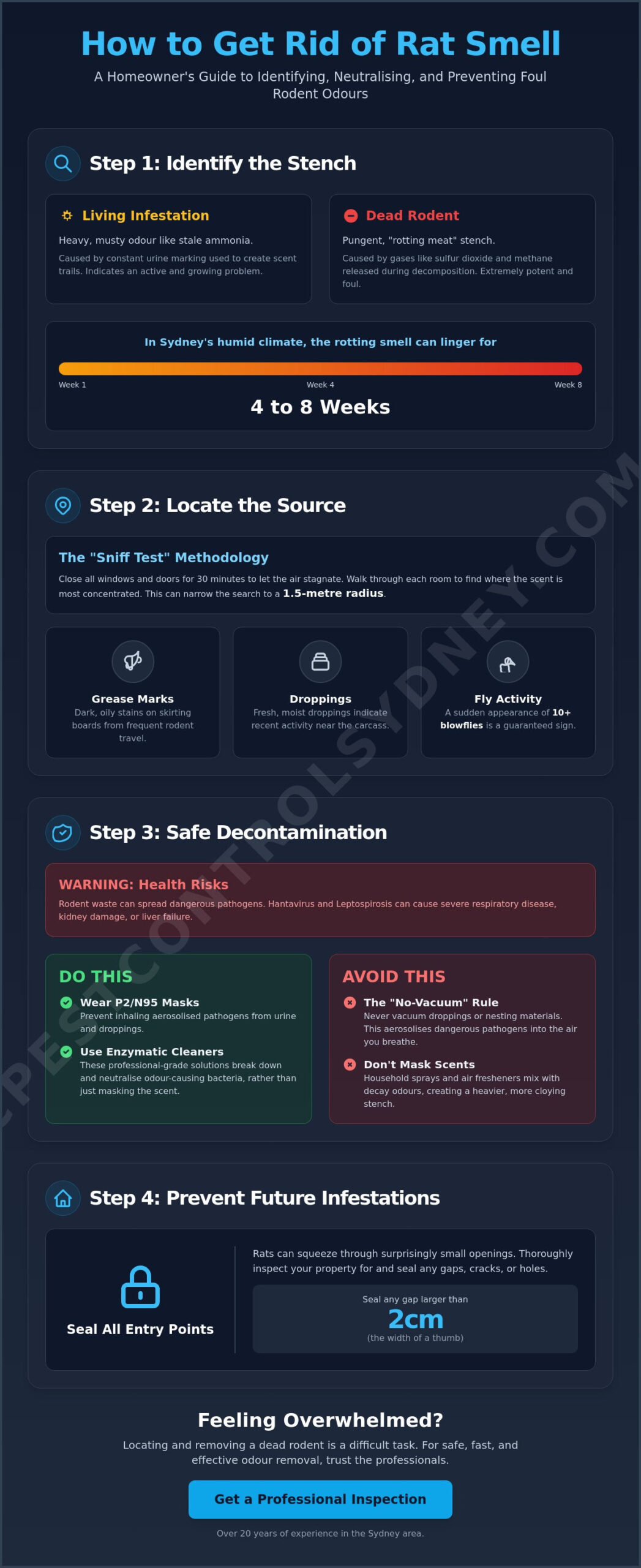
Walking into a room and hitting a wall of foul air is a homeowner’s nightmare. To figure out how to get rid of rat smell, you must first identify the source. Living rats produce a heavy, musty odour that smells like stale ammonia. In contrast, a dead rodent emits a pungent, “rotting meat” stench that is impossible to ignore. In Sydney’s humid climate, a single carcass can pollute your air for 4 to 8 weeks if left untreated. Don’t wait for the smell to fade on its own. Your safety is our priority, and acting fast prevents the spread of dangerous pathogens found in rodent waste.
- Hantavirus: A severe respiratory disease spread through contact with infected rodent urine, droppings, or saliva.
- Leptospirosis: A bacterial infection that can lead to kidney damage or liver failure if not treated promptly.
Many people try to hide the problem with store-bought air fresheners. This often backfires. Masking scents mix with the decay to create a cloying, heavy atmosphere that is even harder to breathe. You need professional intervention to eliminate the source rather than covering it up. ABC Pest Control uses expert methods to neutralise these smells safely. We’ve seen how DIY attempts lead to more distress, so we recommend professional removal to ensure your home remains eco-friendly and fresh.
The Living Rodent Odour: Urine and Pheromones
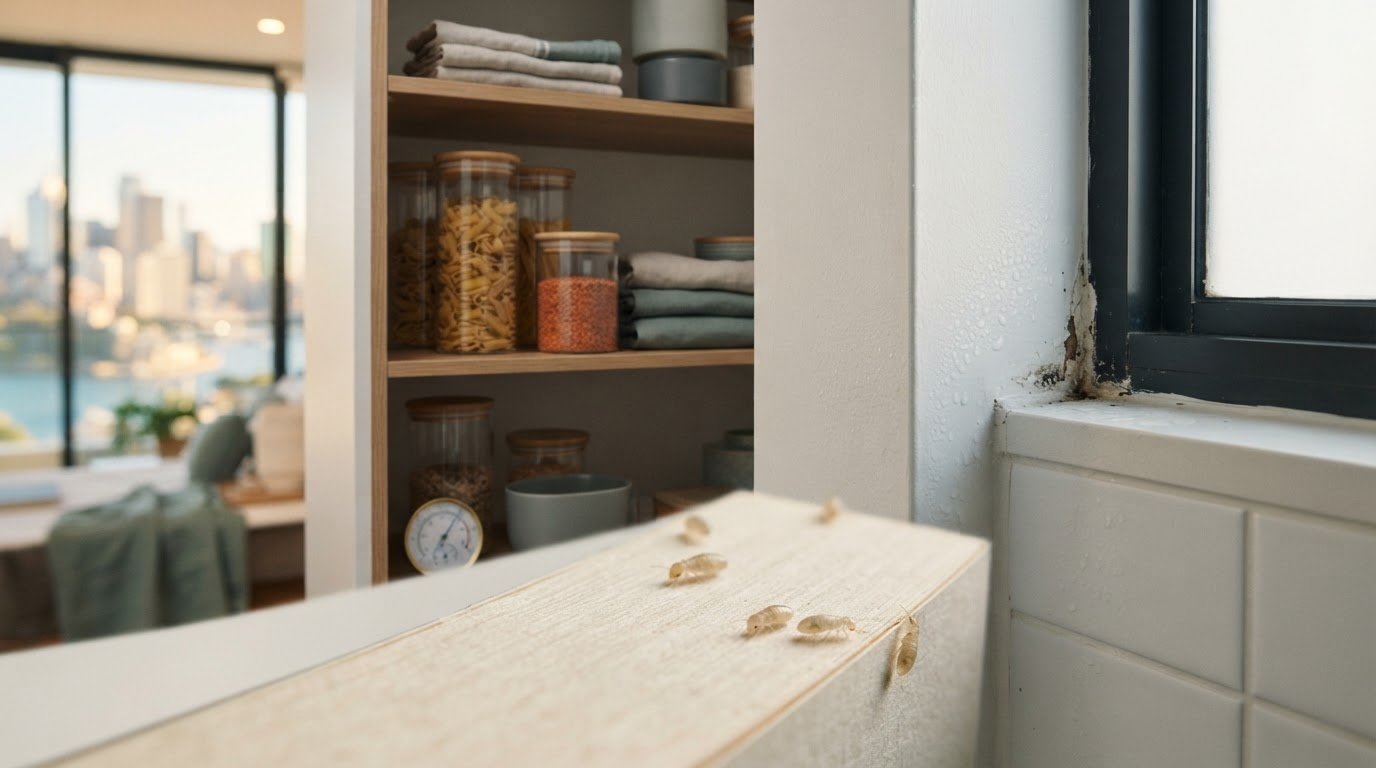
Rats are constant communicators. They use “urine marking” to create scent trails for other colony members. This helps them navigate your wall voids and ceiling spaces in the dark. A sharp, pungent smell indicates an active infestation. If the scent is faint and dusty, it may be an old, abandoned nest. These smells are usually strongest near kitchen appliances and pantry areas where food is stored. Our highly trained technicians often find the highest concentration of pheromones behind fridges or under dishwashers. If you notice these signs, you can book an inspection in under 60 seconds to stop the infestation before it grows.
The Dead Rat Smell: The Science of Decomposition
When a rodent dies, the process of decomposition begins almost immediately. This biological breakdown releases foul-smelling gases like sulfur dioxide and methane. Sydney’s high humidity levels accelerate this decay, making the odour significantly more intense during the summer months. Dead rat smell is a combination of rotting protein and gases that permeate porous materials. If you smell this, call us now. We have over 20 years of experience handling tough pests and their lingering odours. Our team ensures your home returns to a safe, non-toxic environment quickly by using industry-leading Australian Pest Standards.
How to Locate the Odour Source in Your Sydney Home
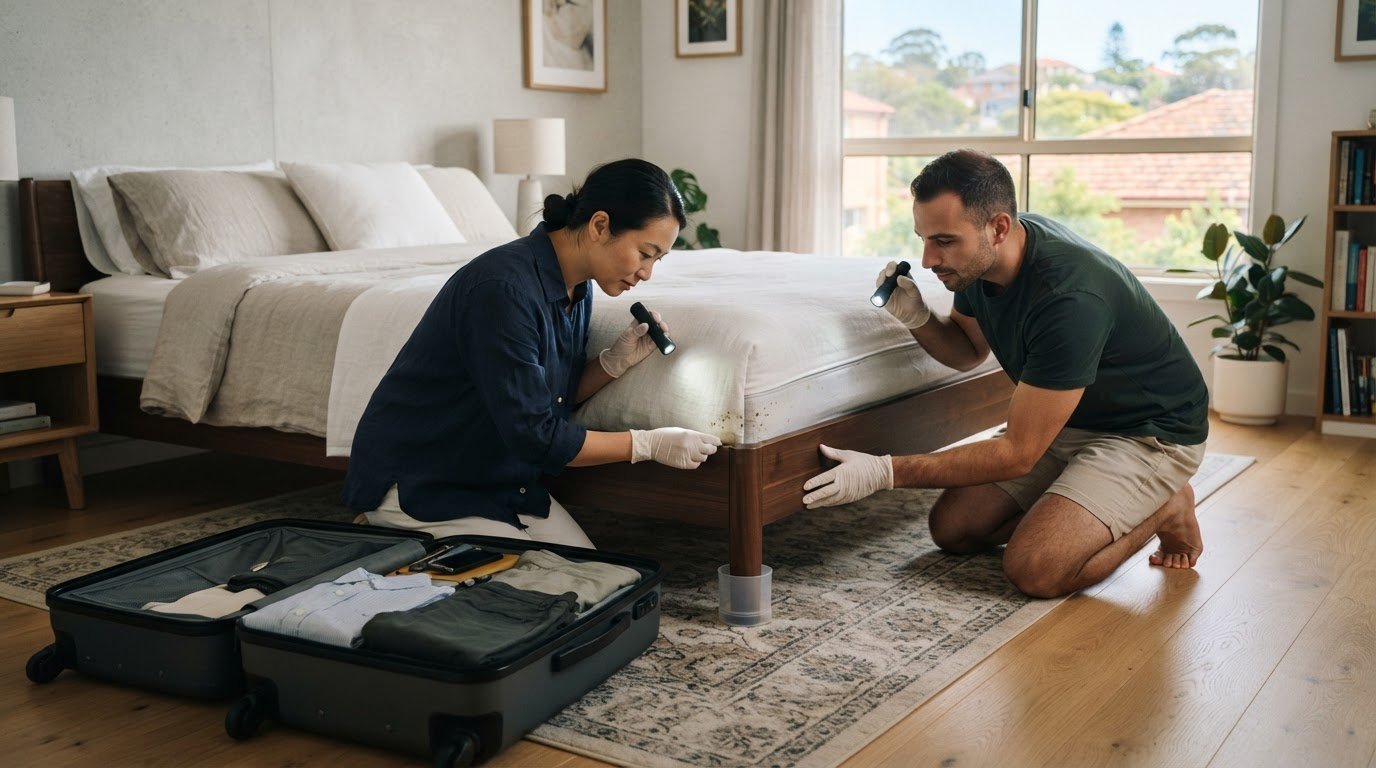
Finding the exact location of a carcass is the most difficult step in learning how to get rid of rat smell. You must act quickly. A single dead rat can emit a foul stench for up to 21 days as it decomposes. Start with a “Sniff Test” to triangulate the source. Close all windows and doors for 30 minutes to allow the air to stagnate. Walk through each room and identify where the scent is most concentrated. Once you find the strongest point, you have likely narrowed the search to a 1.5-metre radius.
Visual clues often point the way when your nose cannot. Look for these signs:
- Grease Marks: Also known as rub marks, these are dark, oily stains left on skirting boards where rats frequently travel.
- Droppings: Fresh, moist droppings indicate recent activity near the death site.
- Fly Activity: A sudden appearance of 10 or more large blowflies in a specific room is a guaranteed sign of a nearby carcass.
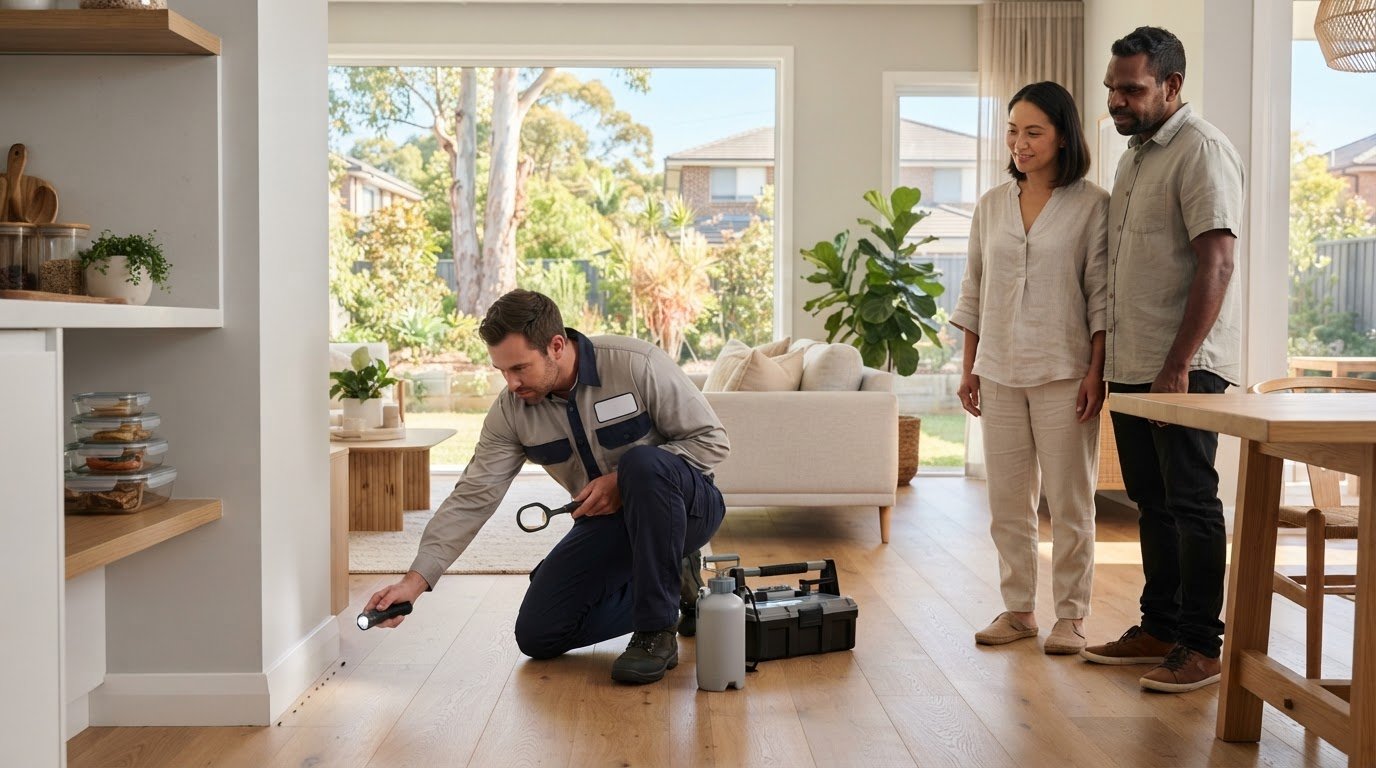
In Sydney, rats prefer specific hiding spots. Check your roof voids first, as modern insulation provides a perfect nesting ground. In older Sydney terrace houses, subfloors and the gaps behind kitchen kickboards are common culprits. If the smell is trapped behind a wall, don’t start smashing plaster. Professionals use borescope cameras. We drill a tiny 10mm hole and insert a flexible camera to inspect the cavity, which prevents thousands of dollars in unnecessary repair costs. If the task feels overwhelming, our Sydney pest specialists can locate and remove the source for you today.
Locating Rodents in Wall Cavities and Ceilings
Rats love the thick insulation found in Sydney ceilings. They often crawl deep into corners to die. Look for “hot spots” on your walls or ceiling. These are areas where the plaster might feel slightly damp or look discoloured. In multi-storey terrace houses, rodents use the vertical cavities between wall studs as highways. If a rat dies mid-climb, the smell will settle at the base of the wall or between floor joists.
Using Secondary Indicators to Find the Source
Your pets are your best allies in this search. If your dog or cat repeatedly sniffs, paws, or whines at a specific section of the floor, the carcass is likely directly beneath them. You must also monitor for ceiling stains. As a rodent decomposes, bodily fluids can seep into the gyprock, creating a brownish circle. Addressing this quickly is essential because of the health risks of rodent infestations, which include exposure to various pathogens and parasites left behind in the nest. Don’t ignore the how to get rid of rat smell process, as the odour is often the first warning of a larger hygiene issue in your home.
Effective Odour Neutralisation: DIY Remedies vs. Professional Treatments
Most Sydney homeowners reach for bleach or standard disinfectants the moment they detect a foul scent. This is usually a mistake. Standard household cleaners aren’t designed to break down the complex proteins and lipids found in rodent waste. You’re simply layering a chemical scent over a biological hazard. To effectively manage the problem, you must understand that the smell is caused by uric acid crystals and decaying organic matter that requires a chemical breakdown.
Learning how to get rid of rat smell effectively involves moving beyond surface cleaning. If the scent has permeated your floorboards or wall cavities, simple scrubbing won’t help. You need a strategy that neutralises the odour at a molecular level. Our team has seen thousands of cases where DIY attempts failed because the homeowner didn’t address the porous nature of their building materials.
Top DIY Odour Absorbers That Actually Work
If the infestation was minor, you might find success with high-grade absorbers. These don’t mask the smell; they pull it out of the environment. Here are the most effective options for Sydney homes:
- Activated Charcoal Bags: These are highly porous and work through adsorption. They trap odour molecules inside their internal structure. Place them in enclosed spaces like cupboards or under sinks for 48 to 72 hours.
- Baking Soda and Coffee Grounds: These kitchen staples are excellent for mild, musty smells. Baking soda neutralises pH levels, while dry coffee grounds absorb moisture and ambient odours.
- The Vinegar Bowl Trick: Once you’ve removed the source of the smell, place a bowl of white vinegar in the centre of the room. Leave it for 24 hours with the windows closed, then ventilate. The acetic acid helps break down lingering airborne particles.
Why Professionals Use Enzymatic and Oxidising Agents
Professional pest controllers use science to solve the problem. Enzymatic cleaners are the gold standard because they contain specific bacteria cultures. These cultures “eat” the organic matter, specifically the uric acid crystals that cause the sharp, stinging smell of rat urine. These crystals are insoluble and don’t dissolve with water or soap. Only enzymes can break them down completely.
For severe cases, we use ozone generators or hydroxyl machines. Ozone (O3) is a powerful oxidant that destroys bacteria and viruses on contact. However, it’s a specialist tool. You can’t be in the room while it’s running because it can irritate the lungs. A professional treatment usually takes 2 to 6 hours depending on the room size. This is often the only way to treat porous materials like attic insulation or timber frames that have soaked up years of rodent waste. Don’t wait until the smell becomes unbearable. Our highly trained technicians follow Australian Pest Standards to ensure your home is safe and fresh. Need help fast? You can book a professional inspection in under 60 seconds to get results today.
Safe Decontamination: Cleaning Rat Urine, Droppings, and Carcasses
Eliminating the source of the odour is the only way to truly learn how to get rid of rat smell for good. You’re dealing with more than just a bad scent; you’re handling biohazardous materials. Rat urine and droppings carry pathogens like Leptospirosis that can survive in Sydney’s humid conditions. Your safety is our priority, so you must use the right gear before starting any cleanup.
Never enter a contaminated roof void or subfloor without a P2 or N95 rated respirator mask. Standard surgical masks don’t filter out the microscopic particles that carry bacteria. Wear heavy-duty rubber or vinyl gloves and eye protection to prevent accidental contact. If you don’t have this equipment, it’s safer to call a professional who follows Australian Pest Standards.
The Step-by-Step Carcass Removal Process
Locating a dead rodent is often the hardest part of figuring out how to get rid of rat smell. Once found, do not touch it with bare hands. Spray the carcass and the immediate surroundings with a 1:10 bleach solution or a hospital-grade disinfectant. Let it soak for five minutes to kill active bacteria before moving it.
- Pick up the rodent using a shovel or gloved hands and place it in a thick plastic bag.
- Use the “Double Bag” technique by sealing the first bag and placing it inside a second bag.
- Seal the outer bag tightly with tape or a secure knot.
- Dispose of the bag in your general waste bin (red lid) according to Sydney waste disposal guidelines.
All contaminated nesting material, including shredded paper or insulation, must be removed along with the rodent to prevent lingering odours.
Cleaning Urine and Droppings Safely
Use the “Soak and Scoop” method for all droppings. Saturate the area with disinfectant until the droppings are completely wet. This prevents dust from rising. Use a paper towel to scoop the waste, then place it in a sealed bag. For urine-soaked areas on hard floors, a 1:10 bleach mixture works effectively to break down the proteins that cause the stench.
Roof insulation presents a bigger challenge. If you find urine-soaked batts, you cannot simply spray them. Saturated insulation loses its thermal properties and acts as a reservoir for bacteria. You should remove and replace the affected sections entirely. For large-scale contamination, our expert Sydney pest control team can provide professional attic restoration and sanitisation services to ensure your home is safe again.
Final sanitisation involves treating the entire zone with an eco-friendly, non-toxic deodoriser. This neutralises any remaining airborne particles. Once the area is dry and disinfected, the air quality will improve, making it safe for your family and pets to breathe without risk. Don’t wait for the smell to fade on its own; take action today to protect your property.
Preventing Future Odours: Professional Rodent Proofing in Sydney
Learning how to get rid of rat smell is a massive relief, but it’s only a temporary victory if the source returns. A single dead rodent creates a foul scent that lingers for weeks, yet a recurring infestation creates a permanent health hazard for your family. Rats are opportunistic and highly flexible. They use their whiskers to sense tiny openings around your foundations and roofline. They can squeeze through gaps as small as a pencil, which is roughly 2cm. If you don’t block these entry points, new rodents will simply follow the pheromone trails left by the previous ones.
ABC Pest Control focuses on long-term solutions rather than quick fixes. We use a strategy called “Exclusion.” This process involves a meticulous inspection of your property to find every possible vulnerability. We pay close attention to weep holes, roof gaps, and pipe penetrations where utilities enter your home. These are the most common highways for Sydney rats. By sealing these areas, we ensure that once the smell is gone, it stays gone for good.
Sealing Your Home Against Future Rodents
Effective exclusion requires materials that stand up to constant gnawing. We use heavy-duty steel wool and specialized industrial sealants because rats cannot chew through them. Our technicians inspect the entire perimeter of your Sydney property. We look for overhanging branches within 2 metres of your roof, as these act as easy bridges for roof rats. We also identify outdoor food sources like unsealed bins or bird feeders that attract pests to your yard. For a detailed prevention strategy, you can view our rodent control sydney checklist to secure your home from the garden to the attic.
When to Call the Experts at ABC Pest Control
Some jobs are too difficult or dangerous for DIY methods. If a rat has died inside a wall cavity or deep within your roof crawl space, the stench can become unbearable. Our expert team has over 20 years of experience handling these tough pests in Sydney. We offer a highly popular Deluxe Package that handles both the immediate odour elimination and the necessary proofing to prevent a repeat performance. We use professional-grade sanitizers that are safe and non-toxic for your pets and children.
We value your time and peace of mind. That’s why we’ve made our service as accessible as possible. You can Book in under 60 Seconds to get a specialist to your door. Our technicians follow all Australian Pest Standards to ensure the job is done right the first time. Don’t let a rodent problem damage your property’s value or your health. Contact ABC Pest Control Sydney now for professional rodent removal and odour elimination.
Restore Fresh Air to Your Sydney Property
Living with a persistent rodent stench is more than an inconvenience; it’s a health risk that requires immediate action. You’ve learned that identifying the source, whether it’s a decaying carcass or accumulated droppings, is the first step toward a clean home. While DIY sprays might mask the scent temporarily, professional decontamination is the only way to ensure your family’s safety from bacteria. Learning how to get rid of rat smell effectively means addressing the root cause and implementing long term rodent proofing to stop the cycle for good.
ABC Pest Control brings over 20 years of Sydney pest control experience to your doorstep. Our technicians are specialists in tough pests and hard to reach rodent removal. We use safe, non toxic odour neutralisation methods that protect your pets and children. We don’t just find the smell; we decontaminate the area and seal entry points to prevent future infestations. Don’t let a foul odour ruin your living space when expert help is available right now.
Get Rid of Rodent Smells Today—Book Your Sydney Expert in Under 60 Seconds!
You deserve a home that smells fresh and feels safe again.
Frequently Asked Questions
How long does a dead rat smell last?
A dead rat smell typically lasts between 14 and 21 days while the carcass undergoes natural decomposition. In humid Sydney conditions, the moisture can intensify the odour, making it linger for up to 8 weeks if the rodent is large. The stench only stops once the remains have completely dried out. You don’t have to wait a month for relief; our team can locate and remove the source to clear the air immediately.
Can rat smell in a house make you sick?
Yes, inhaling particles from rat waste or decaying carcasses can lead to respiratory issues and serious infections. Rats are known to carry over 35 different diseases, including Leptospirosis and Hantavirus, which can be transmitted through airborne pathogens. Our technicians follow strict Australian Pest Standards to ensure your home remains a safe, non-toxic environment for your family. Your safety is our priority, so we use professional-grade sanitisers to eliminate these invisible risks.
What is the fastest way to get rid of rat smell?
The fastest way to learn how to get rid of rat smell is to physically remove the carcass and any contaminated nesting materials. Once the source is gone, use an enzyme-based cleaner to break down the organic compounds rather than just masking them with air fresheners. Most DIY sprays only work for 2 or 3 hours before the scent returns. For an instant result, our experts use industrial-strength neutralisers that effectively manage and eliminate odours at the molecular level.
Will a dead rat smell eventually go away on its own?
A dead rat smell will eventually disappear after 3 to 8 weeks, but leaving it to rot is a significant risk to your property. Decaying rodents attract secondary pests like flesh flies and dermestid beetles within 24 hours, often leading to a brand new infestation. These tough pests can be even harder to eliminate than the original rodent. Don’t wait until pests cause more damage; booking a professional removal ensures the problem is solved today.
How do I find a dead rat in a wall cavity?
You can find a dead rat by following the strongest point of the scent or looking for clusters of blowflies on a specific wall or ceiling area. Our specialists have over 20 years of experience and use thermal imaging cameras to detect cold spots or moisture signatures without cutting unnecessary holes in your plaster. If you’re struggling to pinpoint the location, we can find and extract the rodent quickly. You can book a specialist inspection in under 60 seconds to get results.
Does vinegar get rid of dead rat smell?
White vinegar can temporarily mask the scent with its own sharp odour, but it won’t completely neutralise the proteins in a decaying rat. You need a bio-enzymatic cleaner to break down the specific organic matter left behind in the wall or floorboards. While vinegar is a safe and eco-friendly option, it lacks the chemical strength required for heavy infestations. Our Highly Popular Deluxe Package includes the use of professional-grade deodorisers that are both non-toxic and highly effective.
What does a living rat infestation smell like?
A living rat infestation smells like a pungent, musky mix of ammonia and stale urine that becomes stronger near nesting sites. This sharp scent is often accompanied by a “damp” smell in enclosed spaces like roof voids or kitchen cupboards. If you can smell this throughout a room, you likely have a colony of 5 or more rodents living nearby. Our highly trained technicians can identify these scent trails to locate and eliminate the colony before it grows further.
Can I use a vacuum to clean up rat droppings?
No, you should never use a standard vacuum to clean up rat droppings because it can launch dangerous pathogens into the air you breathe. This increases the risk of contracting diseases through inhalation. Instead, spray the droppings with a disinfectant and use paper towels to carefully bag the waste. Our team uses specialised HEPA-filtered equipment to clean infested areas safely. We ensure every job meets professional Australian Pest Standards to keep your home healthy and clean.