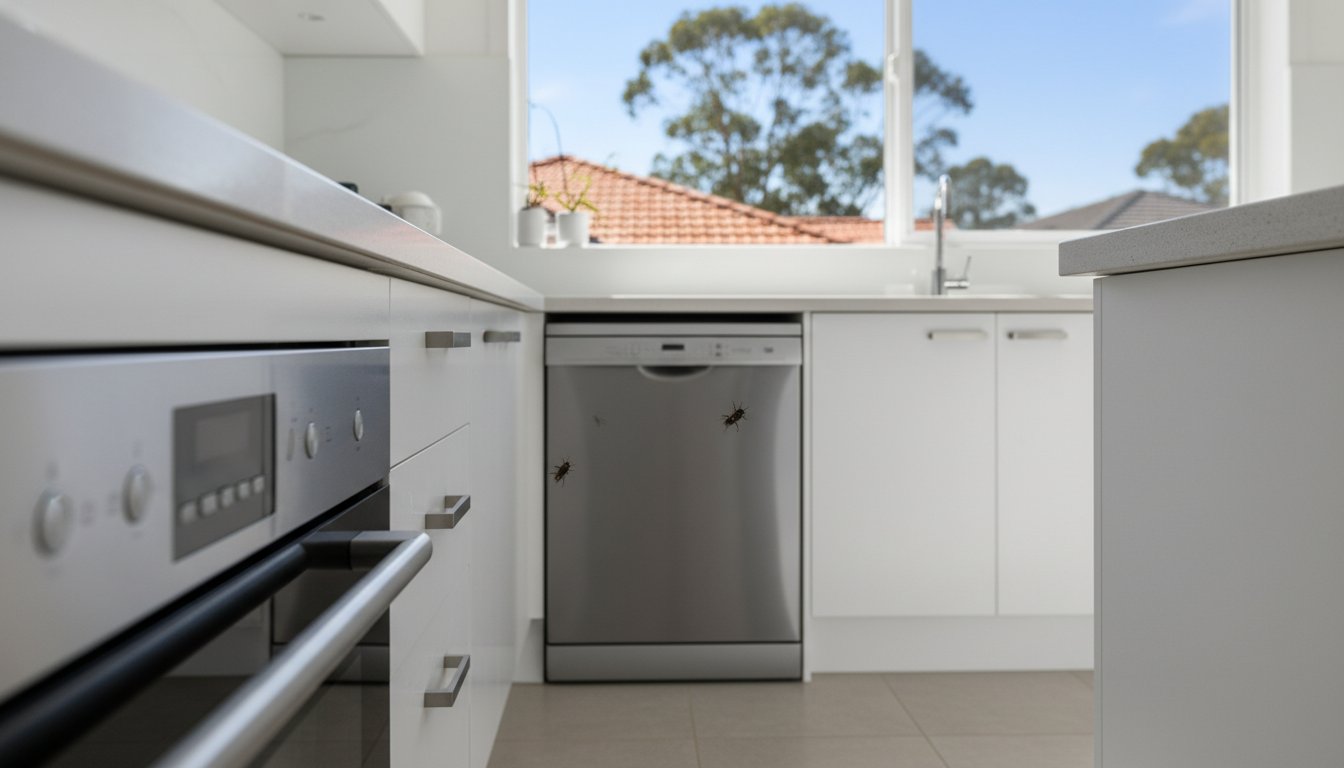
You walk into your Sydney kitchen at midday and everything looks perfectly clean, but are you really alone? If you’ve seen even one stray roach scurrying at night, there’s a high chance hundreds more are tucked away just inches from your food prep areas. Knowing exactly where do cockroaches hide during the day is the only way to move past the anxiety of “unseen” pests and take back control of your home. It’s exhausting to keep buying DIY sprays that fail while worrying about your family’s health and food safety.
We understand that a hidden infestation feels like a ticking time bomb. At ABC Pest Control, we’ve spent over 20 years uncovering the secret daytime sanctuaries of these stubborn pests in local homes. This guide will reveal the top hiding spots, from heavy appliances to tiny cracks in your cabinetry. You’ll learn how to tell if you’re facing a minor issue or a major “hidden” infestation that requires professional intervention. We’ll also provide practical, expert steps to eliminate these hotspots so you can finally stop guessing and start getting results.
Key Takeaways
- Understand the biological drive of thigmotropism and why cockroaches feel most secure when squeezed into tight, dark harbourages during daylight hours.
- Identify the “Big Three” wet areas and structural gaps in Sydney homes to pinpoint exactly where do cockroaches hide during the day.
- Learn why spotting a roach in the light is a major red flag indicating that “population pressure” is forcing hundreds of pests out of their primary hiding spots.
- Discover the “Tip of the Iceberg” theory and how modern electronics create the perfect warm micro-climate for stubborn German cockroach infestations.
- Master a professional 5-step inspection and flushing guide to effectively locate and seal entry points using safe, non-toxic methods.
Understanding Cockroach Hiding Instincts: Why They Stay Out of Sight
Cockroaches are survival experts with instincts honed over millions of years. They don’t just wander into your home by accident; they follow biological imperatives that keep them shielded from threats. If you’re wondering where do cockroaches hide during the day, you need to understand that their choices are driven by a need for security and specific environmental conditions. Our team has over 20 years of experience tracking these pests across Sydney, and we’ve found that their hiding spots are never random.
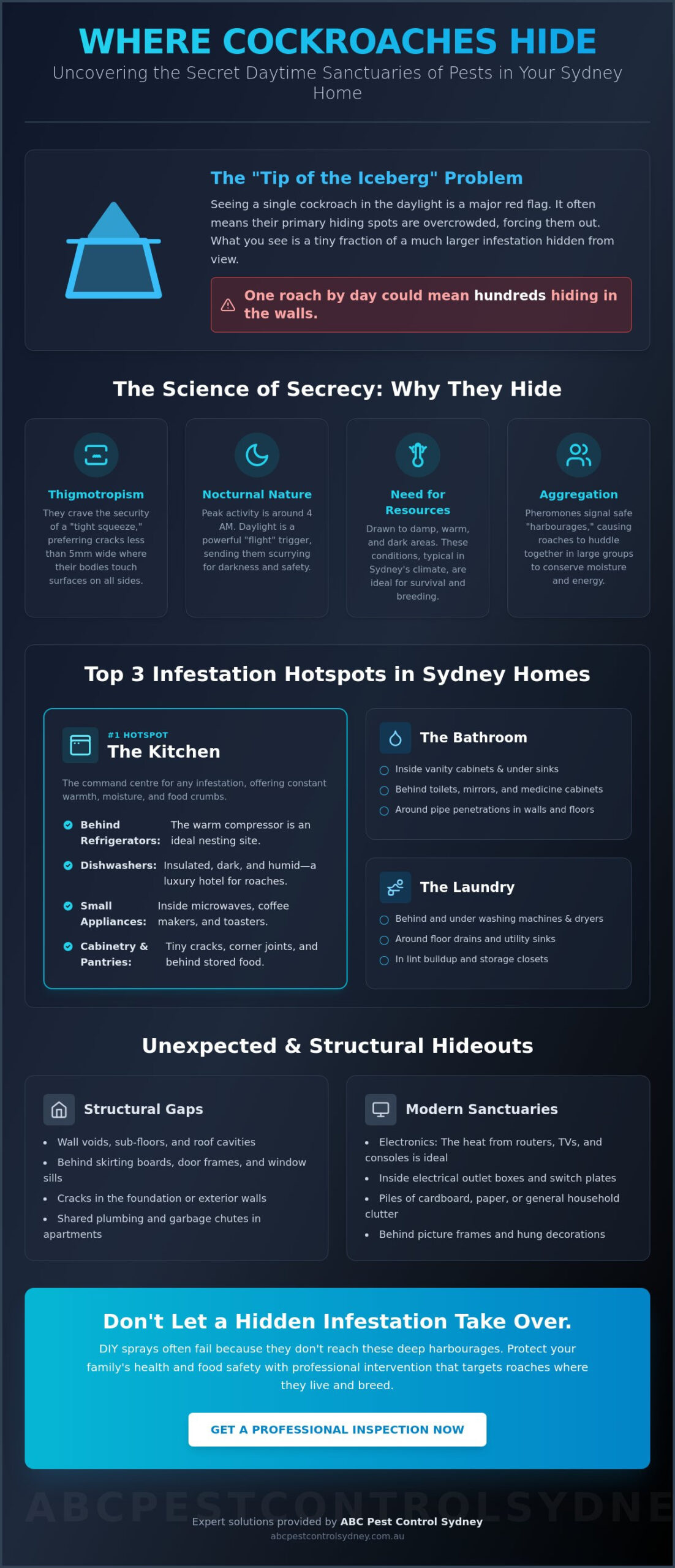
These pests rely on aggregation pheromones to find safety. Unlike ants or bees, cockroaches don’t build physical nests. Instead, they secrete chemical signals that tell other roaches a specific location is safe. This leads to huddling, where dozens or even hundreds of insects cram into a single gap. In the humid climate of Sydney, where relative humidity often sits between 60% and 70%, these huddles help the insects retain vital body moisture. You’ll often find these clusters in subfloors or behind skirting boards where the air remains still and damp.
The Biology of the “Tight Squeeze”
Thigmotropism is the primary reason roaches prefer cracks less than 5mm wide because they require the sensation of physical contact on all sides of their bodies. Their incredibly flat exoskeletons allow them to compress their height and slide into gaps that humans often overlook during a basic cleaning. If you spot a cockroach in an “open” area like the middle of a floor during daylight, it’s a major red flag. This usually means the primary harbourage is overcrowded, suggesting a population that requires immediate, professional intervention to manage.
Nocturnal Habits vs. Daytime Safety
The circadian rhythm of a cockroach is finely tuned to avoid predators. Research into cockroach behavior shows that 4 AM is their peak activity time, as this is typically the darkest and quietest period in a household. During these hours, they use their highly sensitive antennae to navigate in total darkness, feeling for food and water sources without needing sight.
Daylight acts as a powerful “flight” trigger. When the sun rises or a kitchen light flickers on, it stimulates a rapid escape response. They seek out dark, secluded harbourages where they stay stationary for the duration of the day. These safety triggers are so strong that a roach will often starve rather than venture into a brightly lit room. If you’ve seen activity while the sun is up, don’t wait. You’re likely facing a stubborn infestation that needs an expert touch. Call ABC Pest Control today to secure your home with our safe, non-toxic treatments that adhere to the highest Australian Pest Standards.
The Most Common Cockroach Hiding Spots in Sydney Homes
Sydney’s humid climate and coastal density make our homes a prime target for unwanted pests. If you are wondering where do cockroaches hide during the day, the answer usually lies in three specific “wet areas”: the kitchen, bathroom, and laundry. These insects are thigmotactic, which means they prefer tight spaces where their bodies can touch surfaces on all sides. This physical preference, combined with a biological need for warmth and moisture, dictates exactly where they settle when the sun comes up.
In older New South Wales properties, such as traditional Sydney terrace houses, roaches often retreat into sub-floors and expansive roof voids. These areas stay cool in summer and provide easy access to the home’s internal structure. In contrast, modern CBD apartments present different challenges. Roaches in high-rise buildings utilize compact wall cavities, shared plumbing stacks, and garbage chutes to move between units. Understanding these regional architectural differences is the first step in effective pest management.
Kitchen Hiding Spots: The Food Command Centre
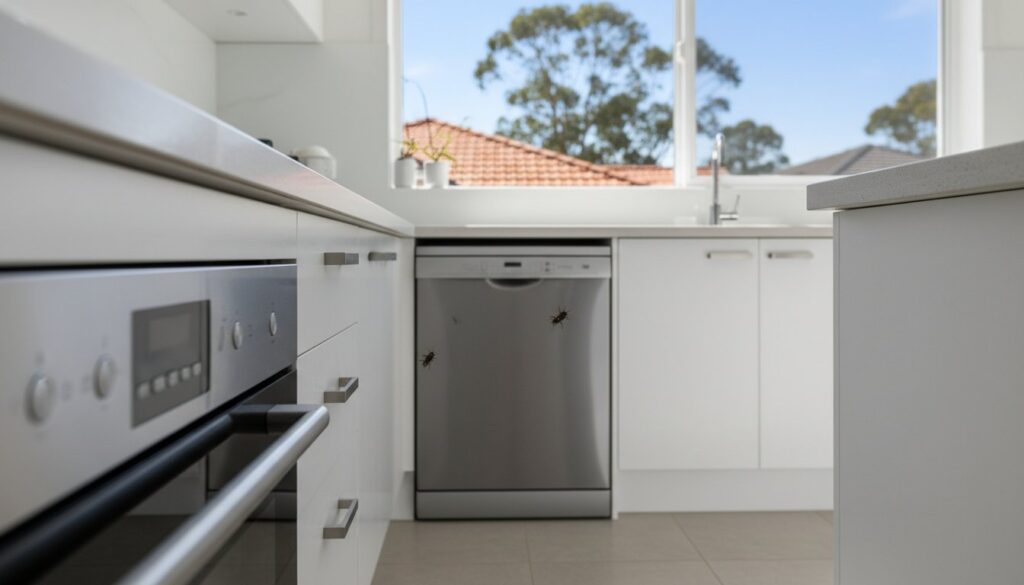
The kitchen is the primary hub for any infestation because it offers consistent heat and nutrition. Roaches gravitate toward the rear of refrigerators because the compressor generates constant, reliable warmth. This heat, paired with nearby condensation, creates an ideal daytime environment. Dishwashers are also a major concern; the thick insulation acts like a luxury hotel for German cockroaches, providing a dark and humid sanctuary that remains undisturbed for most of the day.
Don’t overlook your storage areas. Research indicates that common cockroach hiding spots frequently include the gaps behind kitchen cabinetry and underneath pantry shelf liners. These tiny crevices allow pests to remain inches away from food sources while staying completely invisible to the naked eye. If you notice small black specks in these areas, it’s a clear sign of a growing population.
Bathrooms and Laundries: The Moisture Magnets
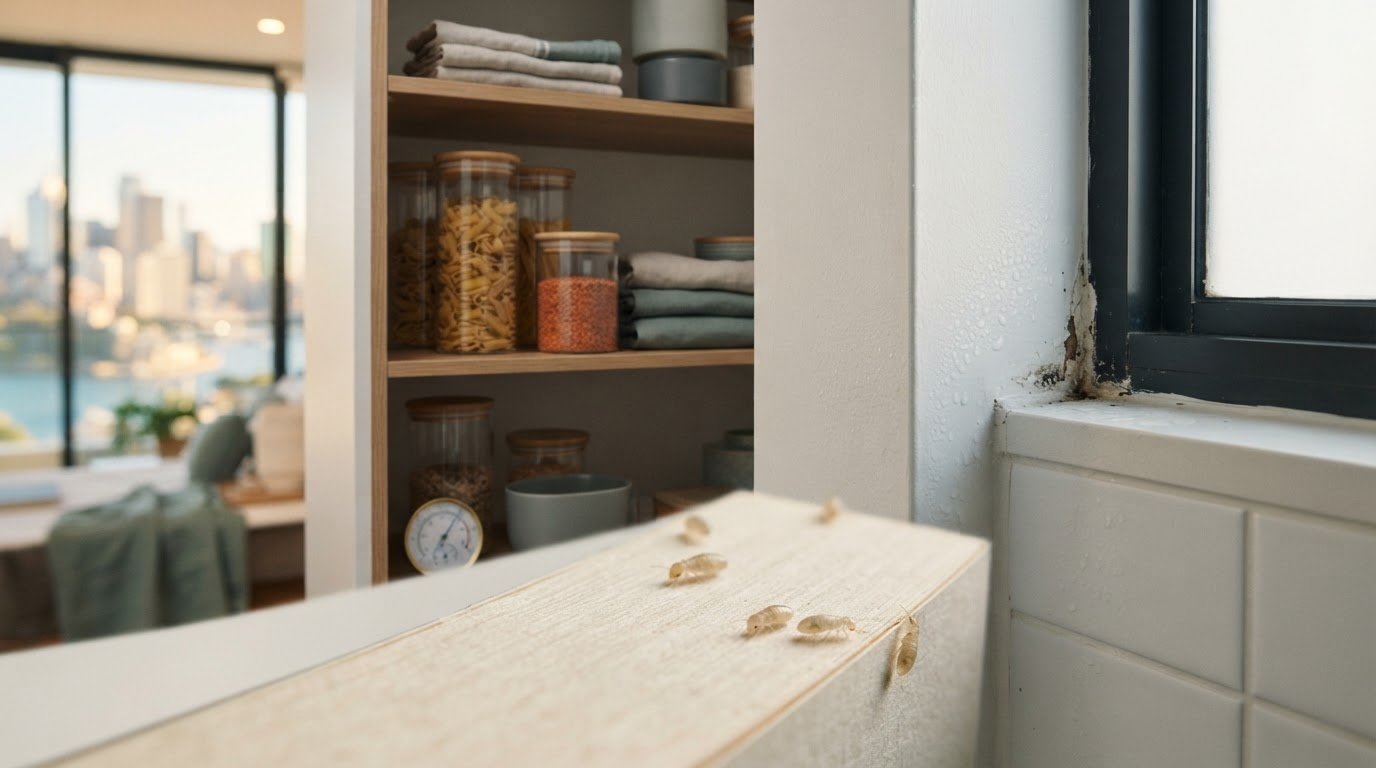
Moisture is a non-negotiable requirement for a daytime harbourage. In many Sydney homes, roaches hide where plumbing penetrations meet the wall. If there is even a 2mm gap around your sink or shower pipes, they will use it as a highway into your wall cavities. Check the dark, damp areas behind toilets and under vanity basins where minor leaks often go unnoticed. These spots provide the high humidity levels that “tough pests” like the American cockroach require to survive the daylight hours.
Laundries are equally dangerous hiding spots. Piles of damp clothes or stacks of cardboard boxes offer the perfect combination of shelter and moisture. Cockroaches love the starch in cardboard glue, making your storage zone a buffet and a bedroom in one. If you suspect an infestation in these wet areas, you should book a professional inspection immediately. Our team at ABC Pest Control has over 20 years of experience identifying these hidden nests to ensure your home meets Australian Pest Standards quickly and safely.
Unexpected Hiding Places: From Electronics to Structural Gaps
Most Sydney homeowners check the pantry or under the sink when they suspect a pest problem. However, these pests are masters of finding tight, warm spaces that humans rarely disturb. If you are trying to figure out where do cockroaches hide during the day, you need to look beyond the obvious. Modern technology and common household items provide perfect micro-climates for these resilient insects to thrive and multiply undisturbed.
The “Electronic Nest”: Why Your Microwave is at Risk
Your kitchen appliances are more than just conveniences; they are high-end real estate for German cockroaches. The circuit boards in microwaves, toasters, and coffee machines emit a constant, gentle warmth that mimics a tropical environment. This heat is essential for their rapid breeding cycles. Internet routers and game consoles are particularly dangerous because they stay powered on 24/7, providing a stable temperature regardless of the season.
To safely inspect your electronics, never spray liquids into the vents. Instead, use a high-powered torch to look for “pepper-like” droppings or shed skins near the rear cooling fans. If you spot activity, it’s a sign of a settled colony. Our team at ABC Pest Control has seen thousands of dollars in damage to high-end electronics caused by roach secretions short-circuiting delicate components.
Structural Gaps and Furniture
Sydney’s diverse architecture presents unique challenges. Many Sydney-style terrace houses feature original floorboards and intricate skirting boards that develop small gaps over time. These cracks are often less than 2mm wide, yet they provide a direct highway for pests to move between rooms. Loose wallpaper and gaps in crown moulding also offer high-level hiding spots that are easily missed during a standard cleaning.
The way we shop also impacts how these pests spread. Shipping boxes are the most common way roaches enter your home. The corrugated layers of cardboard provide insulation, while the starch-based glue used in the boxes serves as a food source. This “Cardboard Connection” explains how cockroaches get inside even the cleanest homes. Always flatten and recycle delivery boxes immediately; don’t store them in the garage or under the stairs.
Furniture is another major culprit, especially second-hand items. When you bring a “vintage find” into your home, you might be inviting a hidden colony. Roaches love the dark interior of sofa frames and the undersides of dining tables. Always inspect the joints and staples of upholstered furniture before bringing it inside. Remember, where do cockroaches hide during the day is often dictated by their need for “thigmotaxis,” which is their instinctual desire to feel a solid surface on all sides of their body.
Don’t let these hidden threats take over your living space. If you’ve spotted a roach in your electronics or skirting boards, you need professional help fast. Our highly trained technicians use eco-friendly treatments to reach these deep harbourage points safely. Get results today and protect your home from structural damage and health risks.
Seeing Roaches in Daylight? Why Daytime Activity Is a Red Flag
Seeing a single cockroach scurrying across your kitchen tile at 2 PM is more than a nuisance. It’s a critical warning sign for any homeowner. Cockroaches are naturally photophobic, meaning they have a biological drive to avoid light. When you spot one during the sunniest part of the day, you’re witnessing the “Tip of the Iceberg” theory in action. Professional estimates suggest that for every one roach visible in the light, there are likely 100 to 500 more tucked away in the shadows.
This daytime activity usually points to intense population pressure. Cockroaches prefer tight, dark spaces where their bodies can touch surfaces on all sides. However, these prime real estate spots are limited. When a colony grows too large, the most secure areas—the places where do cockroaches hide during the day—become overcrowded. This forces lower-ranking or desperate roaches out into the open to search for food and water while the sun is still up.
The Hierarchy of the Harbourage
Roach colonies follow a strict social structure. The largest, most dominant adults claim the safest, dampest spots near your water pipes and fridge motors. If you see nymphs, which are smaller, wingless babies, it indicates a breeding cycle that’s already out of control. Seeing young roaches during the day means the “nursery” is full. This is a hallmark of German cockroach behaviour. These tough pests are notoriously stubborn and can produce a new generation every 28 days, quickly outgrowing any standard hiding spot.
Environmental Triggers for Daytime Sightings
In Sydney, external factors often disrupt their normal patterns. You might notice increased activity due to:
- Extreme Heatwaves: When Sydney temperatures climb above 35 degrees, wall cavities become ovens. Roaches will risk the light to find cooler air or leaking taps.
- Nearby Construction: Major renovations or council roadworks create vibrations that flush pests out of structural voids and into your living spaces.
- Resource Scarcity: If the colony is massive, the competition for crumbs becomes so fierce that weaker roaches must forage during the day to survive.
There’s a big difference between a “lost” roach that wandered in from a delivery box and an “evicted” roach forced out by its own colony. If you see more than one, your home has likely reached a saturation point. Our team has over 20 years of experience dealing with these infestations before they cause structural damage or health risks. Don’t wait for a total takeover. BOOK NOW to get a professional inspection and secure your home today.
How to Flush Out Hiding Roaches and Reclaim Your Sydney Home
Knowing where do cockroaches hide during the day is the first step to winning the war against an infestation. Many Sydney homeowners waste money on supermarket “bug bombs” that promise a quick fix. These products often fail because they lack the “reach” required for deep wall voids. Instead of killing the colony, the harsh chemicals often trigger a scatter response. This drives the roaches deeper into your home’s structure, making the problem harder to solve. To truly reclaim your space, you need a tactical approach that targets the heart of the nest.
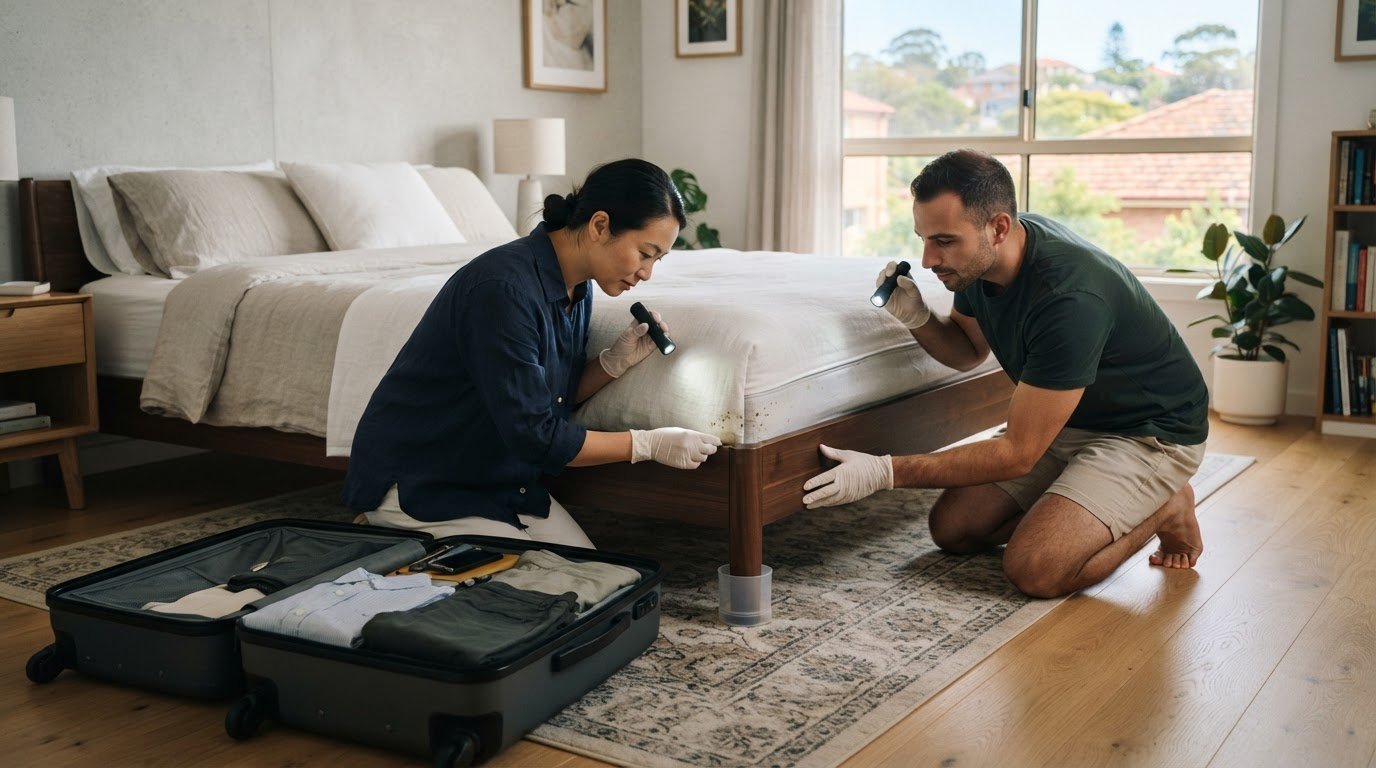
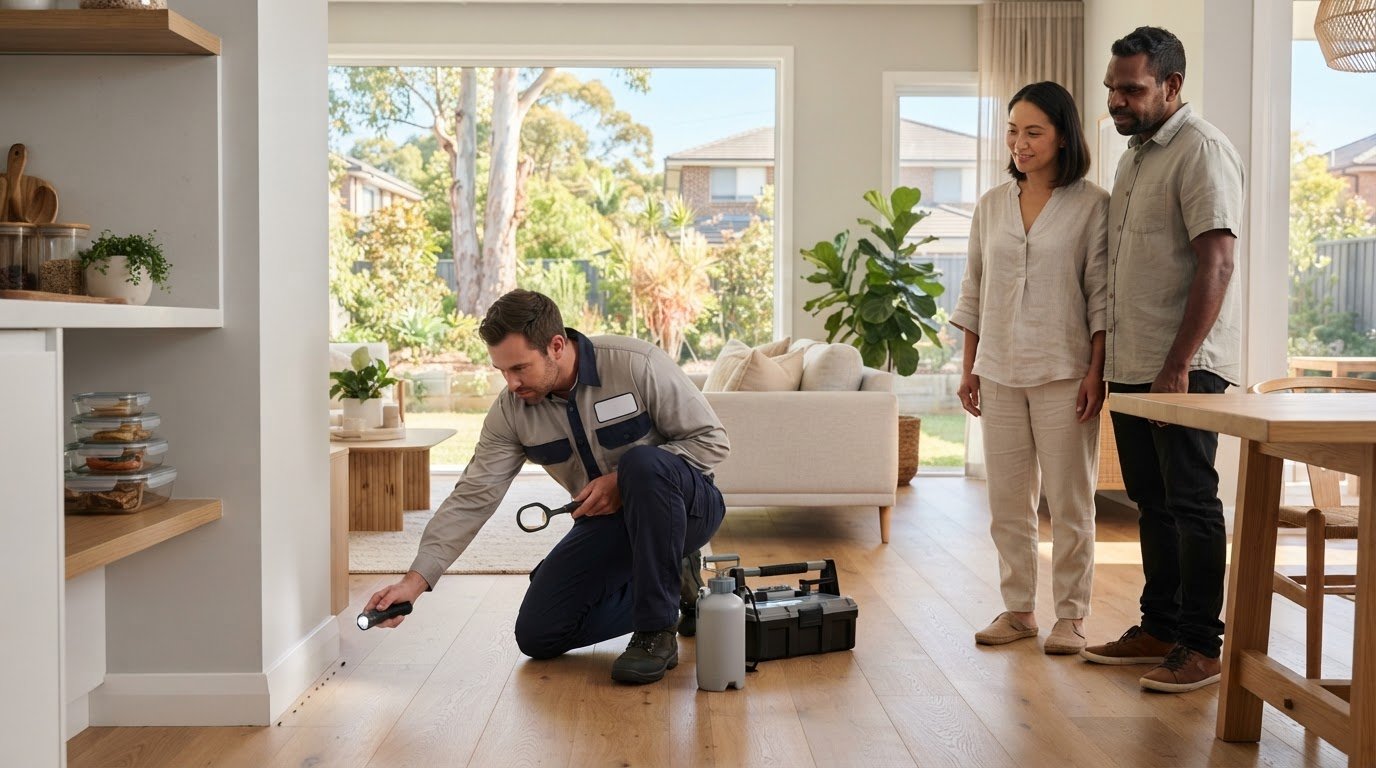
The “Flashlight Test” Inspection Strategy
You don’t need to be a scientist to find the source of the problem. Follow this 5-step guide to locate their secret bunkers:
- Darken the room: Roaches are sensitive to light. Turn off the overheads and wait ten minutes before starting your search.
- Use a bright LED flashlight: Shine the beam into tight crevices. Look for “pepper-like” droppings or small, brown, pill-shaped egg casings (oothecae).
- The Mirror Trick: Use a handheld mirror to see behind heavy appliances like dishwashers and under the dark lip of kitchen cabinetry.
- Apply a flushing agent: Use a botanical pyrethrin spray into a suspected crack. If roaches are present, the irritant will force them to scurry out into the open.
- Identify the “Heart”: Note where the highest concentration of activity occurs. This is where your treatment must be focused.
Once you’ve identified the hotspots, you must seal them off. Focus on these 5 critical areas immediately: skirting board gaps, pipe penetrations under sinks, gaps in tiled splashbacks, window frame crevices, and door sweeps. Using a high-quality silicone caulk prevents them from returning to their preferred daytime retreats.
Professional Elimination: Why ABC Pest Control is Different
While DIY methods might kill a few stragglers, professional cockroach pest control is the only way to ensure the entire colony is gone. ABC Pest Control has over 20 years of experience tackling Sydney’s most stubborn German cockroach infestations. We understand the local environment and the unique challenges of coastal Australian homes.
Our technicians use advanced, non-toxic gels and baits that roaches find irresistible. They consume the bait and carry it back to the secret spots where do cockroaches hide during the day, effectively eliminating the colony from the inside out. This method is safe for your family and pets while remaining lethal to pests. Don’t let a small problem turn into a health hazard. You can Book in under 60 Seconds for our highly popular Deluxe Package. We provide a comprehensive treatment that protects your home and gives you back your peace of mind.
Reclaim Your Home From Hidden Pests Today
Knowing where do cockroaches hide during the day is the first step toward a pest-free property. These resilient insects thrive in Sydney’s dark, humid structural gaps and even inside your kitchen electronics. If you spot them scurrying across the floor in broad daylight, it’s a major red flag that your home has a significant infestation. You don’t have to tackle this alone.
ABC Pest Control brings over 20 years of experience to the Sydney metropolitan area. We specialise in flushing out tough pests like German cockroaches using safe, eco-friendly, and non-toxic treatments. Our expert technicians ensure every corner of your home is protected while keeping your family’s safety as our top priority. You can book a specialist in under 60 seconds to stop the spread before it gets worse.
Get Rid of Hiding Cockroaches Today – Book Your Sydney Specialist Now!
You’re only one click away from a clean and healthy home. Let’s get your living space back to normal today.
Frequently Asked Questions
Is it a bad sign to see one cockroach during the day?
Yes, seeing a cockroach during daylight hours is a major red flag for homeowners. It typically means the primary hiding spots are overcrowded, forcing individual roaches out into the open to find space. In our 20 years of experience across Sydney, this usually indicates a large infestation is already established nearby. Don’t wait for the problem to grow; call our experts today to secure your home.
Do cockroaches hide in beds?
It’s rare for cockroaches to hide in beds, but they may settle in the frame or headboard during severe infestations. They prefer being close to food and water sources in kitchens or bathrooms. However, if you eat in bed or have a damp wall nearby, they might move in. If you suspect pests in your bedroom, our safe and non-toxic treatments can clear the area quickly.
Can cockroaches live inside walls?
Cockroaches absolutely live inside wall voids. They use the small gaps around electrical wiring and plumbing pipes to travel between rooms undetected. This is why DIY sprays often fail, as they can’t reach these deep cavities where the insects breed. Our professional technicians use specialised equipment to treat these hidden zones, ensuring we eliminate the problem at the source according to Australian Pest Standards.
Where do cockroaches hide in a clean house?
Cockroaches hide in warm appliance motors and behind skirting boards even in the cleanest Sydney homes. They are often attracted to the starch in cardboard shipping boxes or the heat generated by your fridge motor. Knowing where do cockroaches hide during the day helps, but professional intervention is usually needed. We’ve found that 85% of clean home infestations start in these overlooked, warm machinery spaces.
Do roaches hide in clothes?
Yes, roaches can hide in laundry piles or inside wardrobes. They are attracted to organic stains like food spills or sweat on fabric. If your wardrobe is against a damp wall, it creates a perfect humid environment for them to thrive. Keep your clothes off the floor and check dark corners of your cupboards. If you find them, book our popular Deluxe Package for a comprehensive solution today.
How do I find the cockroach nest?
You won’t find a single nest because cockroaches gather in aggregation spots instead. Look for dark spotting from droppings and a distinct musty odour in tight, warm spaces. These spots are often found near water heaters or behind kitchen cabinets. If you’re struggling to locate the source, our specialists can identify these zones quickly during a professional inspection. You can book your inspection in under 60 seconds online.