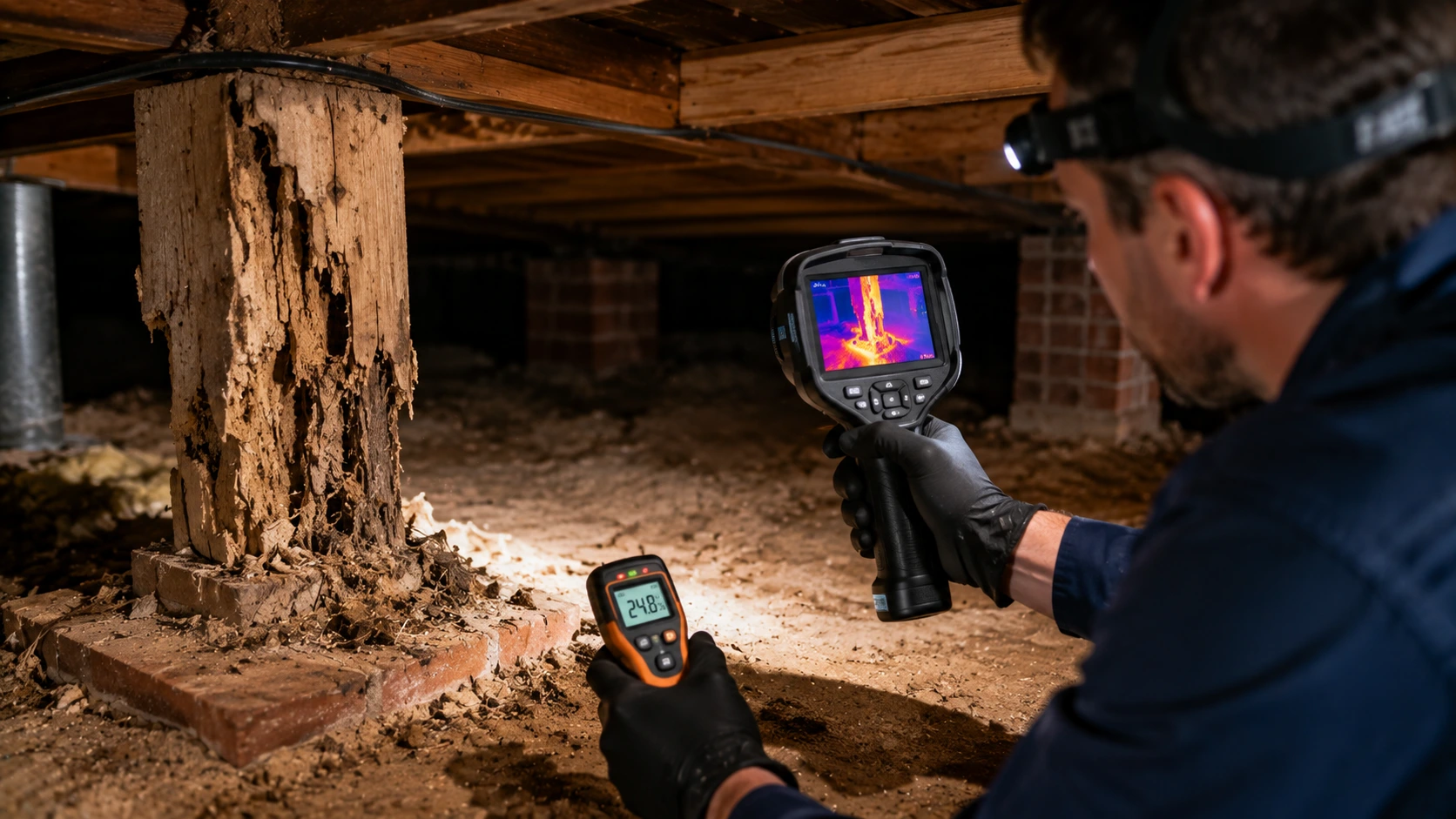
A professional termite inspection uses thermal imaging, moisture detection, and sounding techniques to locate colony activity inside wall cavities, subfloors, and roof voids before any surface sign appears. No visual walkthrough, retail product, or passive monitoring station produces that diagnostic picture. If your Sydney property hasn’t been inspected recently, you don’t actually know what’s happening inside your structural timber.
Key Takeaways
- Termites feed from the inside out, leaving a surface shell intact while structural damage builds silently underneath.
- Professional detection equipment reaches activity in enclosed spaces that no visual check can access.
- The real cost comparison is an inspection now versus structural repairs later, not an inspection versus doing nothing.
- Sydney properties with no visible signs can still have active colonies feeding inside load-bearing timber.
- Waiting for visible signs isn’t a neutral decision. It’s a choice with a compounding price tag.
Why “Nothing Looks Wrong” Is the Most Expensive Assumption a Sydney Homeowner Makes
It’s the most common reason inspections get skipped.
Termites consume structural framing from the inside, leaving an exterior shell that appears completely intact. No sound, no visible trace, nothing that reads as a problem until the damage is already well established. By the time you notice bubbling paint, a soft patch underfoot, or a mud tube along a skirting board, the colony has typically been active for a considerable period before that surface sign became visible.
That invisibility creates a predictable assumption. If nothing looks wrong, nothing is wrong. It’s understandable. It’s also how serious structural damage accumulates without anyone catching it.
A colony doesn’t pause while you’re deciding whether to book. It keeps feeding.
Waiting isn’t a neutral position. Every month of undetected activity narrows the treatment options available and increases the structural exposure you’re carrying without realising it. There’s a detailed breakdown of how that cost gap compounds over time if you want to understand what delayed discovery typically involves in practice.
What a Professional Termite Inspection Actually Covers
A professional inspection isn’t a torchlight walkthrough. It’s a systematic, equipment-based assessment of infestation status, structural vulnerability, and risk exposure, conducted by a licensed technician working through every accessible area of your property.
A qualified inspector works through subfloor spaces, roof voids, wall cavities, skirting boards, door frames, garden beds, and all timber structures connected to the building. Each detection tool solves a distinct diagnostic problem.
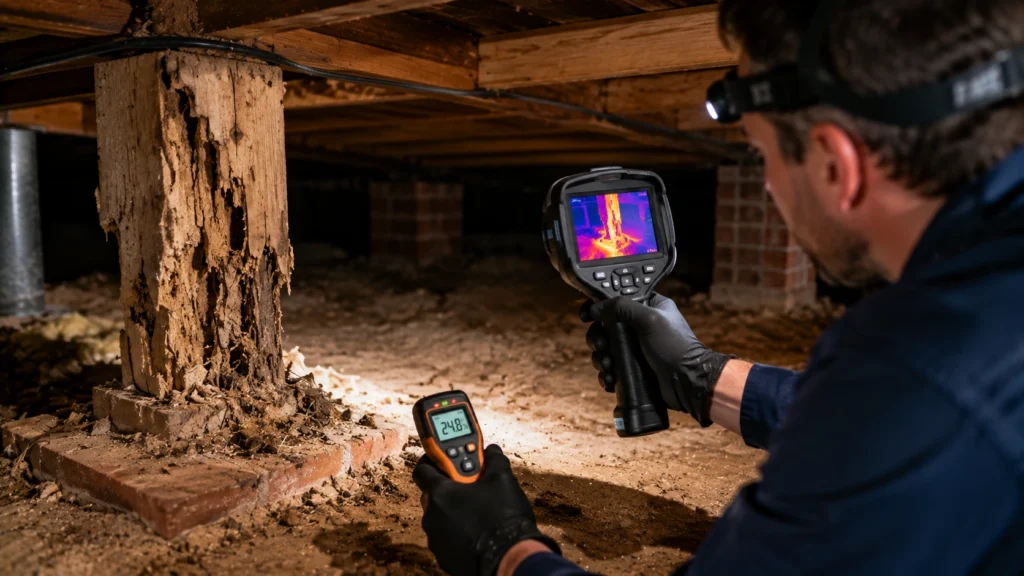
Moisture meters detect elevated humidity inside wall cavities. Termites need consistent moisture to survive, and their activity raises localised humidity inside otherwise dry timber well before any surface sign appears. Thermal imaging cameras identify heat signatures consistent with colony activity inside enclosed spaces where no visual access exists. Sounding tools locate hollow timber that looks structurally intact from outside but has been consumed internally.
The inspection produces a written report mapping findings, identifying the species present, and outlining treatment options. Species identification matters in practice. Coptotermes acinaciformis, the most destructive species active in New South Wales, requires different treatment protocols than less aggressive species. A report that omits species identification doesn’t give you enough to make a sound treatment decision.
That written report also supports follow-on conversations with a builder, structural engineer, or solicitor handling a property transaction. Property buyers should note that a dedicated termite inspection and a standard building inspection answer different questions. One doesn’t replace the other, and relying solely on a building inspection’s general notes about visible pest damage leaves gaps that can matter significantly.
For a full walkthrough of how inspection findings connect to treatment decisions, the termite inspection guide for Sydney homeowners covers the process from initial access points through to the final written report.
How Acting Now Compares to Waiting or Going It Alone
| Approach | What it delivers | What it costs you |
|---|---|---|
| Professional inspection with ABC Pest Control Sydney | Full structural assessment, species identification, thermal imaging, moisture detection, written report compliant with Australian Pest Standards | A scheduled appointment; time scales with property size |
| DIY visual check only | Surface awareness of visible signs | Can’t detect activity inside walls, subfloors, or roof voids; absence of visible signs confirms nothing |
| Retail products applied without an inspection | Addresses termites visible at the surface | Doesn’t reach the colony source; structural damage continues while the surface appears managed |
| Passive monitoring stations alone | Low maintenance once installed | Slow to signal active infestation; no structural assessment; not a substitute for an active inspection |
| Waiting for visible signs to appear | No upfront cost | Visible signs mean the colony has already been active long enough for significant structural damage to be present |
One point worth stating plainly: treating surface activity without a professional inspection first creates false confidence. You address what you can see while damage you can’t see continues. That outcome costs more than acting early because it delays the moment you discover the full extent of the problem.
What Professional Detection Equipment Is Built to Find
Consider a property where a moisture meter returns elevated readings from inside a wall cavity adjacent to the subfloor. Every accessible surface of that timber looks completely normal to the eye. Thermal imaging then picks up heat signatures in that same enclosed space, consistent with colony activity. The outer shell appears sound. No mud tubes are visible anywhere. No hollow response when you press the skirting board by hand.
This is exactly the scenario professional detection equipment is built to catch. It’s also a scenario a self-directed inspection will miss every single time. The equipment reaches activity before surface signs appear, which means more treatment options are available and less accumulated structural damage has occurred by the time anything is done.
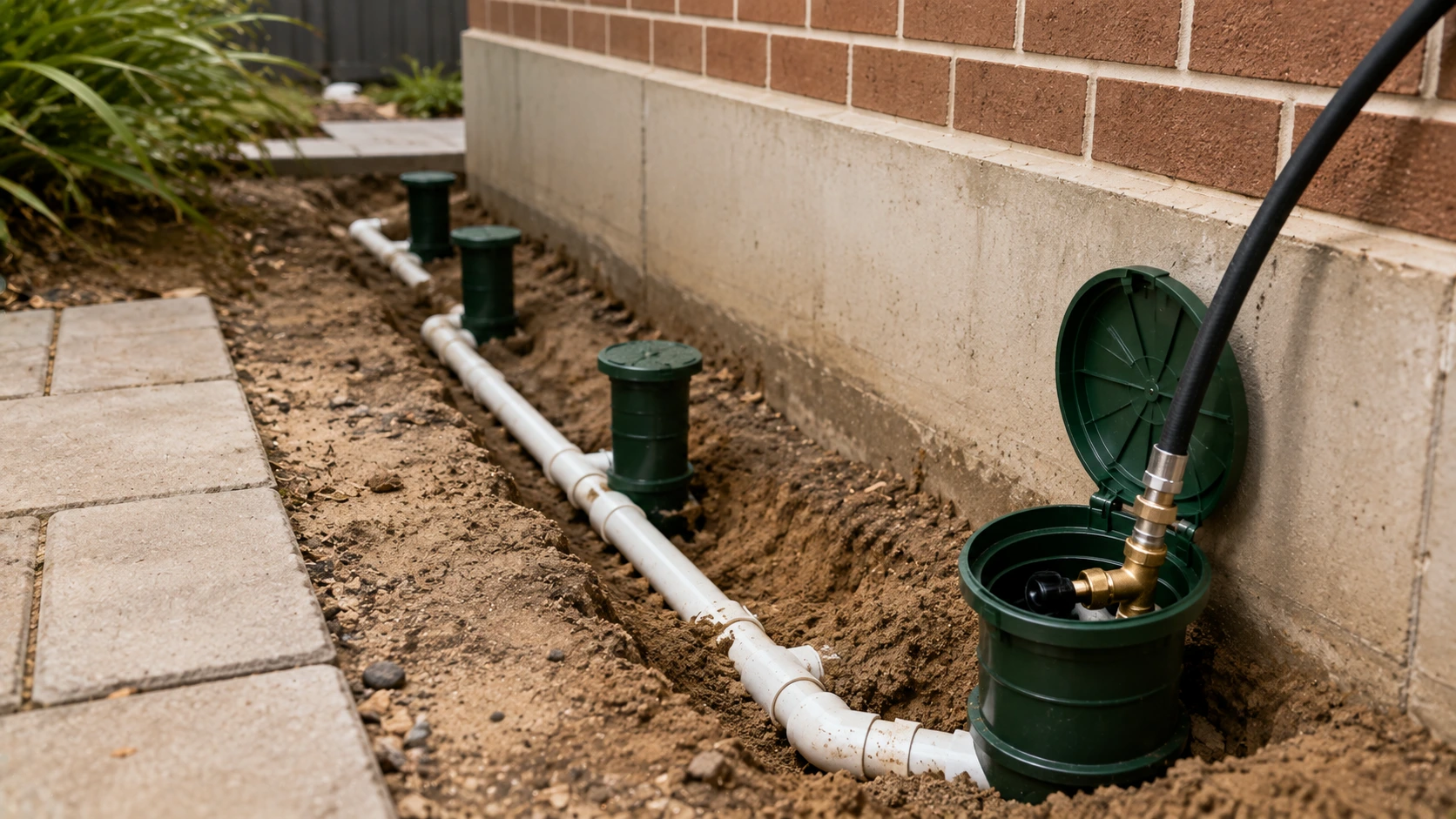
What follows the inspection depends entirely on what it finds. Active colony activity triggers a treatment decision. Options include chemical soil treatments applied to the perimeter and confirmed entry points, baiting systems that work with the colony’s own foraging behaviour to carry a slow-acting agent back to the queen, and reticulation installation for properties where a sustained barrier delivery system built into the soil suits the structure and site conditions. ABC Pest Control Sydney offers reticulation installation and periodic refills for properties where that approach fits.
Old damage with no active colony shifts the focus to structural assessment and barrier installation to prevent re-entry. A clean result still produces a documented baseline so the next inspection measures change rather than starting fresh each time without a reference point.
For a breakdown of what each treatment approach involves, the termite treatment cost guide for Sydney walks through the full range of options and what each stage looks like in practice.
A Genuine Limitation Worth Naming
An inspection tells you what’s present and how severe the activity is. It isn’t a substitute for structural repairs. Damage to load-bearing frames or subfloor bearings requires a builder or structural engineer working from the inspection report. The inspection produces accurate diagnostic information. What you do with that information involves tradespeople operating outside pest control scope.
This matters most for older properties across the Inner West, Southern Suburbs, and Western Sydney, where earlier decades of timber construction carry a higher structural risk profile. Knowing what you’re dealing with is the prerequisite for every decision that follows. The termite damage inspection guide for Sydney properties covers what happens once damage is identified and what the assessment process involves.
Who This Matters Most For
If your property hasn’t had an inspection in the past twelve months, this applies directly to you.
Property managers and landlords should be aware that responsibility for termite inspections sits with the property owner, not the occupant. Termite damage affects the structural value of the asset regardless of who lives in it. Discovering a significant infestation after a tenant reports a problem is more disruptive and more expensive than a proactive inspection cycle. The pest control compliance guide for Sydney property managers covers how that responsibility is allocated and what regular inspections protect against in practice.
If your property is a new build with a termite management system installed by the builder, the priority is knowing when that system needs its first check or reticulation refill. The original installation doesn’t cover you indefinitely.
For broader guidance on protecting your property from pest threats beyond termites, the expert pest prevention checklist for Sydney homes is a useful companion to any inspection report.
Book a Termite Inspection Across Sydney
ABC Pest Control Sydney has been conducting termite inspections across the Sydney metropolitan area for over 20 years, covering properties from the Northern Beaches and Eastern Suburbs through the Inner West, Southern Suburbs, and across to Parramatta, Penrith, and Blacktown. Every inspection uses thermal imaging and moisture detection as standard. Every report complies with Australian Pest Standards.
Warren Bailey, Operations Manager and featured expert in Yahoo News and the Daily Mail, oversees how inspections are conducted and how findings are interpreted, particularly for properties with complex subfloor access or significant tree coverage near structural timber.
Booking takes under 60 seconds. Get a free quote at abcpestcontrolsydney.com.au.
7 Questions Sydney Homeowners Ask About Termite Inspections
How long does a termite inspection take for a typical Sydney home?
For a standard three-bedroom home, a thorough inspection generally takes between 60 and 90 minutes. Larger properties, homes with extensive subfloor access, or those with multiple outbuildings take longer. The time covers the subfloor, roof void, internal rooms, and the full external perimeter, not just the areas that look concerning at first glance.
Can I treat a termite problem myself using products from a hardware store?
Retail products address termites visible at the surface but don’t reach the colony, which is typically located in soil or deep inside structural timber. Without addressing the colony source, activity returns. A professional inspection first tells you exactly what you’re dealing with before any treatment decision is made, so you’re not managing a surface symptom while the underlying cause continues unchecked.
What’s the difference between a termite inspection and a standard building inspection?
A building inspection assesses general structural condition and may note visible pest damage, but it doesn’t include the detection equipment or species identification that a dedicated termite inspection provides. For any Sydney property purchase, you need both reports. They answer different questions and neither replaces the other.
Do I need an inspection if I’ve never seen any signs of termites?
Yes. Termites work inside timber and soil rather than on surfaces where you’d notice them. The absence of visible signs isn’t confirmation that nothing is active. Properties with significant structural damage have often shown no obvious external signs during the early phase of infestation, because the outer shell of the timber stays intact until it structurally can’t hold any longer.
Is a regular inspection worth it for a rental investment property?
Yes. Termite damage reduces the structural value of the asset regardless of who’s living in it. Discovering a significant infestation after a tenant reports a problem is both more disruptive and more expensive than a proactive inspection schedule. The pest control compliance guide for property managers covers the broader framework for keeping your portfolio protected across the year.
How much does termite damage cost to repair?
Repair costs depend entirely on what’s been damaged and how long the colony has been active. Minor damage to non-structural timber sits at the lower end. Damage to load-bearing frames, subfloor bearings, or roof structures can reach significantly higher figures. The financial difference lies in the gap between catching activity early and catching it after years of undetected feeding. The termite treatment cost guide covers what the treatment and repair process looks like once damage is identified.
I’ve just found a mud tube on my property. What should I do right now?
Don’t disturb it. A mud tube is an active termite highway. Breaking it causes the colony to retreat and rebuild elsewhere, making the infestation harder to locate and treat accurately. Leave it intact, note exactly where it is, and contact a licensed technician promptly. ABC Pest Control Sydney offers 24-hour emergency pest control for situations where waiting for a scheduled appointment isn’t realistic.
About the Author
Warren Bailey is the Operations Manager at ABC Pest Control Sydney, with over 20 years of experience in residential and commercial pest management across the Sydney metropolitan area. He specialises in termite inspections, bed bug treatments, and integrated pest management, and has been featured in Yahoo News and the Daily Mail for his expertise in pest control and prevention. ABC Pest Control Sydney services the entire Sydney metro area, from the Northern Beaches to Penrith and Blacktown.