Direct Answer
Termite reticulation systems cost more to install than a standard chemical barrier, but the refill cost at each subsequent treatment cycle is significantly lower because the pipe network stays in the ground permanently. Whether reticulation makes financial sense depends on your property’s construction type, soil access, and how long you intend to stay.
Key Takeaways
- Reticulation carries a higher upfront cost but removes re-excavation expenses at every future treatment cycle.
- Standard chemical barriers are proven and cost-effective when soil access around the perimeter is open and unobstructed.
- Physical barriers are permanent but can only realistically be installed during new construction or major renovation.
- Bait stations work over weeks or months and are not suited as a standalone response to active infestations.
- A professional termite inspection must come before any treatment decision, because the right system depends on what’s actually happening at your property.
Why Does This Feel Like Such a Hard Decision?
Most Sydney homeowners face this choice once or twice in their lives. The terminology is unfamiliar, quotes vary considerably between providers, and every system is framed differently depending on who’s explaining it. You’re being asked to spend thousands of dollars on something you can’t see working, protecting against damage that stays invisible until it’s already severe.
That invisibility is the real problem. A termite barrier that’s doing its job shows you nothing. You only notice it when it fails.
The other thing that catches people out is thinking of this as a one-time purchase. Every termite protection method has a lifespan, a renewal cost, and a maintenance requirement. The installation price is only part of what you’re committing to.
What Is a Termite Reticulation System?
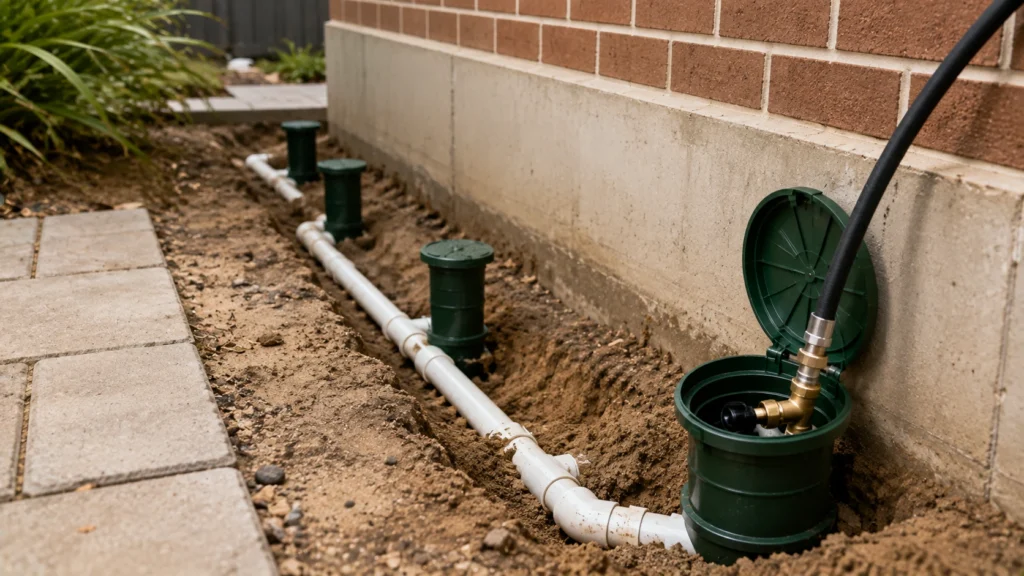
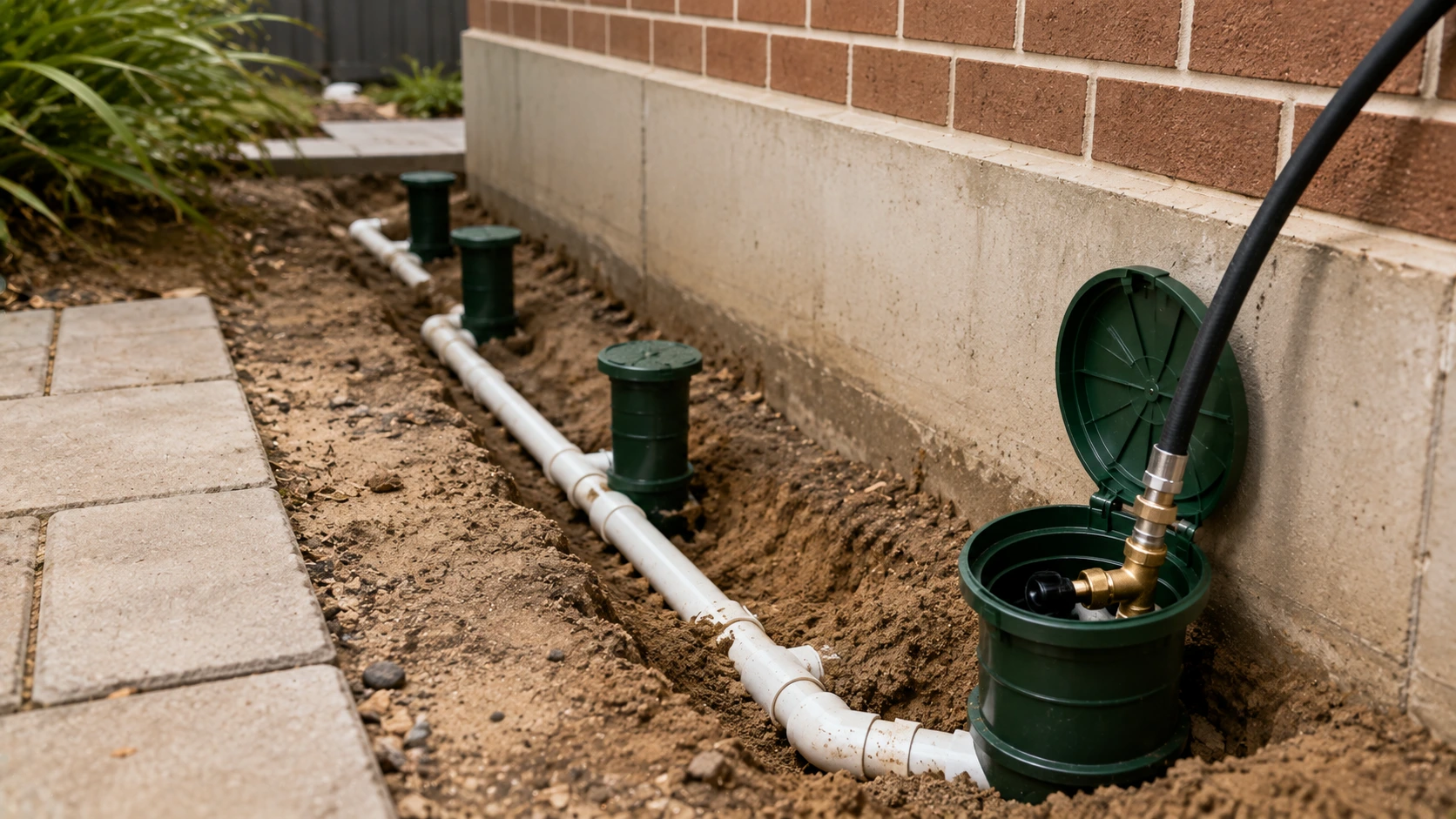
A termite reticulation system is a network of perforated pipes installed in the soil around and beneath a building’s perimeter. Termiticide is injected through this network and redistributed without digging up the ground around your slab.
Here’s the mechanism that matters: in a standard chemical barrier, termiticide is injected directly into the soil at treatment time. Over years, it breaks down through soil movement, rainfall, and microbial activity. When the chemical concentration drops below effective levels, protection drops with it. Restoring it means re-treating the soil, which often requires breaking up paving or re-excavating around the slab perimeter.
A reticulation system removes that access problem at each renewal. The pipes stay in place permanently. When the termiticide needs refreshing, a technician connects to the system’s access points and pumps fresh product through the existing network. The labour-intensive installation work is already done, so the ongoing refill cost is lower at every future cycle.
That’s the core trade-off: you pay more once to pay less repeatedly.
For a detailed picture of what drives termite treatment costs in Sydney across different property types and construction styles, reviewing those figures before committing to any system is worth your time.
How Do the Main Treatment Options Compare?
The table below isn’t a ranking of what’s cheapest. It’s a comparison of what happens when you act with proper professional guidance versus what happens when you wait, guess, or rely on unqualified advice.
| Scenario | Upfront Cost | Long-Term Cost | Risk Profile |
|---|---|---|---|
| Reticulation installed after professional inspection | Higher install cost | Lower refill cost at each cycle, no re-excavation | Correctly matched to property; low ongoing disruption |
| Standard chemical barrier after professional inspection | Moderate install cost | Full re-treatment required at renewal; re-excavation likely where paving exists | Effective where soil access is open; higher disruption cost on enclosed perimeters |
| DIY or unverified online treatment | Low upfront | Unpredictable; often masks activity rather than eliminating it | Colony may relocate within structure; damage continues undetected |
| No treatment, waiting to see what happens | Zero now | Structural repair costs, potential engineering assessment, disruption of living through repairs | Colonies feed continuously; visible damage is almost never the full extent of it |
The difference between the first two rows and the last two isn’t just money. It’s what you end up with. A recommendation from a licensed technician who has inspected your property is based on real information: your slab type, soil conditions, existing moisture points, and whether there’s active infestation right now. The alternative is guessing, and the consequences of installing the wrong system or applying a barrier over an active colony are worse than a brief delay for a proper assessment.
Is Reticulation Always the Better Long-Term Choice?
No, and it’s worth saying that plainly.
Reticulation earns its cost premium in specific conditions. If your home is slab-on-ground construction, if the perimeter is enclosed by concrete paths, paving, or established landscaping, or if you’re planning to stay in the property for well over a decade, the reduced refill cost compounds into genuine savings across multiple treatment cycles.
Consider a typical slab home in Western Sydney where most of the perimeter is paved. A standard chemical re-treatment at year seven would require breaking up sections of that paving to reach the soil. A reticulation system installed at the outset eliminates that cost at every future refill. Over two or three cycles, the system works back the installation premium.
But if your property has open, accessible soil on all sides, a standard chemical barrier applied correctly by a licensed technician is a proven solution. The reticulation premium isn’t justified when access isn’t the obstacle.
The honest rule is this: reticulation saves money when access is the problem. When it isn’t, a standard barrier is the simpler and more economical call.
What About Physical Barriers and Bait Stations?
Physical barriers built from stainless steel mesh or granite aggregate are the only termite protection method with a genuinely long-term structural lifespan. They work by blocking physical entry points rather than relying on chemical degradation cycles. The limitation is installation. Physical barriers need to be built into the structure during construction or a major renovation. Retrofitting them to an existing home is rarely practical, and when it is possible, the disruption is significant.
Bait stations operate on a different principle entirely. They use cellulose-based bait laced with a slow-acting termiticide. Termites take the bait back to the colony, which disrupts colony development over weeks or months. That timeline matters. If you have an active infestation causing structural damage right now, a bait program running over several months is not the right standalone response. Bait stations suit long-term monitoring on lower-risk properties, or as part of a combined program alongside a chemical treatment.
The reframe worth making: termite protection isn’t a product you buy once. It’s a system you maintain. Every method has a maintenance schedule. The question isn’t which one lasts forever, because none of them do. The question is which maintenance schedule fits your property and your budget across the next ten to twenty years.
What Happens When You Skip Treatment Entirely?
Waiting feels like a neutral choice. It isn’t. A termite colony feeds continuously, and by the time damage becomes visible, the colony has typically been active for well over a year. What you can see is almost never the full extent of it. That’s not a general warning; it’s a function of how termites work. They consume timber from the inside out, leaving the outer surface intact until the structural core is already compromised.
Most standard home insurance policies in Australia specifically exclude termite damage. They treat it as a maintenance issue rather than an insurable event. That exclusion matters because it means the full cost of structural repair lands directly on you, without any offset.
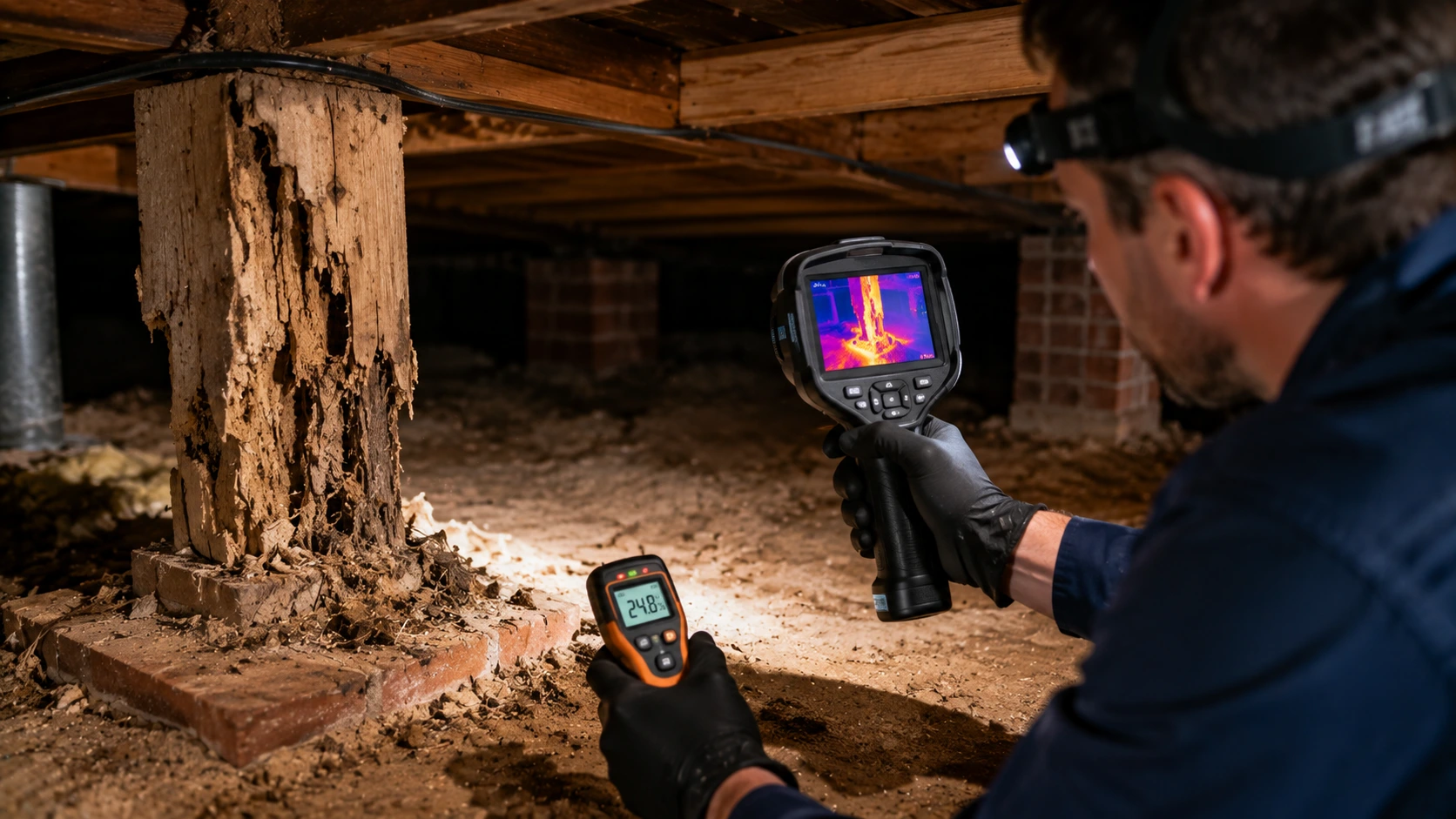
Before committing to a treatment, understanding whether termite damage is active or old changes the urgency and the type of response needed. The termite damage inspection process is what establishes the scope of what you’re dealing with before any treatment decision is made.
If you want to work through the key variables before booking a quote, the termite treatment homeowner checklist is a useful starting point.
When Does Reticulation Make Sense? A Simple Framework
Reticulation is worth considering when:
- Your home is slab-on-ground with limited open soil access around the perimeter.
- Paving, paths, or mature landscaping would require significant disruption at each future standard re-treatment.
- You’re planning to stay in the property for more than ten years.
- You’ve completed at least one prior chemical barrier cycle and are planning the next renewal.
A standard chemical barrier is the more straightforward choice when:
- Your soil perimeter is open and accessible on all sides.
- You’re planning to sell within five years and want a documented, recent treatment on record.
- The property layout makes reticulation installation impractical or disproportionately disruptive.
This decision becomes considerably clearer once you know your construction type and current infestation status. A professional termite inspection in Sydney is what establishes both.
Who Should Make the Recommendation?
Be cautious of any provider who quotes a system before inspecting your property. A legitimate termite treatment recommendation requires knowing your slab type, soil conditions, existing moisture points, and whether there’s any current activity. Without that, the quote is a guess.
Installing the wrong system is a recoverable mistake, but a costly one. Installing any chemical barrier over an active infestation is worse. Termites that detect the treated zone don’t simply stop; they look for a way around it, which often means deeper into the structure. That’s why the inspection comes first, every time.
ABC Pest Control Sydney handles reticulation installation and refills, standard chemical barriers, and full termite inspections across the entire Sydney metro area, from the Northern Beaches to Blacktown, Penrith, Parramatta, and the Southern Suburbs. Warren Bailey, Operations Manager and media-featured termite specialist with over 20 years working through Sydney’s varied housing stock, leads the team. All products used comply with Australian Pest Standards.
For a broader view of what pest control costs across Sydney for different treatment types and property sizes, that reference covers the full picture. You can book a termite inspection in under 60 seconds at abcpestcontrolsydney.com.au. Free quotes are available.
FAQ
How long does a termite reticulation system last?
The pipe network itself is permanent. The termiticide needs refreshing every five to eight years depending on soil conditions, rainfall, and the specific product used. The advantage at each renewal is that no re-excavation is required, so the ongoing cost per cycle is substantially lower than a full re-treatment.
Can reticulation be installed in an existing home?
Yes, in most cases. It’s more involved to install in an existing home than during new construction, but it’s a standard procedure for slab-on-ground properties where future soil access would otherwise require breaking up paving. A site inspection confirms whether your property layout makes it practical.
Is a termite inspection required before installing any barrier?
Yes, and skipping it creates real risk. If an active infestation is present when a chemical barrier is applied, you can trap termites inside the structure with no path out and no chemical exposure forcing them out. The inspection identifies any active activity so it can be addressed before the barrier goes in.
What’s the difference between a termite barrier and a bait station?
A barrier creates a treated zone in the soil. Termites contact it and carry the termiticide back to the colony, or are deterred from crossing it. A bait station uses slow-acting bait that termites find and take back to the colony over weeks or months. Barriers respond faster and are suited to high-risk properties or active infestations. Bait stations work best for long-term monitoring or as part of a combined program.
Does home insurance cover termite damage in Australia?
Most standard policies in Australia specifically exclude termite damage, treating it as a maintenance issue. This is why the cost of prevention needs to be weighed against repair costs directly, not against zero. The gap between the two is usually significant.
How do I know if my existing chemical barrier is still effective?
You can’t assess it visually. The termiticide in soil is odourless and invisible once applied. The only reliable way to know whether it’s within its effective concentration range is to check the treatment date against the product’s rated lifespan, or have a licensed technician review it. If you don’t have documentation of when your last treatment was carried out, treat that as a prompt to have it assessed.
What should I do if I suspect termites are already active in my home right now?
Don’t apply any DIY product to the affected area. Disturbing an active colony can scatter it through the structure rather than concentrating it, which makes treatment harder and extends the damage. Book a professional inspection immediately. ABC Pest Control Sydney inspections cover the full property including hard-to-reach areas under floors and inside wall cavities. Booking takes under 60 seconds online.
Warren Bailey is the Operations Manager at ABC Pest Control Sydney with more than 20 years of experience in residential and commercial pest management across the Sydney metropolitan area. He specialises in termite inspections, barrier systems, and hard-to-treat infestations, and has been featured in Yahoo News and the Daily Mail for his expertise. All treatments carried out by ABC Pest Control Sydney comply with Australian Pest Standards.