Did you know that termites cause over $6.8 billion in property damage every single year? In Sydney, the risk to your home’s structural integrity is a constant threat that demands immediate, expert intervention. We understand the anxiety that comes with learning how to prepare for a termite treatment. You’re likely worried about chemical safety for your kids and pets, or perhaps you’re stressed about moving heavy furniture to expose hidden damage. It’s often confusing to distinguish between simple inspection steps and the intensive requirements of a full eradication.
Proper preparation is the difference between a surface-level fix and total colony elimination. You want confidence that the treatment reaches the heart of the nest without putting your family at risk. This 2026 checklist provides a clear, actionable path to ensure our technicians can work efficiently with minimal disruption to your daily life. We’ll show you how to ready your Sydney property for maximum effectiveness and long-term protection. Let’s secure your home’s future today.
Key Takeaways
- Ensure 100% accessibility to high-risk zones so technicians can target hidden voids where termites thrive.
- Move all internal furniture at least 50cm from walls and clear under-sink cupboards to allow for thorough moisture and damage checks.
- Learn exactly how to prepare for a termite treatment by clearing all vegetation and wood debris at least 30cm from your external foundation walls.
- Differentiate between the preparation needs for liquid chemical barriers, which require perimeter trenching, and baiting systems that focus on station placement.
- Protect your investment by avoiding the disturbance of treated soil zones for at least 48 hours following the professional application.
Why Proper Preparation is Critical for Termite Treatment Success
Successful termite eradication isn’t just about the chemicals we use; it’s a partnership between the homeowner and the technician. Knowing how to prepare for a termite treatment ensures our specialists have 100% accessibility to every high-risk zone in your home. Termites are masters of hitchhiking through inaccessible wall voids, subfloors, and ceiling spaces. If a single segment of the colony remains hidden because of a blocked access point, the risk of re-infestation remains high. We need clear sightlines to identify every entry point.
For chemical treatments, the primary goal is to create an uninterrupted Termite barrier around your property. Any gap in the treated soil, whether it’s caused by a concrete path, a heavy garden shed, or a pile of stored boxes, provides a highway for these pests to bypass the protection. Missing even a small area can lead to catastrophic structural failure over time. Proper preparation removes these obstacles, allowing the termiticide to bond correctly with the soil and form a continuous shield of protection.
The Golden Rule: Do Not Disturb Active Termites
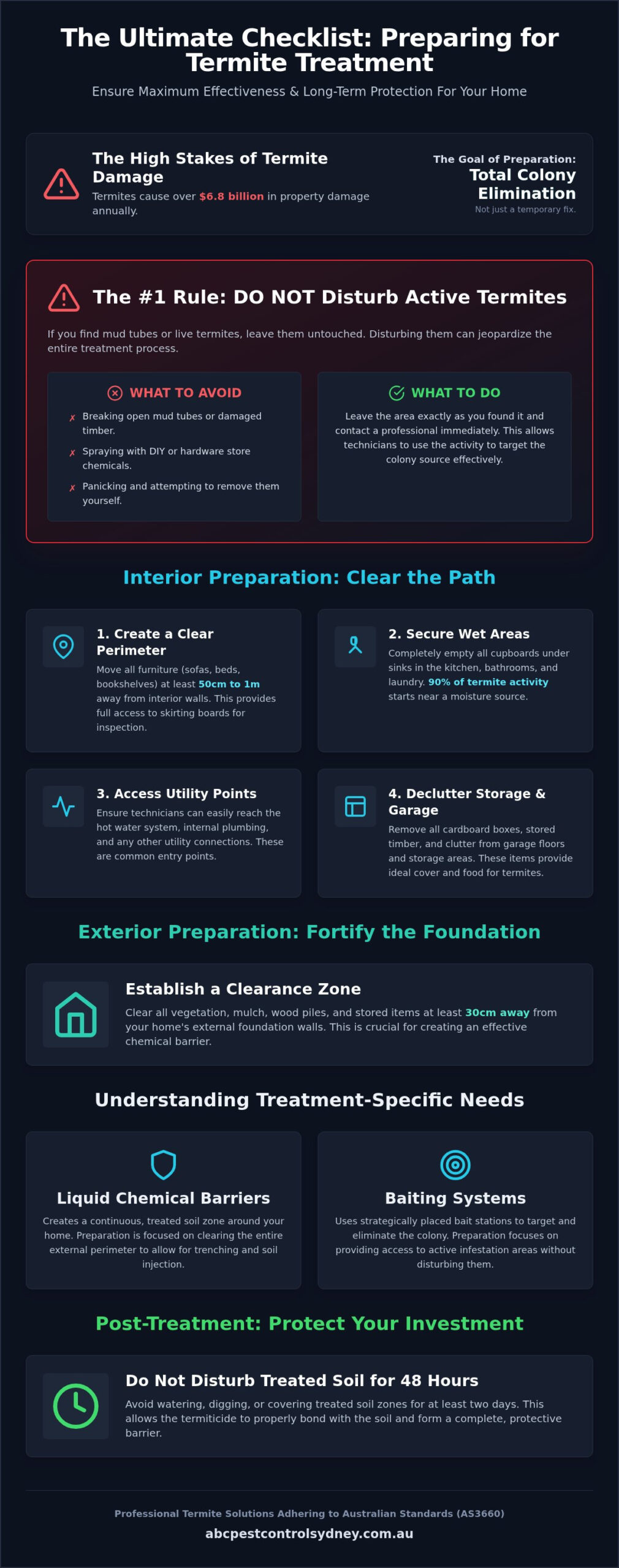
This is the most common mistake homeowners make when they first spot damage. If you find mud tubes or what look like “white ants” in your timber, leave them exactly as they are. Breaking these tubes or applying DIY hardware store sprays ruins professional baiting strategies. Termites are highly sensitive to environmental changes. When they feel threatened by amateur intervention, they retreat deeper into the structure or relocate to a different part of the house. This makes it significantly harder for our team to track the colony and eliminate the queen. Leave the visible activity alone so we can use it to deliver the treatment directly to the source.
Safety and Compliance in Sydney
Our approach prioritizes your family’s safety alongside total eradication. We strictly adhere to Australian Standards (AS3660) for every termite inspection Sydney homeowners book with us. Using professional-grade, eco-friendly solutions means you don’t have to worry about toxic exposure to children or pets. By following our guide on how to prepare for a termite treatment, you help us apply these specialized solutions with surgical precision. This efficiency minimizes the time we spend on-site and ensures the fastest path back to a secure, pest-free home.
Interior Preparation: Clearing the Path for Technicians
Interior preparation is about visibility and accessibility. Our technicians utilize advanced tools like thermal imaging and moisture meters, but these devices require direct contact with wall surfaces to be effective. Learning how to prepare for a termite treatment starts with creating a clear, walkable perimeter inside every room of your house. We cannot treat what we cannot reach, and hidden gaps are exactly where colonies thrive.
Move all furniture at least 50cm to 1m away from internal walls. This includes heavy items like sofas, beds, and large bookshelves. If a technician can’t physically reach the wall, they can’t confirm if termites are traveling behind your furniture. Clear access is non-negotiable for a professional result. Don’t forget to remove all clutter, cardboard boxes, and stored timber from the garage floor. Termites love the dark, undisturbed environment of a garage, and floor-level debris provides the perfect cover for their entry points.
Living Areas and Bedrooms
Skirting boards act as the primary highway for termites in Sydney homes. These pests often travel inside the small gaps between the timber and the wall structure. Remove any floor-length curtains or drapes that block the junction where the wall meets the floor. If you have built-in wardrobes, ensure they’re accessible so we can check for the tell-tale signs of mudding or hollowed timber. Don’t wait until the technician arrives to move heavy furniture; doing this in advance ensures the treatment remains on schedule and reaches every corner. If you’re feeling overwhelmed by the process, our pest sprays Sydney specialists can offer further guidance during your booking.
Wet Areas and Utilities
Moisture is the single biggest attractant for a colony. Statistics show that 90% of termite activity starts near a moisture source. You must clear out all cupboards under sinks in your kitchen, bathroom, and laundry. This allows our team to inspect internal plumbing penetrations and check for hidden leaks that might be drawing pests into your walls. A dry home is a termite-resistant home. Ensure clear access to your hot water system and any internal utility points. According to the EPA guide to termite control, managing moisture and removing cellulose-based debris are the most effective ways to support a professional treatment plan. Finally, ensure every window and door frame is clear of obstructions. We need to tap and inspect these frames to ensure your home’s structural integrity is intact.
Exterior and Subfloor Readiness: Protecting the Perimeter
Your home’s first line of defense is the external perimeter. To ensure a professional application, you must understand how to prepare for a termite treatment by clearing the foundation. Cut back all vegetation and mulch at least 30cm away from the external foundation wall. Foliage provides a bridge for termites to bypass treated zones. If plants touch the brickwork, they offer a direct, shaded path for pests to enter your home undetected. Relocate firewood piles, scrap timber, and cardboard boxes immediately. Move these items several meters away from the house structure. Storing wood against the foundation is an open invitation for subterranean termites. They’ll colonize the wood pile first and then move into your walls through the smallest cracks in the concrete or brickwork.
The “Soil-to-Brick” Clearance
Termites thrive in moist, organic environments. Mulch and garden beds against the house act as a buffet and a nursery. Ensure your soil levels are low enough to expose the damp-proof course. If the soil or garden beds cover this line, termites can enter the wall cavity behind the brick skin. Clear all weep holes, those small vertical gaps in your brickwork, of soil and debris. Blocked weep holes trap moisture and provide a “bridge” entry point. Referencing the Los Angeles County guide to termite treatment preparation can help you understand the meticulous level of clearing required for high-stakes treatments. This level of detail is essential for preventing structural failure. Don’t let a simple pile of mulch compromise your home’s safety.
Subfloor and Crawl Space Access
Sydney homes often feature unique challenges like sandstone foundations and complex pier structures. You must provide clear access to the subfloor via manholes or trapdoors. Technicians need to inspect every pier and bearer to ensure no mud tubes are climbing toward your floorboards. Sandstone is porous and can hide moisture, making it a favorite for local termite species. Remove all stored items from the subfloor area. Old suitcases, timber offcuts, or spare tiles provide “ladder” access. These items allow termites to bypass the soil and reach the timber framing directly. Ensure your technician has a clear, unobstructed path to crawl through the entire space. If we can’t see the pier, we can’t guarantee it’s protected. This step is a critical part of how to prepare for a termite treatment in older Sydney properties. Accessibility is the key to total colony elimination.
Treatment-Specific Requirements: Barriers vs. Baiting
Every eradication strategy demands a unique set of physical preparations. If you’ve chosen a liquid chemical barrier, the requirements differ significantly from a baiting program. Understanding these differences is the final step in learning how to prepare for a termite treatment effectively. For properties with built-in reticulation systems, you must ensure all fill-points are accessible. Don’t let new paving or garden beds cover these crucial injection sites. If you’re dealing with a severe infestation that requires fumigation, follow all protocols regarding double-bagging food and removing indoor plants. While tenting is less common in the Sydney metro area, it remains a high-stakes procedure that requires meticulous attention to detail.
Preparing for Chemical Barrier Installation
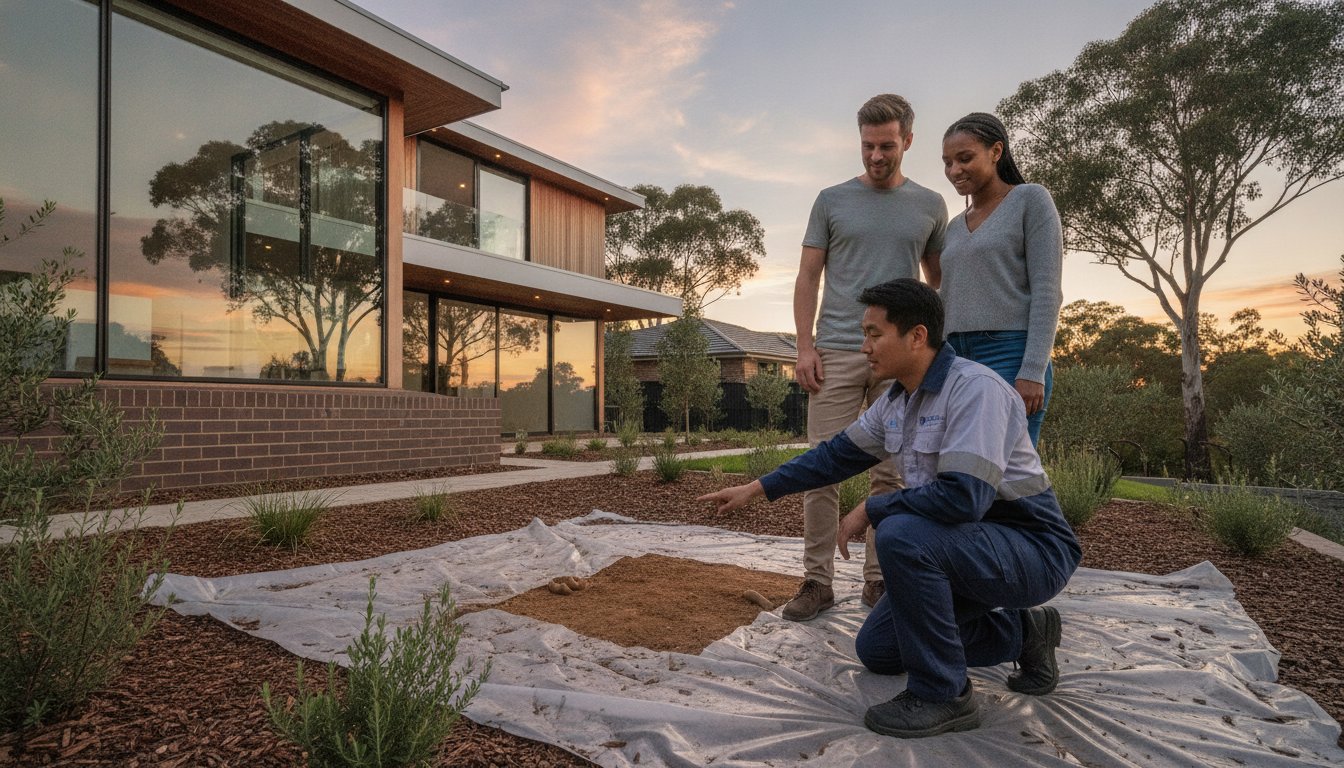
Installation of a chemical barrier is a labor-intensive process. Technicians often need to trench along the foundation or drill through concrete paths to reach the soil beneath. Move any loose pavers or decorative stones away from the house edge before we arrive. You should also identify the location of underground utilities like water pipes or electrical wires. A continuous liquid barrier is only possible if the technician can access the entire perimeter of the slab without hitting a hidden service line. Any gap in this barrier becomes a potential entry point for a persistent colony. Clearing the concrete edges ensures the drilling is precise and the termiticide is distributed evenly.
Preparing for Termite Baiting Stations
Preparing for baiting stations is less invasive but requires clear communication. Identify and mark any areas where children or pets frequently play in the yard. While the stations are secure, we want to ensure they’re placed in the most effective, low-traffic locations. Clear small patches of grass or soil every three meters around the house where the stations will be submerged. This allows the termites to find the bait stations before they ever reach your foundation. You can easily integrate these systems with your existing pest control Sydney plans for year-round peace of mind. Ready to secure your perimeter? Book your professional termite barrier installation now to stop the damage before it spreads.
Post-Treatment: Maintaining Your Termite-Free Zone
The success of your eradication plan depends on what happens after the technician packs up their gear. While you’ve mastered how to prepare for a termite treatment, the work doesn’t end when the application is finished. You must avoid disturbing the treated soil zone for at least 24 to 48 hours. This means no gardening, trenching, or landscaping around the perimeter of your home. If you move the soil, you break the chemical barrier and create a gap for pests to exploit. Monitor your property for “termite flight” or swarming in the weeks following the application. Seeing winged termites indoors shortly after treatment is common as the colony reacts, but persistent activity should be reported to our team immediately.
Long-term defense requires consistent moisture management. A dry home is a safe home. Fix any leaky outdoor taps and ensure your downpipes direct water far away from the foundation. Improving your property’s drainage prevents the soil from becoming a damp haven that attracts new colonies. Schedule your 12-month follow-up inspection immediately. Regular inspections are mandatory to maintain your treatment warranties and catch any new threats before they cause structural failure. Understanding how to prepare for a termite treatment ensures the initial application is perfect, but these maintenance steps keep the shield intact for years to come.
The ABC Pest Control Sydney Guarantee
Experience is the most valuable tool in pest management. ABC Pest Control Sydney brings over 20 years of local expertise to every job. We understand the specific challenges of the Sydney metro area, from sandstone foundations to high-pressure coastal environments. Our commitment to eco-friendly and safe extermination methods means your family and pets remain protected throughout the process. We specialize in high-difficulty infestations that other providers might miss. Whether you’re dealing with a resilient subterranean colony or complex structural voids, our technicians have the technical training to resolve the issue. We don’t just spray; we provide a comprehensive defense strategy that complies with Australian Standards AS3660.
Next Steps and Booking
Take the final step toward a secure home today. Our digital booking process is designed for modern Sydney residents who value their time and peace of mind. Rapid interaction and ease of use are at the core of our service. Don’t wait for a small problem to become a structural catastrophe. Book your comprehensive termite treatment now to lock in your protection. You’ve done the preparation; now let the experts handle the eradication. Secure your property with the reliability of a seasoned industry leader.
Secure Your Sydney Property and Stop the Damage Today
Accessibility is the foundation of a successful eradication. By clearing interior walls and ensuring the exterior perimeter is free of debris, you’ve removed the obstacles that allow colonies to thrive. Remember that moisture control remains your best long-term defense. Fixing leaks and improving drainage prevents your property from becoming an attractant for future infestations. Mastering how to prepare for a termite treatment is the single most important step you can take to ensure our specialists can do their job with surgical precision.
We bring 20+ years of Sydney metro experience to every site. Our team utilizes AS3660 compliant inspections and eco-friendly, family-safe methods to protect your loved ones while eliminating pests. You don’t have to face this stress alone. Our modern digital booking system makes it easier than ever to secure professional help. Take the final step to safeguard your investment.
Protect your home today—Book a professional Termite Treatment with ABC Pest Control Sydney
Your home is your biggest investment. You’ve done the hard work of preparing; now let us provide the expert intervention you deserve. We are ready to help you reclaim your peace of mind.
Frequently Asked Questions
Do I need to leave the house during a termite treatment?
Generally, you don’t need to leave your home. Most modern treatments, such as liquid soil barriers or baiting systems, allow you to stay inside while we work. We use low-odor, professional-grade products designed for minimal disruption. You only need to vacate if we are performing a specialized fumigation, which is rare for most Sydney residential properties.
Should I clean my house before the termite technician arrives?
Yes, but focus on clearing access rather than deep cleaning. You must ensure a clear path for our technicians by moving furniture 50cm away from internal walls and emptying under-sink cupboards. This is a vital part of how to prepare for a termite treatment because it allows our thermal imaging tools to detect hidden activity without obstruction.
Is termite treatment safe for my pets and children?
Yes, we prioritize the safety of your family. We utilize eco-friendly and family-safe methods that strictly comply with Australian Standards AS3660. Once liquid treatments have dried, usually within a few hours, it’s perfectly safe for children and pets to use the area. Our baiting stations are also locked and tamper-resistant to prevent accidental contact.
What happens if it rains on the day of my termite barrier treatment?
We will likely reschedule if heavy rain is forecast. Liquid soil barriers require dry ground to ensure the termiticide bonds correctly with the earth. If it rains during or immediately after an application, the product might wash away before it sets. We monitor Sydney weather patterns closely to ensure every treatment is applied in optimal, effective conditions.
How long does a professional termite treatment take to complete?
Most professional treatments take between 3 to 8 hours to complete. The exact time depends on your property size and the complexity of the installation. A full liquid chemical barrier for a standard Sydney house usually requires a full day of work. Bait station installations are often faster, typically taking around 2 to 4 hours depending on the perimeter length.
Can I still see live termites after the treatment has been applied?
Yes, it’s normal to see activity for a few days or even weeks. Our treatments are designed to be slow-acting so termites carry the product back to the heart of the colony. You might even notice a temporary increase in activity or a “termite flight” as the nest reacts. This confirms the termites are interacting with the treatment and spreading it to the queen.
Should I remove termite mud tubes myself before the appointment?
No, you should never disturb mud tubes or active termites. Breaking these leads or using DIY sprays warns the colony, causing them to retreat or relocate to a different part of your home. We need those active tubes to deliver the treatment directly into the colony’s network. Leave everything exactly as you found it to ensure maximum eradication success.
How often should I have my Sydney home treated for termites?
You should schedule a professional inspection every 12 months at a minimum. While chemical barriers can provide protection for several years, Sydney’s high termite pressure makes annual inspections essential for maintaining warranties. Knowing how to prepare for a termite treatment each year ensures your home remains a difficult target for new colonies looking to move into your neighborhood.