One in three Sydney homes will experience a termite attack in its lifetime. This is a staggering statistic that keeps many property owners awake at night. When you book your annual check, the biggest logistical question is usually: do I need to be home for termite inspection? It’s tempting to ask the inspector to just check the garden or sub-floor while you’re at work. You don’t want to burn a day of leave or leave a stranger alone in your house.
We understand that your time is valuable and your privacy is important. It’s perfectly normal to feel anxious about the disruption. However, skipping the internal portion of an inspection leaves your biggest asset vulnerable. Your presence is the key to a successful “Internal Audit” required by Australian Standard AS 3660.2. Without access to your skirting boards, roof voids, and wet areas, even the best technology can miss active colonies hidden behind your walls.
This article clarifies why being home is essential for a 100% accurate result. You’ll discover which high-risk zones require internal access and how we use thermal imaging to see what the naked eye cannot. We’ve also included a preparation checklist to ensure the process is fast, professional, and provides the total peace of mind you deserve.
Key Takeaways
- A comprehensive termite inspection requires full internal access to comply with Australian Standard AS 3660.2.
- When asking do I need to be home for termite inspection, remember that being present allows you to receive real-time feedback and expert advice on your property’s specific risks.
- Inspectors must physically enter high-risk zones like roof voids and subfloors to identify mud tubes and subterranean entry points that external checks miss.
- Properly preparing your home by clearing manholes and moving furniture ensures the technician can perform a thorough audit without delay.
- Professional Sydney inspections utilize advanced thermal imaging technology to detect “silent destroyers” hidden deep within your wall cavities.
Do I Need to Be Home for a Termite Inspection? Short Answer
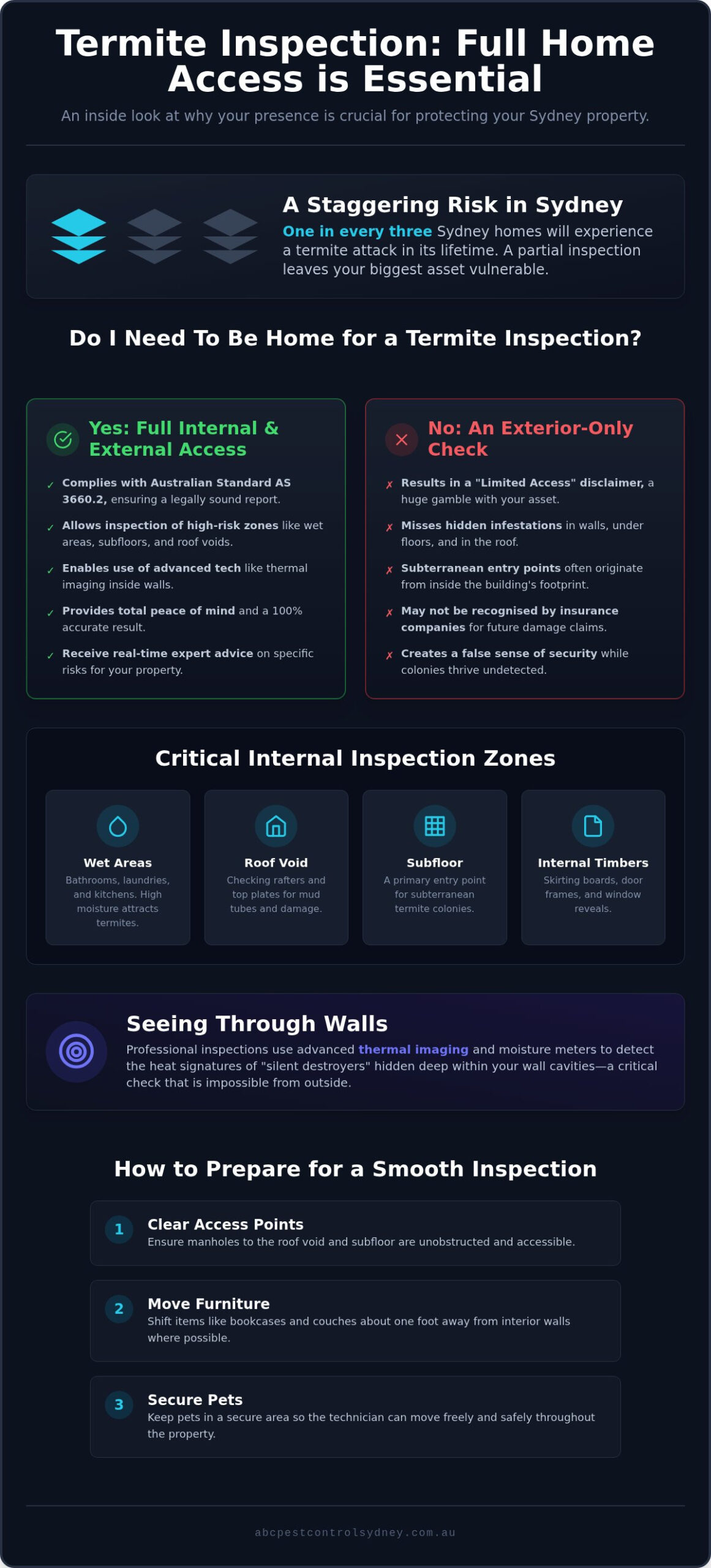
The short answer is yes. To receive a comprehensive, compliant report that actually protects your property, you really should be home. A professional termite inspection isn’t just a quick walk around the garden. It requires full access to both the interior and exterior of your home. In Sydney, the humid climate makes Termites a constant, year-round threat. To meet Australian Standard AS 3660.2, our technicians must conduct a thorough assessment of every accessible timber element, both inside and out.
Our technicians focus heavily on “high-risk” internal zones. These include bathrooms, laundry rooms, and kitchens where moisture levels are typically higher. These damp environments are magnets for subterranean species. We use specialized moisture meters and thermal imaging to scan behind your walls, but we can’t perform these vital checks from your driveway. If you’re asking, do I need to be home for termite inspection, consider the risk of leaving these critical internal areas unchecked. Missing even one small section of the house could allow a colony to thrive undisturbed for months.
Can the Inspection Proceed if I Am Not There?
Technically, an inspector can check the exterior of your home while you’re away. However, this significantly limits the accuracy and reliability of your final report. If you absolutely cannot take time off work, we recommend a specific protocol. You must arrange for a trusted neighbor, a family member, or a professional real estate agency like Stage Property to provide entry. We have a professional process for these situations to ensure your home remains secure while we perform the “Internal Audit” of your skirting boards, door frames, and window reveals. Without someone there to grant access, the inspector simply cannot fulfill their legal and professional obligations to protect your home.
The Risk of a “Partial” Termite Inspection
A “partial” check is a gamble you shouldn’t take with your biggest asset. Termites often enter through subfloors or tiny gaps around internal plumbing penetrations. If a technician can’t get inside, active infestations behind your walls or under your floorboards could go completely unnoticed. This results in a “Limited Access” disclaimer on your official report. This isn’t just a bit of paperwork; it has real-world financial consequences. Most Australian insurance companies won’t recognize a partial inspection if you try to make a claim for damage later. It’s much safer and more cost-effective to ensure we have total access from the very start.
Internal Areas That Require Professional Access
Sydney’s unique climate creates a perfect storm for timber pests. The high humidity and warm temperatures encourage Coptotermes acinaciformis, the most destructive species in our region, to seek shelter inside your walls. This is exactly why you shouldn’t ask, “do I need to be home for termite inspection?” and expect a simple walk-around. A professional technician must examine the built-in joinery that makes up the skeleton of your home. We check cupboards, skirting boards, and door frames for the subtle rippling or hollow sound that indicates active damage.
Wet areas are another high-priority zone. Termites are biologically driven to find moisture. Bathrooms, laundries, and kitchens provide the perfect environment for them to thrive. If there’s a slow leak behind your shower or under the kitchen sink, termites will find it long before you do. By granting us access to these rooms, we can use specialized tools to ensure no silent destroyers are nesting near your plumbing penetrations.
Why the Roof Void and Subfloor are Critical
These dark, undisturbed spaces are the “engine rooms” of a termite infestation. In many Sydney properties, the subfloor is the primary entry point for subterranean colonies. Homeowners often wonder, do I need to be home for termite inspection if the technician only needs to see the subfloor? The answer remains yes; the subfloor connects directly to internal wall cavities. Technicians use high-powered torches and tapping tools to detect hollowed timber in these crawl spaces. If you have a home with a subfloor, you are particularly vulnerable to white ants. Similarly, the roof void contains critical structural elements like rafters and top plates. We look for mud tubes, which are the protective tunnels termites build to travel safely while they consume your roof framing.
The Role of Moisture in Termite Detection
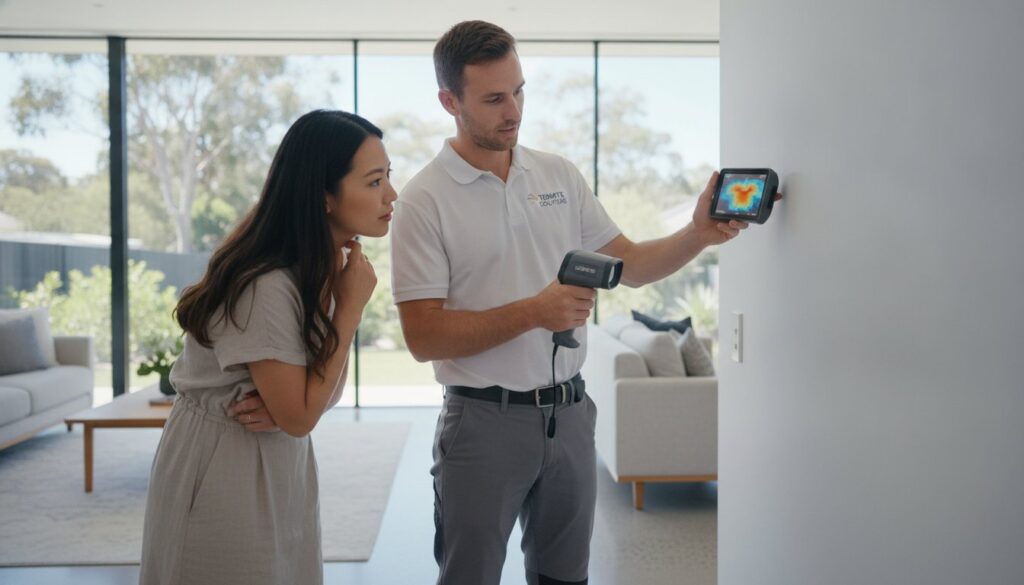
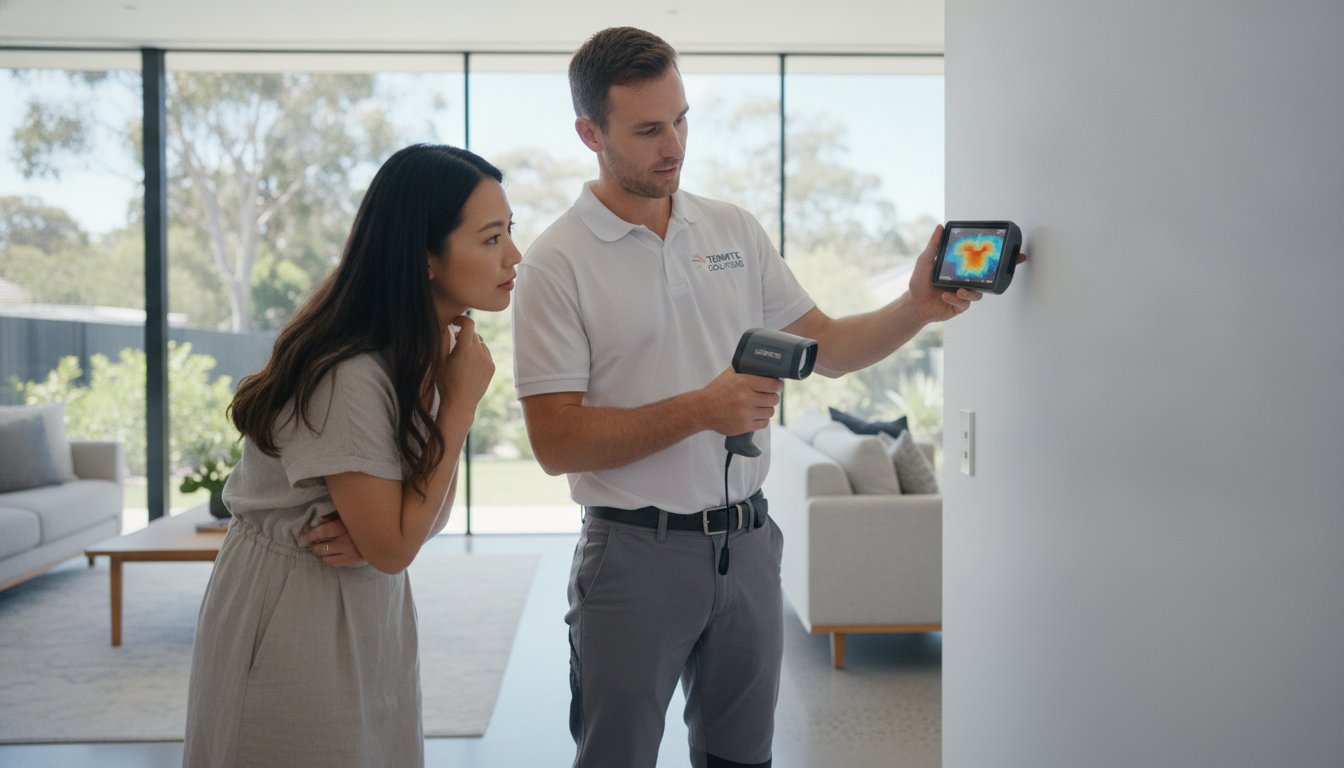
Modern technology has changed how we identify and control termites within a property. We don’t just rely on our eyes; we use precision moisture meters to find the damp spots that attract pests. High moisture readings in internal walls, especially those adjacent to showers, are immediate red flags. These readings often correlate directly with active termite galleries hidden deep inside the timber. Our technicians then use thermal imaging to confirm the presence of a colony without needing to cut into your plasterboard. If you want to ensure your home is truly safe, it’s best to schedule a professional assessment that covers every square inch of your interior.
The Benefits of Being Present During the Inspection
Being on-site during your appointment transforms a standard service into a valuable educational experience. You might wonder, do I need to be home for termite inspection if the final report is digital? The truth is that real-time feedback is irreplaceable. A professional technician can walk you through the property. They point out early warning signs that a static document might not fully convey. Seeing the evidence firsthand makes the threat real. It allows you to take immediate action to protect your investment.
One of the biggest advantages is witnessing advanced technology in action. We use thermal imaging cameras to detect heat patterns behind your plasterboard. Watching a technician demonstrate how these tools “see” through your walls provides confidence. A simple visual check simply can’t match this level of detail. If we identify a potential issue, we provide an immediate consultation on termite treatment options. This saves you days of waiting for a follow-up call. You can address the problem before it escalates into a structural nightmare.
For homeowners seeking deeper knowledge, resources like Termite Control: Answers for Homeowners explain why professional intervention is vital. However, nothing beats a local expert explaining the specific risks of your Sydney neighborhood.
Ask Your Sydney Pest Expert the Right Questions
Use this time to identify “conducive conditions” around your home. Ask the inspector about your garden mulch, timber retaining walls, or that leaking garden tap you’ve been ignoring. These are high-risk factors that attract subterranean species. You should also ask for a demonstration of our moisture meters. Understanding how we pinpoint high-risk zones helps you maintain your property more effectively between annual visits. Don’t forget to discuss the ideal frequency of inspections for your specific suburb. Some areas of Sydney face much higher pressure than others due to local soil types and vegetation.
Building Trust and Peace of Mind
Transparency is the foundation of our service. Seeing the thoroughness of the check reduces the anxiety that often comes with hidden damage. Our technicians from ABC Pest Control Sydney provide clear, jargon-free explanations of every finding. We want you to feel empowered, not overwhelmed. Direct interaction ensures all your concerns about pest control Sydney are addressed on the spot. This face-to-face communication builds a level of trust that isn’t possible through an email or a phone call after the fact.
How to Prepare Your Home for a Sydney Termite Inspector
Preparation ensures our technicians spend their time inspecting your home rather than moving your furniture. A standard inspection of a 200sqm Sydney house typically takes between 1.5 to 2 hours. If access is blocked, it takes longer and reduces the accuracy of our findings. As you prepare and ask yourself, do I need to be home for termite inspection, remember that your active role in clearing access is just as important as the technician’s tools. To get the most out of our 20 plus years of Sydney-specific experience, follow these simple steps before we arrive.
Start with the most difficult areas to reach. Clear everything away from the manhole or scuttle hole that leads to your roof void. Technicians must climb into this space to check rafters and top plates for signs of activity. Similarly, ensure the subfloor access hatch is not buried under storage boxes or debris in the laundry or hallway. If we can’t get in, we can’t verify the safety of your floor framing. Secure your pets in a safe, enclosed area or take them for a walk during the appointment. This prevents them from interfering with sensitive equipment or accidentally escaping through open gates while we move between the garden and the interior.
Internal Preparation Checklist
- Empty the cupboards under sinks in your kitchen, laundry, and bathrooms so we can check plumbing penetrations for moisture and mud tubes.
- Move heavy boxes, shelving, or equipment away from the perimeter of your garage to allow a clear view of the slab edge.
- Clear a 50cm path along all internal walls to provide unobstructed access for the technician’s moisture meter and thermal imaging scans.
External and Garden Preparation
The exterior of your home is your first line of defense. Trim back any foliage or garden beds that are touching the house walls. Overhanging branches and thick shrubs provide a “bridge” for pests to bypass your chemical or physical barriers. Move firewood piles, timber offcuts, or cardboard boxes at least several meters away from the foundation. These are essentially termite hotels that invite colonies to move closer to your structure. Most importantly, ensure the inspector can clearly see the “weep holes” in your brickwork. These small gaps are designed for ventilation, but they are also common entry points for subterranean species. If they are covered by soil or mulch, we cannot see if termites are entering your home. To ensure every high-risk zone is properly audited, schedule your professional Sydney termite inspection with our expert team now.
Professional Termite Inspections in Sydney: Why ABC Pest Control?
Protecting your home from subterranean threats requires more than just a quick glance. ABC Pest Control Sydney brings over 20 years of local experience to every property we audit. We’ve seen firsthand how “silent destroyers” can compromise a building’s integrity in just a few months. This is why we insist on a standard of care that exceeds basic requirements. When you ask, do I need to be home for termite inspection, our answer is rooted in our commitment to quality. We want to ensure every internal and external timber is verified against the highest industry benchmarks.
Our methodology is built on precision and transparency. We don’t just rely on visual cues. Our team uses a suite of advanced detection tools to find what others miss. Every assessment we perform results in a comprehensive report that complies fully with Australian Standard AS 3660.2. This documentation is vital for your records and future property valuations. To provide a total resolution for your home, we utilize:
- Thermal Imaging: We detect heat signatures from active colonies hidden behind plasterboard.
- Moisture Meters: We pinpoint damp conditions that act as a beacon for subterranean species.
- Termatrac Technology: We use microwave sensors to track termite movement through solid timber without invasive drilling.
Safety is our priority. We employ eco-friendly methods that effectively target pests while remaining completely safe for your family and pets. You don’t have to choose between a termite-free home and a healthy environment. We deliver both through specialized, low-impact treatments tailored to your specific property layout.
Our Sydney-Specific Expertise
Sydney is a high-pressure zone for termites, but the risks vary significantly between regions. We understand the specific challenges faced by homes from the humid North Shore to the drier, heat-prone Western Suburbs. Our technicians are trained to identify multiple threats simultaneously. During your appointment, we often spot the subtle signs of rodent control issues that may be developing alongside termite activity. This holistic approach ensures your property is protected from all angles. We provide tailored advice based on your local micro-climate and soil type, helping you maintain a resilient barrier year-round.
Book Your Fast and Professional Inspection Today
Don’t leave your property’s safety to chance. If you’re still wondering, do I need to be home for termite inspection, remember that your presence ensures the most thorough internal check possible. We offer an easy online booking system and a responsive phone team to help you secure a time that fits your schedule. We believe in transparent pricing with no hidden fees for your termite inspection sydney. Join thousands of local homeowners who trust ABC Pest Control for their peace of mind. Secure your home today and stop termites before they start.
Secure Your Sydney Home Against Silent Destroyers
Your home is your most valuable asset. Don’t leave its protection to a partial check. While the logistical question of do I need to be home for termite inspection is common, the benefits of your presence are clear. You ensure full internal access to high-risk zones like roof voids and wet areas. This allows our technicians to deliver a 100% accurate audit that meets strict Australian Standard AS 3660.2 requirements.
ABC Pest Control Sydney brings 20 plus years of experience to your doorstep. Our comprehensive service includes advanced thermal imaging technology to detect hidden colonies before they cause structural damage. You receive a compliant, jargon-free report and immediate expert advice on maintaining a pest-free environment. Take the first step toward total peace of mind and professional protection for your property.
Book Your Professional Sydney Termite Inspection Now and safeguard your property for the future. We’re ready to help you protect what matters most with reliable, expert intervention.
Frequently Asked Questions
How long does a termite inspection usually take?
A professional audit of a standard 200sqm house typically takes between 1.5 to 2 hours. This timeframe allows our technicians to examine high-risk zones like the roof void, subfloor, and external perimeter. Larger properties or those with complex structures may require additional time to ensure every timber element is verified against Australian Standards.
Do termite inspectors need to go inside the house?
Yes, internal access is mandatory for a compliant report. Technicians must check skirting boards, door frames, and wet areas like bathrooms where termites are attracted to moisture. If you are asking do I need to be home for termite inspection, remember that an exterior-only check is considered a partial inspection and may not be recognized by insurance providers.
What happens if the inspector finds active termites?
Don’t disturb them. If we discover active termites, it’s vital that you leave them alone. Spraying them with household chemicals often causes the colony to retreat and relocate, making professional eradication much harder. We will provide an immediate treatment proposal and a risk assessment to stop the infestation before structural damage worsens.
Is a termite inspection the same as a general pest control service?
No, they are distinct services. General pest control targets surface pests like cockroaches or spiders. A termite inspection is a specialized structural audit focused on wood-destroying insects. It involves advanced tools like thermal imaging and moisture meters to find hidden activity deep within your walls that a standard spray won’t address.
How much does a professional termite inspection cost in Sydney?
Costs vary based on the size of your property and the technology used. A comprehensive audit involving thermal imaging and moisture meters reflects the specialized equipment and expertise required. We recommend contacting us for a transparent quote tailored to your specific Sydney suburb and home layout to ensure you receive the most accurate information for your property.
Do I need a termite inspection for a brand new home?
Yes, even new homes are vulnerable. While new constructions have physical or chemical barriers, AS 3660.2 recommends a professional inspection at least once every 12 months. Termites can bypass barriers through garden beds or renovations. An annual check ensures your warranty remains valid and identifies any early breaches before they become expensive repairs.
Will the inspector need to move my furniture?
Homeowners are responsible for clearing access. We ask that you move furniture at least 50cm away from internal walls and clear cupboards under sinks. This allows our technicians to scan skirting boards and plumbing penetrations efficiently. If you can’t move heavy items, please let us know beforehand so we can discuss the best way to proceed during the appointment.
Are the chemicals used in termite treatments safe for my pets?
Yes, we prioritize your family’s safety. Modern termite treatments use eco-friendly products that are specifically designed to be safe for pets and children once dry. Our technicians follow strict safety protocols and will provide clear instructions on when it’s safe for your pets to return to treated areas. Peace of mind and safety are part of every service we provide.