
Did you know that Sydney pest managers are reporting record-high rat numbers in 2026, making this the most challenging year for homeowners in over two decades? You want your home to be a safe sanctuary, but the constant worry about unhygienic droppings near your food or hidden termite damage creates genuine anxiety. It’s difficult to distinguish between the house settling and a serious problem. Learning the early signs of pest infestation in house is the only way to protect your property and your family’s health before the damage becomes irreversible.
We understand your need for peace of mind and professional certainty. This guide will help you identify subtle red flags before they cause thousands in structural damage to your Sydney home. You’ll learn how to spot the specific signatures of common intruders like German cockroaches and rodents. We’ll also explain how the new March 2026 rodenticide regulations impact your options. By the end of this article, you’ll know whether an infestation exists and exactly when it’s time to call a professional for expert intervention.
Key Takeaways
- Learn to identify the subtle signs of pest infestation in house, such as specific dropping shapes and chewed wiring, before they lead to expensive structural damage.
- Understand how Sydney’s unique humidity accelerates breeding cycles and why a single sighting usually indicates a hidden colony.
- Discover the exact biological signatures of termites and cockroaches, including mud tubes and egg casings hidden in kitchen cupboards.
- Master a room-by-room inspection strategy that targets high-risk moisture zones like bathrooms and the dark spaces behind kitchen appliances.
- Know when to transition from monitoring to professional action with comprehensive packages designed to eradicate up to 15 different pest types in one visit.
The Stealthy Threat: Why Spotting Signs of Pest Infestation in Your House is Critical
A single cockroach scuttling across your kitchen bench isn’t just an eyesore; it’s a warning shot. In the pest control industry, we distinguish between a “sighting” and an “infestation.” A sighting might be a lone traveler, but an infestation is a persistent colonisation where pests have established a breeding ground within your walls. Sydney’s unique climate makes this transition happen faster than in almost any other Australian city. Our high humidity and temperate coastal weather act as an incubator, accelerating the breeding cycles of cockroaches and termites. If you wait until you see a swarm, the colony has likely been growing for months.
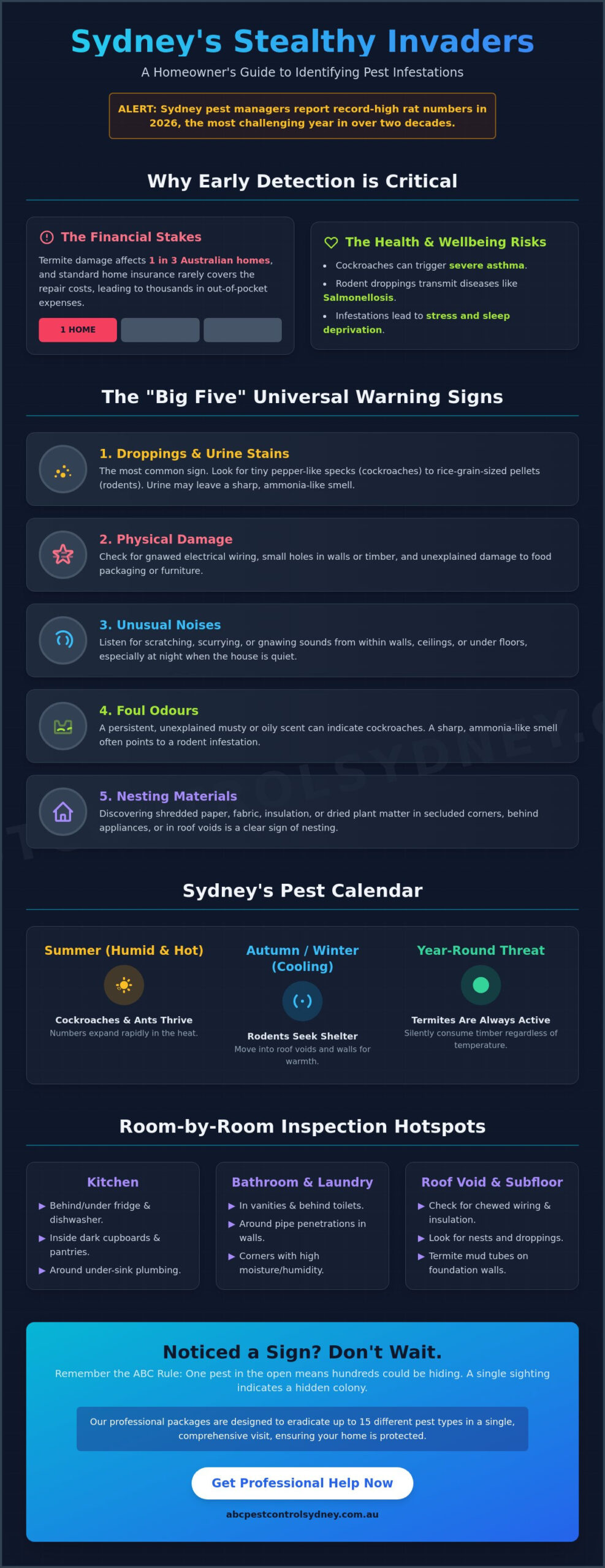
The financial stakes are incredibly high for Sydney property owners. Industry data suggests that termite damage affects 1 in 3 Australian homes during their lifespan. Because standard home insurance rarely covers termite damage, a hidden invasion can result in tens of thousands of dollars in out-of-pocket structural repairs. At ABC Pest Control Sydney, we operate by the “ABC Rule”: if you spot one pest in the open, there are likely dozens, if not hundreds, hidden in the shadows. Identifying the early signs of pest infestation in house environments is your best defense against these mounting costs.
The Health Risks of Delayed Action
Pests aren’t just destructive; they’re dangerous to your family’s wellbeing. German cockroaches are notorious for carrying pathogens and triggering severe asthma attacks through their shed skins and droppings. Rodents pose even greater risks. Their dander and urine can transmit diseases like Leptospirosis and Salmonellosis, which are serious public health concerns in high-density Sydney suburbs. Beyond the physical risks, the mental toll of an active infestation often leads to significant stress and sleep deprivation. You deserve to feel safe and relaxed in your own home.
Sydney’s High-Risk Pest Seasons
Our local environment dictates when specific threats emerge. During the humid summer months, cockroaches and ants thrive in the heat, rapidly expanding their numbers. As the weather cools in autumn and winter, rodents seek the warmth of your roof voids and wall cavities, often chewing through electrical wiring to create nesting sites. Termites remain a year-round threat in New South Wales, silently consuming timber regardless of the temperature. Understanding these comprehensive pest control methods is essential for year-round protection. Early detection of the signs of pest infestation in house structures allows you to act before the seasonal surge turns into a permanent problem.
The “Big Five”: Universal Warning Signs You Should Never Ignore
Identifying the physical signs of pest infestation in house environments requires a keen eye for detail. While these intruders are experts at staying hidden, they leave behind undeniable biological footprints. If you notice any of the following indicators, your home is likely under siege from a growing colony. Ignoring these markers only gives pests more time to multiply and cause damage.
- Droppings and Urine: These are the most common indicators. Sizes range from tiny pepper-like specks to rice-grain-sized pellets.
- Physical Damage: Look for chewed electrical wiring, holes in attic insulation, and small entry points in timber structures.
- Unusual Noises: Scratching inside wall cavities or the sound of scurrying across the ceiling at night often signals a rodent problem.
- Foul Odours: A persistent musty scent often points to cockroaches, while a sharp, ammonia-like smell indicates rodent urine.
- Nesting Materials: Finding shredded paper, fabric, or dried plant matter in dark, undisturbed corners is a clear sign of active nesting.
It is worth noting that rodents are often attracted to loose papers and cardboard boxes for nesting material. If you need to upgrade your storage to more durable options or replace damaged stationery, you can discover Mega Office Supplies for a wide range of professional office essentials.
For more on the environmental impact of these intruders and how they interact with local ecosystems, you can review the NSW pest animal information portal. Understanding these risks is the first step toward reclaiming your home. If you are noticing these red flags, a professional general pest control package can provide the comprehensive sweep needed to protect your property.
Decoding Droppings and Smears
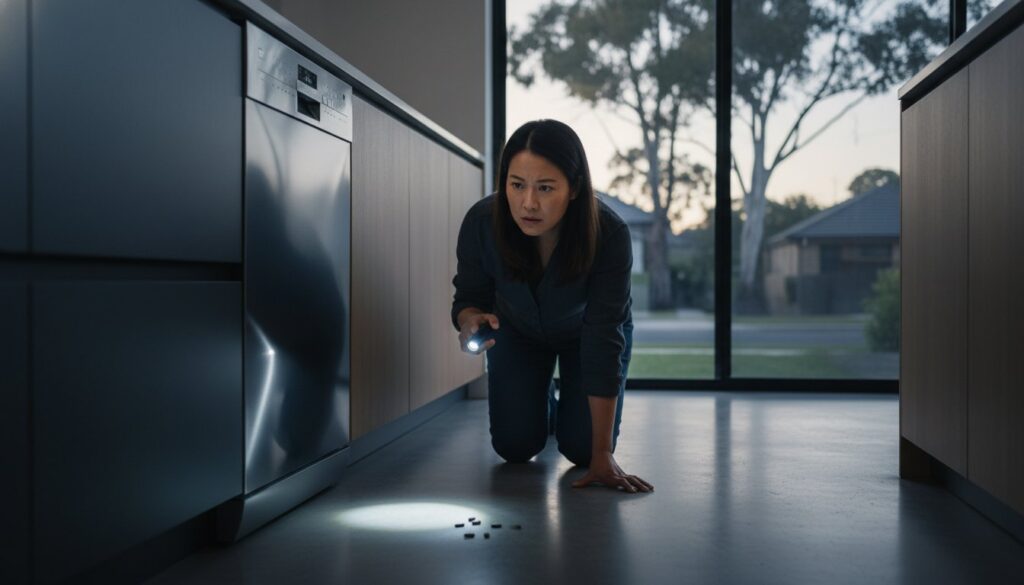
Cockroach droppings look like tiny black pepper specks, whereas mouse droppings are larger, dark, and shaped like grains of rice. Beyond pellets, look for “rub marks.” These are dark, greasy trails left by rodents as their oily fur brushes against skirting boards. In high-humidity areas like Sydney bathrooms, cockroaches also leave brown, irregular smear marks on vertical surfaces. These signs of pest infestation in house settings are definitive proof that pests are using specific travel routes through your home.
Auditory Clues: What Those Sounds Actually Mean
Heavy thumping or loud scratching in the roof usually indicates larger intruders like roof rats or even possums. In contrast, a light pitter-patter is more typical of mice or significant cockroach activity. If you hear a faint clicking sound coming from within your timber frames, pay close attention. This is often the sound of termite soldiers banging their heads against wood to signal danger to the rest of the colony. These sounds are never “just the house settling.” They are active signals of a biological invasion in progress.
Decoding the Evidence: Signs of Specific Sydney Pests
Pests in Sydney aren’t a monolith. Each species leaves a unique biological fingerprint that requires a specific response. To protect your property effectively, you need to recognize these distinct signs of pest infestation in house environments. Identifying the exact culprit early allows for a targeted treatment plan rather than a broad, less effective approach. If you ignore these specific indicators, you risk letting a specialized threat turn into a total property takeover.
- Termites: Look for pencil-thin mud tubes on external foundation walls and timber that sounds “hollow” when tapped.
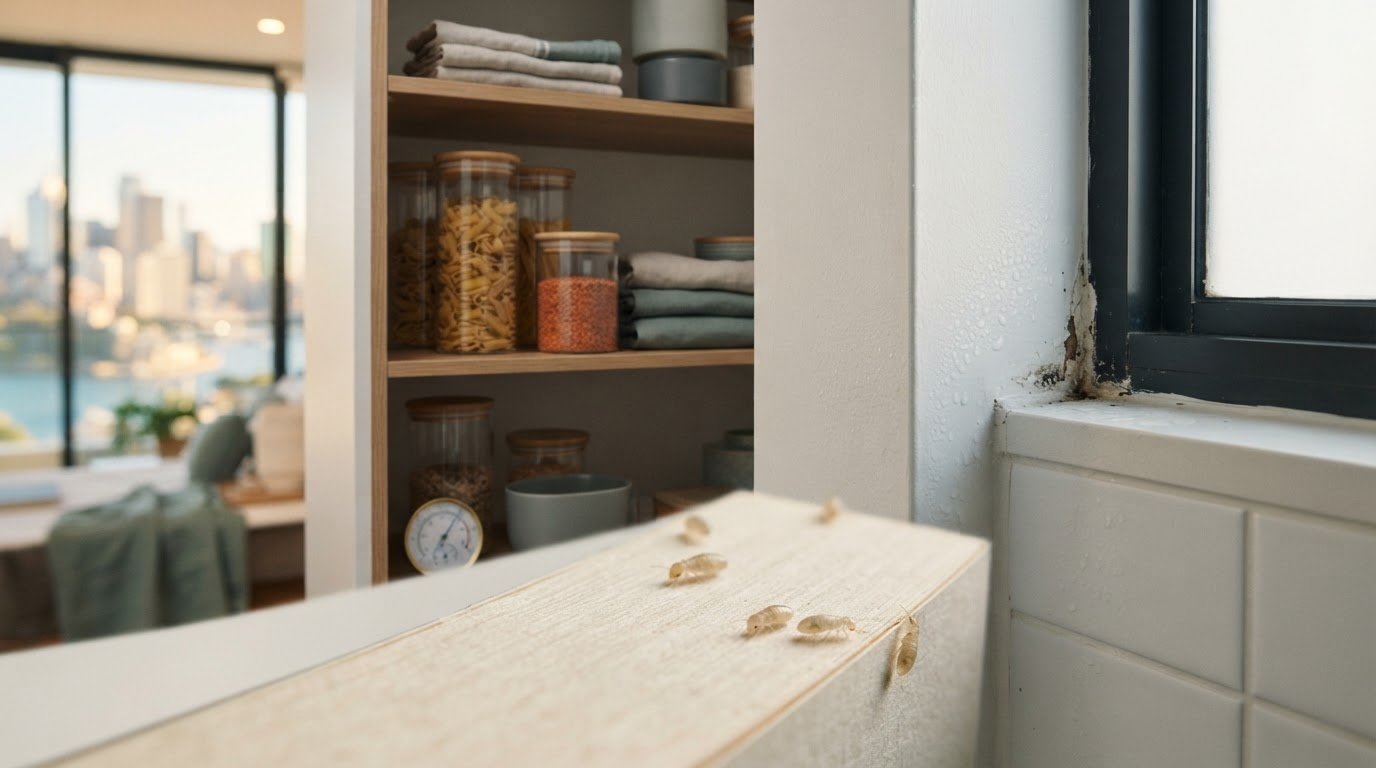
- Cockroaches: Spotting oothecae, which are small, brown, capsule-shaped egg casings, in the dark corners of kitchen cupboards.
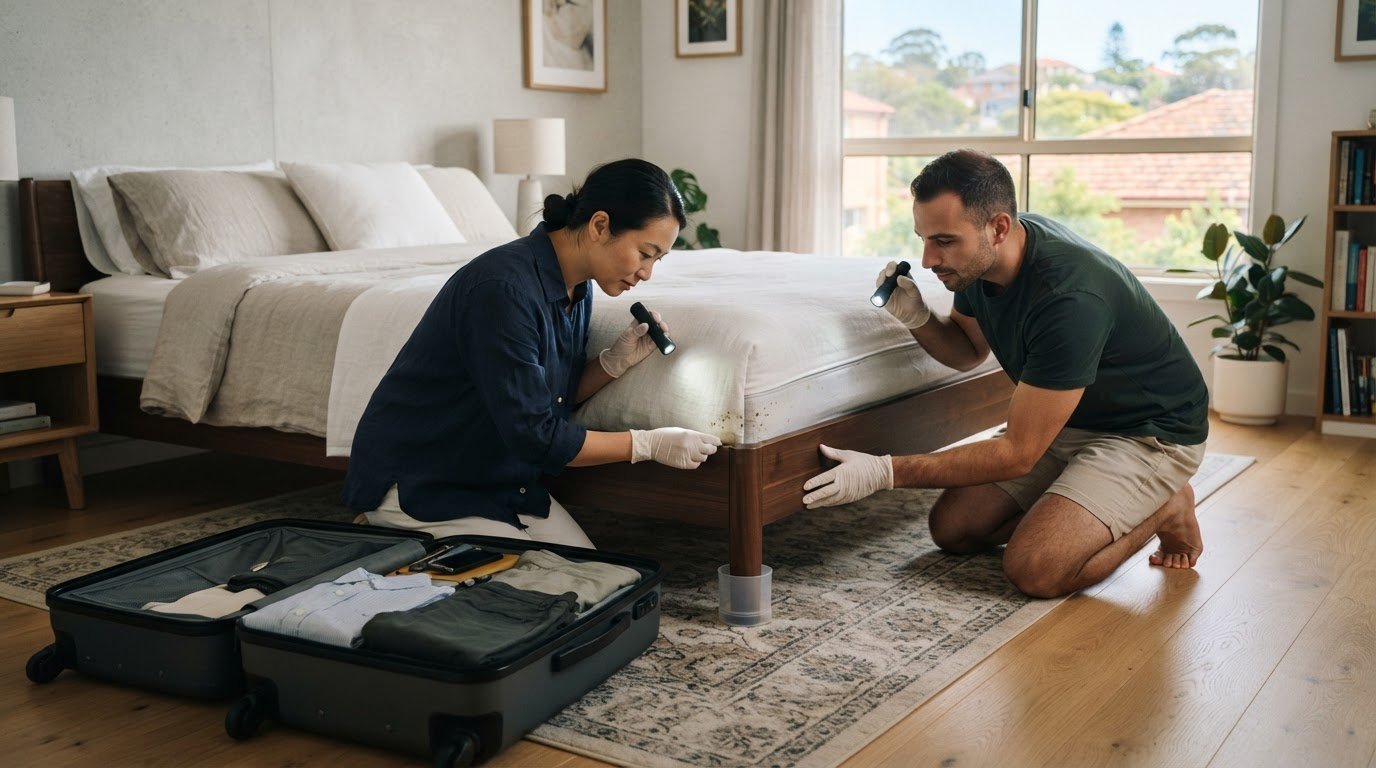
- Bed Bugs: Finding tiny blood spots on sheets or “rusty” stains on mattresses and bed frames.
- Possums: Hearing heavy, rhythmic thumping in the ceiling at night accompanied by yellow urine staining on cornices.
The Termite Warning Sign: More Than Just Wood Damage
Many homeowners mistakenly refer to termites as “white ants.” This is a dangerous misnomer. Termites are far more destructive than any ant species and can compromise your home’s structural integrity in months. They build mud tubes to stay hydrated while traveling from the soil to your timber frames. You should also watch for “frass.” This sawdust-like material is actually the waste produced by wood-boring pests. Because termites eat wood from the inside out, the damage isn’t always visible. A professional termite inspection Sydney is the only reliable way to confirm if your home is safe or under silent attack.
Resilient Pests: Bed Bugs and German Cockroaches
Some infestations are notoriously difficult to clear with DIY methods. German cockroaches, for example, reproduce at an alarming rate in Sydney’s humid climate. If you see their egg casings or notice a lingering musty smell, the colony is already well-established. Bed bugs are equally resilient. These hitchhikers hide in cracks and crevices, emerging at night to feed. A heavy bed bug presence often produces a sweet, sickly odour that is unmistakable once you’ve smelled it. These signs of pest infestation in house settings require specialized chemicals and techniques that hardware store sprays simply can’t provide. If you suspect these intruders have moved in, consult our guide on how to get rid of bed bugs to understand the level of intervention required for total eradication.
The Room-by-Room Inspection: Where to Look for Pests
Grab a high-powered torch and a pair of gloves. To truly confirm the signs of pest infestation in house environments, you must look where most people don’t. Pests are biological opportunists that seek out heat, moisture, and darkness. By conducting a structured walkthrough of your property, you can catch a colony before it spreads to every room. Use this framework to audit your home’s high-risk zones.
- The Kitchen: Pull out the fridge and check the motor area for warmth-seeking German cockroaches. Inspect under the sink for leaks and check inside pantry door hinges.
- The Bathroom: Look for moisture-loving pests around floor drains and behind the toilet. Persistent dampness in grout can attract silverfish and drain flies.
- Roof Voids and Attics: Shine your light across the insulation. Look for flattened “runways” or scattered droppings that indicate rodent activity.
- External Perimeter: Trace the brickwork for “ant highways” and ensure your weep holes are clear of debris or mulch.
- Subfloors: Check the crawl space for damp soil or termite mudding on the internal piers.
If your DIY inspection reveals active trails or nesting sites, don’t wait for the problem to escalate. Secure our general pest control packages to stop the invasion at the source and protect your structural integrity.
The Kitchen and Pantry Deep-Dive
Your pantry is a prime target for stored product pests. Check your flour, grains, and dry pet food for tiny silk webbing or small crawling larvae. These are clear indicators of pantry moths. While you might find a few dead bugs under the toaster, don’t be fooled into thinking the threat has passed. Dead pests in plain sight often suggest that the hidden nesting sites are so overcrowded that weaker individuals are being pushed into the open. For a deeper look at managing these resilient intruders, read our expert advice on how to get rid of cockroaches for good.
External Perimeter and Weep Holes
Sydney gardens are beautiful, but they often serve as launch pads for home infestations. Overhanging tree branches act as bridges, allowing roof rats and ants to bypass your ground-level defences. Inspect your weep holes carefully. These essential ventilation gaps in your brickwork are the preferred entry points for spiders and cockroaches. If your garden beds are pressed directly against the house, you’ve created a high-speed lane for pests to enter. Our guide to pest control Sydney provides a comprehensive strategy for creating a chemical barrier around these vulnerable entry points. Identifying these signs of pest infestation in house exteriors is the only way to prevent a breach.
Professional Intervention: How ABC Pest Control Sydney Eradicates Infestations
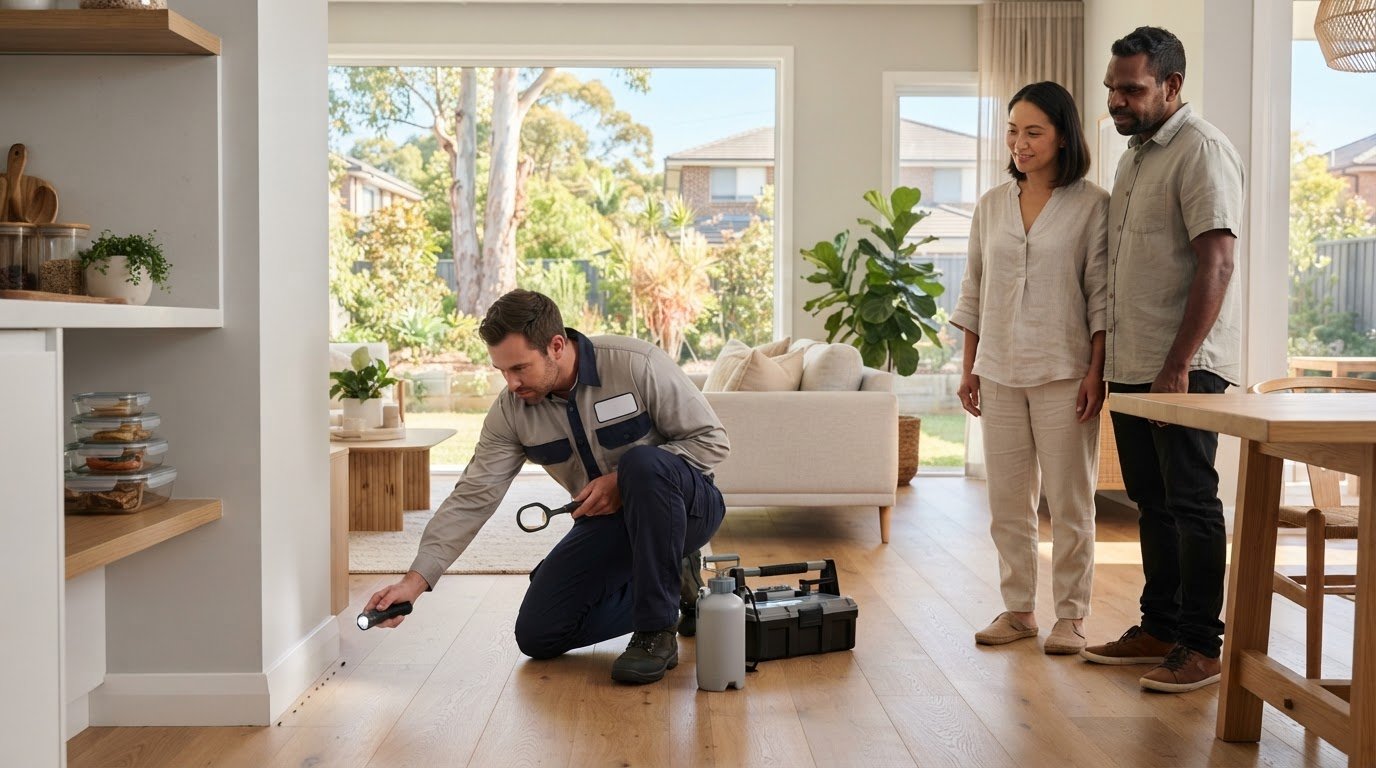
Once you’ve identified the signs of pest infestation in house areas, the clock starts ticking. Early detection is a significant victory, but total eradication requires professional grade methodology. With over 20 years of experience navigating the specific pest challenges of the Sydney basin, we understand that local knowledge is the difference between a temporary fix and a permanent solution. We don’t just treat the symptoms; we eliminate the biological source of the problem. Our team combines technical training with an urgent response to ensure your home remains a safe sanctuary.
Our “General Pest Control Package” is designed for maximum efficiency and value. It treats up to 15 different pests in a single visit, providing a comprehensive sweep that covers everything from common ants to resilient cockroaches. This is the gold standard for Sydney homeowners who want total peace of mind without the hassle of booking multiple specialized appointments. We also excel at handling high difficulty challenges that retail products can’t touch, such as bed bug outbreaks or complex possum removals.
Safety is the cornerstone of our professional persona. We use eco-friendly and safe methods specifically selected to protect your children and pets while remaining lethal to intruders. By adhering to strict national regulatory standards, we deliver results that don’t compromise your family’s health or the environment. You get the benefit of specialized expertise and the reassurance that your property is in the hands of seasoned professionals.
Our Proven 3-Step Eradication Process
- Detailed Inspection: We use professional diagnostic tools to find the hidden nests and moisture sources that standard DIY checks often miss.
- Targeted Treatment: Using safe, high-grade sprays and baits, we neutralize the colony at its core. This is far more effective than surface level retail sprays.
- Preventative Barriers: We establish long-lasting chemical and physical perimeters to ensure those signs of pest infestation in house structures don’t return next season.
Book Your Sydney Pest Inspection Today
Delaying treatment only increases the risk of expensive structural damage and ongoing health complications. Pests don’t move out on their own; they colonize until they are professionally removed. Take control of your home’s safety right now through our rapid digital booking process. It’s modern, respectful of your time, and the fastest way to restore your peace of mind. Get a free quote for your Sydney home today and let our experienced team handle the heavy lifting for you.
Reclaim Your Peace of Mind Today
Your property is likely your largest investment. Protecting it from the subtle but destructive signs of pest infestation in house environments is a critical responsibility that shouldn’t be delayed. By mastering the room-by-room inspection framework and recognizing the unique biological signatures of Sydney pests, you’ve already taken the first step toward a safer home. Always remember that a single sighting usually represents a much larger colony hidden deep within your walls. Professional intervention is the only definitive way to ensure these colonies are completely eradicated and blocked from returning.
Don’t let a minor nuisance escalate into thousands of dollars in structural damage. We bring over 20 years of specialized Sydney experience and a reputation for excellence as seen on major Australian media outlets. Our eco-friendly and family-safe treatments provide the total protection you need without any risk to your loved ones. Secure your home with Sydney’s pest experts—book your inspection now! You deserve the peace of mind that comes with a truly pest-free environment. Let’s reclaim your home today.
Frequently Asked Questions
What are the first signs of a pest infestation in a house?
The earliest signs of pest infestation in house environments often include small droppings in cupboards or strange scratching sounds at night. You might also notice tiny holes in food packaging or dark grease marks along your skirting boards. These subtle clues indicate that a colony is establishing itself. Don’t wait for a visual sighting to take action; these biological markers are enough evidence to warrant an inspection.
How can I tell the difference between rat and mouse droppings?
Rat droppings are significantly larger, measuring about 12mm to 20mm with blunt ends. Mouse droppings are much smaller, roughly 3mm to 8mm, and have pointed ends similar to grains of rice. Fresh droppings look dark and moist, while older ones appear grey and crumbly. Identifying the size helps our team determine the correct treatment strategy for the specific rodent species present in your home.
What does a termite infestation look like in Sydney homes?
Termite activity often manifests as pencil-thin mud tubes climbing up your external foundation or internal walls. You may also find that timber door frames or skirting boards feel soft or sound hollow when tapped. In some cases, you might even see “swarmers,” which are winged termites, emerging during humid Sydney evenings. These are urgent signals of structural risk that require immediate professional intervention.
Can I hear pests in the walls during the day?
While most pests like rodents are nocturnal, you can occasionally hear them during the day if the infestation is large or their nest is disturbed. Scratching or scurrying sounds in the walls during daylight hours often suggest a high population density. If you hear persistent movement when the house is quiet, it’s a strong indicator that the intruders have become comfortable in your living space.
What should I do if I see a cockroach in my kitchen?
Seeing one cockroach usually means dozens more are hiding nearby in cracks or behind appliances. Clean up all food crumbs immediately and seal open containers in your pantry. Because DIY sprays often fail to reach the hidden nest, you should book a professional treatment to stop the breeding cycle. Early intervention prevents a minor sighting from becoming a major health risk for your family.
Are pest infestation signs different in apartments vs. houses?
Specific signs of pest infestation in house structures often involve roof or garden entry, while apartment issues frequently center on shared plumbing and wall cavities. In Sydney units, you are more likely to see German cockroaches or bed bugs traveling between neighboring apartments. Look for activity near shared pipes under sinks or in laundry areas where moisture and heat are consistent and attractive to pests.
How often should I have a professional pest inspection in Sydney?
We recommend a professional pest inspection at least once every 12 months for most Sydney properties. Homes in high-risk termite zones or areas with dense vegetation may require more frequent checks every six months to ensure total protection. Regular inspections catch subtle problems before they turn into expensive structural repairs. This proactive approach ensures your home remains safe and hygienic throughout every season.
Do bad smells always mean I have a pest problem?
Persistent, unexplained odours are a very common indicator of a serious pest issue. Cockroaches produce a distinct musty, oily smell, while rodents leave a sharp ammonia scent from their urine. While a bad smell could occasionally be related to plumbing, a professional should investigate if the odour is concentrated in areas like the kitchen, subfloor, or roof void. Trust your senses and act quickly to identify the source.