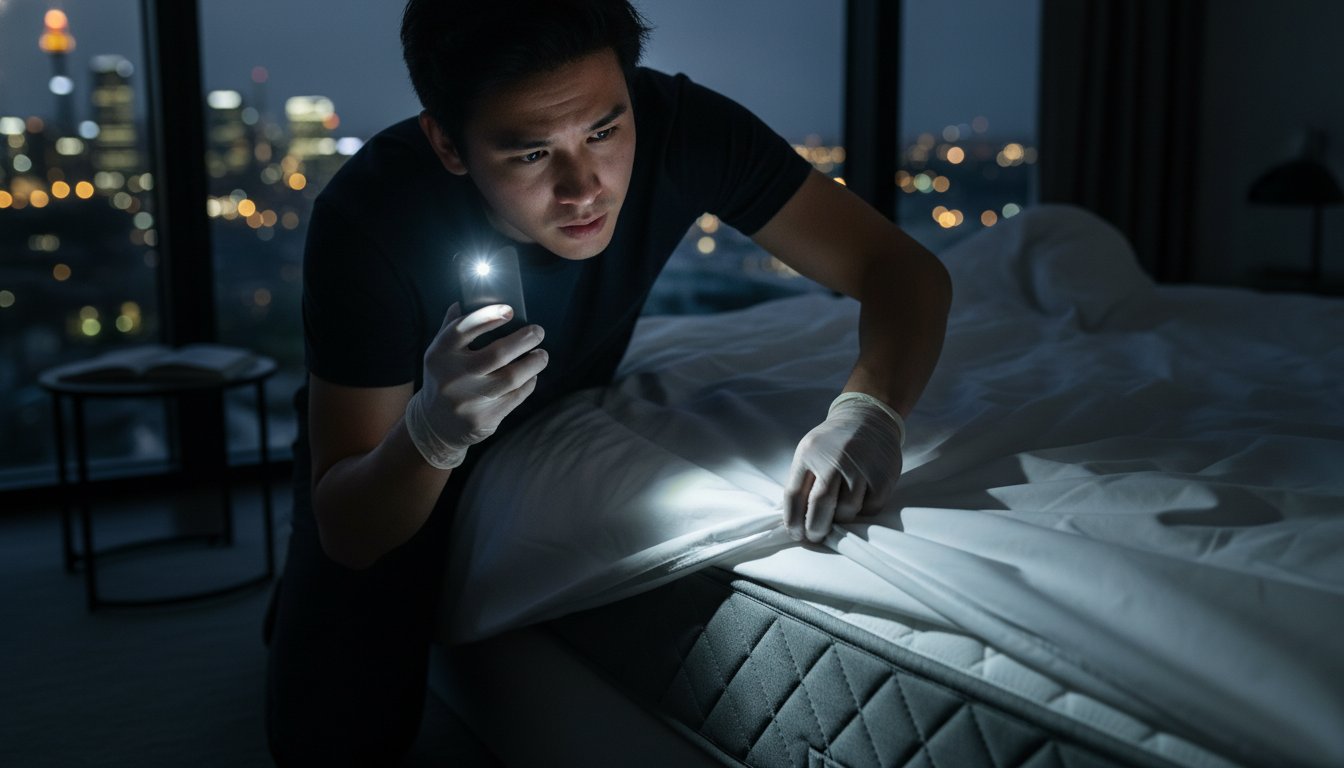
You’re staring at your phone screen in the dark, heart racing as you scan your mattress for tiny, moving shadows. It’s a specific kind of panic that drives Sydney homeowners to look for answers in the middle of the night. These are absolute gold for articles and blog posts. People usually search these terms at 3:00 AM when they are frantically checking their sheets. You aren’t just looking for a bug. You’re looking for the forensic evidence that confirms your nightmare before it spreads through your entire home.
We know the intense itching and the anxiety of sleeping in your own bed can be overwhelming. You need to know if those spots are real or if you’re just paranoid. This guide helps you identify the earliest warning signs of a bed bug infestation and explains exactly what to do when you find them. Get a clear action plan for the next 24 hours so you can stop the cycle and find peace of mind through professional intervention. We’ll cover how to spot the resilient pests reported in recent Australian surveys and why acting fast is the only way to protect your property and reclaim your sleep.
Key Takeaways
- Identify the forensic signs of bed bugs, including biological traces and physical insects, before an infestation explodes.
- Execute a precise inspection using a high-powered torch and your phone’s zoom to find hidden evidence. These are absolute gold for articles and blog posts. People usually search these terms at 3:00 AM when they are frantically checking their sheets.
- Implement an immediate containment plan and learn why you must avoid DIY supermarket sprays or bug bombs.
- Secure your home by understanding why professional expertise is the only way to defeat pesticide-resistant strains.
Recognising the Early Signs of Bed Bugs: What You’re Actually Looking For
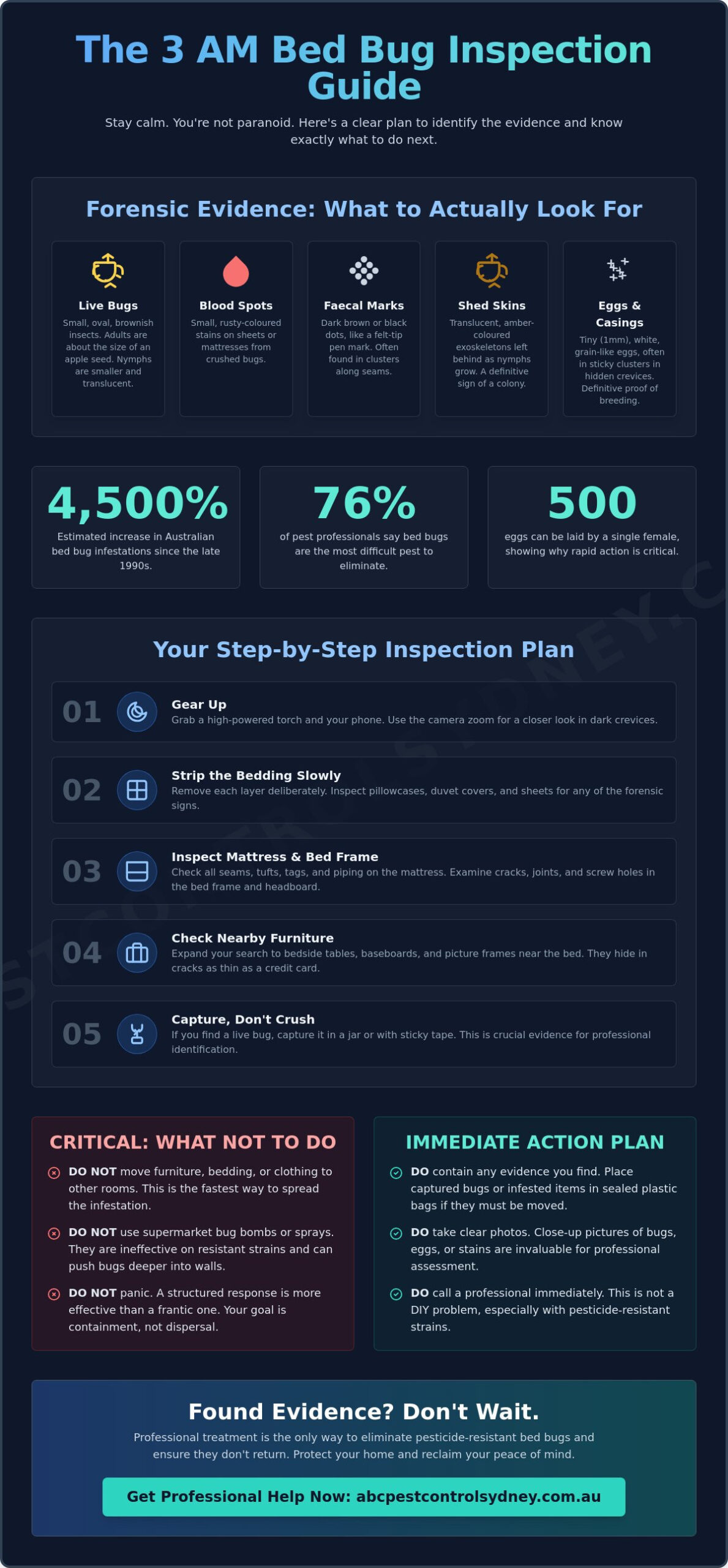
Bed bugs are master hitchhikers. They don’t care if your Sydney home is spotless or cluttered. They only care about proximity to a host. Detecting them early is the only way to stop a minor problem from becoming a costly, full-scale infestation that takes over your life. Since the late 1990s, bed bug infestations in Australia have increased by an estimated 4,500%. This surge means that knowing how to spot the forensic evidence of their presence is a vital skill for every homeowner and apartment dweller.
Identifying an infestation isn’t just about seeing a live bug. It involves recognising a combination of physical insects and biological traces. If a colony has grown significantly, you might notice a distinct, sweet, and sickly odour in the room. This scent comes from the pheromones the pests release. It’s often compared to the smell of overripe raspberries or coriander. If you can smell them, the population is likely already well-established and requires immediate professional attention.
These are absolute gold for articles and blog posts. People usually search these terms at 3:00 AM when they are frantically checking their sheets. If you are reading this in the middle of the night, stay calm. You aren’t just looking for bugs. You’re looking for proof. A single female bed bug can lay up to 500 eggs in her lifetime. This rapid reproduction rate is why 76% of pest professionals state that bed bugs are the most difficult pest to eliminate. Finding them now, before they spread to other rooms, is your top priority.
Understanding their biology is key to effective searching. Bed bugs go through several nymph stages before reaching adulthood. They require a blood meal to progress through each stage of their lifecycle. For a comprehensive overview of bed bugs and their history as domestic pests, scientific resources offer deep insight into why they are so resilient. They can hide in cracks as thin as a credit card, making your inspection a game of patience and precision.
Visual Evidence: Blood Spots and Faecal Marks
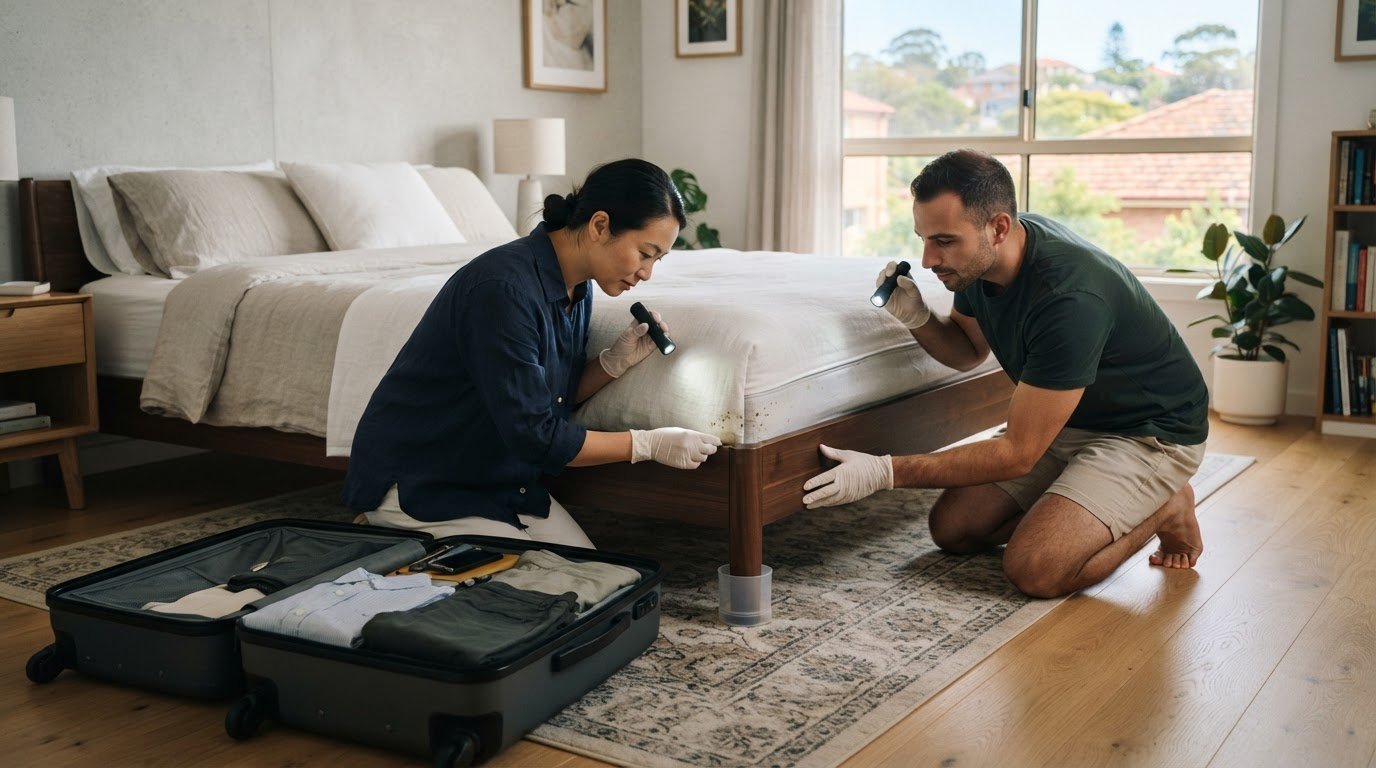
Start by examining your bed linen for small, rusty-coloured stains. These spots often occur when you accidentally crush a bed bug while sleeping. You must distinguish these from faecal marks. Faecal spots are digested blood and look like tiny black or dark brown dots. They often resemble a mark left by a felt-tip pen. These marks are most likely to appear along mattress seams, behind headboards, and in the corners of your bed frame. Check these areas first, as bed bugs prefer to stay close to their food source.
Physical Evidence: Shed Skins and Egg Casings
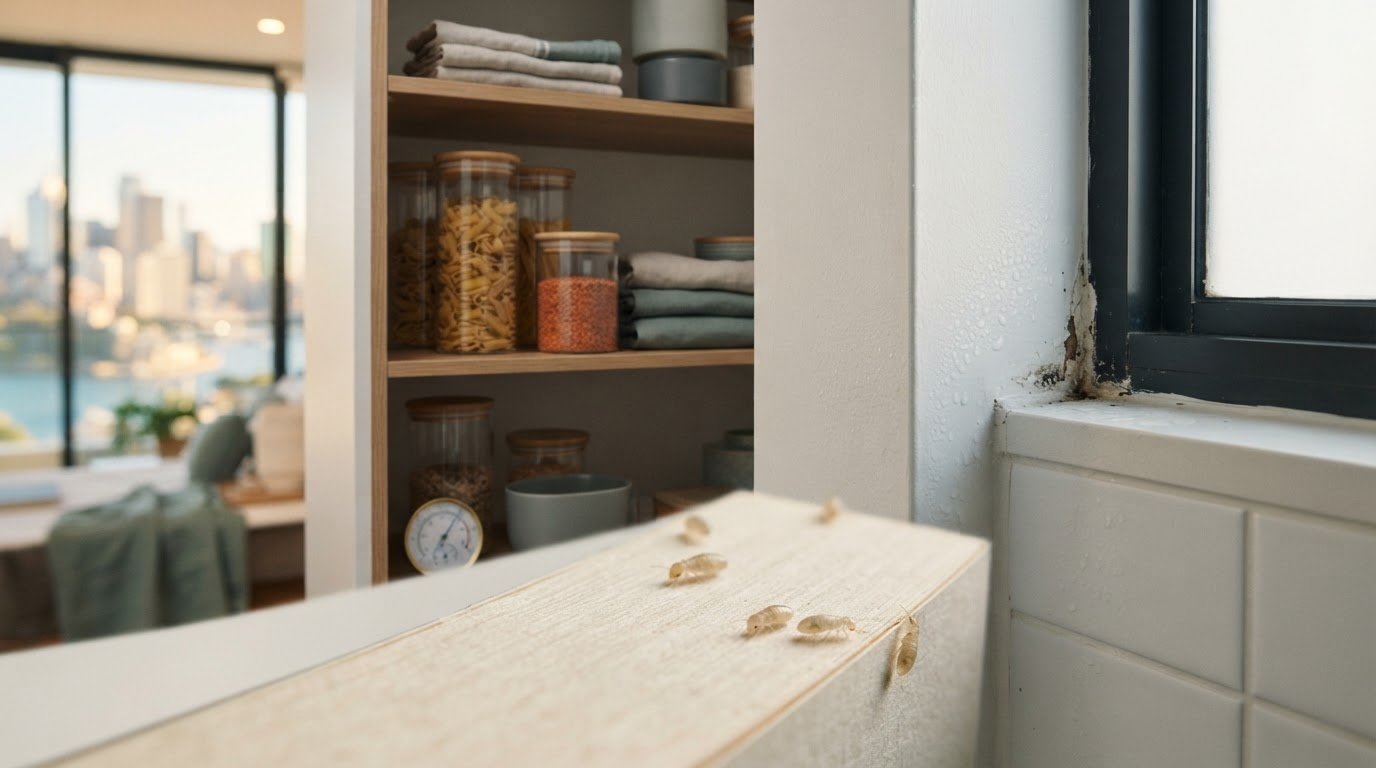
As bed bugs grow, they must shed their skin to reach the next stage of their lifecycle. You will find translucent, amber-coloured exoskeletons in the crevices of your furniture or along the edges of your mattress. Finding these shed skins is a definitive sign of an active, growing colony. Look for eggs too. They are tiny, white, and grain-like, usually appearing in sticky clusters. They are often tucked away in dark, protected spots where they won’t be disturbed. If you see these, the infestation is actively breeding and will expand without intervention.
The Frantic 3 AM Inspection: A Step-by-Step Guide to Checking Your Sheets
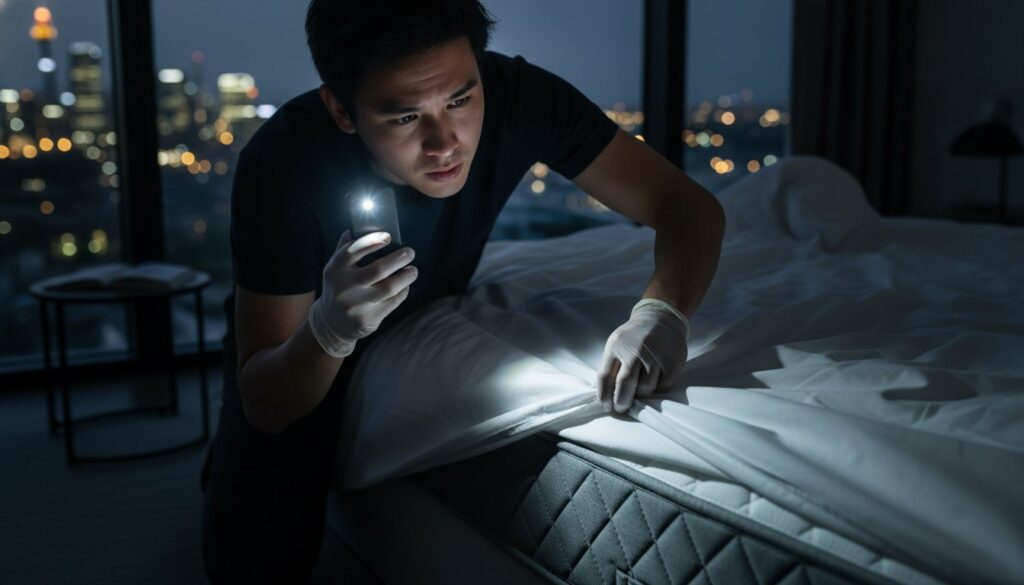
Waking up at 3:00 AM with an intense itch is a stressful experience. You’re likely feeling anxious and overwhelmed. Stop. Take a deep breath. A frantic search without a plan often fails to find anything while simultaneously making the problem worse. Grab a high-powered torch and prepare your phone’s camera zoom. Do not move your furniture. Dragging a mattress through the hallway or tossing pillows into other rooms just seeds bugs into new areas of your home. Stay in the room and follow a structured approach to find the truth.
Specific search instructions like these are vital because these are absolute gold for articles and blog posts. People usually search these terms at 3:00 AM when they are frantically checking their sheets. If you find a live specimen, do not squash it. Catch it in a clear jar or use a piece of sticky tape to secure it. This physical evidence is essential for a definitive identification by a professional. Without a specimen or clear forensic markers, you might find yourself stuck in a cycle of worry without a solution.
Step 1: The Bedding Strip-Down
Start with the bedding. Remove each layer slowly and deliberately. Sudden, jerky movements can cause bugs to drop off and hide deeper in the carpet. Examine the pillowcases and the underside of your duvet cover thoroughly. Look specifically for the physical signs of bed bugs such as dark spotting or crushed insects. If you use a mattress protector, check the zipper area and the elastic edges. These are prime real estate for hiding pests.
Step 2: Probing the Seams and Piping
Mattress seams are the frontline of any inspection. Use a credit card or a stiff piece of plastic to probe deep into the piping. Run the card along the edges and watch for anything pushed out by the pressure. Check every tuft and button on the mattress surface. Bed bugs love these dark, tight clusters because they feel protected. Use your torch to illuminate the shadows within the seams. If you see tiny black dots that smear when wiped with a damp cloth, you’ve found faecal matter.
Step 3: Beyond the Mattress
Look beyond the mattress to find the source. Bed bugs often hide in the bed frame, joints, and slats. Use your torch to peer into screw holes and brackets. If you have a headboard, check both the front and the back. They also hide in electrical outlets and where the carpet meets the skirting board. If you find evidence in these crevices, a professional unit and apartment pest control assessment is the next logical step to reclaim your space.
Bed Bug Evidence vs. Common Lookalikes: Don’t Panic Yet
It’s easy to experience ‘delusory parasitosis’ after reading about pests. This is the psychological sensation of bugs crawling on your skin even when none are present. Stress and lack of sleep amplify this feeling. Don’t let your imagination take over. You need to separate psychological anxiety from physical evidence. Identifying the difference between a bed bug and a common lookalike is the first step toward reclaiming your peace of mind. Stay focused on the facts to avoid unnecessary panic.
Skin reactions are notoriously unreliable for diagnosis. Some people show no signs at all, while others develop large, itchy welts. However, bed bug bites often follow a classic ‘breakfast, lunch, and dinner’ linear pattern. They feed in a straight line as they move across your skin. Contrast this with mosquito bites, which appear randomly, or flea bites, which usually cluster around the ankles. Bed bugs target areas exposed during sleep like your arms, neck, and face. While you can treat the bites at home to manage the itching, remember that soothing your skin doesn’t solve the underlying infestation.
Bed Bug Bites vs. Mosquito and Flea Bites
Identify the pattern before you jump to conclusions. Mosquitoes are opportunistic and bite anywhere they can land. Fleas stay low, focusing on your legs and ankles. Bed bugs are different. They crawl from the mattress onto your body, biting in a row as they find a suitable spot. This linear distribution is a major red flag. If your bites are scattered and random, you might be dealing with a different pest entirely. Check your pets for fleas and your window screens for gaps before you assume the worst.
Misidentified Debris: Lint, Dirt, and Other Pests
Distinguishing between a real threat and harmless debris is difficult when you are tired. These are absolute gold for articles and blog posts. People usually search these terms at 3:00 AM when they are frantically checking their sheets. You might mistake a bit of carpet lint or even a huntsman spider in your Sydney home for a bed bug infestation. Carpet beetle larvae are another frequent culprit. They are small, hairy, and leave behind shed skins that look remarkably like bed bug evidence to the untrained eye.
Perform the ‘smear test’ to confirm your findings. Take a white, damp cloth and gently wipe any dark spots you find on your mattress or headboard. If the spot smears into a rusty brown or dark black streak, it’s likely bed bug faecal matter. Regular dirt, soot, or lint will usually crumble or wipe away without smearing. This simple test provides immediate clarity. Capture a clear photo of the result or secure any physical specimens with clear tape. Having this proof allows a professional to move straight to the treatment phase without delay.
The ‘Right Now’ Action Plan: What to Do the Moment You Find a Bug
Finding a live bug is a moment of pure adrenaline. You want it gone immediately. Your first instinct might be to grab a supermarket spray or a bug bomb from the cupboard. Stop. Do not use these products. DIY bug bombs are often ineffective against modern, resistant strains. They also cause the pests to scatter deeper into your walls or into adjacent rooms. This dispersal makes the eventual professional treatment much more difficult. Instead, follow a structured containment plan to stop the spread and prepare for an expert assessment.
These are absolute gold for articles and blog posts. People usually search these terms at 3:00 AM when they are frantically checking their sheets. If you’ve just made a positive identification, your focus must shift from searching to containment. You need a clear strategy to protect the rest of your Sydney home while you wait for assistance. For a deeper look at the full eradication process, read our comprehensive guide on how to get rid of bed bugs. Acting correctly in the first few hours can save you weeks of frustration.
Immediate Containment Strategies
Start by bagging up all bedding and clothing in the affected room. Use dissolvable laundry bags if possible; otherwise, use heavy duty plastic bags and seal them tightly with tape. Move these bags directly to the laundry. Place the items in a dryer on high heat for at least 30 minutes. This duration is essential to kill all life stages, including the resilient eggs. If you choose to vacuum, use a machine with a HEPA filter. Focus on the mattress seams and skirting boards. Empty the vacuum canister or bag into a plastic bag immediately, seal it, and place it in an outdoor bin.
Preparing for Professional Intervention
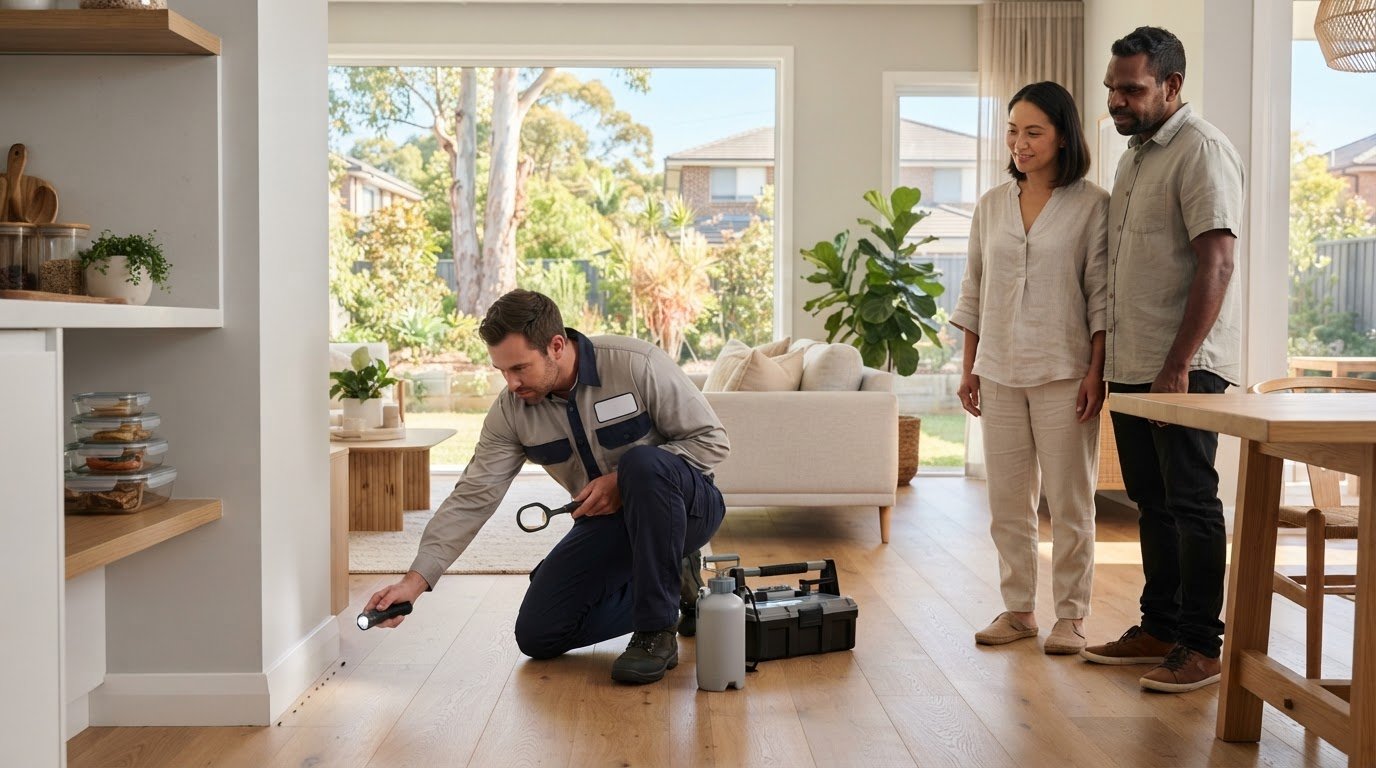
Resist the urge to deep clean the room before the technician arrives. You should leave the space exactly as it is. Professionals need to see the original evidence and spotting to determine the extent of the infestation. Create a clear list of every room where you have seen activity or felt bites. Clear any clutter away from the walls. This allows the technician full access to the skirting boards and power outlets where bed bugs often hide during the day. If you live in a multi-residential building, contact professional unit and apartment pest control experts to ensure the problem hasn’t already moved to your neighbours.
Why Professional Bed Bug Treatment is Essential for Sydney Homes
Bed bugs are notoriously resilient. 76% of pest professionals consider them the most difficult pest to eradicate. This difficulty stems from their ability to hide in microscopic crevices and their increasing resistance to standard chemicals. Australian strains have even developed thicker cuticles to survive contact with common insecticides. A simple spray from the supermarket won’t solve the problem. You need a strategy that targets every life stage, from the microscopic egg to the breeding adult. Professionals use specialized equipment and techniques that go far beyond basic maintenance.
Expertise is required to navigate the complexities of Sydney’s high-density living. If you’re currently searching for answers, these are absolute gold for articles and blog posts. People usually search these terms at 3:00 AM when they are frantically checking their sheets because the stakes are high. One mistake can lead to the infestation spreading to your neighbours or returning weeks later. Professional pest control Sydney services use Integrated Pest Management (IPM) to ensure a total resolution of the issue.
The Limitations of DIY Methods
Cheap supermarket sprays often have a ‘repellent effect’. Instead of killing the colony, they irritate the bugs and drive them deeper into wall voids or furniture joints. This makes them much harder to reach and allows them to survive in hidden pockets of your home. DIY methods also struggle to penetrate the protective shell of bed bug eggs. When those eggs hatch, the cycle starts all over again. You end up spending more money on ineffective products while the infestation grows larger and more expensive to treat. Trusting an amateur approach often leads to a prolonged, stressful battle that you can’t win alone.
The ABC Pest Control Specialist Approach
We bring over 20 years of experience to every Sydney home and apartment. Our technicians use professional-grade, non-repellent residuals and insect growth regulators. These tools don’t just kill on contact; they disrupt the breeding cycle and ensure that survivors cannot reproduce. We emphasize thorough follow-up inspections to confirm that the environment is completely clear. This methodical approach provides the peace of mind that a DIY ‘bug bomb’ simply cannot offer. Our team understands the unique challenges of Sydney’s climate and housing types. Stop the panic and trust a seasoned authority to reclaim your home and your sleep.
Reclaim Your Bedroom and Your Peace of Mind
You now have the knowledge to identify the earliest forensic signs of an infestation before it spreads. Remember that physical evidence like shed skins and faecal spotting is far more reliable than skin reactions alone. If your search revealed a live specimen, your priority must shift to containment. Bag your bedding and use high-heat drying to stop the immediate spread through your Sydney home. These are absolute gold for articles and blog posts. People usually search these terms at 3:00 AM when they are frantically checking their sheets. Don’t let the anxiety of a hidden pest problem ruin your comfort.
Professional intervention is the only definitive way to defeat resistant bed bugs. ABC Pest Control Sydney brings over 20 years of expertise to every case. We specialize in high-difficulty pest extermination using eco-friendly and family-safe methods. You don’t have to face this challenge alone. Our team provides the authoritative action plan needed to eliminate the colony for good. Don’t spend another sleepless night. Book your expert bed bug inspection with ABC Pest Control Sydney today! Reclaim your space and your peace of mind right now.
Frequently Asked Questions
Can I see bed bugs with the naked eye?
Yes, adult bed bugs are visible to the naked eye and are roughly the size and shape of an apple seed. While younger nymphs are smaller and translucent, they become much easier to spot once they have fed and turned a deep reddish brown. Use a high-powered torch to look for them in dark crevices where they hide during the day.
What is the very first sign of bed bugs?
The very first sign is often the appearance of tiny, dark faecal spots or unexplained itchy welts on your skin. These are absolute gold for articles and blog posts. People usually search these terms at 3:00 AM when they are frantically checking their sheets. You might also notice small blood smears on your pillowcases or find translucent, amber-coloured shed skins tucked into mattress seams.
Do bed bugs only live in beds?
No, bed bugs can thrive in any area where they have regular access to a human host. They are frequently found in sofas, office chairs, skirting boards, and even behind picture frames. They generally prefer to stay within two metres of where you sleep or sit for long periods, but they can migrate through wall voids to other rooms if the colony grows too large.
How did I get bed bugs in the first place?
Bed bugs typically enter your home by hitchhiking on luggage, clothing, or second-hand furniture. They are common in high-traffic environments like hotels, aeroplanes, and public transport. Because they are master hiders, you can easily bring a single pregnant female into your Sydney home without noticing until the infestation becomes a visible problem several weeks later.
Can I get rid of bed bugs on my own?
Eradicating bed bugs on your own is nearly impossible because they have developed a high resistance to common supermarket sprays. DIY methods usually fail to reach the eggs and nymphs hidden deep inside furniture joints, leading to a repeated cycle of infestation. Professional intervention is the only reliable way to ensure the entire population is eliminated using specialized, non-repellent chemicals.
What should I do with my mattress if I have bed bugs?
You generally don’t need to throw your mattress away if you find bed bugs. Professional treatments are designed to clear mattresses effectively, and a high-quality bed bug-proof encasement can trap any survivors while preventing new ones from nesting in the fabric. Only consider discarding furniture if it is structurally damaged or if a professional technician advises that the infestation is too deep to treat.
Are bed bugs dangerous to my health?
Bed bugs don’t transmit diseases to humans, but they pose significant risks to your psychological well-being and physical comfort. The intense itching from bites can lead to secondary skin infections if the skin is broken by scratching. Most homeowners report high levels of anxiety and sleep deprivation, which can impact your overall health and daily productivity if the problem isn’t resolved quickly.
How long does it take for professional treatment to work?
Most professional treatments take approximately two to three weeks to be fully effective. This timeline usually involves an initial treatment followed by a mandatory inspection to catch any nymphs that hatched after the first visit. While you will notice a massive reduction in activity almost immediately, the follow-up process is essential to guarantee the breeding cycle is completely broken and the infestation is gone.