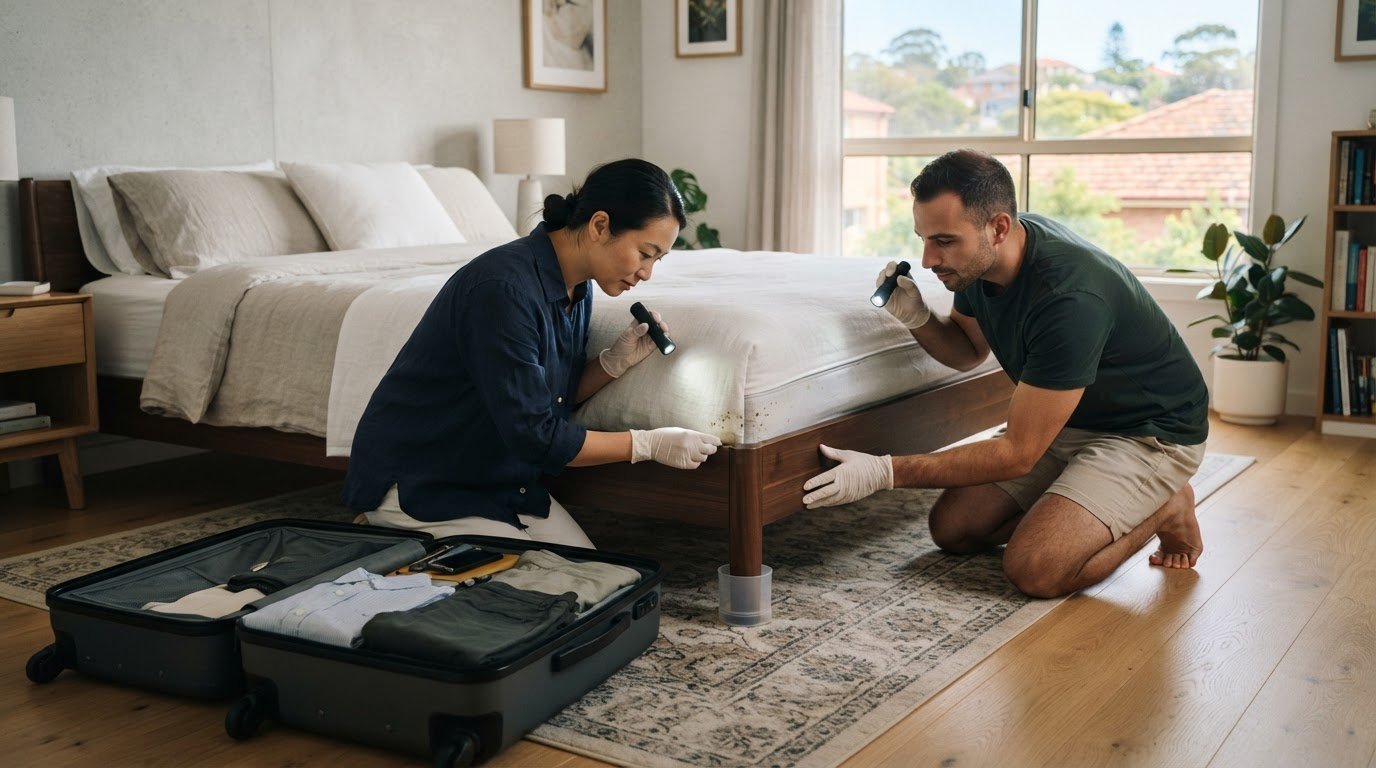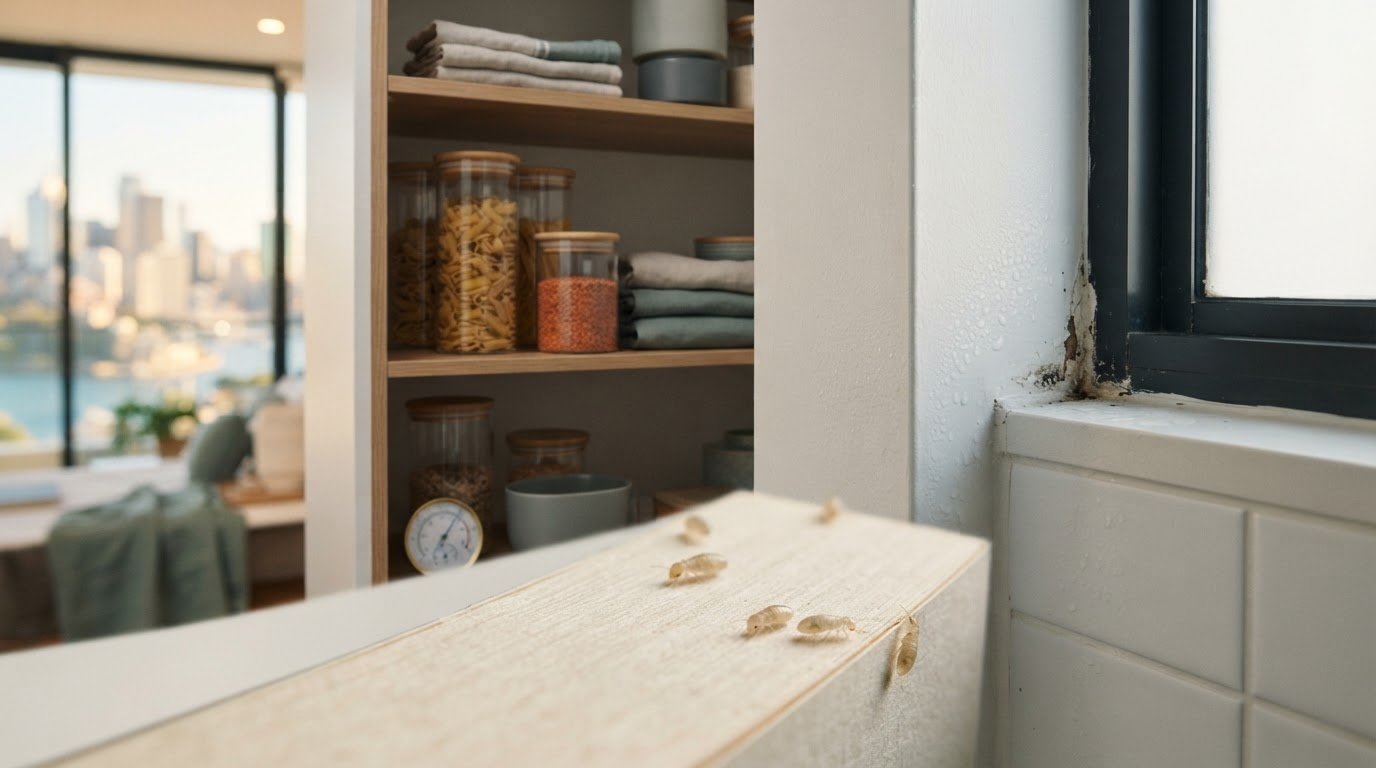


Did you know experts predict a 67 percent surge in local infestations throughout 2025? Waking up with itchy, red bed bug bites is a stressful experience that quickly ruins your sleep and peace of mind. It’s exhausting to deal with the constant irritation and the social stigma that often follows these pests into your home. You need a fast, reliable solution to reclaim your bedroom and your comfort.
We understand that the fear of ineffective treatments can be just as overwhelming as the itching itself. This guide provides the expert Sydney insights you need to positively identify the problem and find immediate relief for your skin. You’ll learn exactly how to soothe the irritation and, more importantly, how to execute a clear plan to clear your home for good. From identifying the specific patterns of these pests to professional eradication strategies, we’ll help you stop the cycle of infestation today.
Key Takeaways
- Identify the distinct “breakfast, lunch, and dinner” linear pattern to confirm an infestation and stop the spread quickly.
- Compare bed bug bites against mosquito and flea marks to ensure you apply the correct treatment for your skin immediately.
- Protect your health by learning how to avoid secondary infections like impetigo caused by excessive scratching and irritation.
- Follow a professional protocol for immediate itch relief using simple household steps and effective over-the-counter options.
- Discover why expert inspection is the only way to find hidden harbourage areas and stop the infestation for good.
Identifying Bed Bug Bites: Symptoms and Appearance
Identifying bed bug bites is the essential first step toward reclaiming your home and your sleep. These small, itchy welts are caused by Cimex lectularius, a resilient parasite that feeds exclusively on human blood. Unlike many other pests, these insects are elusive and rarely seen during the day. You are more likely to see the evidence they leave behind on your skin before you ever spot a live bug in your bedroom.
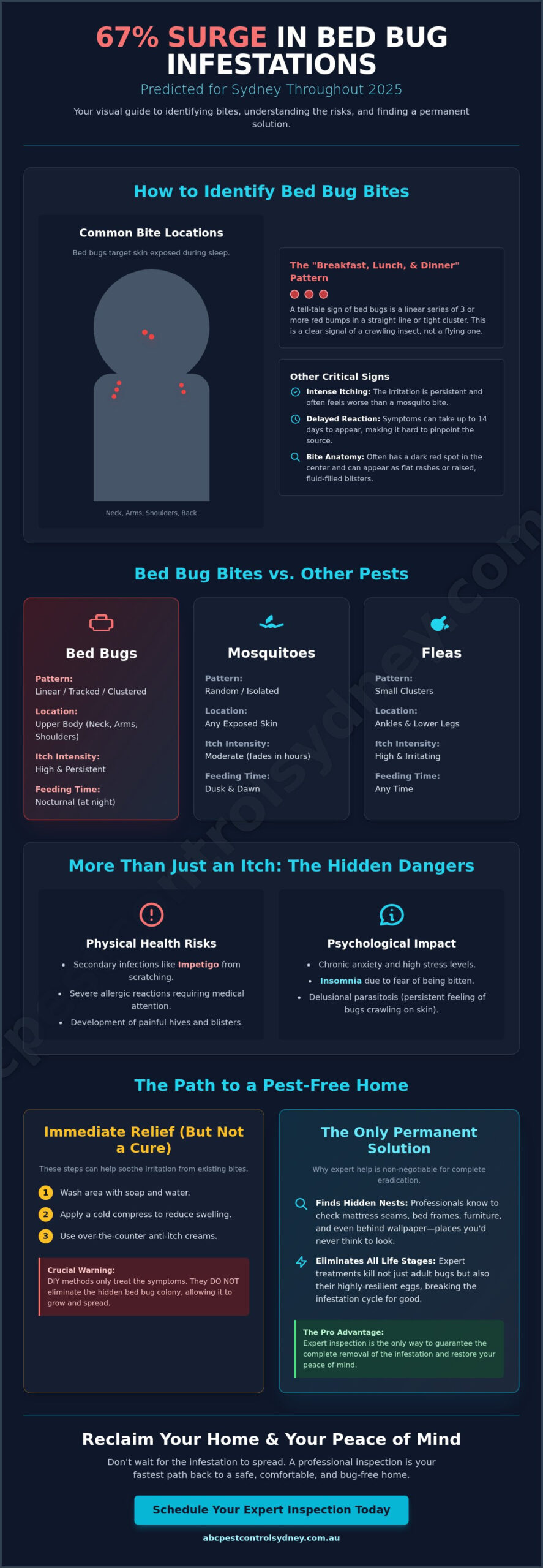
One of the most telling signs of an infestation is the “breakfast, lunch, and dinner” pattern. This refers to a linear series of three or more red bumps appearing in a straight line or a tight cluster. This happens because the bug may be disturbed during feeding or is simply searching for the most accessible blood vessel. These marks typically appear on skin that remains exposed while you sleep, such as your neck, arms, shoulders, and back. If you notice these “tracked” marks, it’s a clear signal to check your mattress seams and bed frame immediately.
The timing of these symptoms often causes confusion for Sydney residents. While some people react quickly, it’s common for symptoms to take up to 14 days to appear after the initial bite. This delay makes it difficult to determine exactly when or where the encounter occurred. You might have been bitten two weeks ago while traveling and only started itching today. For a comprehensive overview of bed bugs and their unique biology, understanding this delayed reaction is vital for accurate identification.
The Anatomy of a Bed Bug Bite
A typical bite features a dark red spot at the very center of the welt where the skin was pierced. The texture of the reaction can vary significantly between individuals. Some people develop flat red spots that look like a rash, while others experience raised, fluid-filled blisters. You won’t feel the insect while it’s feeding. They inject a natural anaesthetic and an anticoagulant through their saliva to keep you from waking up while they consume their meal.
How Your Body Reacts: Mild to Severe
Most reactions involve intense itching and localized inflammation. However, your body’s response can escalate. Some individuals experience severe allergic reactions, including hives or difficulty breathing, which require prompt medical attention. Beyond the physical marks, the psychological impact is often the most difficult part to manage. Many people suffer from “parasitosis” or persistent sleep-related anxiety. The feeling that something is crawling on your skin can lead to chronic exhaustion and high stress levels. Addressing the infestation quickly is the only way to restore your mental peace.
Bed Bug Bites vs. Other Common Sydney Pests
Misidentification is the primary reason why many Sydney residents fail to resolve an infestation on their own. You might spend weeks and significant money on surface sprays for mosquitoes while a colony of parasites continues to grow in your bed frame. Correctly identifying bed bug bites is a critical step that dictates your entire treatment strategy. If you misread the signs, you give the pests more time to multiply and spread to other rooms.
Mosquitoes are the most frequent point of confusion. Their bites appear in a random, scattered pattern across the body. Because they fly, they can reach any patch of exposed skin. Bed bugs are different. They cannot fly or jump. They crawl from their hiding spots and feed in a “tracked” or linear pattern. If your welts appear in a straight line, it’s a definitive sign of a crawling insect rather than a flying one. For more help Identifying and Treating Bed Bug Bites, observe how the redness develops over the first 24 hours.
Fleas are another common culprit in local homes, especially those with pets. However, fleas typically target your ankles and lower legs. They jump from the carpet or rugs, making your lower extremities the easiest target. Many people also mistakenly blame a huntsman spider for mysterious marks. These spiders are actually shy and rarely bite humans. If you are waking up with new marks every morning, a spider is almost never the cause. Spiders don’t seek out humans for food, but bed bugs do.
Comparison: Bed Bugs, Fleas, and Mosquitoes
- Pattern: Bed bugs follow a linear or tracked path; fleas appear in small clusters; mosquitoes are random and isolated.
- Location: Bed bugs target the upper body (neck, arms, shoulders); fleas stay near ankles and legs; mosquitoes strike anywhere.
- Itch Intensity: Bed bugs and fleas cause high, persistent irritation; mosquito itching usually fades within hours.
- Feeding Time: Bed bugs are strictly nocturnal; mosquitoes are most active at dusk and dawn; fleas bite at any time.
Is it a Skin Condition or a Bite?
Sometimes, what looks like a bite is actually a skin reaction. Heat rash or hives can produce red, itchy bumps that mimic insect activity. To solve the mystery, you must look for physical evidence beyond your skin. Check your mattress seams, headboard, and skirting boards for tiny blood spots or dark excrement marks. These are the undeniable signatures of an infestation. If you’re still unsure, our what is a pest guide offers a broader look at common Sydney invaders. If the mystery continues, our General Pest Control Packages provide the professional inspection needed to identify and eliminate the source of your discomfort.
Risks and Complications of Bed Bug Infestations
While these pests don’t transmit blood-borne diseases like malaria or Lyme disease, labeling them as harmless is a significant mistake. A single encounter can quickly escalate into a household emergency that affects your health and your wallet. The primary danger lies in the sheer speed of their reproduction. A small colony can grow exponentially, with local data showing a 4,500 percent increase in infestations across Australia since the late 1990s. If you don’t act fast, a few stray bugs can become a massive colony within weeks.
Financial risks are also a major concern for Sydney residents. Infestations often lead to the total loss of expensive mattresses, couches, and upholstered furniture because the bugs hide deep within the internal structures. For renters, the stakes are even higher. In New South Wales, the responsibility for treatment costs often depends on when the infestation began. If it’s discovered mid-tenancy, you could be held liable for the professional eradication costs. This makes our End of Lease Pest Control services a vital protection for your bond and your rental history.
Secondary Infections and Skin Damage
The intense itching caused by bed bug bites often leads to vigorous scratching, especially during the night. This action breaks the skin barrier and creates an easy entry point for bacteria. Secondary infections like impetigo or folliculitis are common complications that require medical intervention. Watch for these warning signs that a bite is becoming infected:
- Redness that spreads or streaks away from the original bite site.
- The skin feels unusually warm or hot to the touch.
- Development of yellow crusting, oozing pus, or significant swelling.
- Swollen glands or a sudden, unexplained fever.
Don’t ignore these symptoms if they appear. If you notice signs of infection, seek advice from a healthcare professional immediately to prevent more serious staph complications. For Australians who need quick access to medical advice or health resources, Aussie Scripts:-types-indications-benefits-and-side-effects-C36532) offers a convenient telehealth platform. Treating the skin is important, but it won’t stop the cycle until the pests are gone.
The Mental Health Toll of Nightly Bites
The psychological impact is often the heaviest burden for our clients. Chronic sleep deprivation affects your performance at work and your overall quality of life. Many people experience high levels of anxiety about “bringing the bugs home” from public transport or hotels, leading to social isolation. This stress creates a cycle of hyper-vigilance where every speck of lint on a sheet looks like a bug. With over 20 years of experience, we’ve seen that the sense of psychological relief is the most valued feedback we receive after a successful treatment. Reclaiming your home isn’t just about the skin; it’s about restoring your peace of mind and your ability to rest safely in your own bed.
Immediate Relief and Why DIY Often Fails
Waking up with bed bug bites creates an immediate, frantic desire to fix the problem. Your first priority is stopping the itch, but your second must be avoiding mistakes that make the infestation permanent. Many Sydney homeowners reach for supermarket “bug bombs” or total-release foggers. This is a critical error. These products use repellent chemicals that rarely kill the entire colony. Instead, they trigger the “Scattered Bug” effect. The pests detect the toxin and flee deep into wall cavities, behind skirting boards, and into electrical outlets. You haven’t solved the problem; you’ve just made it much harder for a professional to reach them later.
Immediate skin care is your best defense against the secondary infections discussed earlier. Start by washing the affected area with mild soap and warm water to remove surface bacteria or residual insect saliva. Apply cold packs for 10 minutes at a time to reduce swelling and numb the nerves. For persistent irritation, over-the-counter antihistamines or calamine lotion can provide significant comfort. These steps manage your physical symptoms, but they do nothing to address the thousands of eggs potentially hiding in your bed frame.
First Aid for Bed Bug Bites
Applying a hydrocortisone cream is the most effective topical treatment for reducing inflammation and immediate itch. Keep your fingernails trimmed short to prevent skin trauma if you scratch during your sleep. For mild reactions, natural soothers like aloe vera gel provide a cooling effect without the use of harsh chemicals. These methods offer a temporary reprieve while you coordinate a professional resolution.
The Trap of Home Remedies
Many people believe that simply washing their bedsheets will end the nightmare. While cleanliness helps, it is not a cure. Bed bugs can survive a standard cold or warm wash cycle easily. To actually kill the bugs and their pearly white eggs, you must reach sustained temperatures of at least 50°C for a minimum of 20 minutes. This usually requires a high-heat dryer cycle or specialized professional steam equipment. If you want to understand the full process of clearing your room, read our 5-step guide to getting rid of bed bugs. Don’t waste time on ineffective home remedies that allow the population to double every few weeks. If you need a total resolution, book one of our General Pest Control Packages today to secure your home and your health.
Professional Eradication: The ABC Pest Control Sydney Solution
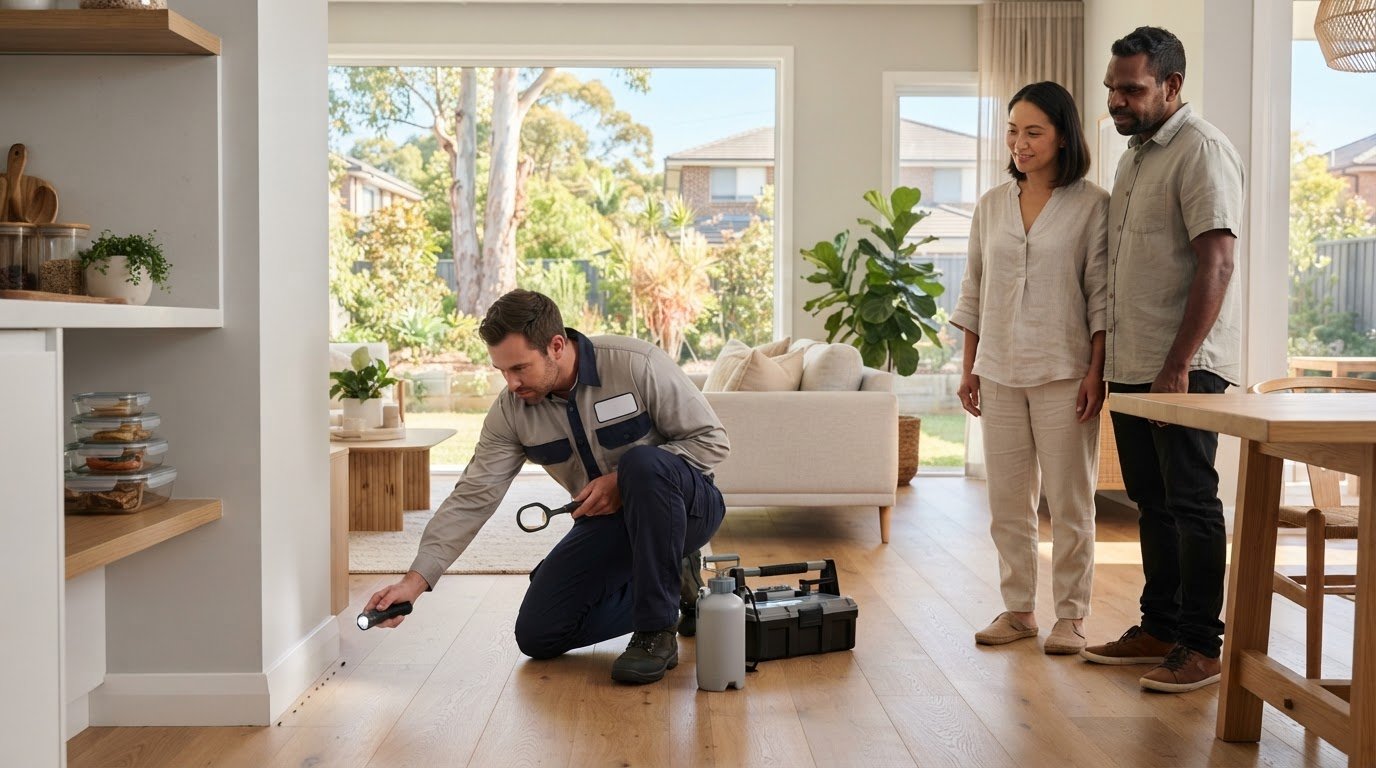
Relying on store-bought sprays often leads to a cycle of frustration and recurring bed bug bites. At ABC Pest Control Sydney, we break this cycle using a specialized extermination protocol developed over 20 years of local service in the metropolitan area. Our approach begins with a rigorous, professional inspection to identify “harbourage” areas. These are the deep-seated hiding spots in floorboards, electrical sockets, and joinery where eggs and adults congregate. Simply treating the surface of a mattress is never enough. You must eliminate every hidden pocket to prevent a resurgence.
Safety is our absolute priority for every household. We utilize eco-friendly treatments that are specifically designed to be safe for families and pets while remaining lethal to resilient parasites. Our technicians stay updated on the latest insecticide resistance trends to ensure every application is effective. We don’t believe in “quick fix” methods that fail within weeks. Instead, we provide a comprehensive resolution that targets the biology of the pest at every life stage, ensuring your home becomes a sanctuary again.
Our Tiered Pest Control Packages
We offer flexible service options to meet the specific needs of your property. Our General Pest Control Packages allow you to bundle bed bug treatments with broader household protection against other common invaders. For those moving out of a rental property, our End of Lease Pest Control provides the specialized sprays required to secure your bond and satisfy landlord requirements. You can manage your entire service through our modern, rapid digital booking process. It’s designed for maximum efficiency so you can find a solution without unnecessary delay.
Why Sydney Trust ABC Pest Control
Our reputation is built on strict compliance with Australian national regulatory standards and the APVMA. We have extensive experience managing infestations in high-density environments, including complex apartment blocks and units across the Inner West and CBD. We understand the unique challenges of shared-wall living where pests can easily travel between neighbors. Don’t let a small problem become a building-wide emergency. Stop the bites tonight. Book your expert bed bug inspection here and reclaim your sleep today.
Reclaim Your Sleep and Secure Your Sydney Home
Don’t let a single night of discomfort turn into a permanent household crisis. You now know how to distinguish the tracked pattern of bed bug bites from other common pests and why high-heat professional intervention is the only way to kill eggs for good. Delaying treatment only allows the infestation to scale, risking your furniture and your mental health.
With 20+ years of Sydney experience and eco-friendly, family-safe treatments, we provide the authoritative resolution you need. Our experts have been featured on major Australian media outlets for our specialized capability in handling high-difficulty cases. It’s time to stop the cycle of itching and sleep deprivation. Get a Free Quote for Expert Bed Bug Removal and reclaim your sanctuary today. You can sleep soundly again knowing your home is in professional hands.
Frequently Asked Questions
How can I tell the difference between bed bug bites and mosquito bites?
Mosquito bites are typically scattered and random because these insects fly to any exposed skin. In contrast, bed bug bites often appear in a linear “breakfast, lunch, and dinner” pattern. Mosquito itching usually subsides within a few hours, while the irritation from bed bugs can persist for a week or more. You’ll also notice that bed bug marks tend to be smaller and redder at the very center.
Do bed bug bites appear immediately after being bitten?
Reaction times vary significantly between individuals. While some people see a welt within hours, many don’t experience symptoms for several days or even up to two weeks. This delay is why it’s often difficult to trace the exact location where you first encountered the pests. Don’t assume your home is clear just because you didn’t itch immediately after a trip or a guest’s visit.
Can bed bug bites make you sick or spread diseases?
Bed bugs are not known to transmit infectious diseases like malaria or hepatitis. Their primary health risks involve secondary bacterial infections from scratching and the severe psychological toll of sleep deprivation. If you develop a fever or notice spreading redness, seek medical advice immediately to address potential staph complications. The mental stress of an infestation is often the most significant health impact reported by Sydney residents.
What is the best cream or treatment for bed bug bite itching?
Topical corticosteroid creams are generally the most effective way to reduce localized inflammation and itching. Calamine lotion or oral antihistamines can also provide relief for more widespread reactions. Always wash the area with mild soap first to remove any residual saliva that might be triggering the immune response. These treatments manage the symptoms on your skin but won’t stop the insects from returning the following night.
Why do I have bites but my partner doesn’t have any?
It is a common misconception that bed bugs are “picky” eaters. In reality, your partner is likely being bitten just as often as you are, but their body simply doesn’t react to the insect’s saliva. Some people are asymptomatic, while others develop intense, itchy welts from the exact same infestation. If one person shows signs, you should assume the entire bed is infested and requires professional inspection.
Will bed bug bites go away on their own if I leave them?
The skin welts will eventually heal, but the colony living in your home will only grow larger. Bed bugs can survive for months without a meal, so “waiting it out” is not a viable strategy. You must address the source of the bed bug bites with professional intervention to stop the cycle of feeding and reproduction. Ignoring the problem allows the bugs to spread into wall cavities and neighboring rooms.
How do I know if the bites are from an infestation in my own bed?
Confirm the source by searching for physical signatures in your sleeping area. Inspect the piping of your mattress and the joints of your bed frame for tiny black spots of excrement or crushed blood stains. If you find these markers alongside new morning welts, the infestation is active in your own bedroom. You might also find translucent eggshells or shed skins tucked into the corners of your headboard.
Should I throw away my mattress if I have bed bug bites?
You rarely need to discard your mattress, and doing so can actually spread the insects to other parts of your home. Professional pest control treatments are designed to penetrate deep into furniture structures to eliminate bugs and eggs. Save your investment by securing an expert inspection before you decide to throw anything away. Using a high-quality mattress encasement after treatment is a much more effective and affordable strategy.