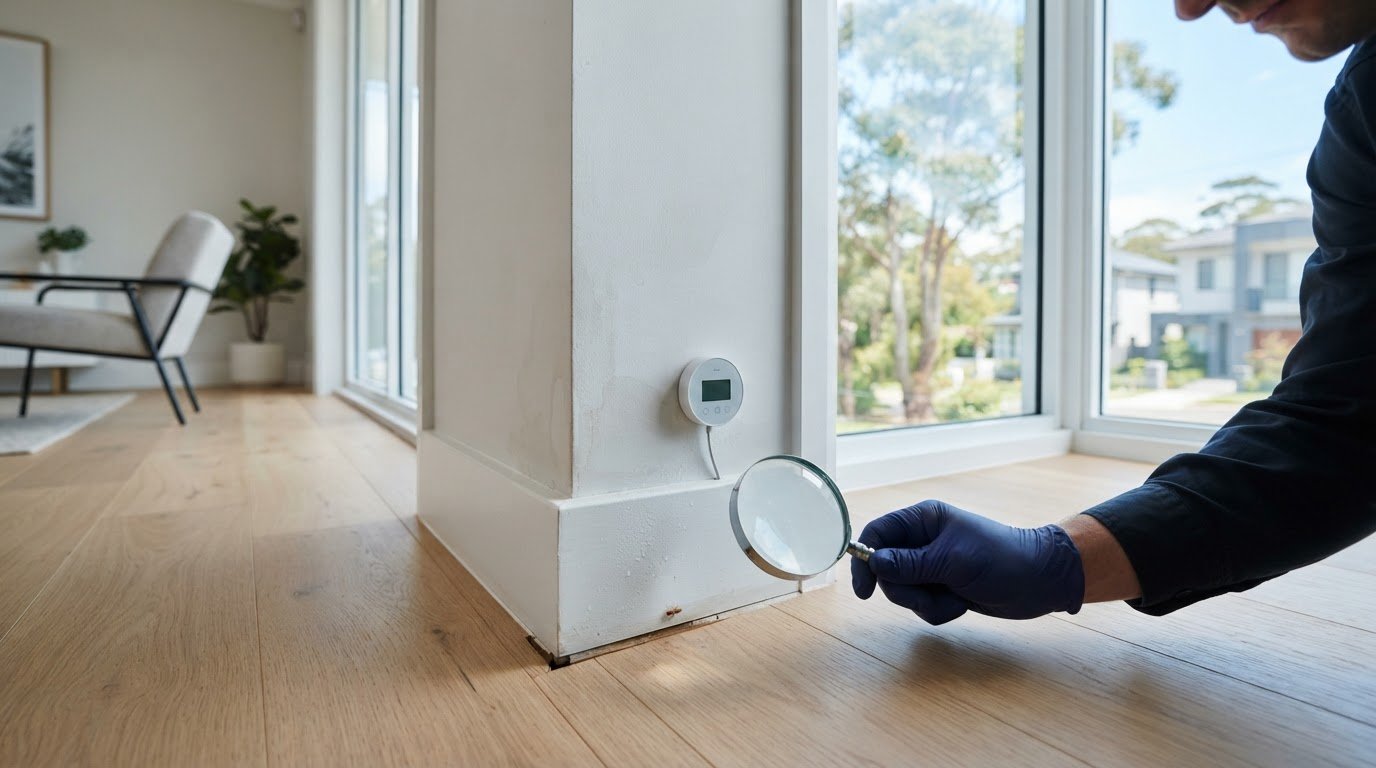
What if lasting booklice control depends less on spraying and more on finding the moisture that’s attracting them? If you’re searching for “booklice treatment for new homes sydney,” it’s understandable to wonder whether the tiny insects are booklice, another pest or a sign of dampness or mould in your new build.
Recent construction or renovation doesn’t rule out moisture problems. Concrete and plaster can take time to dry, while poor ventilation or a hidden leak may create conditions where booklice thrive. Spraying may reduce the insects you can see, but they may return if the underlying conditions remain.
This guide explains how to recognise booklice, why they can appear in newer Sydney homes and which moisture and ventilation issues to check. You’ll also find practical ways to manage conditions, when professional pest advice may help, and what to confirm before booking. The aim is a plan that addresses both the conditions and the visible insects.
Key Takeaways
- Learn how to distinguish booklice from other tiny household pests before deciding what to do.
- Check for possible moisture contributors, including condensation, residual construction moisture and unresolved leaks, without assuming they prove a building defect.
- Understand why reducing damp conditions and addressing visible insects serve different purposes in booklice treatment for new homes sydney.
- Record where and when you see insects, which rooms are affected and whether there have been recent water events. These details can help with an assessment.
- Before booking a Sydney pest professional, confirm service availability, insect identification, treatment scope and safety instructions.
Booklice in a new Sydney home: how to identify the pest and understand the concern
Finding tiny insects in a recently built or renovated home can be unsettling, but their presence doesn’t automatically prove a construction defect. Start by identifying what you’re seeing. Booklice, also called psocids, are small insects associated with damp conditions and mould. Despite their name, they aren’t head lice and don’t live on people.
Booklice are tiny, soft-bodied insects that may appear indoors where dampness and mould provide suitable conditions. Correct identification helps guide the next steps. The name comes from their association with book paste. You can read more about booklice (order Psocodea) and their classification. Different pests need different responses, so avoid choosing a treatment based on a guess.
What do booklice look like, and where might you notice them?
Booklice are very small and often pale, but appearance alone isn’t enough for reliable identification. Look for them on or near damp materials, stored items or surfaces with visible mould growth. They aren’t the same as head lice, which are associated with the scalp. If you’re unsure whether the insects are booklice or another household pest, don’t guess.
Take a clear close-up photo if possible and note exactly where you found the insects. A pest professional can use these details to help assess what you’re seeing and whether further identification is needed.
Does finding booklice mean your new home has a building defect?
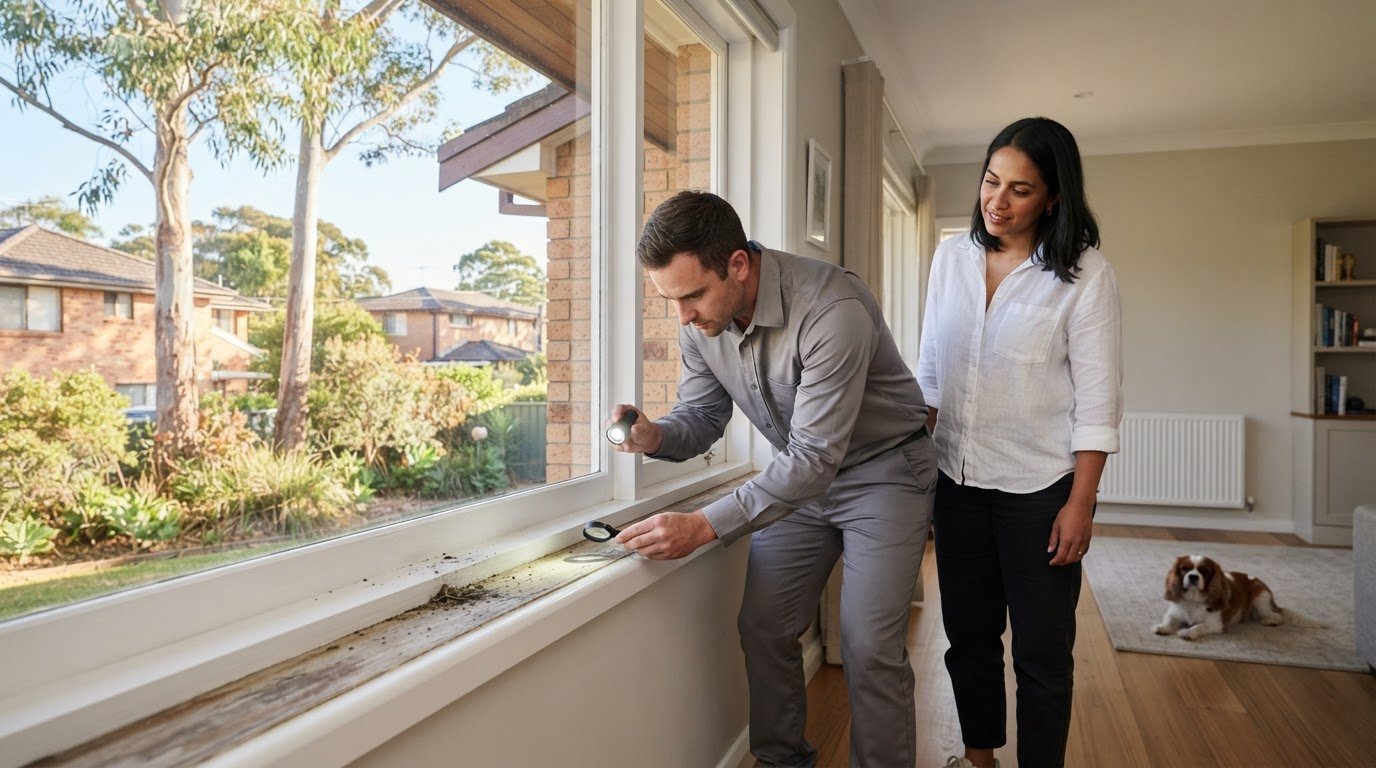
No single sighting can diagnose a building problem. Booklice may be associated with moisture or mould, but their presence alone doesn’t confirm a leak, poor workmanship or a defect. Pest identification is separate from assessing building conditions. Record where and when you see insects, and note persistent condensation or damp patches without disturbing potentially affected materials.
If you’re concerned about moisture, ventilation or building work, raise those issues with the appropriate building or maintenance professional. A pest assessment may help identify the insects and discuss possible contributing conditions, but it isn’t a building inspection. This distinction helps you decide whether booklice treatment for new homes sydney is the next step or whether a moisture concern needs separate investigation first.
Why booklice appear in new homes: moisture, mould and indoor conditions
Booklice are commonly associated with damp conditions and mould, but finding them doesn’t reveal exactly where moisture is coming from. In a new home, possible contributors include construction materials that are still drying, condensation or an unresolved leak. These are possibilities to investigate, not proof of a defect. A new build isn’t automatically damp, and conditions can vary between rooms.
Penn State Extension explains that booklice may be associated with moisture trapped in the wall void in new construction that hasn’t dried. This is one possible situation, not a diagnosis of your home. Moisture management can reduce conditions that favour booklice, but it can’t guarantee that insects will be eradicated.
Which conditions can encourage booklice indoors?
Check areas where moisture may linger, such as cupboards with poor airflow, stored paper or cardboard, and surfaces showing signs of mould. Damp materials and limited ventilation may contribute, but no single factor explains every sighting. The location and timing can help reveal a pattern.
Record the room, nearby materials and whether you notice condensation or dampness at the same time. Sightings in one cupboard may prompt you to check that space closely, while insects appearing in several rooms suggest a broader pattern to discuss with a suitable professional.
What should Sydney homeowners check without making assumptions?
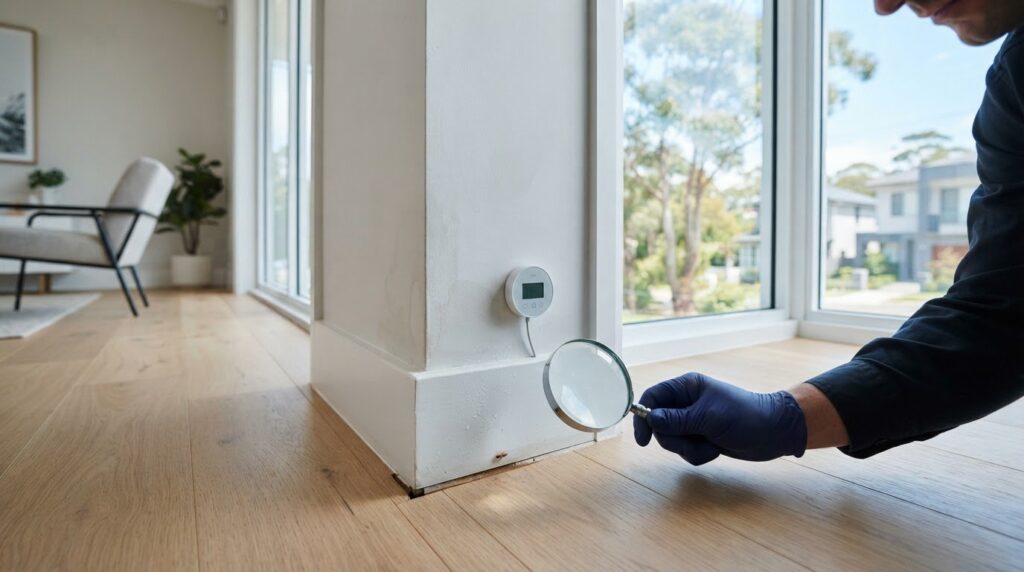
Look for visible condensation on windows, dampness inside cupboards, signs of plumbing leaks and rooms that seem poorly ventilated. Note whether the same area becomes damp repeatedly, and take photos where useful. Don’t assume that any one finding proves a building defect. If you suspect a leak or construction issue, raise it with the appropriate building or maintenance professional.
Separating pest observations from building concerns helps you choose the right next step. For broader information about residential pest concerns and management, read this guide to pest control in Sydney. If you’re considering professional pest advice, you can contact ABC Pest Control Sydney to ask whether booklice inspections or treatment are currently available and what the service covers.
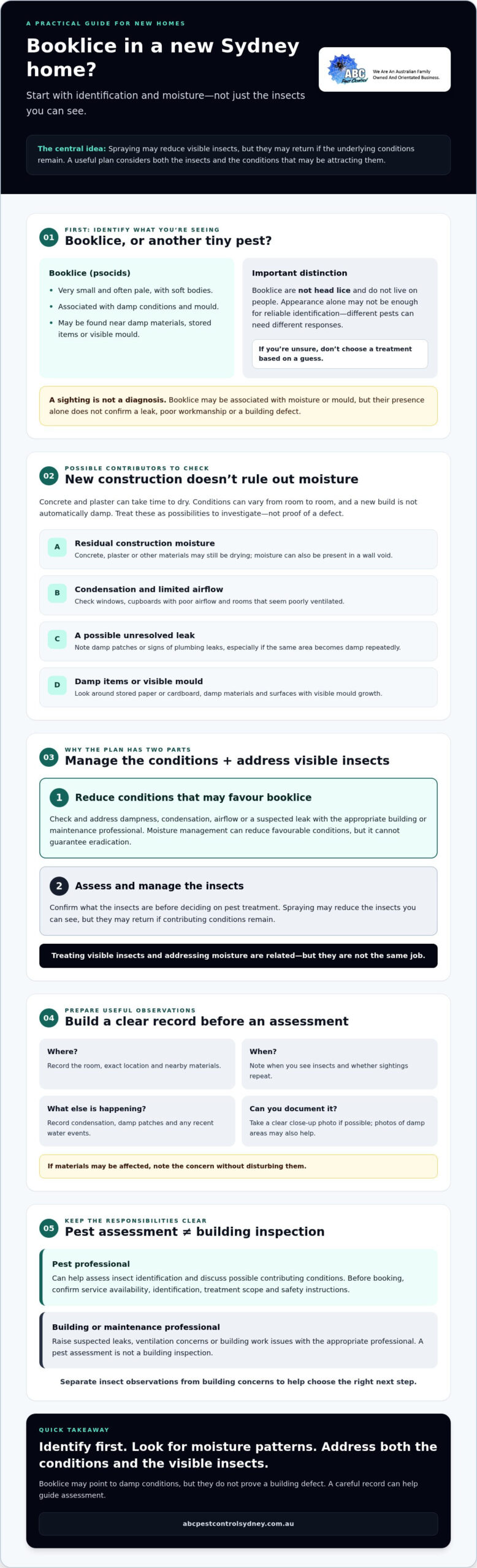
Booklice treatment for new homes Sydney: why moisture control and pest treatment work together
Effective booklice management considers two separate issues: conditions that may support the insects and the insects currently visible. Drying damp areas and improving airflow can help reduce conducive conditions. Cleaning may remove insects or mould from accessible surfaces, but it won’t identify every moisture source or confirm what the insects are. A professional assessment can help with identification and clarify whether treatment is appropriate.
The Penn State Extension guide to booklice also emphasises moisture control, including in new construction that hasn’t been allowed to dry. Think of moisture correction as addressing the environment, while pest treatment targets insects present. Neither should be assumed to resolve the other issue automatically.
| Approach | Purpose | Limits and when to use it |
|---|---|---|
| Household moisture management | Reduce dampness, improve airflow and investigate visible moisture. | A useful first step, but it may not reveal a hidden source or identify the insect. |
| Routine cleaning | Remove accessible insects, dust and affected stored material where appropriate. | Can help manage what’s visible, but won’t correct a leak or persistent dampness. |
| Professional assessment and treatment | Help confirm pest identity and discuss options for the insects present. | Ask what the service covers, whether booklice are treated and what moisture concerns need separate attention. |
Can drying and cleaning alone resolve a booklice problem?
Start with practical steps: improve airflow where possible, reduce dampness and clean accessible areas. If material is mould-affected, consider whether it can be safely cleaned or needs appropriate assessment. These actions may make conditions less favourable, but visible insects can persist for a time and results aren’t guaranteed. Don’t apply indoor pesticides without checking the product label. Seek professional advice if you’re unsure about safe use.
When does professional booklice treatment make sense?
Ask for expert identification if sightings are widespread, persistent or difficult to distinguish from another pest. Before agreeing to treatment, discuss possible moisture contributors, what the service includes, safety instructions and whether follow-up is available. Read this guide to common Sydney pests for broader identification context.
For booklice treatment for new homes sydney, confirm availability directly before booking. ABC Pest Control Sydney provides residential pest management across metropolitan Sydney and has more than 20 years of experience, but booklice-specific service availability and methods aren’t confirmed. Ask about residential pest management and whether the team can assess your concern.
Preparing for booklice treatment in new Sydney homes
A little preparation can make an assessment more useful. Record what you’ve seen and where, then share those details before agreeing to any service. This helps a provider consider whether the insects may be booklice and what to investigate, without assuming the home has a moisture defect.
What information should you have ready when requesting an assessment?
Build a short record before you call or enquire. Include:
- Where: List the affected rooms and specific spots, such as a cupboard, window or stored items.
- When: Note when sightings began, whether they recur and whether you’re seeing more of them.
- What you can see: Take clear photos and record any visible dampness, condensation or mould nearby.
- What has changed: Share the property’s age and any recent construction, renovation or plumbing work. Mention recent water events, but don’t assume they caused the insects.
These observations can help focus the conversation. A photo may support identification, while the location and pattern of sightings can provide context about where to look next.
What should you ask a Sydney pest-control provider?
Before booking, confirm that the provider currently identifies and treats booklice in residential properties. Ask what the proposed service includes and how the team distinguishes pest treatment from investigation of moisture or mould concerns.
- What identification can you provide before recommending treatment?
- What approach is proposed, and what preparation or household precautions are required?
- Is follow-up available, and what would it cover?
- If I suspect a leak or building issue, should I speak with a separate building professional?
Don’t move or discard stored items, or prepare rooms, until the provider explains what’s needed. Instructions depend on the treatment approach, so get them directly rather than relying on generic advice. Clear answers help you judge whether the proposed booklice treatment for new homes sydney addresses the insects, while keeping any building concerns with the right professional.
ABC Pest Control Sydney provides residential pest management across metropolitan Sydney and has more than 20 years of pest-management experience. Booklice-specific availability and methods aren’t confirmed, so ask the team before arranging a service. Ask ABC Pest Control Sydney about booklice treatment.
Choosing booklice treatment in Sydney: what a professional assessment should cover
A useful assessment should do more than recommend a spray. It should explain which insect has been identified, what the proposed service covers and which conditions may be encouraging activity. For booklice treatment for new homes sydney, look for a clear distinction between addressing the insects and investigating possible moisture or mould concerns.
How can you assess whether a treatment plan addresses the real issue?
Ask the provider to explain the identification and the reasons for the proposed approach. The service scope should be specific: which areas or concerns will be addressed, what preparation is needed and what household precautions apply. If moisture appears relevant, ask how it factors into the assessment and whether a separate building professional may need to investigate a suspected leak or defect.
Clarify whether follow-up is available and what it would involve. Be cautious of vague promises or broad claims that don’t explain the work. A clearly described scope helps you compare options and understand what pest treatment can address, without mistaking it for building repairs or mould remediation.
What can ABC Pest Control Sydney confirm before you book?
ABC Pest Control Sydney provides residential pest management across metropolitan Sydney and has more than 20 years of pest-management experience. That background provides context, but it isn’t a booklice-specific guarantee or confirmation that this service is available.
Confirm booklice availability and method before booking. Ask whether the team currently offers booklice identification or treatment for residential properties, what approach is proposed, and what preparation and household safety guidance you’ll receive. If follow-up is important to you, ask whether it’s available and what it covers. Also clarify whether a suspected moisture or mould issue needs assessment by a separate building professional.
Clear answers help you decide whether the service matches your needs. If booklice treatment isn’t available, ask what other options you can consider rather than assuming a general pest service covers this pest.
Contact ABC Pest Control Sydney to discuss your home and confirm whether booklice assessment or treatment is currently offered.
Take the next step towards lasting booklice control
Booklice in a new home can be concerning, but sightings alone don’t confirm a construction defect. Identify the insects before choosing a response, and investigate possible moisture or ventilation conditions without jumping to conclusions. For lasting control, address conducive dampness as well as any insects present. Spraying alone may not resolve the conditions that allow booklice to return.
A clear assessment should explain what has been identified, what treatment covers and what household precautions apply. If you’re considering booklice treatment for new homes sydney, confirm that the provider currently treats booklice and ask about its approach before booking.
ABC Pest Control Sydney provides residential pest-control services across metropolitan Sydney and has more than 20 years of pest-management experience. Booklice-specific availability and methods aren’t confirmed, so ask the team directly about your situation.
Contact ABC Pest Control Sydney to discuss booklice in your home. Confirm the service scope and practical next steps before booking.
Frequently Asked Questions
What are booklice, and how can I tell if they are in my new home?
Booklice, also called psocids, are tiny insects often associated with damp conditions and mould. They may look pale, but size and colour alone can’t confirm identification. Look for them around damp materials, stored paper or areas with visible mould. They’re not head lice. Take a clear photo and note where you found them. If you’re unsure, ask a pest professional to help identify the insects before choosing treatment.
Why are there booklice in my newly built Sydney home?
Booklice may appear when indoor conditions are damp or mould is present. In a new home, possible contributors include residual moisture in construction materials, condensation or an unresolved leak. These are possibilities, not a diagnosis: a sighting doesn’t prove a building defect, and a new home isn’t automatically damp. Note which rooms are affected and whether you see recurring condensation or dampness. Raise suspected building issues with an appropriate building professional.
Can moisture control get rid of booklice without pest treatment?
Reducing dampness and improving airflow may make conditions less favourable for booklice, and cleaning accessible areas can help manage visible insects or affected materials. These steps may be enough in some situations, but they don’t confirm what pest you have or address every possible source. If sightings continue, spread or are uncertain, seek professional identification. Moisture management supports prevention, while pest treatment, if appropriate, addresses insects present.
Is booklice treatment safe for children and pets?
Safety depends on the treatment method, product and how it’s used, so no treatment should be assumed completely risk-free. Before agreeing to a service, ask the provider which household precautions apply, including what to do with children, pets, food and treated areas. Follow the technician’s instructions and any product label directions. If you’re considering a pesticide yourself, read its label carefully and seek professional advice if you’re unsure it’s suitable indoors.
How long does booklice treatment take to work?
There isn’t one reliable timeframe for every home. The outcome can depend on correct pest identification, the treatment used and whether damp conditions continue. Ask the provider what changes to expect, when to check for further activity and whether follow-up is available. Keep monitoring the areas where you saw insects and note any recurring moisture. If sightings persist, share your observations with the provider rather than assuming the treatment has failed or worked.
Should I spray booklice myself before contacting a pest controller?
Identify the insects before applying a spray. A product intended for another pest may be unsuitable, and spraying won’t correct a moisture source. If you choose to use a pesticide, follow its label exactly and don’t apply it in a way the label doesn’t permit. When identification is uncertain or sightings are widespread, take photos and ask a pest professional for advice before treating indoor areas.
Does ABC Pest Control Sydney treat booklice in new homes?
Booklice-specific inspection and treatment availability aren’t confirmed, so contact ABC Pest Control Sydney and ask before booking. The company provides residential pest management across metropolitan Sydney and has more than 20 years of pest-management experience. Confirm whether booklice are covered, what approach is available, and what preparation or household safety guidance applies. A professional pest assessment doesn’t replace a separate building assessment for suspected leaks or defects.