Is that faint vibration behind your plasterboard a simple nuisance, or is it the sound of your home’s electrical system failing? You aren’t imagining things. It’s completely normal to feel a surge of anxiety when the house goes quiet and the humming starts. Whether you fear a swarm of European wasps or the structural devastation of termites, that noise is a signal you shouldn’t ignore. Understanding the specific buzzing sound in wall cavity causes is the first step toward securing your Sydney home and protecting your family from hidden dangers.
This article will help you identify the exact source of that mystery noise and learn the safest way to eliminate the threat for good. We provide a clear diagnosis of the sound, from electrical arcing to aggressive nests, and offer a professional plan to stop the noise safely. With over 20 years of experience in the Sydney metro area, we specialize in these high-difficulty challenges. You’ll gain the peace of mind that comes with a secure, quiet home. Let’s find out what’s really happening behind your walls before a small vibration becomes a major emergency.
Key Takeaways
- Learn to differentiate between a biological infestation and a dangerous electrical fire hazard before the damage escalates.
- Understand the primary buzzing sound in wall cavity causes in Sydney, including aggressive European wasps and destructive termite activity.
- Discover why you should never use DIY sprays on wall cavities, as these products often provoke nests and drive pests deeper into your home.
- Identify the environmental triggers, such as high-load appliance use, that signal an electrical issue rather than a pest problem.
- See how specialized technology like thermal imaging allows professionals to locate hidden threats with precision and minimal disruption to your property.
Deciphering the Buzz: What Is Making Noise in Your Wall?
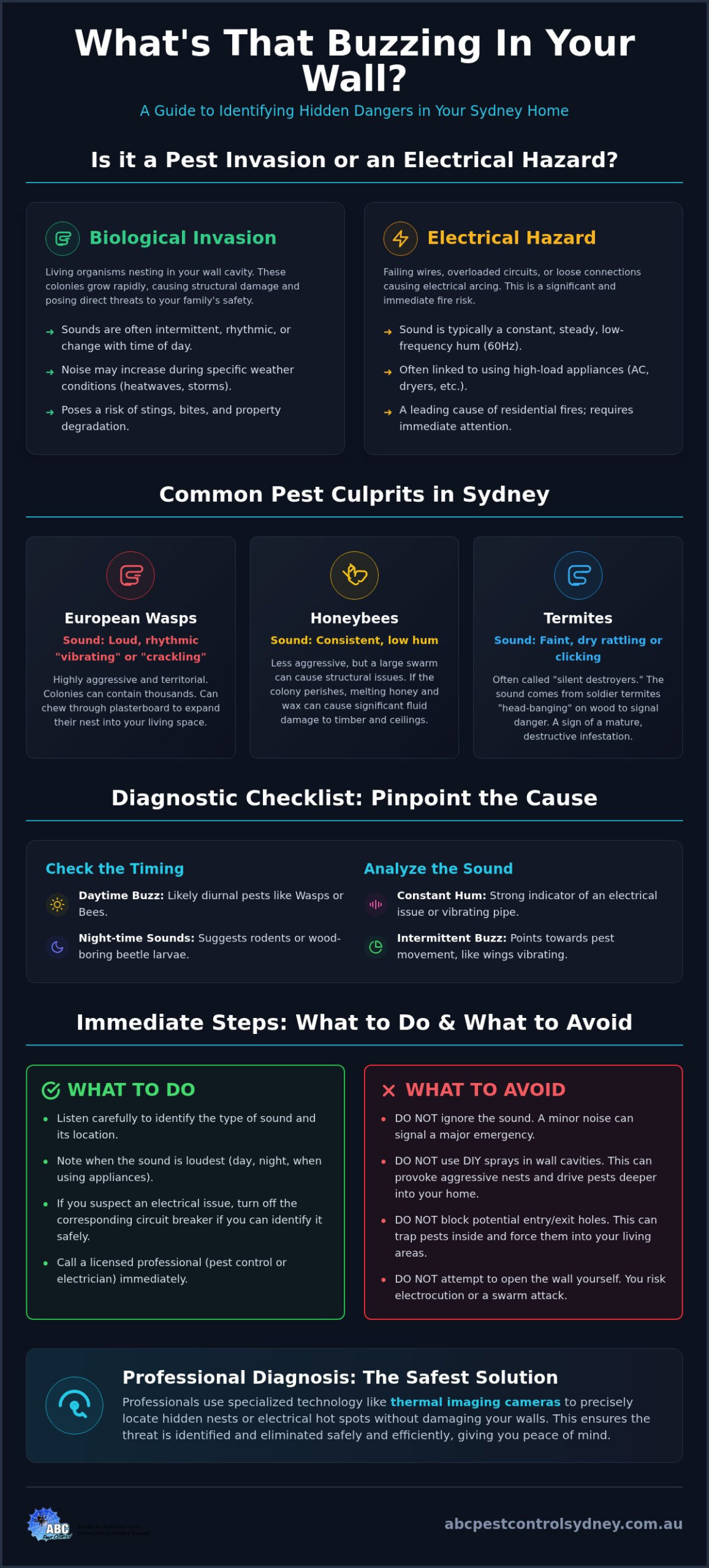
That low-frequency hum or frantic vibration behind your drywall is rarely just “house noise.” In many Sydney homes, the most common buzzing sound in wall cavity causes are divided into two high-stakes categories: mechanical failures or biological invasions. Ignoring these sounds is a gamble you can’t afford to take. A mechanical buzz often signals electrical arcing, which is a leading cause of residential fires. Conversely, a biological sound indicates a colony is actively compromising your home’s structural integrity or safety.
Immediate identification protects your property value and your family. If the sound is biological, the population is likely growing by the hour. If it’s electrical, a single spark could ignite the insulation within seconds. You must act before a minor annoyance turns into a total loss. Determining the root cause quickly is the only way to ensure your home remains a safe haven.
The Anatomy of a Wall Cavity Sound
Your home’s structure is built with hollow spaces between studs. These areas act as natural echo chambers, amplifying even the smallest vibrations into loud, localized disturbances. A constant, steady hum usually suggests an electrical load issue or a vibrating pipe. Intermittent, rhythmic buzzing often points toward wings or movement. Acoustic amplification in home construction refers to the way hollow wall voids resonate and increase the volume of internal vibrations.
When Does the Buzzing Happen?
Timing is your best diagnostic tool for identifying buzzing sound in wall cavity causes. If the noise reaches a fever pitch during the day, you’re likely dealing with diurnal pests. European wasps and honeybees are most active when the sun is up. Some species, like Carpenter bees nesting behavior, involve boring into timber during daylight hours, creating a distinct, heavy vibration that resonates through the framing.
Night-time sounds follow a different pattern. Scratching or clicking after dark often signals rodents or wood-boring beetle larvae. Sydney’s volatile weather plays a role too. Sudden heatwaves or heavy rain often drive pests into the dry, stable environment of your wall cavities. When the barometer shifts, pay close attention. An increase in noise during a Sydney storm usually means pests are seeking higher, drier ground inside your structural timber to escape the rising damp.
Common Pest Culprits: Bees, Wasps, and Termites
In Sydney, biological activity is one of the most frequent buzzing sound in wall cavity causes. While a mechanical hum is concerning, a living infestation is often more urgent. These pests don’t just make noise; they actively degrade your home’s structure and pose a physical threat to your family. Aggressive nesting pests like wasps can be particularly dangerous to curious children and pets who might accidentally disturb a hidden entry point. Identifying the specific creature behind the plaster is vital for choosing the right resolution strategy.
The Aggressive Nature of European Wasps
European wasps are a high-risk cause of loud, rhythmic buzzing in Sydney walls. Unlike native bees, these wasps are notoriously territorial and can sustain a colony of thousands within a single wall void. You’ll often hear a distinctive “vibrating” or “crackling” sound as the workers move against the internal wall linings. If left untreated, these wasps can actually chew through plasterboard to expand their nest, eventually entering your living space. In New South Wales, wasp activity typically peaks during the late summer and autumn months, making this the most critical time for vigilant monitoring.
Honeybees present a different set of structural risks. While their hum is more consistent, a swarm that takes up residence can weigh several kilograms. If the colony dies or the house becomes too hot, the wax and honey can melt, causing significant fluid damage to your timber framing and ceiling. This is often accompanied by the damage caused by carpenter bees, which bore deep channels into structural wood. Both situations require expert intervention to prevent secondary rot and attract other scavenging pests.
Termites: The Silent (but Noisy) Destroyers
Termites are often called silent destroyers, but they aren’t completely quiet. When a colony is disturbed or feels threatened, soldier termites use a “head-banging” communication method. They strike their heads against the wood to signal danger to the rest of the nest. This creates a faint, dry rattling or clicking sound that many homeowners mistake for a light electrical hum or a minor water drip. If you hear this specific dry vibration, it’s a sign of a mature infestation that has already begun consuming your home’s skeleton.
Early detection is the only way to save thousands in repair costs. Scheduling a termite inspection sydney homeowners trust ensures that these hidden threats are identified before they compromise your roof or floor joists. Don’t wait for the sound to stop on its own. A quiet wall often means the damage is done. You should book a professional pest assessment at the first sign of any unusual vibration to secure your property’s future.
Pests vs. Electrical: How to Tell the Difference
Distinguishing between a life-threatening electrical fire hazard and an aggressive pest invasion is the most critical step for any Sydney homeowner. While both can create a similar vibration, their triggers and behaviors are vastly different. Understanding the specific buzzing sound in wall cavity causes allows you to call the right professional, either an electrician or a pest specialist, before the situation escalates into a catastrophe. You shouldn’t ignore either, but the solution depends entirely on an accurate diagnosis.
One of the fastest ways to diagnose the issue is the “light switch test.” Locate the circuit breaker or simply turn off the lights and appliances in the affected room. If the buzzing stops immediately when the power is cut, you are likely dealing with electrical arcing. If the sound persists in the silence, you have a biological guest. Unlike pests, electrical faults are tied directly to the flow of current. Perform this test during a quiet time of day to ensure you can hear the subtle changes in the wall’s frequency.
Signs of Electrical Arcing and Faulty Wiring
Electrical buzzing is often the sound of electricity jumping across a gap in damaged wiring. This “arcing” produces a steady, high-frequency hum that doesn’t change rhythm or intensity unless the electrical load changes. Look for these specific indicators of a mechanical failure:
- The Ozone Smell: A distinct metallic or “bleach-like” scent often accompanies electrical faults.
- Surface Heat: Touch the wall carefully; electrical issues often create localized warm patches on the plaster.
- Flickering Lights: If the buzzing coincides with lights dimming or flickering, it’s a mechanical failure.
Crucially, electrical sounds are indifferent to your presence. Tapping on the wall won’t cause an electrical hum to stop or change. Pests, however, will often go silent or scurry in response to physical vibration. If the sound is constant and ignores your tapping, treat it as a fire risk immediately.
Physical Clues of an Active Infestation
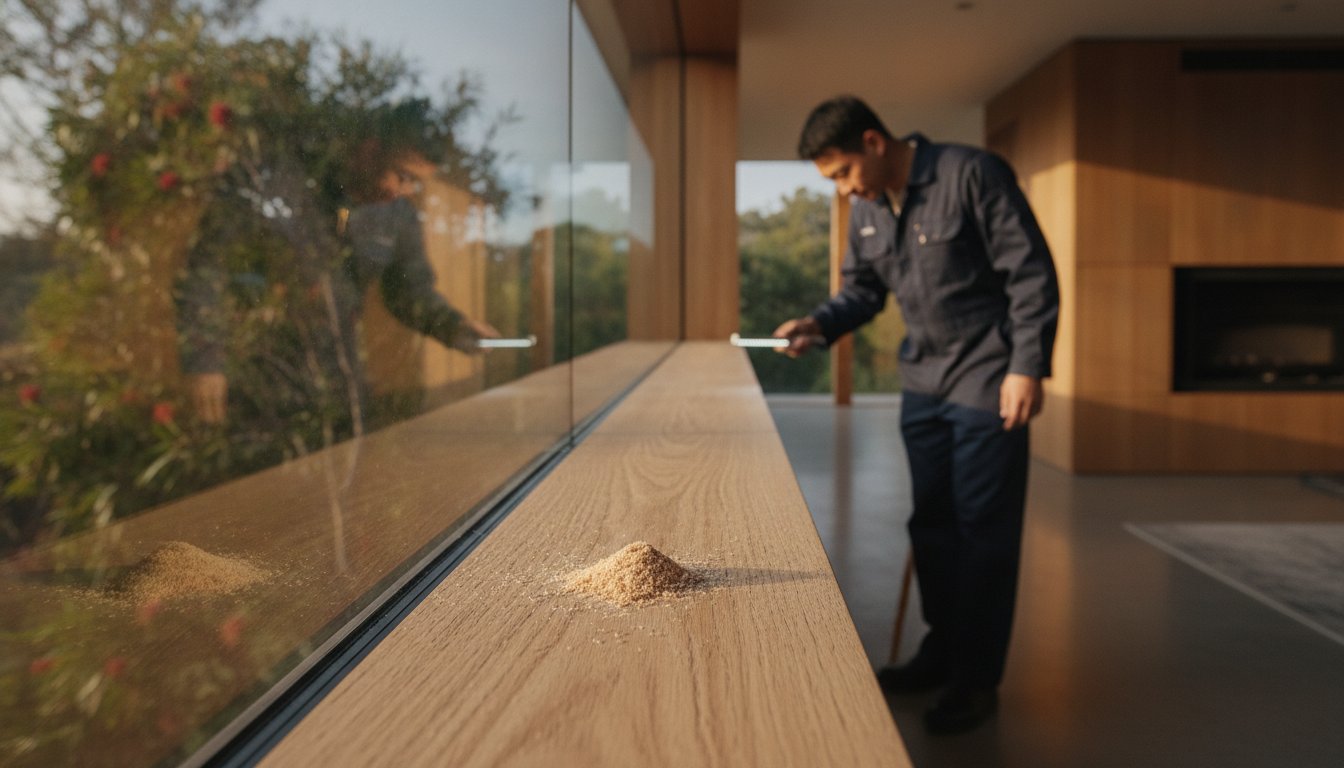
If the light switch test fails to stop the noise, start looking for physical evidence of life. Pests leave behind a trail that wires simply don’t. Check your skirting boards for “frass,” which are the fine, powdery droppings left by wood-boring insects, or small piles of sawdust-like material. These are clear signs of a biological buzzing sound in wall cavity causes that require immediate professional treatment.
Step outside and observe your external walls. Look for insects entering or exiting weep holes, vents, or gaps in the brickwork. If you see a consistent flight path, you’ve found the nest’s front door. For a deeper look at identifying specific local species, consult our guide to pest control sydney residents rely on for total home protection. Don’t guess with your home’s safety. Use these markers to confirm the threat and act today.
Immediate Steps: What to Do (and What to Avoid)
Discovering the source of a mystery noise is urgent, but your first reaction could make the problem much worse. Many homeowners instinctively reach for a can of surface spray or a DIY aerosol. Stop. This is the “Don’t Spray” Rule. Using generic pesticides on a buzzing sound in wall cavity causes often fails to reach the heart of a nest. Instead, the chemicals irritate the colony, driving aggressive pests deeper into your home’s structure or into other rooms through electrical outlets and light fittings.
You must also resist the urge to seal any visible entry holes on your home’s exterior. While it seems logical to “trap” the problem, this is a dangerous mistake. If you block the only exit for a swarm, they will find a new one. This often means they will enter your living space. Before you take any physical action, confirm whether you need an electrician or a pest specialist. If the light switch test we discussed earlier indicates an electrical fault, keep the power off to that circuit and call a sparky immediately. If the sound is persistent and biological, it’s time for professional intervention.
The Danger of Trapping Pests Inside
Sealing a wall cavity while a nest is active creates a high-pressure situation for the insects. When trapped, wasps exhibit aggressive exit-seeking behavior, which typically causes them to chew through internal plasterboard to escape into the living space. This turns a hidden vibration into a direct physical threat to your family. Furthermore, if you manage to kill a nest inside a wall without removing it, the decaying organic matter attracts secondary infestations. Maggots, carpet beetles, and even rodents will move in to scavenge on the remains, creating a long-term hygiene crisis in your home.
Safe Observation Techniques
You can help your technician provide a faster diagnosis by documenting the activity safely. Don’t tap or bang on the wall, as this can provoke a defensive response from a nest. Instead, try these non-invasive methods:
- The Glass Method: Place the rim of a clean drinking glass against the wall and put your ear to the base. This amplifies the internal sound without disturbing the cavity.
- External Perimeter Check: Walk around the outside of your property. Look for mud tunnels on the brickwork or a high volume of insects flying near the roofline.
- Record the Sound: Use your phone to record the noise. A clear audio clip helps specialists differentiate between the dry rattle of termites and the frantic hum of wasps.
Once you have gathered these clues, stop and wait for the experts. Attempting to dismantle a wall yourself is both dangerous and unnecessary. For immediate professional assistance, book a high-difficulty pest inspection today to secure your Sydney property. Our team uses specialized tools to resolve the issue without putting your home at further risk.
Professional Solutions for Wall Cavity Infestations
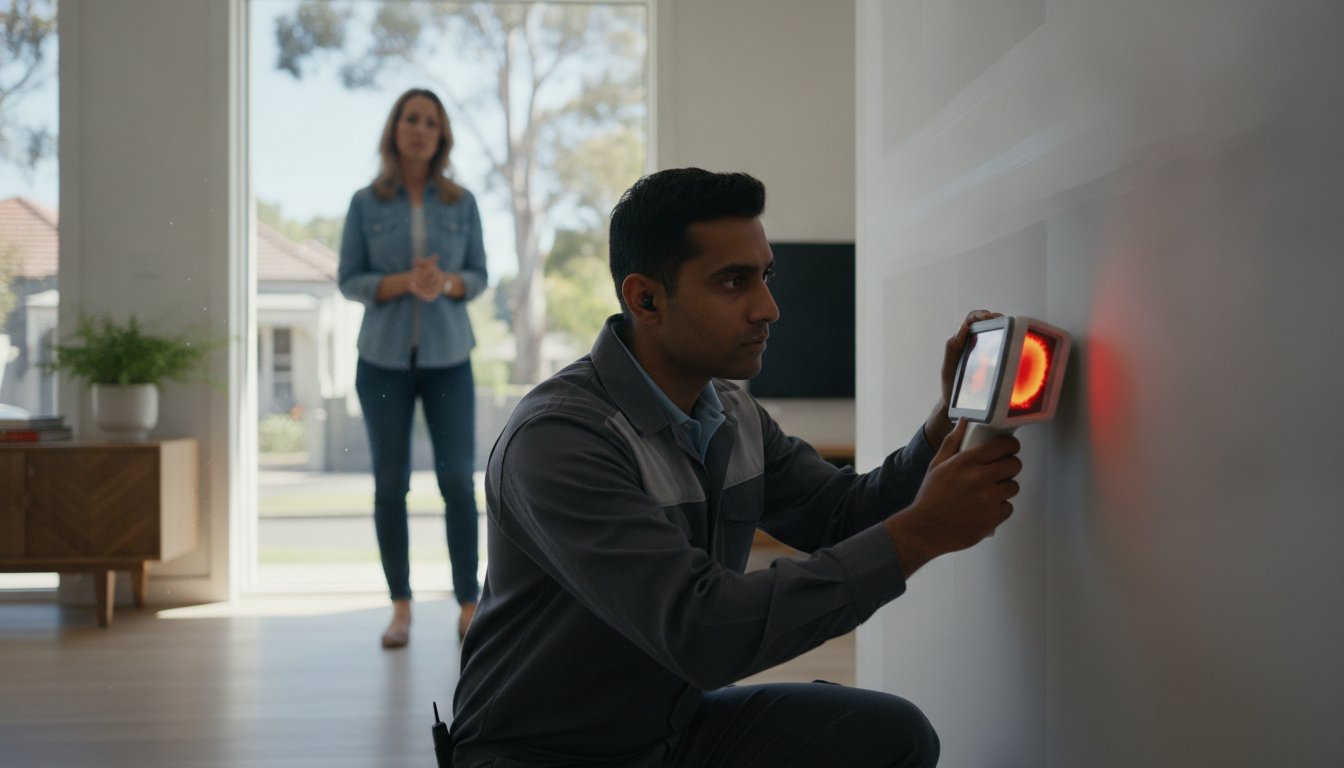
Resolving a hidden threat requires more than a standard surface treatment. We specialize in identifying the most complex buzzing sound in wall cavity causes using non-invasive technology. You don’t need to tear down your walls to find the problem. Our team uses high-sensitivity acoustic sensors to listen through the plaster and pinpoint the exact center of activity. We also employ thermal imaging cameras to detect the heat signatures generated by large wasp nests or active termite colonies. This precision ensures we treat the source, not just the symptoms.
Safety is our priority. We use eco-friendly treatment options that effectively neutralize the threat while keeping your children and pets safe from harsh chemical exposure. Our methods comply with all national regulatory standards, providing a professional resolution that protects your health and your property. By opting for a specialized approach, you avoid the risks of secondary infestations and structural decay. We focus on tangible outcomes that restore the quiet and security of your home.
Why ABC Pest Control Sydney is the Sydney Expert
We bring 20 years of experience to every Sydney home. We understand the unique behavior of local pests, from aggressive European wasps to subterranean termites. Our reputation as high-difficulty challenge specialists means we handle the cases other companies avoid. You get the peace of mind that comes with a permanent solution and a secure home. Don’t let the anxiety of a hidden nest disrupt your life any longer. Book your urgent inspection today to stop the noise for good.
Our Comprehensive Treatment Process
We follow a logical, three-step rhythm to ensure total eradication and long-term protection for your property. Our process is designed for maximum efficiency and minimal disruption to your daily routine.
- Step 1: Non-Invasive Diagnostic Inspection. We use advanced thermal and acoustic technology to locate the nest without damaging your drywall.
- Step 2: Targeted Treatment. Our technicians apply a species-specific, eco-friendly solution directly into the cavity to eliminate the colony at its core.
- Step 3: Long-Term Prevention. We provide a full assessment of your home’s exterior to identify and seal entry points, preventing future invaders from returning.
Choosing one of our General Pest Control Packages provides a comprehensive shield for your Sydney property. Don’t let a small buzz turn into a structural failure. Secure your peace of mind with an expert-led plan designed for the modern Sydney home. We deliver rapid results that protect your investment and your family’s safety.
Secure Your Sydney Home and Restore Your Peace of Mind
That vibration behind your plasterboard isn’t just a noise; it’s a diagnostic warning you shouldn’t ignore. Whether it’s a dangerous electrical fault or an aggressive colony of European wasps, delaying action only increases the risk of fire or structural collapse. You now have the tools to perform the light switch test and understand why you must avoid the “Don’t Spray” rule to prevent driving pests further into your living space. Identifying the specific buzzing sound in wall cavity causes is the first step toward a safe, quiet property.
ABC Pest Control Sydney brings over 20 years of local expertise to every inspection. We are specialists in high-difficulty termite and wasp removal, utilizing eco-friendly treatments that are completely safe for your kids and pets. Don’t wait for the problem to escalate into an expensive structural emergency or a safety hazard. Don’t let the buzz turn into a bite, contact ABC Pest Control Sydney for an urgent inspection! We are ready to help you reclaim your home and protect your investment today.
Frequently Asked Questions
Is a buzzing sound in the wall always a fire hazard?
A buzzing sound isn’t always a fire hazard, but it’s a symptom you must treat with urgency. While it often signals a biological infestation, it can also indicate electrical arcing from damaged wiring. If the vibration is accompanied by a smell of ozone or flickering lights, you face a significant fire risk. Professional diagnosis is the only way to confirm the specific buzzing sound in wall cavity causes and ensure your home’s safety.
Can termites actually make a buzzing noise?
Termites produce a distinct rattling sound rather than a traditional buzz. Soldier termites strike their heads against timber to warn the colony of danger, creating a dry, rhythmic vibration. This noise is a clear indicator of a high-difficulty challenge that requires specialized extermination. If you hear this faint clicking, your structural integrity is likely already at risk. Contact an expert to prevent the infestation from compromising your home’s framing.
What should I do if I see wasps entering a hole in my brickwork?
Observe the area from a safe distance and never attempt to block the entry point. Blocking the hole traps the wasps, which often triggers an aggressive response where they chew through your internal walls to find a new exit. This can lead to a swarm entering your bedroom or living room. Record the activity on your phone to help your technician identify the species and prepare a targeted, eco-friendly treatment plan for your property.
How much does it cost to remove a nest from a wall cavity in Sydney?
Professional removal costs in Sydney depend on the pest species, the size of the nest, and how difficult the cavity is to access. Every home’s structure is unique, so a flat rate is rarely accurate for high-difficulty cases. Some companies might waive inspection fees if you proceed with a treatment package. You should request a detailed assessment to receive a transparent quote that covers both eradication and long-term prevention strategies.
Can I use a bug bomb to get rid of the noise in my wall?
You should avoid using bug bombs or DIY aerosols for noises inside your walls. These products cannot penetrate deep into the insulation where nests are typically located. Instead of resolving the issue, the chemicals often irritate the pests and drive them into other parts of the house. Professional intervention is required to deliver targeted treatments directly into the void without putting your family or pets at risk of chemical exposure.
How do I tell if the buzzing is an electrical arc or a bee nest?
Perform the light switch test by turning off the power at the circuit breaker. If the noise stops immediately, you are likely dealing with an electrical arc. If the vibration persists in the silence, it is almost certainly a biological nest. Electrical issues are often accompanied by warm patches on the wall or a burning plastic scent. Identifying these buzzing sound in wall cavity causes early prevents both fires and painful stings.
What happens if a wasp nest is left untreated in a wall?
An untreated nest will continue to expand, with populations often reaching thousands of aggressive insects. Over time, the moisture from the nest can damage your plasterboard, and the weight of a large colony may even cause structural sagging. Once a nest dies naturally, the decaying organic matter attracts secondary pests like maggots and carpet beetles. Professional removal ensures the cavity is cleaned and secured, preventing a cycle of recurring infestations.
Why is the buzzing in my wall louder at night?
Increased night-time noise usually points to nocturnal pests like rodents or certain beetle larvae that move when the house is still. However, the perceived volume often increases simply because ambient household noise has decreased. If you hear rhythmic scratching or chewing after dark, it is a sign of an active biological presence. Professional acoustic sensors can pinpoint these movements precisely, allowing for a targeted resolution that restores your quiet evenings.