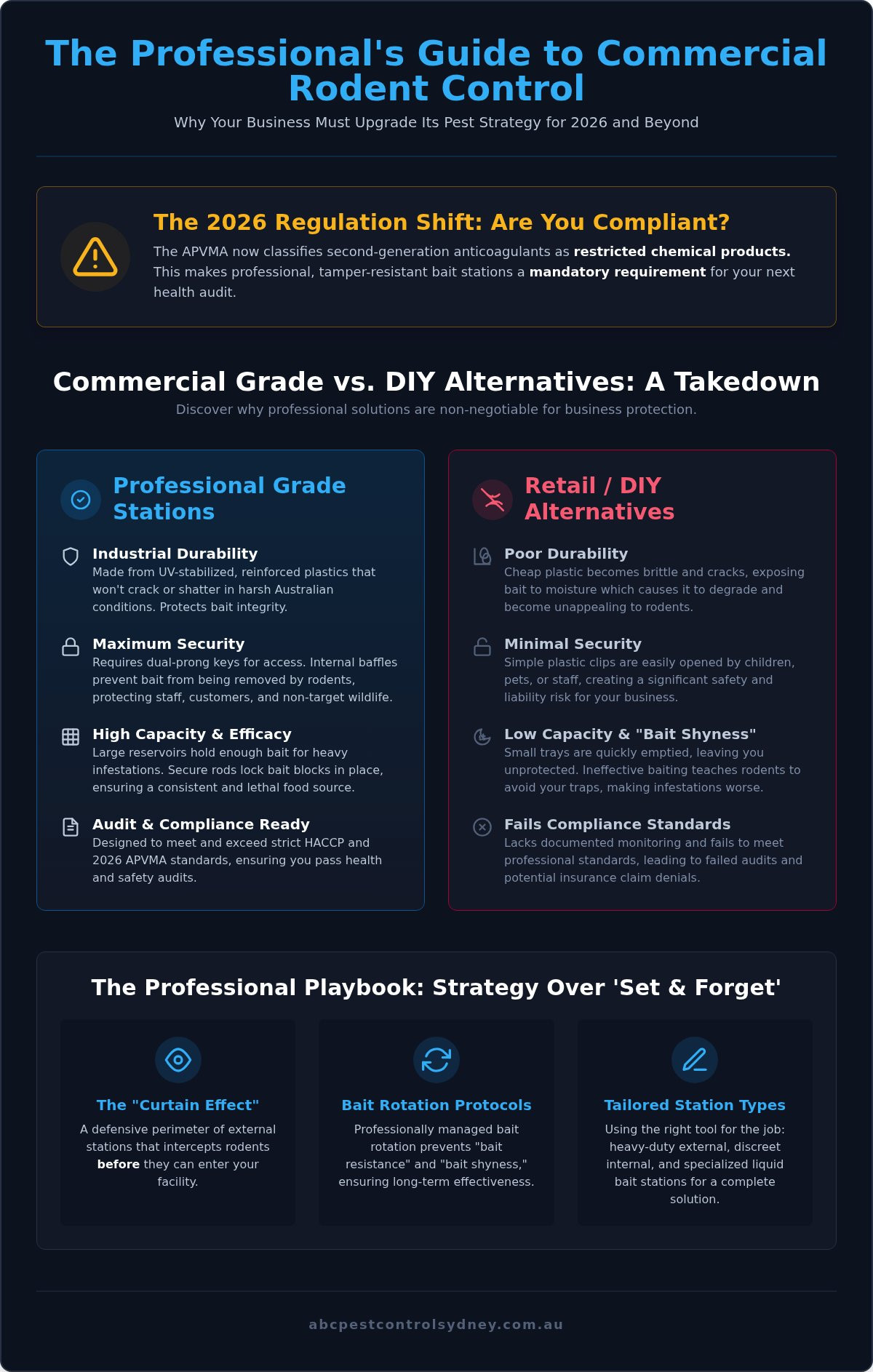
Could your current pest strategy survive a surprise health audit under the strict 2026 rodenticide regulations? With the APVMA now classifying second-generation anticoagulants as restricted chemical products, professional commercial rodent bait stations are no longer just an option; they are a compliance necessity for Sydney business owners. You’ve worked hard to build your brand. The last thing you need is a failed audit or a customer sighting a rat in your facility. It’s frustrating when DIY methods fail to hit the root cause, leaving your stock and your reputation at risk.
We understand that maintaining a clean, compliant environment is your top priority. While expert janitorial services like Brilliant Office Cleaning provide the foundation for facility hygiene, this guide will show you how professional pest management provides the discreet, high-level protection required to meet HACCP standards and keep your facility pest-free. You’ll discover the latest compliance requirements for tamper-resistant equipment, the science behind effective station placement, and why expert monitoring is the only way to ensure total peace of mind in a high-pressure commercial environment.
Key Takeaways
- Learn why 2026 APVMA regulations make tamper-resistant commercial rodent bait stations a mandatory requirement for your next health audit.
- Identify the durability flaws in retail products and why industrial-grade enclosures are necessary to protect your facility’s stock and reputation.
- Master the “curtain effect” strategy to build a defensive perimeter that stops rodents before they ever step foot inside your warehouse.
- Prevent bait resistance with professional rotation protocols that don’t rely on the ineffective “set and forget” retail mindset.
- Access tailored commercial pest management plans backed by 20 years of experience in resolving Sydney’s most resilient rodent infestations.
What Are Commercial Rodent Bait Stations?
Commercial rodent bait stations are specialized, lockable enclosures designed to house rodenticides or mechanical traps securely. They serve as the front line of defense for any business facing pest pressure. These units aren’t the flimsy plastic trays you find at a local hardware store. They’re engineered for high-traffic environments where safety and durability are non-negotiable. Since rodenticides are chemicals formulated to eliminate rats and mice, keeping these substances away from non-target animals, children, and food products is the primary goal of every station.
A professional unit differs from residential versions in three key ways: durability, capacity, and security. While a home station might hold a single block of bait, commercial rodent bait stations are built with larger reservoirs to handle heavy infestations in Sydney warehouses and kitchens. They feature reinforced UV-stabilized plastics that won’t crack under the Australian sun or shatter if bumped by a forklift. Inside, you’ll find secure bait rods that lock the blocks in place, preventing rodents from dragging poison into sensitive areas.
Tamper-Resistance and Safety Features
Tamper-resistance is defined as the ability of a station to prevent access to its contents by unauthorized persons or non-target animals. This isn’t just about a lock; it’s about clever internal engineering. Internal baffles create a labyrinth that rodents must navigate to reach the bait. These walls prevent a rat from “kicking out” loose crumbs or dragging a whole block through the entry hole. Access is restricted to licensed professionals using specialized keys. This level of security ensures your business remains compliant with strict health and safety standards while protecting your staff and customers.
Types of Commercial Stations: Internal vs. External
Effective pest management relies on choosing the right tool for the specific environment. We categorize commercial rodent bait stations into three main types:
- External Perimeter Stations: These are heavy-duty units placed along the building’s exterior. They intercept rodents before they ever find a way inside.
- Internal Low-Profile Stations: Designed for discretion, these fit into tight spaces like under pallets, behind heavy equipment, or inside kickboards in commercial kitchens.
- Liquid Bait Stations: In dry environments like grain stores or bakeries, rodents are often thirstier than they are hungry. These stations hold liquid bait, providing a lethal solution where traditional blocks might be ignored.
Implementing the right mix of these tools is essential for a robust rodent control Sydney strategy that protects your facility from every angle.
Why Commercial-Grade Stations Outperform DIY Alternatives
Retail traps from big-box stores often fail because they aren’t designed for the rigours of a Sydney business environment. Professional commercial rodent bait stations utilize UV-stabilized plastics that resist intense heat. Cheaper alternatives become brittle and crack within months, exposing the bait to moisture. When water enters a station, the bait degrades and becomes unappealing to rodents. High-capacity reservoirs in professional units allow for a consistent supply of bait. This is critical in high-infestation zones where a single retail tray would be emptied in hours, leaving your facility unprotected.
Security is another major differentiator. While retail boxes might use a simple plastic clip, industrial stations require dual-prong keys. This prevents unauthorized access by staff, customers, or children. It also ensures your business maintains the high safety and compliance standards required for modern commercial operations. Professional hardware stays locked, stays put, and stays effective.
The Cost of DIY Failure in Business
Rats are highly intelligent creatures. If a low-quality trap or poor bait only makes them slightly ill, it leads to “bait shyness.” Once a colony identifies a food source as dangerous, they’ll avoid your DIY traps entirely. This failure allows the population to explode. The hidden costs are staggering. Damaged stock, chewed electrical wiring, and a ruined reputation are far more expensive than professional intervention. Many commercial insurance policies now mandate professional pest management. They often view DIY attempts as insufficient because they lack documented monitoring and fail to solve the root cause of the infestation.
Safety and Liability Protection
Liability is a massive concern for public-facing businesses in Sydney. A loose bait block dragged out of a flimsy retail box can lead to accidental poisoning. Professional stations are often weighted or anchored directly to the pavement or floor. This prevents “box dragging,” where larger Norway rats attempt to pull the station back to their nesting site. Meeting Australian Standards for food-handling areas requires this level of hardware security. It’s about protecting your bottom line and your community at the same time. If you’re struggling with persistent sightings, our commercial pest management team can install the professional-grade hardware your business deserves.
Strategic Placement and Compliance Standards
A bait station is only as effective as the strategy behind its placement. In large Sydney warehouses, rodents don’t wander aimlessly; they follow “runways” along walls and behind pallets. This behavior, known as thigmotaxis, means that commercial rodent bait stations must be positioned precisely where rodents feel most secure. Strategic placement of bait stations involves identifying these high-traffic paths and nesting sites to ensure maximum uptake. Simply placing a box in a corner isn’t enough. It requires an understanding of the local environment and the specific species, such as the Roof Rat or Norway Rat, that are common in the Sydney metropolitan area.
Compliance is the backbone of professional pest management. For food-related businesses, meeting HACCP and ISO standards is mandatory to pass health audits. You can’t just throw down a few traps and hope for the best. Auditors require a detailed site map and a numbered tracking system for every station on your property. This documentation proves that you have a proactive management plan in place. Under the 2026 regulations, if you’re using restricted chemical products, these stations must be secured and placed within two meters of the building structure. This level of precision protects your business from heavy fines and ensures your facility remains compliant with national regulatory standards.
Internal Placement: Precision and Discretion
Inside a facility, the goal is to target “dead zones” where rodents harbor without risking food safety. We focus on storage rooms, false ceilings, and the areas behind heavy kitchen equipment. To avoid cross-contamination, stations must maintain a safe distance from food preparation surfaces. We integrate these units discreetly so they don’t disrupt your business aesthetics. By using low-profile commercial rodent bait stations, we provide effective control that remains invisible to your customers while meeting every health department requirement.
External Perimeter Defense
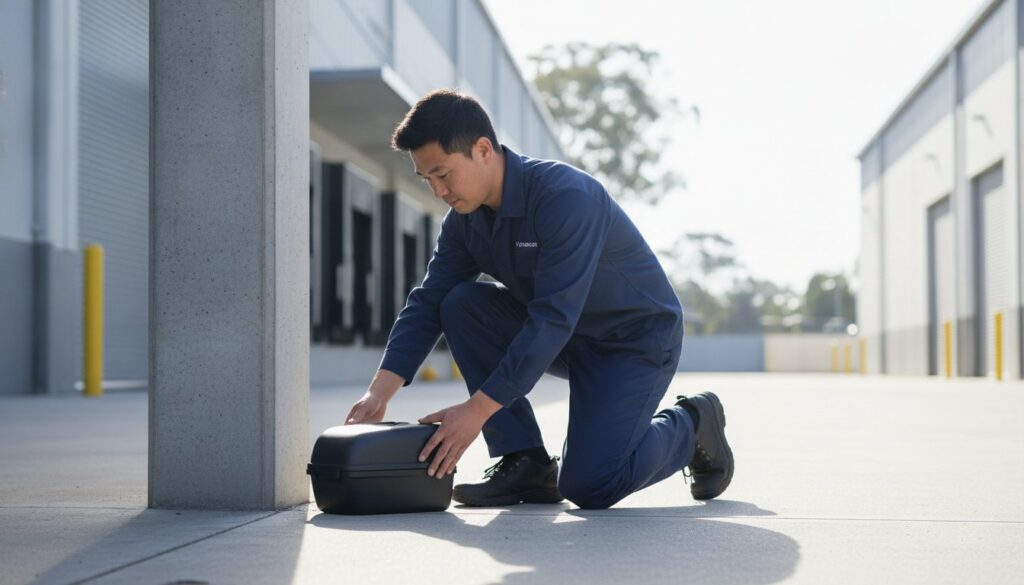
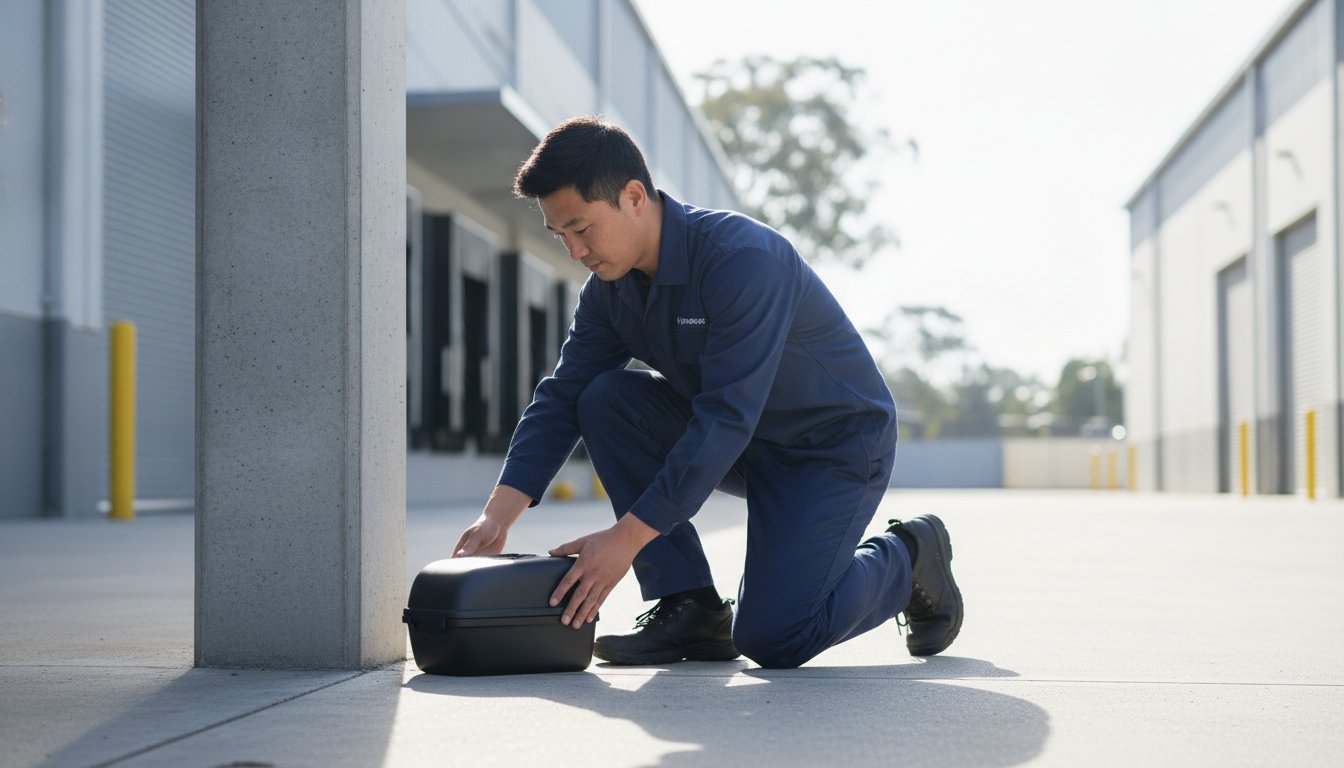
The “curtain effect” is your first line of defense. We create a defensive perimeter by spacing stations every 10 to 15 meters along the building’s exterior. This intercepted line stops rodents before they can find an entry point. We anchor these stations directly to concrete or heavy-duty paving to prevent them from being moved by weather or unauthorized handling. High-risk areas like loading docks, utility pipe entries, and waste management zones receive extra attention. If you are currently upgrading or designing your facility, you can learn more about A1 Precision Solutions and their comprehensive warehouse fit-out solutions. This proactive approach ensures that your facility stays protected 24/7, regardless of the pest pressure outside.
Professional Monitoring and Maintenance Protocols
Many business owners believe that once commercial rodent bait stations are installed, the job is done. This is a dangerous misconception. A station is a diagnostic tool, not just a trap. Without regular professional monitoring, you’re flying blind. We ensure that every unit is inspected, cleaned, and refilled according to a strict schedule. If a station is dirty or smells like a dead rodent, healthy rats will avoid it. Professional sanitization maintains the attraction of the station, ensuring it continues to work as intended.
Rodents are adaptable creatures. Using the same bait for too long can lead to behavioral or physiological resistance. We rotate bait formulations to keep the population off-balance. This prevents the bait shyness mentioned earlier and ensures that the colony remains vulnerable to our treatments. Auditors and health inspectors don’t just want to see boxes; they want to see the paper trail. We provide comprehensive logs for every visit. This documentation is essential for your HACCP compliance and can be the difference between a passed audit and a heavy fine.
The Monitoring Cycle: What Professionals Check
We don’t just refill bait. We analyze “bait take” to estimate the size of the colony and track their movement across your facility. If one side of a warehouse shows higher consumption, we shift our defensive line accordingly. We also check for secondary pests like warehouse beetles or cockroaches that might be attracted to the bait itself. Every lock and anchor is tested to ensure the unit remains tamper-resistant and compliant with the 2026 APVMA standards. If a station is damaged by a forklift or weather, we replace it immediately to maintain your site’s integrity.
Data-Driven Rodent Management
Integrated Pest Management is a data-led approach to long-term prevention that prioritizes environmental adjustments alongside chemical controls. By reviewing station logs over time, we identify seasonal trends in Sydney rodent activity. For instance, we often see a surge in activity during the cooler months from March to May. This data allows us to be proactive rather than reactive. We adjust your strategy based on real-world results from your specific site rather than relying on guesswork. Ready to secure your facility with a professional monitoring plan? Book our commercial pest management service today to ensure your business stays compliant and pest-free.
Expert Rodent Management with ABC Pest Control Sydney
ABC Pest Control Sydney brings over 20 years of specialized experience to your facility. We focus on resolving high-difficulty infestations that standard services often miss. Our team knows the Sydney metropolitan area inside and out. We provide expert rodent control Sydney that protects your brand and your bottom line. Every business has unique risks. We develop customized commercial pest management plans that utilize professional-grade commercial rodent bait stations tailored to your specific industry requirements.
Safety and sustainability sit at the core of our methodology. We utilize eco-friendly and low-toxicity baiting solutions designed for maximum impact with minimal ecological footprint. If you have an active sighting, you need immediate action. We maintain rapid response times across all Sydney suburbs to address urgent infestations before they escalate. Don’t let a pest problem spiral out of control. Our experienced technicians are ready to intervene with the reliability and expertise your business deserves.
Why Sydney Businesses Trust ABC
Our two decades of local history include handling complex infestations in historic Sydney buildings. These structures often feature difficult subfloors and ceiling voids that rodents exploit. We understand these architectural challenges perfectly. We offer transparent, digital reporting that makes health audit compliance simple for busy managers. This documentation provides a clear paper trail for inspectors, proving your commitment to national safety standards. Our team is fully licensed and insured. We project a professional image that reflects well on your business while delivering the results you expect from an industry leader.
Get Started with a Professional Site Audit
A successful management plan begins with a thorough commercial rodent inspection. We examine every corner of your property, from loading docks to staff break rooms. We identify the specific entry points and food sources that attract pests. Following this audit, we design a bespoke layout for your commercial rodent bait stations. This precision ensures that every station is positioned for the highest possible uptake. We don’t believe in “set and forget” solutions. We provide a proactive defense that evolves with your site’s needs. Contact us today for a discreet and professional consultation. Take the first step toward a permanently pest-free facility.
Protect Your Sydney Business with Expert Rodent Defenses
Professional commercial rodent bait stations are now a non-negotiable requirement for Sydney business owners navigating the 2026 APVMA regulatory landscape. We’ve shown that the right hardware is only half the battle. Success depends on strategic placement along rodent runways and a rigorous monitoring cycle that prevents bait resistance. Relying on brittle retail traps or unmonitored stations risks failed health audits and significant stock damage. You need a proactive system that works 24/7 to intercept pests before they breach your perimeter.
Our team brings 20+ years of Sydney experience to every site audit, providing the specialist capabilities needed for high-difficulty infestations. We deliver HACCP and audit-compliant reporting that takes the stress out of compliance management. You can trust our discreet and professional service to handle the most resilient rodent issues without disrupting your daily operations. Don’t wait for a sighting to damage your brand’s reputation. Secure Your Business Today with Professional Rodent Control and enjoy the peace of mind that comes from industry-leading expertise. Your facility is in safe hands.
Frequently Asked Questions
Are commercial rodent bait stations safe for use in food preparation areas?
Yes, commercial rodent bait stations are safe for food preparation areas when managed by professionals. We use tamper-resistant enclosures that lock the bait securely inside, preventing any accidental contact with food surfaces or staff. These units meet strict HACCP requirements and Australian health standards. We place them strategically in dead zones behind equipment to ensure effective control without risking cross-contamination in your kitchen or storage rooms.
How often should commercial bait stations be serviced?
Service frequency depends on your specific risk profile and local pest pressure. Most Sydney businesses require monthly inspections to remain compliant with health audits and insurance policies. During the high-pressure autumn months, we may recommend more frequent visits to handle increased activity. Regular servicing ensures that monitoring logs are up to date and that your facility’s defensive line remains fully functional and stocked with fresh bait.
Is it a legal requirement for my Sydney business to have bait stations?
While not a universal law for every office, businesses in food handling, hospitality, and warehousing must maintain a pest-free environment to meet NSW health regulations. Failing to show a proactive management plan during a surprise audit can lead to heavy fines or closure. Implementing professional commercial rodent bait stations provides the documented proof inspectors look for. It demonstrates that you’re taking reasonable steps to protect public health and safety.
Can rodents become immune to the bait used in these stations?
Rodents can develop resistance if the same bait is used repeatedly over a long period. This is why professional rotation is a core part of our management strategy. We switch between different active ingredients to ensure the colony remains vulnerable. We also monitor for bait shyness, where intelligent rats learn to avoid specific stations. By varying the formulations, we overcome these survival instincts and achieve total resolution of the infestation.
What is the difference between a bait station and a rodent trap?
A bait station is a secure, lockable enclosure, while a trap is the specific device or chemical used to eliminate the rodent. The station acts as a protective house for the bait or mechanical trap inside. This design is critical for commercial settings because it prevents non-target animals, children, or unauthorized staff from touching the contents. It also protects the bait from weather degradation, ensuring it stays fresh and attractive to pests.
Are the baits used in commercial stations dangerous for pets or birds?
Rodenticides are toxic to mammals and birds, which makes the use of secure commercial rodent bait stations essential. These units are designed to be tamper-resistant, preventing pets from reaching the poison. We also follow strict placement guidelines to minimize the risk of secondary poisoning to local wildlife. By anchoring stations and using internal baffles, we ensure that the bait stays exactly where it belongs, providing a safe and effective solution.
How many bait stations does my business actually need?
The number of stations required is determined by the size of your property and the level of pest activity. For a standard perimeter defense, we typically place units every 10 to 15 metres along the building’s exterior. High-risk entry points like loading docks or waste storage areas may require additional coverage. We provide a bespoke layout after your initial site audit to ensure every potential runway is covered without unnecessary equipment costs.
What happens if a rodent dies inside the building instead of the station?
Modern baits are formulated to make rodents feel lethargic, often prompting them to return to their secluded nesting sites before they expire. While it’s rare for a rodent to die in a highly visible area, it can happen in wall voids or subfloors. Our professional monitoring service includes checking for secondary signs like odors. We provide rapid response to locate and remove any carcasses, ensuring your facility maintains its hygiene standards and remains free from unpleasant smells.