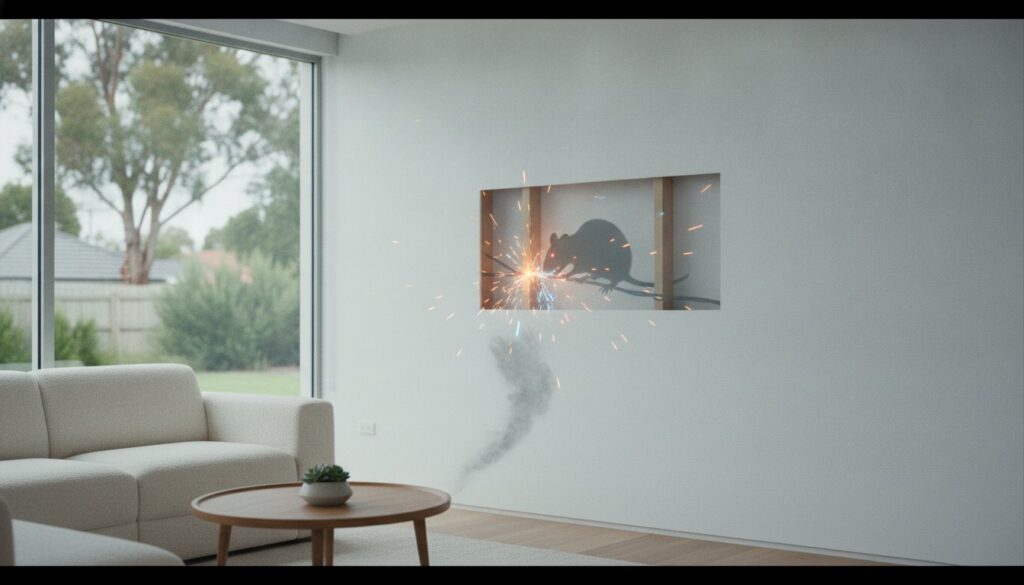
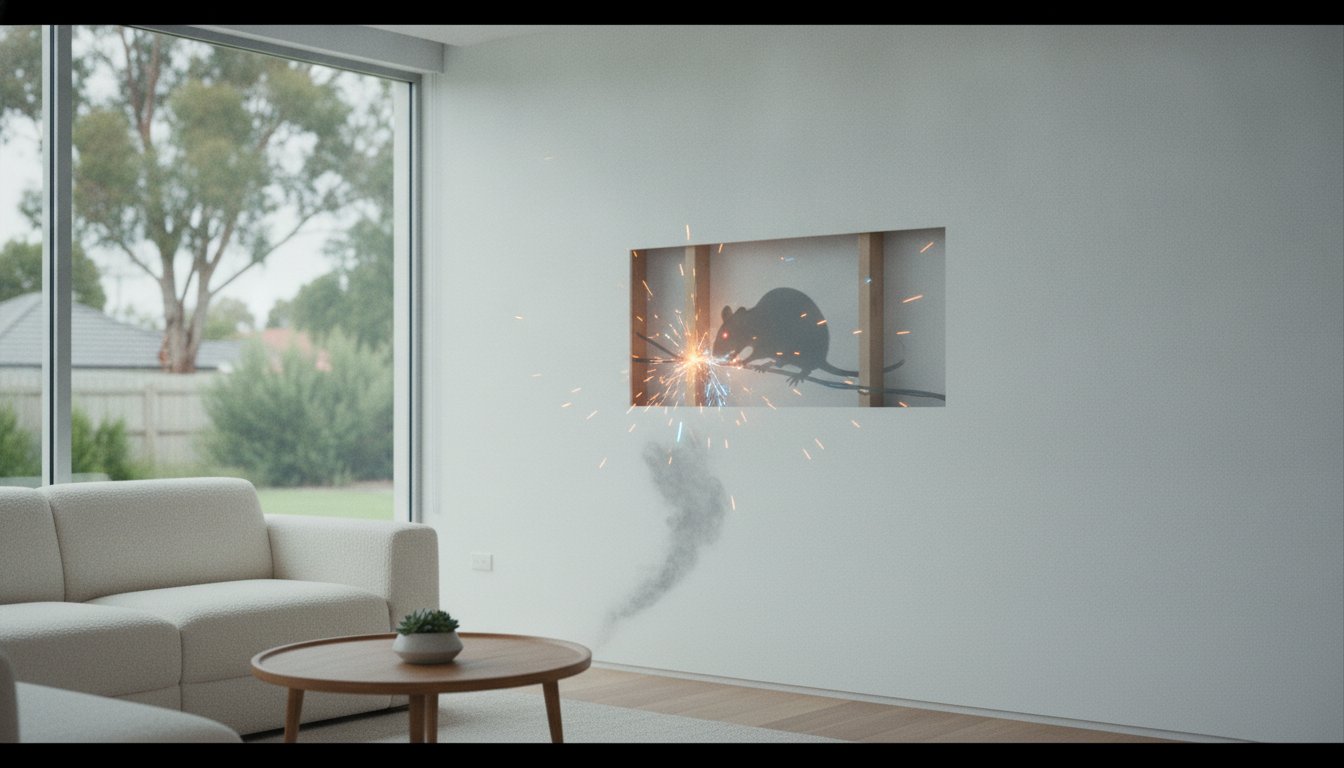
That faint, rhythmic scratching behind your bedroom plasterboard isn’t just a nuisance; it’s a countdown to a potential electrical fire. While you’re losing sleep over the sound of scurrying feet, those rodents are likely gnawing through expensive wiring and compromising your home’s insulation. Identifying the specific signs of rats in walls early is the only way to prevent a high-stakes disaster. It’s a stressful situation that leaves many Sydney homeowners feeling anxious and powerless, especially when fearing the inevitable “dead rat smell” if a DIY solution goes wrong.
You deserve to feel safe in your own home. This article provides a definitive plan to stop a hidden infestation before it leads to structural damage or health risks. We’ll guide you through the sensory markers of an active colony and the urgent steps required to secure your property. You will learn the professional find-and-exclude strategy used to clear wall cavities effectively, ensuring long-term protection and total peace of mind for your household. By following this expert advice, you can protect your investment and finally enjoy a quiet, pest-free environment.
Key Takeaways
- Identify active signs of rats in walls, such as nocturnal scratching and dark grease marks, to confirm an infestation before it spreads.
- Discover how Sydney’s common Roof Rats exploit unsealed eaves and weep holes to enter your home’s structural voids.
- Understand the critical fire risks posed by rodents chewing through electrical insulation and how to protect your property from structural damage.
- Learn why professional “find-and-exclude” strategies are superior to DIY poisons, which often leave decaying rodents trapped inside wall cavities.
- Gain a clear plan for long-term prevention using comprehensive General Pest Control Packages tailored to Sydney’s unique building structures.
The Top 5 Telltale Signs of Rats in Your Walls
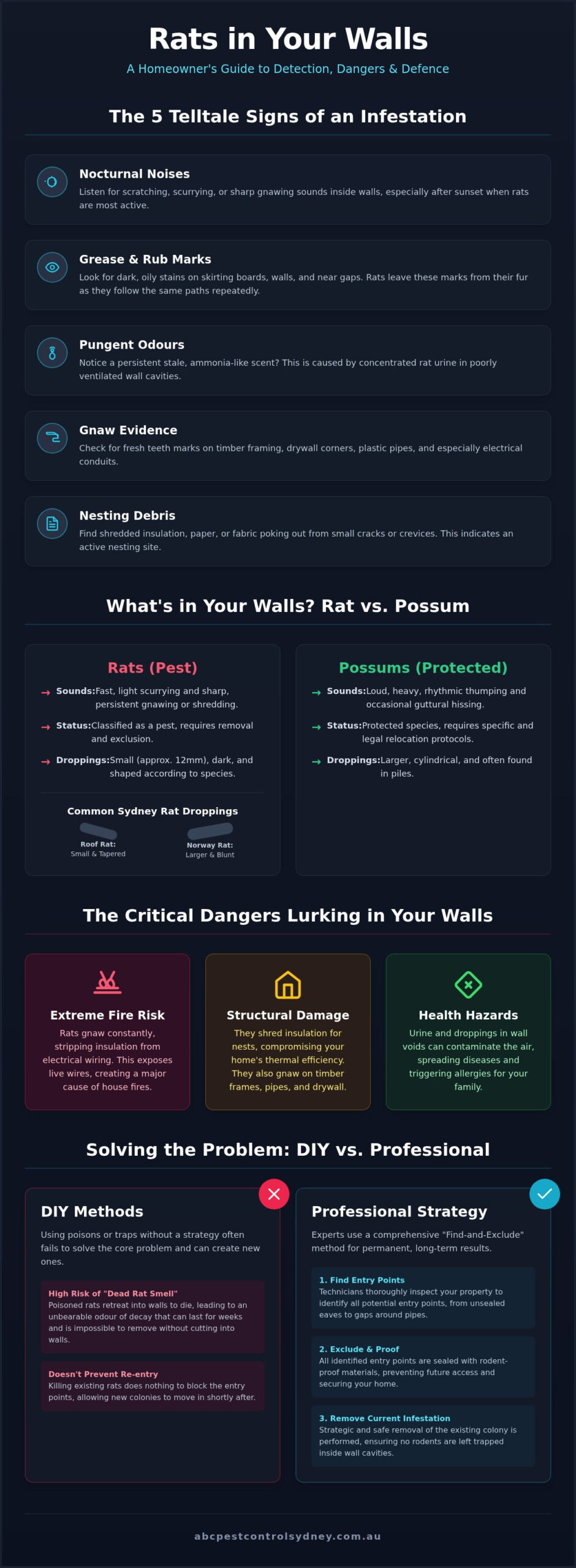
Rats are cryptic survivors that prefer the safety of your wall cavities over open spaces. Because they are nocturnal, you might not see a live rodent for weeks, even while a colony grows behind your plasterboard. Recognizing the early signs of rats in walls is essential to preventing a full scale infestation that threatens your home’s safety. Look for these five primary indicators:
- Nocturnal Noises: Scratching, scurrying, or sharp gnawing sounds that intensify after sunset.
- Grease Rub Marks: Dark, oily stains left on skirting boards or near wall gaps as rats brush their fur against surfaces.
- Pungent Odours: A stale, ammonia like scent caused by concentrated urine in poorly ventilated wall voids.
- Gnaw Evidence: Fresh teeth marks on timber framing, drywall corners, or plastic electrical conduits.
- Visual Debris: Shredded insulation or paper nesting materials poking out of small crevices.
Ignoring these red flags gives rodents time to cause expensive damage. If you notice a combination of these symptoms, your Sydney home likely has an active nesting site that requires immediate intervention.
Rat Noises vs. Possum Noises: Which One Is It?
Distinguishing between these two intruders is vital because of New South Wales regulations. Under the Biodiversity Conservation Act 2016, possums are protected species and require specific relocation protocols, whereas rats are classified as pests. Rats typically produce fast, light scurrying sounds and persistent, sharp “shredding” noises as they gather nesting material. In contrast, possums are much heavier. You will hear loud, rhythmic thumping footsteps and occasional guttural hissing or screeching. If the noise sounds like a heavy weight dragging across the ceiling, it’s likely a possum. If it’s a frantic, light scratching inside the wall, you’re dealing with rats.
Identifying Rat Droppings and Rub Marks
The shape of the droppings tells us exactly which species has invaded your home. Sydney’s most common wall climber, the Roof Rat (Rattus rattus), leaves small, tapered droppings about 12mm long. The larger Norway Rat (Rattus norvegicus) produces blunt ended, capsule shaped droppings. Fresh droppings appear dark and moist, while grey, crumbling waste indicates a historical issue. You should also check for the “grease trail.” Rats have poor eyesight and rely on touch, following the exact same path every night. This leaves a visible smudge of body oils and dirt along the base of your walls. These trails are a roadmap for professional technicians to identify the most effective placement for signs of rats in walls detection and treatment.
How Rats Enter Sydney Homes and Wall Cavities
Sydney is home to a particularly agile intruder: the Roof Rat (Rattus rattus). Unlike their bulkier cousins that burrow in the ground, Roof Rats are expert climbers that prefer the high ground of your ceiling and wall voids. They treat your home like a vertical playground, using overhanging tree branches as “rat highways” to reach your gutters and eaves. Once they find a gap as small as a 20-cent piece, they squeeze inside and begin establishing a colony. Common entry points include unsealed eaves, gaps around plumbing pipes, and even the tiny spaces where electrical wiring enters the structure.
In many Sydney suburbs, the architecture itself provides unique opportunities for rodents. If you live in a terrace house or an older apartment block, shared wall cavities allow rats to travel between properties with ease. You might be vigilant about cleanliness, but if a neighbour has an entry point, the rodents can navigate through the internal framing to reach your home. This is why spotting the early signs of rats in walls is so critical; the problem is often larger than just your immediate living space.
The Biology of a Wall Infestation
Rats don’t just wander into walls by accident; they’re looking for a specific environment. Wall cavities offer protection from predators like owls and cats, while the proximity to internal heating and hot water pipes provides a stable temperature. Your home’s insulation is the perfect material for “breeding chambers.” They shred glass wool or cellulose insulation to create soft, warm nests. Speed is the biggest factor here. A single pair of rats can produce a new litter every three weeks. Without intervention, two rats can easily become twenty in a matter of months, making a General Pest Control Package a vital investment for long-term home protection.
Sydney Architecture and Rodent Vulnerability
Modern Sydney homes aren’t immune either. While older timber-framed houses have plenty of cracks, new builds often feature “weep holes” in the brickwork. These are essential for ventilation and moisture drainage, but without stainless steel mesh covers, they’re an open invitation for rodents. Air conditioning conduits are another frequent culprit. When installers run pipes through external walls, they often leave gaps in the flashing or sealant. Rats follow the scent of cool or warm air escaping these gaps and chew their way into the wall cavity. Our team frequently finds that these overlooked “front doors” are the primary source of recurring infestations in modern Sydney suburbs.
The Hidden Dangers: Why Rats in Walls Are a Serious Risk
Identifying the signs of rats in walls is the first step toward reclaiming your home, but understanding the physical threats they pose is what makes immediate removal non-negotiable. These rodents aren’t just passing through; they are actively degrading your home’s safety and structural integrity. From the moment they enter, they begin a process of destruction that can lead to catastrophic financial and health consequences if left unchecked.
Structural damage is often the most visible result of a long term infestation. Rats possess powerful jaw muscles and teeth capable of gnawing through timber framing, drywall, and even soft metals. They create “rat runs” by chewing through studs to move quickly between rooms. Your home’s thermal envelope is another casualty. Rats treat expensive insulation batts as both a toilet and a source of nesting material. Once insulation is shredded or soaked in urine, it loses its ability to regulate your home’s temperature, leading to higher energy bills and the need for a total, costly replacement.
The Electrical Fire Threat
The most terrifying risk of a hidden infestation is the potential for an electrical fire. Rats have a biological compulsion to gnaw because their incisors never stop growing. They don’t chew your wiring for food; they do it to keep their teeth at a manageable length. This behavior often results in exposed copper, leading to flickering lights or frequently tripped circuits. Research indicates that 20% of ‘undetermined’ house fires are attributed to rodent damage. If you hear scratching near your power points or notice a burning plastic smell, the situation has already reached a critical stage.
Allergens and Respiratory Issues
Disease transmission is a silent threat that doesn’t require direct contact with a rodent. As rat dander and dried droppings accumulate in wall voids, they can circulate through your home’s ventilation system. This is particularly dangerous for residents with asthma or chronic respiratory conditions. Pathogens like Leptospirosis and Salmonellosis can be spread through aerosolized waste particles. Beyond these health risks, rodents act as transport for secondary pests. A colony in your walls often brings fleas, mites, and ticks into the home, which can quickly migrate from the wall cavity into your carpets and bedding. Protecting your family requires more than just catching a single rat; it requires the total decontamination of these hidden spaces.
Professional Rat Removal vs. DIY Methods
Many homeowners react to the first signs of rats in walls by heading to the local hardware store for generic baits. While this seems like a quick fix, it often triggers a much larger problem. DIY methods usually focus on the individual rodent you hear scratching, but they ignore the complex colony dynamics happening behind your plasterboard. Store-bought traps and ultrasonic repellents rarely provide a permanent solution because they don’t address the root cause of the infestation. Rats are neophobic, meaning they are suspicious of new objects in their environment, which often makes basic snap traps ineffective against a seasoned wall colony.
Professional intervention relies on Integrated Pest Management (IPM). This strategy doesn’t just “spray and pray.” It combines biological knowledge with structural exclusion to ensure the rodents are removed and cannot return. Professionals understand that catch and release is ineffective for established wall colonies, as these rodents are highly territorial and will simply find a new way back into your home or die slowly in an unfamiliar environment. Our approach is about total resolution, not just temporary relief.
The Danger of DIY Baiting in Cavities
Throwing loose poison into a wall cavity is a recipe for the “dead rat disaster.” Once a rat consumes store-bought bait, it doesn’t wander outside to find water. It crawls into the deepest, most inaccessible part of your wall framing and dies. During a Sydney summer, a single decomposing rat produces a foul, sickly sweet stench that can permeate your entire home for up to three weeks. You cannot simply mask this smell with air freshener. Professional baiting involves containment and monitoring. We ensure rodents are managed safely, reducing the risk of secondary poisoning to local Sydney owls and family pets that might encounter a disoriented rodent.
Exclusion: The Only Permanent Solution
Killing the current intruders is only half the battle. If you don’t seal the entry points, new “scout” rats will follow the pheromone scent trails left by the previous colony. Professional exclusion involves identifying every possible gap and sealing it with rodent-proof materials like heavy duty stainless steel mesh and steel wool. These are materials that rat teeth cannot penetrate. For a full breakdown of these specialized techniques, see our guide on Rodent Control Sydney. Cleaning up these scent trails is vital to prevent future scouts from marking your home as a viable nesting site. Don’t let a hidden infestation compromise your safety. Book a General Pest Control Package today to secure your home against future invasions.
Expert Rodent Control Sydney: Restoring Your Peace of Mind
Living with the signs of rats in walls creates a unique kind of anxiety. You can hear the damage happening, but you can’t see the culprits. ABC Pest Control Sydney specializes in these high-difficulty cases. We provide a professional resolution that restores your peace of mind and secures your property. Our approach is grounded in over 20 years of experience navigating the specific architectural challenges of the Sydney metro area. We don’t just set traps; we execute a comprehensive find-and-exclude strategy that addresses the root cause of the infestation.
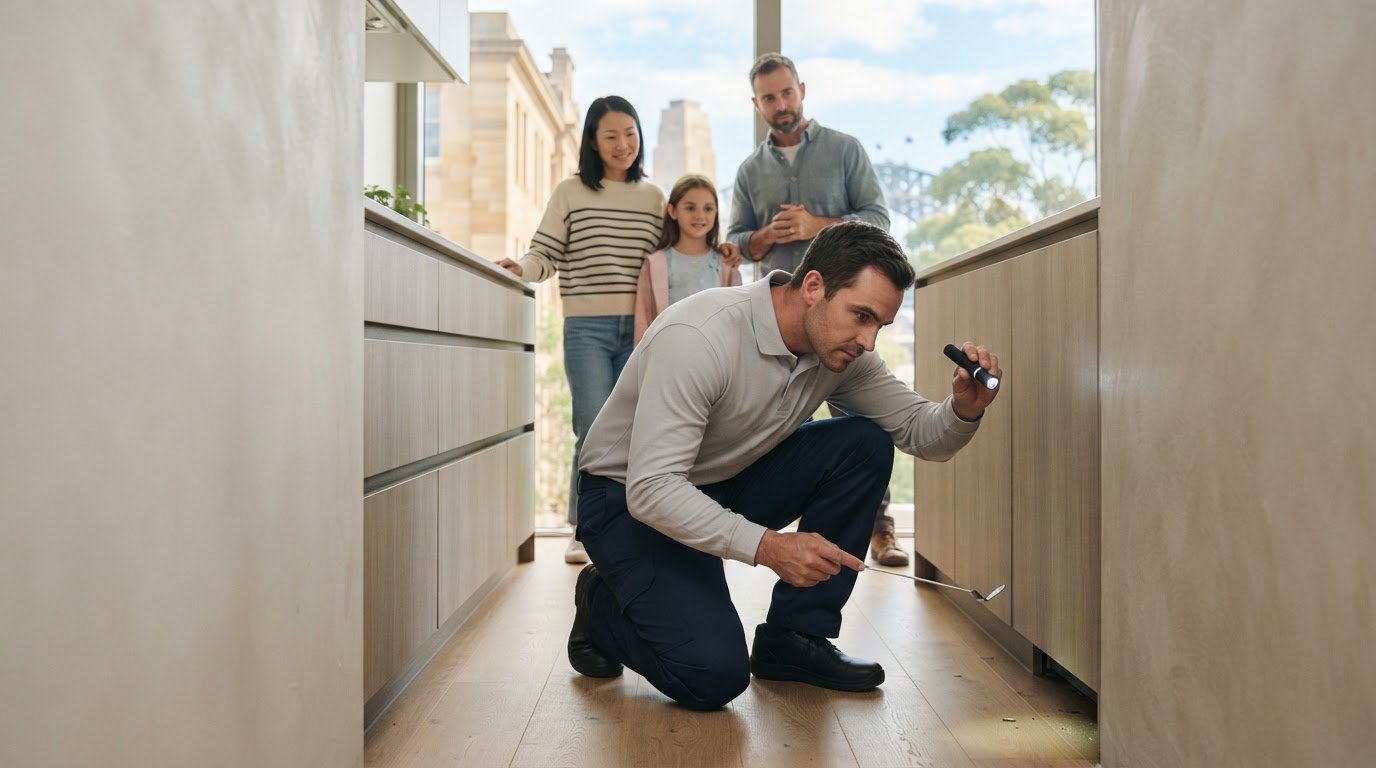
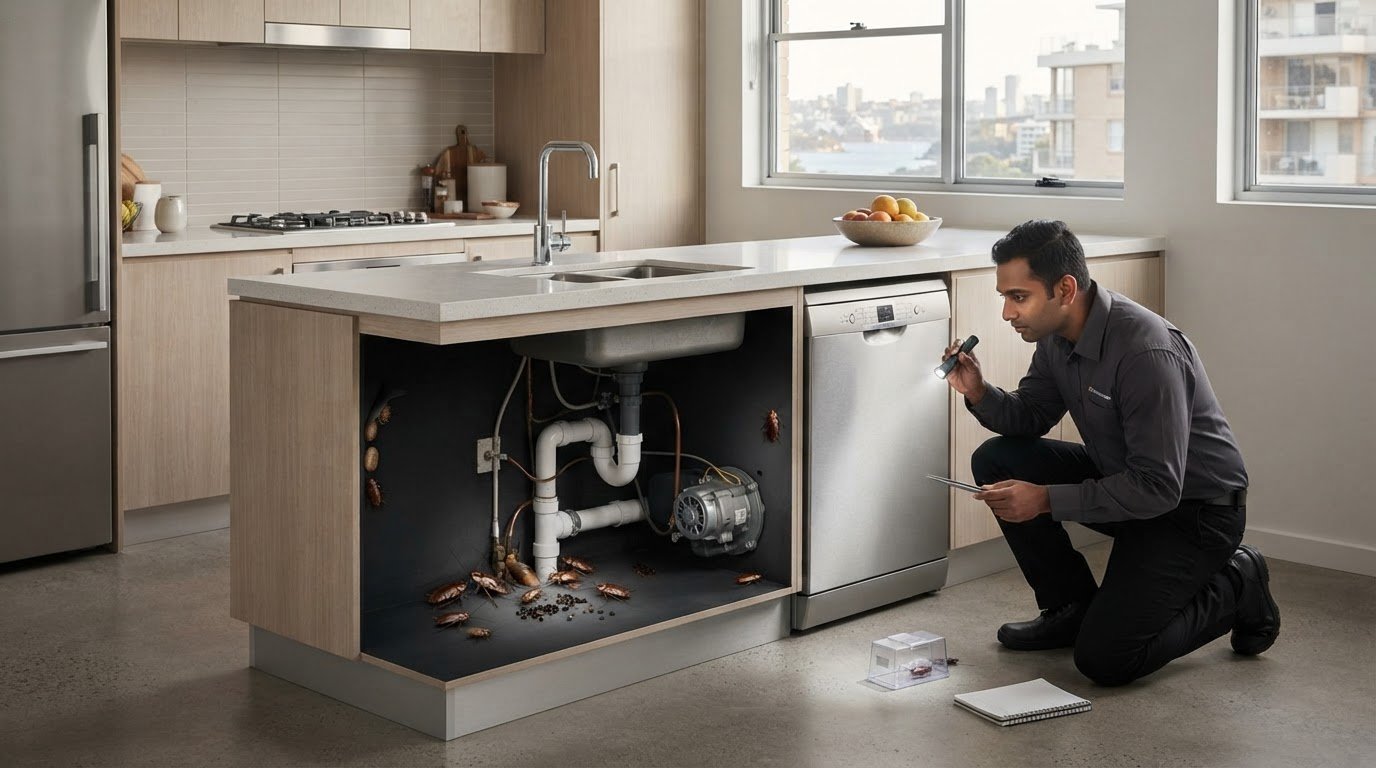
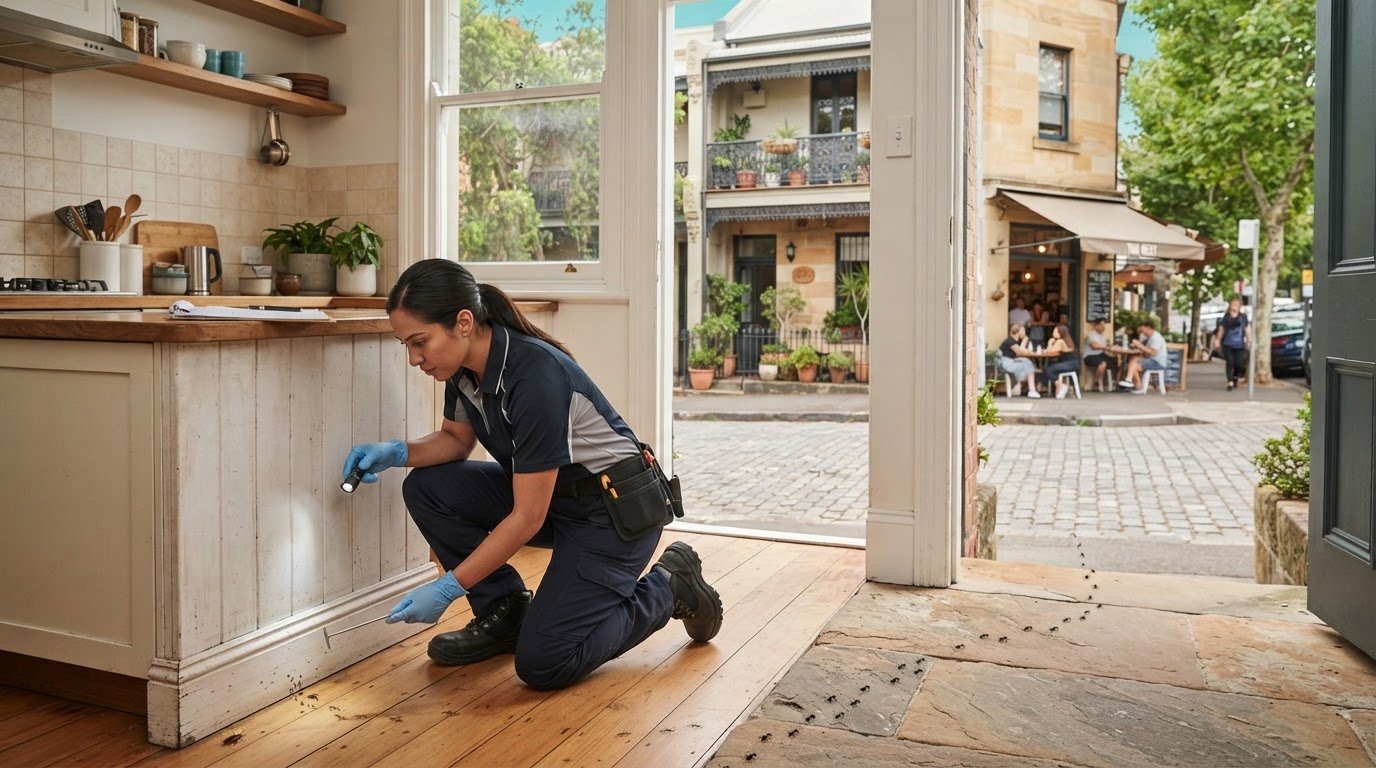
Our technicians perform a thorough inspection of all wall and roof voids. We use specialized equipment to locate nesting sites without damaging your plasterboard. Every home requires a different strategy. We develop customized treatment plans tailored to Sydney’s unique residential structures. Whether you own a historic sandstone cottage or a contemporary high-rise unit, our methods are designed for maximum efficacy and minimal disruption. We prioritize eco-friendly and family-safe products to ensure your home’s air quality remains pristine throughout the process.
Long-term protection is our ultimate goal. Our General Pest Control Packages offer a comprehensive shield for your entire household. These packages focus on the total resolution of current issues while establishing a barrier against future scouts. By addressing the environment as a whole, we stop the cycle of infestation before it can restart. This proactive approach saves you from the stress of recurring costs and structural repairs.
Why Sydney Homeowners Trust ABC Pest Control
We are a seasoned authority in the local market. Our team is trained in the latest rodent behavior science and exclusion technology. We maintain strict compliance with national regulatory standards to ensure every intervention is safe and reliable. Our reputation is built on decades of successful interventions in complex wall cavity cases. Read our Ultimate Guide to Pest Control in Sydney to learn more about our commitment to excellence and home safety.
Book Your Inspection Today
Urgency is your best defense against a growing colony. A small group of rodents can double in size in just a few weeks, increasing the risk of fire and disease. During a professional rodent inspection, we identify every entry point and assess the risk to your wiring and insulation. We provide a clear path forward with no guesswork involved. Our booking process is designed for modern convenience and rapid response. Don’t let rats ruin your sleep or your safety. Contact ABC Pest Control Sydney for an urgent inspection and let our experts handle the heavy lifting.
Take Decisive Action to Protect Your Sydney Home
A hidden infestation is more than just a noise in the night; it’s a direct threat to your property’s electrical safety and your family’s health. By recognizing the physical signs of rats in walls and understanding how these pests exploit Sydney’s unique architecture, you’ve taken the first step toward a pest-free environment. Remember that DIY poisons often lead to decaying rodents trapped in wall cavities, creating a stench that lasts for weeks. The only permanent solution involves professional “find-and-exclude” strategies that seal entry points for good.
With over 20 years of Sydney-specific expertise, ABC Pest Control Sydney provides the specialized intervention required for difficult wall cavity cases. We use safe, eco-friendly treatment methods that protect your home without compromising your indoor air quality. Our comprehensive General Pest Control Packages are designed to stop the breeding cycle and provide long-term peace of mind. Secure your home and family—Book a Professional Rodent Inspection with ABC Pest Control Sydney today. You don’t have to live with the stress of a hidden infestation any longer. Our team is ready to help you reclaim your quiet, safe, and healthy home.
Frequently Asked Questions
How do I know for sure if it’s a rat in my wall and not a mouse?
You can distinguish them by the volume of the noise and the size of their waste. Rats produce a much heavier, rhythmic scurrying sound compared to the light, barely audible pitter patter of a mouse. If you find droppings near a wall gap, rat waste is typically 12mm to 20mm long, while mouse droppings are the size of a grain of rice. Identifying these signs of rats in walls early helps determine the correct treatment strategy.
Will rats eventually leave my walls on their own?
Rats won’t leave your wall cavities voluntarily as long as they have access to shelter and nearby food sources. They are creatures of habit that value the safety of a structural void. Once a female establishes a nest, the colony will continue to breed until the population outgrows the space or you intervene. Waiting for them to move on only increases the risk of structural damage and expensive electrical repairs.
What does a rat in the wall sound like compared to a possum?
Rats create frantic, high speed scurrying and sharp, persistent scratching sounds as they move through wall studs. Possums are significantly larger and produce heavy, slow thumping noises that sound like a person walking on the roof or ceiling. While rats are mostly silent except for their movement, possums often emit loud, guttural hisses or screeching sounds. If the noise is constant and fast, it’s almost certainly a rodent infestation.
Can rats chew through the plasterboard into my living room?
Yes, rats can and do chew through plasterboard to access your living areas. Their incisors are strong enough to gnaw through drywall, especially if they detect food scents on the other side. You might notice small holes appearing in skirting boards or the corners of your pantry. This behavior is often driven by a search for new food sources, making immediate professional exclusion a priority for your home’s safety.
How long does it take for a dead rat in the wall to stop smelling?
A dead rat will typically emit a foul odour for two to three weeks as it decomposes. This timeline varies based on the rodent’s size and the humidity levels inside your Sydney home. In hot, humid weather, the smell is more intense but the process might finish faster. Because the scent is often trapped in unventilated wall voids, it can become unbearable without professional deodorisation or carcass removal.
Is it safe to sleep in a room where I can hear rats in the walls?
Sleeping in a room with active rodents isn’t ideal due to health and safety risks. While rats rarely attack sleeping humans, they circulate allergens, dander, and aerosolized waste through your ventilation. The psychological stress of hearing signs of rats in walls also leads to significant sleep deprivation. Most importantly, the risk of an electrical fire from chewed wires remains a constant threat while the rodents are active behind your walls.
How much does professional rat removal cost in Sydney?
The cost of professional rat removal in Sydney depends on the extent of the infestation and the complexity of your home’s architecture. Factors like the number of entry points that need sealing and the size of the wall voids impact the final investment. We recommend booking a professional inspection to receive a customized quote. This ensures you get a treatment plan tailored to your specific property needs without paying for unnecessary services.
Can I use peppermint oil or mothballs to drive rats out of my walls?
Peppermint oil and mothballs are ineffective at driving rats out of established wall colonies. While these scents might be unpleasant initially, rats are highly adaptable and will simply move to a different part of the wall cavity to avoid the smell. These DIY repellents don’t seal entry points or stop the breeding cycle. Relying on myths only gives the colony more time to cause structural damage and increase in size.