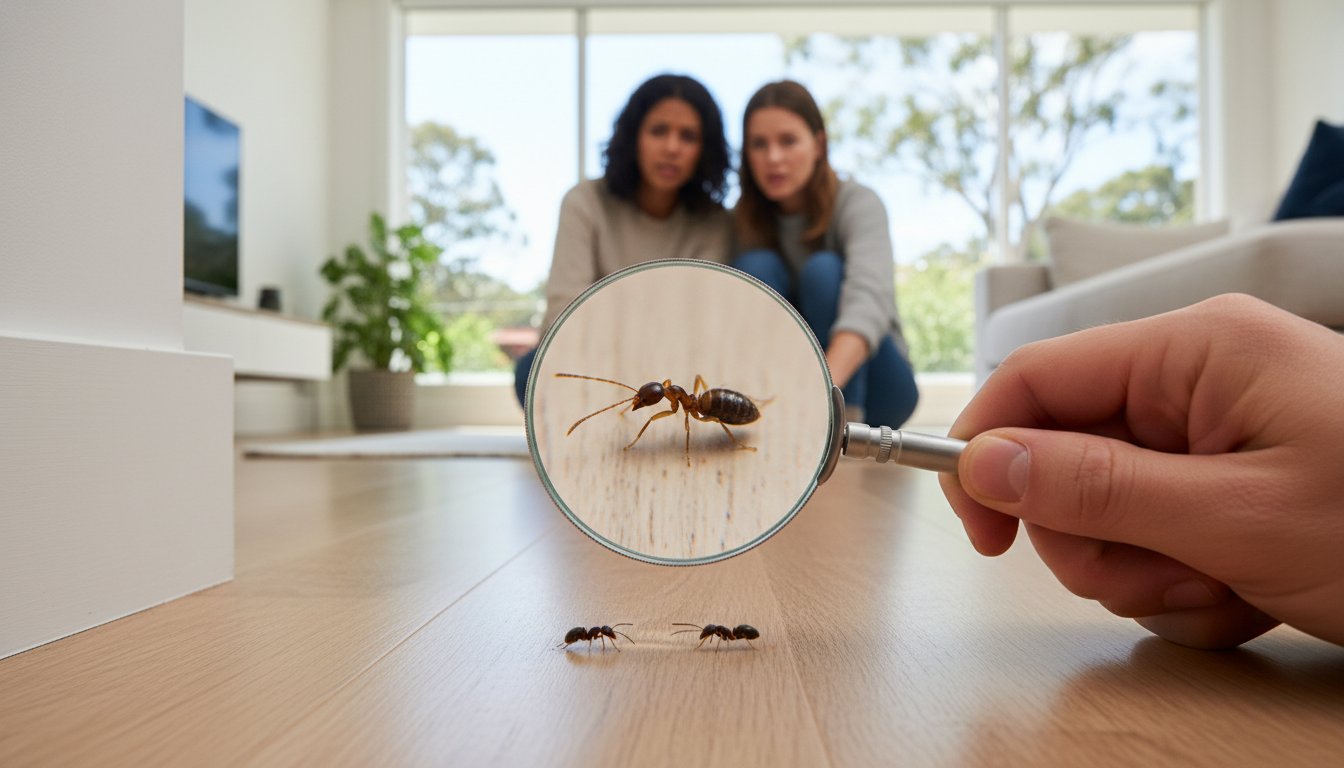
Is that ‘harmless ant’ on your skirting board actually a termite worker about to cost you thousands in structural repairs? It’s a question many homeowners face when they spot common household pests Sydney wide, and the wrong guess can be devastating. We understand the anxiety that comes with seeing a mystery crawler in your kitchen or under the floorboards. Misidentifying a pest doesn’t just lead to confusion; it often results in homeowners using the wrong DIY chemicals or waiting too long to call for expert help.
You deserve peace of mind and a property that’s safe from hidden damage. You’ll learn how to distinguish between similar looking species and avoid the dangerous mistakes people make when they misidentify them. As of March 2026, new Australian regulations mean powerful rodenticides are restricted to licensed professionals, making accurate identification more critical than ever. We’ll provide a clear overview of Sydney’s most resilient pests and the professional steps required to remove them for good.
Key Takeaways
- Understand why the “White Ant” myth is a dangerous misconception that leads to delayed treatment and increased structural damage in New South Wales homes.
- Identify the three vital physical markers-waist shape, antennae structure, and wing length-that separate a harmless ant from a property-destroying termite.
- Learn to distinguish between dangerous Sydney spiders and resilient German cockroaches to ensure you apply the correct professional treatment for your specific risk.
- Follow a step-by-step checklist to monitor the behavior and location of common household pests sydney residents often misidentify before attempting any DIY solutions.
- Discover how advanced tools like thermal imaging and moisture meters provide the accurate identification needed to secure your property against hidden threats.
The Sydney Pest Identity Crisis: Why We Get It Wrong
Spotting a scurrying shape in the corner of your eye often triggers an immediate reaction: grab a shoe or a spray. However, pest misidentification is more than a simple mistake. It’s the act of confusing a destructive, property-threatening species with a relatively harmless one. In a city where property values are high, this confusion leads to expensive delays. You might assume you’re dealing with a nuisance, while a silent colony is actually compromising your home’s structure. Sydney’s warm, humid climate accelerates these threats. You can’t afford to settle for the “just a bug” mindset when your biggest asset is at risk.
One of the most persistent issues in New South Wales is the ‘White Ant’ myth. Many residents still refer to termites as white ants, but they aren’t ants at all. They’re more closely related to cockroaches. This naming error isn’t just a linguistic quirk. It often leads homeowners to use standard ant treatments on a termite infestation. These treatments fail completely. Termites have entirely different biological systems and social structures. By the time the mistake is realized, the repair bill for your Sydney property could be in the thousands. Accuracy is your first line of defense.
The Psychology of Misidentification
The human brain is wired to simplify complex visual data. When you see a fast-moving insect, your mind falls into the ‘looks like’ trap. You categorize it based on the most obvious feature, like size or color, while ignoring critical biological markers. Panic and haste often cloud judgment. You might call a large roach a ‘water bug’ to minimize the anxiety of an infestation, but this masks the real threat. Without professional lighting and magnification, it’s nearly impossible to see the subtle differences in wing structure or antennae that define common household pests.
Why Sydney is a Hotspot for Pest Confusion
Sydney’s unique geography creates a perfect storm for identification errors. Our high biodiversity means dozens of look-alike species coexist in the same suburbs. Urban sprawl pushes native species like Huntsman spiders into residential units, causing unnecessary alarm. Meanwhile, Sydney’s high humidity levels change how pests behave. Moisture makes common household pests sydney residents fear, like termites, significantly more active and visible. Certain species move indoors to escape the heat, appearing in places you wouldn’t expect. Relying on a quick glance or a blurry photo isn’t enough. Professional intervention ensures you aren’t ignoring a serious risk while focusing on the wrong problem.
Termites vs. Ants: The Most Costly Identification Mistake
Mistaking a termite for a common garden ant is the single most expensive error a Sydney homeowner can make. While both are common pests in Australia, their impact on your property is vastly different. Ants are typically a nuisance in the pantry. Termites are a silent catastrophe eating your home from the inside out. Don’t fall for the ‘White Ant’ terminology trap. Termites aren’t ants at all; they’re biologically closer to cockroaches and require specialized treatment plans to eradicate. When dealing with common household pests sydney homeowners often underestimate the speed of termite damage until it’s too late.
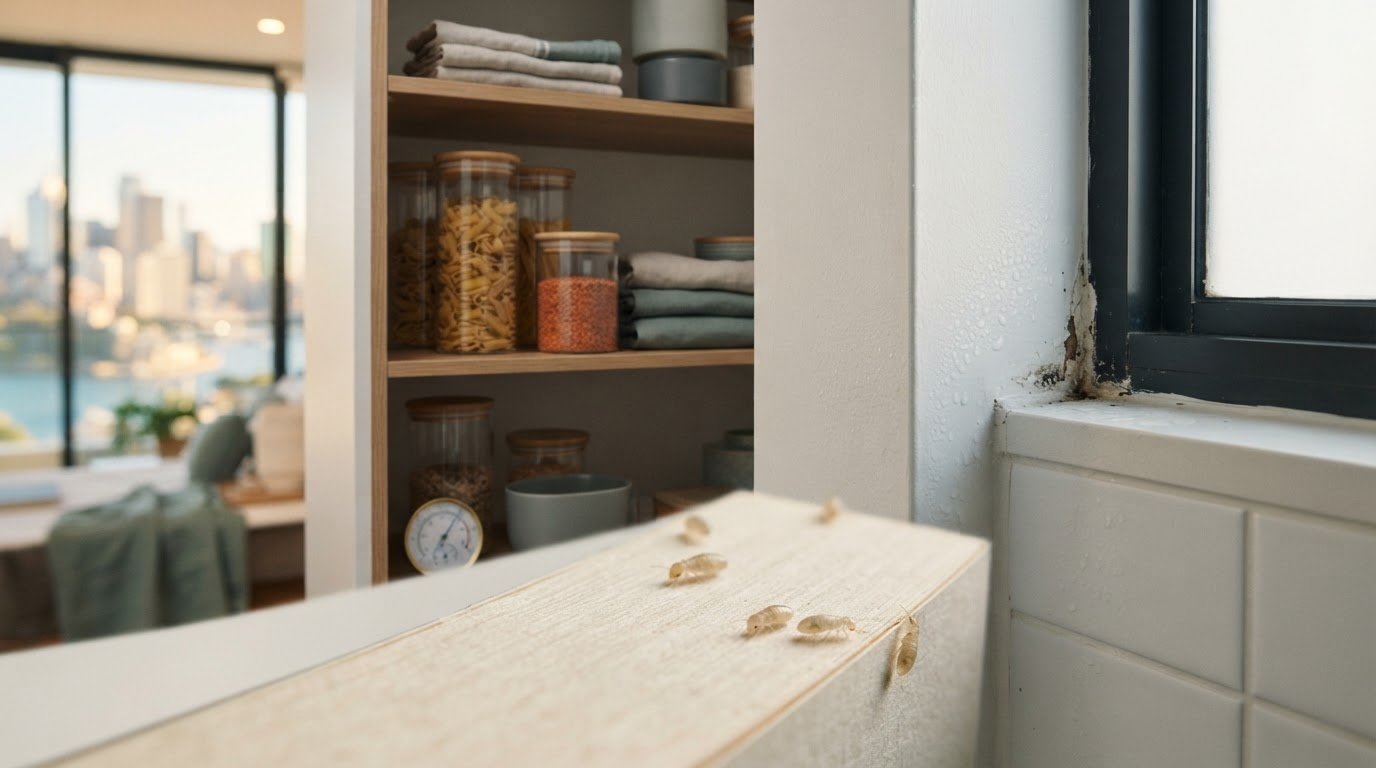
Identification becomes critical during swarming seasons. If you spot ‘flying ants’ inside your living room in 2026, treat it as a major red flag. These are likely termite alates searching for a place to start a new colony. You should also check your foundation for mud tubes. While ants often leave visible dirt mounds or trails, termites build protected mud tunnels to maintain the moisture they need to survive. Seeing these tubes means the infestation is already active and moving into your structure. Subterranean termites in Sydney can consume several kilograms of wood every month, compromising your home’s foundation without a single sound.
Spotting the Difference: A Physical Checklist
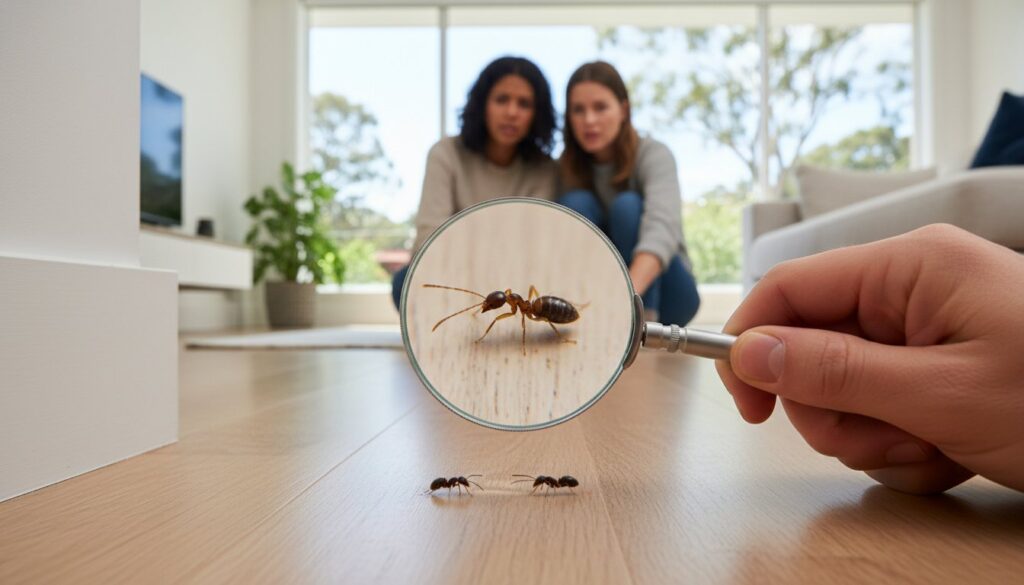
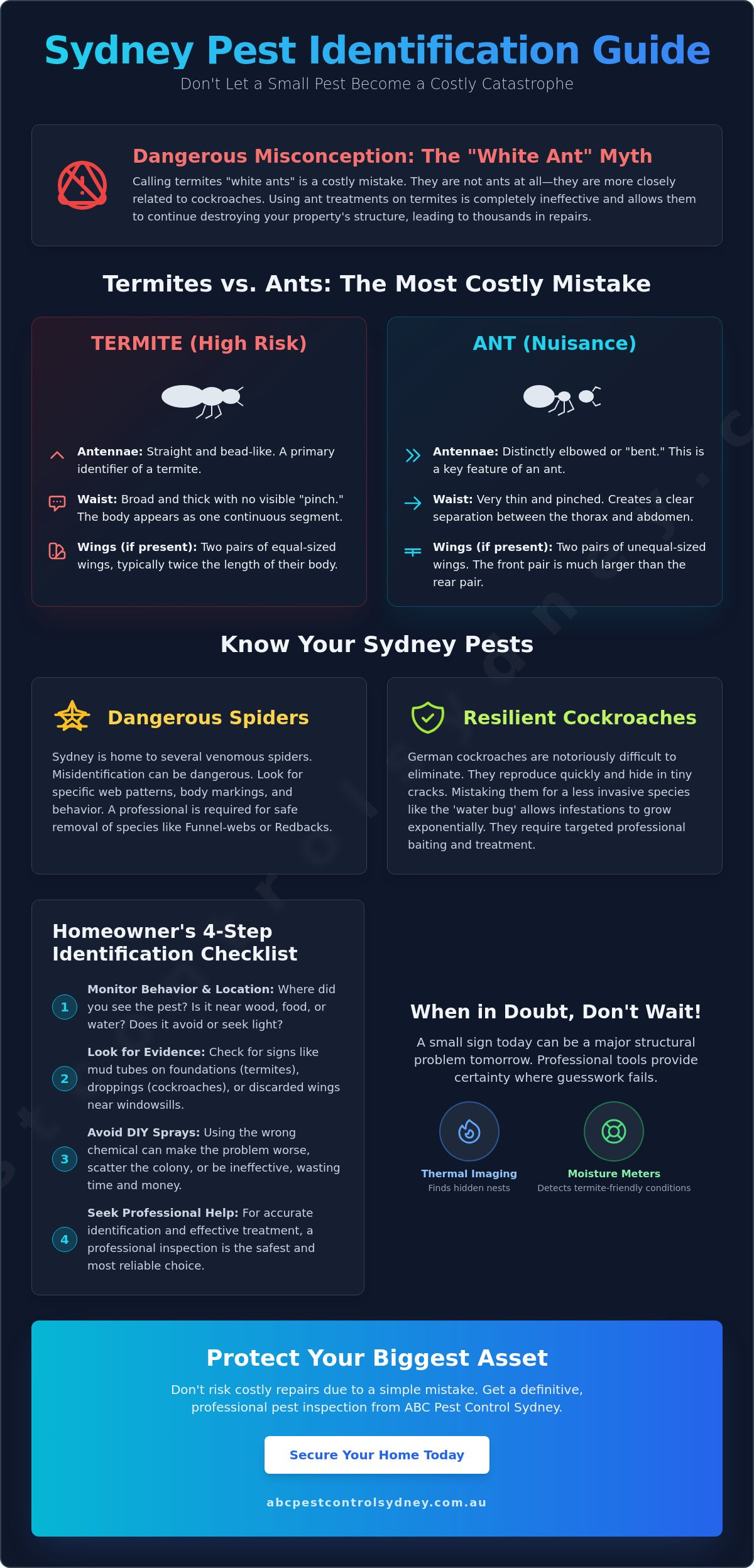
- Straight vs. elbowed antennae: This is the first sign of trouble. Termites have straight, bead-like antennae. Ants have a sharp bend or “elbow” in theirs.
- Thick vs. pinched waists: Look at the middle of the insect. Termites have a broad, thick waist. Ants have a very thin, pinched waist that looks like a thread.
- Wing symmetry: If the pest has wings, check the length. Termite wings are all the same size and twice the length of their body. Reproductive ants have front wings that are much longer than the back pair.
The True Cost of a Wrong Guess
Time is not on your side. A six-month delay in detecting termites can lead to significant structural failure in your roof or floor joists. Many people waste money on generic sprays when they see common household pests sydney residents deal with, but ant spray is completely useless against a subterranean termite colony. It fails to reach the queen, allowing the destruction to continue unabated. You need a professional termite inspection sydney property owners trust to verify the threat. If you’re unsure what’s crawling in your timber, it’s time to book a professional assessment before the damage becomes irreversible. Accurate identification today saves you from an A$10,000 repair bill tomorrow.
Sydney Spiders and Cockroaches: Friend or Foe?
Sydney residents often react with the same level of fear to every eight-legged visitor. However, misidentifying a spider leads to unnecessary panic or a dangerous lack of caution. While common household pests sydney locals encounter range from harmless to high-risk, knowing the difference is essential for your family’s safety. You might hear the ‘scuttle’ of a roach on floorboards or the silent movement of a spider, but sound alone isn’t enough for a positive ID. Visual markers are your most reliable tools for deciding whether to stay calm or act immediately.
The term ‘water bug’ is a common Sydney euphemism. Most people use it to describe the large, reddish-brown American Cockroach to make the infestation sound less severe. In reality, these are scavengers that carry bacteria and pathogens. They’re often found in damp areas like laundry rooms or near drains. Don’t let a soft name distract you from the hygiene risks involved. Identifying the specific species determines whether you need a simple perimeter spray or a more intensive indoor treatment plan.
Sydney’s Famous Spiders
The huntsman spider is the most common source of household frights. They have a scary appearance due to their large size and hairy, sideways-oriented legs, but they’re generally harmless and even eat other insects. Contrast this with the Sydney Funnel Web. Funnel Webs are shiny, black, and significantly more aggressive. They don’t have the flat body of a Huntsman. Redbacks are another high-risk species you cannot afford to misidentify. Look for the distinct red stripe on a pea-sized black body. If you find these in your garage or garden sheds, safe removal by a professional is the only way to ensure your family’s peace of mind.
The Cockroach Conundrum
Mistaking a German Cockroach for a ‘baby’ wood roach is a critical error. Wood roaches are native to NSW and usually wander inside by accident; they don’t infest homes. German cockroaches, however, are a specialist indoor pest. You can identify them by two dark, longitudinal stripes on their pronotum (the shield behind the head). If you see these stripes, you’re facing a species that reproduces faster than almost any other pest. Misidentifying them leads to a rapid, uncontrollable outbreak in your kitchen or bathroom. Learn how to get rid of cockroaches by targeting the specific biology of the German variety. Using the wrong bait or a generic spray will only scatter the colony, making the problem harder to solve. Professional intervention is the only reliable way to stop common household pests sydney from taking over your living space.
A Homeowner’s Checklist for Accurate Pest Identification
When you encounter common household pests sydney properties attract, your first instinct might be to reach for a spray. Stop. Guessing leads to failure and wasted money. Accurate identification requires a systematic approach. You need to gather evidence before the pest disappears back into the wall cavities. Follow this checklist to build a clear picture of the threat facing your home. These steps ensure you provide the right information to experts, preventing the dangerous mistake of treating for the wrong species.
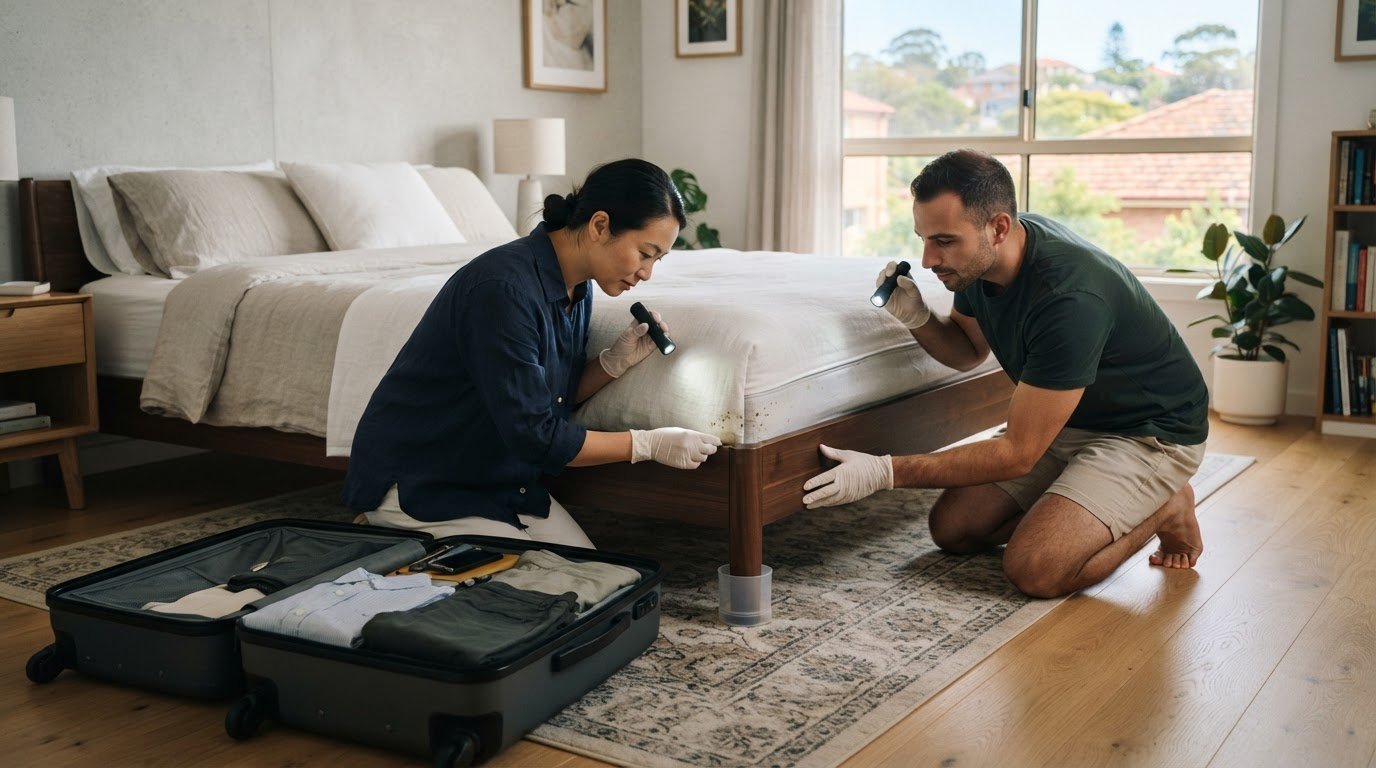
- Step 1: Note the location. Was the pest in a damp bathroom or a dry roof void? Species like German cockroaches prefer heat and moisture near appliances. Termites usually seek out structural timber in darker, less disturbed areas.
- Step 2: Observe behavior. Is the pest wood-boring or simply scavenging for crumbs? Note if it’s strictly nocturnal. Seeing a pest during the day often indicates a high-population infestation that has run out of hiding spots.
- Step 3: Document findings. Take a clear photo from multiple angles. Lighting is critical for showing the subtle colors and textures experts use for ID.
- Step 4: Check for secondary signs. Look for droppings, shed skins, or chew marks on electrical wiring. These clues often tell a bigger story than the insect itself.
- Step 5: Consult a professional. Reach out to a pest control sydney expert to confirm your suspicions and start a targeted treatment plan immediately.
Effective Documentation Tips
Expert identification relies on scale. Place an A$1 or A$2 coin next to the pest before taking a photo. This simple reference helps us distinguish between a large native ant and a small, destructive termite worker. Don’t squash the specimen if you can avoid it. A crushed insect loses the physical markers, like leg segments or wing veins, needed for a positive ID. If it’s safe, catch the pest in a clear jar and keep it for the technician. Note the exact time of day you spotted it. Many common household pests sydney residents struggle with are strictly nocturnal, and this timing is a vital biological clue.
Common Signs You’re Overlooking
Your nose is often as useful as your eyes. A musty, oily odor in the kitchen often signals a heavy cockroach infestation. Sharp, ammonia-like smells usually point toward rodent urine in the roof or cupboards. Look closely at dusty surfaces for tracking marks. Rodents leave distinct tail drags and paw prints that reveal their hidden entry points. Check out our detailed guide on what is a pest to see more hidden indicators you might have missed. If you’ve found any of these signs, don’t wait for the damage to escalate. Contact ABC Pest Control Sydney now to secure your property and regain your peace of mind.
Professional Identification: How ABC Pest Control Sydney Secures Your Home
Accurate identification is the foundation of any successful pest management strategy. You shouldn’t settle for guesswork when your home’s safety is on the line. With over 20 years of experience managing common household pests sydney residents face, we bring a level of local expertise that generic DIY solutions simply cannot match. We’ve spent two decades studying the unique behaviors of Sydney’s resilient species. This longevity ensures we don’t just treat the symptoms; we resolve the core issue. Our professional persona is built on compliance with national standards and a deep understanding of the New South Wales environment.
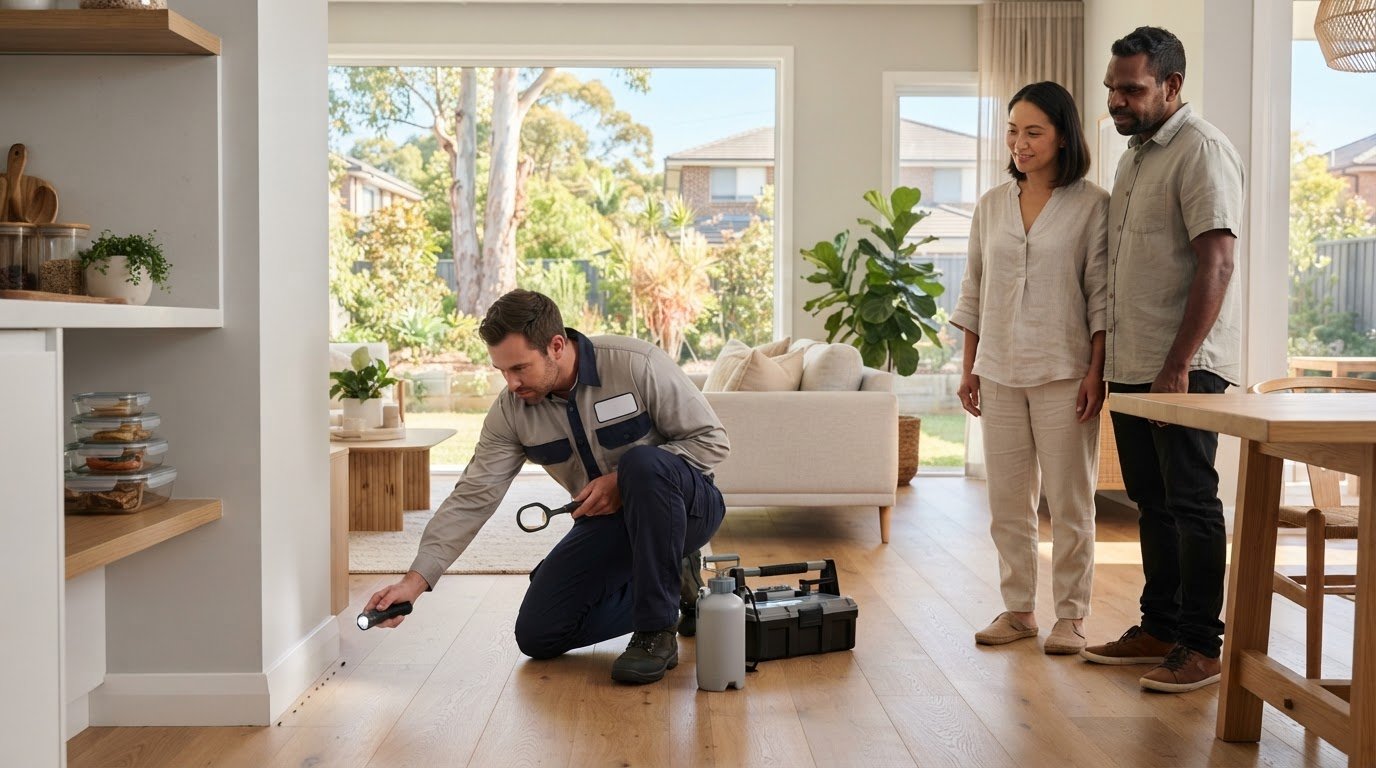
We utilize advanced technology that goes far beyond what the naked eye can see. Our technicians use thermal imaging cameras and moisture meters to detect heat signatures and dampness hidden within your walls. These tools are essential for locating termite colonies or rodent nests that haven’t yet caused visible surface damage. Once we identify the exact species, we develop a tailored, eco-friendly treatment plan. This approach ensures we use the most effective methods for the specific pest while prioritizing the safety of your family and pets. Our focus on tangible outcomes is grounded in the reliability of expert intervention and technical training.
Beyond the Naked Eye
Pests don’t live in the open. They thrive in the dark, inaccessible corners of your property. Identifying a single cockroach in the kitchen is easy, but finding the source behind the floorboards requires specialized equipment. Our team focuses on locating the entry points and breeding grounds to prevent future outbreaks. This is particularly vital for rodent control sydney homeowners rely on. We look for the subtle signs of entry that most people miss, ensuring a total resolution rather than a temporary fix. Don’t let a hidden problem grow into a structural disaster.
Take Action Today
A small identification mistake today can lead to a massive repair bill next month. The risks of delay are too high to ignore. Whether you’re dealing with mystery sounds in the roof or suspicious markings on your timber, clarity is just a phone call away. Secure your property and protect your investment with a professional assessment. We offer modern convenience through an easy booking process designed to respect your time. Stop the anxiety and start the solution. Contact ABC Pest Control Sydney for a professional ID and quote today. Let our seasoned experts provide the peace of mind you deserve.
Secure Your Sydney Property with Expert Identification
Identification is the first and most critical step in protecting your home from structural damage and health risks. You’ve seen how easily common household pests sydney residents encounter can be confused with harmless species. By using a systematic checklist and documenting your findings, you take control of the situation before it escalates. Don’t let a small oversight turn into a costly repair bill that could’ve been avoided with a single inspection.
ABC Pest Control Sydney brings over 20 years of local experience to every property we visit. We specialize in complex termite and rodent cases that require more than just a surface-level spray. Our methods are eco-friendly and family-safe, ensuring your peace of mind while we eliminate the threat. You don’t have to face an infestation alone. Trust the professionals who know the specific challenges of the New South Wales climate and regulatory standards.
Book Your Professional Pest Inspection with ABC Pest Control Sydney Today
Take the next step toward a safe, pest-free environment and protect your family today.
Frequently Asked Questions
Why is it dangerous to misidentify termites as ants?
Misidentifying termites as ants is dangerous because it leads to catastrophic structural damage. You might use standard ant sprays that do nothing to stop a subterranean termite colony. While you wait, these pests eat through your home’s foundation. A short delay can result in repair costs exceeding A$10,000. Always seek professional verification if you see winged “ants” or mud tubes near your timber.
How can I tell the difference between a German cockroach and a common garden roach?
You can identify a German cockroach by the two dark parallel stripes on the shield behind its head. Garden roaches are typically larger and lack these distinct markings. This distinction is vital because German roaches are common household pests sydney residents find in kitchens and bathrooms. They reproduce much faster than garden varieties, requiring specialized baits rather than general surface sprays to eradicate the nest.
Are all large spiders in Sydney dangerous?
No, many large spiders, such as the Huntsman, are actually harmless and help control other insects. Size is a poor indicator of danger in New South Wales. The Sydney Funnel Web is relatively small but highly aggressive and venomous. If you see a shiny black spider with a robust build, stay back. Professional identification ensures you don’t panic over a harmless visitor or ignore a deadly threat.
What should I do if I find a pest I can’t identify?
Document the pest immediately by taking a clear photo from several angles. Use a coin for scale so a technician can judge the size accurately. Don’t squash the insect, as physical markers like wing veins or antennae shape are necessary for a positive ID. Once you have evidence, contact an expert to determine the specific risk to your property and family safety before the population grows.
Can I use the same spray for all types of pests?
Generic sprays are rarely effective for all infestations because every species has unique biological vulnerabilities. Using a single product for common household pests sydney locals face can actually backfire. Some sprays scatter colonies, making them harder to eradicate. Professional treatment plans are species-specific, ensuring the methods used target the heart of the nest rather than just the bugs you see on the surface.
How do professionals identify pests that are hidden inside walls?
Technicians use advanced equipment like thermal imaging cameras and moisture meters to see what the naked eye cannot. These tools detect the heat generated by a large colony or the dampness that termites require to survive. This non-invasive approach allows us to pinpoint activity behind walls and under floorboards. It ensures we find the source of the infestation without causing unnecessary damage to your home’s interior.
What are the most commonly misidentified pests in New South Wales?
In New South Wales, people most frequently confuse termites with “white ants” and German cockroaches with harmless native wood roaches. We also see many residents mistake the dangerous Redback or Funnel Web for common garden spiders. These errors lead to using the wrong DIY products or delaying professional help. Accurate identification is the only way to avoid unnecessary risks and expensive property damage in the long run.
Is a professional pest inspection worth it if I only see one bug?
Yes, because seeing just one pest is often a sign of a much larger hidden population. For species like German cockroaches or termites, the individuals you see are usually forced out of a crowded nest. Waiting for a second sighting gives the colony more time to grow or cause structural harm. A professional inspection clears the confusion and protects your home before a small issue becomes a full-blown crisis.