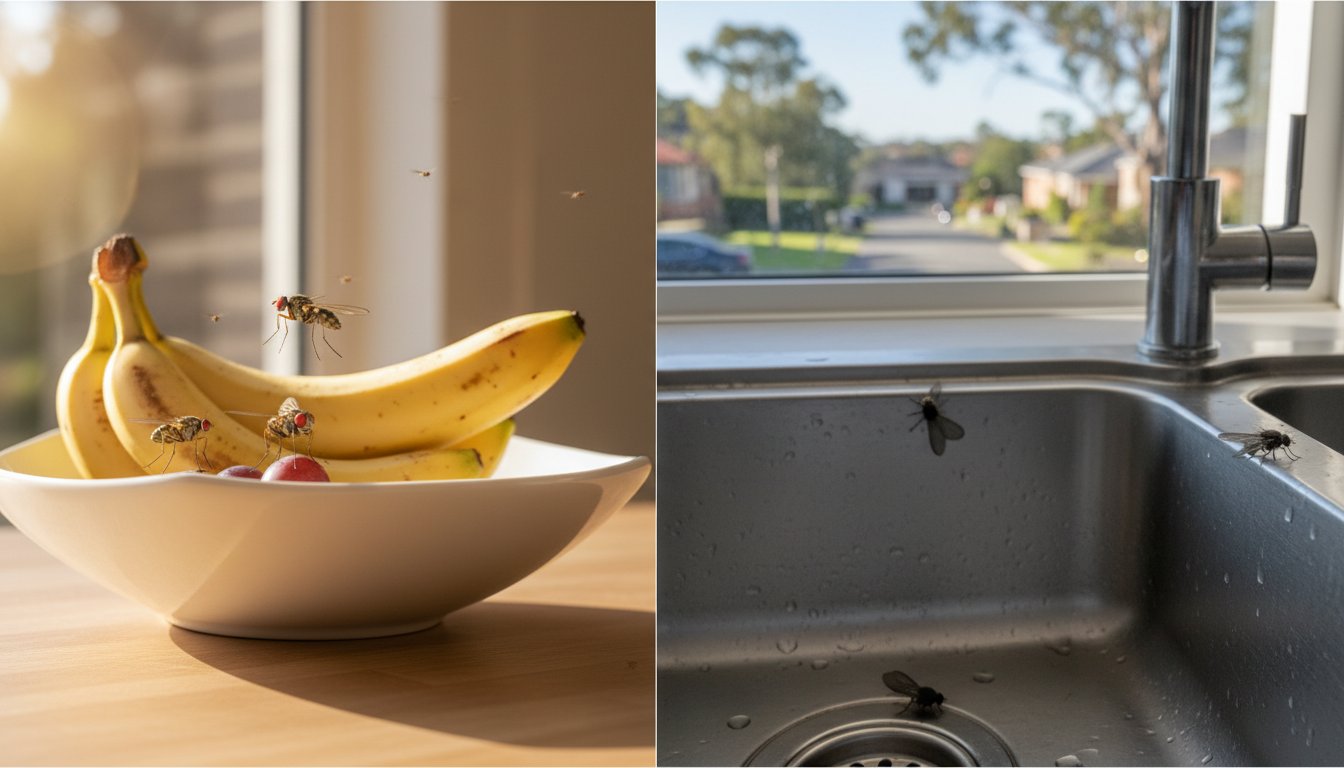
Pouring boiling water down your drain might actually be making your fly problem worse. If you’ve been scrubbing your Sydney kitchen and still find tiny insects hovering near your fruit bowl or sink, you’re likely dealing with a specific breeding cycle that DIY methods can’t break. The core issue isn’t your cleaning routine; it’s a matter of fruit flies vs drain flies and knowing which one has claimed your space. Identifying the wrong pest means using the wrong treatment, which only allows the infestation to grow larger and more unhygienic.
Don’t let a small nuisance turn into a major hygiene risk. We understand your need for a safe, professional resolution that restores your peace of mind. This guide provides the critical identification markers you need to distinguish between these species and implement a clear plan to stop the breeding cycle for good. You’ll learn exactly how to spot the breeding signals for each fly and discover the professional steps required to achieve a completely pest-free environment.
Key Takeaways
- Learn how to distinguish between these pests by identifying red eyes on fruit flies or the fuzzy, moth-like wings of drain flies.
- Discover why the battle of fruit flies vs drain flies depends entirely on finding their specific breeding signals, from overripe produce to gelatinous drain biofilm.
- Understand the urgent hygiene risks these insects pose as they transfer bacteria from sewage pipes directly onto your food surfaces.
- Find out why standard vinegar traps don’t stop persistent infestations and how professional treatment targets the entire lifecycle.
- Access a clear roadmap for permanent removal using expert source identification and targeted larval treatments tailored for Sydney homes.
Identification 101: Is it a Fruit Fly or a Drain Fly?
Stop wasting money on generic traps that don’t work. If you want to clear your kitchen fast, you must first understand the differences in the fruit flies vs drain flies comparison. These two pests might look like simple black specks when they’re buzzing past your face, but they require completely different elimination strategies. Misidentifying them leads to weeks of wasted effort and persistent hygiene concerns in your food preparation areas. Get the identification right now to save yourself time and frustration later.
Focus on these four physical markers to tell them apart:
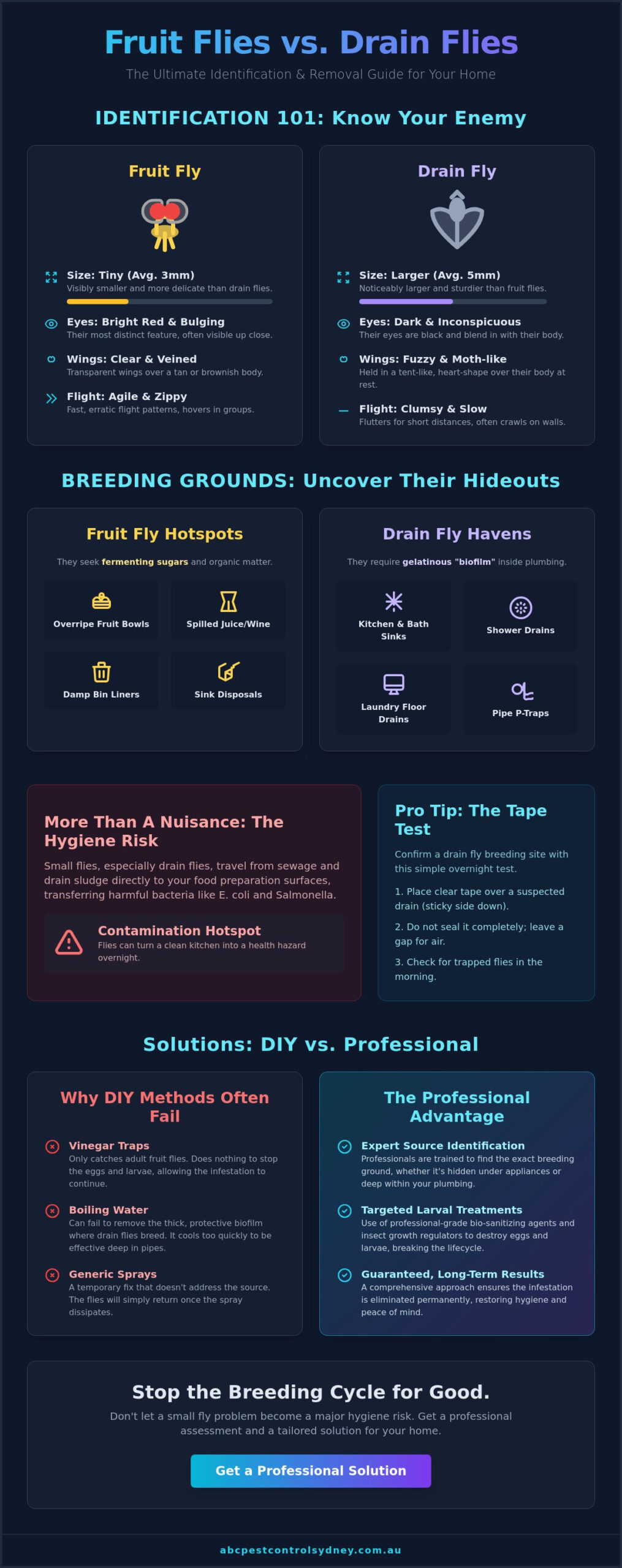
- Size: Fruit flies are tiny, averaging just 3mm in length. Drain flies are slightly larger and sturdier, reaching about 5mm.
- Eyes: Fruit flies almost always have bright, bulging red eyes. Drain flies have dark, inconspicuous eyes.
- Wings: Fruit flies have clear wings and a tan body with dark stripes. Drain flies have thick, hairy wings that give them a moth-like appearance.
- Flight Style: Fruit flies are agile and zippy. Drain flies are clumsy, slow, and often prefer to crawl along walls rather than fly.
The Fruit Fly: Small, Tan, and Zippy
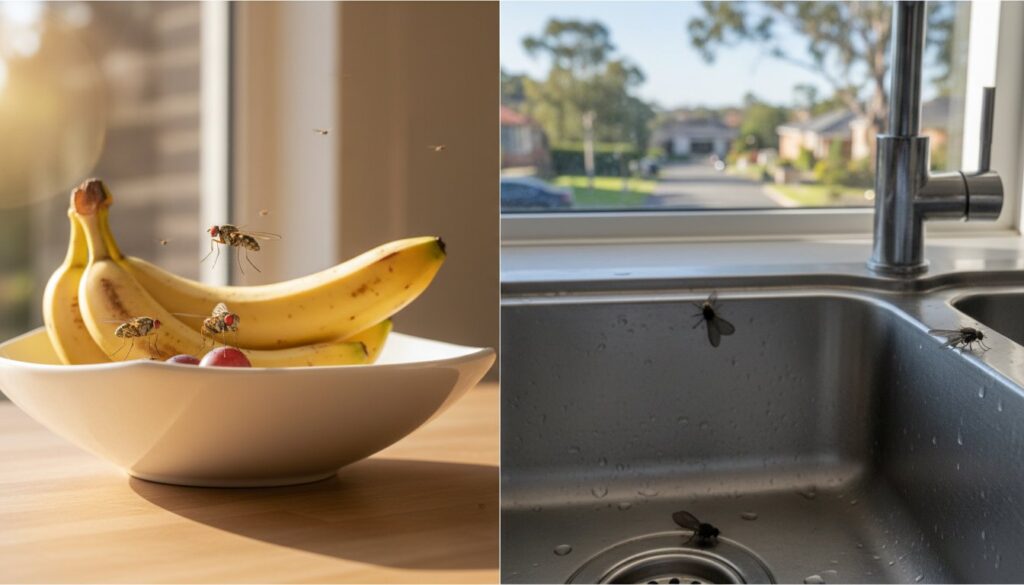
Identify fruit flies by their distinctive red eyes and tan-coloured thorax. These pests are true aerial acrobats. They hover in tight, zippy circles around fruit bowls, wine glasses, and damp bin liners. Their high-speed, erratic flight makes them incredibly difficult to swat or catch mid-air. If you see a tiny insect darting away the moment you move, it’s almost certainly a fruit fly. They thrive on fermenting sugars. They can sense a ripening banana or a spill of juice from across your entire home. Because they reproduce so quickly, a single piece of forgotten produce can trigger a massive swarm in days.
The Drain Fly: The Fuzzy Moth-Lookalike
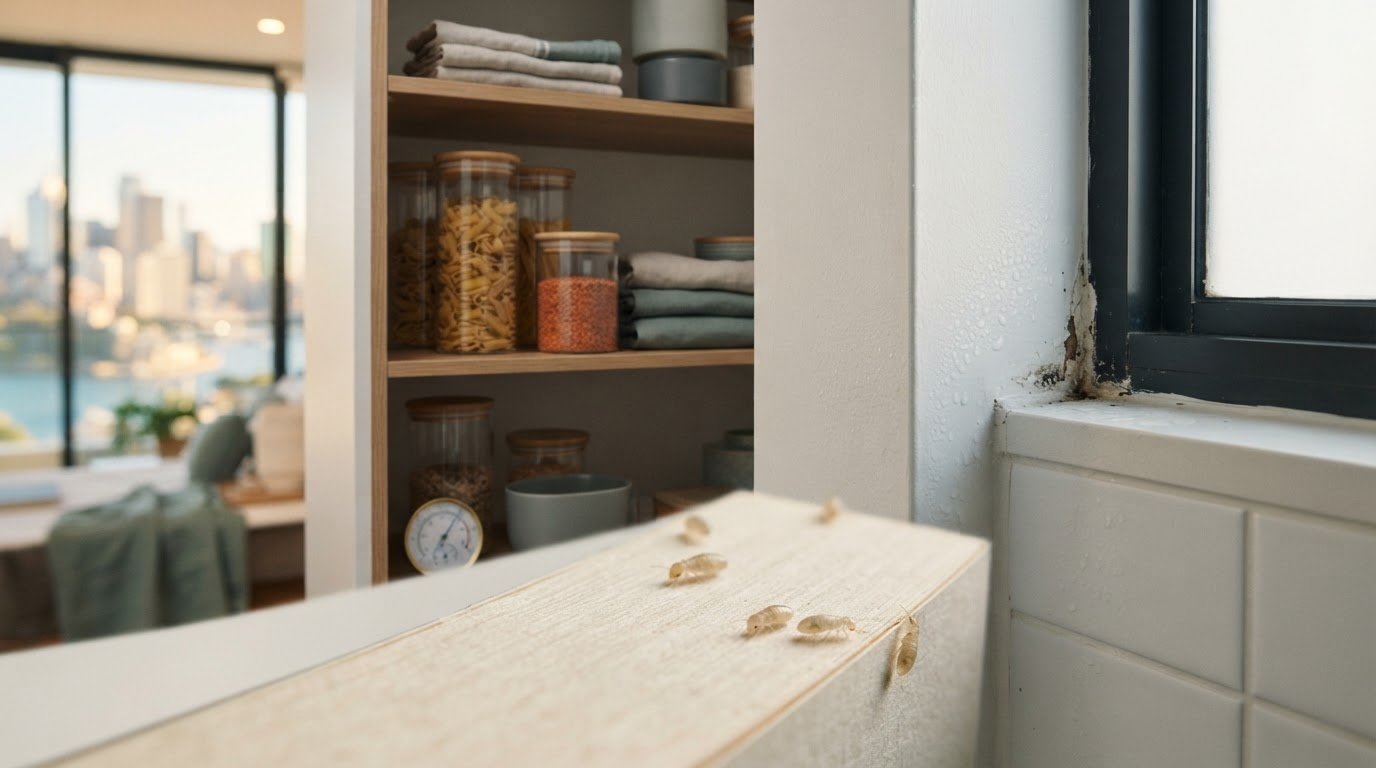
Spot drain flies by their thick, hairy wings that resemble a tiny moth. These insects have a distinct heart-shaped profile when they’re resting on a flat surface. You’ll rarely see them hovering in the middle of a room like their fruit-loving counterparts. Instead, check for flies resting on bathroom tiles, laundry walls, or directly on the porcelain of your kitchen sink. They are weak fliers. They belong to the Psychodidae family, which explains their fuzzy appearance and preference for damp, shaded areas. They tend to flutter short distances or crawl along surfaces rather than taking long, sustained flights. Because they breed in the gelatinous sludge within your pipes, they rarely venture more than a few metres from their source.
Getting the ID right is the only way to choose the correct treatment package. A fruit fly trap won’t touch a drain fly infestation, and vice versa. Once you know which pest has moved in, you can target their specific breeding signals and wipe them out for good.
Breeding Grounds: Where These Pests Hide in Your Sydney Home
Identifying the fly is only the first step. You must locate the exact breeding source to stop the cycle permanently. In the ongoing struggle of fruit flies vs drain flies, the “breeding signal” for each species is distinct. Fruit flies seek out fermenting organic matter and high-sugar environments. Drain flies, however, require the gelatinous “biofilm” sludge that accumulates inside plumbing. If you don’t destroy the source, the flies will simply return a few days after you spray.
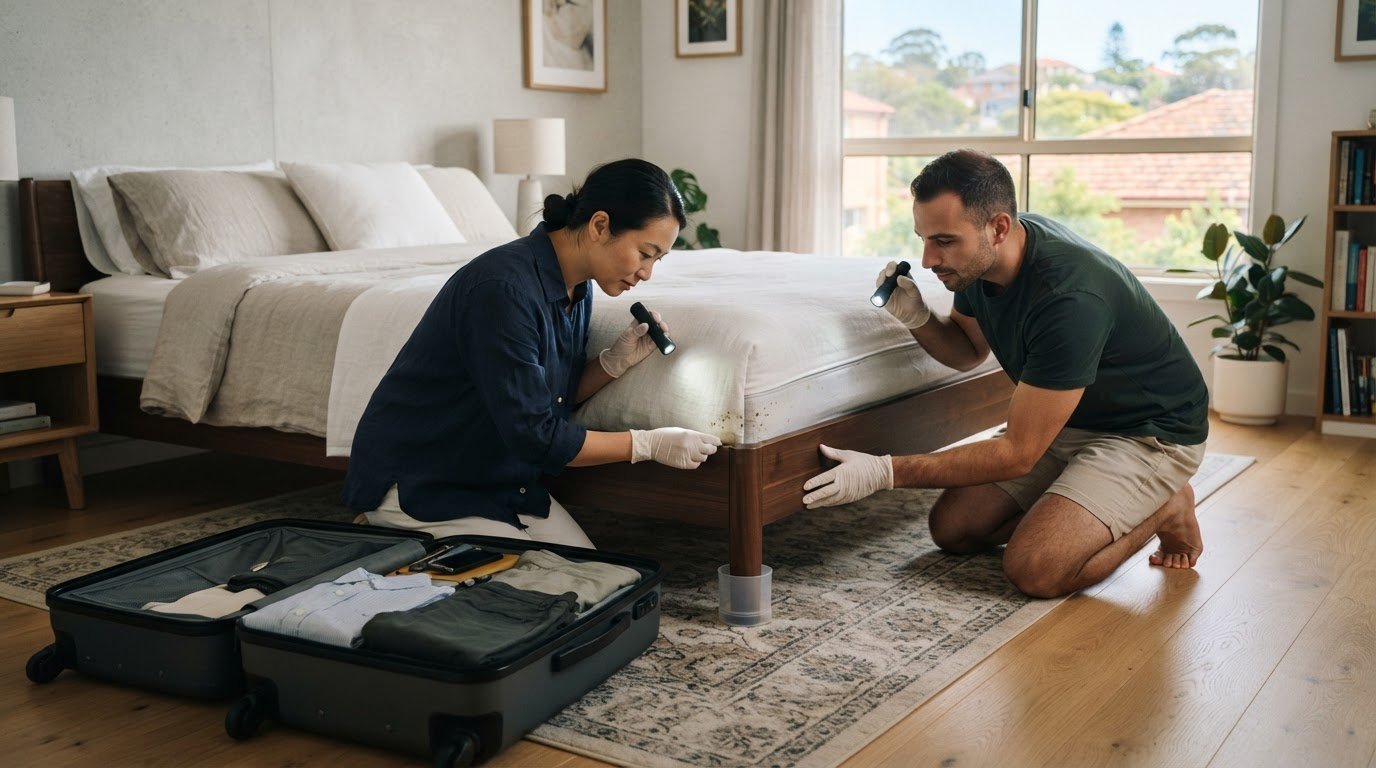
Use the “Tape Test” to confirm their location. Place a piece of clear adhesive tape over suspected drains or gaps before you go to bed. Ensure the sticky side faces down but don’t seal the drain completely. If you find flies stuck to the tape the next morning, you’ve found a primary breeding site. This simple method saves hours of guesswork and prevents you from treating the wrong area of your home.
Kitchen Hotspots for Fruit Flies
Fruit flies are drawn to anything sweet or fermenting. Check the area under your refrigerator for spilled juice or forgotten organic debris. These small spills create a massive attraction in Sydney’s warm climate. Inspect the seals of your dishwasher and your compost buckets. Organic matter often gets trapped in these damp crevices. Don’t overlook your kitchen sink disposal unit. It’s a common reservoir for the fermenting waste that fruit flies crave. You can find more detail on these specific habitats in the University of Kentucky’s guide to small flies.
Bathroom and Laundry Havens for Drain Flies
Drain flies thrive in the “P-trap” of your plumbing. This is where organic sludge and hair accumulate over time. In many Sydney apartments, floor drains in laundry rooms or second bathrooms are rarely used. When the water in these traps evaporates, it creates a perfect, undisturbed environment for flies to multiply. Look for cracked tiles or leaking seals behind toilets and showers. These areas trap moisture and allow biofilm to grow outside of the pipes.
Sydney homeowners should also pay close attention to air conditioning drip lines and shower grates. Our local humidity accelerates the growth of the bacteria these pests feed on. If you’re struggling with a persistent infestation in a high-rise building, our unit and apartment pest control services can identify the deep-seated sources DIY cleaning misses. Addressing these hotspots immediately is the only way to ensure your home remains hygienic and fly-free.
Behavior and Risks: Why You Can’t Ignore Small Flies
A few tiny flies in the kitchen might seem like a minor annoyance. In reality, they’re a ticking clock for your home’s hygiene. Understanding the risks involved in the fruit flies vs drain flies debate is essential for protecting your family. These insects don’t just hover; they act as mechanical vectors for dangerous pathogens. Their explosive reproductive rate means a small cluster can evolve into a full-blown infestation in days. Just 10 flies can become 1,000 within a single week under the right conditions.
Beyond the immediate filth, these pests often serve as warning signs for structural failures. For more detailed Identification and Prevention tips, homeowners should look past the wings and consider what these insects are touching before they land on your surfaces. Decaying fly bodies and cast-off skins can also accumulate in vents and corners. This debris often triggers respiratory issues or allergic reactions in sensitive individuals. Professional intervention is a health priority when these populations spiral out of control.
The Bacteria Transfer Threat
Flies as Bio-Indicators of Home Damage
Persistent drain flies are often bio-indicators of a hidden plumbing disaster. If you can’t clear them with standard cleaning, you likely have a break in a sewer line or a collapsed pipe under your slab. Fruit flies can also signal deeper issues. When they appear away from the kitchen, they might be breeding in a rotting wooden subfloor or a damp wall cavity caused by a slow leak. Simply using a spray doesn’t solve the underlying moisture problem. You need to address the structural cause to ensure the pests don’t return. Our Commercial Pest Management team often finds that these small flies are the first sign of a much larger facility maintenance issue.
How to Get Rid of Small Flies: DIY vs. Professional Extermination
Stop relying on bowls of vinegar and dish soap. While these traps might catch a few adult insects, they do nothing to stop the thousands of eggs waiting to hatch. In the struggle of fruit flies vs drain flies, the only way to achieve a permanent result is to eliminate the breeding source. If you don’t destroy the environment where larvae thrive, you’ll be stuck in a cycle of temporary fixes and recurring swarms. True eradication requires a combination of aggressive sanitation and targeted professional intervention.
Mechanical cleaning is far more effective than pouring liquid chemicals down your sink. Most off the shelf drain cleaners flow through the pipes too quickly to dissolve the thick, gelatinous biofilm where drain flies breed. You need to physically break up this sludge. Use a stiff-bristled drain brush to scrub the interior of your pipes. This physical action removes the food source and the protective layer that shelters developing larvae. For fruit flies, the process is similar; you must find and remove the specific fermenting organic matter mentioned in our breeding grounds section.
Step-by-Step DIY Sanitation
Start by removing all overripe produce from your benches and sealing your trash containers with airtight lids. Scrub your drains with a stiff brush to break up the biofilm. Once you’ve mechanically cleared the pipes, flush them with boiling water or specialized enzyme cleaners designed to eat away organic debris. Don’t forget to check under appliances for hidden spills. These simple steps can manage a minor, localized issue before it spreads to the rest of your home.
When DIY Fails: Signs You Need a Professional
Identify “rebound” infestations that return exactly one week after you’ve finished deep cleaning. This usually means you’ve missed a secondary breeding site hidden behind a wall or under a floor slab. If flies appear in multiple rooms simultaneously, the problem has likely moved into your main sewer lines. At this stage, DIY methods are no longer sufficient. You need specialized pest control sydney services to locate the deep-seated source of the swarm.
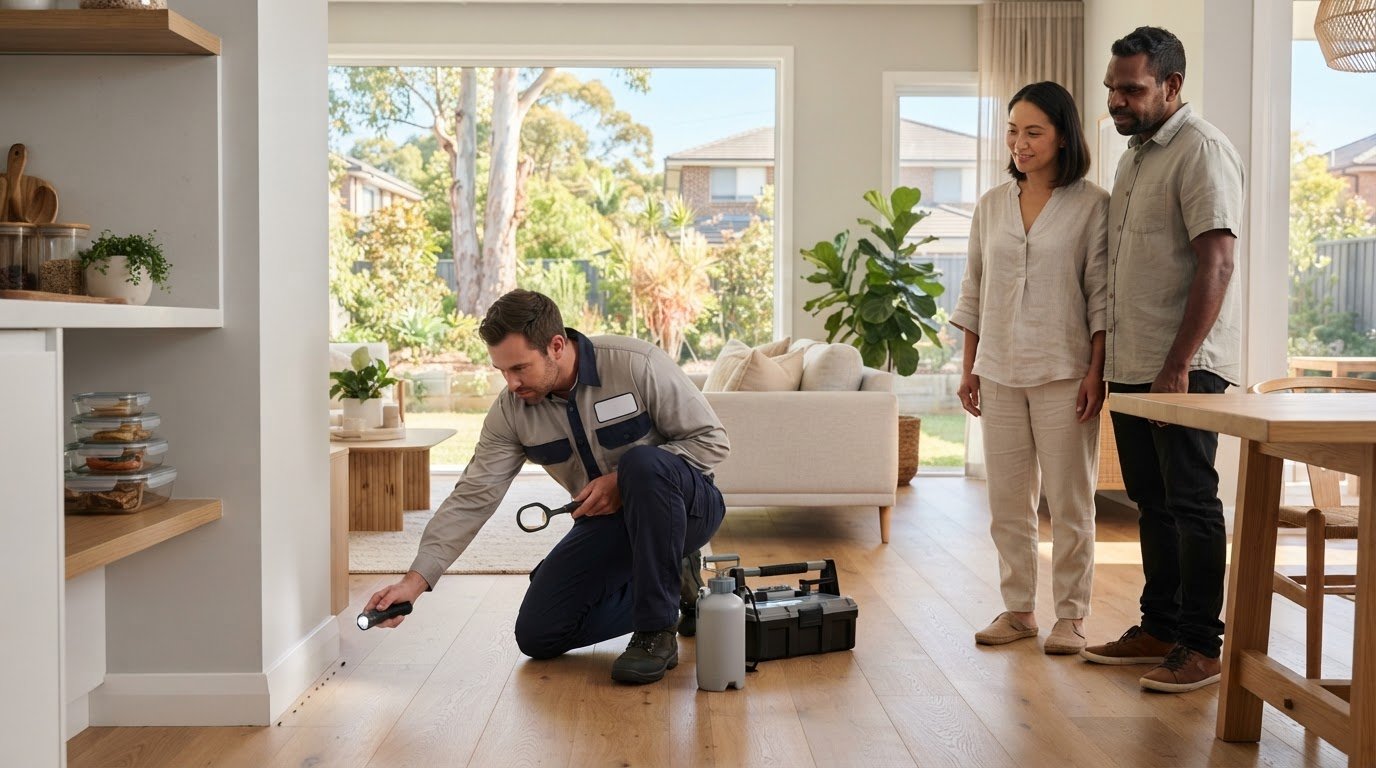
Our professional technicians use insect growth regulators (IGRs) and specialized foaming agents. These foams expand to fill the entire volume of a pipe, coating every surface with treatment that liquid cleaners can’t reach. This stops the larval development cycle and provides an immediate, lasting solution. If your DIY efforts haven’t cleared the problem within 48 hours, the infestation is likely too deep for household tools. Book your professional fly control treatment today to restore hygiene to your home.
Professional Fly Control Solutions with ABC Pest Control Sydney
Knowing the difference in the fruit flies vs drain flies debate is vital, but professional execution is what stops the swarm for good. We provide expert technicians in your neighborhood across the entire Sydney metropolitan area. Our team doesn’t just spray surfaces. We use a systematic approach to eliminate the root cause of your infestation. This ensures these pests don’t return to contaminate your kitchen or bathroom surfaces.
The ABC Method focuses on three critical stages of eradication. First, we perform a deep-dive source identification to find hidden biofilm or fermenting organic matter. Second, we apply targeted larval treatments using specialized foaming agents that liquid cleaners can’t match. Finally, we implement adult management strategies to clear the air immediately. This comprehensive strategy ensures every stage of the lifecycle is addressed safely and effectively without leaving a mess behind.
Why Sydney Residents Trust ABC Pest Control
We bring over 20 years of experience to every Sydney property we service. Our technicians specialize in high-difficulty cases, including complex fly infestations and resilient German cockroach colonies in modern apartments. We understand your time is valuable. That’s why we offer a streamlined booking process and a commitment to same-day service when urgent intervention is required. Our eco-friendly solutions prioritize the safety of your family and pets while delivering professional-grade results that last.
Booking Your General Pest Control Package
Our residential pest management bundles provide total protection for your home. These comprehensive packages handle up to 15 different pests in a single visit, offering far better value than isolated treatments. Every service includes our “Peace of Mind” guarantee to ensure your property remains a healthy, fly-free environment. Don’t let a minor fly problem compromise your home’s hygiene. Book your Sydney pest inspection today and secure your property against seasonal pests.
Restore a Hygienic, Fly-Free Home Today
Identifying the tiny insects in your kitchen is the first step toward reclaiming your space. Whether you’ve spotted the red eyes of a fruit fly or the fuzzy wings of a drain fly, you now have the tools to tell them apart. Permanent removal depends on destroying the specific breeding signal unique to each species. DIY traps often fail because they ignore the larvae hiding in your pipes or under your appliances.
When the battle of fruit flies vs drain flies becomes a persistent headache, it’s time for professional intervention. ABC Pest Control Sydney brings 20+ years of Sydney pest expertise to your doorstep. Our eco-friendly and family-safe treatments ensure your peace of mind. As seen on major Australian media outlets, we specialize in high-difficulty infestations that standard cleaning cannot resolve. Don’t let a small nuisance compromise your family’s health.
Take decisive action now. Get a Free Quote for Expert Fly Control in Sydney and let our experienced team stop the breeding cycle for good. You deserve a clean, comfortable, and pest-free living environment.
Frequently Asked Questions
How do I know if I have drain flies or fruit flies?
Look at the eyes and wings to identify your pest. Fruit flies have distinct red eyes and clear wings; they are agile fliers that hover around food. Drain flies look like tiny, fuzzy moths with heart-shaped wings and are clumsy fliers often found resting on bathroom walls. Identifying fruit flies vs drain flies correctly is the first step to successful treatment.
What kills drain flies instantly in the sink?
Boiling water kills adult flies and some larvae instantly on contact. However, this is only a temporary fix. It doesn’t remove the thick biofilm where they breed. You must use a stiff-bristled brush to scrub the interior of the drain. Physical scrubbing is the only way to destroy the protective sludge layer and stop the lifecycle for good.
Are fruit flies harmful to my health?
Fruit flies are significant health risks because they act as mechanical vectors for pathogens like Salmonella and E. coli. They move between rotting organic matter in bins and your fresh food surfaces. This transfer can lead to food poisoning and other digestive issues. Never ignore these pests in food preparation areas as they compromise your home’s basic hygiene standards.
Do drain flies mean I have a plumbing issue?
Persistent drain flies often signal a hidden plumbing problem. They thrive in organic sludge that builds up in cracked pipes or slow-moving drains. If you see them in rarely used bathrooms, the P-trap might have dried out. This allows sewer gases and pests to enter your living space. You must address the moisture source to stop the cycle permanently.
How long does it take to get rid of a fly infestation?
Professional treatment typically resolves an infestation within 7 to 14 days. This timeline accounts for existing eggs and larvae to complete their current cycle while the treatment prevents new generations from developing. DIY efforts often take much longer or fail entirely because they don’t reach the deep-seated breeding sources in your Sydney property.
Can I use bleach to kill drain flies?
Bleach is generally ineffective for killing drain fly larvae. It’s a liquid that passes through the drain too quickly to penetrate the thick biofilm protecting the eggs. It can also damage your pipes or react dangerously with other household chemicals. Stick to mechanical scrubbing or specialized enzyme cleaners for better, safer results in your kitchen and bathroom.
Why do I have fruit flies if I have no fruit?
Fruit flies don’t need actual fruit to survive; they only need fermenting organic matter. They are attracted to damp bin liners, spilled juice under the fridge, or even moist potting soil. Check your recycling bins for beer or soda residue. Any source of sugar and moisture can trigger a fruit flies vs drain flies confusion in your home.
Will a standard pest spray kill both types of flies?
Standard surface sprays rarely solve a fly infestation because they only target the adults you see. You must treat the larvae at the source to see real results. Professional fly control uses specialized growth regulators and foaming agents. These products penetrate the breeding grounds that generic sprays simply cannot reach, ensuring a total resolution of the problem.