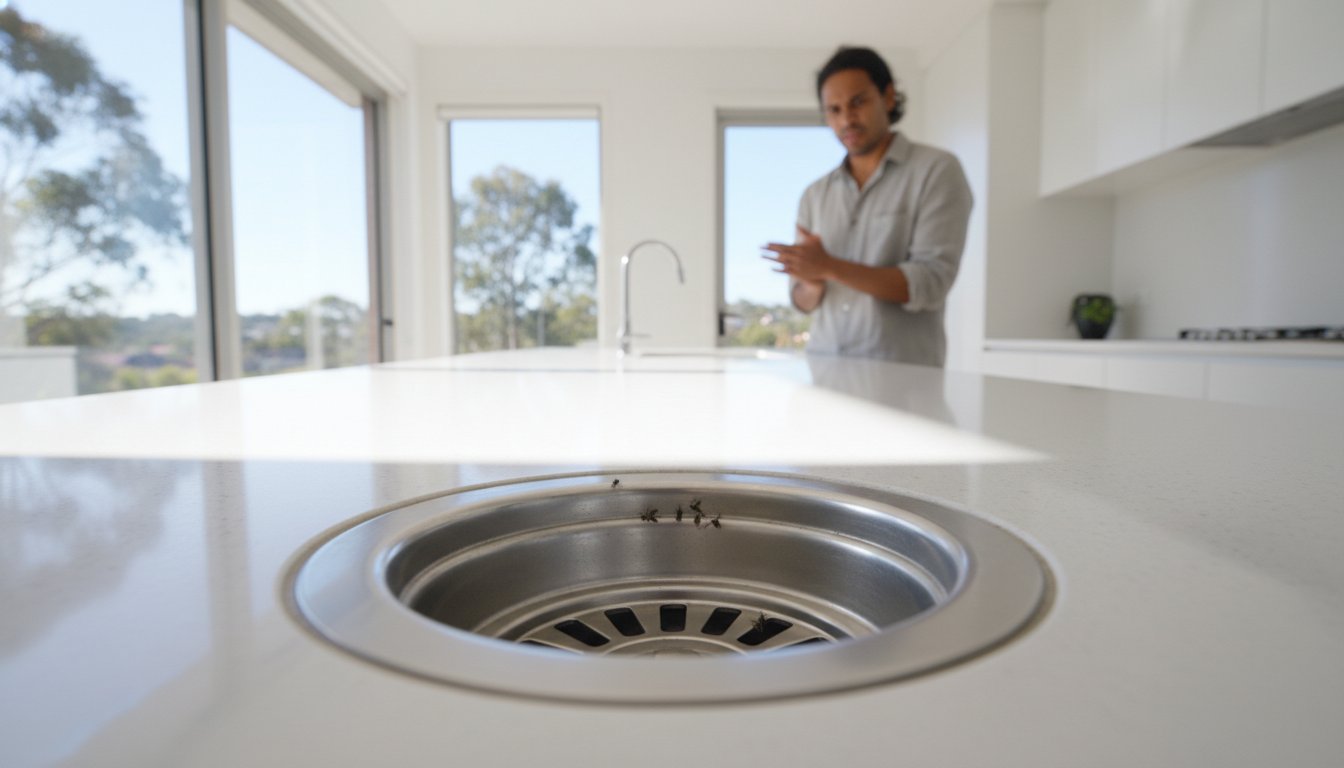
What if the drains you scrub every day are actually the secret nurseries for the pests invading your kitchen? You’ve likely spent hours cleaning and setting vinegar traps, yet you still find yourself swatting at the air and asking, “where are these tiny flies coming from” while they land on your toothbrush or food. It’s exhausting to feel like your home is unhygienic despite your best efforts. You aren’t alone in this struggle, and the solution is closer than you think.
You deserve a home that feels clean and safe. This guide identifies the specific species causing your headache and provides the exact steps to eliminate them. We’ll locate the hidden organic biofilm where a single female can lay up to 100 eggs at a time. You’ll learn why boiling water fails to penetrate these breeding sites and how professional intervention ensures these pests stay gone for good. Let’s find the source and reclaim your peace of mind right now.
Key Takeaways
- Use the “Hover Test” to identify your specific fly species and target their unique breeding habits.
- Stop asking “where are these tiny flies coming from” by using the “Tape Test” to find the exact drain source.
- Learn why standard household cleaners fail to penetrate the thick biofilm protecting fly larvae in your plumbing.
- Starve the infestation immediately by following specific deep cleaning protocols for sink overflows and floor wastes.
- Discover how professional microbial treatments eliminate the hidden breeding source to ensure your home stays fly-free.
Identifying Your Uninvited Guests: What Are These Tiny Flies?
Stop guessing and start observing. Many homeowners waste days on general sprays because they haven’t identified their specific intruder. If you’re asking “where are these tiny flies coming from”, identification is your first line of defense. Treating a drain fly like a fruit fly is a recipe for failure because their breeding sources are worlds apart. One thrives on decaying fruit; the other lives in the sludge of your pipes. Professional results start with knowing exactly which pest has moved in.
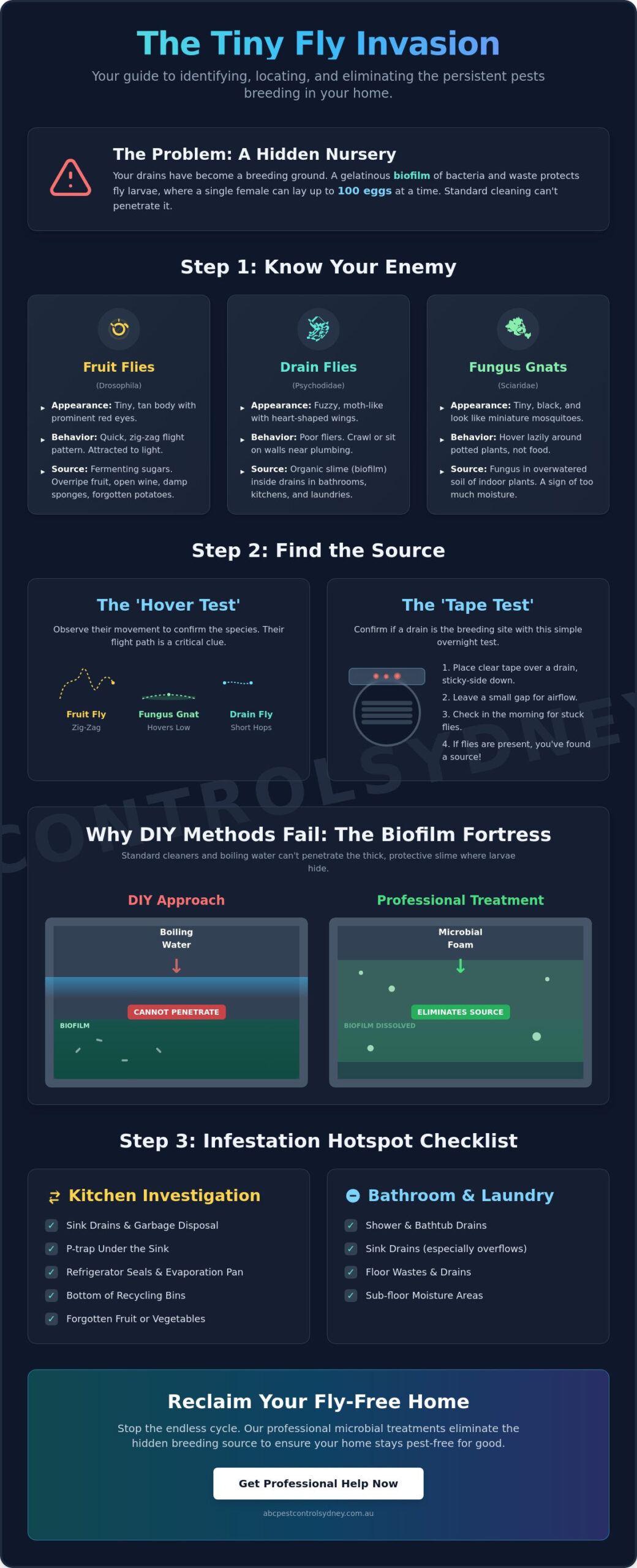
Use the ‘Hover Test’ to narrow it down. Watch how they move. Do they zig-zag quickly around the kitchen? They’re likely fruit flies. Do they hover lazily over a potted plant? Those are gnats. If they mostly sit still on the bathroom wall and only fly a few centimeters when disturbed, you’re dealing with drain flies. Identifying the species is critical because their breeding sources are completely different, and using the wrong treatment will only prolong the infestation. Most indoor infestations in Sydney involve either the sugar-loving fruit fly, the moisture-dependent drain fly, or the soil-dwelling fungus gnat.
Fruit Flies (Drosophila): The Kitchen Invaders
Look for tiny, tan-bodied insects with prominent red eyes. These pests are highly attracted to light and the smell of fermenting sugars. They often enter Sydney homes through open windows during summer or arrive as hitchhikers on grocery store produce. Once inside, they’ll target overripe bananas, open wine bottles, or even a damp sponge. If you’re wondering “where are these tiny flies coming from” in your pantry, check for any forgotten potatoes or onions at the back of the shelf.
Drain Flies (Psychodidae): The Bathroom Lurkers
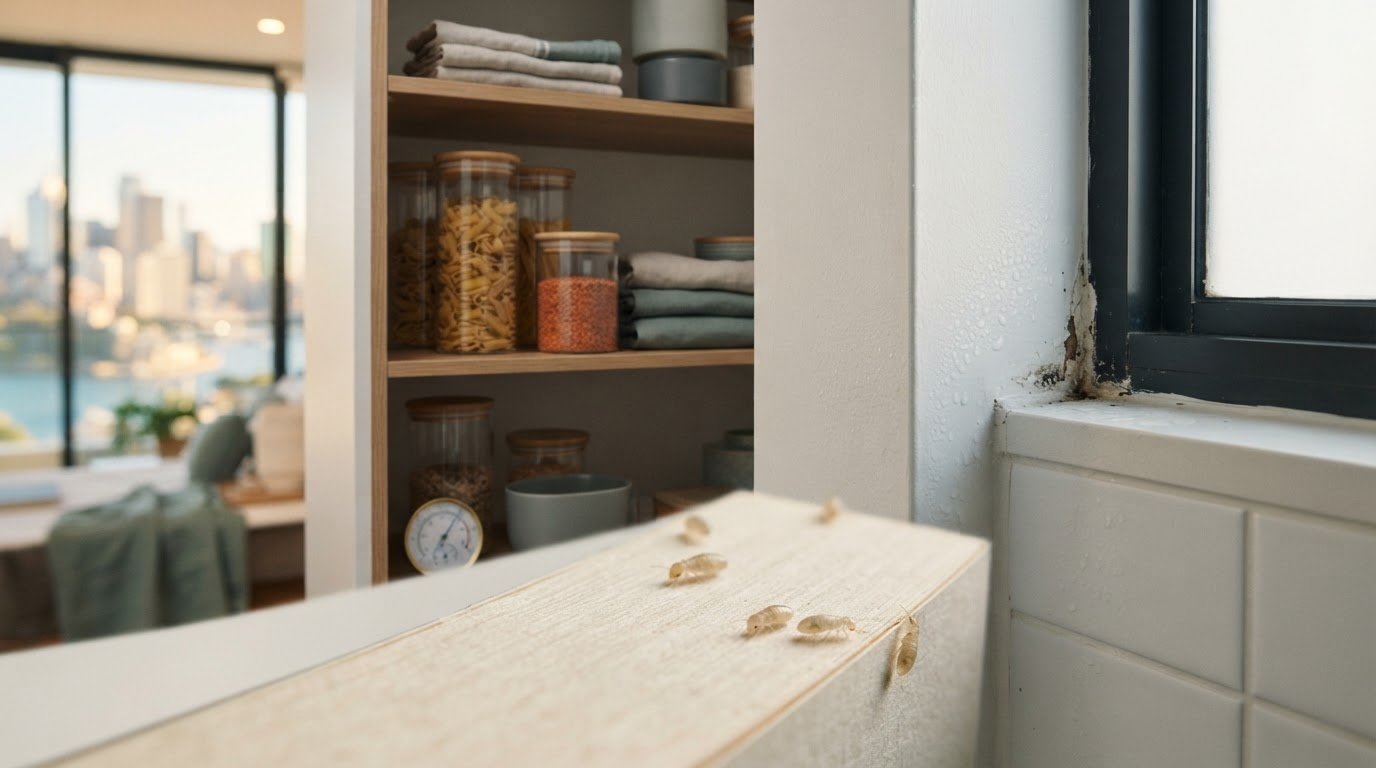
These flies are easily recognisable by their fuzzy, moth-like appearance and distinct heart-shaped wings. Unlike other species, they are remarkably poor fliers. You will usually find them crawling on walls or tiles near sinks, laundry rooms, and showers. They congregate in these damp, dark areas because they rely on the organic slime found inside pipes to survive. Because they stay close to their source, seeing them on a specific wall is a major clue to their nursery location.
Fungus Gnats: The Indoor Plant Pests
If you see tiny, black flies that look like miniature mosquitoes, you likely have Fungus gnats. These pests hover directly around the soil of overwatered indoor plants rather than flying around your food. Sydney’s humid weather often encourages fungal growth in potting mix, providing the perfect environment for their larvae to thrive. They don’t bite, but their presence indicates your plants are staying too wet and providing a consistent breeding ground.
The Source: Where Are These Tiny Flies Coming From in Your Home?
Flies don’t simply appear out of nowhere. They are biological heat-seekers that follow the scent of decaying organic matter to find a place to breed. If you’re constantly swatting at the air and asking “where are these tiny flies coming from”, you need to look beyond the surface. These pests are seeking out “biofilm,” which is a gelatinous layer of bacteria and waste that builds up in moist areas. In Sydney’s humid climate, this buildup happens faster than most homeowners realize, creating a perfect nursery for thousands of larvae.
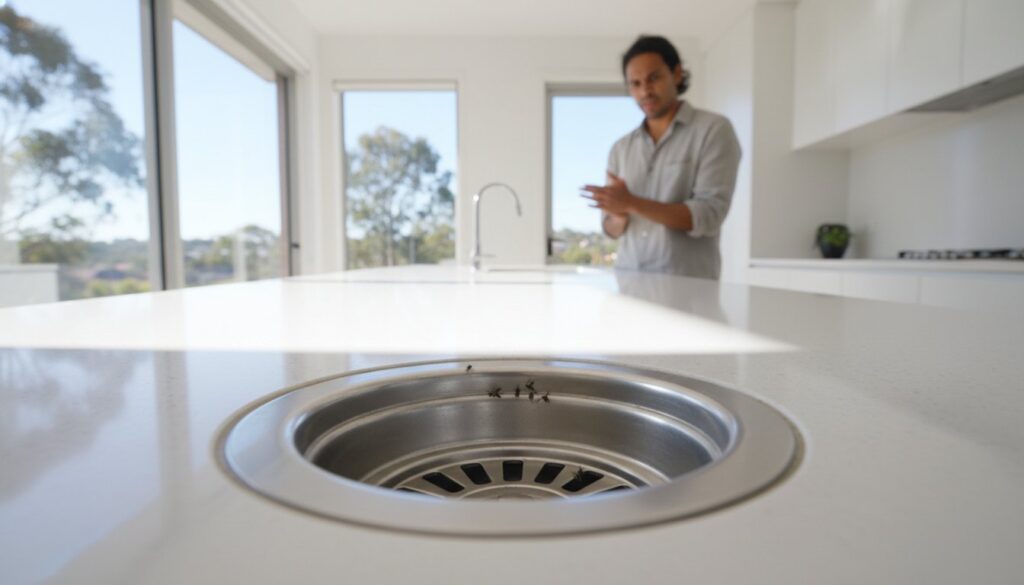
You can identify the exact source using the ‘Tape Test’. Take a piece of clear adhesive tape and place it over your sink or floor drains before bed, sticky side down. Do not seal the drain completely; leave a small gap for airflow. If you wake up to find flies stuck to the underside, you’ve located a primary breeding site. This is a common issue in older Sydney terraces where structural gaps or sub-floor moisture can lead to persistent infestations that standard cleaning won’t touch. If your DIY tests are inconclusive, it might be time for professional drain inspections to find hidden breeding pockets.
The Kitchen Investigation Checklist
Modern kitchens have several hidden moisture traps. Check the slime buildup in your garbage disposal or the ‘P-trap’ under the sink. These areas collect food particles that rot and attract pests. Don’t overlook the refrigerator seals or the evaporation pan underneath the appliance. These pans collect condensation and, if not cleaned, become a stagnant soup of organic matter. Even the residue at the bottom of a recycling bin or a forgotten piece of fruit in a bowl can sustain a massive population. If you’re still wondering “where are these tiny flies coming from” after cleaning your counters, these hidden spots are the likely culprits.
Bathroom and Laundry Drain Vulnerabilities
Drains are the most frequent offenders. The gunk inside your pipes provides everything a fly needs to thrive. For a deeper look at this specific problem, research on Drain Flies in the Home shows that managing this biofilm is the only way to stop the cycle. In many Sydney apartments, floor drains in laundries or second bathrooms aren’t used frequently. This causes the water trap to dry out, allowing flies to fly directly up from the sewer lines. Additionally, check for cracked tiles or failing grout; even a small leak can create a damp wall cavity where flies breed undisturbed.
Outdoor and Entry Point Factors
Sydney’s humid “fly season” puts immense pressure on your home’s exterior. Damaged window screens are easy entry points for scouts looking for food. If you have fruit trees or balcony gardens, overripe fruit falling near windows can attract flies that eventually migrate indoors. Potting mix in balcony plants is also a primary nursery for gnats, especially if the soil stays consistently wet. Ensure your screens are intact and your outdoor pots have proper drainage to reduce the local population before they find a way inside.
The Lifecycle Secret: Why DIY Methods Often Fail
You’ve set the vinegar traps. You’ve swatted dozens of pests. Yet, every morning, the swarm returns. This happens because most home remedies focus on the symptoms rather than the cause. When you ask “where are these tiny flies coming from”, you’re looking for a single point of entry, but the reality is a self-sustaining cycle happening right under your nose. Adult flies are merely the visible tip of the iceberg. To stop the infestation, you must break the reproductive chain that thrives in Sydney’s humid environment.
The breeding cycle is incredibly fast. In as little as 7 days, an egg can transform into a breeding adult. Research shows a single female drain fly can lay up to 100 eggs in the organic biofilm of your drains. This cycle repeats every one to three weeks, meaning a small oversight today becomes a full-blown invasion by next Tuesday. Pouring boiling water down the drain is a common suggestion, but it rarely works for long-term control. The water cools too quickly to kill larvae deep in the pipes, and it can actually damage PVC seals and joints. You need a solution that stays in place long enough to do the job.
The Adult vs. Larvae Disconnect
Adult flies represent only about 10% of the total population in your home at any given time. The remaining 90% exist as eggs, larvae, and pupae hidden in moist crevices. These larvae are protected by a water-resistant biofilm, a thick “gunk” that acts like a shield against standard household bleach and hot water. According to expert resources on Indoor Flies and Their Control, trapping adults without removing this nursery is a losing battle. You’ll catch the ‘scouts,’ but the next generation is already hatching in the pipes.
Common DIY Mistakes to Avoid
Many homeowners reach for “bug bombs” or total release foggers. These are ineffective against tiny flies because the mist cannot reach the larvae tucked inside drain pipes or deep within potting soil. If you’re dealing with gnats, avoid the urge to over-water your plants to “wash them away.” This actually creates the exact fungal environment they need to multiply. You must implement a strict “dry out” phase to break the lifecycle. Without professional-grade microbial cleaners that literally eat away the breeding biofilm, the infestation will persist regardless of how many adults you trap.
- Traps are temporary: They only kill adults that have already likely laid eggs.
- Bleach is ineffective: It slides over the biofilm without penetrating the larval nursery.
- Microbial power: Professional treatments use bacteria to digest the organic matter flies eat.
Immediate Steps to Organise Your Fly-Free Home
Stop the cycle immediately by cutting off their survival resources. If you’re still asking “where are these tiny flies coming from” after identifying the species, it’s time to move from observation to elimination. Flies require moisture and organic matter to survive; removing these is non-negotiable. Start by clearing all “free” moisture from your kitchen and bathroom. For those who need professional help with deep sanitation, Advance Cleaning Services Inc. offers the specialized cleaning services required to eliminate pest breeding sites. Wipe down sinks after every use and ensure no standing water remains in pet bowls or plant saucers overnight. A dry home is a hostile environment for a fly.
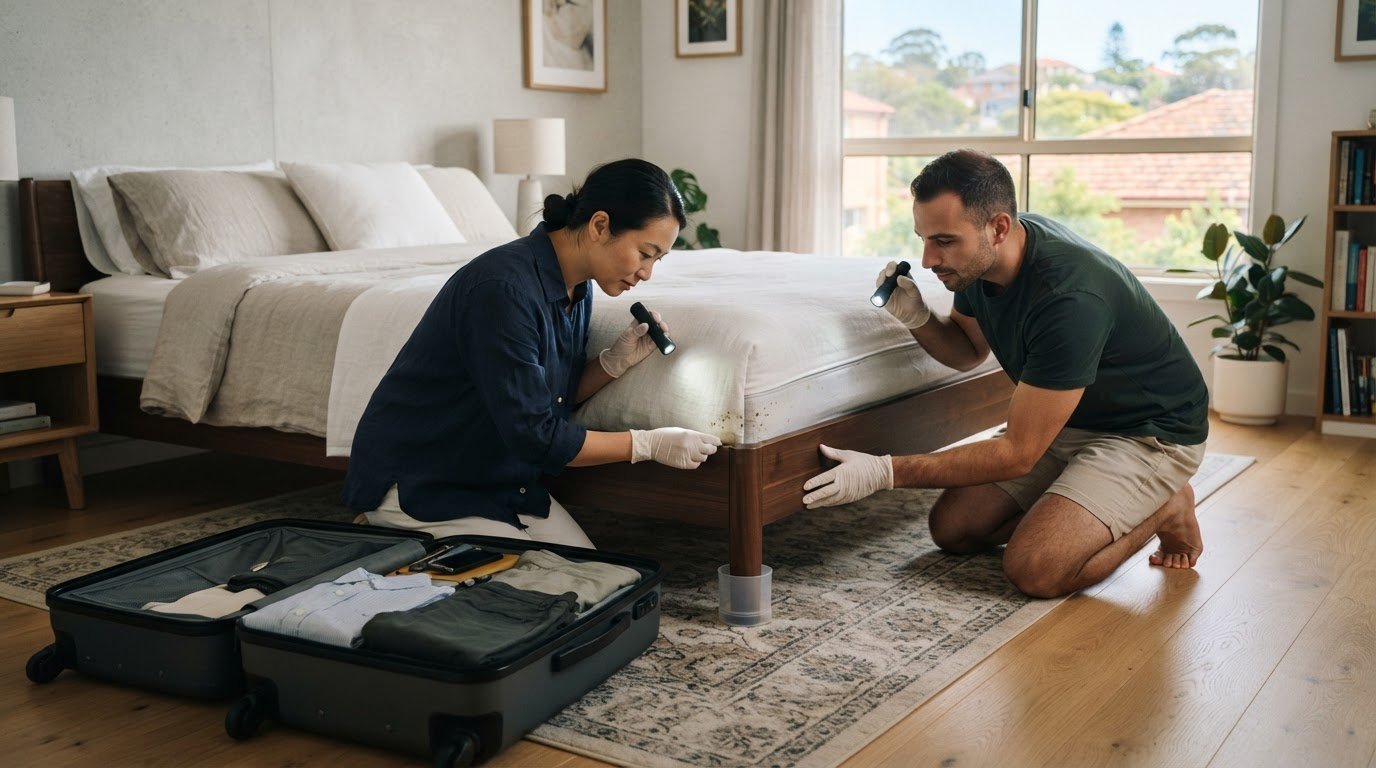
Deep cleaning must go beyond the surface. Focus on sink overflows and floor wastes, which are often the most neglected breeding grounds in Sydney apartments. These areas collect hair, soap scum, and skin cells, creating a nutrient-rich sludge. Use a torch to inspect the “U-bend” of your plumbing. If you see a dark coating, you’ve found the nursery. Understanding what is a pest and why they choose specific breeding sites helps you target your cleaning efforts more effectively. Reclaiming your home requires a systematic approach to sanitation.
Sanitation Power-Hour
- Scrub the drains: Use a stiff-bristled pipe brush to physically break up the biofilm inside your drains. Chemical cleaners often slide over this gunk; mechanical scrubbing is the only way to tear it away.
- Sanitise your bins: Empty all kitchen and recycling bins. Wash them with a strong disinfectant solution to remove any fermented liquid or food residue at the bottom.
- Remove organic bridges: Replace damp dishcloths and sponges daily. These items hold enough moisture and bacteria to support an entire generation of larvae.
Manage your indoor plants carefully to prevent fungus gnat re-emergence. Allow the top five centimetres of soil to dry out completely between waterings. If the infestation persists, consider repotting with fresh, sterile mix. Additionally, seal the perimeter of your home. Inspect window screens for tiny tears and check door seals for gaps. Sydney’s humid “fly season” means even a millimetre-wide opening is enough for a scout fly to enter and start a new colony. If these manual steps don’t stop the swarm, book a professional inspection to find hidden structural breeding sites.
Long-Term Prevention Strategies
Maintain your progress with strict storage habits. Keep all produce in the refrigerator or in airtight containers to prevent attracting sugar-seeking species. Regularly flush floor drains in laundries or guest bathrooms with water to ensure the traps don’t dry out. Stagnant water is an invitation for pests. Finally, schedule an annual pest control Sydney check-up. Professional monitoring identifies early signs of infestation before they become a household crisis, ensuring your home stays fly-free year-round.
Professional Fly Eradication with ABC Pest Control Sydney
Don’t let a small fly problem turn into a permanent household fixture. If your cleaning efforts haven’t stopped you from asking “where are these tiny flies coming from”, it’s because the infestation has moved into areas you cannot reach. Persistent fly issues require a professional’s diagnostic tools to uncover the root cause. We don’t just spray; we eliminate the biological foundations of the colony. Secure your home and reclaim your kitchen with expert intervention from ABC Pest Control Sydney designed for our unique climate.
Our specialized microbial drain treatments are the key to total eradication. These products contain live, beneficial bacteria that literally eat away the breeding biofilm inside your pipes. Unlike harsh chemicals that flush away in seconds, these treatments cling to the pipe walls and digest the organic matter larvae need to survive. It’s a safe, eco-friendly method that protects your family and Sydney’s environment while delivering definitive results. You get the peace of mind that comes with a comprehensive pest management plan rather than a temporary fix.
Our Expert Fly Removal Process
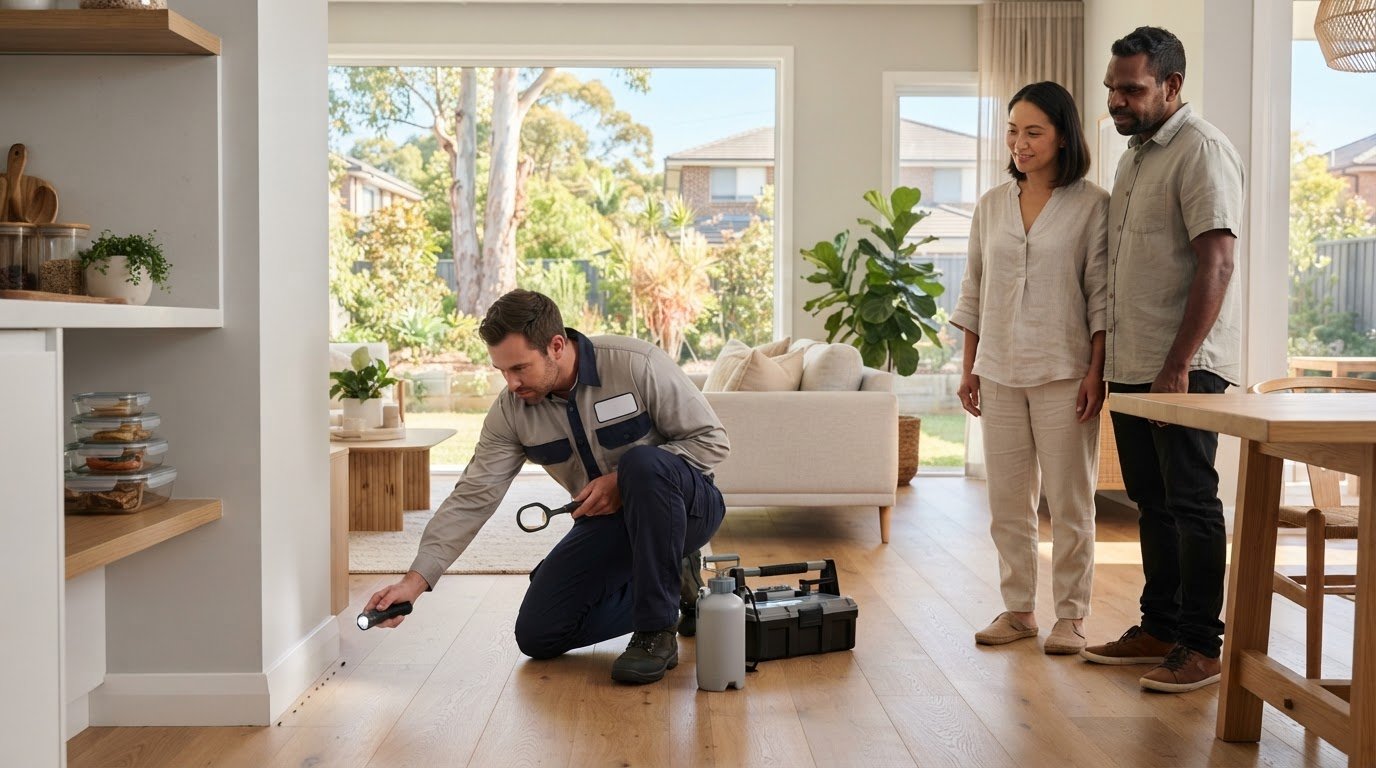
- Professional Identification: We use high-magnification tools to confirm the species. This ensures the treatment matches the specific biology of the pest.
- Source Detection: Our team utilizes thermal imaging to find hidden leaks or dampness behind walls that attract flies.
- Lifecycle Interruption: We apply long-lasting, safe growth regulators. These stop the lifecycle by preventing larvae from ever reaching the adult stage.
Why Sydney Trusts ABC Pest Control Sydney
Experience matters in the local market. ABC Pest Control Sydney has over 20 years of experience handling rodent control and small fly infestations across NSW. We understand the specific challenges posed by Sydney’s humidity and older architecture. Our rapid response times get your kitchen back to a hygienic state quickly without unnecessary delays. We provide tailored packages that address the root cause, not just the symptoms, ensuring your home stays fly-free long after we leave.
Stop the swatting and start the solution today. If you’re tired of wondering “where are these tiny flies coming from” and want an immediate resolution, ABC Pest Control Sydney is ready to help. We combine technical training with a commitment to safety, giving you a professional service that respects your time and your home. Choose a modern, efficient approach to pest management that works the first time.
Reclaim Your Hygienic Sydney Home Today
You now have the knowledge to move beyond surface cleaning and address the biological source of your infestation. From distinguishing between species using the Hover Test to identifying the exact drain through the Tape Test, you’ve learned that effective control requires targeting the hidden biofilm. If you’ve been asking “where are these tiny flies coming from”, the answer lies in the specialized environments like sink overflows and dry floor wastes that we’ve discussed. Breaking the cycle is only possible when you stop the larvae from reaching maturity.
ABC Pest Control Sydney provides the expert intervention needed to restore your home’s hygiene. With over 20 years of Sydney pest expertise, we apply eco-friendly and family-safe treatments that have been featured on major Australian media outlets. We don’t just treat the symptoms; we eliminate the root cause using professional-grade microbial solutions. Stop the swarm today; book your Sydney fly inspection with ABC Pest Control Sydney! Reclaim your peace of mind and enjoy a fly-free home once again.
Frequently Asked Questions
Can tiny flies in the house make you sick?
Yes, these pests can mechanically transmit bacteria and pathogens to your family. Tiny flies often feed and breed in unsanitary environments like sewage, decaying organic matter, and drains. When they land on your food, kitchen surfaces, or toothbrushes, they can transfer harmful microbes. While they don’t bite, their presence represents a significant hygiene risk that requires professional attention.
How do I get rid of tiny flies in my kitchen overnight?
You can reduce the adult population overnight by removing every possible food and moisture source. Seal all fruit in the refrigerator, empty the bins, and dry your sinks completely with a towel before bed. While a vinegar trap might catch some “scouts” by morning, it won’t stop the infestation. You must address the larvae hidden in the drains to see a permanent result.
Will bleach kill drain flies in my Sydney home?
No, bleach is remarkably ineffective against drain fly larvae. It is a thin liquid that passes over the thick, gelatinous biofilm too quickly to penetrate the nursery. The eggs and larvae stay protected inside the slime. Additionally, frequent use of bleach can damage older Sydney plumbing pipes and seals without solving your pest problem.
Why do I have tiny flies even though my house is clean?
Surface cleaning does not reach the hidden nurseries where these pests thrive. Even in a spotless home, organic slime builds up inside drain pipes, dishwasher filters, and refrigerator drip pans. When homeowners ask “where are these tiny flies coming from” in a clean house, the answer is almost always a hidden moisture trap or an internal plumbing issue that requires specialized microbial treatment.
Are these tiny flies actually baby cockroaches?
How long does it take for a professional to clear a fly infestation?
A professional treatment usually shows a dramatic reduction in flies within 24 to 48 hours. However, completely breaking the breeding cycle typically takes about a week of consistent environmental management. The process involves identifying the source, treating the biofilm with specialized cleaners, and allowing the remaining adults to finish their short lifecycle without reproducing.
What is the best homemade trap for small flies?
The most effective DIY trap is a small bowl of apple cider vinegar mixed with a few drops of liquid dish soap. The fermented scent attracts the adults, and the soap breaks the surface tension so they cannot escape. Use this only as a temporary monitoring tool. It will not eliminate the hundreds of larvae currently developing in your plumbing system.
Can tiny flies come from my neighbour’s apartment in Sydney?
Yes, tiny flies frequently travel between units in Sydney apartment blocks through shared plumbing lines and ventilation shafts. If a neighbor has a leak or an unused, dry floor waste, pests can easily migrate into your unit. When you’re wondering “where are these tiny flies coming from” after cleaning your own home, the issue may be a structural problem within the building’s shared infrastructure.