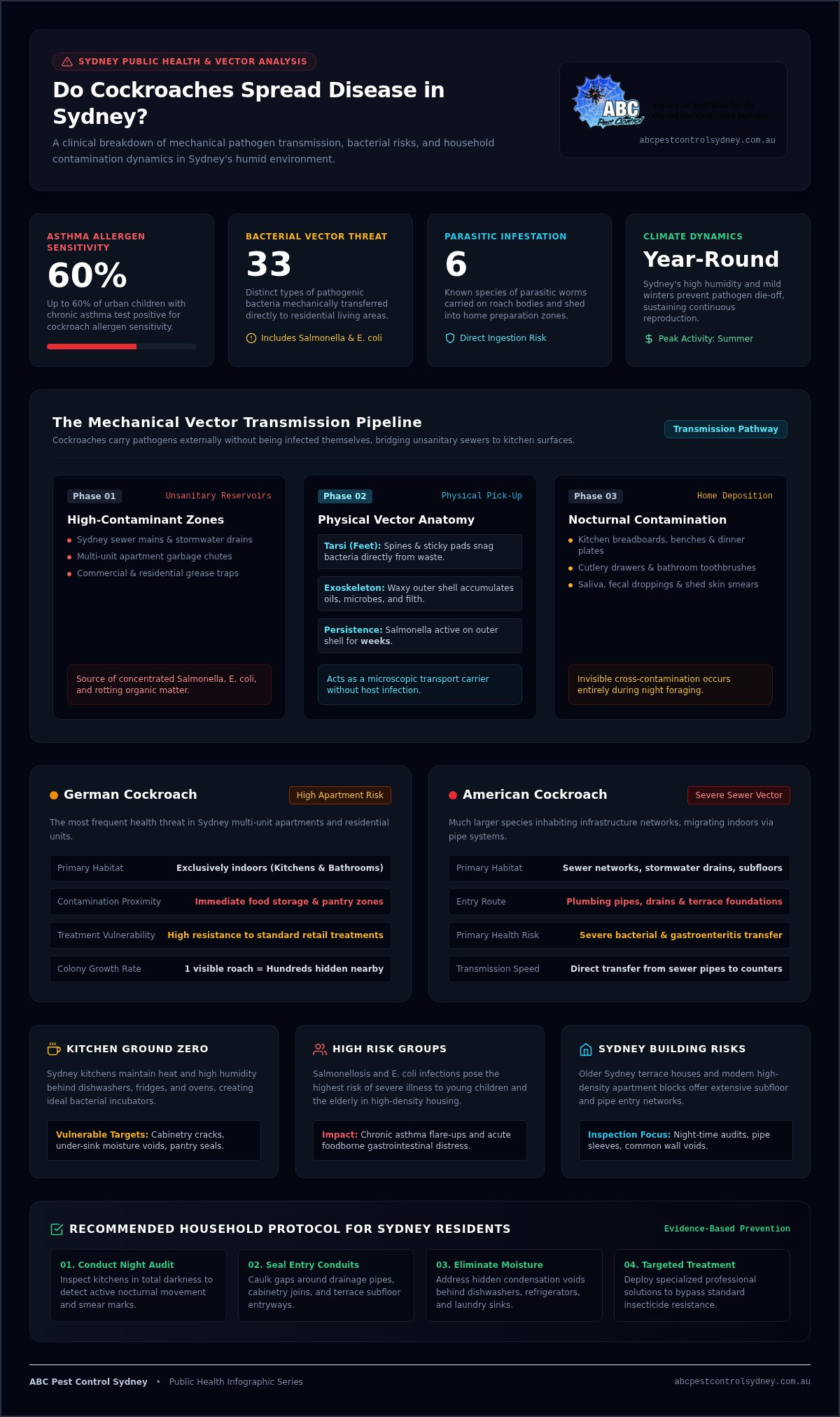
Did you know that up to 60% of urban children with chronic asthma test positive for cockroach allergen sensitivity? In a city as busy as ours, the question of do cockroaches spread disease sydney families should be concerned about is more than a simple curiosity. It’s a matter of public health. You likely feel an immediate sense of dread when you spot a roach in your kitchen. Whether it’s the fear of food poisoning or the embarrassment of an infestation, that anxiety is rooted in a very real danger. These pests act as mechanical vectors, carrying 33 types of bacteria and six species of parasitic worms directly into your living space.
In this guide, we promise to clarify the specific health risks cockroaches pose to your household and how to stop the spread. You’ll discover how to identify common Sydney species, understand why multi-unit apartments are at higher risk, and find a safe, professional solution. We’ll explore the latest in eco-friendly treatments and practical prevention steps to protect your peace of mind and your family’s health for good.
Key Takeaways
- Confirm why the question do cockroaches spread disease sydney families ask is critical, especially given how our humid climate supports year-round pathogen transmission.
- Understand the role of cockroaches as mechanical vectors that bridge the gap between Sydney’s drainage systems and your clean kitchen surfaces.
- Identify the major health threats, including Salmonellosis and E. coli, that pose the highest risks to children and the elderly in high-density living areas.
- Learn how to conduct a night-time audit of your home and seal specific entry points common in older Sydney terrace houses and modern apartment blocks.
- Discover why specialized professional intervention is necessary to combat the increasing resistance of German cockroaches to standard retail treatments.
The Reality of Cockroach-Borne Diseases in Sydney Households
Yes, cockroaches are significant carriers of dangerous pathogens and bacteria. If you are asking do cockroaches spread disease sydney residents must understand that these insects are not just “nuisance” pests. They are a legitimate public health threat. Sydney’s unique climate, characterized by high humidity and warm temperatures, creates a year-round breeding ground. While activity peaks in the summer, our mild winters mean the risk of roach-borne illness never truly disappears. Ignoring a single roach in your home is a dangerous gamble. One visible insect often signals a colony of hundreds hidden nearby. Without intervention, a small problem can escalate into a household health crisis in just a few weeks.
German Cockroaches vs. American Cockroaches in Sydney
Different common pest cockroach species carry different risks based on their behavior. German cockroaches are the most frequent health threat in Sydney apartments and units. They live exclusively indoors, nesting in kitchens and bathrooms. Because they live so close to your food, the risk of contamination is extremely high. American cockroaches are much larger and typically inhabit Sydney’s sewer networks and stormwater drains. They migrate into your living spaces through pipes and subfloors. When they transition from a sewer pipe to your kitchen counter, they bring every pathogen they have encountered directly into your home.
Why Your Kitchen is the High-Risk Zone
Your kitchen is ground zero for infestation because it provides the three things roaches crave: heat, moisture, and food. Sydney kitchens often have high humidity levels behind dishwashers, fridges, and ovens. This environment is perfect for bacterial growth. Roaches are experts at exploiting tiny cracks in cabinetry to reach “clean” food storage areas. They don’t just eat your pantry staples; they contaminate surfaces with their saliva, waste, and shed skin. This is how they spread 33 types of bacteria, including Salmonella and E. coli. To safeguard your home, our General Pest Control Packages focus on these high-risk zones. We treat the hidden voids where roaches hide to ensure your food preparation surfaces remain safe and sanitary.
How Cockroaches Contaminate Your Home and Spread Pathogens
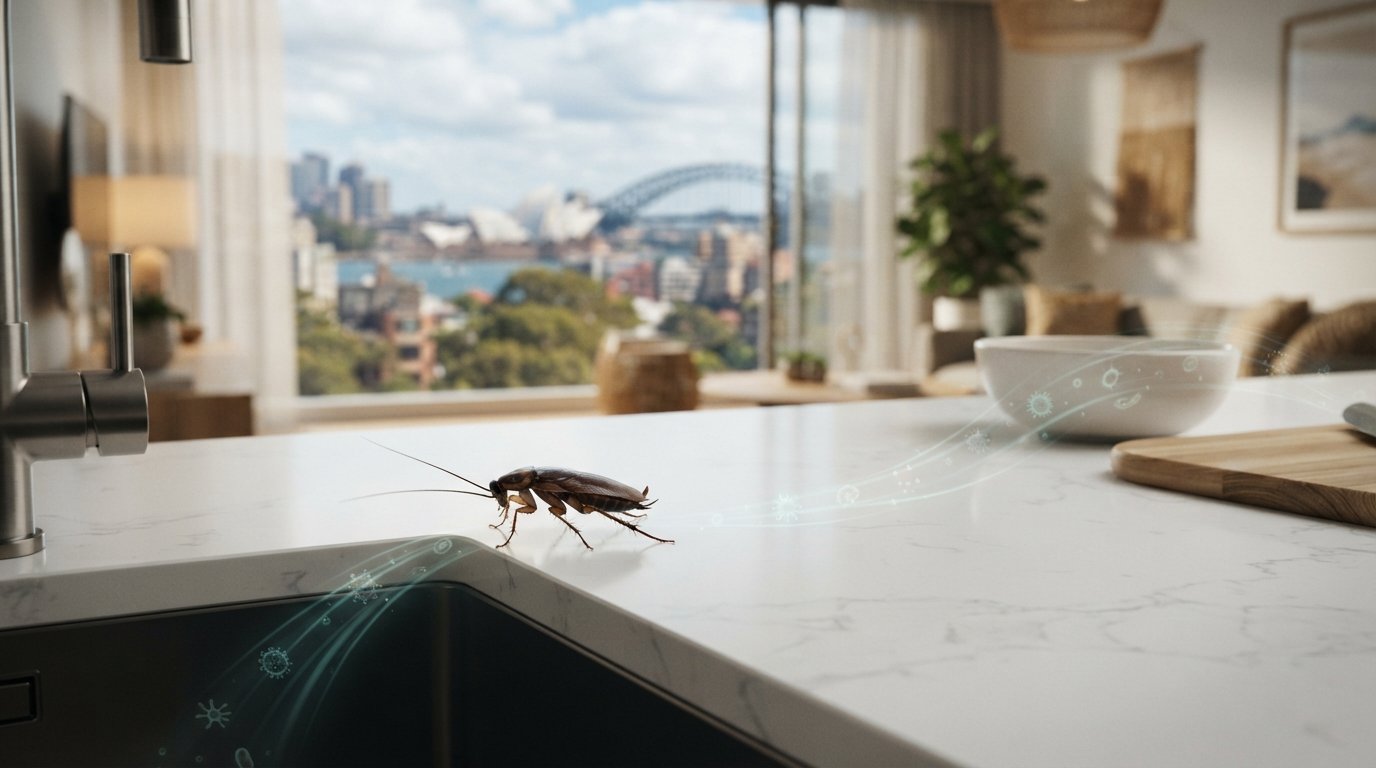
Understanding the “how” is just as vital as knowing the “why” when asking do cockroaches spread disease sydney. Cockroaches function as mechanical vectors. A mechanical vector is an organism that physically carries pathogens from unsanitary environments to clean surfaces without suffering from the diseases themselves. In Sydney, this journey often begins in grease traps, garbage chutes, or sewer mains. As roaches forage through these waste systems, they accumulate a toxic cocktail of microbes on their outer shells and legs.
Because cockroaches are nocturnal, they spend the night exploring your home undetected. They crawl across your breadboards, cutlery drawers, and toothbrushes while you sleep. This hidden activity makes it nearly impossible to track exactly where they’ve been. You might wake up to a seemingly clean kitchen, unaware that a roach has just spent hours transferring filth from a drain to your dinner plates. This constant, invisible movement is what makes them such a high-risk pest for local families.
Cross-Contamination: From Sewers to Cutlery
The physical anatomy of a cockroach is designed for contamination. Their legs are covered in tiny spines that easily snag bacteria and organic waste. When an American cockroach climbs out of a Sydney stormwater drain and enters your home, it acts like a microscopic transport bus. These pests can easily spread bacterial infections and gastroenteritis by simply walking across your food preparation areas. Every step they take leaves behind a trail of invisible pathogens that can survive on dry surfaces for days.
- Tarsi (Feet): Sticky pads and spines collect pathogens from decaying matter.
- Exoskeleton: The waxy outer shell picks up oils and filth from garbage.
- Pathogen Persistence: Bacteria like Salmonella can remain active on a roach’s body for weeks.
The Hidden Danger of Roach Droppings and Saliva
Contamination isn’t limited to physical contact. Cockroaches constantly produce droppings and saliva as they move. In heavy infestations, you’ll notice dark “smear marks” along wall junctions or cupboard hinges. These marks are concentrated tracks of waste and pheromones. As roach droppings dry out, they can crumble into fine dust. This dust becomes airborne, settling on open food or being inhaled by residents. This is particularly dangerous for children with respiratory issues. Pathogens remain active in roach waste long after the insect has moved on, creating a lingering health hazard. If you suspect an infestation, a professional inspection of your General Pest Control Packages can identify these hidden contamination zones before they lead to illness.
Major Diseases Carried by Sydney Cockroaches
Sydney families often mistake a roach sighting for a simple sanitation issue. However, the medical reality is much more serious. When people ask do cockroaches spread disease sydney health experts point to a long list of bacterial and viral threats. Salmonellosis is the most common roach-related illness in our metropolitan area. This type of food poisoning causes intense fever, abdominal cramps, and diarrhea. Because cockroaches forage in garbage and sewers before walking over your food, they deposit Salmonella bacteria directly onto your meals. For young children and the elderly, these infections can lead to severe dehydration and hospitalisation.
Gastroenteritis is another frequent concern. Many “stomach bugs” reported in high-density Sydney suburbs are actually the result of pest-mediated contamination. Cockroaches also carry E. coli and Staphylococcus aureus. These pathogens are particularly resilient and can survive on kitchen surfaces for extended periods. In older, high-density areas, roaches have even been documented carrying the pathogens responsible for Typhoid fever and Dysentery. While these are less common today, the risk remains present in environments where infestations are left untreated.
Asthma and Respiratory Allergies
The connection between cockroaches and respiratory health is a major concern for Sydney households. Cockroach allergens, specifically the proteins Bla g 1 and Bla g 2, are potent triggers for asthma attacks. These proteins are found in roach saliva, waste, and shed skins. As these materials dry out, they break into microscopic particles that become airborne. Sydney’s humid summers exacerbate this issue by keeping these allergens suspended in the air longer. Clinical studies indicate that up to 40% of people with asthma test positive for cockroach sensitivity. To manage these risks, professional integrated pest management protocols are essential. These strategies focus on removing the source of the allergens rather than just masking the problem.
Secondary Infections and Wound Contamination
Beyond internal illnesses, cockroaches pose risks through physical contact. They are known to crawl over sleeping residents, potentially contaminating open wounds or scratches with Streptococci bacteria. This can lead to secondary skin infections that require medical treatment. There is also a significant psychological impact to consider. Entomophobia, or the persistent fear of insects, is common among residents dealing with chronic infestations. The anxiety of knowing roaches are active in your home can lead to sleep deprivation and extreme stress. Addressing the problem with our General Pest Control Packages doesn’t just protect your physical health; it restores your peace of mind and home comfort.
Identifying Infestation Risks and Immediate Prevention Steps
Proactive identification is your first line of defense against illness. To truly answer do cockroaches spread disease sydney residents must look beyond the occasional roach sighting and investigate the dark corners of their homes. Conduct a “night-time audit” of your kitchen and bathroom. Turn off the lights for at least an hour, then enter these rooms with a powerful flashlight. Focus your search on the undersides of sinks, the gaskets of refrigerator doors, and the gaps behind dishwashers. If you see roaches scattering, you have an active colony that requires immediate attention.
Physical exclusion is essential in a city with so much historic architecture. Sydney’s older terrace houses are beautiful but often feature gaps in floorboards and skirting boards that act as pest highways. Use high-quality silicone sealants to close these entry points. You should also address moisture management. A cockroach can survive for a month without food but only seven days without water. Fix leaking taps and ensure sink basins are wiped dry before bed to remove their primary life source. Switch your food storage from cardboard boxes and thin plastic bags to rigid, airtight glass or plastic containers. Roaches easily chew through paper packaging to contaminate your pantry staples and spread pathogens.
Sydney Apartment Living: Communal Risk Factors
Living in high-density units or apartments presents unique challenges. Cockroaches frequently travel between adjoining units through shared plumbing conduits and wall voids. This means an infestation in one apartment can quickly become a building-wide health crisis. If you suspect a neighbor has an untreated issue, you must act fast. Effective results in these environments often require building-wide pest control sydney services. Treating a single unit while the rest of the building remains infested is only a temporary fix. Professional intervention ensures that the entire structure is protected from migrating pests.
Hygiene Habits to Break the Disease Cycle
Breaking the cycle of contamination requires more than just a surface wipe. You must remove “harbourage” areas where roaches breed and hide. De-clutter your home by removing old newspapers, cardboard boxes, and unused paper bags. These materials provide warmth and security for nesting colonies. Perform a deep clean of the areas behind your large kitchen appliances at least once a month. Grease and food debris accumulate in these hidden spots, providing a feast for nocturnal pests. Be cautious with DIY sprays. These products often have a high repellency, which simply pushes the roaches deeper into your wall voids rather than killing the colony. This makes the eventual eradication much more difficult for professionals. For a permanent solution that prioritizes your family’s safety, professional intervention is the safest way to secure your home from these disease carriers.
Professional Cockroach Control: Why Sydney Families Trust ABC
Choosing a pest controller isn’t just about killing bugs. It’s about protecting your family from the pathogens we’ve already discussed. ABC Pest Control Sydney brings over 20 years of localized experience to every home. We’ve spent two decades perfecting our techniques in Sydney’s metropolitan units and terrace houses. If you’re still wondering do cockroaches spread disease sydney residents can’t afford to ignore, the answer is a resounding yes. Our specialized General Pest Control Packages are designed to eliminate these risks while keeping your children and pets safe.
We understand that German cockroaches in apartments are a high-difficulty challenge. These pests are increasingly resistant to standard hardware store sprays. Our team uses advanced, eco-friendly treatments that target the colony at its source. We don’t just treat the surfaces you see. We penetrate the wall voids and utility ducts where roaches breed. This professional approach ensures a total resolution rather than a temporary fix. Trust our seasoned experts to restore your peace of mind with methods that comply with national regulatory standards.
The ABC Treatment Process
Our methodology is built on technical training and industry-leading standards. We follow a clear path to a roach-free home that focuses on long-term hygiene. Our process is designed for rapid information processing and tangible outcomes:
- Detailed Inspections: We identify the hidden nesting sites and moisture sources that DIY methods miss.
- Targeted Baiting: Our technicians use professional-grade gels that roaches carry back to the nest to kill the colony.
- Safe Barrier Sprays: We apply eco-friendly solutions to disrupt the breeding cycle without leaving toxic residues in your kitchen.
- Ongoing Maintenance: We provide tailored plans to ensure your Sydney home stays roach-free through every season.
Secure Your Home Today
Immediate intervention is always cheaper and safer than waiting for an infestation to spread. A single roach can lead to a health crisis in weeks. We’re committed to Sydney’s health and environmental standards, ensuring our work respects both your home and our local ecosystem. Our booking process is modern, fast, and respectful of your time. Don’t let roaches threaten your health or your family’s safety. Book your expert cockroach treatment with ABC Pest Control Sydney today!
Take Control of Your Home’s Health Today
Living in a city like ours means understanding the real risks these pests bring to your doorstep. We’ve explored how these insects bridge the gap between urban waste and your kitchen. If you’re still asking do cockroaches spread disease sydney health experts confirm that the risks to your family are significant. You don’t have to live with the anxiety of an infestation. Professional intervention is the most reliable way to break the breeding cycle in high-density apartments and older terrace houses alike.
ABC Pest Control Sydney offers over 20 years of local expertise. We specialize in eco-friendly treatments that are safe for your kids and pets. Our team handles the high-difficulty challenges that standard sprays simply can’t touch. Don’t wait for a minor sighting to become a major health crisis. Act now to secure your peace of mind.
Protect your family from disease: Book your Sydney cockroach inspection now!
Your home should be a sanctuary, not a breeding ground. Let’s work together to make your space safe and pest-free for good.
Frequently Asked Questions
Can cockroaches spread diseases just by crawling on me?
Yes, they certainly can. Cockroaches are mechanical vectors that carry 33 types of bacteria on their legs and outer shells. If a roach crawls over your skin or an open wound while you sleep, it can transfer pathogens like Streptococcus or Staphylococcus. This physical contact is a primary reason why people ask do cockroaches spread disease sydney families should take seriously. Always wash any area of skin that has come into contact with a pest immediately.
What are the first signs of a cockroach infestation in a Sydney home?
Look for small, dark droppings that resemble ground pepper or coffee grounds in your cupboards. You might also notice dark smear marks along wall junctions or a persistent, musty odor in damp areas. Finding shed translucent skins or egg cases indicates an active breeding cycle. If you see even one roach during daylight hours, it’s a sign that the hidden nesting sites are already overcrowded and require professional treatment.
How do I know if my asthma is being triggered by cockroaches?
Cockroach allergens are potent triggers for respiratory distress. If you notice your coughing or wheezing increases specifically at night or when you’re in the kitchen, it could be a reaction to roach waste. Proteins found in their saliva and droppings become airborne as they dry out. Many urban children with chronic asthma test positive for these specific sensitivities. We recommend consulting an immunologist while also addressing any potential infestation in your home.
Is it safe to use supermarket cockroach bombs in a house with pets?
Many supermarket bombs or foggers contain broad-spectrum chemicals that can leave residues on surfaces your pets touch. These DIY products often fail to reach the deep wall voids where German cockroaches hide. Our professional approach uses eco-friendly, targeted gel baits and safe sprays that prioritize the health of your animals. We focus on enclosed placements behind appliances and under kickboards, ensuring the treatment is effective without exposing your pets to unnecessary risks.
Why do I keep seeing cockroaches in my clean Sydney apartment?
Even the cleanest homes can suffer from infestations because roaches only need a tiny amount of moisture and warmth to survive. In high-density Sydney living, these pests frequently migrate between units via shared utility pipes and wall cavities. Your neighbor’s untreated problem can quickly become yours. This is why we specialize in unit and apartment pest control, focusing on the structural entry points that allow roaches to bypass your daily cleaning efforts.
Can cockroaches contaminate my toothbrush or cutlery?
They definitely can. Cockroaches are nocturnal foragers that prioritize areas with moisture, making your bathroom and kitchen sinks high-traffic zones. They often crawl over toothbrushes and cutlery left on counters, transferring filth from sewers and drains directly to these items. To prevent this, store your toothbrushes in closed cabinets and keep cutlery in drawers. If you suspect roaches have been active, sanitize your items in high-heat water before use.
How long does a professional cockroach treatment last in Sydney?
A single professional treatment typically provides significant protection for several months. However, Sydney’s humid climate and the high-density nature of many suburbs mean that re-infestation is always a risk. Our General Pest Control Packages include thorough initial extermination followed by recommendations for ongoing maintenance. For properties at higher risk, such as older terrace houses or large apartment blocks, we suggest regular check-ups to ensure the protective barrier remains intact throughout the year.
What should I do if I find a cockroach in my food?
Discard the contaminated food immediately and don’t attempt to salvage any part of it. Cockroaches regurgitate saliva and deposit waste as they feed, which can spread bacterial infections and gastroenteritis. Once the food is gone, sanitize the entire preparation area with a food-safe disinfectant. Finding a roach in your meal is a clear indicator of a significant infestation nearby. It’s time to book a professional inspection to find the source of the colony.