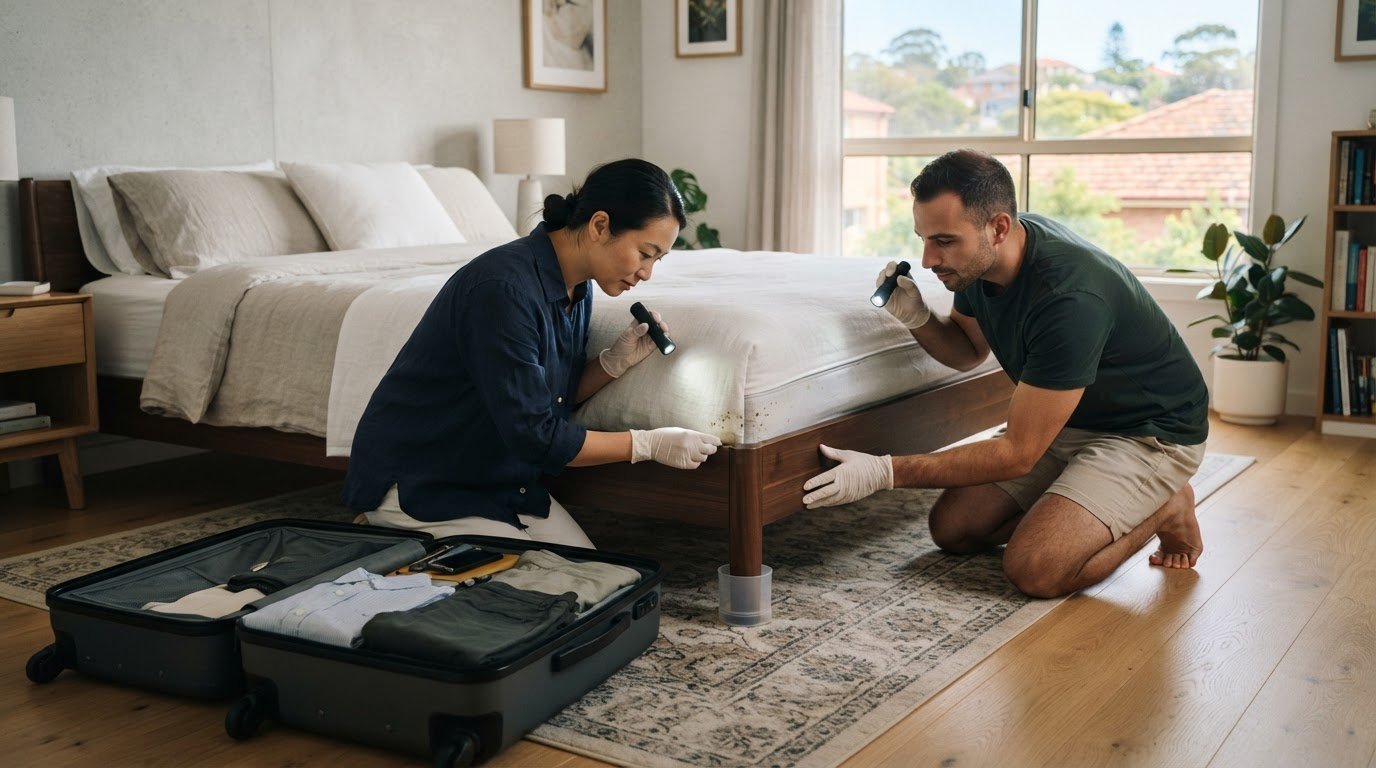


What if a single inspection could cost your business $275,000 and your entire reputation? In Sydney’s high-stakes food industry, that’s the reality under the latest safety regulations. With nearly a million hits on the NSW Food Authority’s “Name and Shame” register in a single year, the public is watching more closely than ever. You’ve worked too hard to let a pest sighting or a lack of paperwork destroy everything you built. The pressure to stay compliant is intense, and the risks of a public listing are higher than ever.
We understand that the stress of an unannounced audit can be overwhelming. Avoiding health code violations pests requires more than just luck; it demands a professional, documented strategy that proves you’re taking every necessary precaution. Secure your business reputation and pass every inspection by mastering these essential pest compliance strategies. This guide provides a clear roadmap to achieving zero sightings, maintaining an audit-ready management log, and ensuring long-term protection from Sydney’s most resilient pests. You’ll learn exactly how to stay off the register and keep your doors open for good.
Key Takeaways
- Learn how to navigate strict NSW Food Authority regulations and avoid the massive financial penalties associated with non-compliance.
- Understand the critical role of avoiding health code violations pests like German cockroaches and rodents to prevent immediate business closure.
- Master the “exclusion mindset” to effectively seal your facility against invaders and implement sanitation protocols that eliminate pest survival essentials.
- Identify the essential components of a compliant Pest Management Register to ensure your documentation is always audit-ready for surprise inspections.
- Discover how professional Commercial Pest Management packages provide the specialized expertise required to handle resilient Sydney pest challenges.
The High Cost of Pest-Related Health Code Violations in Sydney
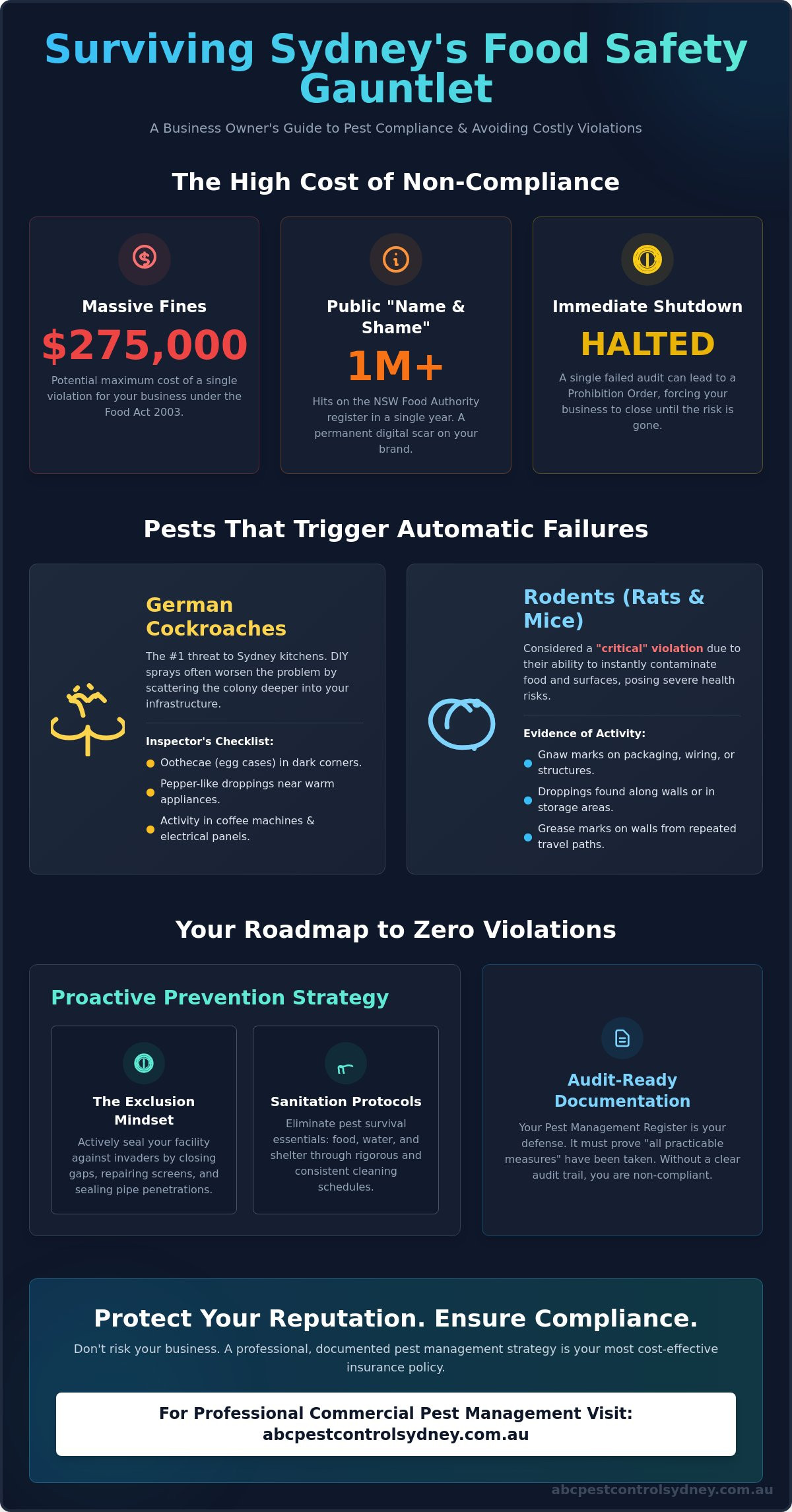
The commencement of the NSW Food Regulation 2025 on September 1, 2025, marked a significant shift in enforcement across the state. Local councils, including the City of Sydney and surrounding suburban authorities, now operate with increased oversight and higher penalty thresholds. Inspectors don’t just look for active pests; they look for the potential for infestation. A single failed audit can lead to a Prohibition Order. This legal tool forces an immediate operational shutdown that lasts until you prove the risk is gone. Your business stops, your revenue vanishes, but your overheads remain. Avoiding health code violations pests is the only way to ensure your doors stay open and your staff remain employed.
Financial penalties under the Food Act 2003 are designed to be punitive and deterrent. While the maximum fines for companies are substantial, even “on-the-spot” fines can cripple a weekly budget. In April 2026, a high-profile Sydney restaurant group and its director were fined a combined $37,500 for significant food safety breaches. These numbers represent the direct costs, but they don’t include the hidden damage to your brand. The “Name and Shame” register acts as a permanent digital scar on your reputation. Securing your premises and avoiding health code violations pests is the most cost-effective insurance policy available to a modern food business owner. It protects you from becoming just another entry on a public list that local diners check daily.
Regulatory Standards You Must Meet
The Australia New Zealand Food Standards Code (Standard 3.2.2) serves as the baseline for all Sydney food operations. It mandates that businesses take “all practicable measures” to prevent pest entry and eradicate any existing populations. Meeting this standard requires more than just occasional sprays. It demands a sophisticated integrated pest management strategy that combines structural integrity with professional monitoring. Compliance isn’t just about what you do; it’s about what you can prove. Documentation is just as critical as the treatment itself. Without a clear, dated audit trail, you’re defenseless during a surprise council visit, regardless of how clean your kitchen looks.
The Local Impact on Sydney Food Businesses
Sydney’s unique coastal climate creates relentless, year-round pest pressure. Our humid summers and mild winters mean that cockroaches and rodents never truly go dormant. In high-traffic areas like the CBD or the Inner West, the risk of cross-contamination from neighboring aging buildings is extreme. Impromptu inspections are frequently triggered by external factors, such as a poorly managed bin area or a complaint from a neighboring tenant. This volatile environment makes professional General Pest Control Packages a fundamental business requirement rather than an optional luxury. You’re securing your livelihood against an increasingly strict regulatory landscape that has no room for error.
The “Big 3” Pests That Trigger Automatic Failures
While the Food Act 2003 (NSW) sets the legal framework, an inspector’s flashlight focuses on the biological evidence. Three specific invaders represent the highest risk for immediate closure and public listing. Avoiding health code violations pests involves identifying these threats before an auditor steps through your door. If these pests are present, your hygiene standards are considered a failure, regardless of how recently you mopped the floors.
German Cockroach Infestations in Sydney
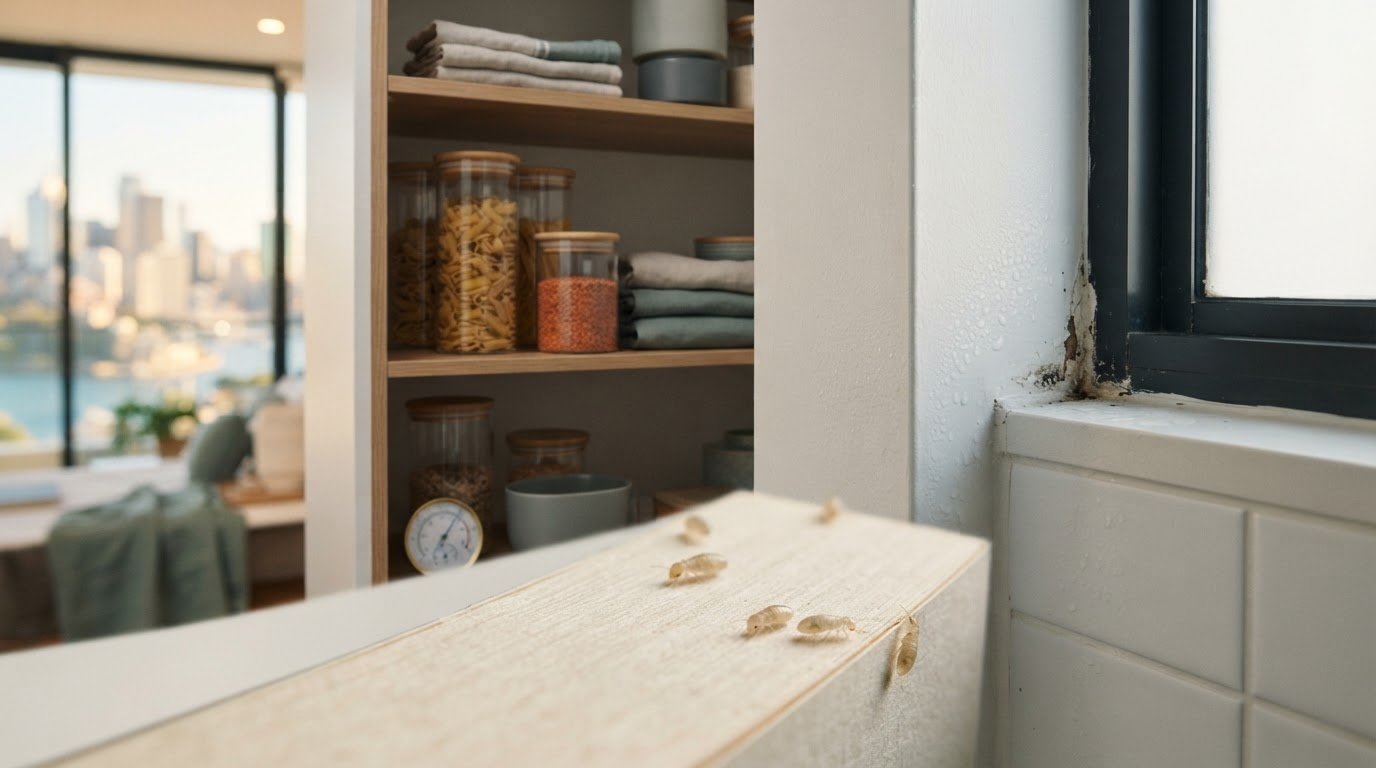
German cockroaches are the primary threat to Sydney kitchens. Managing German cockroaches in apartments and units that house commercial spaces is notoriously difficult because they hide in the warmth of coffee machines and electrical panels. Inspectors look for oothecae, or egg cases, and pepper-like droppings in dark, humid corners. DIY sprays often fail because they cause “scattering,” pushing the colony deeper into your infrastructure where they continue to breed undisturbed.
Rodent Activity and Structural Risks
Rats and mice are “critical” violations because they contaminate surfaces and food products instantly. Effective rodent control is about spotting gnaw marks on packaging and oily rub marks along walls before the auditor does. A single rodent sighting or fresh droppings often trigger an immediate 24-hour closure for mandatory sanitization. These pests signal a breakdown in your building’s “exclusion” integrity, which is a major red flag for any council inspector.
Don’t overlook “smaller” pests like flies and weevils. Large numbers of flies or weevil activity in dry stores signal systemic hygiene failure and poor stock rotation. These are the “smoking guns” that lead an inspector to dig deeper into your records. Watch for these early warning signs to stay ahead of the audit:
- Odor: A musty, oily smell often indicates a significant cockroach presence.
- Smears: Dark streaks on walls or floors where pests frequently travel.
- Damaged Stock: Small holes in bags or cardboard boxes that suggest gnawing.
- Debris: Discarded wings or body parts in hard-to-reach areas.
Spotting these signs early can save your business from a public listing. If you have noticed any of these red flags, our specialized General Pest Control Packages provide the professional oversight needed to keep your business audit-ready and secure.
Operational Strategies for Pest Exclusion and Prevention
Effective pest management isn’t just about reacting to a sighting. It requires an “Exclusion” mindset. This proactive approach focuses on sealing your business against invaders before they ever reach your food preparation areas. By hardening your facility’s exterior and interior, you make avoiding health code violations pests a built-in feature of your operations rather than a constant struggle. Pests are biological opportunists; they only stay where they find food, water, and shelter. Remove these three essentials, and you break the cycle of infestation immediately.
Structural Maintenance Checklist
Inspect your prep areas for any physical vulnerabilities. Even a tiny gap under a door or a crack in the tiling provides an entry point for resilient Sydney pests. Focus on these critical maintenance tasks:
- Seal the Gaps: Use food-grade sealant to close cracks and crevices around sinks, pipes, and skirting boards.
- Door Sweeps: Install professional-grade door sweeps and ensure fly screens are fitted tightly with no tears.
- Drain Care: Clean floor drains weekly to prevent organic buildup. This stops “drain flies” and cockroaches from breeding in the plumbing.
Waste Management Best Practices
Your waste area is the primary attractant for rodents and flies. Maintain a strict “clean lid” policy where all bins remain tightly sealed at all times. Wash the bins themselves regularly to remove fermented liquid and food residue that attracts pests from blocks away. Keep the external perimeter clear of debris, overgrown vegetation, and stacked pallets. These provide the perfect shelter for rats waiting for an opportunity to slip inside. Increase the frequency of your waste removal during peak summer months to ensure nothing sits long enough to become a breeding ground. For comprehensive protection, our Commercial Pest Management services include detailed site audits to identify these operational risks before they lead to a failed inspection.
Preparing for the Audit: Your Pest Management Logbook
A spotless kitchen is a great start, but it won’t save you from a council fine if your paperwork is missing. During an inspection, the auditor’s first request is usually for your Pest Management Register. This document is your legal proof that you are proactive and compliant. Avoiding health code violations pests requires a meticulous paper trail that documents every treatment, sighting, and corrective action taken on your premises. If it isn’t written down, as far as the NSW Food Authority is concerned, it never happened.
When an inspector arrives, your confidence stems from knowing your records are audit-ready. Don’t scramble for loose papers or old emails. Keep everything in a centralized, dedicated logbook that is accessible to all senior staff. This transparency builds immediate trust with the inspector. It shows you take your responsibilities seriously and have nothing to hide. If a pest is found during a visit, your logbook becomes your best defense. By showing a history of regular treatments and staff sighting logs, you prove that the incident is an isolated event rather than a sign of systemic neglect.
What Should Be in Your Logbook?
Your logbook must be comprehensive and current. An incomplete register is often viewed as a major non-conformance. Ensure yours contains these three critical elements:
- Service Reports: Detailed documentation from your licensed pest control Sydney provider. These must list the date of service, areas inspected, and findings.
- Sighting Logs: A record of staff observations. Include the date, time, pest type, and the specific action you took to resolve the issue.
- Safety Data Sheets (SDS): Current safety sheets for every chemical used in your facility. This is a mandatory health and safety requirement for food businesses.
Professional Monitoring Systems
Integrated Pest Management (IPM) relies on data, not just sprays. Professional monitoring systems like bait stations and pheromone traps serve as constant sentinels in your business. They provide documented evidence that you are taking “practicable measures” to secure your kitchen. Scheduled, regular inspections are far superior to reactive “emergency” calls. A reactive approach suggests you only care about pests once they become visible to customers. Scheduled maintenance proves you are managing the risk before it escalates. To ensure your business meets these high standards, book one of our Commercial Pest Management audits today to identify gaps in your current documentation.
Commercial Pest Management with ABC Pest Control Sydney
Your business reputation is your most valuable asset. Protecting it requires a partner who understands the local regulatory landscape. ABC Pest Control Sydney brings over 20 years of experience to your kitchen. We specialize in protecting the food and beverage industry from the devastating effects of failed audits. Our team doesn’t just apply treatments; we provide a comprehensive defense strategy. By focusing on avoiding health code violations pests, we ensure your premises remain compliant and your customers stay safe at all times.
We offer tailored General Pest Control Packages designed specifically for the rigorous demands of Sydney compliance. Our technicians are experts in high-difficulty cases. Whether you are battling a persistent colony of German cockroaches or complex infestations in multi-unit buildings, we have the specialized tools to resolve the issue. We use eco-friendly, HACCP-aware treatments that prioritize the safety of your staff and patrons. You don’t have to choose between effective pest control and environmental responsibility. Our methods are proven to work in the toughest commercial environments.
Why Sydney Businesses Trust ABC Pest Control
Council health inspectors are thorough. They look for any reason to issue a notice. Our comprehensive reporting system is designed to satisfy even the strictest auditor. We provide clear, digital documentation of every visit. This ensures your Pest Management Register is always complete and ready for review. We also understand that timing is everything in the hospitality industry. If you have an urgent sighting, our rapid response teams act fast to neutralize the threat. Our service is professional and discreet. We work around your schedule to ensure your daily operations continue without any disruption to your service or customer experience.
Protect Your Livelihood Today
The cost of a professional audit is a fraction of the price of a single fine. Don’t wait for a surprise inspection to discover a hidden problem. Take control of your compliance status right now. A proactive approach is the only way to secure your future in Sydney’s competitive food scene. We invite you to experience the peace of mind that comes with expert intervention and industry-leading expertise. Our internal leadership figures ensure every technician follows national regulatory standards to the letter. This level of specialization is why we remain the preferred choice for Sydney’s high-risk sectors. Call us today to schedule a professional commercial pest audit for your premises. Stop the problem before it starts.
Get a Free Commercial Pest Control Quote Today and secure your business against future violations.
Secure Your Business Future Today
Compliance isn’t just about passing a one-time check; it’s about building a daily culture of exclusion and professional documentation. You now understand the high stakes of the NSW Food Authority’s “Name and Shame” list and how to identify the critical signs of German cockroaches and rodents before an inspector arrives. Mastering these operational strategies is the most effective way of avoiding health code violations pests while protecting your livelihood and brand reputation.
ABC Pest Control Sydney brings over 20 years of local expertise to your facility. We use eco-friendly, food-safe methods that prioritize the health of your customers and staff. Our compliance-ready reporting ensures your logbook is always audit-ready, providing the paper trail necessary to satisfy any council inspector. Don’t let a preventable pest issue threaten your hard work. Take the first step toward total peace of mind and a flawless safety record today.
Book Your Commercial Pest Audit Now
Your business deserves the protection of a seasoned authority. We’re ready to help you maintain a clean, compliant, and thriving commercial kitchen.
Frequently Asked Questions
What is the most common pest violation in Sydney restaurants?
German cockroaches and evidence of rodent activity are the most frequent causes for penalty notices in Sydney. Inspectors often find these pests in motor housings, behind refrigeration units, or in dry storage areas where food debris has accumulated. These violations signal a failure in daily sanitation and structural maintenance, making them high-priority targets during council audits.
How often should a commercial kitchen have pest control treatments?
Most Sydney food businesses require monthly professional inspections to remain compliant with the Food Act 2003. High-risk premises or those in high-density areas like the CBD often benefit from more frequent visits to prevent infestations before they start. Regular scheduling is the most reliable method for avoiding health code violations pests because it provides a consistent, audit-ready paper trail for local council inspectors.
Can I use supermarket pest sprays in my commercial kitchen?
Don’t use supermarket pest sprays in a commercial kitchen environment. These products aren’t designed for high-volume food prep areas and can lead to chemical contamination of food surfaces. Additionally, DIY sprays often cause pests to scatter and hide deeper in walls or equipment, making a professional treatment much more difficult later. Always rely on food-safe, professional-grade solutions applied by licensed technicians.
What does a health inspector look for regarding pests?
Inspectors focus on physical evidence like live sightings, droppings, egg cases, and grease smears along skirting boards. They’ll also check hard-to-reach areas like the space under dishwashers and behind heavy cooking equipment. Beyond physical signs, they meticulously review your pest management logbook to ensure you’re taking all practicable measures to keep the facility secure and pest-free.
Is a pest sighting an automatic fail for a health inspection?
A single pest sighting isn’t always an automatic fail, but it’s classified as a major non-conformance. The inspector’s reaction depends on the severity of the infestation and whether you have a documented plan in place. If you can show a history of professional treatments and a clear sighting log, you may avoid a shutdown. However, evidence of a widespread infestation usually results in an immediate Prohibition Order.
What is the “Name and Shame” list in NSW?
The “Name and Shame” list is the NSW Food Authority’s public Register of Penalty Notices. It lists businesses that have allegedly committed food safety offenses, including those related to pest infestations. This register is updated regularly and is highly visible to the public. Being listed can cause permanent reputational damage, as nearly a million hits are recorded on the site annually by cautious consumers.
How do I prove to an inspector that I have a pest management plan?
You prove your compliance by presenting a complete and up-to-date Pest Management Register. This logbook should include service reports from your licensed provider, sighting logs from your staff, and current Safety Data Sheets for any chemicals used. Having this documentation organized and ready for inspection demonstrates that avoiding health code violations pests is a core part of your operational strategy and not an afterthought.
What should I do if I see a cockroach in my restaurant?
Record the sighting in your staff logbook immediately, noting the time, date, and exact location. Don’t try to solve the issue with DIY methods; call your professional pest controller for an urgent inspection. Taking immediate, documented action shows health inspectors that you’re responsive and dedicated to food safety. Quick intervention prevents a single sighting from turning into a business-ending infestation.