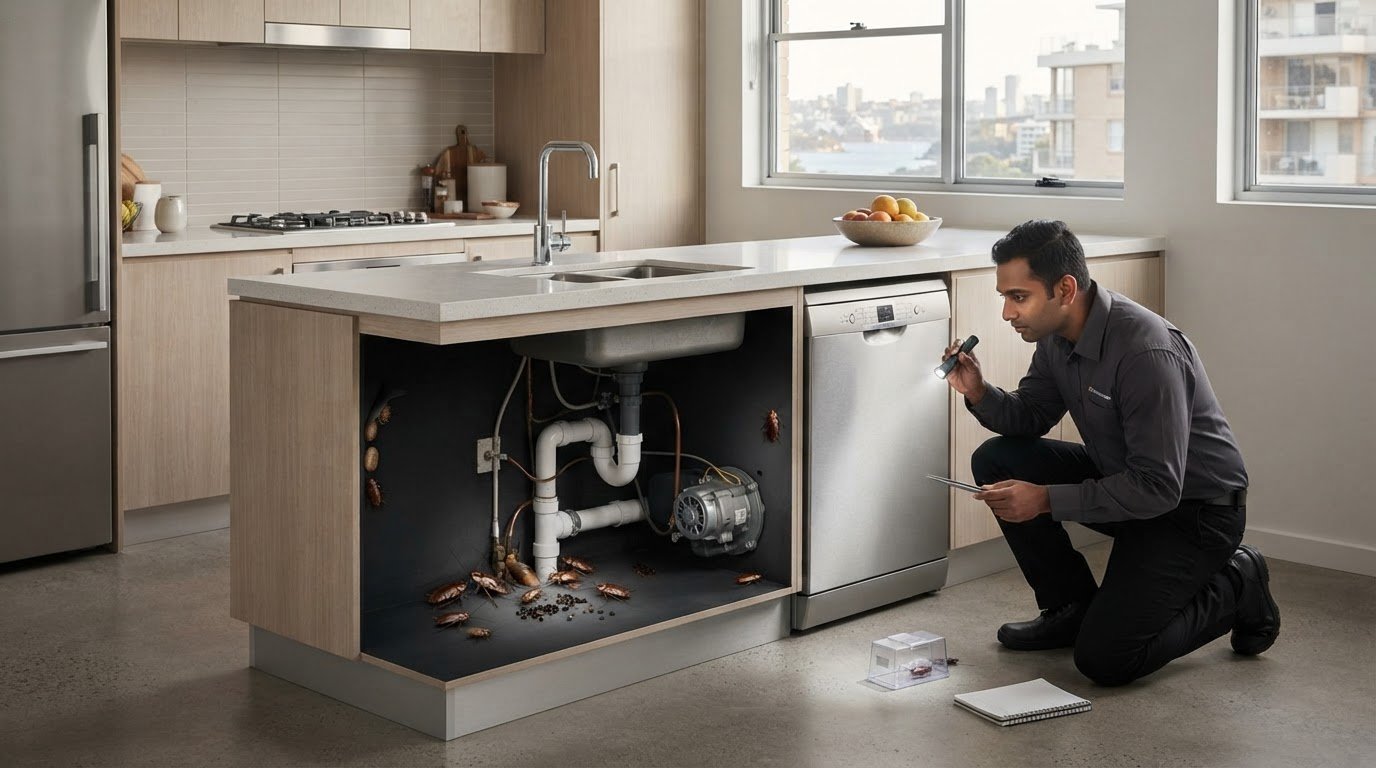
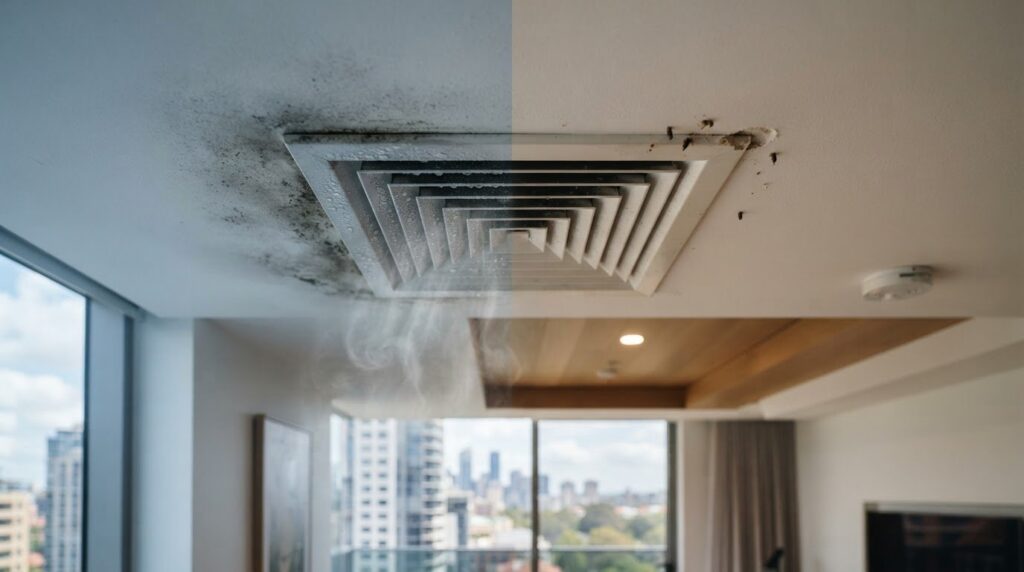
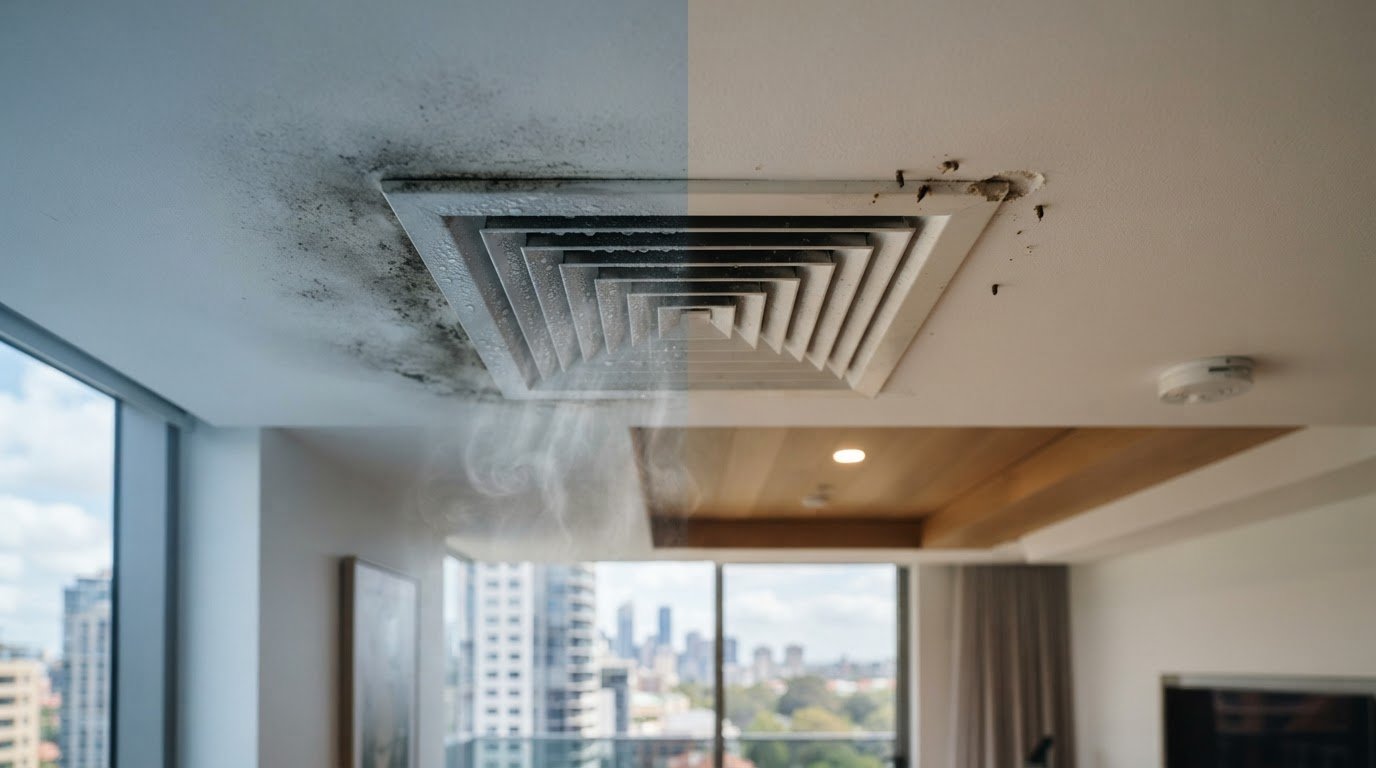
What if a musty smell from your vents points to moisture, not pests? If you’re searching “musty smell from vents pest problem,” the odour alone can’t confirm the cause. Dampness, mould, an HVAC issue or pest activity can all create unpleasant smells, so it helps to compare the odour with other clues before deciding what to do.
Start by noting which vents smell musty, whether the odour affects one room or several, and whether it changes when the heating or cooling system runs. You can also look for safely visible signs nearby, such as damp patches, droppings or insect activity, without removing vent covers or using chemicals. This guide explains how to interpret those clues in your Sydney home or apartment.
If you find signs of rodents or cockroaches, ABC Pest Control Sydney provides residential and commercial pest management across metropolitan Sydney. Pest control addresses pests, not mould, duct cleaning or HVAC repairs, so identifying the likely source helps you choose the right response.
Key Takeaways
- A musty smell from vents pest problem isn’t confirmed by odour alone. Compare the smell with other visible signs before deciding what to do.
- Droppings, gnaw marks or repeated pest sightings make pest activity more plausible, but don’t prove pests are living inside the ductwork.
- Note whether the smell affects one vent or several, and when it appears. These patterns can help narrow down what needs attention.
- Check only what’s safely visible. Don’t dismantle duct components, touch suspicious material or spray pesticides into vents.
- If the odour appears alongside pest evidence, ABC Pest Control Sydney provides pest management for residential and commercial properties across metropolitan Sydney.
Musty Smell from Vents in Sydney: What Could It Mean?
A stale, damp odour drifting from an air vent can be unsettling, especially when you can’t see what’s causing it. But a smell is a clue, not a diagnosis. If you’re searching “musty smell from vents pest problem”, remember that mustiness can accompany moisture, organic debris or pest activity. The odour alone can’t confirm an infestation.
Air can carry an odour from elsewhere in the home, so the vent may be where you notice it rather than where it began. Possible sources include a filter, ductwork or a nearby wall or ceiling cavity. Note where the smell is strongest and look for visible clues, but don’t conclude that pests, mould or an HVAC fault is present based on smell alone.
Why does a musty smell seem to come from an air vent?
Moving air can draw or carry odours through a room, making a vent seem like the source. A smell strongest at one vent may point to a localised source nearby or within the air pathway. If the whole room smells musty, the source could be elsewhere in the space. Neither pattern proves what’s causing it.
Mustiness usually describes an earthy, stale or damp smell. Moisture can support mould growth, and mould may produce musty odours. For background on what mold is, see the overview of this living organism and its relationship with moisture. Dust or other organic debris may also contribute to stale air, while pest activity can leave unpleasant odours.
Does a musty vent smell always mean pests?
No. A musty smell by itself is not proof of pest activity. Moisture, mould, accumulated dust and HVAC-related issues are other possibilities. For example, an odour may travel from a damp area or a dirty filter without indicating that insects or rodents are inside the ductwork.
Look for evidence beyond the smell. Droppings, gnaw marks or repeated pest sightings near the vent make pest control more relevant, but they still don’t establish that pests are living inside the duct. In Sydney homes and apartments, note which vent smells, whether the odour is localised, and whether you can see signs of activity nearby.
The aim is to narrow down what to investigate, not to guess. A vent odour can point to shared conditions such as dampness or sheltered spaces, but further assessment is needed to clarify the source. Compare moisture clues with pest evidence, and keep your checks to areas you can see safely.
How Pests and Damp Conditions Can Create Musty Vent Odours
Damp, sheltered spaces can create conditions that some household pests find favourable. Moisture may be present around a leak, in a poorly ventilated cavity or near HVAC components where condensation forms. These areas can also collect dust and organic debris. That overlap can make moisture and pest activity seem connected, but one doesn’t confirm the other.
Moisture can attract pests, but an odour is not a pest diagnosis. Even if the smell seems to come from a vent, its source could be nearby rather than inside the ductwork. A pest might move through a ceiling cavity or around ducting without nesting in it.
Which household pests may be associated with damp areas?
Cockroaches and rodents are relevant examples in Sydney homes. Cockroaches may shelter in warm, hidden spaces, while rodents can move through roof or wall cavities in search of food and shelter. Dampness can be one part of the conditions around a property, not proof that either pest is present. For practical signs to look for, read this Sydney rodent control guide.
How can pest activity affect vents or nearby spaces?
If pests are active in a cavity near ductwork, droppings, gnawing, nesting material or pest remains could contribute to an unpleasant odour. The exact smell varies, so don’t use its character to identify a pest. An insect or rodent seen near a vent may simply be passing through. It doesn’t establish that the animal lives inside the duct.
Pay attention to context. Droppings near an access point, fresh gnaw marks, repeated sightings or scratching sounds from a ceiling or wall add useful information when considered alongside the odour. No single clue reveals the full source, but several signs together make pest activity more plausible and may warrant an assessment.
Don’t open ductwork or disturb suspected nesting material to investigate. Keep your observations to what’s safely visible, and note where and when you notice the smell or sounds. If moisture appears to be part of the problem, the U.S. Environmental Protection Agency explains why it helps to control moisture to control mold. Pest control can address pest activity, but it doesn’t resolve duct, HVAC or building faults. If visible signs point to pests, residential pest management in Sydney can be a sensible next step.
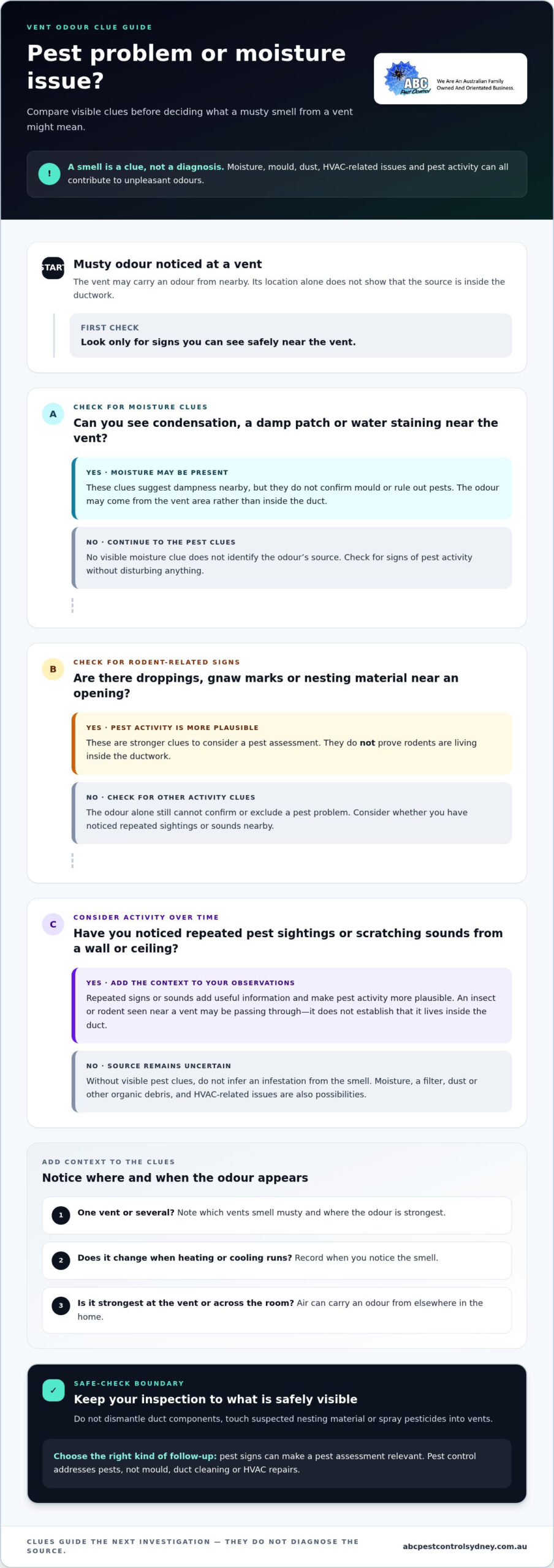
Pest Problem or Moisture Issue? Clues to Compare
Compare what you can see and when the smell occurs, rather than relying on the odour alone. A search for “musty smell from vents pest problem” can lead to several possible explanations, and one clue rarely settles the question. Use this table to organise your observations, not to diagnose the source.
| Clue | Possible source | What it can or cannot indicate |
|---|---|---|
| Condensation, a damp patch or water staining near a vent | Moisture around the vent or in the nearby area | Suggests dampness may be present, but doesn’t confirm mould or rule out pests. |
| Droppings, gnaw marks or nesting material near an opening | Possible rodent activity in a nearby space | Stronger evidence to consider a pest assessment, but doesn’t prove rodents are inside the ductwork. |
| Live insects or repeated cockroach sightings | Possible insect activity in the room or a nearby cavity | Worth recording and assessing. A sighting alone doesn’t identify where pests are harbouring. |
| Odour changes when the heating or cooling system runs | An odour carried by airflow, or an issue associated with the system or nearby space | The timing is useful context, but it doesn’t identify a fault or prove pest activity. |
| Mustiness without visible pest signs | Moisture, mould, dust or another non-pest source | Pests remain possible, but smell alone isn’t enough to conclude they’re present. |
What signs point more toward pests near vents?
Look for droppings, gnaw marks, insect activity, nesting material or repeated scratching sounds near a vent or in a nearby ceiling or wall space. Evidence close to the vent provides more useful context than describing the smell as earthy, oily or stale. If you spot cockroaches, the Sydney cockroach control guide offers further information.
What signs suggest moisture, mould or an HVAC source?
From a safe position, check for visible condensation, damp patches or water staining around the vent. Note whether the smell starts, fades or becomes stronger when the system runs. These patterns may help narrow down what needs attention, but they don’t diagnose mould or an equipment fault. The U.S. Environmental Protection Agency (EPA) explains how moisture relates to mould growth.
If dampness and pest clues overlap, don’t choose one explanation based on a single sign. Record what you notice and seek the assessment that fits the evidence. Pest control can address suspected pest activity, while moisture or HVAC concerns need attention from the appropriate service professional.
What to Do Safely When Vents Smell Musty
A musty smell can make you want to investigate straight away. Keep it simple and safe. You don’t need to open a vent or reach into a cavity to collect useful clues. These steps can help you decide whether pest activity, moisture or an HVAC concern needs attention.
- Note the location. Record which vent smells strongest and whether nearby rooms are affected. A smell limited to one area is useful information, but it doesn’t identify the source.
- Observe from a safe distance. Look around the vent for visible damp patches, water staining, droppings, gnaw marks or insects. Don’t touch droppings, dead animals, nesting material or unknown residue. Keep children and pets away from anything suspicious.
- Document changes. Note when you first noticed the odour and whether it changes when heating or cooling operates. If you take photos, do so without moving vent covers or disturbing debris.
- Choose an assessment that fits the clues. Visible pest evidence alongside the smell makes a pest assessment a reasonable next step. If you mainly notice condensation or staining, the issue may need investigation for moisture or HVAC causes.
What can you check without opening the ductwork?
Stay with what’s visible. Compare the smell at different vents, watch for changes over time, and note whether it appears only while the system runs. Check the surrounding wall or ceiling for dampness or marks. Don’t dismantle duct components, reach inside vents or spray pesticides into them. These actions can expose you to unknown residue and won’t establish the source.
When should you seek a pest assessment?
Arrange an assessment if mustiness appears alongside droppings, gnaw marks, repeated insect or rodent sightings, or scratching sounds from a nearby ceiling or wall. A pest assessment can help evaluate signs of pest activity. It won’t clean ducts, repair an HVAC fault or fix moisture damage. For broader context on managing household pests, see this Sydney pest control guide.
If the evidence points to pests, arrange a Sydney pest assessment with ABC Pest Control Sydney. The business provides residential and commercial pest management across metropolitan Sydney. Keep your observations handy so the assessment can focus on the signs you’ve noticed.
How ABC Pest Control Sydney Can Help with Suspected Pest Activity
A musty vent odour can be worrying, especially if it appears alongside signs of pests. But smell alone doesn’t establish an infestation. The question “musty smell from vents pest problem” can’t be answered with a yes or no based only on the odour. A pest assessment is most relevant when there are additional clues, such as droppings, gnaw marks, insect sightings or scratching sounds near a vent or in a nearby space.
What can a pest-control assessment help establish?
An assessment can consider what you’ve noticed, including where and when the odour occurs, alongside visible pest signs and the property context. This helps evaluate whether pest activity may be contributing to the problem. Any conclusion should depend on the evidence found, not the smell alone. Pest treatment addresses pests; it doesn’t clean ducts, repair HVAC faults or resolve moisture damage.
What happens if the smell is not caused by pests?
Considering the pest evidence can help narrow down the possibilities. If no pest signs are found, that doesn’t mean the odour should be ignored. Persistent mustiness may have a non-pest source, such as moisture or an HVAC-related issue, which needs a different kind of investigation. Notes on the location, timing and any changes can help clarify what to look into next.
ABC Pest Control Sydney provides residential and commercial pest management across metropolitan Sydney. Its general pest control service addresses common pests, including rodents and cockroaches. If signs point to pest activity, a pest assessment offers a practical next step without assuming pests are the cause before the evidence is considered.
Share what you’ve observed, such as which vents are affected and whether you’ve seen pest signs nearby. This context can help focus attention on the suspected pest issue while keeping other possible causes in view. If the odour persists without pest evidence, remember that pest treatment won’t resolve duct, HVAC or moisture problems.
Book a pest assessment with ABC Pest Control Sydney if you’ve noticed signs of pest activity alongside the musty smell.
Take the Right Next Step for Your Sydney Home
A musty smell from vents pest problem isn’t something you can confirm by odour alone. Dampness, mould or an HVAC issue may also be involved. Look for signs that add context, such as droppings, gnaw marks, insect sightings or scratching sounds, and keep your checks safely outside the ductwork.
If you find pest evidence alongside the smell, a pest assessment can help determine whether pest activity may be contributing. Its general pest management covers common pests, including rodents and cockroaches. Pest control addresses pests, not duct cleaning, HVAC repairs or moisture damage, so the clues you’ve recorded can help guide the right next step.
Book a pest assessment with ABC Pest Control Sydney if your observations point to pest activity. A measured check can help you move from uncertainty toward a clearer plan for your home.
Frequently Asked Questions
Does a musty smell from vents mean I have pests?
No. A musty smell from vents pest problem isn’t confirmed by odour alone. Moisture, mould, dust or an HVAC-related issue may also cause a stale smell. Look for additional clues, such as droppings, gnaw marks, insect sightings or scratching sounds near a vent. These signs make pest activity more plausible, but they don’t prove pests are living inside ductwork. Note what you see and where the smell is strongest.
Can rodents or insects live in air ducts?
Rodents or insects may enter spaces around ductwork, such as ceiling or wall cavities, and pests could access duct components where there’s an opening. But finding a pest near a vent doesn’t mean it lives inside the ducts. Don’t remove covers or disturb suspected nesting material to check. Instead, note visible signs nearby, such as droppings or gnaw marks, and arrange a pest assessment if the evidence suggests activity.
How can I tell whether a vent smell comes from pests or mould?
You usually can’t identify the source by smell alone. Droppings, gnaw marks, insects or repeated scratching sounds add context for possible pests. Condensation, damp patches or water staining may point to a moisture issue, while an odour that changes when the HVAC system runs is useful timing information. These clues aren’t a diagnosis, and pest and moisture signs can overlap. Record what you observe and seek the assessment that fits.
What does a dead rodent in ductwork smell like?
A dead animal may cause a strong, unpleasant or foul odour, but smell varies and can’t confirm that a rodent is present. Don’t reach into a vent or dismantle duct components to search. If you notice the odour alongside droppings, scratching sounds or other pest signs, keep people and pets away from any visible remains or unknown residue and seek a pest assessment. The source may still need further investigation.
Can I spray pest control products into an air vent?
No. Don’t spray pesticides into a vent or ductwork. The product may be unsuitable for that location, and spraying won’t establish whether pests are causing the smell. Follow the product label and applicable safety guidance for any pest-control product you use elsewhere. Keep away from visible droppings, dead animals and unknown residue. If you see pest evidence near a vent, document it from a safe distance and arrange an assessment instead.
Should I turn off my air conditioner if the vents smell musty?
Not necessarily. A musty smell alone doesn’t establish an immediate hazard or identify an HVAC fault. Note whether the odour appears or changes when the air conditioner runs, and check safely for visible dampness or pest evidence nearby. If the smell becomes much stronger during operation or you’re concerned about the system, stop using it if practical while you arrange an appropriate assessment. Pest control doesn’t repair HVAC equipment or moisture damage.
When should I call pest control about a musty vent smell in Sydney?
Arrange a pest assessment when the smell occurs alongside droppings, gnaw marks, repeated cockroach or rodent sightings, or scratching sounds near a vent or cavity. Its general pest management covers common pests, including rodents and cockroaches. If there’s no pest evidence, moisture or an HVAC issue may need separate investigation.