What if the moths keep returning because the source is still hiding in your pantry? Cleaning shelves can help, but pantry moth larvae may be tucked inside food packets, including unopened ones. If you’re looking into pantry moth extermination eastern suburbs, start by checking for signs of pantry moths and locating what is sustaining the infestation.
It’s frustrating to spot moths or larvae again after you’ve thrown food out and cleaned the cupboards. Effective control starts with finding the source and interrupting the pest’s lifecycle, not simply treating the visible moths. This guide explains what professional pantry moth treatment may involve, what to ask before booking, and how to prepare food-storage areas and reduce the risk of activity returning.
ABC Pest Control Sydney serves metropolitan Sydney and has over 20 years of pest-control experience. Confirm directly whether pantry moth treatment is available in your Eastern Suburbs suburb. Read on to learn what signs to check, which food may need to be discarded, and how to compare providers on inspection, treatment, preparation and follow-up.
Key Takeaways
- Repeated moth sightings can mean eggs or larvae remain in stored food, so check beyond visible adults.
- Effective control depends on finding the source and checking overlooked storage areas, not just treating moths you can see.
- Compare DIY cleaning and food removal with professional inspection, and seek expert help if activity keeps returning.
- Before treatment, sort suspect foods and ask the provider for specific preparation and follow-up instructions.
- When considering pantry moth extermination eastern suburbs, confirm the pest is covered and the provider services your exact suburb.
Pantry Moth Activity in Sydney’s Eastern Suburbs: When to Call an Exterminator
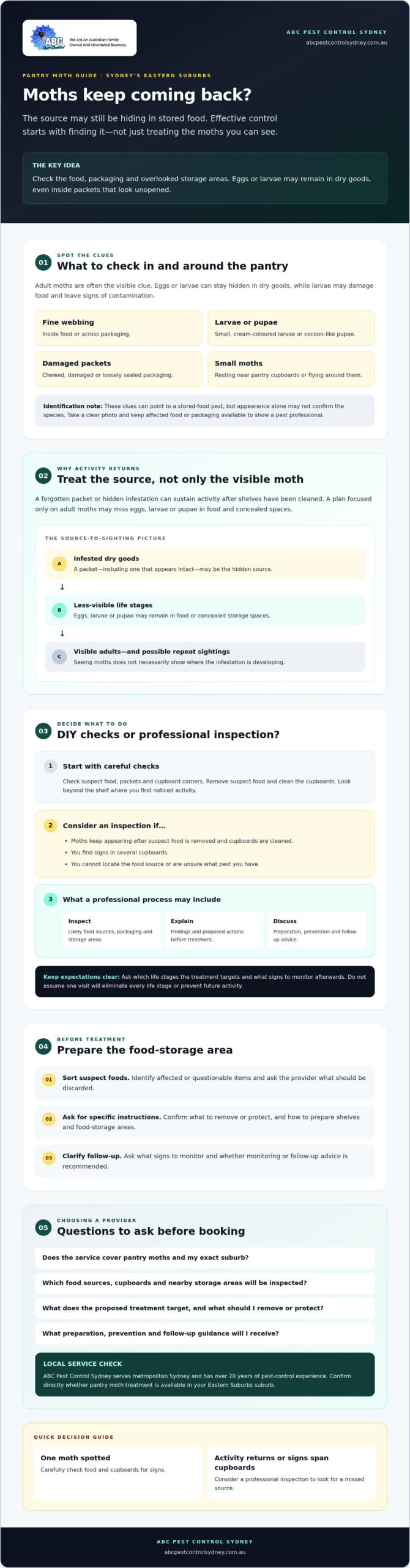
Finding moths in stored food is frustrating, especially after you’ve already cleaned the cupboards. Adult moths are often the visible clue, while eggs or larvae may remain hidden in dry goods. Larvae can damage food, leaving silky webbing, small droppings or other signs of contamination.
Check packets and cupboard corners for:
- Fine webbing inside food or across packaging.
- Small, cream-coloured larvae or cocoon-like pupae.
- Chewed, damaged or loosely sealed packaging.
- Small moths resting near pantry cupboards or flying around them.
These clues can point to a stored-food pest, but appearance alone may not confirm the species. Take a clear photo of the insect or larvae, and keep the affected item or packaging available to show a pest professional. Confirm the pest before choosing a treatment.
Quick answer: One moth may call for careful food and cupboard checks. If moths keep appearing after you remove suspect food and clean, or you find signs in several cupboards, consider a professional inspection.
How can you tell pantry moths from other kitchen insects?
Pantry moth adults are small and may be noticed near food storage. Their larvae are pale, caterpillar-like insects that may be found in or around dry goods. The Indianmeal moth is one possible pantry pest, but don’t rely on a brief sighting to identify the species. Compare a clear photo with a reliable reference on the Indianmeal moth. Eggs or larvae can arrive in dry goods brought home, sometimes inside packaging that looks intact.
When is professional pantry moth extermination worth considering?
Consider getting help if moths return after you’ve checked food and cleaned the cupboards. Repeated activity may mean an infested item or hidden source was missed. Signs in multiple cupboards may also call for a broader inspection, rather than treating only the shelf where you first spotted them.
For pantry moth extermination eastern suburbs residents should confirm that a provider covers their exact suburb and treats the suspected pest. ABC Pest Control Sydney serves metropolitan Sydney, but you should ask directly about pantry moth treatment and availability in your suburb. Before booking, ask what the inspection includes and whether the company can assess your situation.
How Professional Pantry Moth Extermination Finds the Source and Breaks the Lifecycle
Professional pantry moth control should begin with investigation, not simply spraying the adult moths you can see. The aim is to find where activity is coming from, identify affected areas and explain suitable next steps. Visible adults don’t necessarily show where the infestation is developing.
Larvae and infested dry goods can sustain activity. Eggs, larvae or pupae may be less noticeable than flying adults, and a forgotten packet at the back of a cupboard can remain a source. Treatment without checking affected food and overlooked storage areas may leave the underlying problem unresolved.
What happens during a pantry moth inspection?
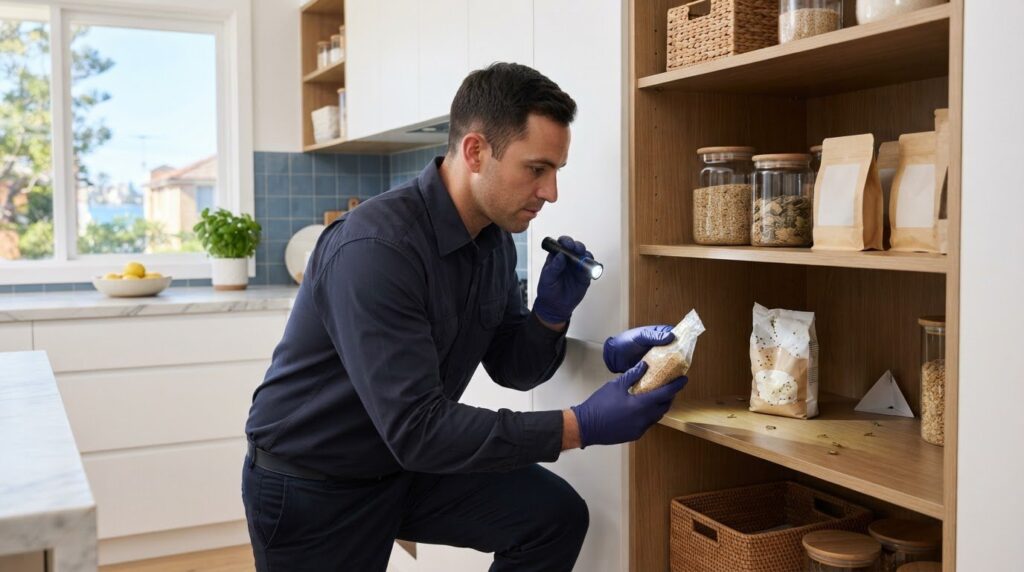
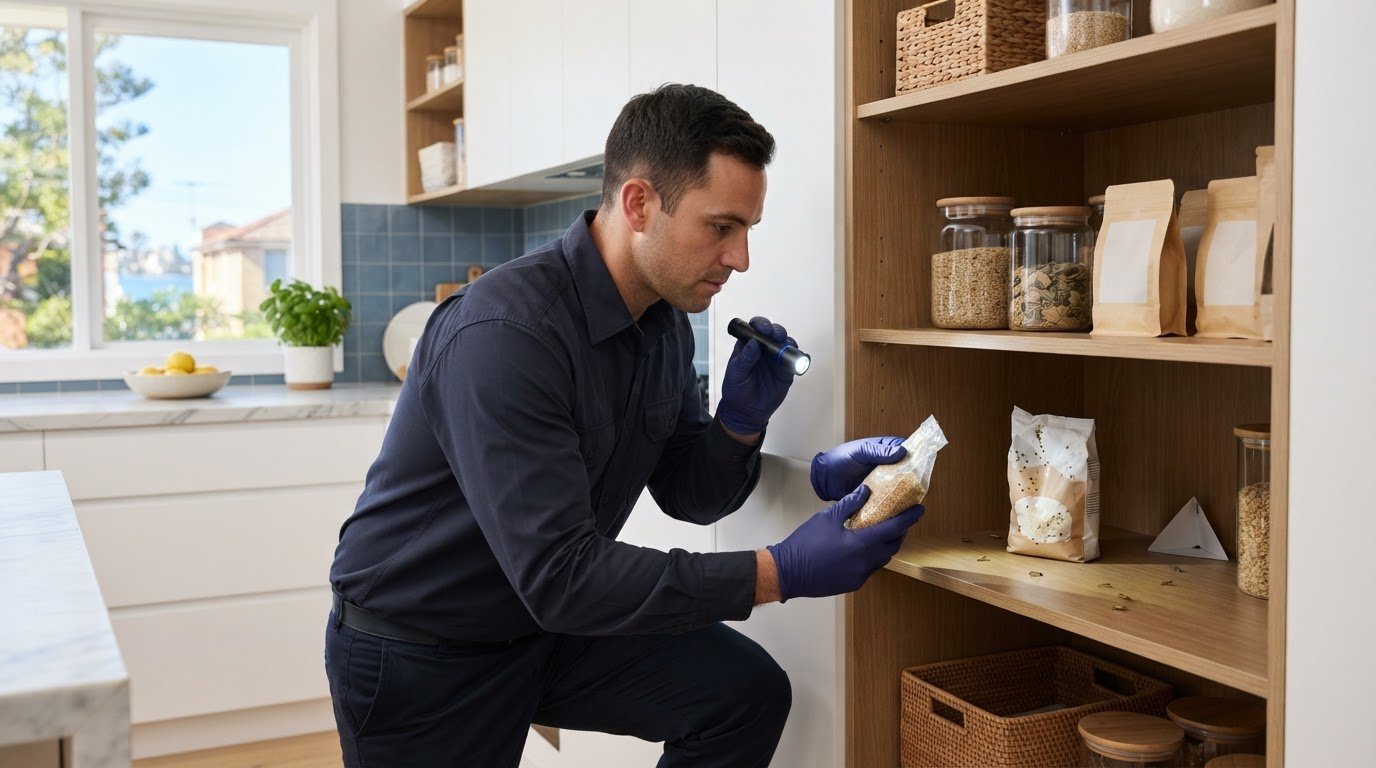
An inspection may include pantry shelves, cupboard corners, food packaging and nearby dry-food storage. Ask whether adjacent cupboards or other storage areas are included, especially if you’ve noticed signs in more than one place. The technician should explain what they found and discuss proposed actions before treatment begins. Clarify what to do with suspect food and how to prepare the space.
Keep the process clear by asking about three parts:
- Inspection: Which likely food sources and storage areas will be checked for signs of activity?
- Treatment: What does the proposed method target, and do you need to remove or protect food items?
- Prevention: What steps may reduce the chance of activity returning, and is monitoring or follow-up advice recommended?
Why treating the moth lifecycle matters
Adult moths are easy to notice, but immature stages may remain in food or concealed spaces. A treatment plan should account for the signs and life stages found during the inspection, rather than focus only on flying adults. Ask which stages the method targets, whether follow-up may be recommended, and what signs to monitor afterwards. Don’t assume one visit will eliminate every life stage or prevent future activity.
For general background on inspection and non-chemical prevention, the National Pesticide Information Center’s Pantry moth control tips can help you prepare informed questions. Ask the provider handling your home for advice specific to the proposed treatment.
If you’re considering pantry moth extermination eastern suburbs, confirm the provider covers your specific suburb and offers pantry moth treatment. ABC Pest Control Sydney serves metropolitan Sydney, but you should verify moth coverage and local availability directly. You can ask ABC Pest Control Sydney about treatment options and clarify the inspection, proposed method and preparation requirements before booking.
DIY or Professional Pantry Moth Extermination: What Should Eastern Suburbs Residents Compare?
Cleaning and checking food can be a sensible first step when activity appears limited. If moths keep appearing or you can’t find their source, a professional inspection may help identify overlooked areas and explain treatment options. Base your decision on how widespread and persistent the signs are.
Removing the source matters more than controlling visible moths alone. Sprays may miss larvae or eggs inside infested goods, or activity hidden in storage areas. In food-storage spaces, follow all product label directions and any technician’s instructions. Don’t apply products to food, packaging or surfaces unless the label specifically permits it.
| Option | Suitable situation | Likely effort | Limitations | When to escalate |
|---|---|---|---|---|
| DIY checks and cleaning | Isolated signs that appear limited to one food item or cupboard. | Inspecting dry goods, removing suspect items, vacuuming corners and cleaning surfaces before restocking. | You may miss a source in another packet or storage area. Cleaning alone can’t confirm the pest or guarantee activity will stop. | Seek professional advice if moths return after checks and cleaning. |
| Professional inspection and treatment | Recurring signs, uncertain sources or activity across multiple cupboards. | Arranging an inspection, following preparation instructions and discussing any recommended follow-up. | Coverage, methods and follow-up vary by provider. Confirm these details before booking. | Consider it when you need help locating the source or assessing activity beyond one cupboard. |
When can cleaning and careful food checks be a reasonable first step?
Start by checking dry goods, including opened and unopened packets. Safely discard items that are clearly infested, following local waste guidance, and keep suspect goods separate from unaffected food. Vacuum cupboard corners and clean surfaces before putting food back. These steps can remove accessible sources, but they may not resolve activity hidden elsewhere.
What should you ask before booking a local exterminator?
Before choosing pantry moth extermination eastern suburbs residents should confirm that the provider treats pantry moths and covers their exact suburb. Ask whether the inspection includes adjacent food-storage areas, what treatment is proposed, and what preparation or follow-up may be needed. Explain any household sensitivities and ask how food-storage areas will be handled. ABC Pest Control Sydney serves metropolitan Sydney, so contact the company to check pantry moth coverage and availability in your suburb.
How to Prepare Your Eastern Suburbs Pantry for a Moth Treatment
Preparation can make the inspection and treatment process clearer, but instructions depend on the proposed method. Follow the provider’s directions first. Before moving food or cleaning shelves, ask what the technician needs to inspect and what should remain accessible.
What should you do before the technician arrives?
Use this checklist as a starting point, then confirm each step with your provider:
- Check stored foods. Look through packets and containers. Keep suspect items separate from unaffected goods, and ask the provider how to handle anything that may be infested.
- Ask whether to empty cupboards. The technician may need clear access, but instructions can differ. Don’t move everything until you know what needs to be inspected.
- Move items carefully. If you’re asked to clear shelves, handle packets gently and keep suspect goods contained to avoid spreading debris or insects to other food-storage areas.
- Protect household members. Ask how to manage food, utensils and pantry access. Keep children and pets away from treated areas as directed by the technician.
- Skip extra products. Don’t apply sprays or other treatments unless the provider confirms they’re appropriate. Additional products may conflict with the planned treatment or its instructions.
What should you do after pantry moth treatment?
After treatment, follow the technician’s directions for re-entry, cleaning and food storage. Don’t wipe treated surfaces or return food to cupboards until you’ve checked what the provider recommends. Once you’re told it’s appropriate, restock carefully and use sealed containers for dry goods where practical. Keep suspect items apart until you know how they should be handled.
Stay observant. Note where and when you see further moth activity, and contact the provider if it continues, following any agreed follow-up process. A record can help show whether activity is returning in the same cupboard or appearing elsewhere.
Preparing for pantry moth extermination eastern suburbs residents should start by confirming instructions with a provider that services their suburb. ABC Pest Control Sydney serves metropolitan Sydney, but you should check pantry moth coverage and local availability directly. Ask ABC Pest Control Sydney about pantry moth treatment and preparation before arranging a visit.
Choosing Pantry Moth Extermination in Sydney’s Eastern Suburbs: Your Next Steps
Choose a provider who explains what they can inspect and treat before you book. Clear answers matter more than promises of instant or permanent results. For pantry moth extermination eastern suburbs residents should confirm service coverage, inspection scope and treatment expectations for their specific home.
How do you compare local pantry moth exterminators?
Ask each provider the same practical questions: Is pantry moth treatment available? Which areas will the inspection cover? What treatment is proposed, and what should you do before and after it? Check that preparation and household safety instructions are explained before work begins. Be cautious about claims of immediate or permanent results, since the source and pest activity can vary from home to home.
ABC Pest Control Sydney serves metropolitan Sydney and has over 20 years of experience. Ask directly whether the company handles pantry moths and covers your suburb. The business describes its methods as eco-friendly, but that does not mean a treatment is risk-free. Ask what the proposed method means for your household and follow the technician’s instructions.
What information should you provide when requesting help?
Share details that can help clarify your situation and whether the service is available:
- Your Eastern Suburbs suburb and whether the property is a house or apartment.
- Where you’ve noticed moths, larvae, webbing or affected food, including which cupboards are involved.
- How long activity has continued and whether it returned after cleaning or removing suspect food.
- Any household sensitivities or concerns about food-storage areas that the provider should discuss with you.
Before confirming an appointment, use this final checklist:
- Pest confirmation: Ask how the suspected pest will be identified.
- Suburb coverage: Confirm service availability for your exact location.
- Inspection: Check which cupboards and nearby storage areas are included.
- Treatment: Ask what the proposed approach targets and what to expect.
- Preparation and follow-up: Get instructions for food, access, re-entry and any agreed follow-up process.
Ready to discuss the signs you’ve found? Contact ABC Pest Control Sydney with your suburb, property type and a brief description of the pantry moth activity. Ask the team to confirm moth coverage and local availability before booking.
Take the Next Step Towards a Moth-Free Pantry
Recurring pantry moth activity can be difficult to resolve if the source remains hidden. Start by checking stored foods and confirming the pest, then compare providers on inspection scope, treatment expectations and clear preparation and follow-up instructions. Removing infested goods matters, but visible moths alone don’t reveal the full source.
For pantry moth extermination eastern suburbs residents should confirm that the provider treats pantry moths and services their exact suburb before booking. ABC Pest Control Sydney serves metropolitan Sydney and has over 20 years of pest-control experience. Ask whether pantry moth treatment is available, what the inspection involves and how to prepare your pantry.
Contact ABC Pest Control Sydney to discuss your pantry moth problem and share what you’ve noticed. Ask the team to confirm coverage and availability, then discuss the next steps for your pantry.
Frequently Asked Questions
Is professional pantry moth extermination necessary?
No, professional treatment isn’t always necessary. Start by inspecting stored foods, safely removing clearly infested items and cleaning affected cupboards. If moths return after these checks, the source is difficult to find, or activity appears in several storage areas, professional help may be useful. Before booking, ask whether the provider treats pantry moths and what its inspection, proposed treatment, preparation instructions and follow-up involve.
How does a professional exterminate pantry moths?
A professional process should begin by confirming the pest and inspecting for its source, including stored food and pantry spaces. The provider should explain the proposed treatment, preparation steps and aftercare before work begins. Methods vary, so don’t assume every service uses the same products or targets every lifecycle stage. Ask what the specific method addresses and what you’ll need to do after treatment.
Can pantry moths come back after extermination?
Yes, moths can reappear if an infested food source remains or new infested goods enter the pantry. Treatment can’t guarantee they’ll never return. Follow the provider’s instructions, check dry goods before storing them, and use sealed containers where suitable. If activity continues, note where and when you see moths, then contact the provider to discuss the agreed follow-up process and whether another inspection may be appropriate.
What should I throw away if I find pantry moths?
Inspect dry goods and packaging for larvae, webbing or other signs of infestation. Place clearly affected food in a sealed bag and follow local waste guidance when discarding it. If you’re unsure about an item, keep it separate from unaffected food and ask a pest professional for advice. Before restocking, check nearby products and clean the affected storage area according to the provider’s instructions.
Are pantry moth treatments safe around food, children and pets?
Safety depends on the treatment, product label, application location and household circumstances. Before work begins, tell the provider about children, pets, food-storage areas and any household sensitivities. Ask how to prepare cupboards and which areas people or pets should avoid, then follow the technician’s directions for re-entry and food storage. Don’t assume a treatment is risk-free simply because it’s described as eco-friendly.
Does ABC Pest Control Sydney provide pantry moth extermination in the Eastern Suburbs?
ABC Pest Control Sydney serves metropolitan Sydney and provides residential and commercial pest management, but pantry moth treatment and availability in every Eastern Suburbs suburb are not confirmed. If you’re seeking pantry moth extermination eastern suburbs, contact the company to verify both before arranging a visit. Share your suburb, where you’ve seen activity, how long it’s continued and whether several cupboards are affected.