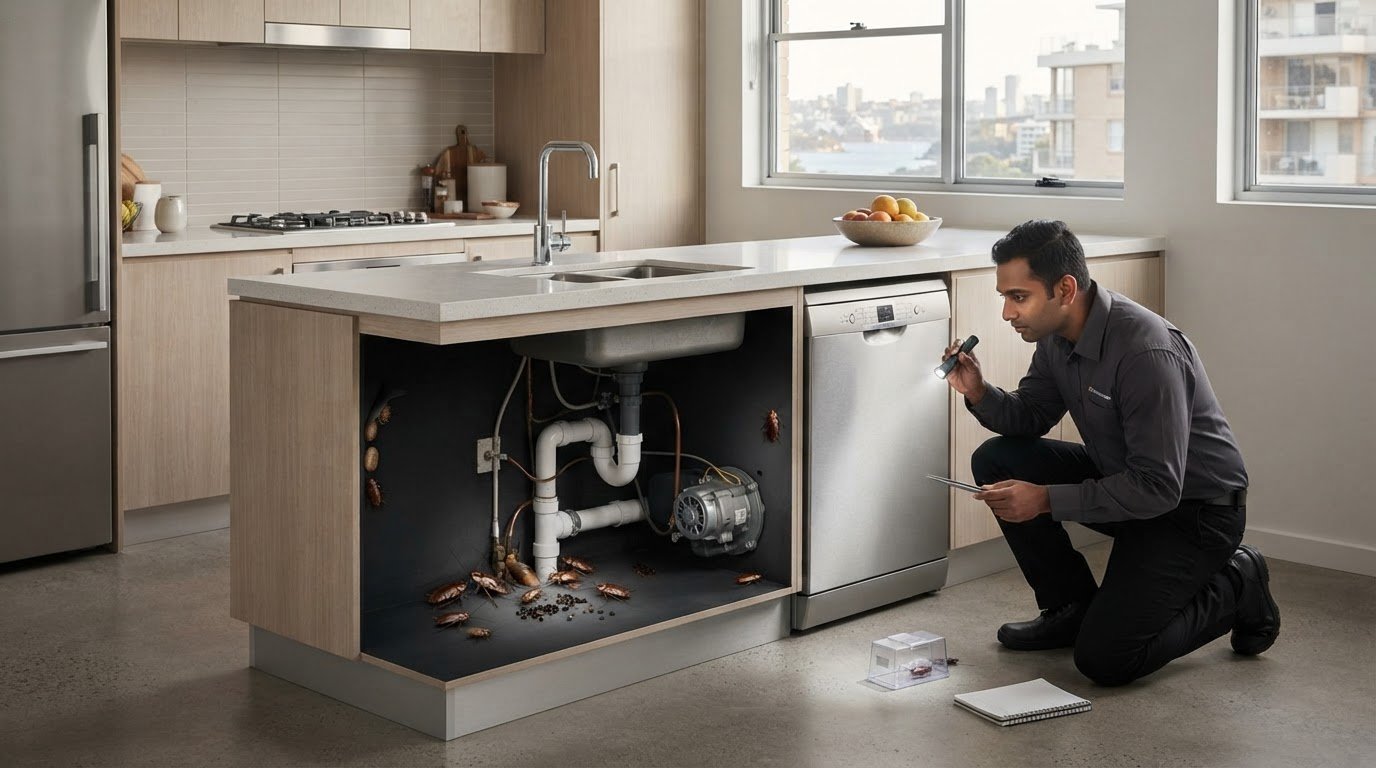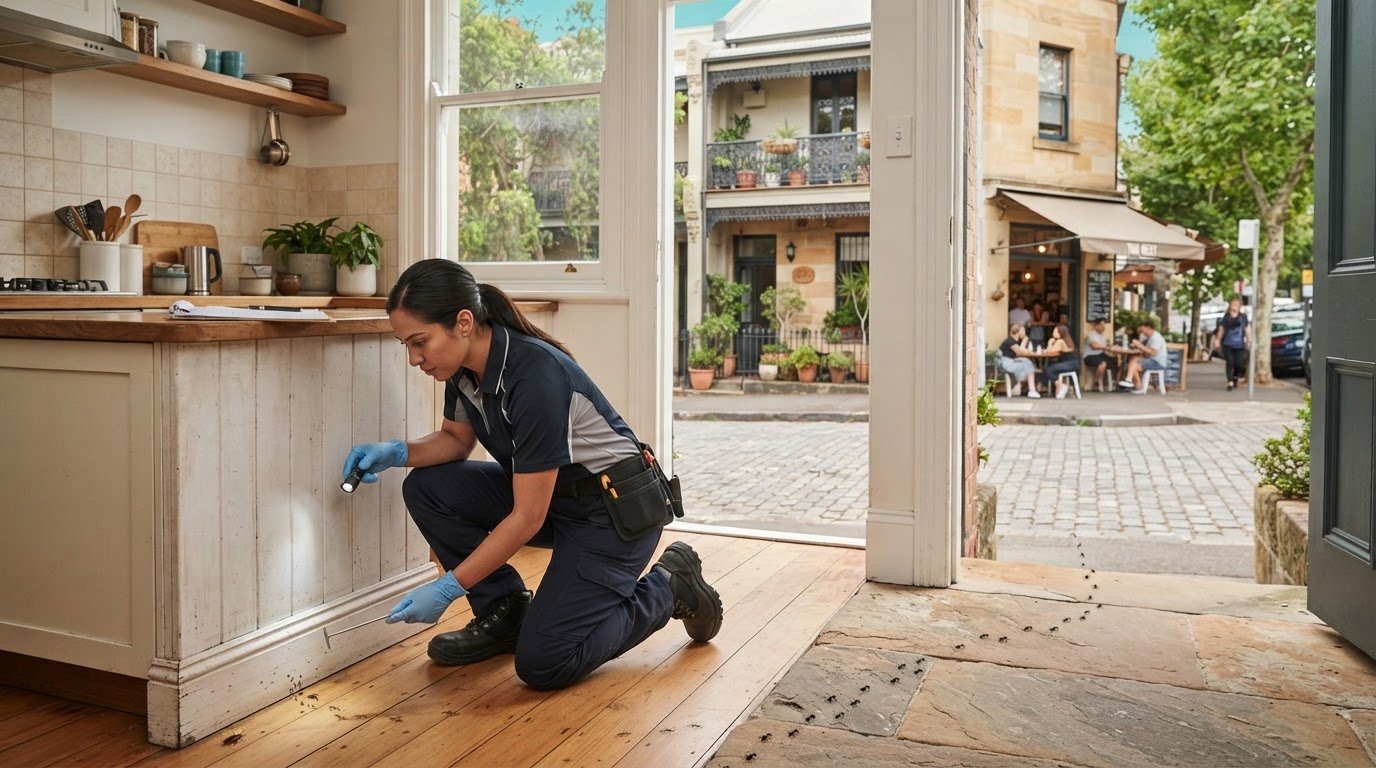
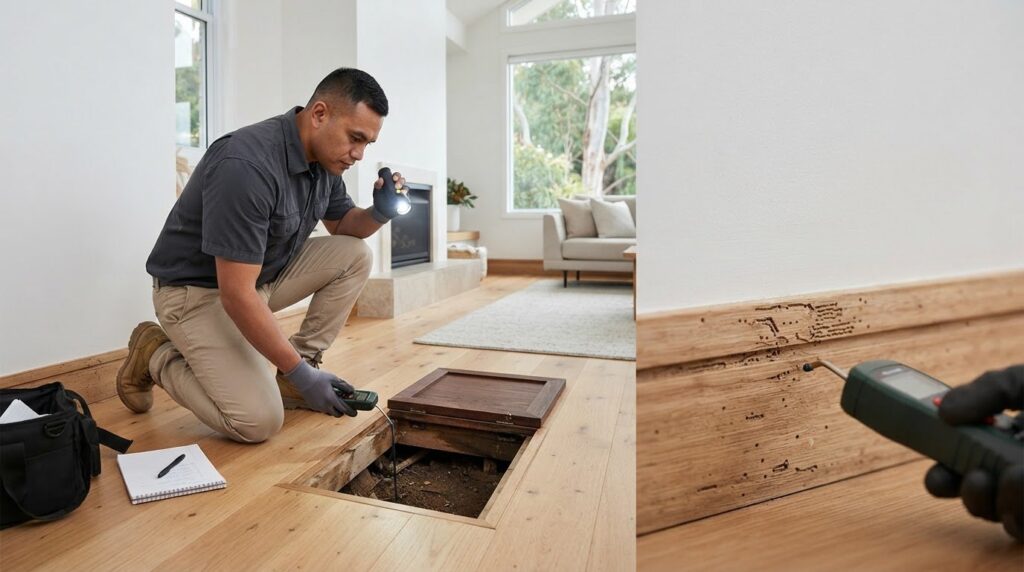
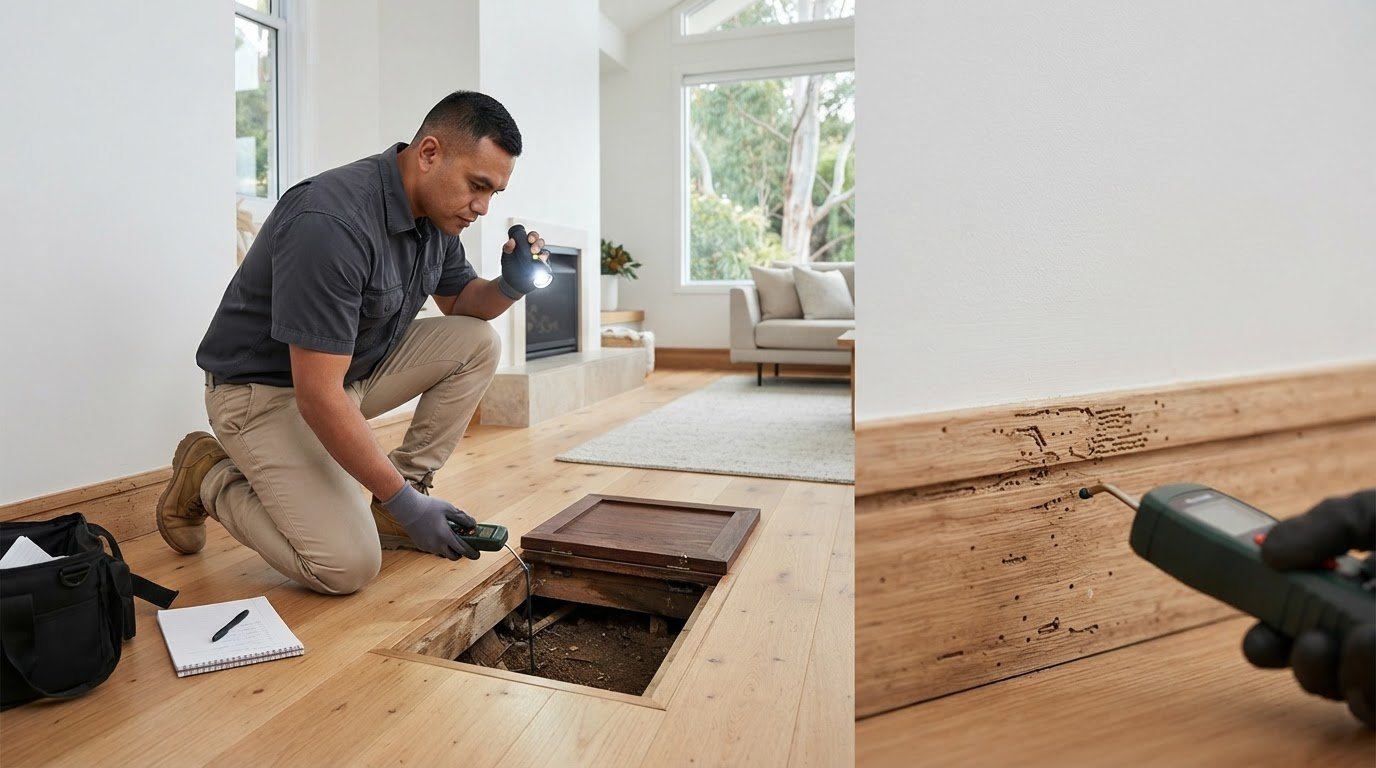
What if the timber damage you’re worried about is hidden behind a wall or beneath flooring? A timber pest inspection in Sydney can help identify visible signs of termites, wood-boring insects and timber decay. What it can reveal depends on the inspection scope and which areas are accessible.
It’s understandable to want clear answers before booking, especially when “timber pest inspection” and “termite inspection” are used interchangeably. They may not cover the same things. This guide explains what an inspection may assess, how to prepare your property, what limitations to expect and which questions to ask about the report.
You’ll also learn why access matters, which property conditions may be noted and how to choose a suitable next step. ABC Pest Control Sydney provides termite inspections and control, but doesn’t list a separate general timber pest inspection service. If you’re considering ABC, confirm whether the requested inspection covers your concerns, including borers or timber decay, and whether it’s available at your Sydney property.
Key Takeaways
- A timber pest inspection checks accessible areas for signs of termites, timber-boring insects and decay, but can’t guarantee that every concealed issue will be found.
- Before booking a timber pest inspection sydney service, confirm whether its scope covers the specific pests and parts of the property you’re concerned about.
- Use the report to distinguish signs of current activity, previous damage and conditions that may increase pest risk.
- Improve access before the inspection and share previous reports, repair records and details of known leaks or moisture issues.
- Ask what the report covers, which areas may be inaccessible and what follow-up is available before deciding what to do next.
What does a timber pest inspection in Sydney actually cover?
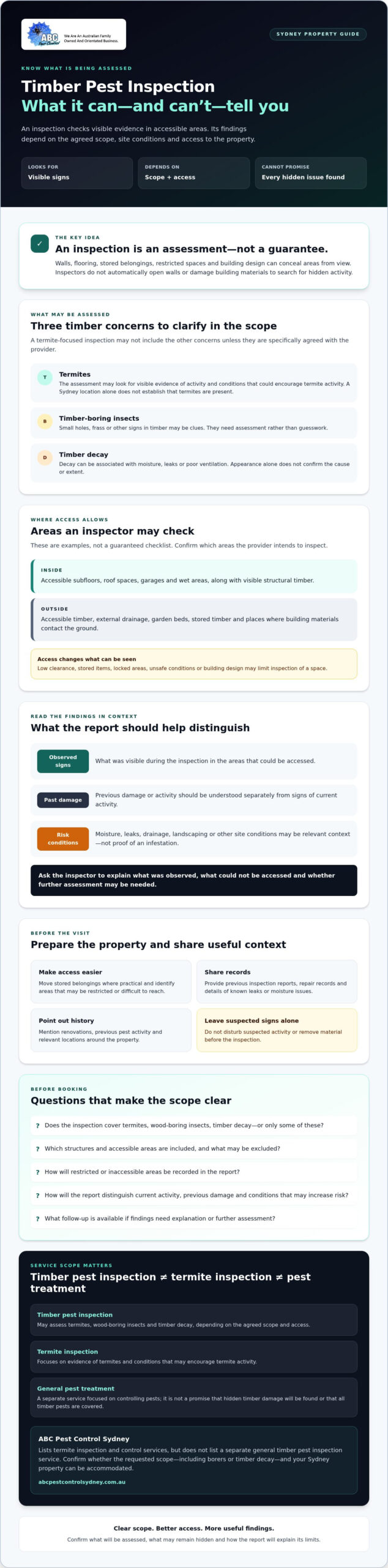
A timber pest inspection assesses visible evidence in areas the inspector can access. It may identify signs of timber pests and conditions that could raise the risk of damage, but it can’t guarantee that every concealed pest or defect will be found. Walls, flooring, stored belongings and restricted spaces can limit what’s visible.
The agreed scope matters. Before booking a timber pest inspection sydney service, confirm which pests, structures and accessible areas are included. A termite-focused inspection may not assess timber-boring insects or decay unless those concerns are specifically included in the requested scope.
Which timber pests may affect a Sydney property?
Termites are a significant timber risk, but their presence shouldn’t be assumed simply because a property is in Sydney. An inspection may look for visible evidence of activity and conditions that could make a property more vulnerable. Wood-boring insects can leave small holes, frass or other signs in timber. These clues need assessment rather than guesswork; Woodboring Beetles provides background on one group of insects that can affect wood.
Timber decay is another concern. It can be associated with moisture, leaks or poor ventilation, but appearance alone isn’t enough to confirm its cause or extent. Ask the inspector to explain what they observed and whether further assessment may be needed.
How is a timber pest inspection different from a termite inspection?
A termite inspection focuses on evidence of termites and conditions that may encourage termite activity. A broader timber pest inspection may also include wood-boring insects or timber decay, if agreed with the provider. Check the written scope before booking so you know what the assessment is intended to cover.
For details on termite-focused assessments, read the Termite Inspection Sydney guide. ABC Pest Control Sydney lists termite inspection and control services, but not a separate general timber pest inspection. Before proceeding, confirm that the requested scope and your Sydney location can be accommodated.
A timber pest inspection assesses visible evidence in accessible areas; general pest treatment is a separate service focused on controlling pests. Neither should be treated as a promise that hidden damage will be found or that all timber pests are covered. Ask what the report will assess, what it may exclude and how any findings will be explained.
How do inspectors assess timber pest risks in Sydney homes?
A careful assessment follows a methodical visual process. The inspector checks relevant accessible areas for signs of pest activity or timber damage, then considers site conditions that may increase risk. They should explain the difference between what they observed and what could make the property more vulnerable. A damp patch or garden bed beside a wall, for example, is context to assess, not proof of an infestation.
The agreed scope and access shape the inspection. Stored belongings, locked areas, low clearance, unsafe conditions or building design may prevent access to some spaces. Inspectors don’t automatically open walls or damage building materials to look for hidden activity. Ask how access restrictions will be recorded and how they affect the findings.
What parts of a property may be checked?
Depending on access, site conditions and the agreed scope, an assessment may include interiors, exteriors and visible timber elements. Potential areas include:
- Inside: accessible subfloors, roof spaces, garages and wet areas, along with visible structural timber.
- Outside: accessible timber, external drainage, garden beds, stored timber and places where building materials contact the ground.
These are examples, not a guaranteed checklist. A subfloor with limited clearance or a roof space obstructed by stored items may not be fully viewable. Before the visit, confirm which areas the provider intends to inspect.
What Sydney conditions should property owners mention?
Share details that could help put the observations in context. Tell the inspector about known leaks, damp areas, renovations, previous pest activity and earlier reports or repairs. Point out relevant locations, but don’t disturb suspected activity or remove material before the inspection.
Landscaping, garden beds, stored materials and timber close to the building may also provide useful context. They don’t establish that pests are present, but the inspector can consider them alongside visible evidence and other site conditions. Be specific about where and when you noticed a concern.
A useful inspection report states what was assessed, what was accessible and where limitations affected the findings. That record helps you understand what the observations do, and don’t, establish. If your concern is termites, ABC Pest Control Sydney lists termite inspection services. Review ABC’s termite inspection services and confirm the inspection scope and availability for your property before booking.
How to assess inspection scope, reports, and limitations
Before booking a timber pest inspection sydney service, ask exactly what the assessment covers. A termite-focused inspection and a broader timber pest inspection aren’t automatically interchangeable. Use the provider’s written scope to compare what will be checked, and confirm any exclusions before the inspection begins.
| Scope | What it may assess | What to confirm |
|---|---|---|
| Termite-focused | Visible evidence of termites and conditions that may favour termite activity. | Which accessible areas are included and whether other timber pests or decay are excluded. |
| Broader timber pest | May include termites, timber-boring insects and timber decay, if agreed with the provider. | Which pests, structures and accessible areas are specifically within scope. |
Interpret findings carefully. Active evidence refers to signs that may indicate current pest activity and should be explained in the report. Previous damage can remain after activity has stopped, so damage alone doesn’t confirm a current infestation. Favourable conditions, such as moisture or timber close to the building, can increase risk but aren’t proof that pests are present.
A report describes observed conditions at the time of inspection. It can’t rule out activity hidden in inaccessible areas or concealed within building materials. Check the report date, assessed areas, exclusions and recommended follow-up. If a finding or term is unclear, ask the inspector to explain it before deciding what to do next.
What should a useful inspection report explain?
Look for the agreed scope, areas inspected, key observations and access limitations. Recommendations should make clear whether action is suggested and what kind of follow-up may be appropriate. Ask for clarification if the report doesn’t distinguish observed evidence from risk conditions, or if you’re unsure how urgent a recommendation is.
Which standards and credentials should you verify?
Ask about the inspector’s relevant qualifications, insurance and experience with the pests included in your requested scope. For a pre-purchase timber pest inspection, you can also ask whether the report refers to AS 4349.3-2010, the standard identified for this inspection type, and whether it applies to the service being offered. Don’t assume a standard is legally mandatory in NSW; ask the provider to explain the basis for citing it and verify current requirements if needed.
How to prepare for a timber pest inspection in Sydney
A little preparation can help the inspector reach more of the agreed inspection areas and understand what you’ve noticed. Before your timber pest inspection sydney appointment, gather relevant records and make access arrangements. Don’t try to expose hidden timber or investigate suspected pest activity yourself.
What should you do before the inspector arrives?
Where practical and safe, clear a path to relevant rooms and visible timber. Arrange access to areas such as the garage, subfloor or roof space if they’re included in the agreed scope. Unlock gates or access points, and tell the provider beforehand if an area is difficult to reach. Don’t enter spaces that may be unsafe.
- Write down what you’ve noticed, where it appeared and when you first saw it.
- Gather previous inspection reports, repair records and details of any past pest treatments.
- Note known leaks, damp areas or other moisture issues that may help explain the property’s history.
- Leave suspected termite workings or damaged timber undisturbed. Avoid applying products before the assessment.
These steps give the inspector useful context without changing evidence they may need to assess.
What should you ask during and after the inspection?
Ask which areas were inaccessible and whether that limits the conclusions. Request a plain-language explanation of observed evidence, conditions that may increase risk and recommended next steps. If a report uses technical terms or doesn’t explain why an action is suggested, ask the provider to clarify before arranging follow-up work.
Check that any follow-up matches the concern and inspection scope. A termite finding, for example, may call for a termite-focused response, while questions about borers or timber decay may require a provider whose agreed service covers those issues.
If your concern is termites, ABC Pest Control Sydney lists termite inspection and control services. Before booking, confirm that the service covers your concern and is available for your Sydney location. Contact ABC Pest Control Sydney about termite concerns.
Choosing a timber pest inspection service and acting on findings
Choose a provider whose confirmed inspection scope matches your concern. A timber pest inspection sydney search may return termite-focused services as well as broader assessments, so don’t assume the wording means the same thing across providers. Before booking, get the scope in writing and check what the report will cover, what it may not assess and how findings will be explained.
How do you choose the right inspector for your property?
Ask whether the service assesses termites only or also covers timber-boring insects and timber decay. Check the inspector’s relevant experience, qualifications and insurance, and ask how access restrictions will be recorded. Confirm when and how you’ll receive the report, whether follow-up questions are supported, and what next steps may be recommended if evidence is found.
Don’t choose on price alone or rely on an unsupported guarantee. A clear explanation of scope and limitations helps you compare services based on what they’ll actually assess, rather than assumptions about what an inspection can reveal.
What should you do if the report identifies termite activity?
Read the findings and recommendations carefully. If the report doesn’t make clear whether it describes current evidence, previous damage or a risk condition, ask the inspector to explain before deciding what to do. Treatment options depend on the site assessment and professional advice, so avoid assuming one approach suits every property.
ABC Pest Control Sydney lists termite inspections and termite control, and states that it has more than 20 years of experience. It doesn’t list a separate general timber pest inspection service. If termites are your concern, confirm the requested inspection or control scope and availability for your Sydney location before proceeding.
Next step: Gather the report and note any questions you want answered. Contact ABC Pest Control Sydney to discuss a termite concern and confirm whether its listed services fit your needs. For concerns about borers or timber decay, ask any prospective provider directly whether those are included in its confirmed scope.
Make your next inspection decision with confidence
A timber pest inspection sydney service is most useful when you know exactly what it covers. Confirm whether the scope focuses on termites or also includes borers and timber decay. Check which areas were accessible, what the report observed and where limitations apply. Findings describe conditions at the time of inspection, so ask questions if you’re unsure what they mean or what to do next.
Prepare by sharing relevant reports, repair history and known moisture issues, and arrange safe access to areas included in the assessment. This gives the inspector useful context without disturbing suspected activity.
For termite concerns, ABC Pest Control Sydney provides termite inspection and control across the Sydney metropolitan area. The business states it has more than 20 years of experience. Confirm that the service scope and availability suit your property before booking. Contact ABC Pest Control Sydney about termite inspection and control.
With clear questions and a report you understand, you can choose a sensible next step for your property.
Frequently Asked Questions
What is included in a timber pest inspection?
A timber pest inspection assesses visible evidence in accessible areas within the agreed scope. It may look for signs of termites, timber-boring insects and timber decay, as well as conditions that could increase pest risk. The report should identify areas inspected and any access limitations. It can’t guarantee detection of concealed activity or damage, so ask the provider which pests and parts of the property the inspection covers.
Is a timber pest inspection the same as a termite inspection?
No, the terms don’t always mean the same thing. A termite inspection focuses on termite evidence and conditions that may favour termite activity. A broader timber pest inspection may also include wood-boring insects or timber decay, if those are part of the agreed scope. Before booking, ask the provider to confirm the pests covered, areas assessed and any exclusions in writing.
How often should a Sydney property have a timber pest inspection?
For most properties in south-eastern Australia, an annual termite inspection is the minimum recommendation. Properties with higher risk, such as those with a history of termites or near bushland, may warrant inspections every six months. The right timing for a broader timber pest assessment can depend on the property’s history and concerns. Ask an appropriate inspection provider to recommend a schedule for your situation.
Can a timber pest inspection find termites hidden inside walls?
Not necessarily. A standard visual inspection checks accessible areas and visible evidence, so termites concealed inside walls may not be detected. Inspectors don’t automatically damage walls or other building materials to search for hidden activity. The report should explain access limitations and what they mean for its findings. If you’re concerned about a particular wall or area, point it out and ask whether further assessment may be appropriate.
What should I do if a timber pest inspection finds termite activity?
Read the report and ask the inspector to clarify the evidence, its location and recommended next steps. Treatment options depend on a site assessment and professional advice, so don’t assume one approach suits every property. ABC Pest Control Sydney lists termite inspections and termite control across the Sydney metropolitan area, and states it has more than 20 years of experience. Confirm the service scope and availability for your property before proceeding.
Do I need a timber pest inspection when buying a house in Sydney?
A timber pest inspection can help you understand visible pest evidence and timber-related risks before buying, but it can’t rule out concealed activity. Confirm whether you need a termite-focused inspection or a broader scope that also considers borers or decay. Check the report date, areas assessed, exclusions and follow-up recommendations. If you’re reviewing a report supplied by a vendor or agent, clarify its scope and whether it addresses your concerns.
How should I prepare my home for a timber pest inspection?
Where practical and safe, clear access to areas included in the agreed scope, such as the garage, subfloor or roof space. Arrange access to locked rooms or gates, and tell the provider about any spaces that may be difficult to reach. Gather previous reports and repair records, and note leaks, damp areas or past pest activity. Don’t disturb suspected termite workings or apply products before the inspection.