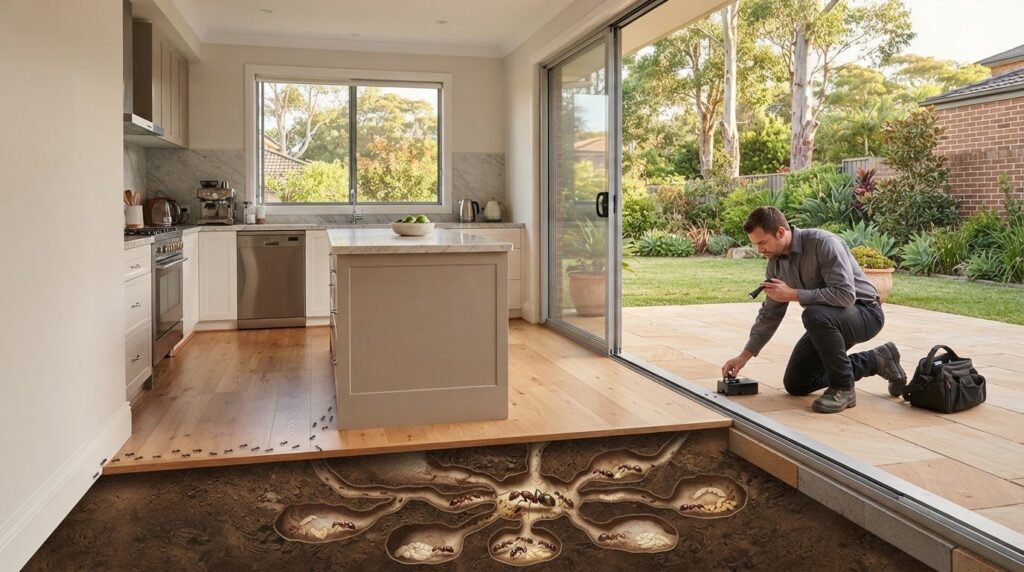
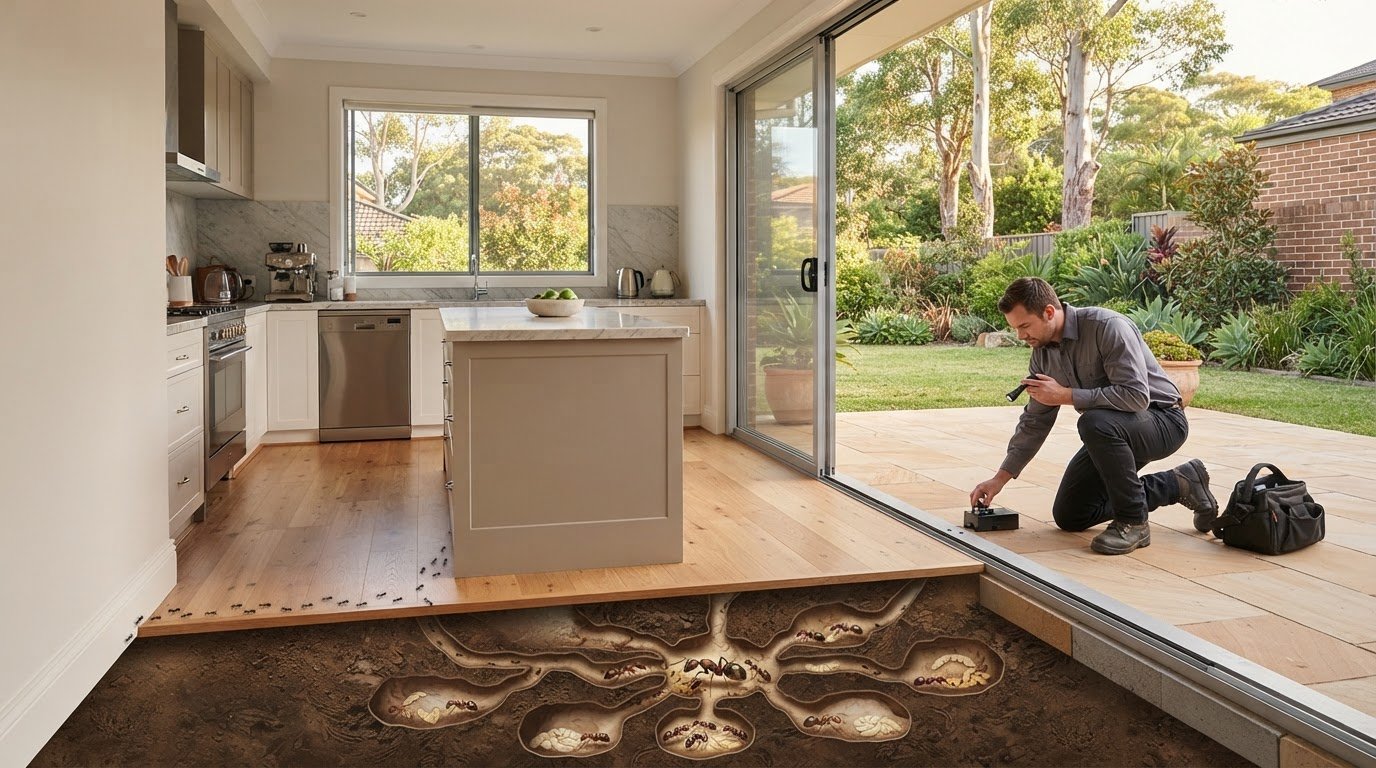
Every time you blast an active kitchen trail with a supermarket surface spray, you are probably multiplying your pest problem. When dealing with persistent ant control Parramatta homeowners must target the hidden central nest rather than just spraying visible workers. Quick-kill bug sprays trigger an immediate defensive reaction known as colony budding, which alarms the colony and causes multiple queens to scatter deeper into your wall voids and subfloors.
It is exhausting to watch relentless ant trails contaminate food preparation areas hours after cleaning, or to discover your paved patio sinking from hidden underground excavation. You deserve lasting peace of mind without worrying about harsh chemical exposure around your children and pets. Discover how targeted professional treatments eliminate stubborn Parramatta ant colonies safely and prevent recurring seasonal infestations. In this guide, we break down why Western Sydney’s distinct climate triggers aggressive indoor foraging, how undetectable non-repellent baits eliminate the reproductive queen, and how to establish a durable protective barrier around your property perimeter.
Key Takeaways
- Understand how Western Sydney’s intense climate swings and urban ground disturbances drive subterranean ant colonies directly into indoor living spaces.
- Learn why standard aerosol sprays worsen infestations through colony budding, scattering multiple queens deeper into subfloors and wall cavities.
- Discover how professional ant control Parramatta treatments deploy undetectable transfer chemistry to eradicate the central reproductive queen at the source.
- Master essential perimeter exclusion methods and comprehensive barrier strategies that safeguard your property against persistent seasonal invasions.
Why Ant Infestations Spike Across Parramatta Residential and Commercial Properties
Parramatta faces distinct environmental and structural pressures that drive intense insect activity year-round. Situated within the Parramatta River basin, the region regularly traps humidity while undergoing aggressive civil development. Major earthworks disrupt deep subterranean nests, displacing millions of insects directly toward suburban fences. Pavements sink and garden beds shift as colonies search for stable terrain. Once displaced, these insects treat adjoining residential boundaries as unbroken foraging territory.
Ants do not operate in isolation. Like many common pests in Sydney, they systematically exploit external weep holes, expansion joints, and cracked mortar to bridge the gap between your garden and your pantry. Securing effective ant control Parramatta properties require demands an understanding of these local architectural vulnerabilities alongside Western Sydney’s unique climate extremes.
Western Sydney Heat and Seasonal Rain Pressure
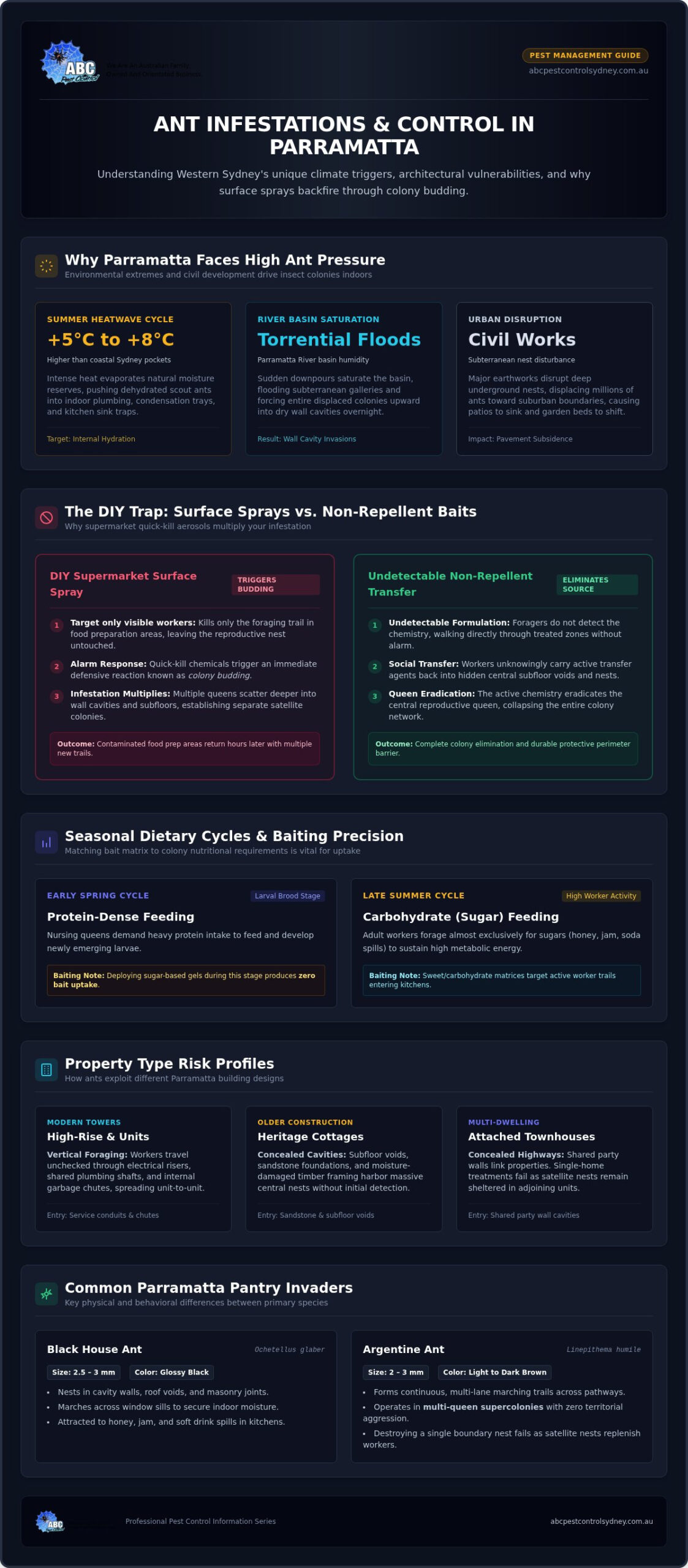
Western Sydney routinely records summer temperatures 5°C to 8°C higher than coastal Sydney pockets. This intense inland heatwave cycle quickly bakes outdoor topsoil, evaporating natural moisture reserves. Dehydrated scout ants push indoors, zeroing in on bathroom plumbing, condensation trays, and kitchen sink traps. The ubiquitous black house ant (Ochetellus glaber) often leads this charge, marching across window sills to secure internal hydration. Conversely, sudden torrential summer downpours saturate the Parramatta River basin, flooding subterranean galleries and forcing entire colonies upward into dry wall cavities overnight.
High-Density Living vs Older Heritage Cottages
Parramatta’s architectural landscape creates contrasting nesting challenges across different property types:
- High-rise towers and modern units: Vertical foraging is rampant. Workers travel through electrical risers, shared plumbing shafts, and internal garbage chutes, spreading unchecked from unit to unit.
- Heritage weatherboard and brick cottages: Subfloor voids, sandstone foundations, and moisture-damaged timber framing offer sheltered cavities where colonies establish massive central nests without initial detection.
- Attached townhouses: Shared party walls create concealed highways. Treating an infestation inside one home often fails because satellite nests remain sheltered next door.
Because these building designs allow pests to bypass exterior surfaces, quick DIY measures simply fail. Engaging professional ant control Parramatta specialists ensures deep, concealed nesting zones receive targeted treatment before satellite colonies spread through shared walls.
Identifying Common Ant Species Invading Parramatta Buildings
Different ant species do not eat the same foods or nest the same way. Colony nutritional requirements shift depending on seasonal brood production. During early spring, nursing queens demand protein-dense food to feed developing larvae. By late summer, adult workers forage almost exclusively for carbohydrates to sustain high metabolic energy. Deploying sugar-based gels against protein-seeking colonies produces zero bait uptake. Successful ant control Parramatta properties need hinges on identifying the exact invading species and matching the chemical bait matrix to its current dietary cycle.
Black House Ants and Argentine Ants: The Pantry Invaders
Black house ants (2.5 to 3 mm, glossy black) frequently nest in cavity walls, roof voids, and masonry joints, trailing indoors toward honey, jam, and soft drink spills. Argentine ants (Linepithema humile) represent a far more complex challenge. Light to dark brown and measuring 2 to 3 mm, Argentine ants are defined by their continuous, multi-lane marching trails that move without pause across walls and pathways.
Unlike native species, Argentine ants form multi-queen supercolonies with no territorial aggression between separate nests. Wiping out a single nest on your boundary fence fails completely because adjoining satellite nests immediately replenish worker numbers. While these small domestic invaders target open food, larger species pose physical hazards in suburban yards. If you encounter large, aggressive outdoor nests with prominent pinchers, consult the Australian Museum guide to bull ants for safe outdoor identification.
Coastal Brown Ants and Carpenter Ants: Structural Threats
Coastal brown ants feature two worker sizes, including large-headed soldier ants. They nest under paved surfaces, excavating vast sub-surface tunnels that cause driveway pavers, sandstone steps, and garden slabs to destabilise and sink.
Carpenter ants present an entirely different structural risk. Measuring between 6 and 12 mm, these nocturnal ants chew smooth galleries inside soft, moisture-damaged timber to nest. While they don’t consume cellulose like termites, their continuous excavation weakens internal timber framing. They frequently inhabit damp wall voids alongside active timber pests. If you discover wood shavings or hollowed framing near skirting boards, arrange an expert termite inspection Sydney assessment immediately to verify structural integrity.
When uninvited colonies threaten your home’s hygiene or building footings, consulting licensed technicians for targeted ant control Parramatta services stops subterranean excavation and eliminates the hidden queen before damage spreads.
DIY Ant Sprays vs Professional Extermination: The Budding Dilemma
Grabbing a can of supermarket bug spray provides immediate gratification, but it creates a long-term disaster. Off-the-shelf aerosol sprays rely on synthetic pyrethroids designed for rapid knockdown. These chemicals kill only the visible workers marching across your kitchen bench. Unfortunately, foraging workers represent barely 10% of the total population. The real engine of the infestation, the reproductive queen, remains completely unharmed inside the nest. Relying on surface contact sprays will never deliver the lasting ant control Parramatta properties require.
The Hidden Danger of Colony Budding
Supermarket sprays don’t just fail to eradicate the nest; they actively worsen the infestation through a defensive reaction called colony budding. Synthetic pyrethroids leave behind pungent sensory irritants. When the central colony detects high worker mortality and chemical vapor near its foraging trail, the nest enters emergency survival mode.
Stressed queens quickly gather clusters of brood and scatter in opposite directions. They establish separate satellite colonies inside previously untouched wall voids, subfloors, and ceiling spaces. What started as an isolated kitchen nuisance quickly multiplies into simultaneous infestations across bathrooms, laundry rooms, and bedrooms. In fact, established integrated pest management guidelines for ants explicitly caution that repellent sprays trigger reproductive splitting in multi-queen species like Argentine and coastal brown ants.
How Non-Repellent Transfer Chemistry Works
Professional extermination bypasses an ant’s sensory defenses using undetectable, non-repellent formulations. Instead of repelling foraging insects, modern active ingredients allow workers to move across treated zones without distress.
The eradication process relies on a natural biological chain reaction:
- Undetectable exposure: Workers pass freely through non-repellent liquid barriers and consume targeted matrix baits without detecting the toxin.
- Horizontal transfer: Returning workers carry the slow-acting compound deep into the central nest on their cuticle and in their digestive tracts.
- Trophallaxis and grooming: Ants continually groom each other and share regurgitated food mouth-to-mouth, systematically delivering the lethal dose to developing larvae and the queens.
Within several days, the compound circulates through every tier of the nest. The entire colony collapses from the inside out, delivering reliable ant control Parramatta homeowners can count on without coating their living areas in harsh, airborne aerosols.
What to Expect During a Professional Parramatta Ant Treatment
Professional ant eradication is a disciplined, multi-stage intervention rather than a hasty surface spray. When licensed technicians visit your property, they target the biological vulnerabilities of the colony. Treatments comply fully with Australian standards, ensuring maximum efficacy against stubborn nests while keeping internal living areas safe for your family and pets.
Step 1 & 2: Comprehensive Property Inspection and Internal Baiting
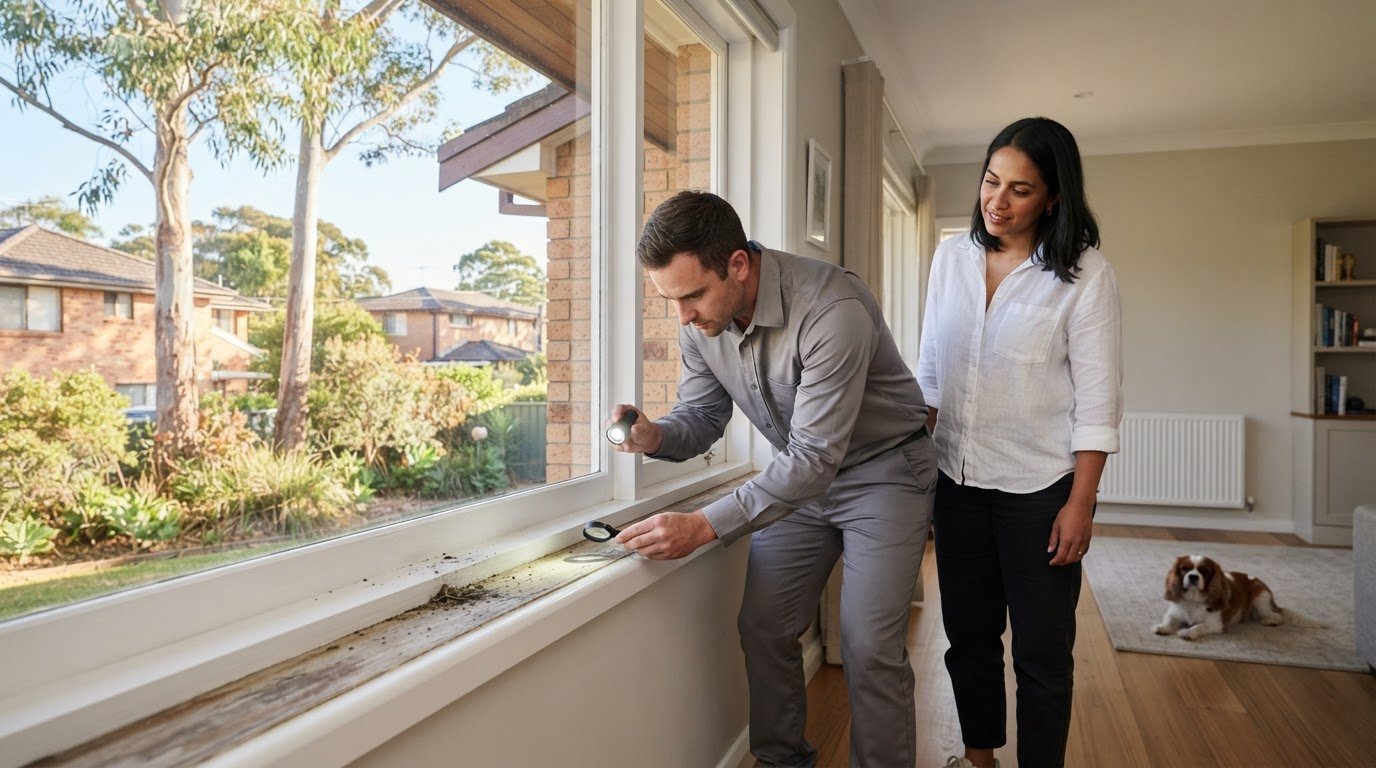
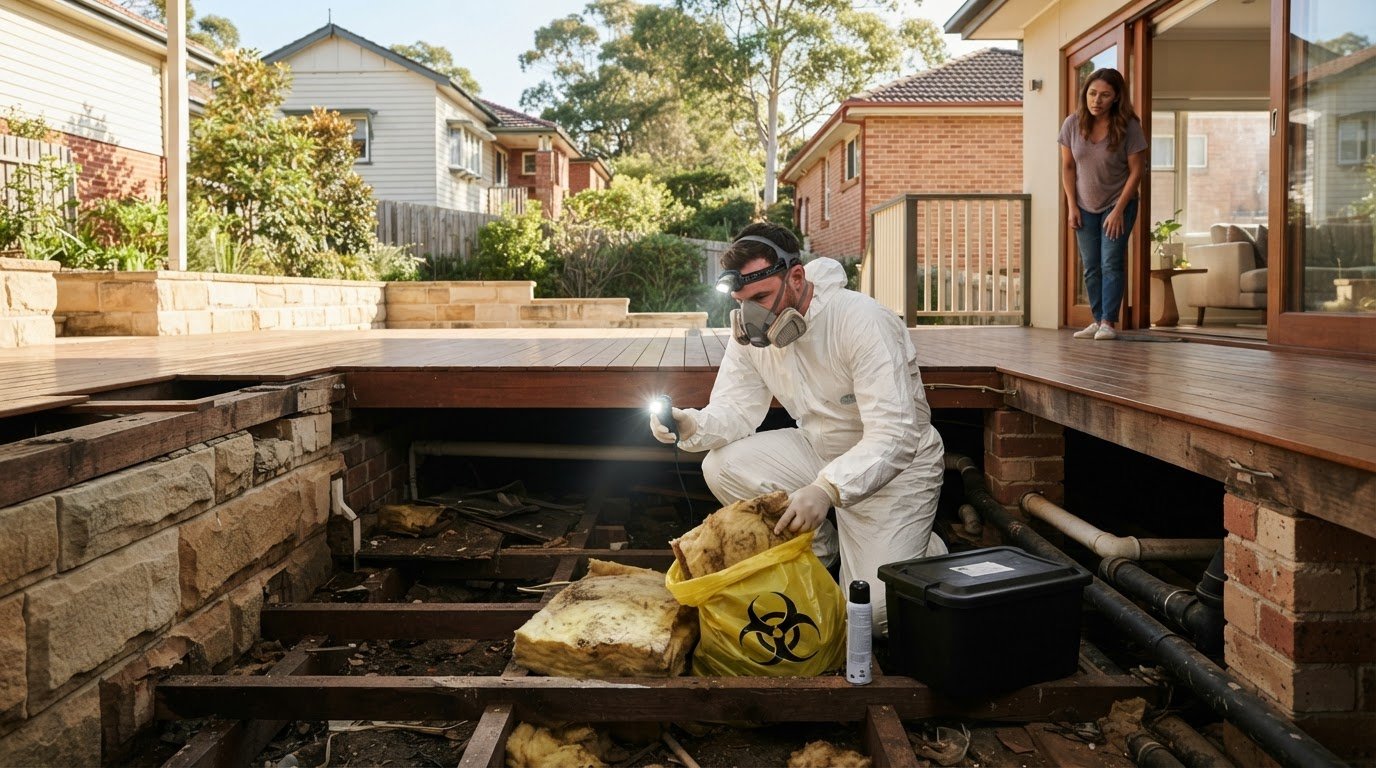
The service begins by tracing active trails back to their structural entry points. Technicians meticulously inspect internal wet areas, electrical risers, weep holes, subfloors, and roof cavities. Pinpointing high-traffic corridors allows for surgical precision instead of broad-spectrum chemical broadcasting.
Next comes species-specific internal baiting:
- Targeted matrix selection: The technician deploys either a carbohydrate-rich or protein-dense gel formulation matching the colony’s current nutritional cycle.
- Discreet void placement: Small beads of gel are applied deep inside cabinetry hinges, skirting cracks, and wall penetrations where scout ants feed undisturbed.
- Child and pet safety: Baits are sealed away inside inaccessible structural crevices, completely out of reach of curious dogs, cats, or young children.
Step 3 & 4: External Perimeter Defense and Preventative Sanitation
Once internal corridors are baited, attention shifts to securing the building’s exterior envelope. Technicians apply a liquid non-repellent perimeter barrier around foundation footings, window sills, door frames, and patio edges. As outdoor ants attempt to enter, they quietly absorb the slow-acting transfer agent and carry it back to subterranean nesting galleries.
The final step focuses on breaking environmental attractions. Your technician provides targeted guidance on physical proofing and sanitation:
- Exclusion sealing: Guidance on caulking exterior masonry cracks and installing mesh guards across open weep holes.
- Foliage management: Trimming overhanging tree limbs and garden shrubs that touch external walls, preventing ants from using branches as aerial bridges.
- Pheromone trail disruption: Recommendations for enzymatic or mild detergent washes to dissolve stubborn chemical scent trails leading across kitchen benchtops.
Don’t wait for expanding colonies to undermine your pavers or invade food storage areas. Take control of your home today by booking an expert inspection through our proven ant control Parramatta service packages to secure permanent, child-safe protection for your property.
Long-Term Ant Prevention: Maintaining a Pest-Free Parramatta Property
Stopping an active infestation inside your kitchen is only half the battle. Maintaining long-term exclusion requires proactive perimeter maintenance to prevent surrounding outdoor nests from re-entering your building envelope. Sealing building gaps and managing yard conditions takes far less effort than battling entrenched, multi-queen supercolonies once they breach your subfloor. Partnering these practical housekeeping habits with professional pest control Sydney packages creates an impenetrable shield around your residence year-round.
Practical Environmental and Structural Hygiene Habits
Scout ants need food, warmth, and reliable moisture. Cutting off these fundamental attractants around your perimeter removes the primary reasons for indoor migrations:
- Prune structural contact points: Cut back tree branches, creeping vines, and dense shrubbery resting against roof tiles, gutters, or window seals. These branches act as direct aerial highways into upper cavities.
- Eliminate standing moisture: Fix dripping outdoor garden taps, inspect air conditioning overflow pipes, and ensure stormwater downpipes drain away from foundations rather than pooling near brick weep holes.
- Manage refuse storage: Wash domestic wheelie bins and recycling bins with detergent regularly. Keep bins elevated on pavers several meters away from external wall edges.
- Seal accessible pantry items: Transfer sugar, honey, cereals, and pet kibble into thick, airtight glass or hard plastic containers to eliminate scent plumes.
Why Combine General Pest Management Packages
Isolated pest treatments leave seasonal gaps that opportunistic insects quickly exploit. Integrating ant defense into broader General Pest Control Packages allows technicians to treat multiple domestic threats in a single visit:
- Simultaneous multi-pest defense: A comprehensive service targets ants, German cockroaches, and webbing spiders simultaneously, eliminating pests that share identical entry conduits.
- Pre-emptive seasonal barriers: Reapplying non-repellent exterior zones before extreme Western Sydney heatwaves strike stops emerging nests before outdoor heat stresses drive colonies inward.
- Experienced local insight: Relying on licensed professionals with over 20 years of hands-on Sydney pest management experience guarantees treatments comply with strict Australian standards. Technicians understand the microclimate shifts specific to the Parramatta River basin.
Proactive care protects your family’s hygiene and preserves structural masonry against persistent excavation. Establish your seasonal defense barrier now and maintain dependable ant control Parramatta homes require to stay genuinely pest-free.
Secure Permanent Colony Eradication for Your Parramatta Property
Don’t let persistent ant trails compromise your kitchen hygiene or destabilise your paved outdoor living spaces. Surface sprays only trigger destructive colony budding, scattering multiple queens deeper into subfloors and wall cavities. Achieving permanent relief requires species-specific non-repellent transfer chemistry that eliminates the reproductive queen directly at the source.
Protecting your home should never mean risking the safety of your loved ones. With over 20 years of professional pest management experience across Greater Sydney, our technicians deploy eco-friendly, child-safe, and pet-friendly treatments fully compliant with Australian safety standards. Whether you need urgent residential intervention or ongoing protection, we combine ant defense with our General Pest Control Packages to shield your perimeter against seasonal reinvasion. Take decisive action before expanding nests multiply further. Book your expert Parramatta ant treatment with ABC Pest Control Sydney today! Restore complete comfort to your home with the trusted ant control Parramatta residents rely on.
Frequently Asked Questions
Why do ants keep reappearing after I spray them with supermarket insect spray?
Supermarket sprays rely on fast-acting synthetic pyrethroids that eliminate only visible surface foragers. This rapid mortality triggers colony budding, an emergency survival mechanism where stressed queens scatter into new wall cavities with their brood. Spraying doesn’t reach the hidden reproductive queen. To achieve lasting ant control Parramatta homeowners need non-repellent transfer chemistry that allows workers to carry lethal doses back to collapse the central nest.
Are professional ant control treatments safe for young children and family pets?
Yes, professional treatments prioritize family and pet safety. Licensed technicians place targeted gel baits deep within concealed structural cracks, wall voids, and hinges that children and pets cannot access. External barrier sprays comply strictly with Australian standards and dry odorless within two to three hours. Once liquid applications have dried completely, your household and pets can resume normal indoor and outdoor activities without chemical exposure risks.
How long does it take to eradicate an entire ant colony completely?
Complete colony eradication generally takes between three to fourteen days depending on species size and nest maturity. Non-repellent active ingredients and matrix baits are deliberately slow-acting. This delay ensures foraging worker ants have sufficient time to distribute the compound to developing larvae and reproductive queens via social grooming and food sharing. While surface activity declines rapidly after application, total nest collapse requires patience as the chemistry circulates.
Can ants cause structural damage to my Parramatta home or electrical wiring?
Yes, certain species pose genuine structural and electrical hazards. Coastal brown ants excavate extensive soil networks beneath paved patios and foundations, causing concrete slabs to sink and crack. Carpenter ants chew hollow nesting galleries through moist structural timbers, weakening wall framing. Species like white-footed house ants frequently pack inside electrical junction boxes and air conditioning units, causing short circuits, blown switches, and sudden electrical fires.
How often should I have my Parramatta property professionally treated for ants?
Scheduling an annual treatment is ideal for sustaining a protective barrier around your perimeter. However, properties facing intense Western Sydney heatwaves, nearby riverbank development, or recurring supercolonies often benefit from bi-annual maintenance. Integrating ant eradication into comprehensive General Pest Control Packages ensures exterior chemical barriers remain active before extreme summer storms or dry spells trigger aggressive indoor foraging across your property.
What should I do to prepare my home before the pest control technician arrives?
Clear clutter away from internal skirting boards and ensure kitchen countertops are wiped clean. Store uncovered food in sealed containers, and move pet bowls and toys away from wall edges. Outside, clear garden debris away from brick footings and weep holes so the technician can access the perimeter. If you require targeted ant control Parramatta technicians will handle the rest, including detailed species identification and void inspection.