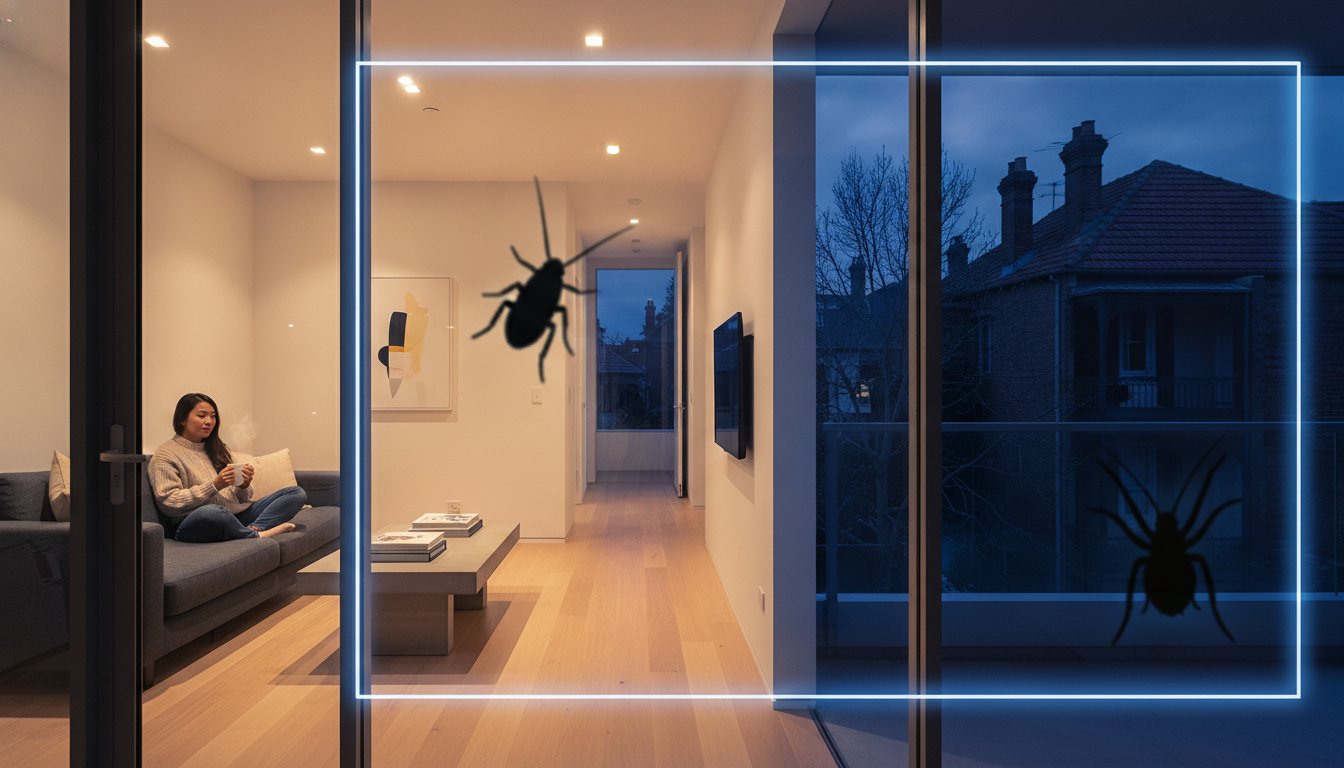
Did you know that your perfectly clean Sydney home is currently being scouted as a winter sanctuary? As the seasonal temperature drops, cockroaches and spiders begin moving indoors in search of warmth, turning your kitchen and skirting boards into their survival bunkers. It’s a biological instinct that ignores how often you mop or vacuum. Finding a spider in the bathroom or a roach in the cutlery drawer isn’t a reflection of your housekeeping; it’s a sign that the local environment is shifting.
We understand the skin-crawling anxiety of finding a spider near your bed or the deep disgust of a cockroach scurrying across your counters. You shouldn’t have to feel like an intruder in your own house. This article will help you protect your property before the full chill of winter 2026 arrives. You’ll gain peace of mind by knowing exactly how to fortify your living space against these unwanted guests.
You will discover the specific biological triggers that drive these pests inside and learn to identify common entry points in Sydney houses and apartments. We also preview the professional strategies used to secure your home. By understanding the “why” behind the invasion, you can take decisive action to maintain a pest-free environment all season long.
Key Takeaways
- Learn how ectothermic biology forces pests to use your climate-controlled home as a survival hub during the colder months.
- Discover why cockroaches and spiders begin moving indoors in search of warmth and how to spot early warning signs in your kitchen or bathroom.
- Identify common entry points like brickwork weep holes and utility penetrations that allow pests to bypass your home’s defenses.
- Understand the “Iceberg Effect” of DIY treatments and why professional intervention is required to disrupt pheromone trails and hidden nests.
- Explore how professional General Pest Control Packages provide a comprehensive shield for Sydney homes and apartments before the winter 2026 peak.
The Science of Survival: Why Pests Seek Your Home’s Warmth
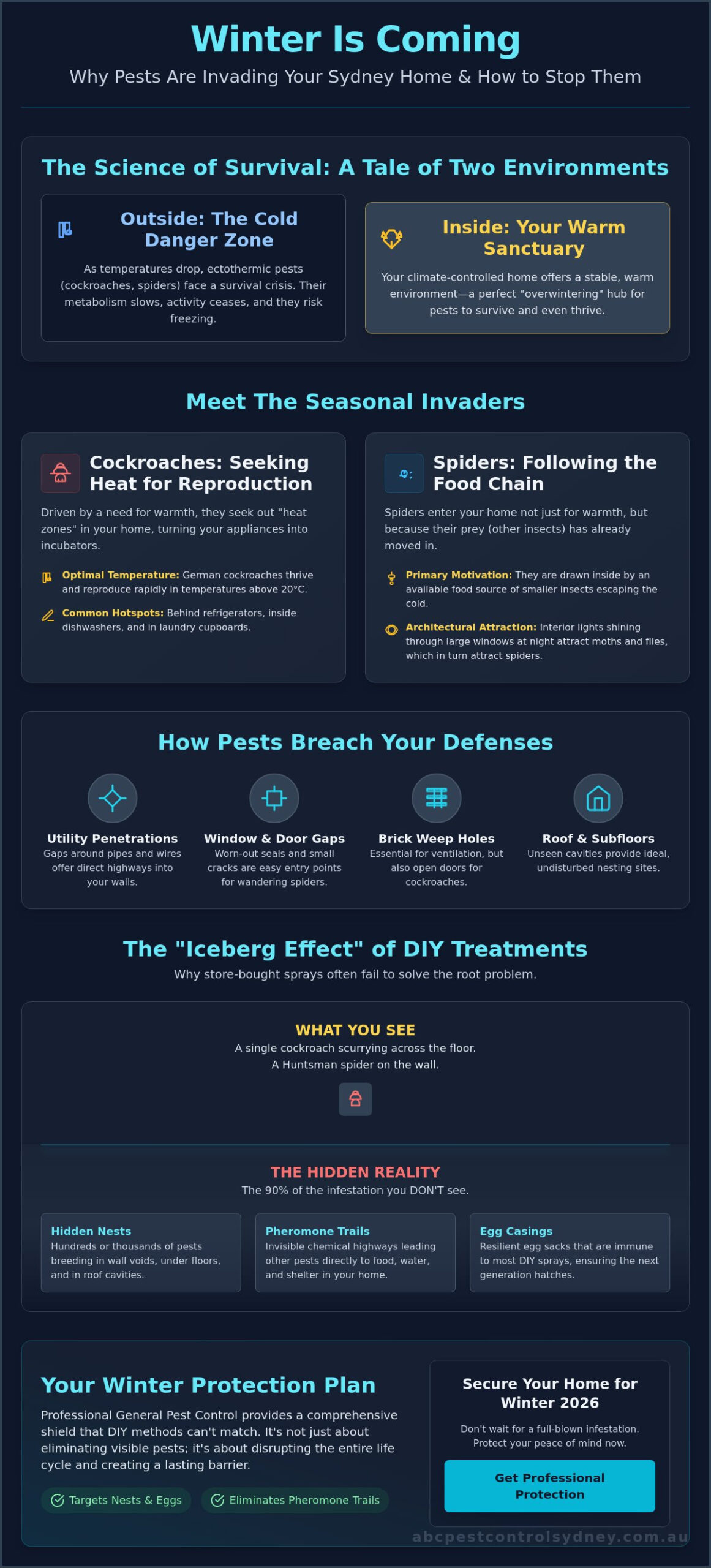
Pests are biological machines driven by external conditions. Most common household invaders are ectothermic, which means they cannot produce their own body heat. They rely entirely on the temperature of their environment to stay active and survive. When the Sydney climate shifts from a humid summer to a crisp autumn, these creatures face a life-threatening challenge. Their metabolism slows down, their movement becomes sluggish, and their ability to reproduce stalls. To survive the winter, they must find a stable environment. This is why cockroaches and spiders begin moving indoors in search of warmth as soon as the first cold snap hits.
Your home acts as a giant radiator for the local pest population. While the outside temperature fluctuates, your internal climate remains consistent. This stability is particularly attractive to pests that practice “overwintering.” They don’t just want to visit; they want to hide in your wall voids, roof cavities, and subfloors. These spaces act as perfect incubators. They provide a buffer against the wind and maintain a level of humidity that prevents pests from drying out. By the time you see one roach on the kitchen floor, hundreds could be nesting comfortably inside your walls.
Cockroaches: Seeking Heat for Rapid Reproduction
German cockroaches are a significant concern in Sydney apartments and units. They are highly sensitive to the cold and thrive best in temperatures above 20°C. When you turn on your indoor heating, you inadvertently create a tropical microclimate that mimics their natural habitat. This constant warmth is a biological trigger. It accelerates their metabolism and increases their egg-laying frequency. Understanding The Science of Survival reveals that a stable, warm environment allows a single female to produce hundreds of offspring throughout the winter. You will usually find these infestations concentrated in “heat zones,” such as the motor compartments of refrigerators, the back of dishwashers, and inside laundry cupboards.
Spiders: Following the Food Chain Indoors
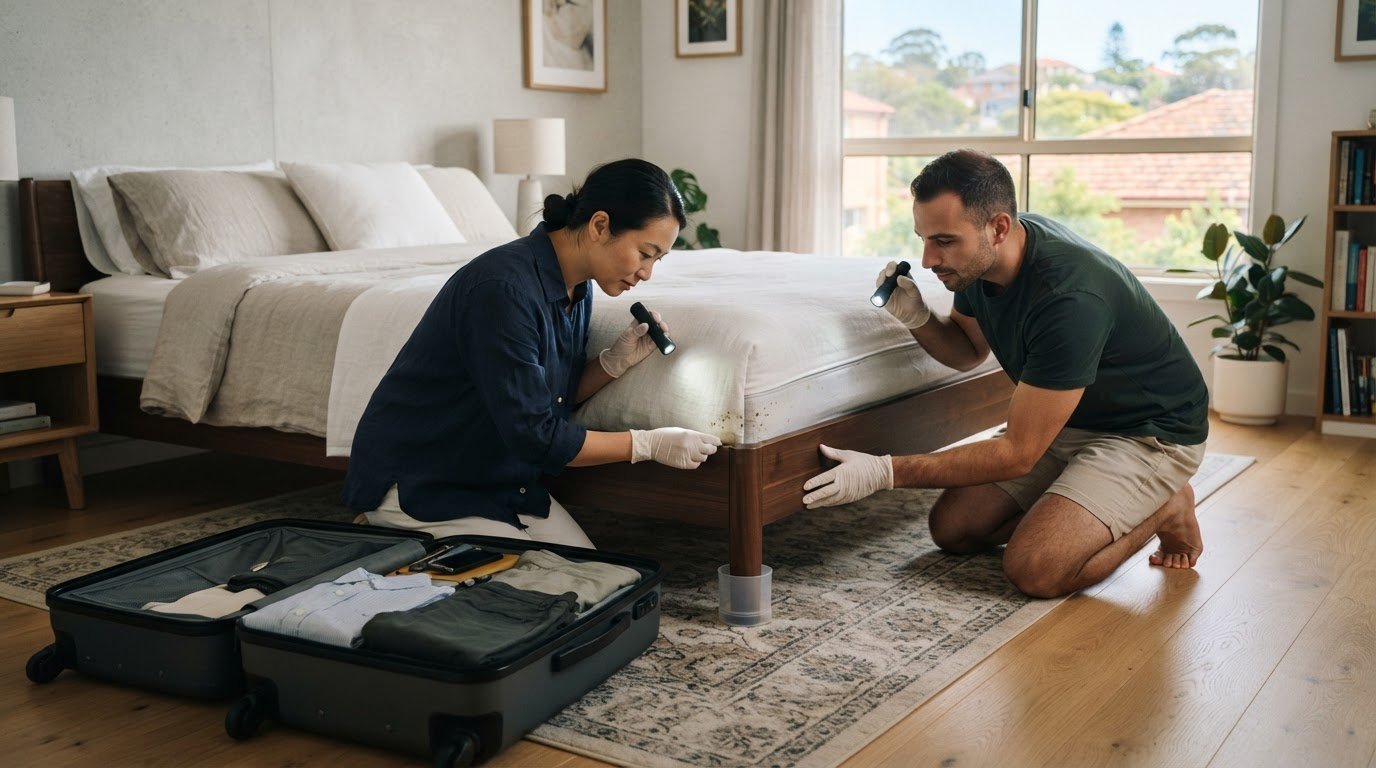
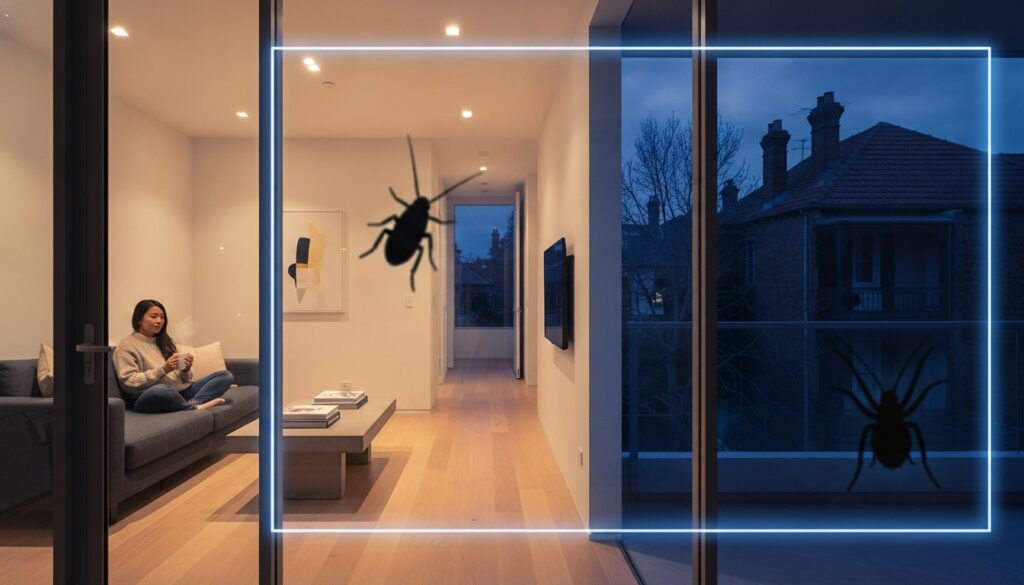
Spiders follow a different survival logic. While they appreciate the shelter of a dry home, they are primarily driven by the movement of their prey. As other insects move inside to escape the cold, spiders follow the food source. Autumn also marks the peak mating season for many Australian species. During this time, male spiders become more active and adventurous, often wandering into bedrooms and living areas. Modern Sydney architecture often contributes to the problem. Large glass windows allow internal light to spill into the garden at night. This attracts moths and flies, which in turn draws predatory spiders to the glass. Eventually, they find small gaps in window seals or doors to move inside.
Identifying the Seasonal Invaders in Sydney Homes
Recognition is the first step in effective defense. As the weather cools, the variety of pests you encounter changes. While summer is known for flies and mosquitoes, autumn is when cockroaches and spiders begin moving indoors in search of warmth. Understanding exactly what is entering your home helps you choose the right solution. In Sydney, we primarily deal with the “Big Three” cockroaches: the large American and Australian varieties that often fly in from gardens, and the smaller, more resilient German cockroach that prefers high-density living.
The Huntsman: Sydney’s Most Visible Autumn Guest
You have likely seen them scuttling across a wall at night. The Huntsman spider is notorious for its impressive size and alarming speed. They frequently enter through gaps in window frames or under doors. Once inside, they gravitate toward ceilings and cornices because these high vantage points offer the best view for hunting. Many homeowners find them terrifying, but they aren’t considered medically dangerous to humans. However, their presence is a clear warning sign. If a Huntsman is staying in your lounge room, it is because there is a steady supply of smaller insects for it to eat. They act as a biological indicator of a wider pest issue.
Cockroach Warning Signs: Don’t Wait for a Sighting
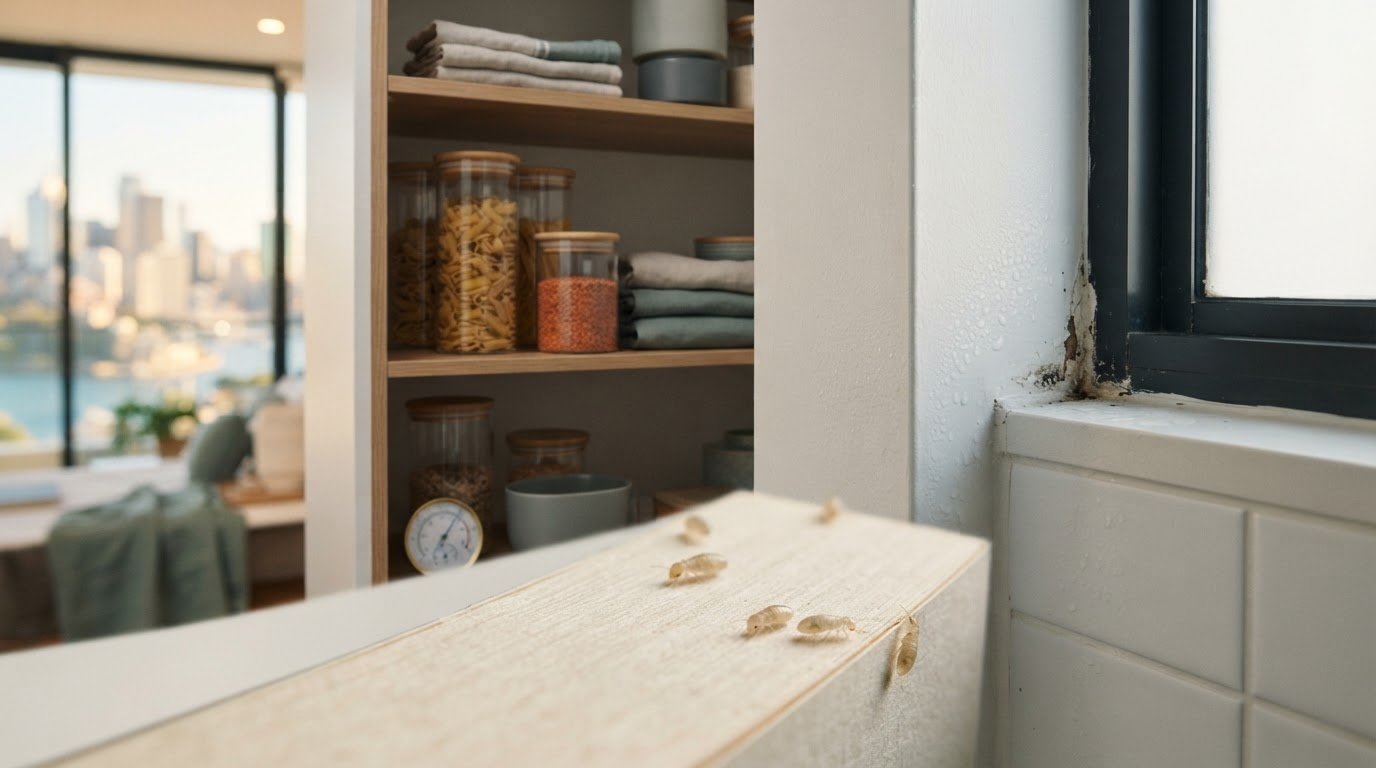
German cockroaches are a particular nightmare for residents in Sydney apartments and units. Unlike their larger cousins, they spend their entire lives indoors. They are experts at hiding. You might not see a live insect until the population is already out of control. Look for “pepper-fleck” droppings. These tiny black spots often appear in cupboard hinges, behind microwave vents, or around dishwasher seals. These are the fecal deposits of a colony established in your kitchen.
A growing colony also produces a distinct, musty odour. It is a heavy, oily smell that lingers in pantries or under sinks. If you see a cockroach during the day, you must take immediate action. These pests are strictly nocturnal. Daytime sightings usually mean the hidden nesting sites are so overcrowded that weaker roaches are being forced out into the open. It is a sign of a severe infestation hidden behind your cabinetry.
While these are the primary threats, do not ignore secondary invaders. Silverfish often move into wardrobes to feed on natural fabrics, while rodents look for nesting materials in roof voids as the temperature drops. If you have noticed these signs, it is time to consider professional pest sprays in Sydney to reset your home’s boundaries. Catching the problem early prevents a minor seasonal shift from becoming a permanent winter infestation.
Common Entry Points: How Pests Breach Your Defenses
Pests don’t need an open door to invade. They are opportunists that exploit the smallest structural flaws in your Sydney property. As the seasonal chill sets in, cockroaches and spiders begin moving indoors in search of warmth through gaps you might never notice. A standard brick home is full of “highways” for these invaders. Weep holes, designed to allow moisture to escape from your wall cavities, are the primary entry point. These small vertical gaps in your brickwork lead directly into your wall voids. They provide a protected path for roaches and spiders to reach every room in your house without ever being seen.
Internal utility penetrations are equally vulnerable. Look under your kitchen sink or behind the washing machine. Plumbers often leave oversized holes around pipes that pass through walls or floors. These unsealed gaps allow pests to travel between the subfloor and your living areas with ease. Similarly, your roof void is a nesting paradise. Thick insulation provides the perfect thermal blanket for rodents and spiders. Skylights and vents offer easy access points from the outside. Even a tiny 2mm gap under an external door is an open invitation for a prowling Huntsman looking for its next meal.
Sydney Architecture and Pest Vulnerability
Sydney’s unique housing styles present specific challenges. In historic terrace houses, shared walls mean your neighbour’s infestation can quickly become yours. Pests migrate through old timber floorboards and common roof spaces. For those in high-density living, German cockroaches in apartments and units are a community-wide issue. They travel through shared garbage chutes and plumbing stacks. This makes individual unit control difficult without a professional strategy. Even modern builds aren’t safe. Recessed downlights and ducted air conditioning vents provide hidden entry points from the ceiling that bypass traditional barrier sprays.
The “Exclusion Checklist” for Homeowners
Stop the invasion before it starts by securing these vulnerable areas. It’s much easier to keep pests out than to remove them once they’ve nested. Focus on these key areas:
- Install stainless steel mesh over weep holes. This prevents pest entry while maintaining essential ventilation.
- Apply weather strips to the base of all external doors. If you can see light under the door, a spider can get in.
- Seal gaps around utility pipes using expanding foam or silicone sealant to block internal “highways.”
- Trim overhanging tree branches. Keep vegetation at least one metre away from your roofline to remove bridges for crawling insects.
Taking these steps creates a physical barrier that works alongside professional treatments to keep your home secure as cockroaches and spiders begin moving indoors in search of warmth. Don’t wait for the first sighting to act.
For those moving into a new Sydney property and looking to start fresh in a pest-free environment, you can learn more about ELP Movers for professional relocation services.
Why DIY Fails When Cockroaches and Spiders Move Indoors
Your first instinct when seeing a scuttling roach is likely to grab a supermarket spray. While this might kill the insect in front of you, it does nothing to stop the hidden invasion. This is known as the “Iceberg Effect.” The pests you see represent only about 10% of the total population. As cockroaches and spiders begin moving indoors in search of warmth, they establish deep nesting sites that surface sprays simply cannot reach. Killing a few individuals on your kitchen floor won’t disrupt the hundreds of others breeding behind your cabinets.
Cockroaches are highly social and communicative. They leave behind pheromone trails in their droppings. These chemical markers act as a GPS for other roaches, “marking” your home as a safe, warm haven. DIY cleaning often fails to remove these microscopic signals, meaning your home remains a target for new arrivals. Spiders present a different risk. Squashing a female spider carrying an egg sac can accidentally release hundreds of tiny spiderlings into your carpet. Without professional-grade equipment, you are often trading one visible pest for a massive, invisible problem.
The Danger of Misapplied Supermarket Chemicals
Many homeowners rely on “bug bombs” or total release foggers. These products are often counterproductive because they contain strong repellents. Instead of killing the colony, the mist often drives pests deeper into wall voids and ceiling cavities where they are harder to reach. This can lead to chemical resistance, especially in modern German cockroach populations that have evolved to survive common household toxins. Supermarket sprays also pose safety risks for pets and children if applied incorrectly or in excessive amounts. Most over-the-counter sprays fail to reach the nest core because they lack the specialized delivery systems required for deep penetration.
The Professional Advantage: Targeted Barriers
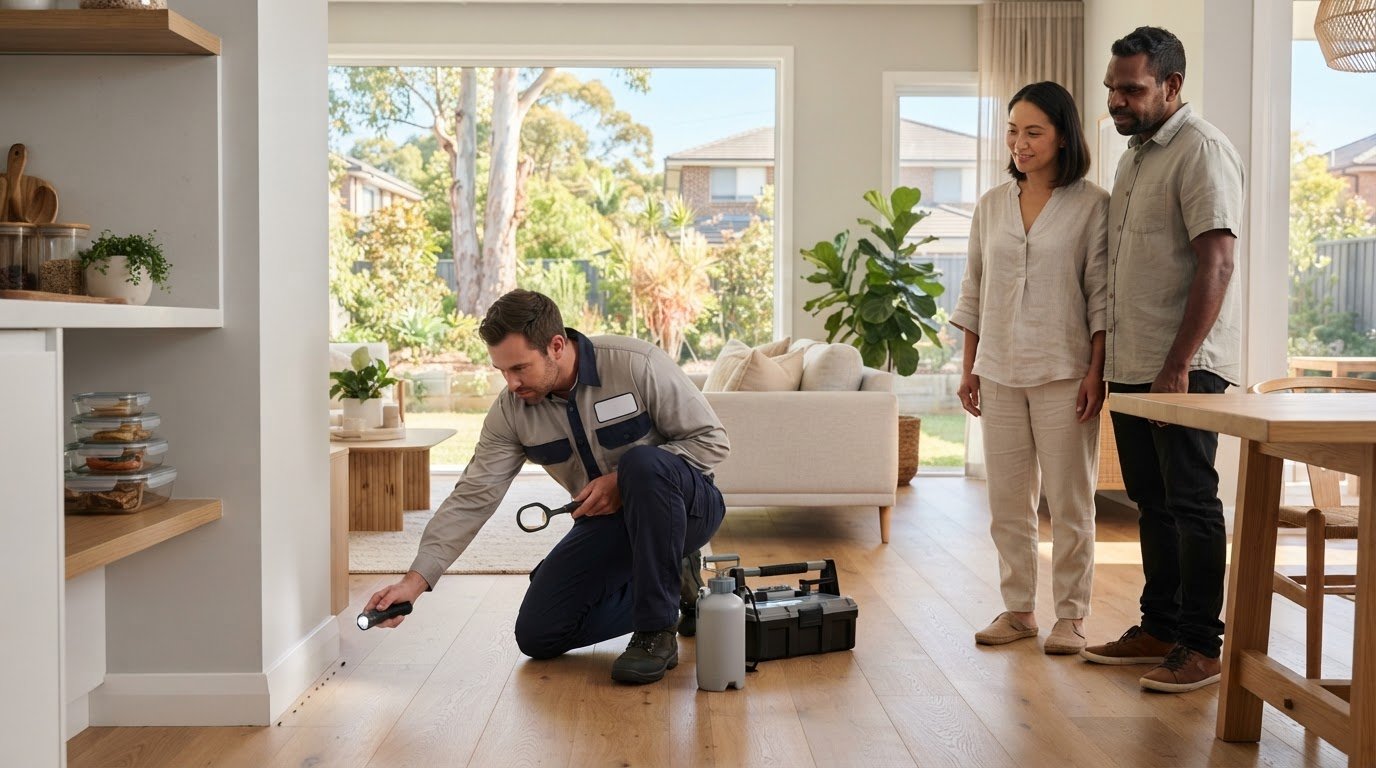
Professional intervention relies on science and precision. A pest control Sydney expert doesn’t just spray the interior of your home. We focus on the perimeter to create a “non-repellent” barrier. This allows pests to walk through the treatment and carry it back to the nest, effectively eliminating the colony at its source. Our methods use residual treatments that remain active for months, providing ongoing protection as the winter chill deepens. All our procedures comply with Australian Standard AS 3660, ensuring the highest level of safety and efficacy for your property.
Don’t let a small sighting turn into a full-blown winter infestation. Secure your home today by booking one of our General Pest Control Packages for total peace of mind.
ABC Pest Control Sydney: Your Winter Protection Plan
Effective pest management requires deep local knowledge. At ABC Pest Control Sydney, we have spent over 20 years protecting residential properties across the metropolitan area. We understand exactly why cockroaches and spiders begin moving indoors in search of warmth as the seasons shift. Our “Sydney-Proof” approach is specifically designed for the unique NSW climate and the resilient pests that call it home. We don’t believe in temporary fixes. We focus on long-term prevention. Our methods are eco-friendly and safe for your family and pets, providing total peace of mind without compromising on the total resolution of your pest issues.
Our technicians are highly trained and fully compliant with national regulatory standards. We combine this technical expertise with a commitment to modern convenience. When you book with us, you aren’t just getting a spray; you are getting a seasoned authority that knows how to handle even the most resilient infestations in Sydney apartments and terrace houses. We mitigate your anxiety by delivering a professional, reliable service that respects your time and your property. By addressing the biological triggers we discussed earlier, we ensure your home remains a fortress against seasonal invaders.
What’s Included in a General Pest Package?
Our General Pest Control Packages offer a comprehensive shield for your property. We target up to 15 common pests in a single visit, ensuring no corner of your home is left vulnerable. Our technicians perform a deep-dive treatment into the areas where infestations actually hide, moving beyond the surface-level issues addressed by DIY products. This service includes:
- Roof Voids and Subfloors: We treat these massive “incubators” where spiders and rodents nest during the winter months.
- Internal Skirtings: We apply targeted treatments to the cracks and crevices where pests travel and hide.
- Kitchen and Wet Areas: We use advanced cockroach gel baits in cabinets and behind appliances to eliminate colonies at the source.
- External Perimeter Sprays: We create a professional-grade barrier around your windows and doors to stop pests before they breach your home.
Secure Your Home for 2026
Timing is everything when it comes to pest prevention. Autumn is the most critical time to book your annual inspection. By acting now, you disrupt the breeding cycle before the full chill of winter 2026 sets in. We respect your time and provide a modern, efficient service experience. Our rapid digital booking system allows you to secure a slot in minutes. Our technicians are punctual, professional, and trained to the highest industry benchmarks. Don’t wait for a full-blown infestation to take hold of your kitchen or bedroom. Take control of your home’s environment today.
Protect your Sydney home—Book your General Pest Control Package today!
Secure Your Sydney Sanctuary for Winter 2026
Your home shouldn’t be a winter bunker for pests. We have explored how biology and architectural gaps make your property a primary target when cockroaches and spiders begin moving indoors in search of warmth. By identifying those hidden entry points and moving beyond the “Iceberg Effect” of ineffective DIY sprays, you have already started the journey toward a safer, cleaner environment for the cooler months ahead.
Professional intervention is the final piece of the puzzle for a pest-free home. With over 20 years of local experience, ABC Pest Control Sydney provides the expert oversight needed to secure your property against even the most resilient invaders. Our General Pest Control Packages cover up to 15 common pests using eco-friendly and family-safe methods. We guarantee a professional, reliable solution that respects your time and protects your health. Take decisive action today to ensure your family remains the only residents in your home this winter.
Get a Free Quote on General Pest Control Packages and reclaim your home from seasonal invaders.
Frequently Asked Questions
Why are there suddenly so many spiders in my house in Sydney?
Spiders become more visible during autumn and winter for two primary reasons: mating season and prey availability. Male spiders often wander into living areas while searching for mates during the cooler months. Additionally, as other insects seek shelter from the cold, spiders follow their food source directly into your home. Sydney’s cooling temperatures act as a biological trigger for this increased indoor activity.
Do cockroaches really come inside for warmth?
Yes, cockroaches are ectothermic and cannot regulate their own body temperature. They rely entirely on their environment to stay alive and active. As cockroaches and spiders begin moving indoors in search of warmth, they gravitate toward stable heat sources like fridge motors, dishwashers, and water heaters. Your climate-controlled home provides the perfect tropical microclimate for them to survive the Sydney winter.
Is it normal to see more cockroaches in winter?
It is very common to notice an increase in sightings as pests migrate from the garden into your wall voids and subfloors. While they breed faster in summer, they are more concentrated indoors during winter. This makes them appear more numerous in high-traffic areas like kitchens and bathrooms. Seeing them now usually means they have already established a nesting site within your property’s structure.
How do I stop spiders and roaches from coming under my doors?
Install high-quality weather strips or door seals on all external entry points immediately. A gap as small as 2mm is enough for a German cockroach or a juvenile Huntsman to scuttle through. If you can see light under your door at night, your home is vulnerable. Combining these physical barriers with a professional perimeter spray creates a double layer of protection that most pests won’t cross.
What is the best month to get pest control in Sydney?
March and April are the most strategic months to book your annual pest treatment. Establishing a professional barrier during autumn ensures your home is protected before cockroaches and spiders begin moving indoors in search of warmth. This proactive timing disrupts the migration cycle and prevents pests from nesting in your roof voids or wall cavities before the peak of winter arrives in 2026.
Are the spiders moving indoors dangerous to my pets?
Most common indoor spiders like the Huntsman are not medically significant to pets, though a bite can cause localized swelling or pain. However, more dangerous species like the Redback or Funnel-web may seek shelter in garages or subfloors during the colder months. These species pose a much higher risk to curious cats and dogs. Professional treatments help eliminate these threats and provide essential safety for your animals.
Can I get rid of a cockroach infestation on my own?
DIY methods rarely succeed against established colonies because they only target the visible 10% of the population. Supermarket sprays don’t reach the nest core hidden deep inside your walls. Professional technicians use specialized gel baits and non-repellent sprays that allow roaches to carry the treatment back to the colony. This is the only way to ensure the total resolution of the infestation and stop the breeding cycle.
How long does a professional pest treatment last in Sydney?
A high-quality professional treatment typically provides robust protection for 6 to 12 months. Factors like heavy Sydney rainfall or high humidity can impact the longevity of external barriers over time. We recommend an annual inspection and treatment plan to maintain your home’s security. Regular maintenance ensures that your protective shield remains effective year-round, regardless of seasonal temperature shifts or pest activity levels.