

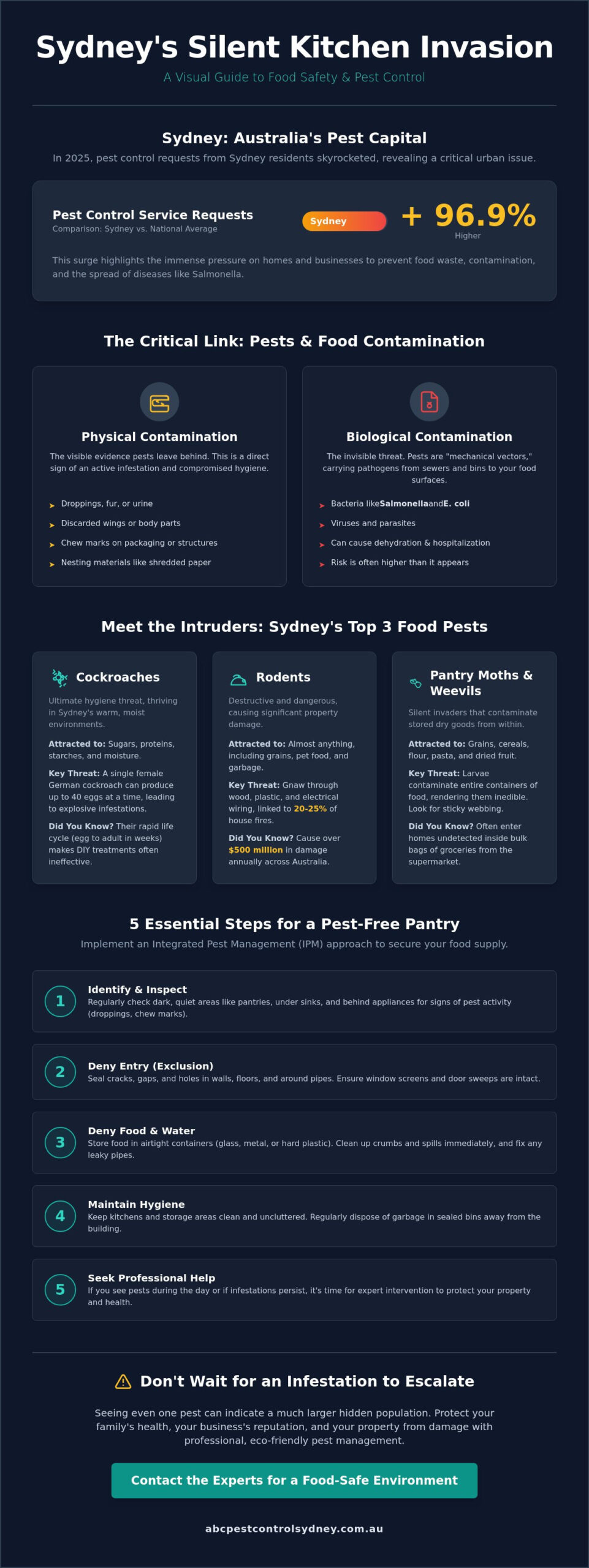
Did you know that Sydney was officially named Australia’s pest capital in 2025, with local residents requesting pest control services at a rate 96.9% higher than the national average? It’s a stressful reality for anyone trying to maintain a clean kitchen. You likely feel the constant pressure of preventing food waste due to contamination or the deep anxiety that comes with the threat of diseases like Salmonella. Whether you are worried about your family’s health or the risk of failing a strict NSW food safety inspection, the presence of pests is a problem that requires an immediate, professional response.
The good news is that you don’t have to face these resilient intruders alone. You can learn how to identify, prevent, and eliminate the specific pests that threaten your hygiene and safety at home or in your Sydney business. This article provides a comprehensive look at modern exclusion methods and compliance with the NSW Food Regulation 2025. We will walk you through the essential steps to achieve a pest-free pantry, ensuring your property remains safe, compliant, and healthy for everyone who steps inside.
Key Takeaways
- Identify how common pathogens spread through pest activity to protect your kitchen’s hygiene.
- Recognize the “Big Three” pests targeting Sydney properties and understand what attracts them to your pantry.
- Ensure your business meets mandatory NSW Food Authority standards to avoid costly inspection failures.
- Implement five essential steps to secure your food supply using a professional Integrated Pest Management approach.
- Learn the critical warning signs that indicate it is time to call for expert, eco-friendly intervention.
Understanding the Critical Link Between Pests and Food Contamination
Pests don’t just steal a few crumbs; they actively destroy your kitchen’s hygiene. Contamination occurs the moment a pest leaves behind droppings, fur, or urine in your storage areas. These materials are more than just unsightly. They carry pathogens that can compromise your entire food supply in seconds. When you find a chewed corner of a cereal box, you aren’t just looking at physical damage. You’re looking at a site where bacteria and viruses have likely been deposited.
Pests like cockroaches and flies are known as mechanical vectors. This means they carry bacteria on their legs and bodies rather than through bites. They spend their time in sewers, drains, and bins, picking up filth. When they move onto your prep surfaces, they transfer that filth directly to your meals. This cross-contamination is a silent threat. A cockroach might nest in a dark wall cavity near a leaky pipe, then crawl across your cutting board at night. Understanding these food safety principles is the first step toward protecting your family or customers.
The economic impact of these intruders is massive across Australia. Invasive species in NSW alone cause a financial impact of at least $1.9 billion every year. In a domestic setting, this translates to hundreds of dollars in wasted groceries that must be thrown away once a single pest is detected. Don’t let your hard-earned money end up in the bin because of a preventable infestation.
Physical vs. Biological Contamination
It’s vital to distinguish between what you can see and what you can’t. Physical contamination includes visible signs like discarded wings, legs, or chew marks on packaging. Biological contamination is the invisible threat of pathogens like Salmonella or E. coli. If you see one bug during the day, it usually indicates a much larger hidden population nearby. Sydney pests are masters of concealment, meaning your food safety risk is often much higher than it appears on the surface. Pest-borne illnesses pose a severe risk of dehydration, hospitalisation, and long-term digestive complications for vulnerable individuals.
Why Sydney’s Climate Accelerates Food Pest Issues
Sydney’s unique environment acts as a breeding ground. High humidity levels during the summer months encourage German cockroaches to reproduce at an alarming rate. As the weather cools in autumn, rodents shift their behavior and seek warmth and indoor nutrition. This seasonal pressure makes consistent vigilance essential for every property owner. For a deeper look at what qualifies as a nuisance in our region, read our article What is a Pest? A Guide to Common Pests in Sydney. Acting now prevents a minor seasonal shift from becoming a permanent health hazard.
Common Sydney Pests That Target Your Food Supply
Sydney’s status as Australia’s “Pest Capital” means your kitchen is constantly under siege. Three specific intruders dominate the local landscape: cockroaches, rodents, and pantry moths. They aren’t just looking for a place to rest. They are hunting for your food supply. Each species has a specific appetite. Sugars and proteins attract cockroaches. Grains and dried cereals are prime targets for moths. Rodents will eat almost anything, including pet food left in bowls overnight.
In commercial kitchens, German cockroaches are a significant threat. Their life cycle is incredibly rapid. A single female can produce up to 40 eggs in one capsule. In the warm, moist environment of a Sydney kitchen, these pests can go from egg to adult in just a few weeks. This explosive growth makes them difficult to control without expert intervention. They don’t just contaminate surfaces; they multiply faster than most DIY treatments can handle.
Rodents are even more destructive. They don’t just eat. They gnaw. To reach sealed containers, they will chew through plastic, wood, and even soft metals. Across Australia, rodents are linked to 20-25% of all residential house fires because they bite through electrical wiring. They cause over $500 million in damage annually. If you suspect an infestation, you must act immediately to protect your property and your safety.
Pantry Moths and Weevils: The Silent Invaders
Indian Meal Moths are often the source of “creepy crawlies” in your flour or cereal. Look for tiny, off-white larvae or adult moths fluttering near the pantry. Weevils are different. They often enter your home inside bulk bags of rice or pasta bought from the supermarket. If you find sticky “webbing” inside a container, the contents are contaminated. Throw them out immediately and scrub the shelves to remove hidden eggs.
Cockroaches: The Ultimate Hygiene Threat
German cockroaches are the primary threat to Sydney restaurants and cafes. They hide in tiny crevices near heat sources like fridges, dishwashers, and ovens. Their small size allows them to squeeze into gaps only a few millimeters wide. For a complete strategy on these resilient pests, see our Sydney Pro’s Guide to getting rid of cockroaches.
Maintaining a clean environment is a legal requirement for businesses. The Food Standards Australia New Zealand guidelines suggest a robust Pest Management Plan to keep your premises safe. If you’re struggling to stay on top of the “Big Three,” consider a professional pest inspection to secure your kitchen today.
Pests and Food Safety Regulations for Sydney Businesses
Running a successful food business in Sydney—from local cafes to specialized providers like Casa Catering Sydney—requires more than just a great menu. It demands strict compliance with the NSW Food Regulation 2025, which commenced on September 1, 2025. This legislation empowers the NSW Food Authority to conduct rigorous inspections of restaurants, cafes, and processing facilities. Their goal is simple: ensure the public is protected from contamination. Inspectors look for any sign of pest activity, from droppings near storage areas to unsealed entry points that invite intruders inside.
The consequences of a failed inspection are severe. You risk heavy fines, immediate closure orders, and a spot on the public “Name and Shame” register. This list is a permanent record that can devastate your customer base. To stay compliant, you must maintain a professional Pest Control Logbook. This document acts as your first line of defense during an audit. It proves to health inspectors that you have a proactive management strategy in place rather than just reacting to problems as they arise.
Compliance rates vary across the city. In the 2024-2025 period, the meat industry maintained a 95% compliance rate, while the seafood sector saw a slight dip to 94%. These figures highlight the constant pressure on business owners to remain vigilant. Don’t wait for an inspector to find a problem you should have caught weeks ago.
HACCP Principles and Pest Management
Hazard Analysis Critical Control Point (HACCP) is an international food safety framework. Pest exclusion is a fundamental part of this system. It requires identifying potential “critical points” where pests could enter or hide and implementing controls to stop them. ABC Pest Control Sydney supports local businesses by providing comprehensive Commercial Pest Management. Our scheduled service visits ensure your premises meet these technical standards, providing the documentation necessary to satisfy even the strictest health audits.
Protecting Your Brand Reputation
A single viral social media post showing a pest in your dining area can destroy your brand overnight. In the digital age, news of a sighting spreads faster than the pests themselves. Prevention is always more cost-effective than trying to repair a ruined reputation. Investing in regular professional monitoring keeps your environment pristine and your customers safe. Every Sydney food business has a non-negotiable legal obligation to keep their premises entirely free of pests at all times.
5 Essential Steps to Keep Pests Out of Your Pantry
Integrated Pest Management (IPM) is the gold standard for maintaining a healthy home environment. This approach moves away from relying solely on reactive sprays and focuses on long-term prevention through environmental changes. Your first line of defense is rigorous sanitation. Pests don’t need a feast to survive; a few crumbs behind a toaster or a sticky spill inside a cupboard hinge are enough to sustain an entire colony. By removing these attractants, you make your kitchen an inhospitable environment for intruders. Take action today by identifying the hidden spots where debris collects.
Storage techniques are just as critical as cleaning. Many dry goods come in flimsy cardboard packaging that offers zero protection against gnawing teeth or boring larvae. Transfer your food into airtight glass or heavy duty plastic containers immediately after shopping; for instance, once you check out Byron Nuts – all about the flavour and bring home their premium snacks, proper sealing is key to keeping them pest-free. This simple habit creates a physical barrier that most pests cannot penetrate. Use the “First In, First Out” (FIFO) method to ensure older stock is used before it becomes a breeding ground for pantry moths. Rotating your supplies prevents items from sitting forgotten at the back of the shelf for months.
Storage and Sanitation Best Practices
Eliminating “dead zones” is a high priority task for any Sydney resident. Pull out your fridge and clean the floor beneath it, as well as the dust on the coils. Scrape out the organic debris that collects in the tracks of sliding pantry doors or under the rims of sinks. These hidden spots often accumulate enough matter to feed cockroaches and silverfish for weeks. A pristine kitchen is your most powerful tool in the fight for food safety and family health.
Exclusion and Environmental Control
Sydney’s unique mix of historic terrace houses and high density apartments provides countless entry points for pests. A mouse can squeeze through a gap the size of a ballpoint pen. Use weather strips on external doors and install fine mesh screens on windows to block entry. Pay close attention to where pipes enter the walls under your sink; seal these gaps with expanding foam or steel wool. Don’t ignore a leaky tap or a damp cupboard. Moisture is a primary draw for German cockroaches and ants seeking a reliable water source. If you need a deeper dive into stopping larger intruders, read Your Complete Guide to Safe & Effective Rodent Control in Sydney.
Take control of your home today. If you suspect an infestation has already taken hold in your kitchen, book one of our General Pest Control Packages to restore your peace of mind and protect your property.
Expert Pest Management for Food-Safe Environments
While proactive cleaning is your best defense, professional intervention becomes essential the moment you see a pest during daylight hours. Daytime sightings of cockroaches or rodents are a critical red flag. They usually indicate that nesting sites are overcrowded and the population has grown beyond your control. You need a solution that reaches deep into wall cavities and equipment motors where DIY sprays cannot penetrate. Waiting even a few days can allow a minor nuisance to escalate into a full-scale food safety crisis.
ABC Pest Control Sydney brings over 20 years of local experience to every property we service. We understand the unique behaviors of Sydney’s most resilient species. Our approach is built on reliability and technical expertise, ensuring your kitchen remains a safe environment for your family or customers. We don’t just treat the symptoms; we identify the root cause of the infestation to provide a permanent resolution. Our Commercial Pest Management strategies are specifically designed to keep businesses compliant with the latest NSW health standards.
Safe and Targeted Treatments
We prioritize environmental responsibility and safety in every treatment we apply. Many homeowners make the mistake of “bombing” their kitchen with broad-spectrum aerosols. This method is often ineffective and can be dangerous if residues settle on food preparation surfaces. Instead, we utilize advanced gel baits and non-toxic monitoring stations. These tools are highly attractive to pests but remain contained and safe for use in sensitive areas. Our technicians place these treatments in strategic locations that pests frequent, ensuring maximum impact with minimal chemical exposure. This targeted methodology is why we are trusted by high-pressure commercial kitchens across the city.
Book Your Food Safety Pest Inspection
A professional kitchen inspection is a comprehensive audit of your property’s defenses. We examine storage racks, check for structural gaps, and review your sanitation protocols. For residential clients, our General Pest Control Packages provide a robust shield that protects your pantry from the “Big Three” pests throughout the year. For business owners, we help maintain the mandatory documentation required for health inspections. Act now before a single sighting turns into a major infestation. Our booking process is fast and efficient, respecting your time and restoring your peace of mind immediately. Secure your Sydney kitchen with ABC Pest Control today and ensure your environment remains pristine and pest-free.
Secure Your Kitchen and Protect Your Health Today
Maintaining a pest-free environment is a non-negotiable part of living and working in Australia’s pest capital. You now understand the critical link between local intruder activity and the safety of your food supply. By implementing airtight storage, sealing structural entry points, and maintaining strict sanitation, you can effectively mitigate the risk of disease and contamination. For Sydney business owners, proactive management is the only way to ensure compliance with the NSW Food Regulation 2025 and protect your hard-earned reputation.
Don’t wait for a minor sighting to escalate into a costly health crisis or a failed inspection. ABC Pest Control Sydney offers over 20 years of regional expertise and uses eco-friendly, food-safe treatment methods. We provide compliance-ready reporting for commercial clients and comprehensive protection for every household. Take the final step toward total peace of mind and a pristine kitchen. Protect Your Food and Family—Book a Sydney Pest Inspection Now. You have the power to keep your home or business safe; start your professional protection plan today.
Frequently Asked Questions
Can pests in my food make me sick?
Yes, pests are primary carriers of dangerous pathogens that cause severe illness. Rodents and cockroaches transfer bacteria like Salmonella and E. coli from sewers and drains directly onto your prep surfaces. This biological contamination can lead to serious foodborne diseases, hospitalisation, and long-term health complications. Protect your family by ensuring your kitchen remains a sterile environment through professional exclusion and regular monitoring.
How do I know if my pantry food is contaminated by pests?
Check for physical signs like chew marks on cardboard, fine silky webbing in grains, or small dark specks that resemble pepper. These are clear indicators that pests have accessed your food supply. If you notice a stale or musty odor coming from your cupboards, it often signifies a hidden infestation. Discard any compromised items immediately and scrub the area to remove invisible eggs or pheromone trails.
What are the most common pests found in Sydney kitchens?
The “Big Three” kitchen pests in the Sydney region are German cockroaches, rodents, and pantry moths. Sydney’s high humidity and urban density create the perfect breeding ground for these resilient intruders. While cockroaches seek out moisture and heat near appliances, rodents hunt for easy access to unsealed grains. Pantry moths are often accidentally brought home inside bulk grocery items, allowing them to spread rapidly through your cupboards.
Is it safe to use pest sprays around food preparation areas?
Using generic aerosol sprays in a kitchen is often dangerous and counterproductive. These chemicals can easily drift onto plates, cutlery, and ingredients, creating a chemical contamination hazard. Professional technicians use targeted gel baits and non-toxic monitoring stations instead. These methods effectively eliminate pests without releasing harmful residues into the air where you prepare your meals. Always prioritize food-safe, professional-grade treatments for kitchen environments.
What should I do if I find a cockroach in my restaurant?
Act immediately to prevent a minor sighting from becoming a public health violation. Isolate the area, check your storage for contamination, and contact a professional for a commercial pest management audit. Under the NSW Food Regulation 2025, businesses must prove they are taking proactive steps to remain pest-free. Failure to do so can result in heavy fines or your business appearing on the public Name and Shame register.
How often should a food business have a professional pest inspection?
High-risk food businesses in Sydney should schedule professional inspections at least once every three months. Some high-volume cafes or restaurants may require monthly visits to ensure total compliance with FSANZ standards. Regular monitoring creates a “Pest Control Logbook” that health inspectors use to verify your commitment to safety. Consistent professional oversight is the most cost-effective way to avoid the catastrophic financial impact of a forced closure.
Do I need to throw away all my food if I find pantry moths?
You must discard any food items that show visible signs of larvae or sticky webbing. Even if a package looks intact, moths can lay microscopic eggs in the folds of plastic or cardboard. To be safe, inspect every unsealed container in the affected area. Transfer all salvageable dry goods into airtight glass or heavy-duty plastic containers to prevent the remaining population from finding a new source of nutrition.
What are the signs of rodents in a kitchen besides droppings?
Look for dark smudge marks along skirting boards caused by the oils in rodent fur. You may also find gnaw marks on wooden cabinets, plastic containers, or even electrical wiring. A sudden, sharp ammonia-like smell often indicates a nearby nesting site. Listen for scratching sounds in the walls or ceiling at night. If you notice these signs, take urgent action to seal entry points before the population expands further.