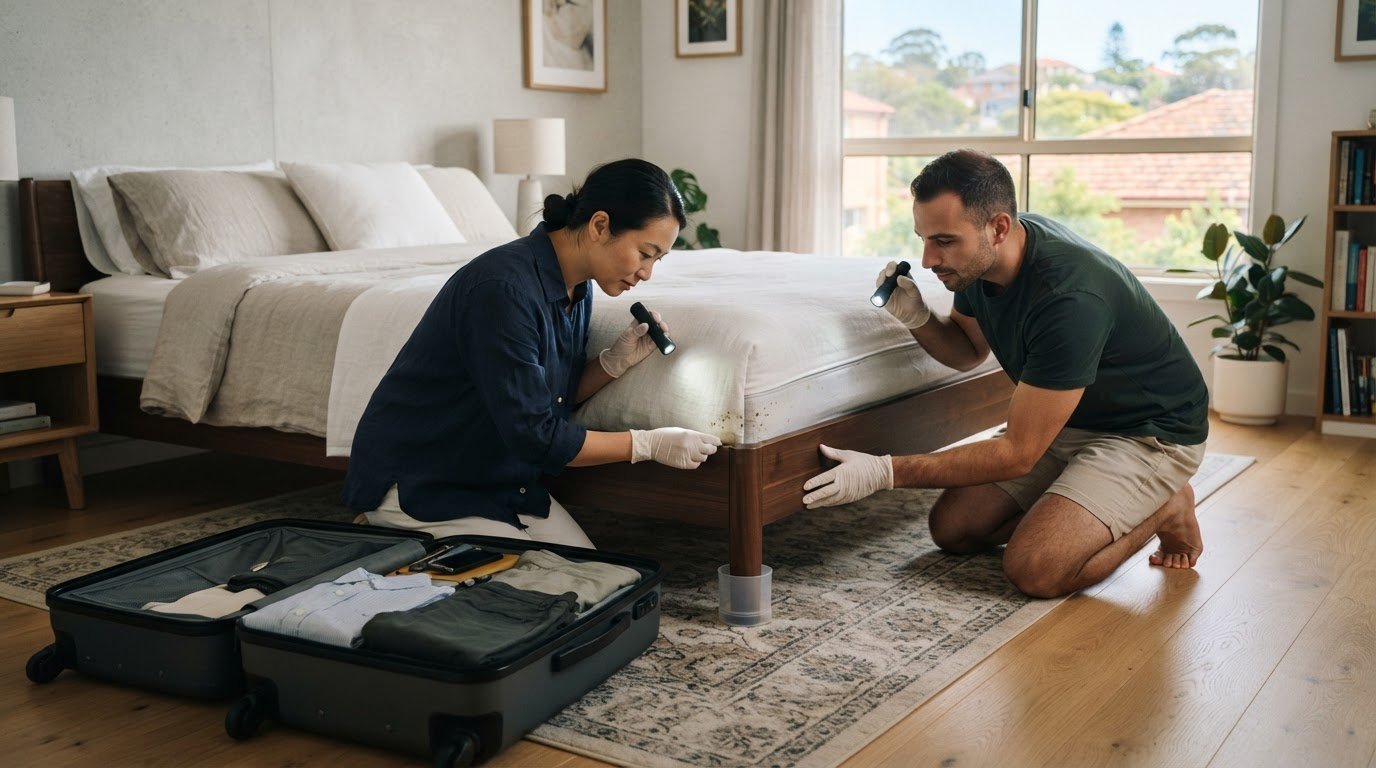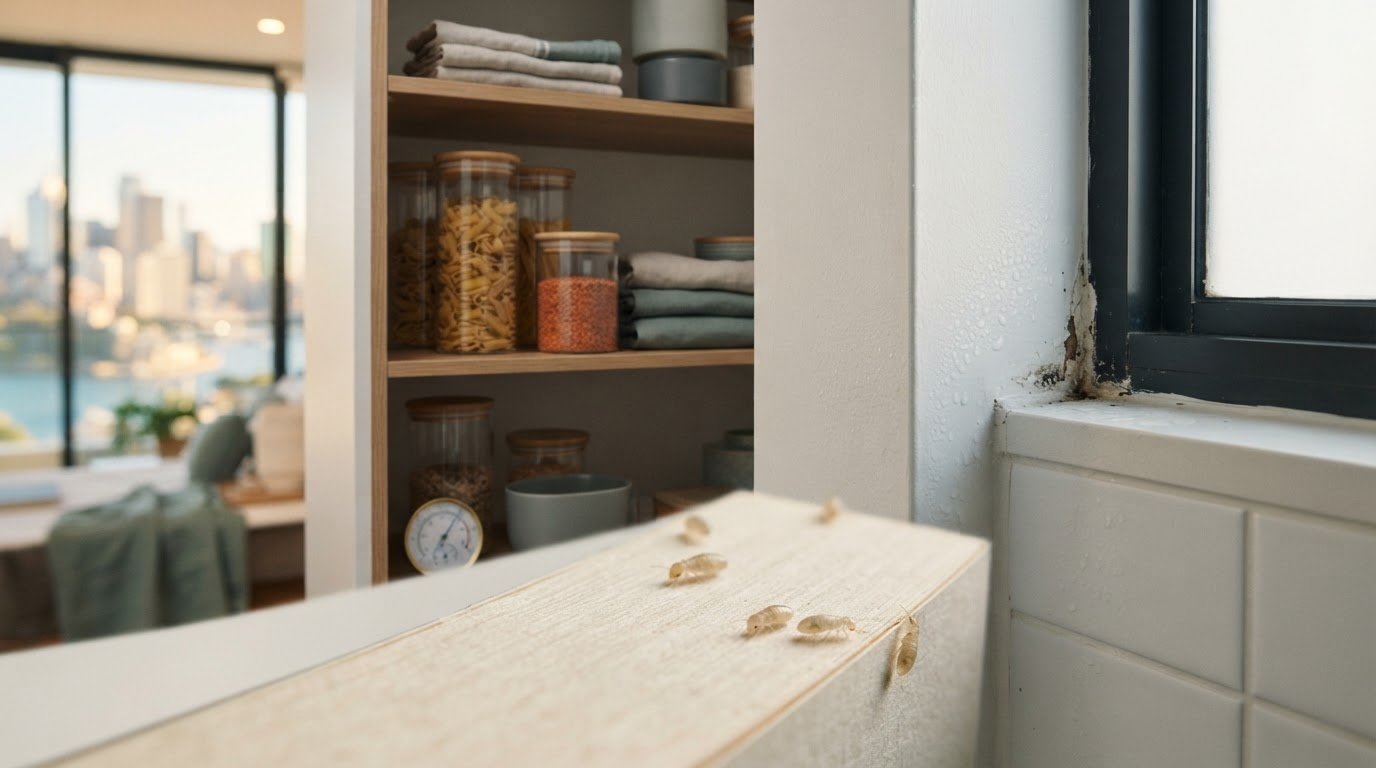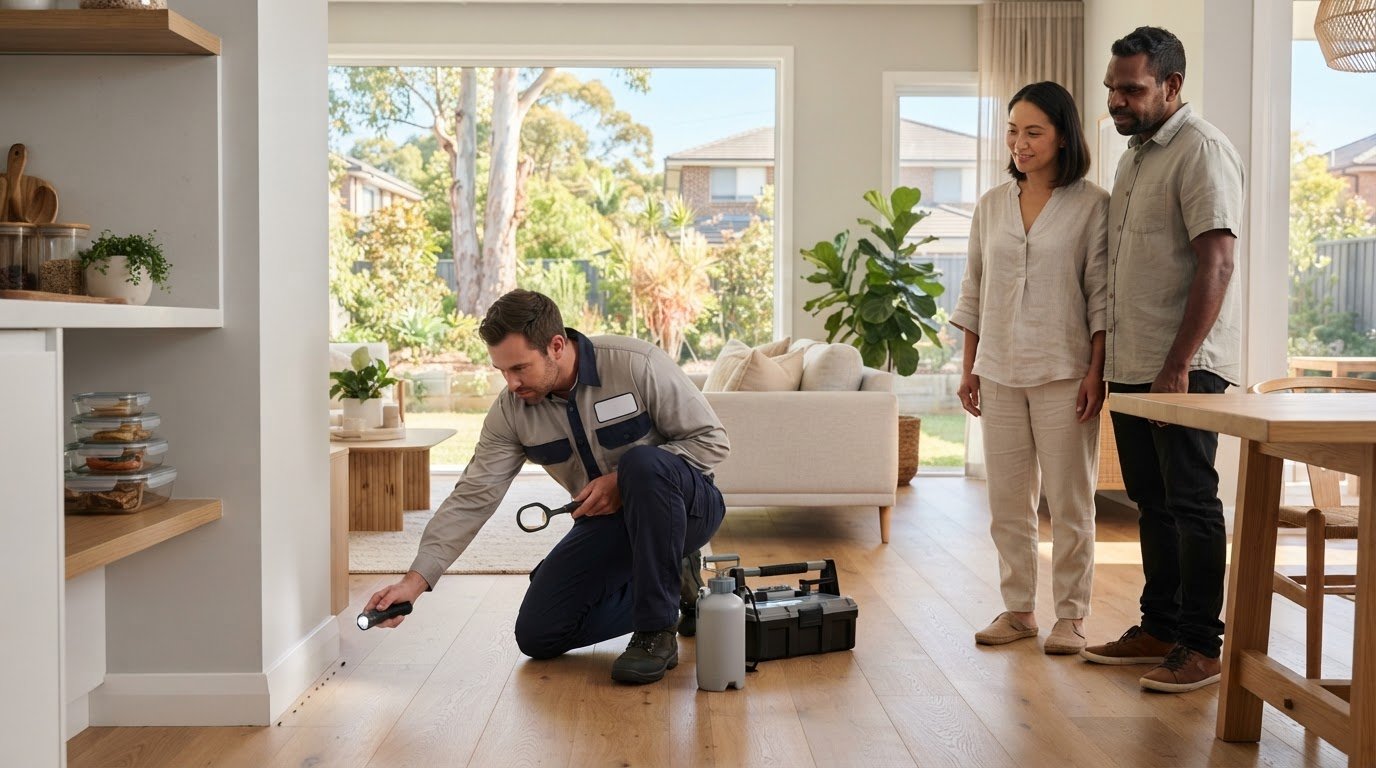


Why does a spotless Sydney kitchen still attract a persistent trail of ants or the sudden scurry of a rodent? It’s a common source of confusion for homeowners who believe cleanliness is the only defense. The reality is that pests aren’t just looking for a quick meal. They’re driven by deep biological instincts to find a reliable source of hydration, food, and shelter. Even an organized home can harbor hidden vulnerabilities that provide the perfect environment for an infestation to take root.
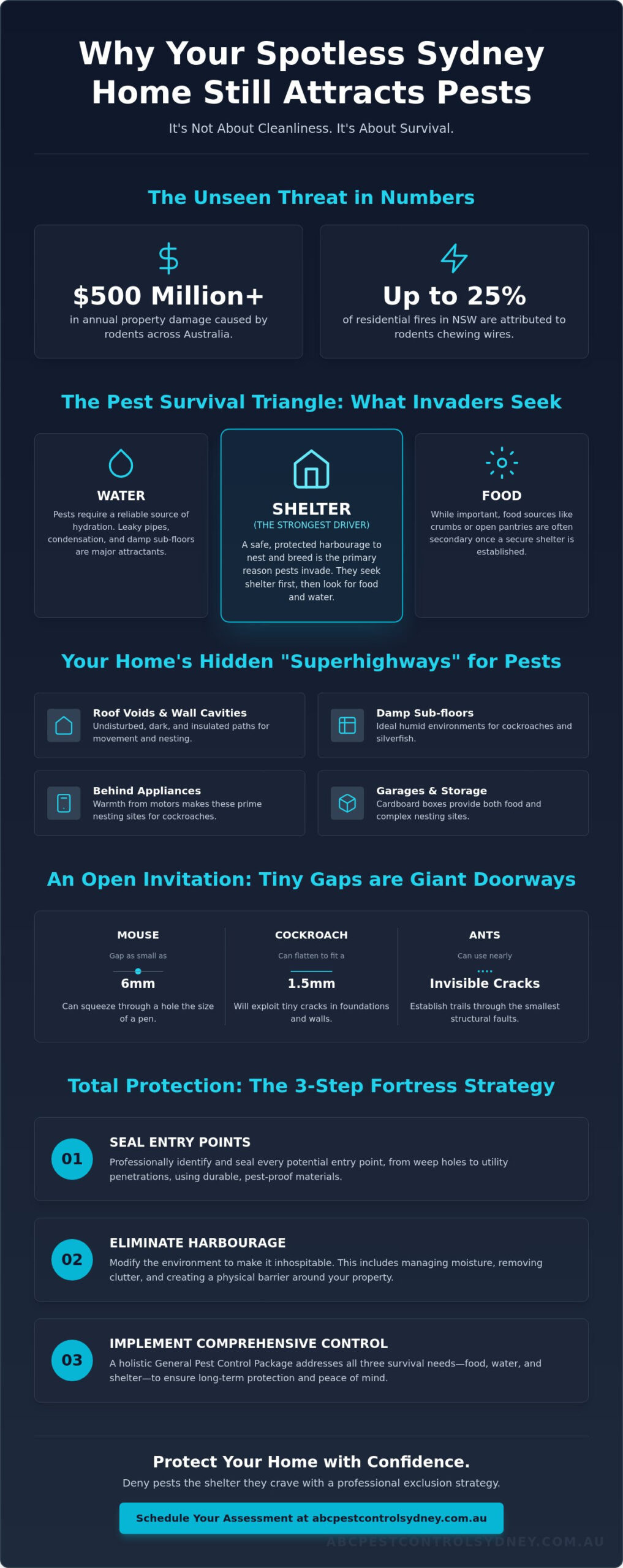
We understand the frustration of recurring sightings and the anxiety caused by potential property damage. Rodents alone cause over $500 million in damage across Australia annually, and they’re responsible for up to 25 percent of residential fires in NSW. This guide will show you how to identify hidden nesting sites and implement professional exclusion strategies. You’ll discover why pests target your specific property and learn how to permanently deny them the survival resources they crave. We’ll break down the biological drivers of their behavior so you can protect your home with confidence.
Key Takeaways
- Understand the biological drivers behind infestations by learning how pests prioritize food, water, and shelter.
- Identify common architectural “superhighways” in Sydney homes, such as roof voids and wall cavities, where pests typically nest.
- Learn why even gaps as small as a few millimetres allow pests to exploit structural vulnerabilities and turn your property into a fortress.
- Seal entry points using professional exclusion strategies to permanently harden your home against opportunistic invaders.
- Explore how comprehensive General Pest Control Packages provide a total solution by addressing all three survival needs for long-term protection.
The Survival Triangle: Why Pests Seek Food, Water, and Shelter
Every pest infestation is a biological response to three non-negotiable requirements: food, water, and shelter. While homeowners often focus on removing crumbs or fixing leaky taps, the need for a safe harbourage is often the strongest driver of a persistent invasion. Even if your kitchen is spotless, pests will enter your property simply to escape predators or the harsh Sydney weather. We define pest shelter as any protected environment that allows for nesting and breeding. Without these safe spaces, pests cannot survive long enough to become a problem.
Effective long-term control relies on Integrated Pest Management, which emphasizes habitat manipulation. By removing the physical conditions that allow pests to thrive, you break their survival cycle. You must understand that even without a readily available food source, pests will invade your home just to find a secure location to hide. Once they’ve established a base, they’ll eventually find a way to access your pantry or water pipes.
The Biological Drive for Protection
Many common Sydney pests, such as German cockroaches and rodents, are thigmotactic. This means they have a physical need to feel solid surfaces against their bodies, driving them into the narrowest cracks of your home. These cramped areas provide the security they need to rest, hide from predators, and reproduce. Shelter also acts as a vital temperature regulator. When Sydney’s humidity spikes or winter nights turn cold, your wall cavities and roof voids offer a stable, protected climate. Once a pest finds a secure nesting site, population growth accelerates at an alarming rate. In these undisturbed environments, a small intrusion can turn into a full-scale infestation in weeks. Delaying action only gives these populations more time to establish a permanent foothold.
Why “Clean” Homes Still Get Pests
A common misconception exists that only neglected or “dirty” properties suffer from infestations. This simply isn’t the case. While some pests are attracted to organic waste, many others are purely shelter-seeking. For species like termites, spiders, or silverfish, a structural gap or a damp subfloor is far more inviting than a crumb on a countertop. Your home’s architectural design often provides “superhighways” like internal plumbing stacks or electrical conduits. These have nothing to do with your cleaning habits. If your property has accessible entry points, pests will treat it as a fortress regardless of how often you mop. They aren’t judging your housekeeping; they’re responding to a biological mandate to find food, water, and shelter. Denying them this access is the only way to achieve long-term peace of mind.
Identifying ‘Shelter’ Hotspots in Your Sydney Property
Sydney properties are built to breathe, but this ventilation often provides the perfect entry point for unwanted guests. Whether you live in a classic Victorian terrace in Paddington or a modern apartment in Parramatta, your home’s architecture contains hidden voids. These spaces are more than just empty gaps; they’re the “superhighways” for Sydney pests. Roof voids and wall cavities offer a direct, undisturbed path from one end of your property to the other. By identifying these hotspots, you can make your home unattractive to pests by removing their access to food, water, and shelter.
Moisture is a significant factor in Sydney’s coastal climate. Sub-floors that lack adequate ventilation become damp, humid environments. This is the ideal habitat for cockroaches and silverfish. Understanding the difference between internal and external harbourage is the first step toward a pest-free home. Internal sites are where they breed and rest, while external sites are the staging grounds they use before launching an invasion. If you suspect your roof void has become a breeding ground, our Sydney pest specialists can provide a thorough assessment to locate these hidden nests.
Common Internal Nesting Sites
Pests prioritize warmth and darkness. The area behind large appliances like fridges and dishwashers is a prime real estate for German cockroaches because of the constant heat generated by the motors. You should also check inside electrical junction boxes and behind skirting boards. These areas are rarely disturbed, allowing for rapid population growth. Cluttered garages and “forgotten” cupboards under the sink are also high-risk zones. Cardboard boxes, in particular, provide both a food source and a complex maze of nesting sites. Move items into plastic tubs to deny them this easy harbourage.
External Harbourage and Entry Points
Your home’s exterior is the first line of defense. Weep holes in brickwork are essential for ventilation, but they’re also an open door for white ants and other crawling insects. Overhanging tree branches act as bridges, allowing rodents to bypass ground-level defenses and enter your roof through the eaves. Garden mulch and woodpiles stacked against the main structure are also dangerous. They retain moisture and provide a direct path into your wall cavities. Keep garden beds at least 30cm away from the foundation and trim all vegetation back from the roofline. These simple changes significantly reduce the likelihood that a pest will find the food, water, and shelter they need to survive on your property.
Structural Vulnerabilities: How Pests Turn Your Home into a Fortress
You might think your home is sealed tight because you don’t see visible holes. This is a dangerous misconception. Most pests don’t need a wide-open door; they exploit microscopic structural vulnerabilities that the average homeowner overlooks. A young rodent can squeeze through a gap as small as 6mm, roughly the width of a pencil. Cockroaches are even more opportunistic, navigating spaces as narrow as 2mm. These tiny entry points are often located in “blind spots” like the gaps where plumbing pipes penetrate walls or the expansion joints in your concrete slab. By entering these spaces, pests find the perfect combination of food, water, and shelter.
Pests don’t just find a place to hide; they actively modify your home to suit their needs. Once they’ve breached the exterior, they turn your wall cavities and sub-floors into a protected fortress. They use your insulation for warmth and your timber for structural support. This internal nesting allows them to breed undisturbed, far away from the reach of surface-level cleaning products. Addressing these vulnerabilities requires more than a quick fix. It demands a professional understanding of how different species exploit building materials to establish a permanent presence.
The Hidden Danger of Termite Shelter
Termites are masters of environmental engineering. They build specialized mud tubes to maintain the high humidity and darkness they need to survive. These tunnels act as a private, climate-controlled shelter that protects them from predators and the drying effects of the air. This artificial shelter allows them to travel from the soil directly into your roof and wall frames without ever being seen. Because they eat your home from the inside out, structural integrity can be compromised before you notice a single sign of activity. Regular termite inspection sydney is the only reliable way to detect these hidden tunnels. One in three Australian homes will experience a termite attack, making professional monitoring a necessity rather than an option.
Rodents and the Search for Warmth
As Sydney temperatures drop during autumn and winter, rodents instinctively seek the warmth of your roof insulation. They aren’t just looking for a temporary bed; they’re looking to expand their nesting space. Mice and rats will gnaw through timber, plastic, and even soft metals to create new pathways within your walls. This behavior poses a significant fire risk. Rodents frequently chew through electrical wiring, and NSW Fire & Rescue attributes 20 to 25 percent of all residential house fires to this specific problem. Effective rodent control focuses on identifying and sealing these structural entry points. You must harden your home’s exterior to ensure these pests never get the chance to settle in and cause irreversible damage.
Hardening Your Home: Professional Strategies to Deny Pests Shelter
Exclusion is the most effective long-term pest management strategy available. It shifts the focus from reactive treatments to proactive prevention. By physically blocking entry points, you create a permanent barrier that denies pests access to food, water, and shelter. This process, often called “building pests out,” is essential for Sydney homes where environmental pressures are constant. Stop relying on temporary fixes and start fortifying your property’s perimeter.
Implement these professional strategies to secure your home immediately:
- Seal every crack and crevice: Use high-quality, pest-proof sealants around window frames and door sills. Standard silicone often degrades, so choose industrial-grade materials.
- Secure weep holes: Install stainless steel mesh over weep holes in brickwork. This allows for necessary ventilation while blocking cockroaches and rodents.
- Create a “clear zone”: Maintain a gap of at least 30cm between your home’s foundation and any garden beds or storage.
- Manage moisture: Use mechanical ventilation or solar vents to reduce humidity in sub-floors. High moisture levels attract the very pests we identified in previous sections.
DIY vs. Professional Exclusion
Don’t rely on standard supermarket expanding foam to stop a determined rodent. Rats and mice can gnaw through soft foam in seconds. Professional exclusion requires industrial-grade materials like stainless steel wool, heavy-duty sealants, and metal flashing. A professional eye also spots entry points that homeowners typically miss, such as gaps in the roofline or behind fascia boards. For a permanent solution, book a professional pest inspection to identify every hidden vulnerability in your structure.
Landscaping for Pest Prevention
Your garden shouldn’t serve as a staging ground for an invasion. Trim all vegetation, including tree branches and shrubs, at least 30cm away from the home’s exterior walls. This removes the natural bridges pests use to bypass ground-level treatments. Replace organic wood mulch with gravel or river pebbles. Wood mulch retains moisture and provides a perfect nesting site for ants and cockroaches. Finally, ensure your gutters are clear. Clogged gutters lead to water pooling, which provides the hydration pests need to survive and breed near your roofline. Denying them this access to food, water, and shelter is the only way to ensure long-term protection.
Total Protection with ABC Pest Control Sydney
ABC Pest Control Sydney has protected local families for over 20 years. We’ve seen every type of infestation this city can offer, from beachfront spiders to inner-west rodents. Our approach is grounded in the biological realities we’ve discussed throughout this guide. We don’t just treat the symptoms; we dismantle the survival triangle. Our comprehensive pest control sydney packages are engineered to eliminate the sources of food, water, and shelter that keep pests coming back.
Our General Pest Control Package
Our signature service is designed for maximum efficiency and peace of mind. We target up to 15 different common Sydney pests in a single, comprehensive visit. This isn’t just a surface-level spray. Our technicians conduct a deep-dive assessment of your property’s structure. We provide you with a detailed report on vulnerabilities, such as the roof voids and wall cavities discussed in earlier sections. By identifying these entry points, we help you establish a permanent “no-go zone” for pests. Ongoing maintenance plans are available to ensure your defenses never weaken as the seasons change.
Book Your Inspection Today
Don’t wait for a minor sighting to escalate into a costly structural issue. Rodents can compromise your electrical safety, and termites can cause irreversible damage in months. Our booking process is fast and built for busy Sydney residents who value their time. We send only professional, highly trained technicians who understand the specific behaviors of local pests. Take control of your home’s safety now. Use our rapid digital booking system to secure your inspection and deny pests the food, water, and shelter they crave. Your peace of mind is our primary goal.
Secure Your Sydney Home Against Invaders Today
Protecting your property requires more than just a clean kitchen. You now understand that pests are biologically driven to exploit even the smallest structural gaps to find food, water, and shelter. By identifying hidden nesting sites and implementing professional exclusion strategies, you can break the survival cycle and stop an infestation before it takes root. Hardening your home’s perimeter is the most effective way to ensure long-term safety and peace of mind.
Don’t let a small intrusion become a major structural risk. ABC Pest Control Sydney brings over 20 years of local expertise to every inspection. We specialize in resolving complex and resilient infestations using eco-friendly and safe extermination methods. Our team is ready to identify every hidden vulnerability in your home’s design. Take back control of your living space and ensure your family’s safety from pests. Secure your home and book your General Pest Control Package today. We’re here to provide the expert intervention you need for a pest-free future.
Frequently Asked Questions
Why do pests need shelter even in the summer?
Pests seek shelter in summer primarily to regulate their body temperature and escape the intense Sydney sun. While they are more active in warm weather, extreme heat can be fatal to many species. They look for cool, dark, and humid environments within your wall cavities or sub-floors to survive the midday peaks. This protection is just as vital as finding food and shelter during the colder months. Because these humid conditions often foster mould growth alongside pests, you can learn more about remediation from MouldMen.
Can pests find shelter in a brand-new apartment?
Yes, pests frequently invade brand-new apartments through shared utility shafts and ventilation systems. Construction gaps often remain around internal plumbing or electrical conduits that haven’t been perfectly sealed. German cockroaches are also notorious for hitchhiking into new buildings via cardboard moving boxes or furniture deliveries. A modern aesthetic doesn’t prevent a pest from finding a secure harbourage in the building’s infrastructure.
How do I know if pests are nesting in my roof?
Unusual noises at night, such as scratching, scurrying, or thumping, are the most common indicators of a roof infestation. You might also notice strange, musky smells or find droppings near manhole covers and storage areas. Check for insulation that appears shredded or moved, as this is a clear sign that rodents are creating nests. If you see birds or insects frequently entering your eaves, it’s time for a professional assessment.
What is the most common entry point for pests in Sydney homes?
Unsealed weep holes and gaps around external pipe penetrations are the most frequent entry points we encounter. These small openings are essential for a home’s natural ventilation but act as an inviting doorway for crawling insects and small rodents. Windows and doors with worn weather stripping or damaged flyscreens also provide easy access. Most homeowners overlook these tiny structural vulnerabilities until a full-scale infestation is already established.
Do pests need shelter more than they need food?
Pests can often survive for several weeks without a meal, but they cannot survive long without protection from predators and extreme weather. A secure nesting site is the foundation of their entire survival strategy. They will often prioritize finding a safe harbourage first, then forage for resources once they feel secure. This is why removing access to food and shelter is the only way to achieve permanent results.
Is it possible to completely “pest-proof” an old house?
While you can’t make an old house 100 percent impenetrable, you can significantly reduce its vulnerability through professional exclusion. Older Sydney homes often have shifting foundations and warped timber that create new, hidden gaps over time. Focus on sealing high-risk areas like the sub-floor, roofline, and internal cabinetry. Regular maintenance and the use of industrial-grade sealants can make even an older property highly resilient against common invaders.
What happens if I ignore signs of pests seeking shelter?
Ignoring early signs leads to rapid population growth and potential structural damage that is often hidden from view. Small intrusions quickly turn into entrenched infestations that are much harder and more expensive to treat later. Pests like termites can compromise your home’s framing silently over several months without showing surface signs. Delaying action also increases the risk of health issues and secondary damage to electrical systems.
How often should I have a professional check for hidden nesting sites?
You should schedule a professional pest inspection at least once every 12 months to maintain proper protection. Homes in high-risk areas, such as those near bushland or properties with a history of termite activity, may require more frequent checks. Annual inspections ensure that new structural gaps are identified before pests can exploit them. Consistent monitoring is the most cost-effective way to maintain a safe and healthy home environment.