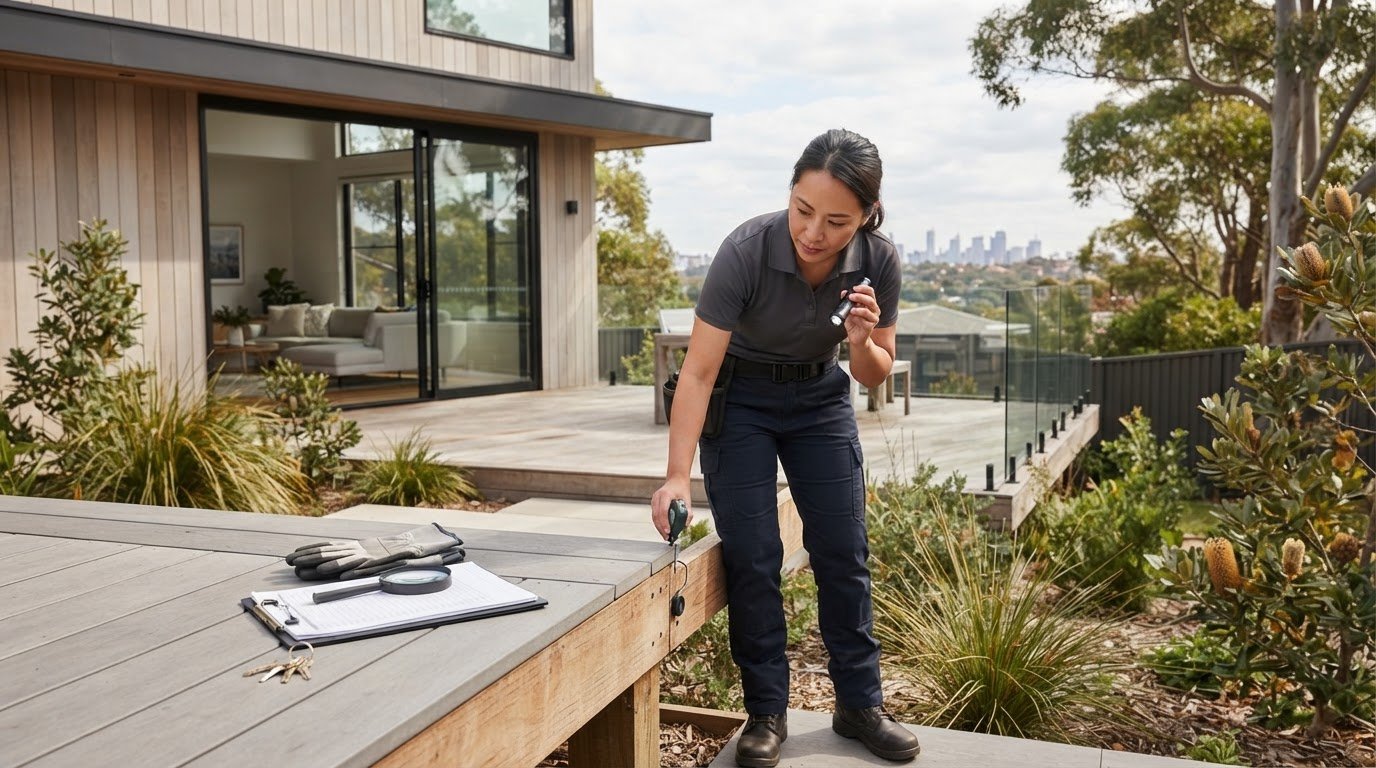
Could a pest report make your Sydney property sale clearer rather than more complicated? It’s understandable to worry that evidence of termites or other pests could unsettle buyers. A real estate pre-sale pest report sydney records observations within an agreed inspection scope. It is not a treatment plan or a guarantee that every part of a property is pest-free.
The key is knowing what an inspection can reveal and how to respond proportionately. A timber-pest report may document visible evidence of termites, borers or wood decay fungi, along with areas the inspector could not access. It is different from ongoing termite management, and neither report nor inspection is the same as pest treatment.
This 2026 seller’s guide explains what an inspection may cover, how to prepare the property and relevant records, and what to consider if findings need follow-up. You’ll also learn how to distinguish inspection recommendations from treatment, so you can take practical next steps without jumping to conclusions. ABC Pest Control Sydney brings more than 20 years of local pest-management experience, including termite inspection and treatment support when pest evidence needs attention.
Key Takeaways
- A real estate pre-sale pest report sydney records inspection observations within an agreed scope, including any areas the inspector could not access.
- Learn how pest-focused, timber-pest, and combined building-and-pest inspections differ in purpose and coverage.
- Prepare clear access to relevant areas and gather past inspection or treatment records if you have them.
- Use the report’s evidence and recommendations to decide whether monitoring, further assessment, or treatment discussions are appropriate.
- Separate observed pest evidence from assumptions, then choose a proportionate next step for the issue identified.
What Is a Real Estate Pre-Sale Pest Report in Sydney?
Before marketing a home or moving towards a sale, sellers need clear information about pest concerns, not guesswork. A real estate pre-sale pest report sydney is a written record of an inspector’s observations within an agreed scope. It helps you understand what was visible and accessible on the inspection day and identify issues that may need attention.
A pest report documents findings. It does not carry out pest treatment, and it is not a guarantee that pests are absent. Inspections are generally based on visual observations of accessible areas. Concealed spaces, blocked access or conditions that change after the inspection can limit what is observed. For a general explanation of what a home inspection is, see Wikipedia’s overview. A pest inspection has a more specific focus.
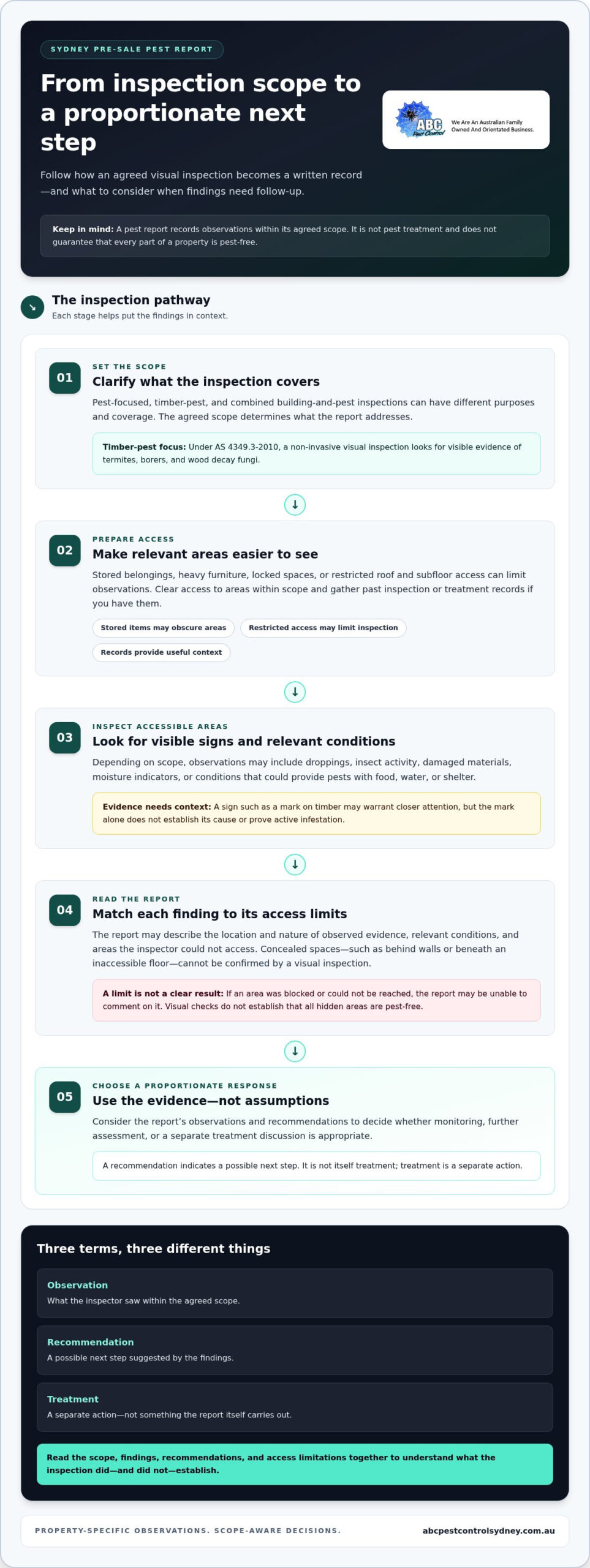
Keep these distinctions in mind: an observation describes what the inspector saw, a recommendation indicates a possible next step, and treatment is a separate action. The agreed scope determines what the report covers, so read it alongside the findings.
Why Sydney sellers seek pest information before a sale
Early awareness can help you prepare more deliberately. For example, if an inspection records visible pest activity or a timber concern, review the finding and consider an appropriate follow-up before sale discussions progress. This can support clearer conversations, but it does not guarantee a smooth transaction or determine how a buyer will respond.
Sydney homes vary in age, construction and setting. A report gives you property-specific observations rather than assumptions based on a suburb or property type.
What a pest report can, and cannot, tell you
Depending on its scope, a report may describe the location and nature of observed evidence, note relevant conditions, and recommend further assessment. It cannot establish what lies behind a wall or beneath an inaccessible floor if those areas were not examined. Treat the findings as a record of that inspection, not proof that every concealed area is clear.
Read any access limitations carefully. If a space was blocked or could not be reached, the report may be unable to comment on it. A pest report also does not answer legal questions about a sale. Disclosure duties are separate from inspection findings, so verify current NSW requirements with your conveyancer or solicitor before deciding what must be disclosed.
What Does a Sydney Pre-Sale Pest Inspection Examine?
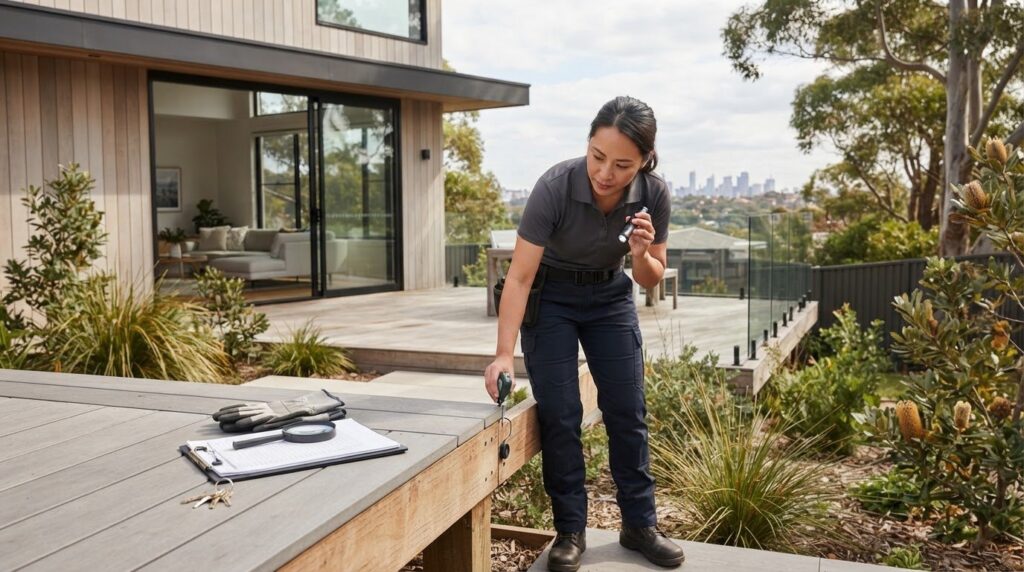
An inspection looks for evidence within its agreed scope, usually through visual checks of accessible areas. Findings may include signs of pest activity, conditions that could support pest activity, or concerns affecting accessible timber. The scope matters: a general pest inspection and a timber-pest inspection do not necessarily examine or report the same things.
For a timber-pest inspection conducted in accordance with AS 4349.3-2010, the focus includes visible evidence of termites, borers and wood decay fungi. The standard describes a non-invasive visual inspection. It does not mean the inspector can see inside walls or under every floor, so findings must be understood in light of which areas could be accessed.
Visible pest activity and conditions that may attract pests
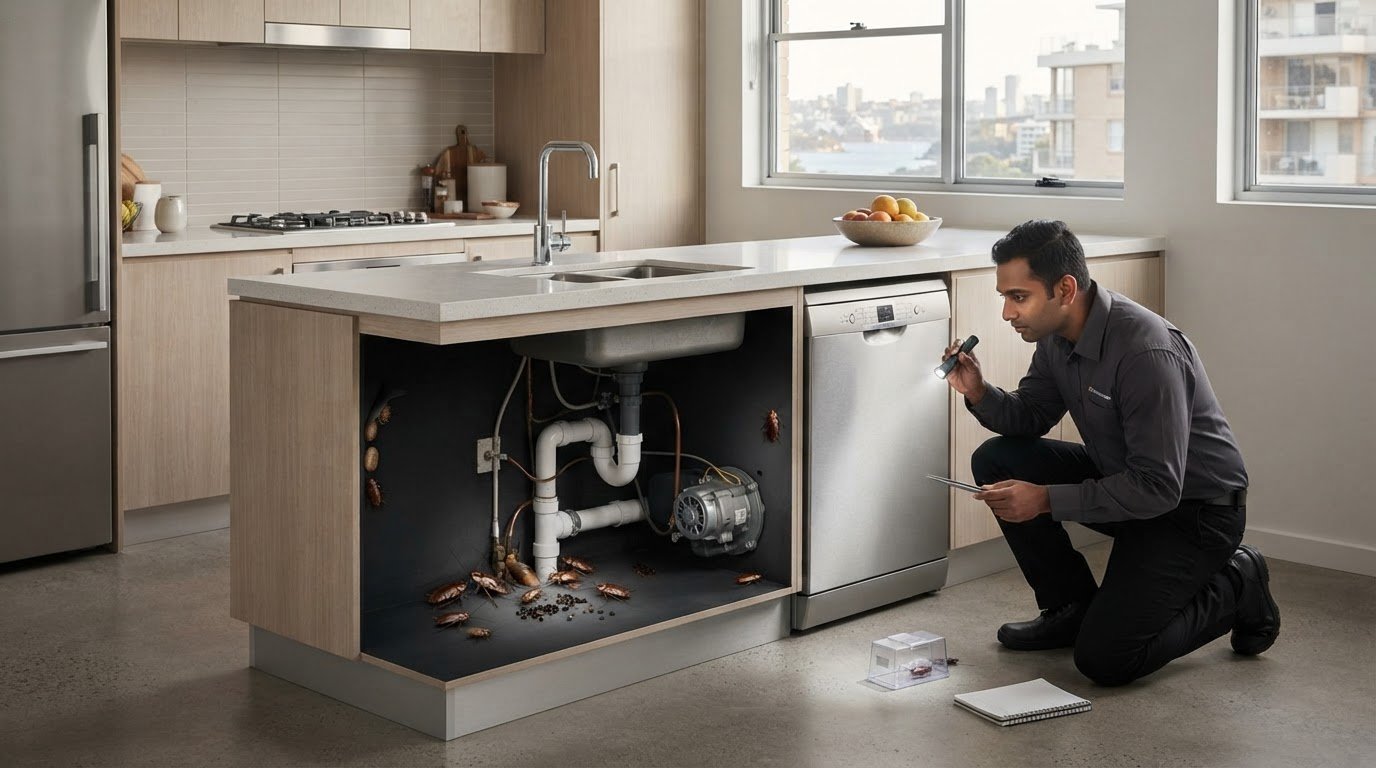
Inspectors may note observations such as droppings, insect activity, damaged materials, moisture indicators or conditions that could provide pests with food, water or shelter. These signs are evidence to assess, not automatic proof of an active infestation. For example, a mark on timber may warrant closer attention, but the mark alone does not establish its cause.
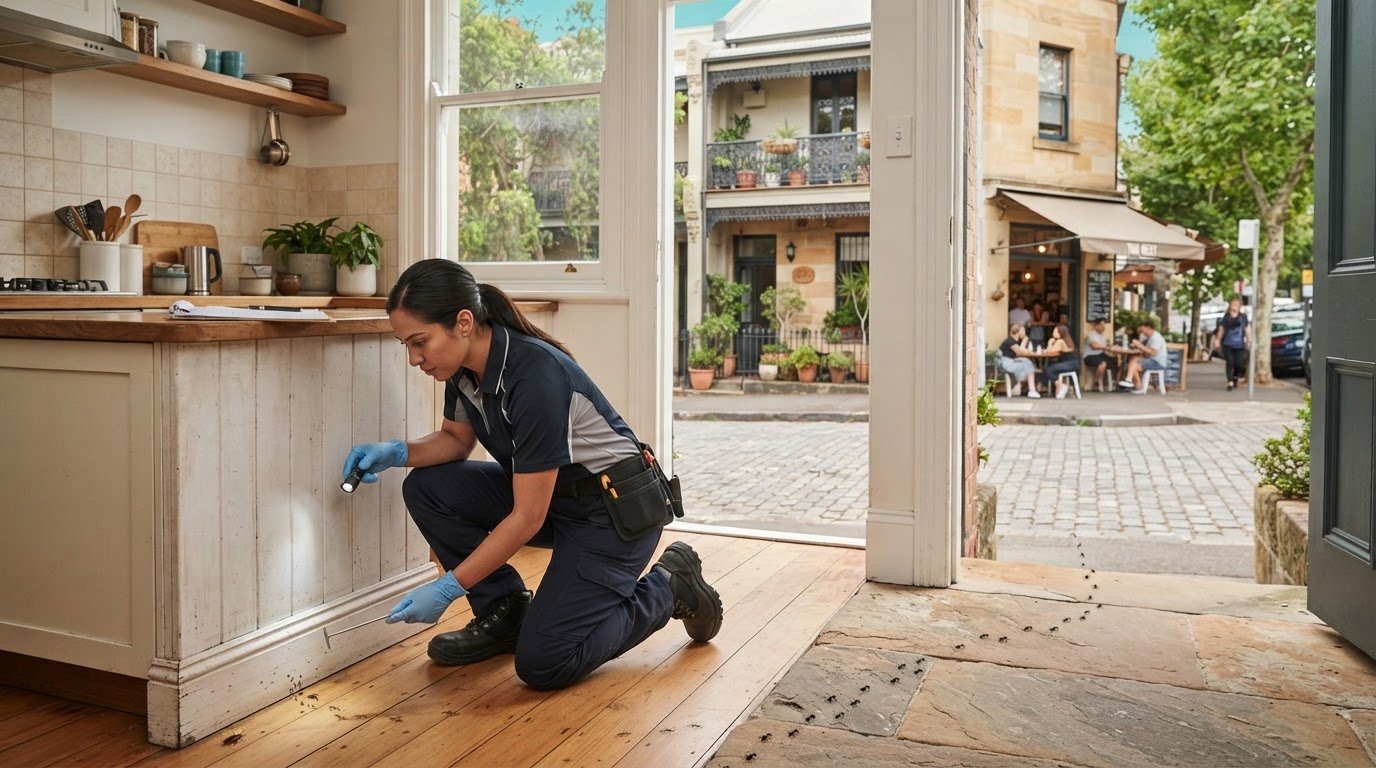
Property condition and access can shape what is visible. Stored belongings may obscure skirting boards or cupboards, while damp surfaces or recent weather may affect visible moisture clues. Clear access helps an inspector observe more of the areas within scope, but it does not remove the limits of a visual assessment.
Termites, timber pests, and inspection limitations
Termite evidence is distinct from signs of general pests such as cockroaches or rodents. A timber-pest inspection considers accessible timber and may record signs associated with termites, wood-boring insects or decay fungi. A general pest-control inspection, by contrast, focuses on the pests and scope specified for that inspection. Do not treat one as a substitute for the other.
Termites can affect concealed timber, and visual inspections cannot confirm the condition of areas that are hidden or inaccessible. Heavy furniture, stored items, locked spaces or restricted roof and subfloor access may limit observations. Read the report alongside its stated scope, findings and access limitations. For more context on the separate focus of ongoing checks, see this Sydney termite inspection guide.
A real estate pre-sale pest report sydney can help clarify what was observed, but it cannot prove that no pest activity exists beyond the inspection’s reach. If findings point to a pest concern, a separate inspection or treatment discussion may help determine a practical next step. ABC Pest Control Sydney provides residential pest-management support across metropolitan Sydney, including termite inspection and treatment services. Explore Sydney pest management support when a reported pest issue needs follow-up.
Pre-Sale Pest Report vs Building-and-Pest and Termite Inspections
These inspection types answer different questions. A pest-focused report concentrates on the pests included in its agreed scope. A timber-pest inspection looks for evidence affecting timber, while a building-and-pest inspection brings building-condition and timber-pest assessments together. The right scope depends on what you need to understand about the property.
| Inspection type | Purpose and likely focus | Key limitations |
|---|---|---|
| Pest-focused inspection | Records observations about the pests covered by the agreed scope, such as visible activity or signs that may need follow-up. | Doesn’t automatically assess structural defects or all timber pests. Coverage depends on scope and access. |
| Timber-pest inspection | Assesses accessible areas for evidence of termites, wood-boring insects and wood decay fungi. AS 4349.3-2010 applies to pre-purchase timber-pest inspections. | It’s a non-invasive visual inspection. Concealed or inaccessible areas can’t be fully assessed. |
| Combined building-and-pest inspection | Brings a building-condition assessment and a timber-pest inspection together, with distinct findings for each focus. | Combining scopes doesn’t mean every test, access point or report format is the same. Check the agreed scope and stated limitations. |
How a pest-focused report differs from a building report
A pest report records pest-related observations. A building report considers the property’s broader building condition and may identify defects outside pest management. A combined service can cover both areas in one appointment, but the findings remain distinct: evidence of pest activity isn’t the same as a building defect, and one scope shouldn’t be assumed to include the other.
For a real estate pre-sale pest report sydney, use the report’s stated scope to understand what was assessed. Don’t assume every inspection includes the same access, tests or level of detail.
When a termite inspection is the more relevant focus
Choose a timber-pest focus when the concern relates to possible termite activity or damage to timber. AS 3660.2 concerns termite management in existing structures, which is distinct from AS 4349.3-2010 for pre-purchase timber-pest inspections. A general pest treatment addresses pest control; it doesn’t replace an independent inspection report or assess concealed termite activity.
For more detail on the inspection process, read the termite inspection guide for Sydney properties. If a report identifies pest evidence that needs practical follow-up, Sydney pest management support can help you consider treatment options separately from the inspection findings.
Preparing for a Pre-Sale Pest Report in Sydney
A little preparation can help the inspector access areas within scope and understand relevant property history. For a real estate pre-sale pest report sydney, focus on clear access, useful records and specific concerns. Don’t move heavy or unsafe items yourself, and don’t assume past treatment or repairs have resolved an issue.
Before the inspection: organise access and property records
Use this checklist to prepare without changing or concealing conditions that may be relevant:
- Clear reasonable access. Move light, movable belongings away from accessible inspection areas where safe. Leave heavy furniture and unsafe items in place.
- Consider key access points. Make accessible areas such as cupboards, garages and entry points to roof or subfloor spaces as clear as practical. Note any locked, obstructed or restricted areas.
- Gather records, if available. Collect past pest or termite inspection reports, treatment records, and paperwork about repairs to affected areas. These documents provide context, but don’t prove a concern has been resolved.
- Write down what you’ve noticed. Note where and when you observed activity, damage or other concerns. Share the details during the inspection rather than guessing at the cause.
- Explain access restrictions. Tell the inspector about areas that can’t be reached and any known barriers. This helps put observations and limitations in context.
After receiving findings: prioritise practical next steps
Read the findings alongside the inspection scope and any access limitations. Separate immediate safety concerns from reported pest evidence and general maintenance observations. If the report uses unfamiliar terminology or recommends further assessment, seek clarification about what that recommendation means within the stated scope.
Then match the next step to the finding. Monitoring may be appropriate for some observations; other evidence may warrant further assessment or a discussion about pest treatment. Avoid treating every note as proof of an active infestation, and don’t assume treatment alone provides an independent inspection report.
For broader guidance on pest concerns around the home, explore the Sydney pest control guide. If the findings point to a pest issue that may need treatment, arrange Sydney pest-management support with ABC Pest Control Sydney. Its team brings more than 20 years of pest-management experience across metropolitan Sydney.
What to Do After a Sydney Pre-Sale Pest Report
A finding in a real estate pre-sale pest report sydney is a reason to review the evidence, not to assume the worst. Start with the report’s wording, scope and access notes. The right response depends on what was observed, which pest is involved, whether the affected area could be inspected and what follow-up the report recommends.
Responding to pest or termite findings without overreacting
Sort each finding into a practical next step:
- Monitor: If the report describes a limited observation without recommending immediate action, follow its monitoring guidance and keep a record of any changes.
- Seek further assessment: If the cause or extent is unclear, or the relevant area was inaccessible, arrange an assessment suited to that concern before deciding what action is needed.
- Discuss treatment: If the report identifies pest evidence and recommends control, discuss treatment options for the pest and property circumstances. Treatment addresses pest activity; it doesn’t replace an independent inspection report or guarantee that a property is pest-free.
Keep the response proportionate. A sign noted during an inspection doesn’t automatically confirm an active infestation, and termite-related concerns shouldn’t be treated as interchangeable with general pest activity. If the finding specifically concerns cockroaches, use this cockroach control guide for Sydney homes for relevant background.
Getting local pest-control support for a Sydney property
When treatment is a suitable next step, share the relevant report details with your pest-management professional. The pest identified, location of the evidence, access limits and recommended follow-up can all help inform a practical treatment discussion. Keep inspection findings and treatment records together for your property files and sale preparation.
ABC Pest Control Sydney brings more than 20 years of experience in residential and commercial pest management across metropolitan Sydney. Its services include termite inspections and treatments, as well as support for common pest concerns. Pest management focuses on the pest issue; it doesn’t certify or replace a formal pre-sale inspection report.
Ready to discuss pest or termite findings at your property? Get pest-control support for your Sydney property.
Move Forward With Clear, Practical Next Steps
A useful real estate pre-sale pest report sydney gives you evidence to work with, not a reason to jump to conclusions. Keep the inspection scope and access limitations in view, prepare relevant property records, and distinguish pest observations from timber-pest findings or broader building concerns.
Then respond proportionately. Monitoring, further assessment or a treatment discussion may each be appropriate, depending on the evidence, pest type and report recommendations. Remember that pest treatment is separate from an independent inspection report.
If the findings point to a pest concern that needs attention, ABC Pest Control Sydney provides residential and commercial pest management across metropolitan Sydney, including termite inspections and treatments. The team brings more than 20 years of pest-management experience to local property concerns.
Get experienced pest-control support for your Sydney property and take your next step with greater confidence. Clear information and practical follow-up can help you prepare thoughtfully for the sale.
Frequently Asked Questions
What is included in a real estate pre-sale pest report?
A real estate pre-sale pest report Sydney sellers commission records observations made within the inspection’s agreed scope. Depending on the inspection, it may note visible pest activity, its location, accessible timber concerns, relevant conditions and recommended follow-up. It should also identify areas that couldn’t be accessed. Read the scope and limitations alongside the findings: a visual inspection can’t confirm the condition of concealed spaces or guarantee pests are absent.
Is a pre-sale pest report the same as a termite inspection?
No. A pre-sale pest report describes findings within its agreed pest-inspection scope, while a termite inspection focuses specifically on termite evidence or management. A timber-pest inspection may also consider other timber concerns, such as borers or wood decay fungi. These services aren’t interchangeable. Check what the inspection covers and whether it is intended to produce a sale-related report, assess timber pests, or support ongoing termite management.
Do I need a pest report to sell a house in NSW?
A pest report can help you understand and document observed pest concerns, but whether one is required for your sale depends on current NSW requirements and the circumstances of the transaction. Don’t treat a report as a substitute for legal advice or assume it settles disclosure questions. Ask your conveyancer or solicitor about your obligations, including how to handle any known pest evidence or property defects.
Can a pest report guarantee a property is pest-free?
No. A pest report records what an inspector observed in accessible areas during an inspection within an agreed scope. Concealed spaces, stored belongings or other access restrictions can limit what’s visible, and conditions may change after the inspection. Treat the report as evidence from a particular inspection, not proof that every part of the property is free from pests. Follow any recommendations for further assessment or monitoring.
How should I prepare my Sydney property for a pest inspection?
Make reasonable access to inspection areas, such as cupboards, garages and accessible roof or subfloor entry points, without moving heavy or unsafe items. Gather previous pest inspection and treatment records if available, and note where and when you’ve observed activity or damage. Tell the inspector about restricted areas or access barriers. Clear access can help the inspection proceed, but it can’t eliminate the limits of a visual assessment.
What should I do if a pre-sale pest report finds termites?
Start by reviewing the exact observation, its location, access limitations and the report’s recommended next step. Don’t assume every mark or sign confirms an active termite infestation. If the report recommends further assessment or treatment, arrange the follow-up that fits the evidence. ABC Pest Control Sydney provides termite inspection and treatment services across metropolitan Sydney. Treatment is a separate action and doesn’t replace the inspection report or guarantee a pest-free property.
Can pest treatment replace a pre-sale pest inspection report?
No. Pest treatment addresses a pest-control concern; an inspection report documents observations within its agreed scope. One doesn’t replace the other. If a report identifies pest evidence, treatment may be a practical follow-up, depending on the pest and circumstances. Keep any treatment records with your property documents, but don’t present them as an independent inspection report or as proof that concealed areas were assessed.