Did you know that one in three properties in Sydney will face a termite infestation during its lifetime? These silent destroyers cause more damage to Australian homes than fires, floods, and storms combined. Most homeowners feel a deep sense of anxiety about what’s happening behind their walls, especially since 92% of standard insurance policies won’t cover the repairs. You might feel uncertain about what is involved in a termite inspection or worry that technical jargon in a report hides the true state of your property.
It’s completely normal to want certainty when your home’s structural integrity is on the line. We understand that you need more than a quick walkthrough; you need a professional forensic audit. This guide explains exactly what happens during an expert assessment, from the high-tech thermal imaging used to see through timber to the specific moisture mapping that identifies high-risk zones. You’ll discover how a thorough inspection, conducted in line with Australian Standard AS 3660.2, provides the peace of mind you deserve. We’ll preview the step-by-step process that ensures no corner of your property is left vulnerable to hidden threats.
Key Takeaways
- Understand why a professional inspection is a forensic audit that must comply with Australian Standard AS 3660.2 to protect your home.
- Discover exactly what is involved in a termite inspection, including the specific 5-point process covering both your home’s interior and exterior.
- Learn how advanced tools like thermal imaging and moisture meters detect hidden activity that is invisible to the naked eye.
- Gain the confidence to decode technical inspection reports and distinguish between active infestations and past damage.
- Protect your investment by identifying conducive conditions that increase your risk in Sydney’s unique environmental landscape.
Table of Contents
- Why a Termite Inspection is a Critical Forensic Audit of Your Home
- The 5-Point Inspection Process: Where We Look and Why
- Advanced Technology vs. Visual Checks: The Tools Involved
- Decoding the Termite Inspection Report: What the Findings Mean
- Securing Your Sydney Property with ABC Pest Control’s Expert Inspections
Why a Termite Inspection is a Critical Forensic Audit of Your Home
A termite inspection is much more than a simple walkthrough. It’s a comprehensive forensic assessment of your property designed to find evidence of termite activity or structural damage. When you ask what is involved in a termite inspection, you’re looking for a technical deep dive into your home’s safety. Professional inspections must comply with Australian Standard AS 3660.2 for existing buildings. This standard ensures every accessible area is checked using rigorous methodology rather than guesswork.
Subterranean termites are the primary threat to Australian homes. These pests move through underground tunnels and often enter houses through tiny cracks in the slab. They are nearly impossible to detect with the naked eye until the damage is severe. A professional audit identifies “conducive conditions” like high moisture levels or soil-to-timber contact. These factors act as an open invitation for a colony to move in. Modern Pest control strategies rely on data and specialized tools to find these hidden vulnerabilities. Identifying these risks early can save you from catastrophic repair bills.
The Risk of Termites in Sydney Properties
Visual vs. Professional Inspections
DIY checks often fail because homeowners don’t know where to look. You might miss subtle mud tubes or the hollow sound of a compromised skirting board. A professional inspection differs significantly from a DIY check or even a basic pre-purchase report. While a pre-purchase inspection follows AS 4349.3 to assess immediate buying risk, an annual maintenance check focuses on long-term prevention and environmental management. A professional termite audit is a non-invasive, high-tech search for timber pests and the environmental factors that encourage their growth.
The 5-Point Inspection Process: Where We Look and Why
A professional inspection isn’t a casual stroll around the yard. It’s a rigorous search for evidence that most people would never notice. When homeowners ask what is involved in a termite inspection, they’re often surprised by the sheer depth of the forensic search. We break the property down into five distinct zones to ensure nothing is missed:
- Exterior Perimeter: We look for mud tubes on the slab edge and check garden structures that might lead termites toward the house.
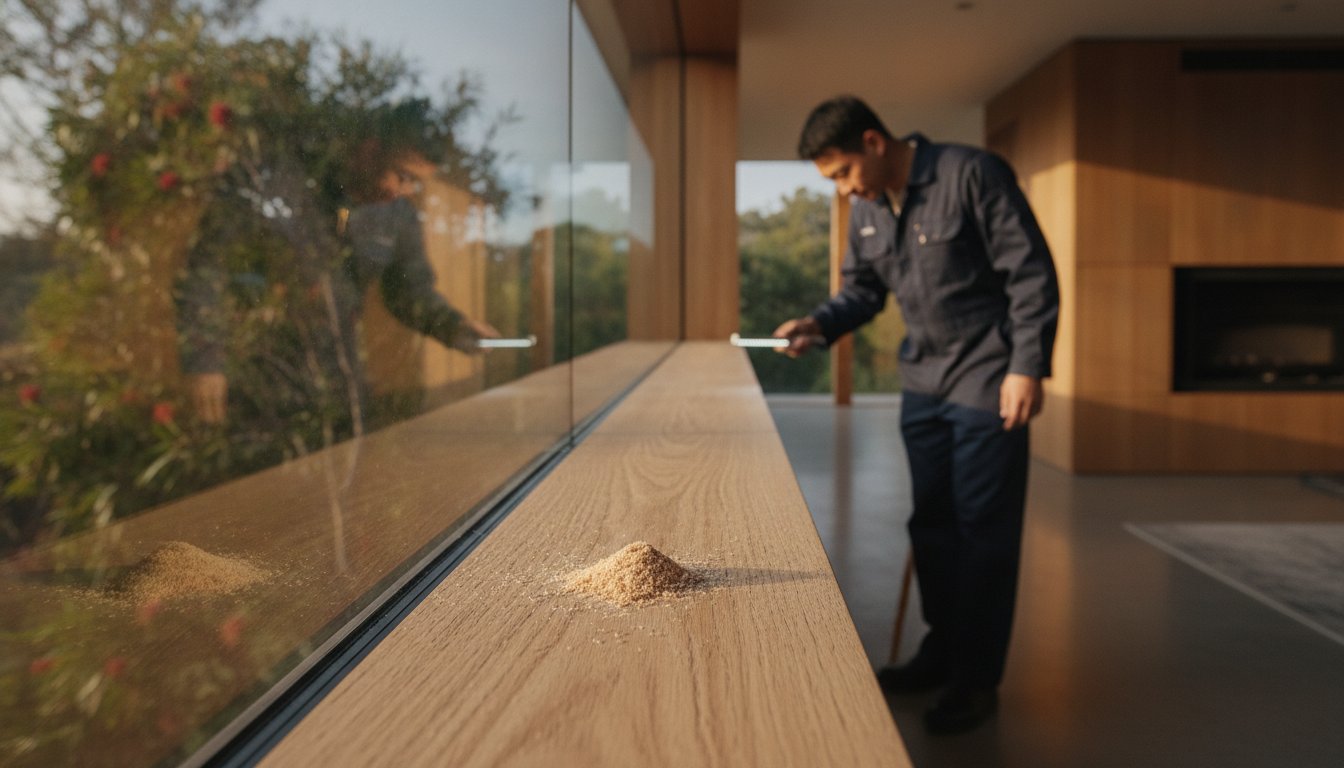
- Interior Timbers: Our team inspects skirting boards, window sills, and door frames where activity often first becomes visible.
- The Subfloor: This is a high-priority check of piers and foundations for termite highways and mudding.
- The Roof Void: We examine the structural trusses where termites often seek moisture or shelter.
- Site and Garden: We hunt for active nests in old stumps or trees across the entire property that could serve as a launchpad for an attack.
In-Depth Interior and Wall Cavity Checks
Our technicians use a specialized “tapping” method to listen for the hollow resonance of compromised timber. Termites eat wood from the inside out, often leaving just a paper-thin layer of paint or veneer. We pay close attention to dark corners and the areas behind built-in cupboards. These are prime locations for “mudding,” which is the protective soil-like material termites build to stay hydrated. According to the EPA guide to termites, identifying these early signs is vital for preventing structural failure. We prioritize wet areas like bathrooms and laundries, as the high humidity levels in these rooms are an irresistible draw for subterranean species.
Navigating the Subfloor and Roof Spaces
Older Sydney homes present unique challenges, particularly in tight crawl spaces. These subfloors are the frontline of defense. We check for “bridging,” where termites build tunnels over physical barriers, or “breaching,” where they find a way through a damaged barrier. This is physically demanding work that requires specialized training and equipment. Similarly, the roof void is a critical zone. Moisture issues from a small roof leak can attract colonizing termites, turning your structural beams into a food source. If you’re worried about hidden activity in these hard-to-reach areas, it’s worth booking a comprehensive pest control package to secure your home. Understanding what is involved in a termite inspection means realizing that we go where you can’t, ensuring every structural timber is accounted for.
Advanced Technology vs. Visual Checks: The Tools Involved
Visual checks are the baseline for any professional assessment, but they have significant limitations. Termites are experts at staying hidden. To fully grasp what is involved in a termite inspection, you must understand the technology that turns a standard walkthrough into a high-tech forensic audit. We don’t rely on guesswork. Our technicians use specialized equipment to identify threats buried deep within your home’s structure.
- Moisture Meters: Subterranean termites require high humidity to survive. These meters pinpoint elevated moisture levels in timber and drywall that often signal a hidden colony.
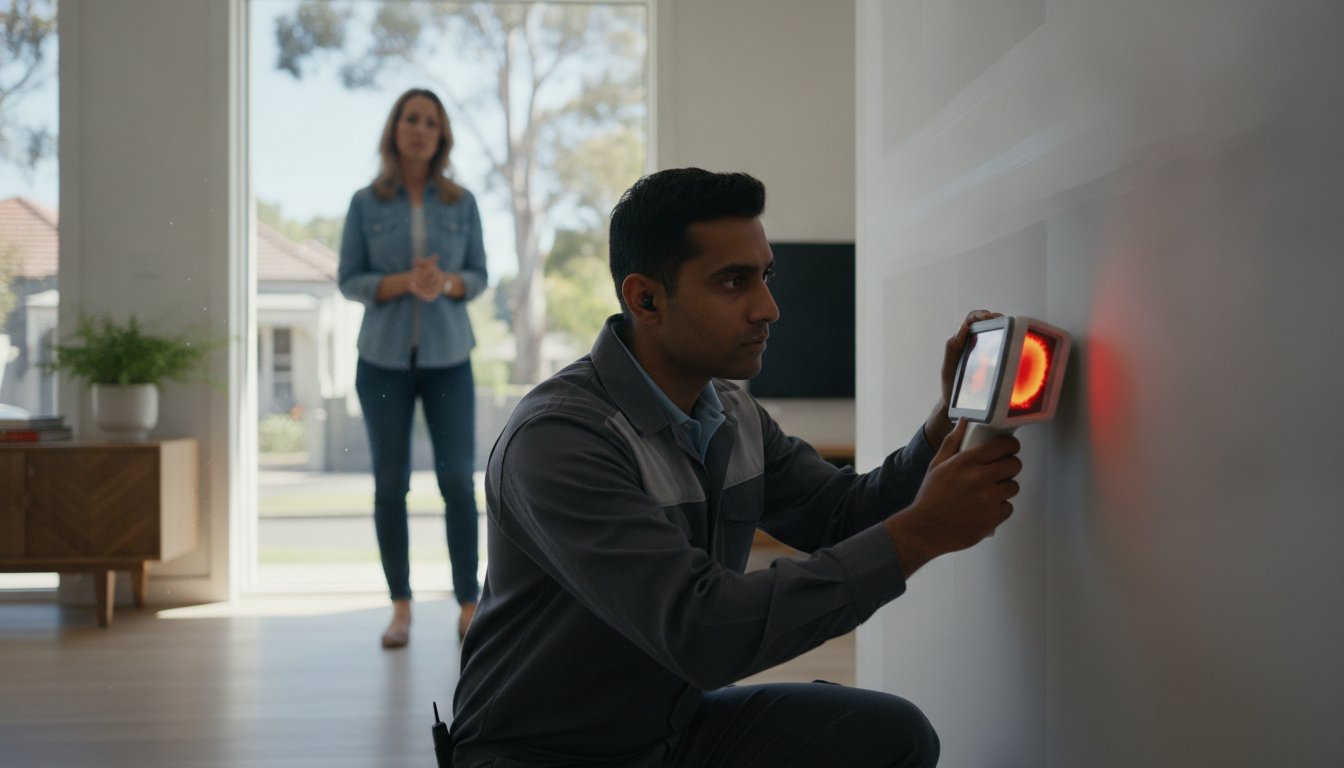
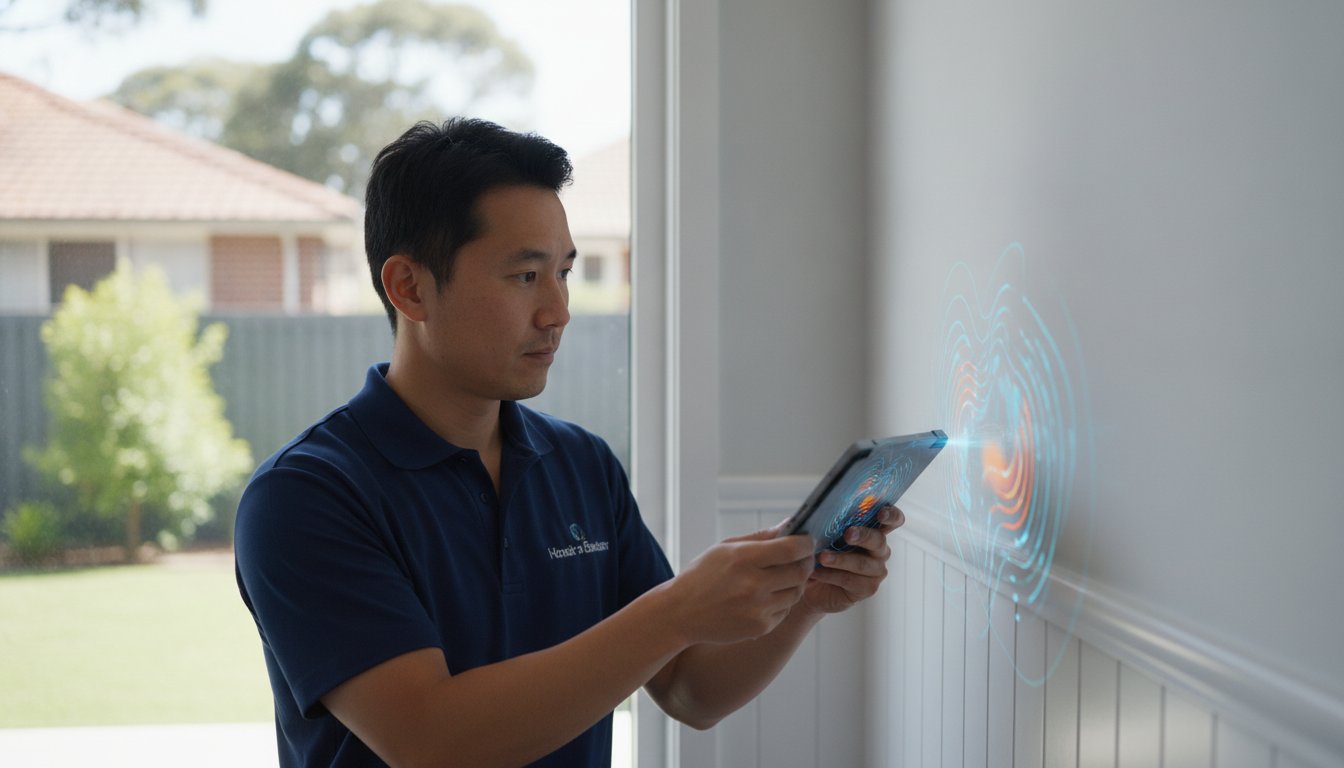
- Thermal Imaging Cameras: These devices detect minute temperature variations. Because a large termite nest generates heat through metabolic activity, these cameras reveal “hot spots” behind solid surfaces.
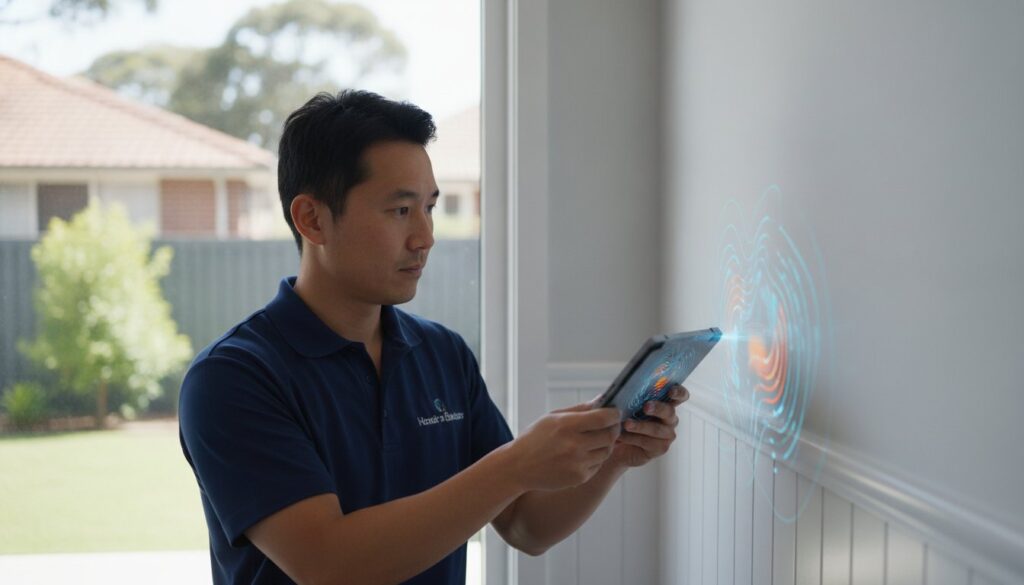
- Termatrac T3i: This is the only tool that uses radar to confirm movement through brick, timber, and plasterboard without any physical disruption.
- Borescopes: When we find a suspicious area, these tiny cameras allow us to see inside wall cavities through a hole smaller than a pencil tip.
Using these tools is a core part of following university extension advice on termite inspections, which emphasizes that specialized equipment is necessary to find infestations before they cause visible damage. This proactive approach is the only way to ensure your property remains safe.
How Thermal Imaging Reveals Hidden Colonies
Thermal imaging is a game-changer for non-invasive detection. Termites are social insects that regulate the temperature of their environment. By mapping the heat signatures of your walls, we can identify anomalies that suggest a concentrated nest. While this technology is incredibly powerful, it isn’t a silver bullet. It requires a skilled technician to interpret the data correctly. We use thermal imaging as a primary detection layer, always cross-referencing findings with other tools to ensure 100% accuracy.
The Power of the Termatrac T3i
The Termatrac T3i represents the gold standard in modern pest detection. It uses three distinct sensors: radar, moisture, and thermal. The radar component is particularly vital. It allows us to confirm the presence of live termites by detecting their movement through solid barriers. This means we don’t have to pull off skirting boards or cut into drywall just to see if a colony is active. ABC Pest Control Sydney invests in this technology because it protects your home from unnecessary damage during the investigation process. It provides the absolute certainty you need without the mess of traditional invasive methods.
Decoding the Termite Inspection Report: What the Findings Mean
Receiving your final report can feel overwhelming if you aren’t sure what to look for. You need to know exactly what the findings mean for your property’s safety. Understanding what is involved in a termite inspection report is just as important as the physical check itself. It translates technical observations into a clear action plan for your home. This document serves as a forensic record of your property’s vulnerability at a specific point in time.
The most critical distinction in any report is the difference between “active” and “past” activity. If the report mentions active termites, it means live insects were found during the assessment. Past activity indicates damage or mudding where no live termites were currently present. Don’t assume past activity means the danger has passed. It often suggests the colony is still nearby, simply waiting for the right conditions to return. Both findings require immediate professional intervention to prevent further structural compromise; if your built-in storage has been affected, CutByBEES offers custom-made cabinetry to help you rebuild efficiently.
Every professional report includes a “Limitations” section. Technicians cannot see through solid concrete slabs or move heavy, built-in furniture. If a room was locked or a subfloor crawl space was too tight for safe access, it will be listed here. This transparency is vital. It tells you exactly which areas remain a mystery so you can take steps to provide access in the future. Remember, a report is a snapshot in time, not a permanent guarantee. Termites are mobile; a clear report today doesn’t mean you can skip next year’s check.
Identifying High-Risk Conducive Conditions
Sydney’s damp weather makes certain areas of your home irresistible to pests. Leaking taps, poor site drainage, and garden mulch piled against the house are common “conducive conditions.” These factors create the high-moisture environment subterranean termites crave. Stored goods, like cardboard boxes or timber offcuts leaning against external walls, are another major risk. They provide a hidden “bridge” that allows termites to enter your home undetected. You can reduce your risk immediately by clearing these items and ensuring your weep holes remain unobstructed.
Next Steps After a Positive Finding
If your report confirms an infestation, do not disturb the area. Spraying them with household chemicals or breaking their mud tubes will only cause the colony to retreat and resurface elsewhere. This makes professional treatment much harder and more expensive. You’ll need to consider long-term solutions like baiting systems or chemical barriers. For a deeper look at the process, visit our guide on termite inspection Sydney: what to expect. If your report highlighted high-risk areas, book a follow-up assessment to ensure your home remains secure and your family stays safe.
Securing Your Sydney Property with ABC Pest Control’s Expert Inspections
Sydney’s environment is unique. Protecting your property requires a team that understands local termite behavior. ABC Pest Control Sydney brings over 20 years of experience to every job. We don’t just look at surface damage; we conduct a deep forensic audit. You’ve learned what is involved in a termite inspection, from thermal imaging to moisture mapping. Now, it’s time to put that knowledge into action. Our team specializes in high-difficulty cases that others might miss. We ensure your family stays safe by using eco-friendly, compliant methods. Our intervention is designed to mitigate your anxiety and provide long-term reliability.
Consistency matters in pest management. We adhere strictly to Australian Standard AS 3660.2. This compliance ensures that every technician follows a regulated, professional methodology. We don’t cut corners because we know the risks of delay are too high. When you choose us, you’re choosing two decades of regional specialization. We’ve seen how termites adapt to Sydney’s changing climate. We use that knowledge to build better defenses for your home. Our experts provide the authoritative guidance you need to make informed decisions about your property’s future.
Why Choose ABC Pest Control Sydney?
We’ve spent two decades mastering Sydney’s pest challenges. Our technicians are fully licensed and insured according to NSW regulations. This local expertise is vital. We know which neighborhoods face the highest pressure. We also offer general pest control packages that complement your termite defense. These bundles provide total resolution for German cockroaches, carpet beetles, and ants alongside your timber check. You get comprehensive protection in one visit. We use safe, ecological methods that prioritize your family’s health while eliminating resilient pests. Our commitment to environmental responsibility means you don’t have to choose between safety and effectiveness.
Book Your Comprehensive Inspection Today
Don’t let uncertainty put your home at risk. Our modern booking process is designed for your convenience. It’s fast, efficient, and respectful of your time. We provide the professional reassurance you need to sleep soundly. You’ll receive a detailed report that clarifies exactly what is involved in a termite inspection and what your property needs next. We handle the most difficult challenges with ease, positioning ourselves as the seasoned authority in the Sydney market. Take the first step toward total property safety. Protect your home from silent destroyers by booking an expert termite inspection today. Your peace of mind is just one click away.
Take Control of Your Home’s Structural Safety Today
Understanding what is involved in a termite inspection is the first step toward securing your property against Australia’s most destructive pests. You now know that a professional audit is a high-tech forensic search. We use advanced Termatrac T3i technology and thermal imaging to see what the naked eye cannot. By following a rigorous 5-point process and ensuring compliance with Australian Standard AS 3660.2, you move from uncertainty to total clarity. Don’t leave your property’s future to chance when silent destroyers are active across Sydney.
With 20+ years of local experience, ABC Pest Control Sydney provides the expert intervention and peace of mind you deserve. Our detailed reports identify active threats and the environmental conditions that invite them. This allows you to act before costly damage occurs. It’s time to protect your investment with a team that truly understands the Sydney landscape. Book your expert termite inspection with ABC Pest Control Sydney today and rest easy knowing your home is in professional hands. We’re here to help you safeguard your property for years to come.
Frequently Asked Questions
How long does a professional termite inspection take?
A professional termite inspection typically takes between 90 minutes and two hours for a standard three-bedroom home. Larger properties or those with complex subfloors and extensive roof voids may require more time. Our technicians conduct a thorough forensic audit, so we never rush the process. We ensure every accessible timber and high-risk zone is checked to provide you with total peace of mind.
Do I need to be home for the termite inspection?
Yes, you or a representative must be present to provide internal access to the property. The inspector needs to check interior walls, skirting boards, and built-in cupboards. We also require access to the roof void and subfloor areas. Being home allows you to discuss any findings immediately with the technician and understand the specific risks identified in your forensic report.
Will the inspector need to drill holes in my walls?
Standard inspections are non-invasive and do not require drilling. We use advanced technology like thermal imaging and the Termatrac T3i to detect activity through solid barriers without causing damage. If we identify a high-risk area that requires a closer look, we may suggest using a borescope. This involves a tiny hole, usually smaller than a pencil, to insert a camera. We always seek your permission before any invasive checks.
How often should I have a termite inspection in Sydney?
Australian Standard AS 3660.2 recommends a comprehensive inspection at least every 12 months. However, Sydney’s humid climate and high termite pressure mean many homeowners opt for six-monthly checks. This is especially important for properties near bushland or those with a history of activity. Regular assessments ensure that any new colonies are detected before they cause significant structural damage to your investment.
What is the difference between a termite inspection and a pest inspection?
A termite inspection focuses specifically on wood-destroying insects that threaten your home’s structural integrity. It is a technical forensic audit involving specialized tools like moisture meters and radar. A general pest inspection targets common nuisances like cockroaches, spiders, and rodents. While both are important for a healthy home, only a dedicated termite check complies with the rigorous standards needed to protect your timber structures.
Can termites be detected if they are not currently active?
Yes, professional inspectors can identify evidence of past activity even if the colony has moved on. We look for abandoned mud tubes, hollowed-out timbers, and specific damage patterns in your wall cavities. Identifying past activity is crucial because it proves your home is vulnerable. Understanding what is involved in a termite inspection helps you realize that past evidence is a vital warning sign that requires a preventative protection plan.
What happens if the inspector finds termites in my home?
If we find active termites, the most important rule is to leave them undisturbed. Do not spray them with household chemicals, as this causes the colony to retreat and resurface elsewhere. Your inspector will provide a detailed treatment proposal, which may include baiting systems or chemical barriers. We act quickly to stop the damage and implement a long-term protection plan tailored to your property’s specific needs.
Is a termite inspection covered by standard home insurance?
No, standard home insurance policies in Australia generally exclude termite damage and the cost of inspections. Insurers consider termite protection a maintenance responsibility for the homeowner. This makes annual professional assessments your only real defense against massive structural repair costs. Regular checks provide the documentation you need to prove you have maintained the property according to Australian Standards.